MTG Control Decks: Strategy, Key Cards, and Builds (2026)
A 2026 guide to MTG control decks in Pioneer, Modern, and Commander. Key cards, curves, sideboards, and matchup plans for Azorius and Esper Control.
Quick AnswerMTG control decks win by stalling early threats with counterspells and removal, then closing with planeswalkers like Teferi or a single finisher. Azorius and Esper Control are the most consistent shells in Pioneer and Modern, while Commander control plays through pillowfort and counter packages.
MTG control decks aren’t trying to win the early turns. Azorius and Esper Control share the same plan across Modern, Pioneer, and Commander: counter the right spell, kill the right creature, then resolve a single planeswalker that closes the game by itself. This guide walks through the strategy, the cards that earn slots in 2026 lists, and the matchup plan that turns a “do-nothing” deck into a clock.
This breakdown is for sleeving real cards in formats you have permission to play (paper, Magic Online, or Magic Arena). Nothing here is an excuse for proxying outside friend-pod rules.
- Control is a long-game archetype that absorbs early damage and converts it into card advantage, then wins with one to three threats over many turns rather than a fast clock.
- Teferi, Hero of Dominaria untaps two lands and can tuck a permanent, so he often turns a stable control board into a winning position.
- Counterspells and removal trade one-for-one, so control needs draw spells like Memory Deluge or Dig Through Time to refill and stay ahead on cards.
- Aggro is the worst matchup for most builds, so sideboard slots usually go to extra wraths, lifegain, and cheap removal rather than more counters.
- Commander control plays differently from 60-card control: pillowfort enchantments, board wipes every three to four turns, and a single big finisher are the formula instead of stack-based counters.
#What Is the General Strategy of an MTG Control Deck?
Control decks plan to lose the first three to four turns on board and win on cards. The deck wants to trade a single counterspell for an opponent’s threat, then resolve a card-draw spell to keep the trade going. Once you’ve answered enough early plays, you resolve a finisher and ride it to victory.
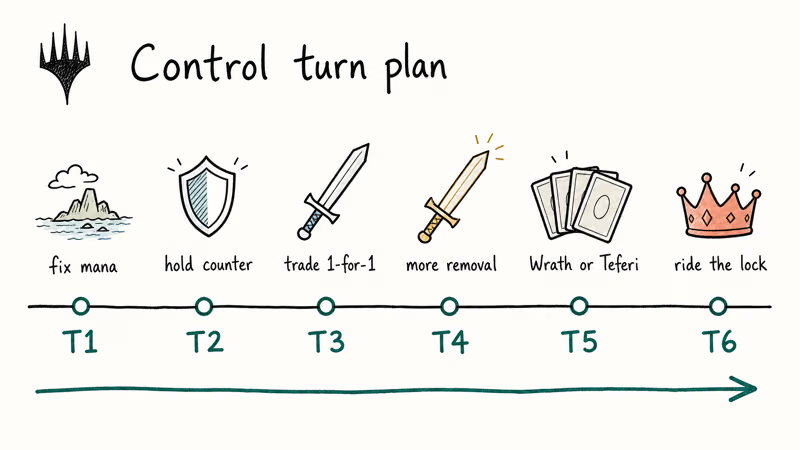
The general turn structure looks like this. Turns one and two go to fixing mana with the best lands in MTG, checking the opponent’s hand with discard if you’re playing black, and holding up a counterspell.
Turns three and four are when you start trading cheap removal for early creatures. By turn five, you want to resolve a sweeper or a planeswalker, then protect it until the game ends.
According to Wikipedia, MTG launched in 1993, and control has been one of the three foundational archetypes ever since, alongside aggro and combo. See the main Magic: The Gathering article for the full format timeline. The blueprint hasn’t changed much: deny resources, accumulate card advantage, win with a small number of finishers.
The hardest skill in playing control isn’t card knowledge. It’s deciding which spell on your opponent’s turn one is worth a counter.
Counter the wrong cantrip and you fall behind on cards. Counter a key removal spell aimed at your future planeswalker, though, and you’ve already won the long game. New control pilots often hold counters for “the perfect target” and lose because the perfect target never came.
#Core Card Categories Inside a Control Shell
A working control list breaks into five card categories: counterspells, removal, sweepers, card draw, and finishers. Most lists run four counters, six to eight removal spells, two to three sweepers, four to six card-draw effects, and one to three finishers.
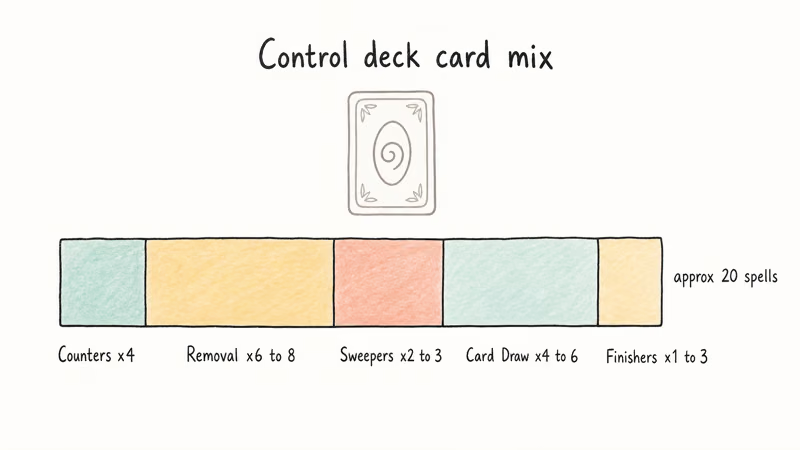
The exact mix depends on the format and what the metagame is doing this week.
#Counterspells
Hard counters are the cleanest answers because they cost no card on resolution. Absorb costs one white, one blue, and one generic, and it counters any spell while gaining you three life, which is why it shows up in Azorius and Esper builds in Pioneer. Counterspell at two blue mana sees Modern play in Azorius Control and Murktide variants.
Mana Leak, Force Spike, and Deluge round out cheaper options when you need to tap out on curve. Soft counters like Spell Pierce or Stubborn Denial fit into tempo-leaning shells where you want a one-mana stopgap rather than a two-mana hard answer.
#Removal Spells
Cheap removal stops aggro creatures before they snowball. Path to Exile and Swords to Plowshares both cost a single white mana and exile any creature.
That’s why white is one of control’s two anchor colors. Fatal Push handles low-cost creatures in black shells, and Anguished Unmaking removes any nonland permanent in Esper at three mana, which catches planeswalkers and enchantments that counterspells missed.
#Sweepers
Board wipes reset the table when individual removal can’t keep up. Wrath of God, Day of Judgment, and Supreme Verdict all clear the board for four mana. Farewell at six mana exiles creatures, artifacts, enchantments, and graveyards in one shot. Most lists run two to three sweepers, since drawing two on the same turn is wasteful but having zero is fatal against go-wide aggro.
#Card Draw
Card-draw spells are how control gets ahead once both players have traded threats. Memory Deluge, Dig Through Time, Treasure Cruise, and Chemister’s Insight all dig multiple cards deep, and the flashback or jump-start text lets you cast the spell twice over the course of a long game.
That dual-mode text is why one slot can answer two different turns of the game.
#Finishers
Finishers close out the game once the board is stable. Teferi, Hero of Dominaria is the gold-standard planeswalker finisher: he untaps two lands when he enters, draws a card or tucks a permanent on +1, and his ultimate locks the opponent out three to four turns later.
Shark Typhoon gives Azorius lists a creatureless win condition with a built-in cycling mode. Murktide Regent in Izzet builds turns the graveyard into a 7/7 to 9/9 flyer for four mana.
#Top Control Archetypes in Pioneer and Modern
Pioneer and Modern reward different shells because the card pools start at different points. Pioneer began with Return to Ravnica forward, so Teferi, Hero of Dominaria and Supreme Verdict are still legal. Modern goes back to Eighth Edition, which means cantrips like Brainstorm aren’t available but Force of Negation and Solitude are.
#Azorius Control (Pioneer and Modern)
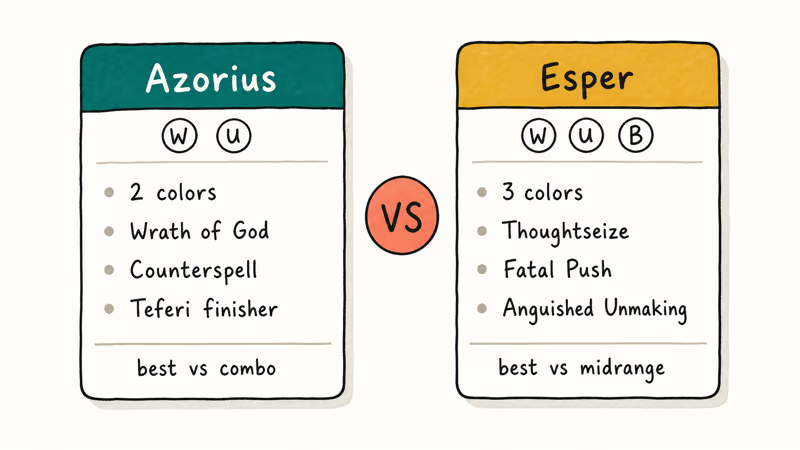
Azorius lists run two colors: white for Wrath of God, Path to Exile, and Solitude, plus blue for Counterspell, Memory Deluge, and Teferi, Hero of Dominaria. The 22 to 24 lands include shocklands, fastlands, or surveil lands depending on the format. The wins come from resolving Teferi behind a counterspell, or from a Shark Typhoon cycle that drops a 4/4 flyer at instant speed.
According to MTGGoldfish, Azorius Control has been a top-eight Pioneer archetype in most months since 2024. The full Pioneer metagame breakdown updates weekly. The deck rewards tight sequencing more than card-pool depth, which is why it stays consistent through metagame swings.
#Esper Control (Pioneer and Modern)
Esper splashes black for Thoughtseize, Fatal Push, and Anguished Unmaking. Each adds a one-mana answer that pure Azorius can’t match.
Esper’s black splash is strongest against creature-light midrange decks, while creature-heavy aggro pushes the deck toward sideboard slots like Damping Sphere and additional sweepers.
#UW or Esper Variants With a Cleaner Win Condition
Some lists swap Teferi for The Wandering Emperor, Vraska, Relic Seeker, or a planeswalker that closes faster against control mirrors. Vraska, for example, can deal with an opposing Teferi by ticking up to her -3 and exiling him.
For commander-style alternative finishers, the best planeswalkers in MTG breaks down which six- and seven-mana walkers are most often chosen as control’s late game.
#Commander Control Builds Differently
Commander control isn’t 60-card control with extra cards. The format is multiplayer, the starting life total is 40, and singleton rules force you to run one copy of each answer. That means stack-based counter-and-trade plans don’t work as cleanly. Instead, Commander control leans on four pillars.
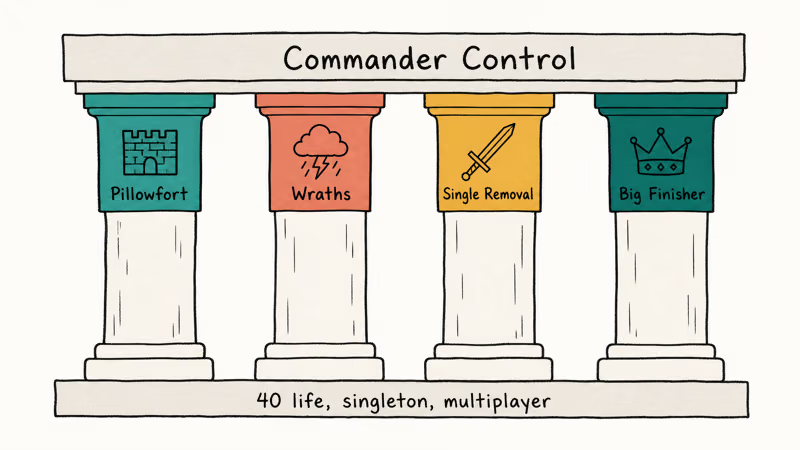
The first pillar is pillowfort. Propaganda, Ghostly Prison, and Sphere of Safety force opponents to pay extra mana to attack you, which buys turns.
Wraths come second. A Commander control deck typically runs three to five board wipes (Wrath of God, Cyclonic Rift, Damnation, Farewell) and aims to cast one every three to four turns. Single-target removal sits in the third slot, where Path to Exile, Swords to Plowshares, and Generous Gift cover the windows between wraths.
The fourth pillar is the finisher, and this is where Commander control diverges most from 60-card. A control deck in EDH usually runs one or two giant finishers, like Approach of the Second Sun, Jin-Gitaxias, Core Augur, or a build-around commander like Talrand, Sky Summoner that wins through token generation.
According to EDHREC’s control tag page, Talrand, The Locust God, and Niv-Mizzet, Parun all show up in the top slots because each one wins a long game by itself once protected.
If you’d rather pilot a more aggressive blue Commander, the best Izzet commanders in MTG covers Niv-Mizzet variants that lean toward draw-and-burn finishes instead of pure stall.
#Mana Curve and Sideboard Construction
Most 60-card control lists run a curve that tops out at six mana, with the heaviest concentration at three to four. The lands are usually 26 to 27, including two to four utility lands like Castle Vantress, Field of Ruin, or Hall of Storm Giants. Twenty-five-land builds work in Modern with cantrips but not in Pioneer.
The sideboard usually splits into three buckets. Aggro slots include a third or fourth sweeper, extra cheap removal, and a lifegain card or two. Combo slots include graveyard hate (Rest in Peace, Soul-Guide Lantern), a counter for must-counter spells (Dispel, Disdainful Stroke), and sometimes a Damping Sphere. Control mirror slots include Negate, Tale’s End, additional planeswalkers, and more card draw.
Damping Sphere is one of the most important sideboard slots against Storm and Tron. It slows the turns that make those matchups lopsided before sideboarding.
#How Do You Play Around an Aggro Matchup?
Aggro is the worst matchup for most control decks because the early curve denies you time to set up. The plan changes from “answer every threat” to “live to turn five.” Mulligan aggressively for one-mana removal: a hand with Fatal Push, Path to Exile, or Cast Down is usually keepable; a hand without one of those is usually not.
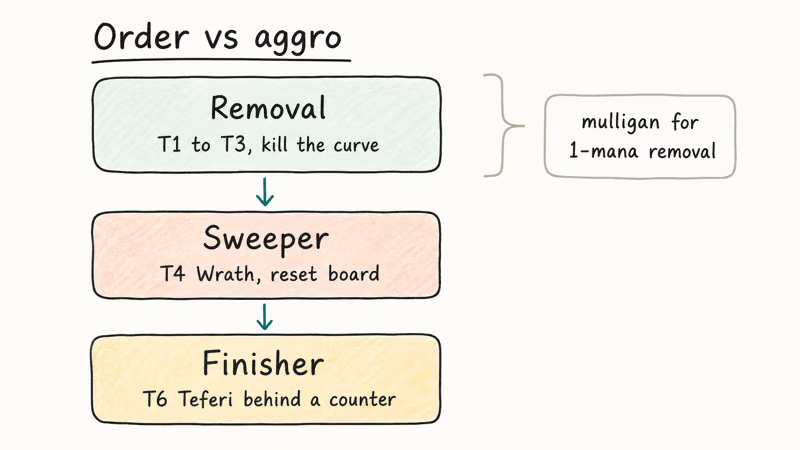
The order of operations against aggro is removal first, sweeper second, finisher third. Burn in particular punishes you for tapping out.
Sequence Wrath of God on turn four, hold up two mana for an Absorb on turn five, and only deploy your planeswalker on turn six when you have a counter ready behind it. The 3-life mode on Absorb matters because that lifegain can buy enough time to reach a sweeper or finisher instead of dying to the last burn spell.
Sideboarding pulls counterspells and brings in extra removal plus lifegain. Some lists bring in Sanctifier en-Vec or Pithing Needle if the aggro deck leans on a key creature. Goblin and Burn matchups in particular benefit from cards that interact with creatures and burn at the same time, and the roundup of the best goblin cards in MTG covers the cheap two-drops that demand answers.
#Bottom Line
For Pioneer and Modern, Azorius Control with Teferi, Hero of Dominaria is the most consistent control shell in 2026. The two-color mana base is more reliable than three-color Esper, and the matchup spread covers midrange and combo without leaning on splash colors.
Pick Esper Control instead if your local meta is heavy on midrange decks.
The black splash buys Thoughtseize, Fatal Push, and Anguished Unmaking, which is enough disruption to swing the matchup against creature-light midrange decks running Bloodtithe Harvester or Sheoldred, the Apocalypse. The trade-off is two lands of mana-base consistency, which costs you the occasional game where you miss a color on turn three.
For Commander, Talrand, Sky Summoner or The Locust God wins the most consistent long games.
Avoid plain four-mana counterspells in Modern unless your meta is filled with three-mana spells. The format is too fast for slow counters, and the slot earns more value from Counterspell, Force of Negation, or Mana Drain. The best clone cards in MTG guide covers Spark Double and Phantasmal Image, both of which slot into control sideboards as flex finishers when the matchup demands a creature win condition over a planeswalker.
#Frequently Asked Questions
Can a control deck win on turn five?
Rarely. The deck plans to win across turns six through ten, not on a fast clock.
How do control decks handle aggressive opponents?
Cheap removal first, then a turn-four sweeper, then a finisher behind protection on turn five or six. The 3-life mode on Absorb and the lifegain on Sphinx’s Revelation buy time against burn lists, especially when the game comes down to the last spell.
Most lists dedicate four to six sideboard slots to anti-aggro answers like Sanctifier en-Vec, Knight of Autumn, or extra wraths, and pilots often pull two or three counterspells to make room.
Are control decks expensive to build in 2026?
Pioneer Azorius Control runs roughly 350 to 500 USD on Magic Online and 700 to 1,000 USD in paper, with the shocklands and Teferi, Hero of Dominaria as the priciest pieces. Modern Azorius Control sits closer to 1,200 USD because of Force of Negation and Solitude.
Budget pilots can sleeve up a Mono-Blue tempo shell with cheaper counters and finishers like Ledger Shredder for under 200 USD, which trades full Azorius consistency for a faster game plan that folds more often to combo.
Can control decks win in Commander multiplayer?
Yes, but the deck needs different cards than 60-card control.
Are control decks good for beginner Magic players?
Control is one of the harder archetypes for new players because each turn requires sequencing decisions: which spell to counter, which creature to remove, which mana to hold up. Aggro and midrange give a smoother learning curve, since each turn has fewer interaction windows. Once a pilot has 20 to 30 hours of reps, control becomes a strong format choice because the playstyle rewards careful thinking over raw tempo.
What’s the best counterspell to run in a 2026 control deck?
Counterspell at two blue mana for Modern. Absorb for Pioneer.
Do all control decks need a planeswalker finisher?
No. Shark Typhoon, Approach of the Second Sun, and Murktide Regent all close games without a planeswalker. The advantage of a planeswalker finisher like Teferi, The Wandering Emperor is that each loyalty activation also draws or generates a card, keeping you ahead on resources while it closes the game.
An enchantment or creature finisher dodges planeswalker-specific removal like Hero’s Downfall or Vraska’s Contempt, which lets you sneak through against decks that pack three or four targeted walker answers but only one or two for permanents in general.

Fortnite Stuck on the Loading Screen? Fix It in 2026
Fortnite stuck on the loading screen? Check server status, fix the Windows N Media Pack and DirectX 11 on PC, clear the console cache, and verify files.

Minecraft Keeps Crashing? Java and Bedrock Fixes (2026)
Minecraft keeps crashing on startup or mid-game? Update your GPU driver, remove mods on Java, and reinstall Gaming Services on Bedrock. Fixes for both.

Pokemon GO Not Loading? Fix the Loading Screen 2026
Pokemon GO not loading or stuck on the Pokeball? Check server status, fix automatic date and time, grant location permission, clear the cache, and update.
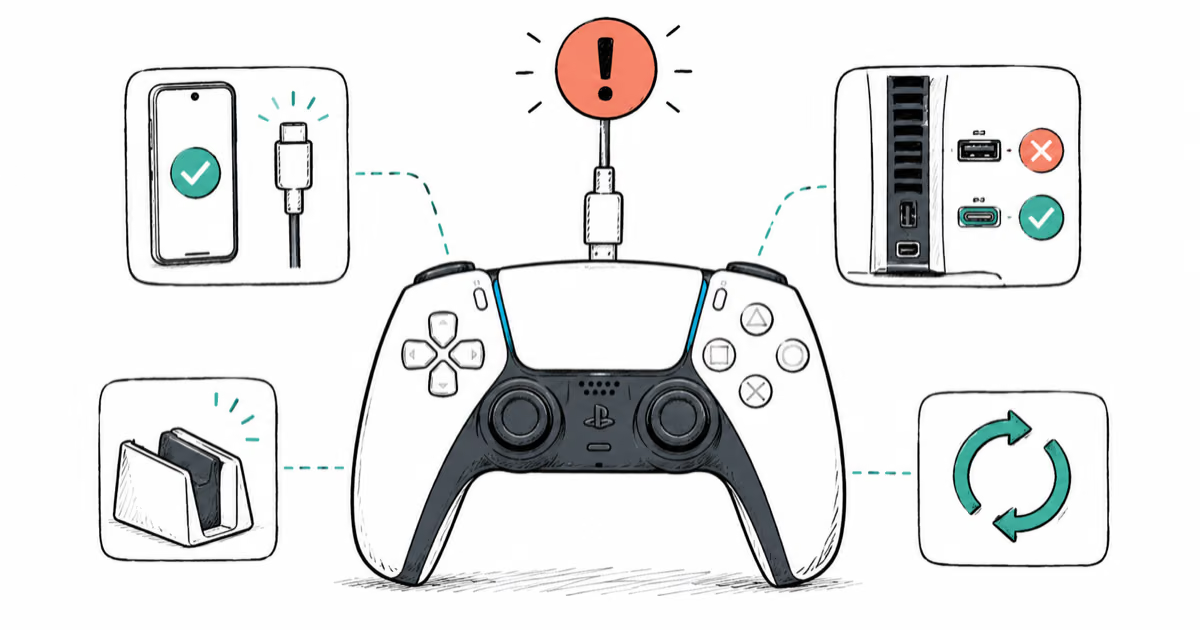
PS5 Controller Not Charging? 9 Fixes That Work (2026)
DualSense not charging? Swap the cable, use a rear port in Rest Mode, clean the USB-C port, and check power settings. 9 fixes for a dead PS5 controller.