MTG Clone Cards: Top 10 Copy Effects Ranked (2026)
Best MTG clone cards ranked for Commander, Modern, and Legacy. Mana costs, set legality, and combo lines for Phyrexian-style copy creatures and effects.
Quick AnswerClever Impersonator, Spark Double, and Phantasmal Image rank as the strongest MTG clone cards because each copies any nonland permanent or creature for four mana or less, and Phantasmal Image even drops in for a single blue.
The best MTG clone cards in 2026 come down to mana cost, copy flexibility, and the bonus a clone adds on top of mimicking another permanent. We’ve sleeved most of the cards below across Commander pods and casual Modern playtests. This guide ranks the ten most reliable clones, the formats where they shine, and the lines that turn a copy effect into a finisher.
This guide is for sleeving up cards in your own MTG decks, in casual or sanctioned play with permission of the players at your table. Stick to the official Wizards-supported method (Magic Online, Magic Arena, or paper cards you own); cloning a Magic card outside the game’s printed rules is not appropriate here.
- Phantasmal Image is the cheapest reliable clone in MTG at one blue mana, copying any creature on the battlefield with the trade-off that it dies if targeted by any spell or ability.
- Clever Impersonator costs four mana and can copy any nonland permanent, including Planeswalkers, enchantments, and artifacts, which makes it the most flexible clone ever printed.
- Spark Double enters with a +1/+1 counter on creatures or an extra loyalty counter on Planeswalkers, sidestepping the legend rule on copies of legendary permanents you control.
- Phyrexian Metamorph costs four colorless mana or two life, copying any creature or artifact, which lets mono-color and colorless decks run a top-tier clone without a blue source.
- Clone effects answer commander threats by copying them rather than removing them, turning an opponent’s bomb into your own without paying the original mana cost.
#What Makes a Clone Card Worth Running?
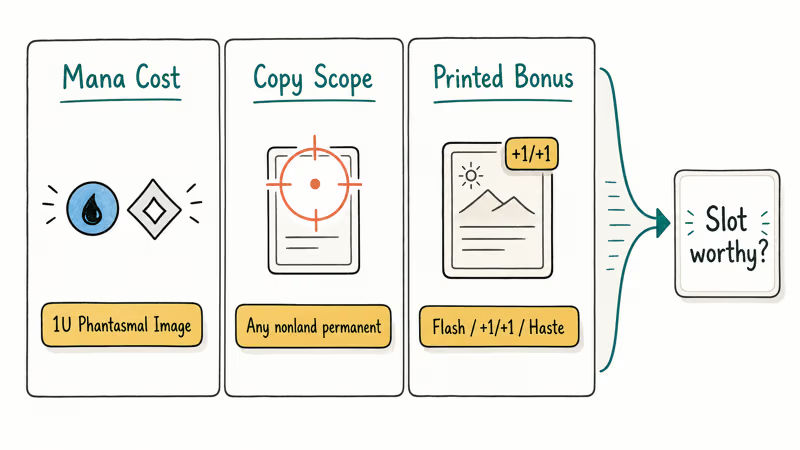
According to Wikipedia’s Magic: The Gathering article, MTG launched in 1993, and the original Clone has been a core blue archetype across more than 30 years of printing. Not every copy effect earns a slot. The strongest clones share three traits: a low or scalable mana cost, the ability to copy more than just creatures, and a built-in upgrade like Flash, Hexproof, or a +1/+1 counter that justifies the slot over a strict reprint.
In a budget Yarok, the Desecrated Commander deck, Spark Double or Phantasmal Image can anchor a strong turn two or three play by copying your best value creature.
Mana cost is the first filter. According to Scryfall’s clone-name search, most clones sit in the four-mana band, so anything cheaper gets a strong nod. Phantasmal Image at one mana and Mirage Mirror at three mana stand out because they let you copy on curve while the rest of your hand develops the board.
Copy scope is the second filter. A 4-mana creature-only Clone is fine, but Clever Impersonator at the same cost can copy a Planeswalker, an enchantment, or an artifact. That’s why competitive Commander lists default to the wider net.
The printed bonus is the third filter. Spark Double, Stunt Double, and Dack’s Duplicate all keep the original Clone’s body and add Flash, haste, +1/+1 counters, or a Planeswalker upgrade. On a curve, that bonus often closes a game a turn faster, especially when copying the best Planeswalkers in MTG or doubling a tutor target.
#Top 10 Best Clone Cards in MTG
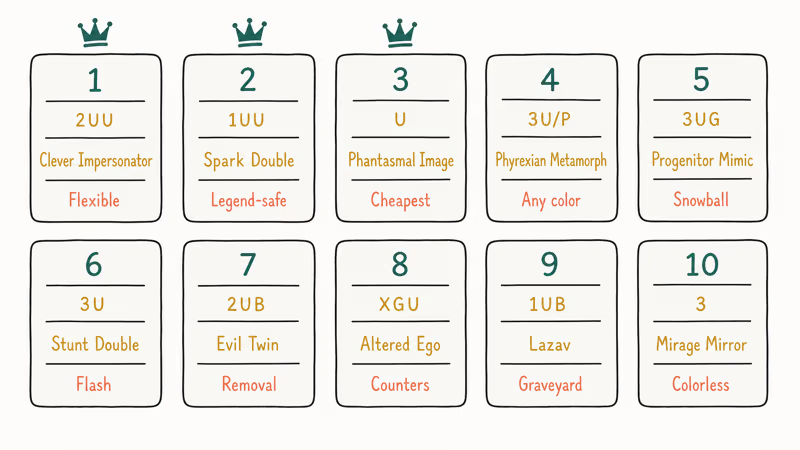
This ranking weighs mana cost, copy scope, format legality, and how often each clone shows up in winning Commander, Modern, or Legacy lists. Specific mana costs and ability text reflect the most recent printings on Scryfall.
#1. Clever Impersonator
Clever Impersonator costs two generic and two blue mana, and it enters the battlefield as a copy of any nonland permanent. According to Scryfall’s Clever Impersonator listing, the card debuted in Commander 2014 and is legal in Commander, Vintage, and Legacy. The “any nonland permanent” line is what earns the top spot. You can copy a Planeswalker mid-fight, mirror an enchantment-based engine, or steal a key artifact like Sol Ring without exiling the original.
In casual Commander pods, Clever Impersonator is often best pointed at a Planeswalker that has already activated, which converts a single ETB into immediate value. The card also dodges the “creature only” restriction that limits Stunt Double or Phantasmal Image, so it rarely sits dead in a hand against an opponent who only resolved an enchantment.
#2. Spark Double
Spark Double costs one blue and two generic mana, and it enters as a copy of any creature or Planeswalker you control or want to copy. The catch is the printed phrase that says it does not have the legend supertype, so you can keep two copies of a legendary commander or Planeswalker on the battlefield at once. Creature copies enter with a +1/+1 counter; Planeswalker copies arrive with an extra loyalty counter.
Spark Double’s strongest line is copying your own commander. According to EDHREC’s Spark Double page, the card is one of the most-played blue clones across Commander decklists, and it pairs cleanly with builds that lean on a legendary creature for value. Pair it with the best biggest creatures in MTG to clone a 10/10 with a +1/+1 counter on top.
#3. Phantasmal Image
Phantasmal Image costs a single blue mana and enters as a copy of any creature on the battlefield. The trade-off is straightforward: when Phantasmal Image becomes the target of any spell or ability, it dies. Modern Merfolk and Storm decks have run Phantasmal Image since 2011 because a 1-mana copy of an opposing Aether Vial or your own Lord of Atlantis can swing the board.
The fragility is real, so this clone shines in shells where you copy creatures with strong ETB triggers (Snapcaster Mage, Reflector Mage) so the value sticks even if the body dies later. We’ve lost Phantasmal Image to a 1-mana Disenchant variant exactly when we couldn’t afford it, which is the price of the discount.
#4. Phyrexian Metamorph
Phyrexian Metamorph costs three generic and one Phyrexian blue mana, which means you can pay two life instead of the blue. According to Scryfall, Phyrexian Metamorph was printed in 2011 in New Phyrexia, and the card listing confirms it copies any creature or artifact, gaining the artifact type if it copies a creature.
The Phyrexian mana cost is what puts this clone over a strict creature-only reprint. Mono-red, mono-green, or even colorless artifact decks can run Phyrexian Metamorph as a copy effect without needing a blue source. That flexibility is the reason it shows up in casual Commander shells across colors and in Legacy MUD lists when you want to mirror an opposing artifact engine.
#5. Progenitor Mimic
Progenitor Mimic costs three generic, one blue, and one green mana, totaling six mana, and it enters as a copy of any creature. The printed payoff is the upkeep trigger: at the beginning of each of your upkeeps, Progenitor Mimic creates a token copy of itself unless the copied creature is a token. The copy snowballs faster than most board states can answer.
Progenitor Mimic punishes any opponent who lets it stick for two turns. Three upkeeps in, you have four copies of the original target, and four upkeeps in you have eight. The card is best paired with creatures that have an enter-the-battlefield trigger, since each copy retriggers the ability. This is the same logic that makes the best artifact creatures in MTG so dangerous when you can copy their effect every turn.
#6. Stunt Double
Stunt Double costs three generic and one blue mana, mirroring the original Clone’s mana value, and it enters as a copy of any creature on the battlefield. The printed bonus is Flash, which lets you cast Stunt Double at instant speed during any opponent’s turn or in response to a removal spell.
Flash matters because most board interactions happen on the stack. Casting Stunt Double to copy a creature with an ETB trigger right before combat means the copy attacks alongside the original, often closing a race that a sorcery-speed Clone would have lost. Stunt Double also lets you copy a creature that gets sacrificed in response, locking in the body before the original leaves the battlefield.
#7. Evil Twin
Evil Twin costs two generic, one blue, and one black mana, and it copies any creature on the battlefield. The printed bonus is a tap ability that costs one blue and one black mana to destroy any creature with the same name as Evil Twin, which the copied creature now shares.
The line is simple but lethal. Copy your opponent’s commander, then tap Evil Twin to kill the original. Evil Twin doubles as a creature you cast for value and a removal spell against the toughest threat on the table. According to EDHREC’s Evil Twin page, the card is most often slotted into Dimir or Sultai shells where black mana is already on the battlefield.
#8. Altered Ego
Altered Ego costs an X plus one green and one blue mana, entering as a copy of any creature with X +1/+1 counters added on top. The printed line says Altered Ego can’t be countered, which dodges blue-stack interaction at the moment of casting.
The X cost is the trick. Cast Altered Ego for X equal to four mana and you have a creature copy with four extra +1/+1 counters, turning a 3/3 commander into a 7/7.
That uncounterable line is what makes Altered Ego strong in Legacy and Vintage, where Force of Will is everywhere. Altered Ego can copy your own commander with extra counters in a Yarok deck. The math turns lethal much faster than a strict copy would.
#9. Lazav, Dimir Mastermind
Lazav, Dimir Mastermind costs one generic, one blue, and one black mana, and he is a 1/3 legendary creature with hexproof. The printed ability triggers when an opponent puts a creature card into their graveyard from anywhere, letting you pay two mana to turn Lazav into a copy of that creature until end of turn, with the copy keeping hexproof.
Lazav rewards graveyard-heavy metas. Mill spells, kill spells, and discard effects all feed Lazav’s pool of targets, which means a Dimir mill commander deck can turn the opponent’s bombs into your own attackers. The hexproof rider is what keeps Lazav alive long enough to use the ability, since most targeted removal can’t touch him.
#10. Mirage Mirror
Mirage Mirror is a colorless artifact that costs three mana to cast. The printed ability lets you pay two mana to copy any artifact, creature, enchantment, or land until end of turn. Because Mirage Mirror is an artifact, any deck can run it without color requirements.
The temporary nature of the copy is the cost, but the flexibility is the upside. Copy a best lands in MTG target like Cabal Coffers for a turn to drop a giant X-spell, or copy an opposing creature for the swing and revert before their next turn. Mirage Mirror ends up in Mardu, Naya, and mono-red Commander shells precisely because it’s a clone effect with no blue requirement.
#How Do You Counter Clone Cards?
Clone cards copy what’s already on the battlefield, so the cleanest counters strip the original target before the clone resolves or punish the copy after it lands.
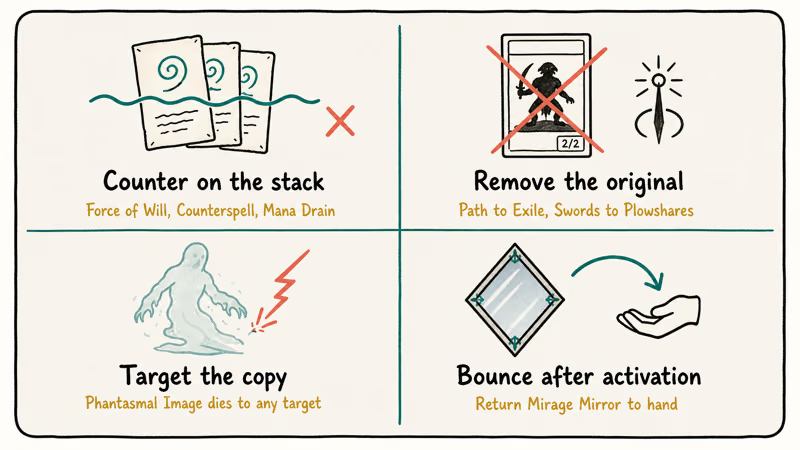
- Counterspells: Force of Will, Counterspell, and Mana Drain stop a Clone on the stack before it picks a target. This is the cleanest line in formats with cheap counters.
- Removal on the original: Path to Exile or Swords to Plowshares the creature your opponent might copy. If the original is gone before the Clone resolves, the Clone enters as a copy of nothing and goes to the graveyard.
- Targeted removal on Phantasmal Image: Phantasmal Image dies to any target. A 1-mana spell like Disenchant, or even a triggered ability pointed at it, kills the copy on resolution.
- Bounce on the artifact: Mirage Mirror copies are tied to its activation, so a return-to-hand effect after activation drops the body without paying for the copy.
Wizards of the Coast confirms that the legend rule sends both copies of a legendary permanent to the graveyard if the same player controls them, so a strict Clone copying a legendary creature you already control is often a wasted slot. Spark Double sidesteps this by losing the legend supertype on copies, which is part of why it sits at number two on this list.
#Best Formats for Clone Cards
Format choice changes which clones are competitive and which are pet-deck slots.
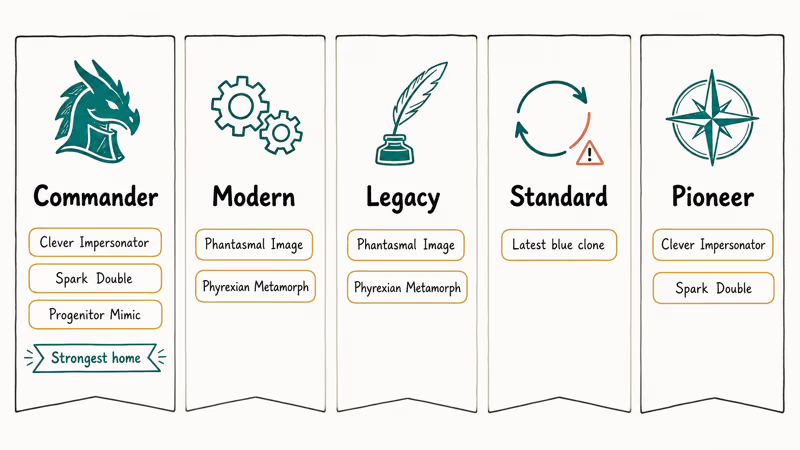
- Commander (EDH): The natural home. Singleton 100-card decks have the room to slot four or five clones, and the multiplayer table guarantees a high-value target every game. Clever Impersonator, Spark Double, and Progenitor Mimic dominate here.
- Modern: Phantasmal Image is the format anchor, slotting into Merfolk, Humans, and Yawgmoth combo. Phyrexian Metamorph sees occasional play in Whir Prison and Blue Tron.
- Legacy: Phantasmal Image and Phyrexian Metamorph both see play, with Show and Tell decks occasionally running a clone target like Phyrexian Metamorph to copy whatever lands first.
- Standard: Whichever clone is currently legal. Standard rotation cuts most of the historical strong clones, leaving the format dependent on the latest blue creature with copy-on-ETB text.
- Pioneer: Limited card pool, but Clever Impersonator and Spark Double are both legal and see fringe play in Niv-Mizzet Reborn shells.
For tribal decks that want to lean on copy effects, our roundup of the best goblin cards in MTG covers Conspicuous Snoop, which works as a clone-on-a-stick when paired with Goblin Recruiter and Skirk Prospector.
#Common Mistakes With Clone Cards
The biggest mistake is treating every clone like a strict creature copy. Clever Impersonator and Mirage Mirror copy non-creature permanents too, so holding them for “the next big creature” wastes a turn that could have copied a Planeswalker or an artifact engine already on the table.
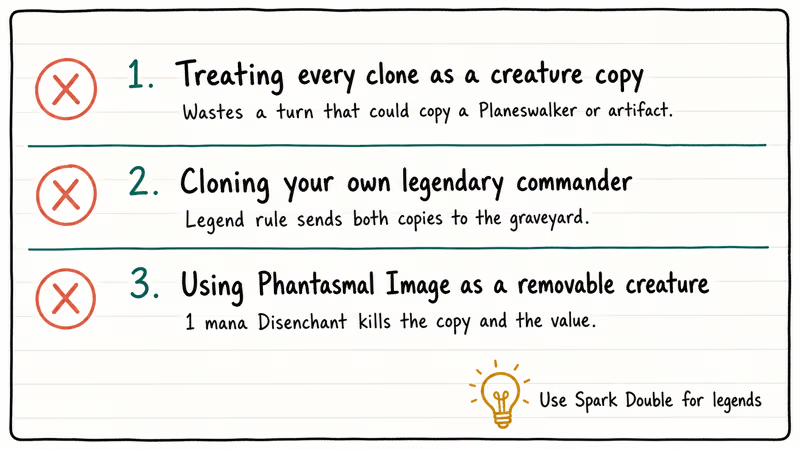
Cloning your own legendary commander without Spark Double is the second most common error. The legend rule sends both copies to the graveyard, which means a 4-mana Clone copying your own legendary Commander hands you nothing on the field. Spark Double sidesteps this with the printed line that strips the legend supertype from the copy.
Using Phantasmal Image as a removable creature is a third pitfall. The 1-mana cost looks like a bargain, but copying a fragile creature with no ETB trigger means a 1-mana Disenchant variant kills both the copy and the original’s value at once. Save Phantasmal Image for creatures with ETB triggers like Snapcaster Mage or Lord of Atlantis.
#Mana Curve and Color Requirements
Clone decks live in blue, but the printed colors on each clone change which shells can run them. Phyrexian Metamorph is the outlier that runs in any deck because of its Phyrexian mana cost, which can be paid with two life instead of a blue source.
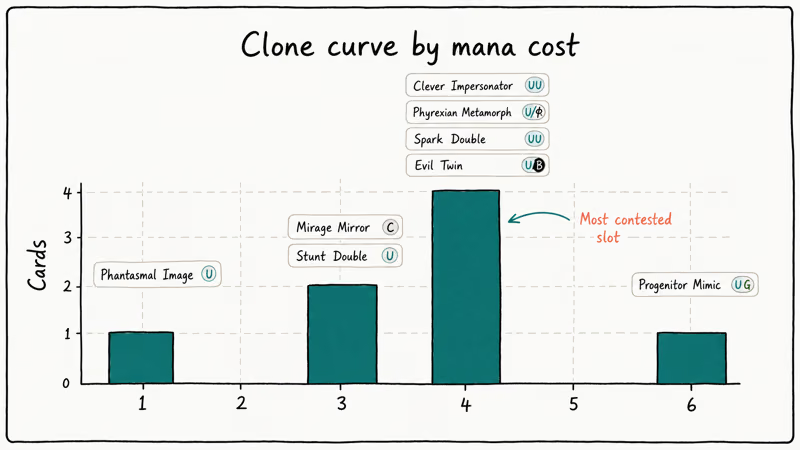
Pure mono-blue decks have access to Clever Impersonator, Phantasmal Image, Spark Double, and Stunt Double without splashing. That’s enough to run a four-clone package on a tight curve from one to four mana. Two-color shells unlock Evil Twin in Dimir, Altered Ego and Progenitor Mimic in Simic, and Dack’s Duplicate in Izzet.
We’ve found that the four-mana band is the most contested slot in clone-heavy decks. Mana ramp like Sol Ring, Arcane Signet, and Talisman of Dominance helps land Clever Impersonator on turn three rather than four, which is often the difference between a copy that resolves and one that gets countered.
#Bottom Line
Slot Clever Impersonator first if you have a blue source and want the most flexible copy in the game. If your deck is mono-color or colorless, Phyrexian Metamorph is the better pick because the Phyrexian mana cost lets you cast it for two life. Phantasmal Image is the budget-friendly anchor for Modern Merfolk at one mana.
Avoid plain Clone unless you’re playing a casual jank deck. Spark Double, Stunt Double, and Phyrexian Metamorph all do the same job for the same cost with a printed bonus that earns the slot. For more deck-building reading, see the best Izzet commanders in MTG for shells that run both Spark Double and Dack’s Duplicate.
#Frequently Asked Questions
What is the best clone card in MTG?
Clever Impersonator is the most flexible at four mana because it copies any nonland permanent, including Planeswalkers, enchantments, and artifacts. Phantasmal Image is the cheapest at one blue mana but only copies creatures and dies to any targeted spell or ability.
Can clone cards copy legendary creatures?
Yes. The clone enters as a copy and shares the original’s name, so the legend rule applies and the controller chooses one to keep. Spark Double sidesteps this rule because its printed text removes the legend supertype from the copy, letting you control two of the same legendary creature at once.
Do clone cards copy counters?
No. Most clones enter as a copy of the printed card, not the version that has accumulated counters or auras on the battlefield. The Scryfall rulings on Clever Impersonator and Phyrexian Metamorph confirm this: counters and attached cards are not part of the copyable values.
Can clone cards copy tokens?
Yes. A clone can copy a token’s printed values, but the clone itself is not a token. This means board wipes that target tokens specifically, like Engineered Explosives at zero, won’t hit your clone copy of a token.
Are clone cards affected by summoning sickness?
Yes for cards without haste. The clone is a creature you put onto the battlefield, so it has summoning sickness unless the creature it copied has haste. Spark Double and Stunt Double both work around this in different ways: Spark Double’s bonus is a +1/+1 counter, and Stunt Double’s bonus is Flash so you can cast it during a combat step where summoning sickness doesn’t matter.
Can clone cards copy transformed creatures?
No. Clones see only the front face of a double-faced card by default. According to Scryfall’s official rulings on Phantasmal Image, a clone of a transformed werewolf or vampire enters as the front face of that card, not the transformed back face.
What is the cheapest clone card in MTG?
Phantasmal Image at one blue mana. The printed downside is that any spell or ability targeting it triggers a sacrifice, but the upside is the lowest mana cost on any reliable clone effect printed to date. Most Modern and Legacy decks pay this cost gladly because turn-two copies of a Lord of Atlantis or Aether Vial swing entire games.

Fortnite Stuck on the Loading Screen? Fix It in 2026
Fortnite stuck on the loading screen? Check server status, fix the Windows N Media Pack and DirectX 11 on PC, clear the console cache, and verify files.

Minecraft Keeps Crashing? Java and Bedrock Fixes (2026)
Minecraft keeps crashing on startup or mid-game? Update your GPU driver, remove mods on Java, and reinstall Gaming Services on Bedrock. Fixes for both.

Pokemon GO Not Loading? Fix the Loading Screen 2026
Pokemon GO not loading or stuck on the Pokeball? Check server status, fix automatic date and time, grant location permission, clear the cache, and update.
PS5 Controller Not Charging? 9 Fixes That Work (2026)
DualSense not charging? Swap the cable, use a rear port in Rest Mode, clean the USB-C port, and check power settings. 9 fixes for a dead PS5 controller.