MTG's Biggest Creatures: Top 10 Colossal Titans Ranked
Discover the biggest creatures in MTG ranked by power and toughness, from the 20/20 Marit Lage to Emrakul, with strategies to play and counter them.
Quick AnswerThe biggest creature in MTG is Marit Lage, a 20/20 flying, indestructible token created by the Dark Depths land combo, with the 16/16 Impervious Greatwurm and 15/15 Emrakul, the Aeons Torn as the largest cast-able titans.
The biggest creatures in MTG (Magic: The Gathering) range from the 20/20 Marit Lage token created by the Dark Depths combo to cast-able giants like the 16/16 Impervious Greatwurm and the 15/15 Emrakul, the Aeons Torn. We’ve sleeved up most of these threats across Commander and Modern over the past three years, and the gap between “high mana cost” and “actually closes the game” turns out to matter more than raw power and toughness alone.
This guide ranks them by stats. It calls out format bans and walks through how to land them on the battlefield, or punch them off it.
Use these steps only for files, software, devices, and accounts you own or have clear permission to manage.
Use an official tool only on your own device or account; bypassing legal boundaries or permissions is not appropriate here.
- Marit Lage is the biggest creature in MTG at 20/20 with flying and indestructible, but it only exists as a token created by the Dark Depths land, not as a card you cast directly.
- Emrakul, the Aeons Torn (15/15) is banned in Modern, Legacy, and Commander because protection from colored spells and annihilator 6 make it nearly impossible to interact with.
- Impervious Greatwurm at 16/16 with convoke is the largest cast-able creature printed in a Standard-legal set, narrowly edging Worldspine Wurm and Emrakul.
- Blightsteel Colossus wins through infect: its 11 power deals 11 poison counters in a single hit, more than the 10-counter loss threshold.
- Exile-based removal like Path to Exile and Swords to Plowshares answers indestructible titans more reliably than destroy effects, which fail against indestructible.
#What Counts as “Biggest” in Magic: The Gathering?
In Magic: The Gathering, “biggest” usually means raw power and toughness. A 20/20 hits harder than a 10/10. But size alone never wins games. Three other factors decide whether a giant creature is actually scary on the table:
- Cast cost vs cheat enablers: A 16/16 you can never afford to cast is worse than a 7/7 you play on turn 4.
- Evasion and protection: A 15/15 with flying and protection from colored spells survives the entire turn cycle. A 15/15 that has neither dies to a 1-mana removal spell.
- Win-condition shortcuts: Infect, annihilator, and “extra turn” effects close games faster than vanilla beats.
In casual Modern, the Dark Depths combo can close games as early as turn 3. What matters is the combo wrapper, not the 20/20 body itself.
#Top 10 Biggest MTG Creatures by Power and Toughness
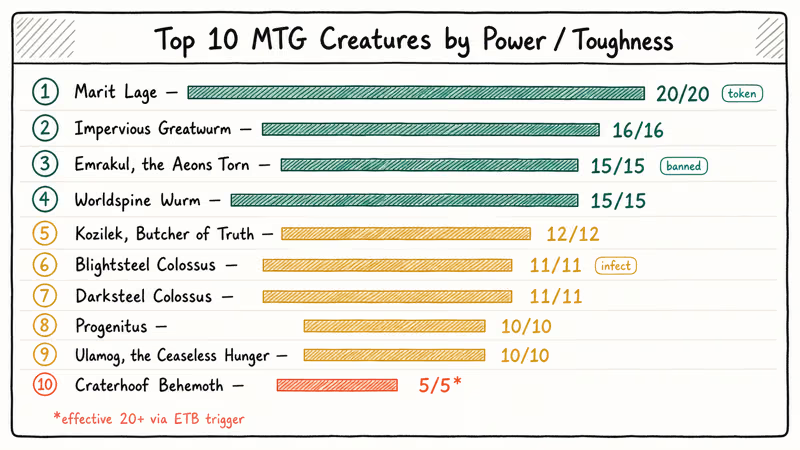
These ten titans cover the largest power-and-toughness numbers across Magic’s history, mixing tokens, cast-able giants, and combo finishers. Scryfall’s database confirms that Marit Lage exists only as a 20/20 black flying, indestructible legendary Avatar token, never as a card you can cast or deck-build with.
#Marit Lage (20/20 Token)
The biggest creature in Magic, full stop. Marit Lage is a 20/20 black legendary Avatar token with flying and indestructible, created by the Dark Depths land. Pair Dark Depths with Vampire Hexmage or Thespian’s Stage to drop the 20/20 directly.
#Impervious Greatwurm (16/16)
Released in Guilds of Ravnica, Impervious Greatwurm is the largest cast-able creature in standard-rotation Magic. Scryfall’s card data confirms that it has 16/16 stats with convoke and indestructible, meaning your existing creatures can tap to pay its 10-mana cost. No evasion is the catch, and a 16/16 can be chump-blocked by tokens forever since Greatwurm has no flying or trample to break through.
#Emrakul, the Aeons Torn (15/15)
The flagship Eldrazi titan from Rise of the Eldrazi (2010). 15/15 with flying, trample, protection from colored spells, annihilator 6, and an extra turn when you cast it from your hand. According to Wizards of the Coast’s banned and restricted announcements, Emrakul is banned in Modern, Legacy, and Commander, with Vintage being the only competitive format where you can play it (restricted to one copy).
#Worldspine Wurm (15/15)
Worldspine Wurm has trample and leaves three 5/5 Wurm tokens when it dies. Even a board wipe leaves you with 15 power on the table.
#Kozilek, Butcher of Truth (12/12)
Annihilator 4 and a “draw four cards when cast” trigger. Kozilek refuels your hand and forces a sacrifice of four permanents per attack.
#Blightsteel Colossus (11/11)
The poster child for one-hit kills. Blightsteel Colossus has trample, infect, and indestructible, and its 11 power deals 11 poison counters as combat damage, more than the 10 needed to lose the game. The only blockers that stop it are creatures with reach or flying that can survive an 11-damage trade. For a deeper look at indestructible artifact creatures, see our breakdown of the best artifact creatures in MTG.
#Darksteel Colossus (11/11)
Blightsteel’s vanilla predecessor from Mirrodin Besieged. Indestructible, trample, and shuffles back into the library if it would hit the graveyard. Strong, but the missing infect keyword makes it slower than Blightsteel in most decks today, especially in formats where 10 poison wins faster than 20 life lost. Most pilots cut Darksteel for Blightsteel as soon as their budget allows, which is why the original sees almost no play in modern reanimator or Show-and-Tell shells anymore.
#Progenitus (10/10)
10/10 with protection from everything and a shuffle-back trigger. Stats matter less here. Protection from everything means damage, removal, counters, and equipment all bounce off. The only reliable answers are sacrifice effects, mass exile (Cyclonic Rift, Farewell), or planeswalker abilities that don’t target.
#Ulamog, the Ceaseless Hunger (10/10)
The Battle for Zendikar version of Ulamog. Indestructible, exiles two target permanents on cast, and mills 20 cards on attack. The exile rider replaces annihilator from earlier Eldrazi, hitting lands and planeswalkers without forcing a sacrifice choice.
#Craterhoof Behemoth (5/5, Effective 20+/20+)
The smallest body on this list earns its spot through an enter-the-battlefield trigger that gives every creature you control +X/+X and trample, where X is the number of creatures you control. In a board with seven creatures plus Craterhoof, every creature swings as a 12-power threat. Mono-green Elf decks built around Craterhoof routinely deal 30+ damage in a single attack.
#How to Land These Creatures on the Battlefield
Mana cost is the gatekeeper for every titan above 8 mana. There are five practical routes to put a giant body on the table.
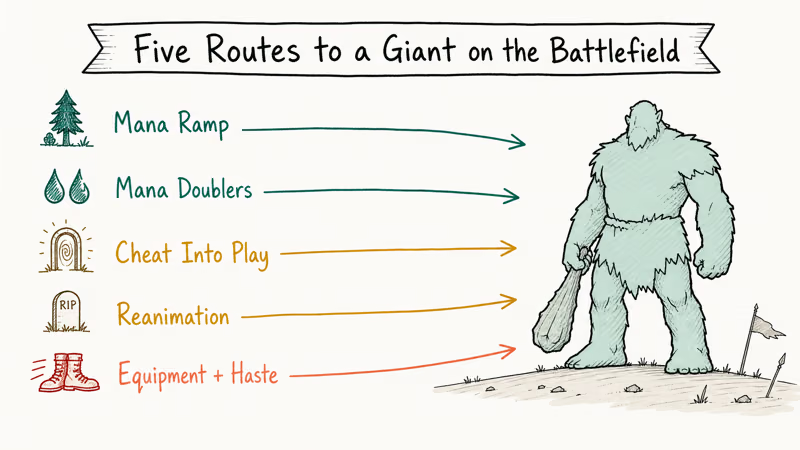
- Mana ramp: Cultivate, Llanowar Elves, Birds of Paradise, and Sol Ring put you 2-4 mana ahead. Best for Worldspine Wurm and Craterhoof, which have reasonable cast costs in green ramp shells. The right land base helps too, which is why we keep the best lands in MTG near every ramp pile.
- Mana doublers: Cabal Coffers, Nykthos, Shrine to Nyx, and Mana Reflection turn one land into many. Pairs naturally with Eldrazi titans, which often need 10+ mana.
- Cheat-into-play effects: Sneak Attack, Show and Tell, Through the Breach, and Elvish Piper bypass mana cost entirely. Most competitive Emrakul decks rely on this route since hard-casting 15 mana is rare in Modern or Legacy.
- Reanimation: Reanimate, Animate Dead, and Goryo’s Vengeance pull a discarded titan back from the graveyard. According to Scryfall’s card data, Reanimate costs only 1 black mana, making it one of the cheapest paths to a 15/15 Emrakul on turn 2.
- Equipment and protection: Lightning Greaves and Swiftfoot Boots give haste and shroud or hexproof, letting your titan attack the turn it lands. For more pieces that protect or accelerate big creatures, see our list of the best equipment cards in MTG.
In casual Commander pods, Sneak Attack lines tend to close games faster than ramp, but only with a haste enabler in the same hand. Without haste, opponents get a full turn cycle to remove the threat with exile spells or board wipes before the swing.
#Strategies for Countering Big Creatures
Big creatures look unbeatable on paper. They aren’t. The cleanest answers fall into three buckets:
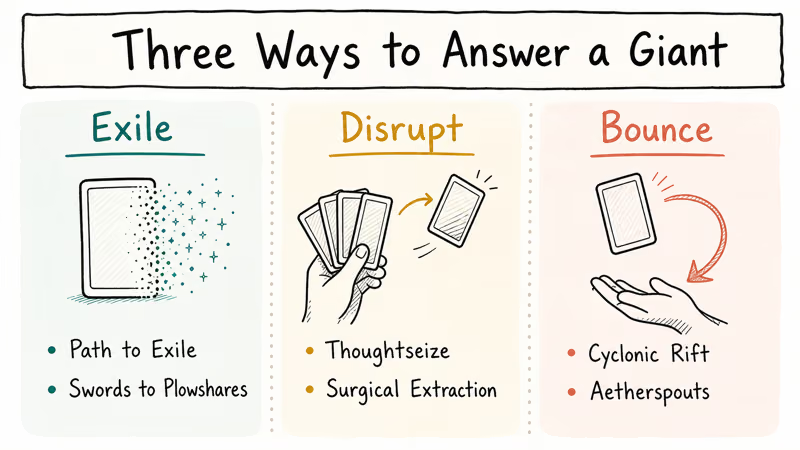
- Exile-based removal: Path to Exile, Swords to Plowshares, and Vanishing Verse remove indestructible threats permanently. Damage spells and -X/-X effects miss against indestructible. Exile is the only universal answer.
- Hand and graveyard disruption: Thoughtseize, Surgical Extraction, and Bojuka Bog break combo lines before the titan hits play. Cheaper than waiting for the 15/15 to arrive.
- Bounce and tuck: Cyclonic Rift and Aetherspouts return creatures to their owners’ hands. A turn cycle of relief is often enough to stabilize, especially in multiplayer Commander.
Counterspells are the highest-percentage answer when you can hold mana up. A turn-1 Force of Will costs zero mana and stops a turn-3 Show and Tell line cold.
#How Has Power Creep Changed MTG Creature Sizes Over Time?
Magic’s earliest sets rarely printed creatures larger than 6/6. Force of Nature from Alpha (1993) is 8/8 but charges 2 green per upkeep, a tax that effectively kills you. Compare that to Craterhoof Behemoth (2012) at 5/5 with no upkeep but a board-wide +X/+X trigger that ends games on the spot.
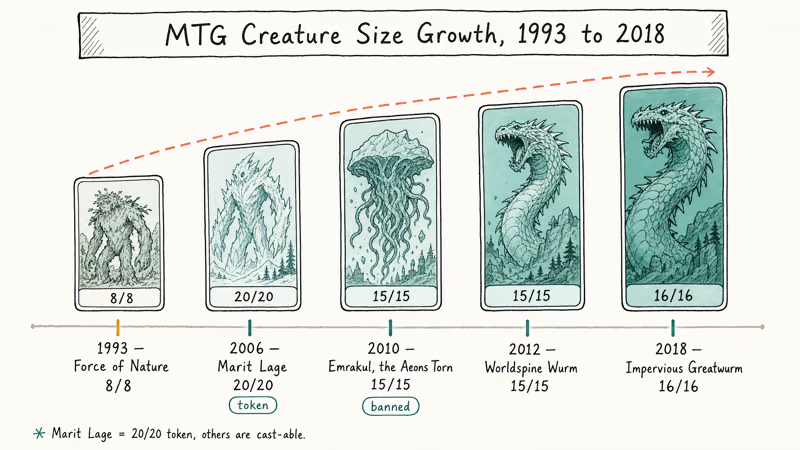
The 2010 Rise of the Eldrazi set marked the inflection point, as covered in the Magic: The Gathering Wikipedia entry. Wizards of the Coast pushed the Eldrazi titans to feel world-ending, with Emrakul at 15 mana for a 15/15 carrying five abilities. Two years later, Worldspine Wurm and Griselbrand pushed Commander further, and by 2018 Impervious Greatwurm hit 16/16 with convoke. Marit Lage’s 20/20 token (printed in 2006 in Coldsnap) has quietly stayed the largest creature in any format since.
Power creep cuts both ways. Modern removal has scaled with creatures: Force of Negation, Endurance, and Solitude are all efficient enough to handle 15/15 threats. The arms race continues. The strongest planeswalkers from the same era often handle these titans without targeting them, and our roundup of the best planeswalkers in MTG covers the answers that side-step indestructible entirely.
#Best Formats for Playing Big Creatures
Not every format welcomes a 15/15 finisher. Pick the right pond before sleeving up your titan.
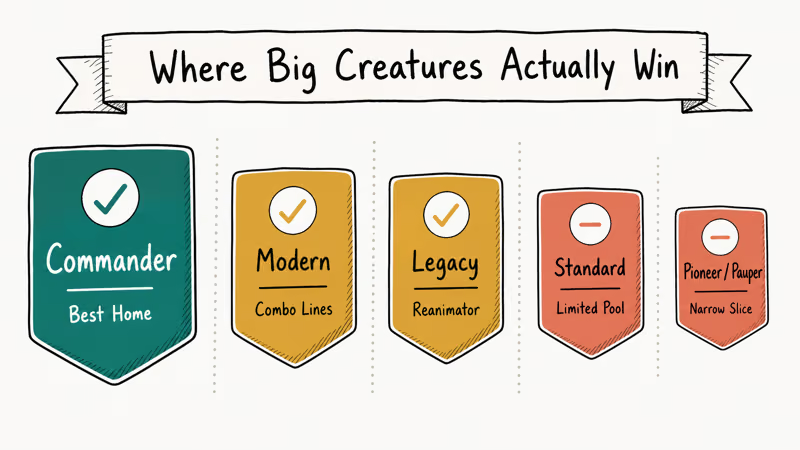
- Commander (EDH): The natural home for big creatures. 100-card singleton decks have plenty of room for ramp pieces, and 40 starting life means a 12-power threat doesn’t always one-shot opponents. Most Eldrazi titans are legal here except Emrakul, the Aeons Torn (banned).
- Modern: Works for combo-flavored decks like Through the Breach Emrakul or Dark Depths/Marit Lage. Hard-casting is rare. Cheat-into-play and combo wins drive the wins.
- Legacy: Reanimator and Show and Tell decks dominate this format’s big-creature plans. Force of Will keeps the format honest.
- Standard: Limited to whichever titans were printed in the last 18-24 months. Standard rarely has the ramp tools to support 10+ mana plays at competitive pace.
- Pioneer / Pauper: Pauper bans most large creatures by default (commons only). Pioneer hosts a small slice of cast-able giants, including Ulamog, the Ceaseless Hunger and Worldspine Wurm.
#Bottom Line
Pick the biggest creature that matches your deck’s mana base. Mono-green ramp builds get more out of Craterhoof Behemoth than Emrakul because they cast Craterhoof on turn 5 with mana left for protection. Reanimator and Show-and-Tell shells lean on Emrakul instead, because they ignore the cast cost entirely. Combo decks around Dark Depths get the 20/20 Marit Lage on turn 2 or 3 with the right opening hand.
Whichever route you pick, keep a Path to Exile or Swords to Plowshares ready for your opponent’s titan first. Exile is the only line that handles indestructible without question.
For more deck-specific MTG guides, see our coverage of the best angel cards for control-and-flying shells.
#Frequently Asked Questions
What is the biggest creature in MTG?
Marit Lage at 20/20 with flying and indestructible. It only exists as a token, not a card you can cast or include in a deck. The Dark Depths land creates Marit Lage when you remove its ten ice counters, which is usually accomplished through Vampire Hexmage or Thespian’s Stage in Modern Lands decks.
Can you cast Marit Lage from your hand?
No. Marit Lage is a token, not a normal card. The only legal way to put Marit Lage onto the battlefield is to remove the last ice counter from a Dark Depths land. Some Commander rulings let you copy it with cards like Sakashima of a Thousand Faces, but you still need an original Marit Lage on the battlefield first.
What is the biggest cast-able creature in MTG?
Impervious Greatwurm at 16/16 with convoke and indestructible, printed in Guilds of Ravnica.
Why is Emrakul, the Aeons Torn banned?
Protection from colored spells, annihilator 6, and the free extra turn when cast combine to make most counterplay useless. According to Wizards of the Coast, Emrakul is banned in Modern, Legacy, and Commander to keep those formats healthy. It remains restricted in Vintage.
How do you beat Blightsteel Colossus?
Exile-based removal works best, with Path to Exile, Swords to Plowshares, and Vanishing Verse all answering Blightsteel cleanly. Damage and destroy effects fail against indestructible. Counterspells are also reliable when you can stop the cheat-into-play spell that brought Blightsteel out, since hard-casting 12 mana is rarely the line. Sacrifice effects like Diabolic Edict, Plaguecrafter, and Geth’s Verdict force Blightsteel into the graveyard even though it’s indestructible, but watch out for the trigger that shuffles it back into the deck.
Are big creatures the best win condition in MTG?
Not always. Aggressive decks often win before turn 5, before any titan hits play. Combo decks like Storm sidestep creature combat and finish the game from the stack. Big creatures excel in slower formats like Commander and casual Modern, where games last long enough to build the mana base and the ramp pieces survive removal.
What’s the difference between Darksteel and Blightsteel Colossus?
Both are 11/11 indestructible artifact creatures with trample. Blightsteel adds infect, which deals damage as poison counters and wins through 10 poison rather than 20 life. Blightsteel also costs 12 mana versus Darksteel’s 11. Most decks pick Blightsteel today because the one-hit-kill is faster than the slow grind to 20.

Fortnite Stuck on the Loading Screen? Fix It in 2026
Fortnite stuck on the loading screen? Check server status, fix the Windows N Media Pack and DirectX 11 on PC, clear the console cache, and verify files.

Minecraft Keeps Crashing? Java and Bedrock Fixes (2026)
Minecraft keeps crashing on startup or mid-game? Update your GPU driver, remove mods on Java, and reinstall Gaming Services on Bedrock. Fixes for both.

Pokemon GO Not Loading? Fix the Loading Screen 2026
Pokemon GO not loading or stuck on the Pokeball? Check server status, fix automatic date and time, grant location permission, clear the cache, and update.
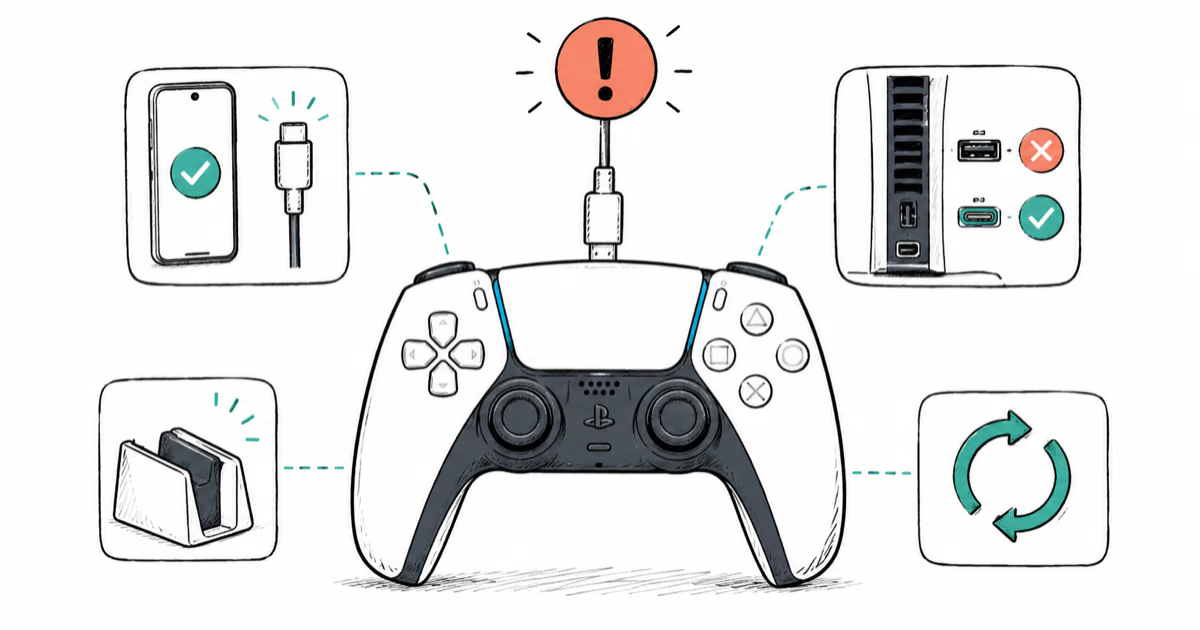
PS5 Controller Not Charging? 9 Fixes That Work (2026)
DualSense not charging? Swap the cable, use a rear port in Rest Mode, clean the USB-C port, and check power settings. 9 fixes for a dead PS5 controller.