10 Best Planeswalker Cards in MTG: Top Magic Picks
The 10 best MTG planeswalker cards ranked: from Jace, the Mind Sculptor and Oko, Thief of Crowns to Teferi and Karn, with format-by-format strategy notes.
Quick AnswerThe strongest MTG planeswalkers are Jace, the Mind Sculptor for card control, Oko, Thief of Crowns for early disruption, and Teferi, Hero of Dominaria for control decks. Each one warps deck-building around its abilities in Modern, Legacy, and Commander.
The best MTG planeswalkers don’t just attack or block. Cards like Jace, the Mind Sculptor, Oko, Thief of Crowns, and Teferi, Hero of Dominaria have been banned, restricted, or tournament-defining in almost every format they’ve touched. This guide ranks the ten planeswalkers every Magic player should know.
- Planeswalkers were introduced in the 2007 Lorwyn expansion and have since become a central card type in nearly every constructed format.
- Oko, Thief of Crowns costs only 3 mana but reaches 6 loyalty on his first turn, which is why he was banned in Standard, Modern, and Pioneer in late 2019.
- Jace, the Mind Sculptor has four abilities at a 4-mana cost and was banned in Standard before later being unbanned in Modern.
- Liliana of the Veil costs 3 mana and forces opponents to discard cards or sacrifice creatures every turn, making her a long-running staple in black-based decks.
- Ugin, the Spirit Dragon’s mass exile ability hits all colored permanents at once, often ending a game on the spot when resolved.
#Why Are Planeswalkers Important in MTG?
A planeswalker is a permanent type that represents a powerful mage who can travel between worlds. According to Wikipedia’s Magic: The Gathering article, the planeswalker card type debuted in Lorwyn in October 2007 with five originals across the five colors.
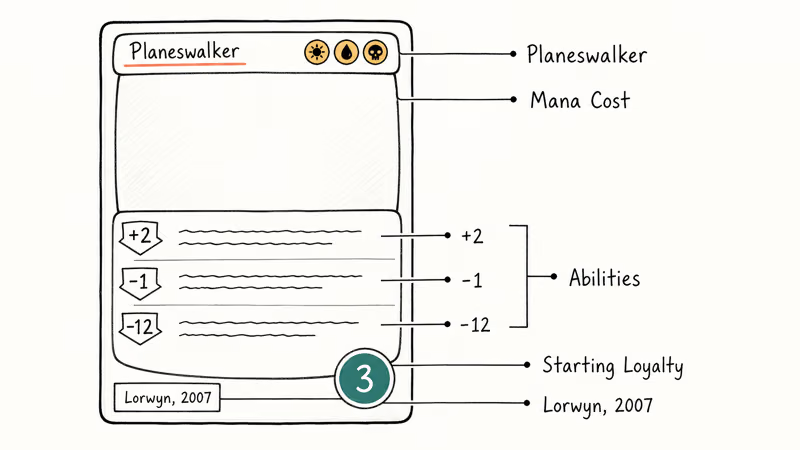
Each one entered the battlefield with a starting loyalty count and gave its controller access to one of two or three abilities per turn.
Today, planeswalkers appear in nearly every constructed format. According to Wizards of the Coast’s banned and restricted list, several of the planeswalkers ranked below have been banned in at least one format because their power level outclassed the rest of the card pool.
When a permanent type forces multiple bannings across formats, you’ve found cards worth understanding deeply.
#How Are These Top Planeswalkers Ranked?
This list weighs three things: format impact, mana efficiency, and how often the card has been banned, restricted, or printed at a price point that signals tournament demand.
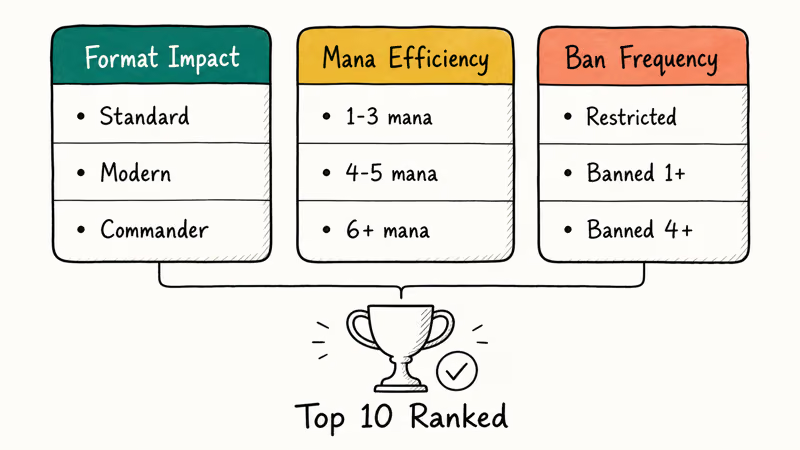
Each entry has an established competitive reputation across Commander, Modern, and Legacy, and the ranking lines up with community lists on EDHREC and Scryfall. The result is a mix of control finishers, midrange disruption, and outright combo enablers.
Every card here has a banning history, a tournament record, or both.
#1. Jace, the Mind Sculptor
Jace, the Mind Sculptor costs four mana and starts with three loyalty. He has four abilities, which is rare for a four-mana planeswalker even today.
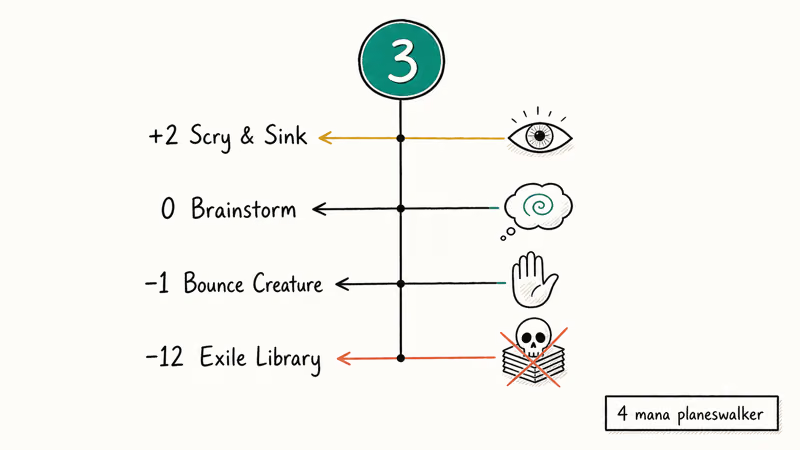
The +2 looks at the top card of an opponent’s library and lets you put it on the bottom; the 0 returns up to two cards from your library to your hand and discards two; the -1 bounces a creature; and the -12 ultimate exiles an opponent’s library entirely. Scryfall’s card page for Jace, the Mind Sculptor shows the card was banned in Standard during its 2010 run and later unbanned in Modern in 2018.
In a five-color Commander deck full of planeswalkers, the +2 quietly steers an opponent’s draws turn after turn, which is the kind of soft lock that wins long games.
#2. Oko, Thief of Crowns
Oko costs three mana and can reach six loyalty on the turn he enters, because his +1 makes a Food token and his +2 turns any creature or artifact into a 3/3 Elk. Most three-mana removal spells can’t kill a six-loyalty planeswalker, so he usually survives at least two turns.
Wizards of the Coast announced on October 21, 2019 that Oko was banned in Standard alongside Field of the Dead, then later banned in Pioneer, Modern, and Legacy.
Four format bans in less than a year is the closest a planeswalker has come to historical bans like Mind Twist or Channel.
In a Bant deck, the +2 alone neutralizes almost any threat by turning it into a 3/3 vanilla creature, no matter what abilities or counters were on it.
#3. Liliana of the Veil
Liliana of the Veil costs three mana and starts with three loyalty.
Her +1 forces both players to discard a card; her -2 forces a target player to sacrifice a creature; her -6 splits all permanents into two piles and lets the opponent choose which pile to keep. Black-red and Jund decks have leaned on her as a midrange disruption piece since her 2011 release.
In a Modern Jund list, Liliana pairs with Thoughtseize and Inquisition of Kozilek to strip an opponent’s hand early, and her repeatable discard keeps the pressure on after the one-shot spells are gone.
The card’s edict effect doesn’t care about hexproof or shroud. If you build a Modern control deck with discard pressure, she earns a slot.
#4. Teferi, Hero of Dominaria
Teferi costs five mana, has four loyalty, and three abilities that all push the game toward control’s win condition. The +1 draws a card and untaps two of your lands. The -3 exiles a target nonland permanent. The -8 grants an emblem that exiles every opponent’s nonland permanent at the start of your upkeep.
Scryfall’s card page for Teferi, Hero of Dominaria records that the card was banned in Standard in October 2019 and remains a staple in Commander control lists.
The untap clause is what makes him difficult to play around. The card effectively costs two mana on the turn it enters, because two lands come back ready to hold counterspells.
A single Teferi can swing a long match in an Izzet commander pod by holding open removal every turn while still drawing cards.
#5. Karn Liberated
Karn Liberated costs seven colorless mana and starts at six loyalty. His +4 forces an opponent to exile a card from their hand; his -3 exiles any permanent; his -14 restarts the game with everything Karn has exiled placed under his controller’s permanent zone.
He was the engine of the old Tron archetype in Modern, where Urza’s Tower, Mine, and Power Plant produced seven mana on turn three.
Wizards’ comprehensive rules document covers the start-the-game-over mechanic in section 716, and that ruling is what makes Karn’s ultimate one of the most decisive single-card outcomes in the game.
Karn’s -3 removes hard-to-answer artifact creatures like Wurmcoil Engine without trading two cards for one.
#6. Ugin, the Spirit Dragon
Ugin costs eight colorless mana and starts at seven loyalty.
His +2 deals three damage to any target creature or player. His -X exiles every nonland permanent with converted mana cost X or less, except Ugin himself. His -10 gains seven life, draws seven cards, and puts up to seven permanents from your hand onto the battlefield.
The middle ability is the one that ends games. Pointing -X at six against a board full of cheap threats wipes everything in one click, including the biggest creatures opponents have been ramping into all game.
According to Scryfall’s Ugin page, the card sits among the most-played colorless planeswalkers in EDH.
#7. Wrenn and Six
Wrenn and Six is a two-mana planeswalker with three loyalty and two repeatable abilities. The +1 returns a land card from your graveyard to your hand; the -1 deals one damage to any target; the -7 emblem grants every instant and sorcery in your graveyard retrace.
Wrenn and Six is banned in Legacy because the +1 generates infinite card advantage with fetch lands, which most Legacy decks already play.
In a Modern Temur Cascade deck, the +1 reliably refills fetch lands across long games while the -1 shuts down Goblin Guide and other one-toughness creatures.
The card’s two-mana cost is what makes it dangerous. It’s almost always live to play on turn two.
#8. Nissa, Who Shakes the World
Nissa, Who Shakes the World costs five mana, four of which must be green, and starts at five loyalty.
Her static ability adds an extra green mana every time you tap a Forest. Her +1 turns a target land into a 3/3 Elemental creature with haste and vigilance until end of turn. Her -8 puts an emblem onto the battlefield that makes lands indestructible and lets you find any number of Forest cards from your library.
In a green ramp deck running Nissa alongside the best mana lands, her Forest-doubling static ability quickly snowballs into enough mana to hard-cast Emrakul or any other expensive finisher without skipping a turn.
Wizards’ Throne of Eldraine ban announcement doesn’t ban Nissa, but the same ban window confirmed that the green ramp shell she anchored was warping Standard at that time.
#9. Gideon, Ally of Zendikar
Gideon, Ally of Zendikar costs four mana, has four loyalty, and turns into a 5/5 indestructible Knight Ally creature with one click.
Because the indestructible clause kicks in only on the turn he attacks, you can swing for five damage and prevent any combat damage in return. His +1 creates a 2/2 Knight Ally token, and his ultimate grants an emblem that pumps every creature you control with +1/+1.
In a White Weenie deck, Gideon closes games fast: he attacks as a 5/5 the turn he lands, builds a board of Knight tokens, and his emblem pumps the whole team for the final swing.
#10. Sorin Markov
Sorin Markov costs six mana, four of which must be black, and starts at four loyalty.
His +2 deals two damage to any target and gains you two life; his -3 sets a target opponent’s life total to ten; his -7 takes control of an opponent during their next turn, letting you make every decision they would make.
Sorin shines in Commander, where the -3 turns a 40-life starting total into a much shorter game.
The -7 mind-control effect is mostly a meme outside of long four-player games, but it does win matches when an opponent is one card from a game-ending land combo.
#Bottom Line
If you only build one deck around a single planeswalker, make it Jace, the Mind Sculptor in a Modern blue control shell or Liliana of the Veil in a Modern Jund list.
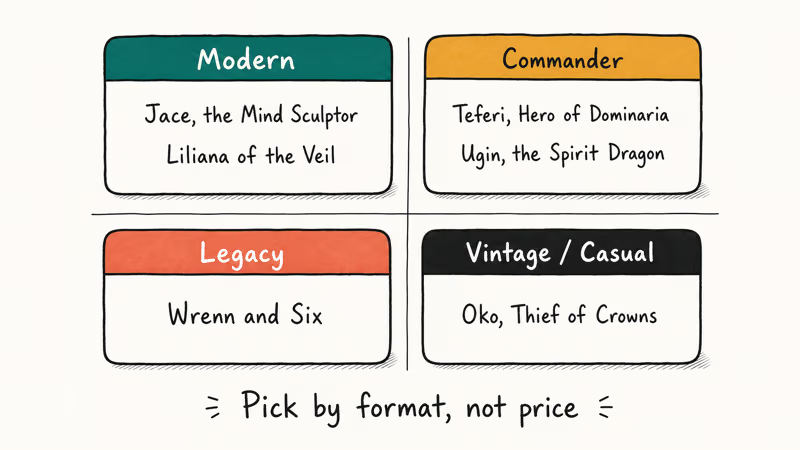
Both stay legal in Modern with strong tournament records.
Oko is stronger card-for-card, but his banning across Standard, Pioneer, Modern, and Legacy means you’re limited to Vintage or kitchen-table play. For Commander, Teferi and Ugin are the two safest picks because they sit in nearly every color identity that wants control or ramp.
Build around the planeswalker that fits the format you actually play, not the one with the highest dollar price.
#Frequently Asked Questions
Who is the strongest planeswalker in MTG?
Jace, the Mind Sculptor is widely regarded as the most powerful planeswalker ever printed because of his four abilities at four mana. Oko, Thief of Crowns is the most banned, with format bans in Standard, Pioneer, Modern, and Legacy.
Are any planeswalkers banned in Commander?
Yes. Oko, Thief of Crowns and a small number of other cards have been banned in Commander by the Rules Committee. Always check the official Commander banned list before building, because the list updates roughly twice a year and tends to lag behind Standard bans.
How many planeswalkers can I have in my deck?
Up to four copies of any single planeswalker in 60-card constructed.
What does the planeswalker uniqueness rule mean?
If you control two planeswalkers with the same name, you must put one into the graveyard. The rule applies to the planeswalker’s name, not the subtype, so two different Lilianas can sit on the battlefield at the same time.
Can a planeswalker block creatures?
No. Planeswalkers can’t block, but creatures can attack them as if they were players. If a creature damages a planeswalker, the planeswalker loses loyalty equal to that damage. Low-loyalty planeswalkers like Liliana of the Veil need protection from fast aggro decks for this reason.
Are old planeswalkers worth buying for new players?
Most older planeswalkers are not Standard-legal, so they’re useful only in eternal formats.
What’s the difference between a planeswalker’s loyalty and a creature’s toughness?
Loyalty works like a separate life total. Each ability either adds or subtracts loyalty, and a planeswalker dies if its loyalty hits zero. Combat damage to a planeswalker reduces loyalty, but you can also activate negative-loyalty abilities to spend loyalty for effects, which is the core of how planeswalkers create value over time.
Does sideboarding affect planeswalker choice?
Yes. Sideboard slots in Modern and Legacy often include cheap removal like Pithing Needle, which shuts off planeswalker abilities entirely without targeting the planeswalker itself. A single Pithing Needle naming Karn Liberated can effectively neutralize a Tron deck for the rest of a match. Plan your planeswalker pick around the format’s most common sideboard answers.

Fortnite Stuck on the Loading Screen? Fix It in 2026
Fortnite stuck on the loading screen? Check server status, fix the Windows N Media Pack and DirectX 11 on PC, clear the console cache, and verify files.

Minecraft Keeps Crashing? Java and Bedrock Fixes (2026)
Minecraft keeps crashing on startup or mid-game? Update your GPU driver, remove mods on Java, and reinstall Gaming Services on Bedrock. Fixes for both.

Pokemon GO Not Loading? Fix the Loading Screen 2026
Pokemon GO not loading or stuck on the Pokeball? Check server status, fix automatic date and time, grant location permission, clear the cache, and update.
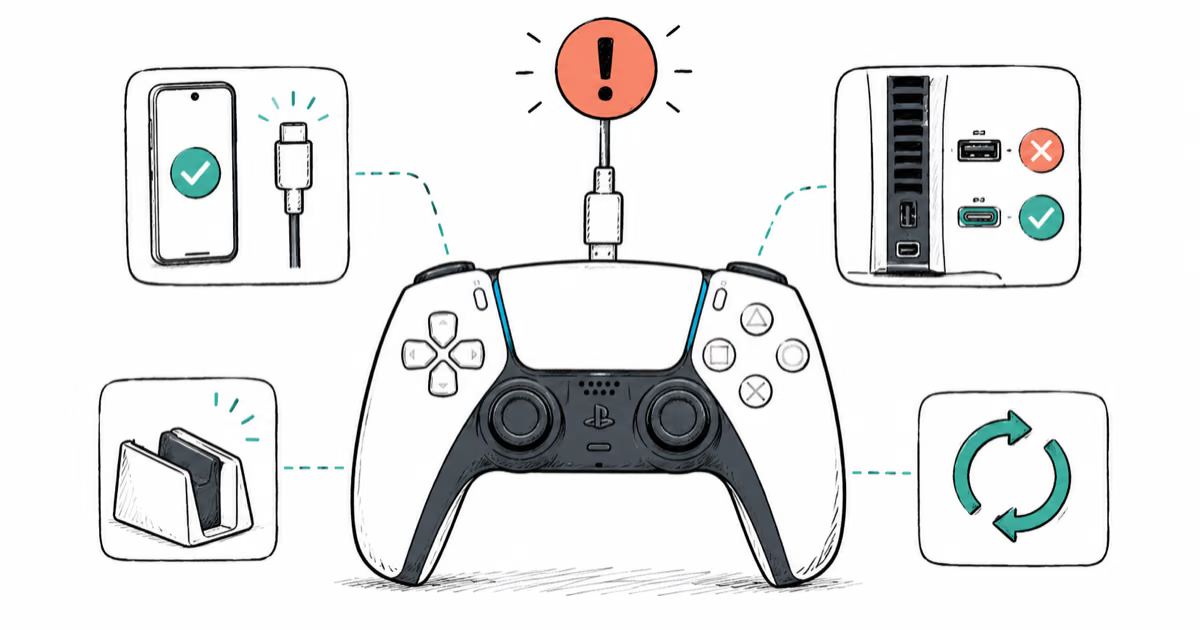
PS5 Controller Not Charging? 9 Fixes That Work (2026)
DualSense not charging? Swap the cable, use a rear port in Rest Mode, clean the USB-C port, and check power settings. 9 fixes for a dead PS5 controller.