10 Best Land Cards in MTG: Top Magic Lands for Decks
The 10 best MTG land cards ranked: from Tolarian Academy and Field of the Dead to Maze's End, with strategy notes for Commander and competitive play.
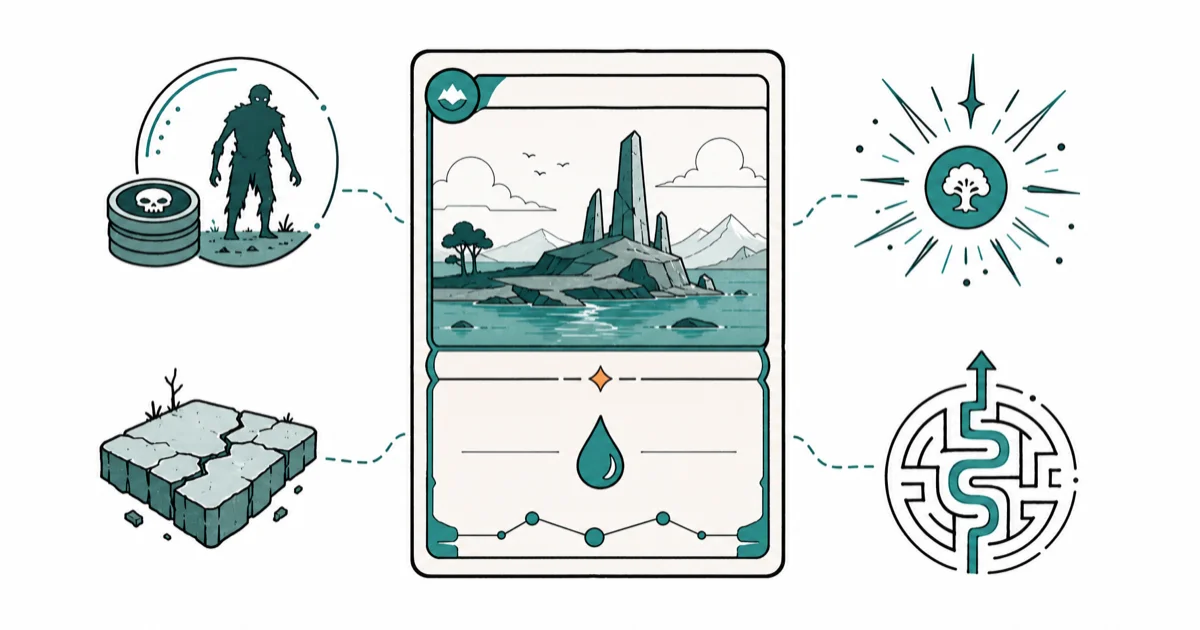
Quick AnswerThe best MTG land cards include Tolarian Academy for explosive blue mana from artifacts, Field of the Dead for endless zombie tokens, and Strip Mine for destroying any land an opponent plays. Each entry on this list defines or warps entire deck strategies in Commander, Legacy, and Vintage.
The best MTG land cards do far more than tap for mana. Lands like Tolarian Academy, Field of the Dead, and Strip Mine warp entire formats around their abilities and decide which deck archetypes get to exist at all. Only a handful of lands rank as truly format-defining. This guide covers the ten you should know.
- Tolarian Academy is widely considered the most powerful land ever printed; it’s restricted in Vintage and banned in both Legacy and Commander.
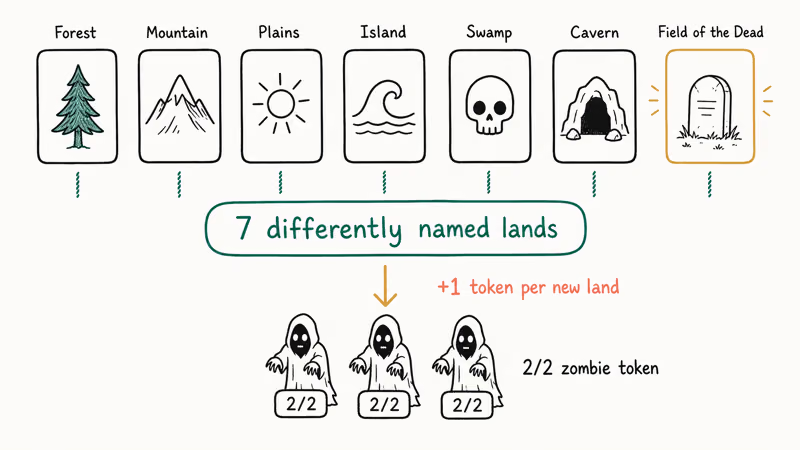
- Field of the Dead generates a 2/2 zombie token whenever a new land enters play, as long as you control seven or more differently named lands.
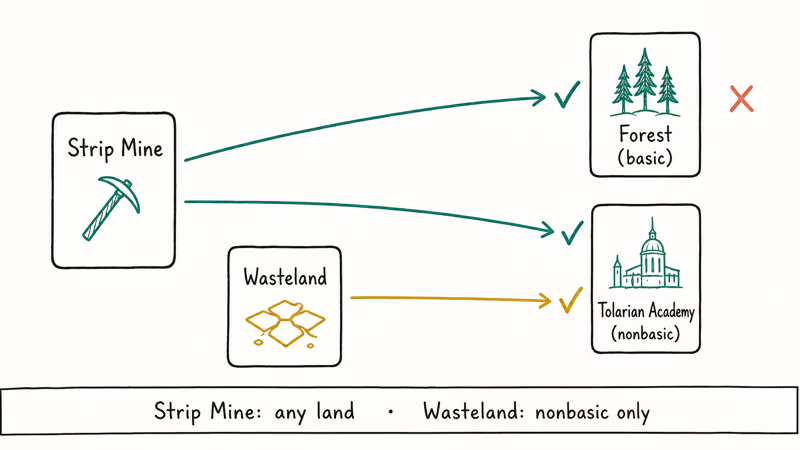
- Strip Mine is strictly stronger than Wasteland because it can destroy any land, including basics, while Wasteland only hits nonbasic lands.
- Maze’s End is one of the few lands that wins the game outright, triggering when you control all ten Ravnican gate lands at the same time.
- City of Brass taps for any of the five colors at the cost of one life per use, making it the gold standard for five-color mana fixing.
#Why Are Lands So Important in MTG?
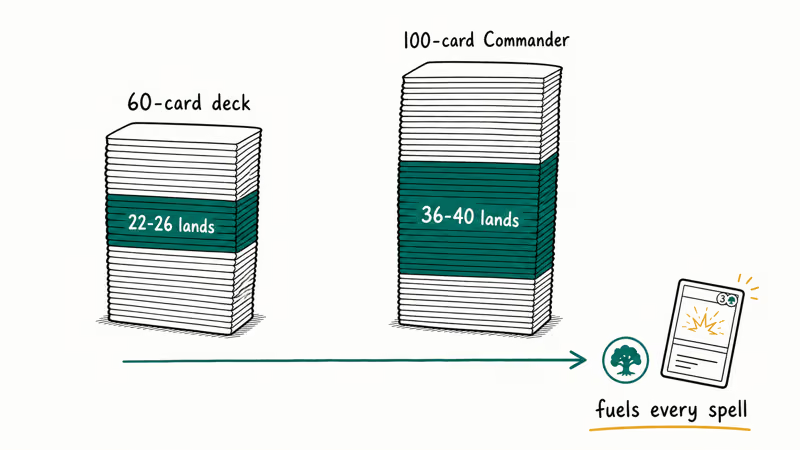
Lands are the engine that powers every other card in your deck. Without mana, you can’t cast spells, summon creatures, or activate most abilities. A typical 60-card deck runs 22 to 26 lands, and Commander decks usually run 36 to 40. According to Wikipedia’s article on Magic: The Gathering, the game launched in 1993 and has printed over 25,000 unique cards since release, but only a tiny fraction ever earn the “land that defines a format” label.
Some lands are so strong they get banned. According to Wizards of the Coast’s banned and restricted list, several of the lands ranked below are restricted or banned in tournament-legal formats. The official designation is the clearest sign you’ve found a top-tier card.
#How Did We Choose These Top Lands?
This ranking focuses on three things: format-defining impact, raw power level, and how often each land changes the way a deck is built. It also considers community rankings on EDHREC and the official Scryfall database.
The result is a mix of combo enablers, control-deck staples, and outright win conditions. Every land here has shaped how the game is played at some level.
#1. Tolarian Academy
Tolarian Academy taps to produce blue mana equal to the number of artifacts you control. In a deck built around cheap artifacts, that math snowballs into double-digit mana on turn three or four, which is why so many infinite combos rely on it. Anyone who’s played a Storm or artifact-heavy deck has felt the swing the moment this land hits the table.
The card is too strong for fair play. Tolarian Academy is restricted in Vintage and banned in Legacy and Commander, which is the same banning tier as the Power Nine. When a card breaks Vintage, the format that allows almost every powerful card ever printed, you’ve found something special.
Artifact-heavy Sai, Master Thopterist builds before the Commander ban show why Academy was so dangerous: cheap artifacts can turn it into a huge blue-mana engine very early.
#2. Field of the Dead
Field of the Dead is a colorless land that produces a 2/2 zombie token whenever another land enters the battlefield, as long as you already control seven or more differently named lands. In a format where ramp spells like Cultivate and Scapeshift see constant play, that quickly turns into a board full of free creatures.
According to Wizards’ banned-and-restricted announcement from October 21, 2019, Field of the Dead was banned in Standard alongside Oko, Thief of Crowns because of its dominance in tournament play. Commander hasn’t banned it. Green ramp decks still include it as a finisher.
Any deck can run it. Ramp lists chain it with Scapeshift; goblin tribal builds feed it a flood of token creatures.
#3. Strip Mine
Strip Mine is the colorless land that destroys any other land. Tap it, sacrifice it, and you can target any land your opponent controls, including basics. That single line of text is what separates Strip Mine from its weaker cousin Wasteland, which only hits nonbasic lands.
Strip Mine has a long history of restriction. Scryfall’s card page for Strip Mine shows the land was a 4-of staple in the earliest professional Magic events of 1996 and remains a key tool in Legacy decks that need to disrupt opposing manabases. A single Strip Mine can shut down combo decks that depend on lands like Tolarian Academy, buying enough time for normal threats to matter.
If you only run one land destruction effect in a Commander deck, this is the one.
#4. Maze’s End
Maze’s End is one of the few cards in MTG that wins the game outright. Pay one mana, tap it, and if you control one each of the ten Ravnican gate lands, you win on the spot.
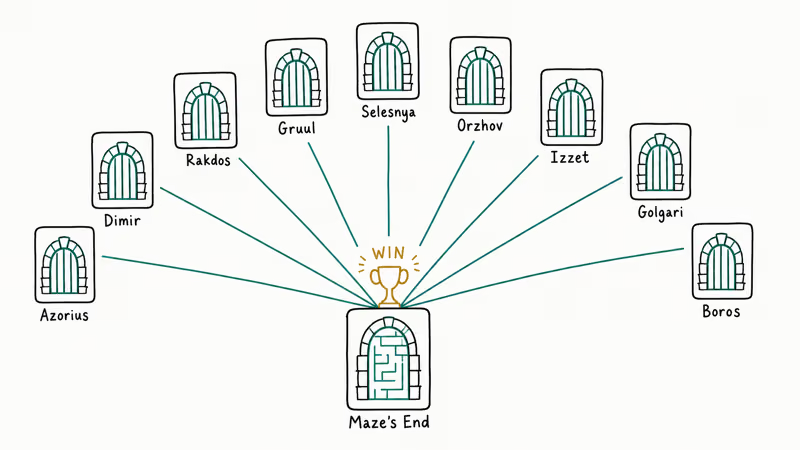
The card appeared in the original Dragon’s Maze set and has appeared in nearly every Ravnica return since, which keeps the gate count high enough to support the strategy. The strategy is slow but resilient. Once you assemble the gates, opposing decks need land destruction to break the lock, and most decks don’t run enough of it to matter. Cards like Gates Ablaze and Gatecreeper Vine make Maze’s End decks competitive in casual play and even in slower control formats.
It’s one of the few decks that lets you ignore your opponent’s life total entirely.
#5. Rishadan Port
Rishadan Port taps for one colorless mana, which by itself is unremarkable. The reason it’s on this list is its second ability: pay one mana and tap it to tap any other land your opponent controls. In a Legacy or Vintage manabase, that single-mana tax can lock an opponent out of a key color for entire turns.
Scryfall’s ruling for Rishadan Port confirms that the activation doesn’t deal damage and doesn’t prevent untapping during the next untap step. That’s the technical reason the effect feels so frustrating to play against. Multiple Rishadan Ports in a Death and Taxes mirror can keep both players short on usable mana for several turns.
The card’s expensive in dollar terms, but its colorless identity means any deck that wants disruptive mana denial can run it.
#6. City of Brass
City of Brass taps for one mana of any color. The catch is that it deals one damage to its controller every time it taps. In a five-color Commander deck stuffed with planeswalkers, the trade-off is a bargain. You spend a few life points across a long game in exchange for the most reliable mana fixing in the game.
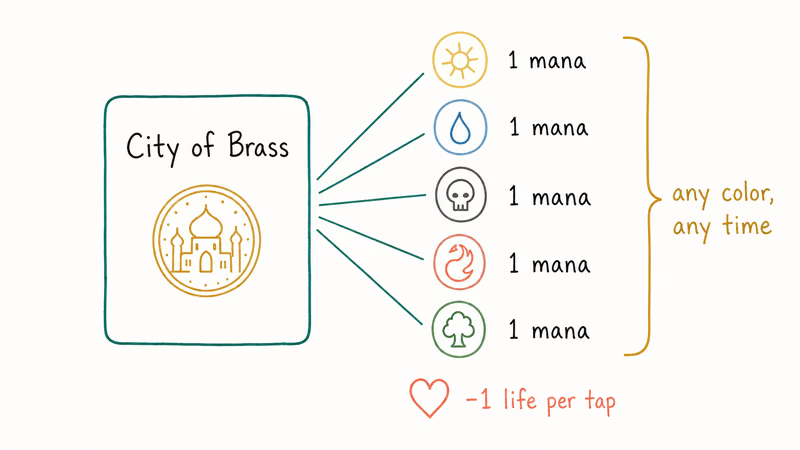
The card’s been reprinted in nearly every era of Magic, from Arabian Nights through Modern Horizons, which means it’s widely available. It’s the original “any color, any time” land, and it still holds up against newer alternatives like Mana Confluence and the shock lands.
Decks that gain incidental life from sources like Soul Warden or Aetherflux Reservoir can effectively zero out the damage. For aggressive five-color builds racing the clock, the one damage rarely matters.
#7. Library of Alexandria
Library of Alexandria taps for one colorless mana, but its second ability is what made it famous: tap to draw a card, but only if you have exactly seven cards in hand. Card advantage that costs no mana is one of the strongest effects in the game.
The seven-card requirement is easier to meet than it looks. Land drops, draw spells, and discard outlets all keep your hand within range, and a single activation per turn quickly pulls you ahead of any deck that isn’t also drawing extra cards. Library of Alexandria is on the Commander banned list and restricted in Vintage.
The card is a piece of MTG history. It was originally printed in Arabian Nights in 1993 and remains one of the most expensive Magic cards in the secondary market.
#8. Field of Ruin
Field of Ruin works in a similar space to Strip Mine but with a different cost structure. Pay two mana and sacrifice it to destroy any nonbasic land, and both you and the targeted player search for a basic land. It’s symmetric, but in decks that already run a lot of basics, the trade is heavily one-sided in your favor.
Field of Ruin is unrestricted in every format and sees constant play in Modern decks like Tron and Death and Taxes. The fact that it replaces itself with a basic means you don’t lose a land drop, which is what separates it from Strip Mine in slower formats. It’s especially useful against decks that depend on lands like Cavern of Souls.
#9. Crawling Barrens
Crawling Barrens taps for colorless mana and can be activated to add +1/+1 counters to itself and turn into a 0/0 creature. Each activation costs four mana and adds two counters.
A single Crawling Barrens can grow into a serious clock in a slow control deck. The card pairs especially well with proliferate effects and counters-matter decks, and it dodges many creature-removal spells because it’s a land most of the time.
It’s more flexible than older man-lands like Mishra’s Factory because it has no color requirement and scales with how much mana you can pour into it.
#10. Arch of Orazca
Arch of Orazca taps for one colorless mana. Its activation costs five mana and lets you draw a card, but only if you have the City’s Blessing, which means you control at least ten permanents. Slow formats hit that threshold easily.
Arch of Orazca’s appeal is that it sits in your deck as a free emergency mana sink. Once the game stalls and you have no spells worth casting, the activation gives you raw card draw at instant speed in any color. It works in any Commander deck and slots into Izzet control builds without disrupting the manabase.
The card came out of Rivals of Ixalan in 2018 and remains one of the cleanest utility lands printed in the modern era.
#Bottom Line
If you can only afford one land from this list for a competitive Commander pod, buy Strip Mine first. Its ability to remove any opposing land for two mana solves more game-state problems than any other single card here, and it’s legal in every format that matters for casual play.
For Vintage or Legacy artifact combo, Tolarian Academy is the only correct answer. Field of the Dead is the cheapest pickup of the three and the best entry point for green ramp Commander decks.
#Frequently Asked Questions
How many lands should I include in my MTG deck?
Standard 60-card decks run 22 to 26 lands; Commander decks (100 cards) run 36 to 40.
Are fetch lands worth the investment?
Fetch lands like Polluted Delta and Wooded Foothills are expensive but provide deck-thinning and consistent fixing for multicolor decks. If you play competitive Modern, Legacy, or Commander, fetch lands pay off across hundreds of games. For casual kitchen-table play, basic lands and tap lands are usually enough.
Can utility lands replace basic lands in any deck?
Utility lands work best when they fit your deck’s strategy. A mono-color aggro deck doesn’t need Maze’s End, and a five-color Commander deck doesn’t benefit from Crawling Barrens the same way a control deck does. The rule of thumb is to keep your basic land count high enough to cast your colored spells on time, then add utility lands for free upside.
Do man-lands like Crawling Barrens still see competitive play?
Yes. Man-lands remain popular in formats with heavy removal because creatures that are also lands survive most board wipes. Modern decks like Murktide Regent and Legacy decks like Death and Taxes have used Mishra’s Factory and Mutavault for years for this reason.
Is Tolarian Academy still legal anywhere?
Tolarian Academy is restricted in Vintage. It’s banned in Legacy and Commander.
Why is Maze’s End so hard to disrupt?
Maze’s End wins the game from the land row, so opponents need land destruction or an alternate win condition to stop it. Most decks don’t run more than one or two pieces of land destruction, and the Maze’s End deck typically draws into more gates faster than opponents can pick them off. The deck also runs gate-themed protection and counterspells to stall opponents long enough to assemble all ten gates.
Are these lands legal in Commander?
Most are legal: Strip Mine, Maze’s End, Field of the Dead, Field of Ruin, Crawling Barrens, City of Brass, Rishadan Port, and Arch of Orazca all see Commander play. Tolarian Academy and Library of Alexandria are banned in Commander as of the official Commander Rules Committee list.
What budget alternatives exist for these lands?
Field of Ruin replaces Strip Mine for under a dollar. Caves of Koilos, City of Brass’s spiritual sibling, costs a fraction of City of Brass and offers similar fixing. Reliquary Tower stands in for Library of Alexandria’s “draw with a full hand” effect at a fraction of the price.

Fortnite Stuck on the Loading Screen? Fix It in 2026
Fortnite stuck on the loading screen? Check server status, fix the Windows N Media Pack and DirectX 11 on PC, clear the console cache, and verify files.

Minecraft Keeps Crashing? Java and Bedrock Fixes (2026)
Minecraft keeps crashing on startup or mid-game? Update your GPU driver, remove mods on Java, and reinstall Gaming Services on Bedrock. Fixes for both.

Pokemon GO Not Loading? Fix the Loading Screen 2026
Pokemon GO not loading or stuck on the Pokeball? Check server status, fix automatic date and time, grant location permission, clear the cache, and update.

PS5 Controller Not Charging? 9 Fixes That Work (2026)
DualSense not charging? Swap the cable, use a rear port in Rest Mode, clean the USB-C port, and check power settings. 9 fixes for a dead PS5 controller.