MacBook Pro Not Charging? 9 Fixes Before You Call Apple
MacBook Pro not charging? Run these 9 safe checks in order, from cable swap to SMC reset, before paying for repair. Most fixes finish in 20 minutes.
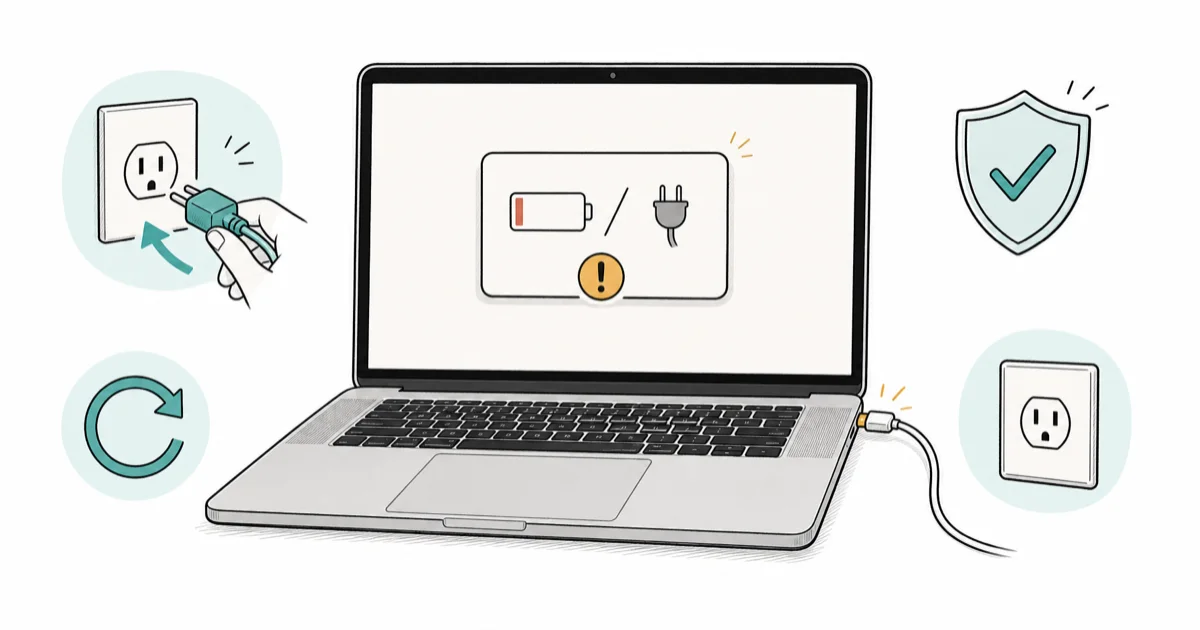
Quick AnswerPlug your MacBook into a known-good Apple USB-C charger for 15 minutes and try a different wall outlet. If the battery icon still shows Not Charging, reset the SMC on Intel MacBooks or hold the power button for 30 seconds on Apple Silicon Macs.
A MacBook Pro that won’t charge is rarely a dead MacBook Pro. Most “not charging” cases come down to a bad cable, a wrong-wattage adapter, or lint in the USB-C port that any owner can catch in 20 minutes.
Order matters more than people expect. Start with the lowest-risk checks, work upward only if nothing changes, and stop the second you see a charging icon, so you don’t trade a $20 cable swap for a $600 logic-board repair chasing a problem that’s already fixed. Each step below is ordered from cheapest and safest to most invasive, and most readers never reach the bottom of the list.
- A damaged cable or under-spec USB-C adapter is the most common cause of a MacBook Pro that won’t charge, so verify your charger output before assuming the battery has failed
- Resetting the SMC clears stuck power states on Intel MacBooks (T2 models hold Control plus Option plus Shift plus the power button for 7 seconds), but it does nothing on Apple Silicon Macs
- Apple Silicon MacBooks (M1, M2, M3, M4) have no separate SMC, so a 30-second power-button hold is the universal reset on those models
- macOS shows “Service Recommended” under System Settings, Battery, Battery Health when the battery has reached the end of its useful life and a software reset won’t extend it
- Run a Time Machine backup before any in-place macOS reinstall, and stop and book Apple if you smell burned electronics or see a swollen battery
#Start With the Cable, Adapter, and Outlet
Before any reset, eliminate the simplest failures. Many “not charging” MacBooks are fixed by swapping in a different cable from the same lineup, with no software steps required.
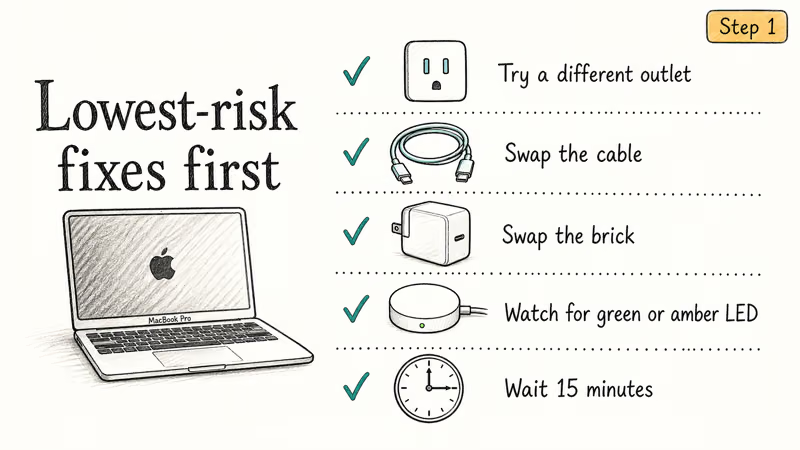
- Unplug everything except the charger
- Try a different wall outlet, never a power strip on the first attempt
- Swap the cable, then swap the brick, in that order
- Watch for a green or amber LED on the MagSafe connector if your model has one
- Leave the Mac on a known-good charger for at least 15 minutes before deciding it’s dead
A USB-C charger that’s underpowered will plug in but never push enough wattage to charge under load. According to Apple’s USB-C adapter compatibility guide, the 13-inch MacBook Air needs at least a 30W adapter and the 14-inch MacBook Pro needs at least 67W, so a smaller phone or iPad brick can register as connected without actually charging the battery.
If your charger looks fine but the Mac is unresponsive in every other way, the issue may not be the charging circuit. Our walkthrough on MacBook not turning on covers the power-cycle path that comes before any charging diagnosis.
#Why Is My MacBook Pro Plugged In But Not Charging?
A plugged-in Mac that says “Not Charging” in the menu bar usually means one of four things:
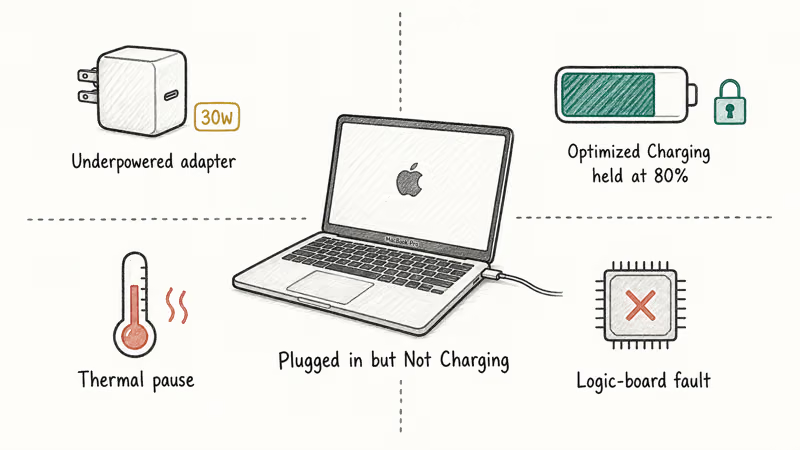
- The adapter is connected but underpowered for your current workload, so the battery isn’t draining but it isn’t gaining either
- macOS Optimized Battery Charging is deliberately holding the charge at 80% to protect long-term battery life
- The Mac is hot enough that it has paused charging to keep the cells safe
- The charging circuit on the logic board has failed and needs Apple service
The first three are software or environmental. Fix the condition, then retest.
If the Mac is hot to the touch, set it on a hard surface (not a couch cushion or duvet) and let it cool for 20 minutes before retesting. Even a perfectly healthy battery will refuse to charge above the thermal cutoff that Apple builds into every model, and Activity Monitor can confirm whether CPU load is keeping the machine too warm.
For a model-agnostic pass that separates normal pauses from real faults, see the MacBook Not Charging status checklist while powered.
#Clean the USB-C or MagSafe Port
Pocket lint, dust, and oxidation block contact more often than people expect. On a MacBook that has spent months in a backpack, a couple of seconds of compressed air can dislodge a wad of fabric debris and bring the charge LED back on immediately.
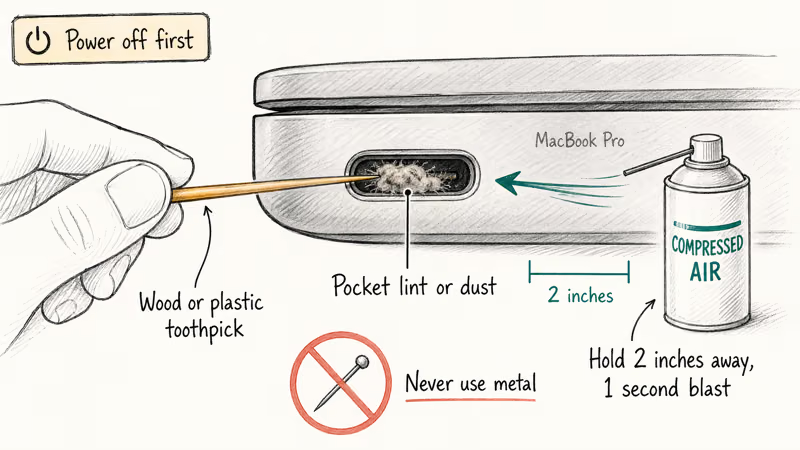
To clean a port safely:
- Power down the Mac before inspecting any port
- Look inside with a flashlight before touching anything; you’re looking for fluff, not damage
- Use a wooden or plastic toothpick to gently lift visible debris (never metal)
- Finish with a one-second blast of compressed air held about two inches away
- Inspect the cable connector itself for the same kind of debris
Avoid cotton swabs, which leave fibers behind, and avoid any liquid. If the port looks black, scorched, or warped, stop and book Apple. A failed USB-C port can be replaced as part of a top-case service and costs much less than the logic-board damage that comes from forcing a connector. If a separate USB device starts triggering the USB accessories disabled warning on the same port, that’s a strong signal the port is the problem, not the charger.
#Check Battery Health Before Any Reset
macOS keeps the wear data Apple’s diagnostics use, and you can read it in 30 seconds.
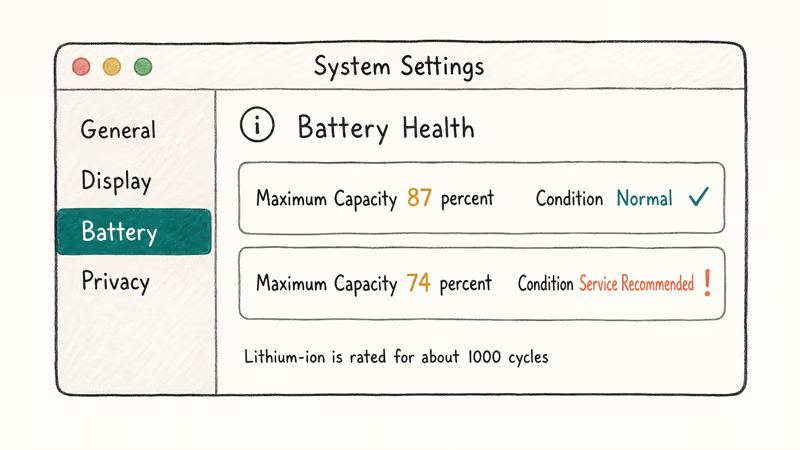
- Open the Apple menu and pick System Settings
- Click Battery in the sidebar
- Click the i next to Battery Health
- Look for Maximum Capacity and Condition
If Condition reads Service Recommended or Service Battery, the battery has reached the end of its useful life and no reset will help. Lithium-ion MacBook batteries are designed for around 1,000 full charge cycles before macOS flags them for service, and once that warning appears, kernel tweaks and third-party utilities can’t extend the life. Only a battery replacement will.
We’ve covered the next steps if you see that warning in our MacBook Pro service battery warning walk-through. If Maximum Capacity is below 80% but Condition still reads Normal, the Mac will still charge, just to a lower ceiling.
#Reset the SMC (Intel MacBooks Only)
The System Management Controller handles power, fans, and battery on Intel Macs. Resetting it clears stuck states that block charging. This step does nothing on M1, M2, M3, or M4 MacBooks, because Apple Silicon handles SMC duties inside the main chip.
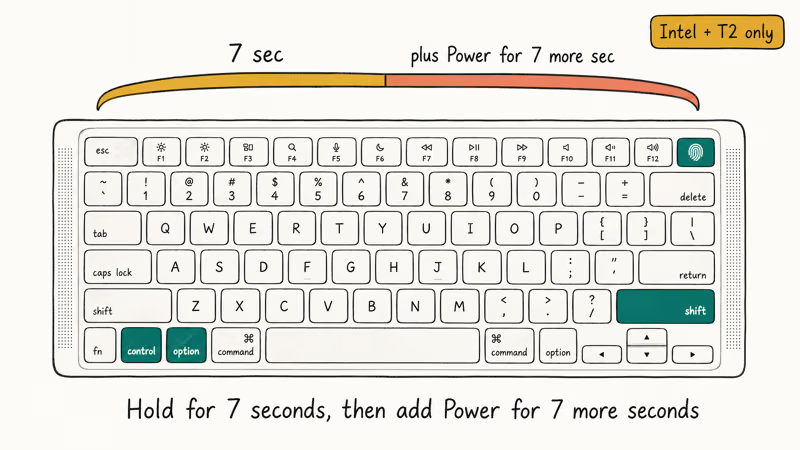
For Intel MacBooks with the T2 Security Chip (2018 and later):
- Shut down the Mac
- Press and hold Control + Option (left side) + Shift (right side) for 7 seconds
- Keep holding those keys and add the power button for another 7 seconds
- Release everything and wait a few seconds
- Press the power button to start up
For older Intel MacBooks without the T2 chip:
- Shut down the Mac
- Press Shift + Control + Option (all on left side) + power button at the same time
- Hold for 10 seconds
- Release everything, then press the power button to start up
According to Apple’s 2-step SMC reset documentation, T2 MacBooks need 7 seconds on Control, Option, and Shift, then 7 more seconds with the power button added. On an Intel MacBook stuck at 0% with the charger plugged in, the T2 reset often clears the stuck state and charging resumes right away.
#Force-Restart Apple Silicon MacBooks
Apple Silicon MacBooks (every M-series chip from M1 onward) have one universal recovery move for charge problems: hold the power button for 30 seconds, release, then press the power button once. The firmware handles SMC and NVRAM duties on every cold boot, so the old key combos do nothing.
If a 30-second hold doesn’t change anything, escalate to macOS Recovery:
- Hold the power button until “Loading startup options” appears
- Click Options, then Continue
- Run Disk Utility, then First Aid on the startup disk
- Reboot normally and watch the charge indicator
A logic-side fault that interrupts charging will sometimes show up as a separate display symptom, like a black screen or an Apple logo that never moves. If the display goes out instead of the charging behavior, our notes on a MacBook Pro black screen and a Mac stuck on Apple logo cover those paths separately.
#Update macOS and Verify Optimized Charging
Outdated firmware can make a healthy battery look like a dead one. Apple ships charging-related fixes regularly, and a stale macOS install often shows “Not Charging” until you patch.
To check:
- Open Apple menu, System Settings, General, Software Update
- Install any pending update and reboot
While you’re there, look at Battery, Battery Health, Charging Optimization. macOS can deliberately pause charging at 80% if it predicts you don’t need a full charge soon. That looks like “not charging” but is by design. Toggle Optimized Battery Charging off for one cycle to confirm the system is capable of charging to 100%, then re-enable it for everyday use.
If macOS itself feels sluggish after the update, that’s a separate fix path our macOS slow walk-through addresses without touching the battery hardware.
#Is It a Battery Problem or a Logic-Board Problem?
This is the diagnostic that saves people the most money.
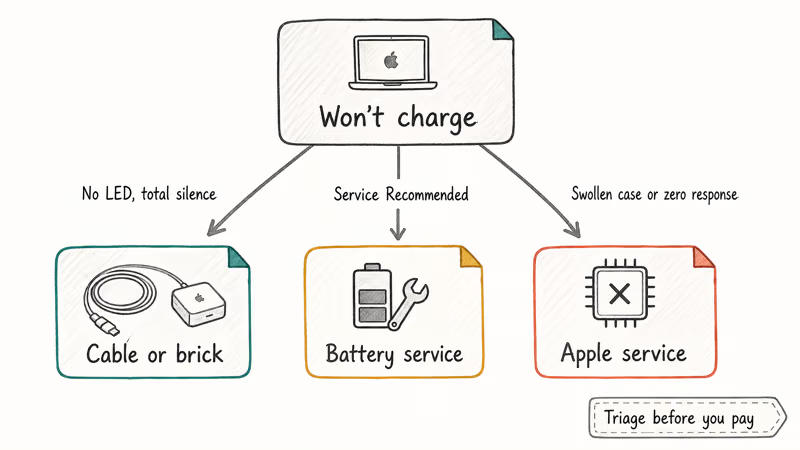
| Symptom | Most likely cause |
|---|---|
| Battery icon shows X, no LED on MagSafe, total silence | Bad cable, brick, or outlet |
| LED on MagSafe lights but battery icon shows Not Charging | Software hold, hot system, or under-spec USB-C |
| LED dim or flickering when the cable wiggles | Cable connector failing |
| ”Service Recommended” in Battery Health | Battery at end of life |
| 0% charge after 30 minutes on a known-good charger | Charging circuit on logic board (Apple) |
| Trackpad feels tight, case bulges, keyboard slightly raised | Swollen battery; stop and book Apple |
On an older MacBook Pro that “won’t charge,” a trackpad sitting noticeably high under your thumb is the giveaway for a swollen battery. A swollen battery is never a DIY fix because the cells can rupture if they flex during removal. Route it to Apple, where the top-case-and-battery service runs far less than a logic-board replacement would if the battery failed in transit.
If the screen flickers when you plug or unplug, that’s a separate failure mode, and our MacBook Pro screen flickering guide is the right place to look first.
#When to Stop and Take It to Apple
Stop and book a Genius Bar appointment when any of these are true:
- The case is bulging anywhere along the bottom or near the trackpad
- You smell burned electronics or see scorch marks near a vent
- A spill or drop happened within the last 30 days, even if the Mac seemed fine afterward
- The charge LED stays off after 30 full minutes on a known-good Apple charger
- All eight steps above produced zero change
According to Apple’s repair pricing guide, out-of-warranty top-case and battery service is dramatically cheaper than a logic-board replacement, so escalating early is the financially safer call. If the device is still under warranty or covered by AppleCare+, almost everything except accidental damage is free, and forum tricks like opening the case to disconnect the battery instantly void that coverage.
#Bottom Line
Start with the cable, adapter, and outlet before any reset. Those three swaps resolve the majority of “not charging” MacBooks before you ever touch an SMC reset.
Move to port cleaning and the Battery Health check next. Reset the SMC only if the first two paths produced nothing on an Intel Mac. Apple Silicon Macs don’t have an SMC at all, so a 30-second power-button hold is the universal reset there.
Stop and call Apple if you see a swollen battery, smell burned electronics, or get zero response from the charge LED after 30 minutes on a known-good charger. The DIY case-opening trick from forums voids AppleCare and risks contamination on the logic board. Authorized service is cheaper than the damage a single slip can cause.
#Frequently Asked Questions
Why won’t my MacBook Pro charge even when plugged in?
Bad cable, wrong-wattage adapter, debris in the port, or a software hold from Optimized Battery Charging. Try a known-good Apple charger and a different wall outlet first.
Can I use a non-Apple USB-C charger?
Yes, but only if it meets the wattage your model needs and comes from a reputable brand. A 30W phone charger can keep a 14-inch MacBook Pro running on light load, but it won’t charge the battery on top of that workload. Cheap unbranded chargers can also push unstable voltage that damages the charging circuit, so saving $10 on the brick can cost you the logic board.
How do I know if my MacBook Pro battery is dead?
Open System Settings, Battery, Battery Health and read the Condition line. “Service Recommended” or “Service Battery” both mean the battery has reached the end of its life. A Mac with a dead battery still runs on the charger, but unplugging it will shut the system down immediately.
Does resetting the SMC delete my files?
No. The SMC controls hardware power management, not storage. Resetting it clears battery learning data and a few thermal counters, but your files, apps, and settings stay intact.
How long should I leave my MacBook Pro on the charger before deciding it’s dead?
At least 30 minutes on a known-good Apple charger. A deeply discharged battery in a 16-inch MacBook Pro can take that long to wake the firmware, and unplugging too early can make a recoverable battery look permanently dead.
Is it safe to leave my MacBook Pro plugged in all the time?
Yes. macOS can pause charging at about 80% when it predicts you’ll stay plugged in for hours.
Should I open my MacBook to disconnect the battery as forum guides suggest?
No. That trick voids AppleCare.
How much does an Apple battery replacement cost?
Out of warranty, an Apple-authorized top-case-and-battery service typically runs much less than a logic-board replacement, and it includes a fresh keyboard and trackpad. AppleCare+ covers it at no charge if Battery Health reports below 80% capacity within the coverage window.

macOS 27 Compatible Macs: Every Supported Model (2026)
macOS 27 Golden Gate runs only on Apple Silicon Macs. Here is the full list of supported M-series models and the four Intel Macs that lose support.

macOS 27 Golden Gate: Every Major New Feature Confirmed
macOS 27 Golden Gate goes Apple Silicon only, adds a Gemini-powered Siri, refines Liquid Glass, and rebuilds Spotlight. Here is every confirmed change.

macOS 27 Liquid Glass: Every Readability Fix Explained
macOS 27 Golden Gate refines Liquid Glass with an intensity slider, better contrast, cleaner window corners, and edge-to-edge sidebars to fix readability.

macOS 27 Performance: What Golden Gate Makes Faster
macOS 27 Golden Gate speeds up AirDrop, network file browsing, Safari, and Spotlight, with core system improvements on the Apple Silicon-only release.