iOS 26 Supported Devices: Full iPhone Compatibility List
iOS 26 supports iPhone 11 and later plus iPhone SE 2nd gen and newer. Apple dropped iPhone XS, XS Max, and XR. Here is the full list and what to do.
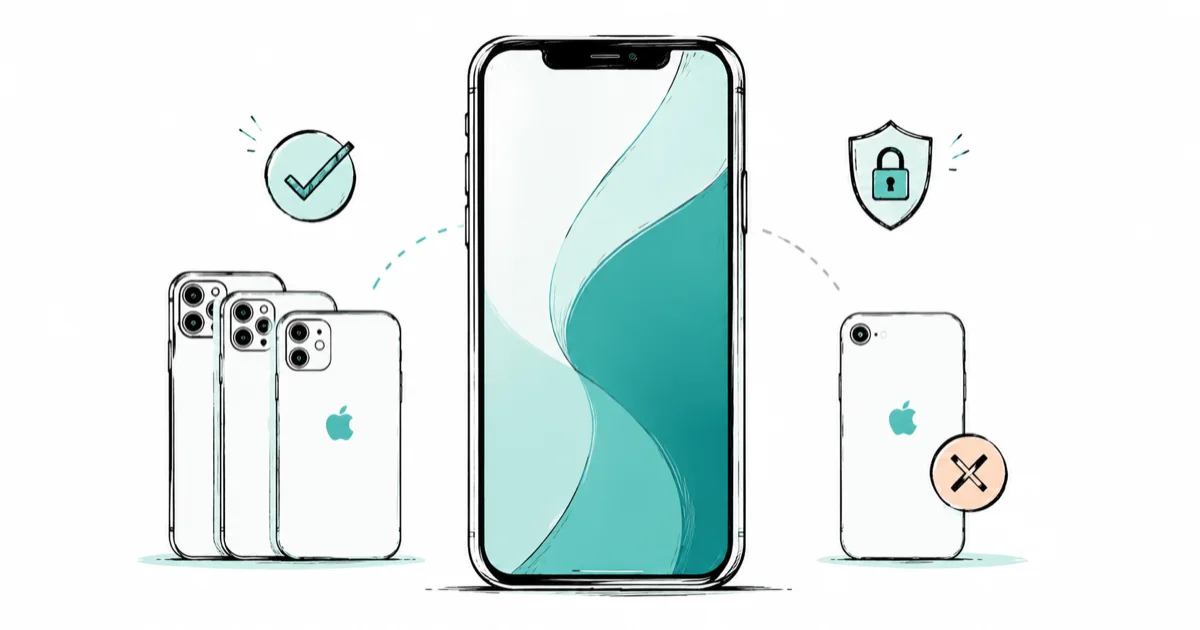
Quick AnsweriOS 26 supports iPhone 11 and later plus iPhone SE 2nd gen and newer (A13 Bionic floor). Apple dropped iPhone XS, XS Max, and XR; those models stay on iOS 18 with security patches.
iOS 26 shipped on September 15, 2025, with the A13 Bionic as the chip floor. iPhone 11 and iPhone SE 2nd generation are the oldest models supported. Apple dropped three iPhones this cycle: iPhone XS, XS Max, and XR.
- iOS 26 runs on every iPhone with an A13 Bionic chip or newer, from iPhone 11 through the iPhone 17 lineup
- Three models lost support: iPhone XS, iPhone XS Max, and iPhone XR all stay on iOS 18 as their ceiling
- iPhone SE 2nd generation (2020, A13 Bionic) and 3rd generation (2022, A15 Bionic) are both supported
- Apple Intelligence requires an A17 Pro chip or newer, so iPhone 15 Pro, iPhone 16, and later get the AI features even though iPhone 11 through iPhone 15 standard get core iOS 26
- Dropped iPhones get security-only updates on iOS 18 for roughly two years, putting the practical ceiling at late 2027
#iOS 26 Supported iPhones: The Full 2025 List
Apple confirmed the iOS 26 device list at WWDC on June 9, 2025, and the build shipped to everyone on September 15, 2025. According to Apple’s iOS 26 iPhone compatibility page, every iPhone with an A13 Bionic chip or newer is on the list. The two iPhone SE generations that share those chips are included too.
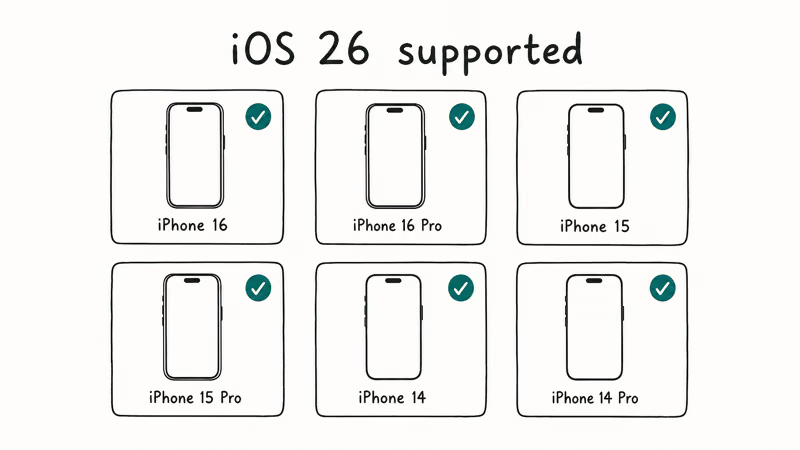
The page now also lists the iPhone Air, iPhone 17, iPhone 17 Pro, iPhone 17 Pro Max, and iPhone 17e, which Apple added when those models launched. Here is the full supported list, grouped by chip generation.
Complete list of iPhones compatible with iOS 26, confirmed by Apple as of the September 15, 2025 release
| iPhone model | A-series chip | Year released | iOS 26 status |
|---|---|---|---|
| iPhone 17 / 17 Pro / 17 Pro Max / 17e / Air | A19 / A19 Pro | 2025-2026 | Supported |
| iPhone 16 / 16 Plus / 16 Pro / 16 Pro Max / 16e | A18 / A18 Pro | 2024-2025 | Supported |
| iPhone 15 / 15 Plus | A16 Bionic | 2023 | Supported (no Apple Intelligence) |
| iPhone 15 Pro / 15 Pro Max | A17 Pro | 2023 | Supported (Apple Intelligence floor) |
| iPhone 14 Pro / 14 Pro Max | A16 Bionic | 2022 | Supported |
| iPhone 14 / 14 Plus | A15 Bionic | 2022 | Supported |
| iPhone SE (3rd generation) | A15 Bionic | 2022 | Supported |
| iPhone 13 / mini / Pro / Pro Max | A15 Bionic | 2021 | Supported |
| iPhone 12 / mini / Pro / Pro Max | A14 Bionic | 2020 | Supported |
| iPhone SE (2nd generation) | A13 Bionic | 2020 | Supported (oldest SE on list) |
| iPhone 11 / 11 Pro / 11 Pro Max | A13 Bionic | 2019 | Supported (oldest iPhone on list) |
| iPhone XS / XS Max / XR | A12 Bionic | 2018 | Dropped (iOS 18 ceiling) |
| iPhone X / 8 / 8 Plus | A11 Bionic | 2017 | Dropped at iOS 17 |
| iPhone SE (1st generation) | A9 | 2016 | Dropped at iOS 16 |
The list lines up with Apple’s pattern of supporting six iOS major versions per chip generation. The A13 Bionic shipped in fall 2019; iOS 26 is its seventh major.
Both the iPhone 11 (A13 Bionic, 4GB RAM) and the iPhone 13 (A15 Bionic, 4GB) run iOS 26, getting the Liquid Glass redesign and core feature set. On the older A13 hardware, app-launch transitions can feel slower than on the iPhone 13, but the phone stays usable for everyday browsing.
The clearest summary of the cut comes from MacRumors’ iOS 26 roundup, which states: “iOS 26 is not available on the iPhone XR, iPhone XS, or the iPhone XS Max, but it will run on all other iPhones that support iOS 18.”
Three models out, everything else iOS 18 supported carries forward.
#Which iPhones Did Apple Drop From iOS 26?
Three iPhones were cut from iOS 26: iPhone XS, iPhone XS Max, and iPhone XR. All three run the A12 Bionic chip, all three shipped in fall 2018, and all three sit at seven major iOS releases of support before this cut. That matches Apple’s typical six-to-seven year support pattern for an A-series chip generation.
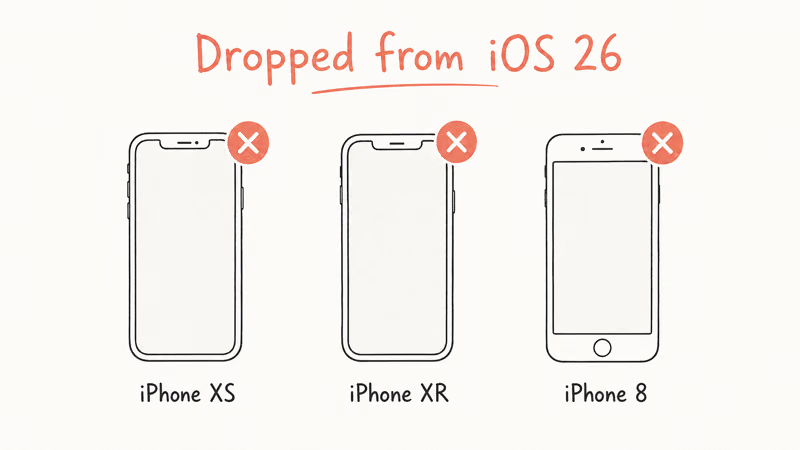
The drop was widely expected. According to 9to5Mac’s iOS 26 launch coverage, iOS 26 also includes more than 20 new Apple Intelligence features that are exclusive to iPhone 15 Pro and later, which is a separate gate inside iOS 26 itself.
These iPhones are already on iOS 18 and will stay there as their permanent ceiling.
| Dropped iPhone | Year | Chip | Final iOS | Security updates expected through |
|---|---|---|---|---|
| iPhone XS | 2018 | A12 Bionic | iOS 18 | Late 2027 (Apple’s typical 2-year prior-major window) |
| iPhone XS Max | 2018 | A12 Bionic | iOS 18 | Late 2027 |
| iPhone XR | 2018 | A12 Bionic | iOS 18 | Late 2027 |
If you are still on iPhone X, iPhone 8, or iPhone 8 Plus, you were already cut at iOS 17 in 2023. Nothing about iOS 26 changes that situation. Our iPhone X and 8 troubleshooting reference covers the A11 Bionic cohort’s remaining options.
iPhone 11 owners get a one-year reprieve at the bottom of the iOS 26 list. The A13 Bionic is the floor this cycle, but iPhone 11 is now in its seventh year of support and is the most likely candidate for the next cut at iOS 27 in 2026. We cover that forward-look in our iOS 27 supported iPhones forecast sibling article.
#Why Did Apple Cut the A12 iPhones From iOS 26?
Apple cut the iPhone XS, XS Max, and XR for the same compounding reasons that drove every prior cut: chip performance, RAM ceiling, and feature floor.
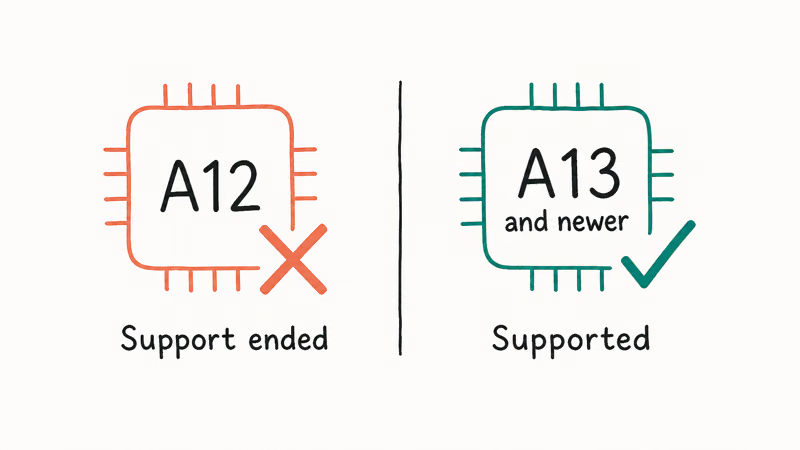
First, the A12 Bionic’s compute and neural engine performance fall below what iOS 26 features assume. The Liquid Glass redesign uses GPU-accelerated translucency throughout the interface, and recent test reports from launch week showed visibly slower transitions on A12-class hardware compared to A13.
Second, RAM becomes a hard ceiling. iPhone XS shipped with 4GB of RAM, while iPhone 15 Pro shipped with 8GB, and iOS 26’s heavier features assume the higher tier.
Third, the Secure Enclave and modem silicon on A12 devices is two generations old at this point. Apple’s security and connectivity work targets the newer hardware floor.
The Apple Intelligence split shows up clearly between the iPhone 15 (A16 Bionic) and iPhone 15 Pro (A17 Pro). Only the Pro model surfaces the new Writing Tools, Notification summaries, and Image Playground options. The standard iPhone 15 runs the same iOS 26 build but keeps the AI menu items hidden.
That gap inside iOS 26 itself shows where Apple’s hardware floor is moving. It’s why A12 devices couldn’t credibly ship even the core iOS 26 experience without quality compromises.
There is also an engineering cost. Each iOS major Apple supports adds QA time across every supported chip generation.
Cutting A12 devices at iOS 26 frees engineering hours that Apple is now spending on Apple Intelligence features for the A17 Pro and A18 tier. Trade-offs aren’t free, but they explain why Apple’s tail is relatively short compared to Android phone makers promising seven-year updates.
The cut also follows the steady pattern. Apple dropped A11 devices (iPhone X, 8, 8 Plus) at iOS 17 in 2023, A10 Fusion at iOS 16, A9 at iOS 15, and so on. A chip generation gets dropped roughly every other major iOS, which puts the A13 Bionic on the bubble for iOS 27 in 2026.
#What to Do If Your iPhone Got Dropped From iOS 26
If you own an iPhone XS, XS Max, or XR, you have three paths and none of them require panic.
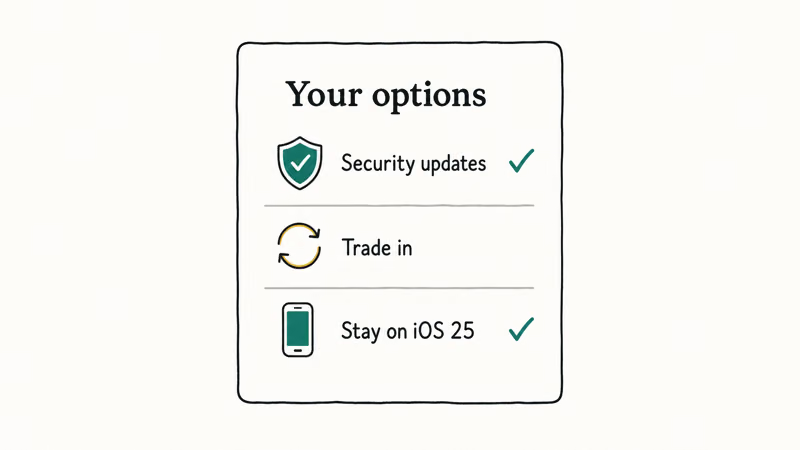
Path 1: Stay on iOS 18. Apple ships security-only updates for the prior major iOS for roughly two years after the new major arrives. That gives iOS 18 a security-update window through approximately late 2027.
You’ll miss the Liquid Glass redesign and the new core iOS 26 features, but you stay protected against security vulnerabilities and your existing apps keep working. If you don’t run banking apps or work-issued apps that require the latest iOS, this is the lowest-friction path. Our guide on whether to cancel an iPhone update prompt covers what to do if Apple pushes any iOS 18 maintenance you’d rather defer.
Path 2: Trade in and upgrade. Apple’s Trade In program accepts iPhone XS, XS Max, and XR for trade-in credit toward a new iPhone.
The iPhone 16e is the most affordable current path that gets you onto the A18 chip with several years of iOS support ahead. Third-party services like Decluttr or Gazelle often pay slightly more, but Apple Trade In is the simplest workflow because the credit goes directly against your new iPhone purchase.
Path 3: Keep using it as a secondary device. A dropped iPhone still makes a fine kid’s device, music handset, or kitchen recipe tablet. Many iPhone 11 accessories such as wireless chargers work on the A12 cohort too. If the device powers on and the battery health is above 80%, it still has a job.
One edge case to flag. If you ended up on an unstable build through a profile install or a beta side channel, restore your iPhone without updating to get back to a stable iOS 18 release.
#iOS 26 Apple Intelligence Compatibility (A17 Pro Floor)
iOS 26 has two compatibility tiers, not one. The first tier is iOS 26 itself, which runs on every iPhone with an A13 Bionic chip or newer. The second tier is Apple Intelligence, which has a much higher floor.
According to Apple’s Apple Intelligence support page, the compatible iPhones are “iPhone 15 Pro models, and iPhone 16 models or later.”
That means the A17 Pro chip is the floor. The standard iPhone 15 and iPhone 15 Plus running the A16 Bionic don’t get the AI features even though they run iOS 26 fine.
| Tier | iPhones that qualify | What you get |
|---|---|---|
| iOS 26 core | iPhone 11 through iPhone 15 / 15 Plus, iPhone SE 2nd / 3rd gen, iPhone 14 series | Liquid Glass redesign, Live Translation in supported apps, Call Screening, Voicemail summaries (non-AI), Messages polls |
| iOS 26 + Apple Intelligence | iPhone 15 Pro / Pro Max, iPhone 16 / 16 Plus / 16e / Pro / Pro Max, iPhone 17 / 17e / Pro / Pro Max, iPhone Air | Everything above plus Writing Tools, Image Playground, Notification summaries, advanced Siri, ChatGPT integration |
This split confuses a lot of people. iOS 26’s marketing leans on the AI features, which mislead non-Pro owners.
If Apple Intelligence is your reason to upgrade, you need an iPhone 15 Pro, iPhone 16, or newer. Anything older runs iOS 26 fine but skips the AI suite. Our should you install iOS 27 beta guide covers the beta-decision framework for Apple Intelligence-capable devices. The same hardware tier also unlocks the configurable side button, and our iPhone Action Button ideas walks through 10 assignments that go beyond Silent Mode.
#iPhone 11 Final Year Outlook on iOS 26
iPhone 11, iPhone 11 Pro, and iPhone 11 Pro Max are the oldest iPhones on the iOS 26 list. The A13 Bionic kept them in this cycle, but they have now hit seven iOS majors — one year beyond Apple’s typical window.
Treat 2025 to 2026 as iPhone 11’s last guaranteed year on the latest iOS. The A13 Bionic floor is the next likely target for the iOS 27 cut.
If you own an iPhone 11 and like the device, a battery replacement is a sensible move to keep it usable through its iOS 26 lifecycle. Apple’s Trade In program is the simplest upgrade path when you’re ready, but there’s no urgency this year.
#Bottom Line
If you own an iPhone 11 or later, including iPhone SE 2nd generation and newer, iOS 26 is already on your phone or available in Settings > General > Software Update with no action needed beyond a routine backup. If you own an iPhone XS, XS Max, or XR, iOS 18 is your permanent ceiling. Apple is shipping security-only patches on the iOS 18 branch through roughly late 2027, after which plan a hardware upgrade.
iPhone 11 owners are the bubble case for next year. The A13 Bionic floor will likely shift up to A14 at iOS 27 in 2026, so this cycle is a one-year extension rather than an open-ended runway.
Apple Intelligence is a separate gate inside iOS 26 itself. iPhones below the A17 Pro floor get Liquid Glass and core features but not the generative AI tools.
iOS 26
#Frequently Asked Questions
Will my iPhone XR get iOS 26?
No. iPhone XR was dropped along with iPhone XS and iPhone XS Max. All three stay on iOS 18, which receives security-only patches for roughly two years.
Does iPhone 11 support iOS 26?
Yes. iPhone 11, 11 Pro, and 11 Pro Max are all on the iOS 26 list, with the A13 Bionic as the floor. Plan for iOS 27 in 2026 to be the likely cut for the A13 cohort.
Is iPhone XS getting iOS 26?
No, iPhone XS is not getting iOS 26. iPhone XS, XS Max, and XR were all cut from iOS 26 because they run the A12 Bionic chip, which is below the A13 floor Apple set for this cycle. iPhone XS users can stay on iOS 18, which will receive security-only updates for roughly two years per Apple’s historical pattern.
What is the oldest iPhone that supports iOS 26?
iPhone 11 and iPhone SE 2nd generation, both running the A13 Bionic chip.
Will iPhone XS get security updates after iOS 26?
Yes. Apple typically ships security-only updates on the prior major iOS for roughly two years after the new major arrives. With iOS 26 released in September 2025, that gives iOS 18 a security-update window running through approximately late 2027. After that point, iPhone XS, XS Max, and XR will stop receiving security patches, and you should plan a hardware upgrade.
Does iPhone 15 get Apple Intelligence on iOS 26?
Only iPhone 15 Pro and iPhone 15 Pro Max get Apple Intelligence. The standard iPhone 15 and iPhone 15 Plus run the A16 Bionic, which is below the A17 Pro floor Apple set for the AI features. Both standard models still run iOS 26 and get the Liquid Glass redesign plus the core feature set, but the Writing Tools, Image Playground, and Notification summary features stay hidden.
Should I upgrade my iPhone XS or XR now?
Not immediately. Stay on iOS 18 through its security-update window, which should run into late 2027 based on Apple’s two-year window for prior majors.
Plan a hardware upgrade for when third-party apps drop iOS 18 support, typically a year or two after a model is cut, or when your battery degrades enough that replacement makes economic sense. The iPhone 16e is the most affordable current Apple option on a multi-year support runway.
iOS 26.6.1 Security Update: What Apple Fixed and Who Gets It
Apple released iOS 26.6.1 on August 17 with 29 security fixes, including an IPSec interception bug. See what it patches, who gets it, and how to update.
iPhone 17 Cellular Data Not Working on iOS 26? 9 Fixes
iPhone 17 cellular data still dropping on iOS 26? Apple fixed the launch bug in iOS 26.0.1, but recovery failures persist. Here's the fix ladder.

iOS 26 System Data Storage Full: How to Fix It Now
iOS 26 made System Data storage balloon past 50GB for some iPhones. Here is what is safe to clear, what is normal, and the iOS 26.1 storage fix.
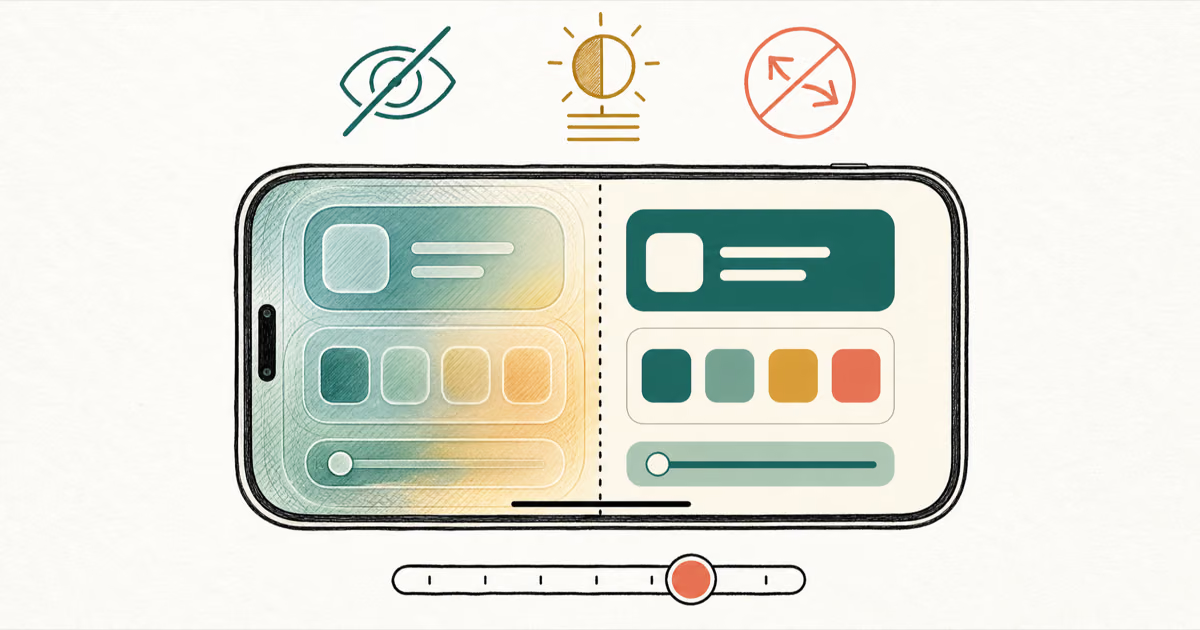
How to Disable Liquid Glass in iOS 26: 2026 Settings
iOS 26 will not let you fully turn off Liquid Glass, but five settings reduce the transparency, motion, and brightness so the iPhone feels flat again.