How to Use Venmo Balance to Pay Someone (2026 Guide)
Use your Venmo balance as payment source instead of your bank account. Select Venmo Balance before confirming payment to avoid fees and spend funds.
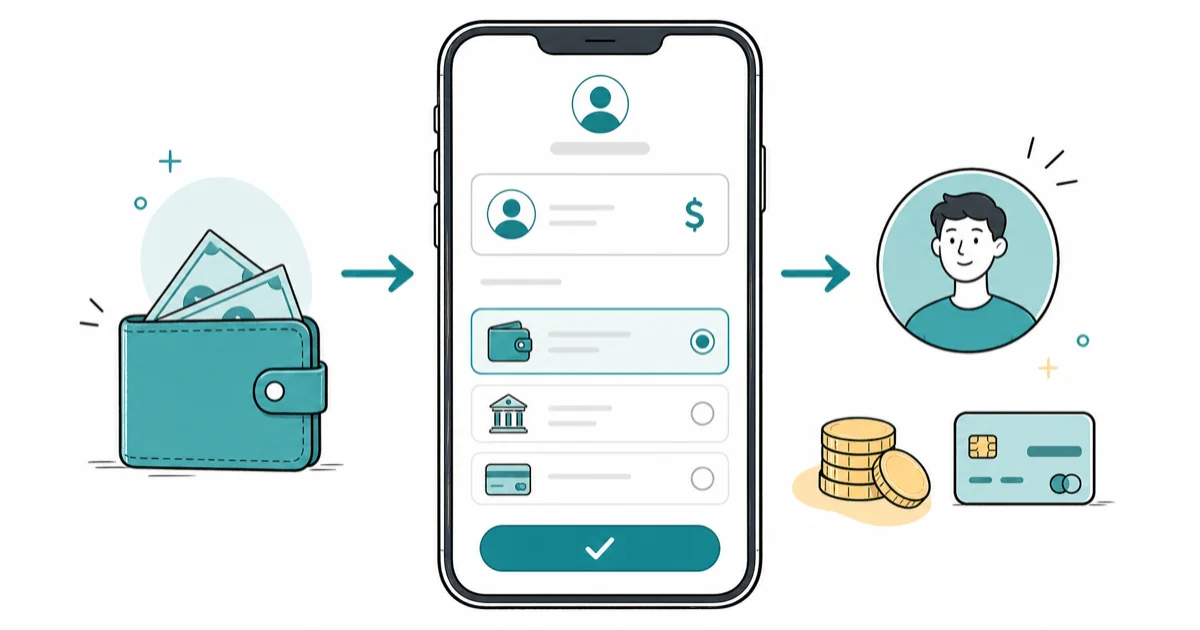
Quick AnswerOpen Venmo, tap Pay or Request, enter the recipient and amount, tap the payment method at the bottom, select Venmo Balance, then confirm payment. Works only if you have sufficient balance.
Your Venmo balance lets you pay friends without hitting your bank account directly. When you receive money from someone through Venmo, that cash sits in your balance until you either cash out to your bank or spend it on payments.
On the current Venmo app, switching from your default card to your balance takes just two taps for any payment type.
The process works identically for person-to-person payments and merchant purchases. This differs from other payment apps where balance functionality varies significantly between transaction types, creating confusion for users who need consistency across different payment scenarios.
Unlike Apple Pay, which charges your linked cards directly, Venmo stores received funds separately.
- Venmo balance only appears as a payment option if you have sufficient funds for the transaction amount
- You must verify your identity through Venmo’s ID upload process before using your balance to pay anyone
- Instant bank transfers to your Venmo balance cost 1.75% with a $0.25 minimum and $25 maximum fee
- Standard bank transfers to build your balance are free but take 1-3 business days to complete
- Venmo’s weekly spending limit from your balance is $6,999.99 for verified accounts as of 2026
#When to Use Your Venmo Balance
Venmo balance works best when you want to spend money someone just sent you. Instead of transferring to your bank first, you can pay other people directly from your existing Venmo funds.
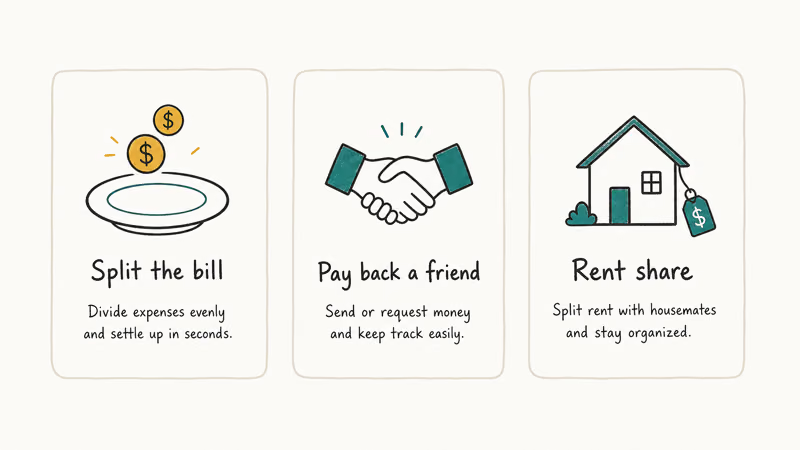
The most common use cases include splitting restaurant bills, paying rent to roommates, sending birthday gifts, and purchasing from Venmo-enabled merchants. According to Venmo’s official fee structure, balance payments cost nothing while card transactions may trigger fees.
As Apple’s support documentation notes for similar mobile payment systems, identity verification requirements have become standard across the industry since 2023.
Your balance has some limitations though.
You can’t use it for business transactions if you have a personal account. Venmo also requires identity verification before you can send any payments from your balance, even small amounts. If your account gets frozen during this process, you’ll need to know how to unfreeze your Venmo account first.
The verification process resembles what other payment platforms require. Similar to Apple Pay setup requirements, you’ll need to provide government identification and wait for approval before accessing full functionality.
#How to Pay Someone Using Your Venmo Balance
Open Venmo, tap Pay or Request, enter the recipient’s username, and type the amount.
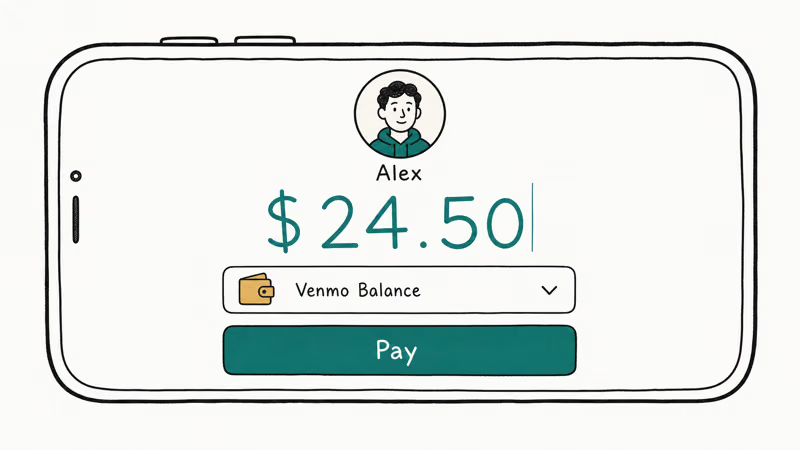
Before hitting Pay, tap the payment method selector at the bottom. You’ll see your linked cards, bank accounts, and Venmo Balance if you have funds available. Select Venmo Balance and confirm the transaction.
The entire process takes only a few moments. The recipient gets the money instantly, and your balance decreases by the exact amount sent. No fees apply when using your balance for standard payments.
The payment will fail if your balance is insufficient.
Venmo won’t automatically split between your balance and a backup payment method. You’ll need to either add funds first or switch to a different payment source. This is different from how PayPal handles payments, where the platform can draw from multiple sources automatically.
#Why Doesn’t Venmo Balance Appear as an Option?
Your Venmo balance won’t show up in the payment methods if you don’t have enough money to cover the full transaction amount. Venmo requires sufficient funds for the complete payment — partial balance usage isn’t supported.
Identity verification blocks balance payments too.
According to Venmo’s support documentation, you must upload a government-issued photo ID and complete their verification process before using your balance to pay anyone.
On an unverified account, the balance option simply doesn’t appear until verification completes, which typically takes 24-48 hours. Some users report longer wait times during peak periods or if additional documentation is required.
#How to Add Money to Your Venmo Balance?
You can load money into your Venmo balance from a linked bank account. Open Venmo, tap the ☰ menu icon, select Manage Balance, then Add Money. Choose your bank account and enter the amount.
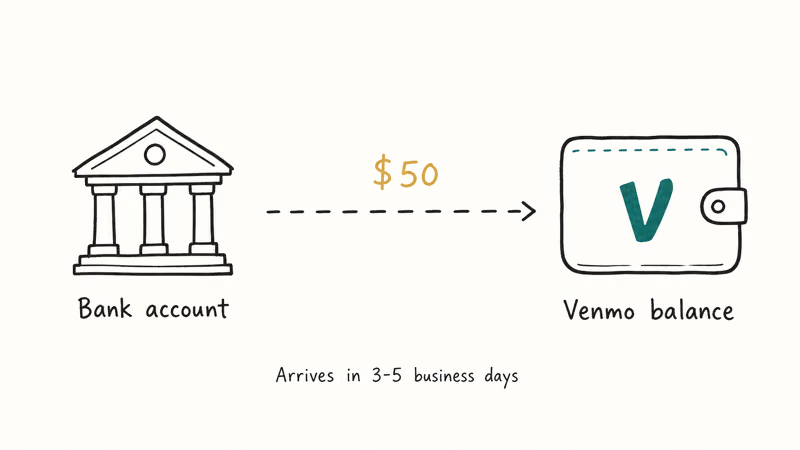
Standard transfers are free but take 1-3 business days.
Instant transfers cost 1.75% with a minimum fee of $0.25. They usually complete quickly, and Venmo states it can take up to 30 minutes. The 1.75% fee makes instant transfers expensive for large amounts, but convenient for smaller sums when you need immediate access.
Your daily add money limit is $2,999.99 per day. The weekly rolling limit is $6,999.99. These limits apply to verified accounts and may be lower for unverified users. According to Venmo’s official limits, business profiles have their own thresholds that rise after identity verification, so check the limits screen in your own business profile for the current figures.
#Using Venmo Balance for Online Shopping
Many online retailers accept Venmo as a payment method. When checking out, select Venmo and you’ll be redirected to authorize the payment. Your balance appears as the default payment source if you have sufficient funds.
Venmo checkout is available on several popular shopping sites including Target, Domino’s Pizza, and Uber Eats. The checkout process takes under a minute including the Venmo authorization screen.
Your purchase history appears in your Venmo feed just like person-to-person payments.
This creates a complete transaction record that’s useful for budgeting and expense tracking. All purchase details show up immediately after completing the transaction, giving you real-time visibility into your spending patterns across both social payments and merchant purchases.
Some merchants don’t support Venmo balance and require a backup payment method. This varies by retailer. Check your payment method selection within the Venmo authorization screen to confirm your balance is being used, not a linked card.
In-store purchases work differently.
You’ll need the Venmo debit card or ask if the merchant accepts Venmo QR codes for direct balance payments. Unlike online shopping, most physical stores require the debit card to access your balance. If you need to manage your card after freezing issues, you might find guidance for blocking PayPal transactions useful for similar payment platform controls.
#What Happens If Your Balance is Insufficient
Venmo doesn’t allow partial balance payments. If you have $20 in your balance but try to send $25, the transaction fails. You can’t automatically split the payment between your balance and a linked card.
You have three options when your balance is too low:
- Add money to your balance from a linked bank account
- Change payment method to a debit card, credit card, or bank account
- Request money from friends to boost your balance first
When you try to pay with insufficient balance, Venmo shows an error message: “Your Venmo balance doesn’t have enough funds.”
The app suggests switching to a different payment method or adding money to complete the transaction. This differs from how PayPal processes payments where backup funding sources can automatically cover shortfalls. If you decide to fall back on a card instead, see our guide on changing your payment method on iPhone for the exact steps.
The error appears immediately after tapping Pay, before any money moves. Your transaction history won’t show failed attempts from insufficient balance.
#Venmo Balance Fees and Costs
Using your Venmo balance for payments costs nothing. Standard person-to-person transfers, merchant purchases, and bill payments are all free when funded from your balance.
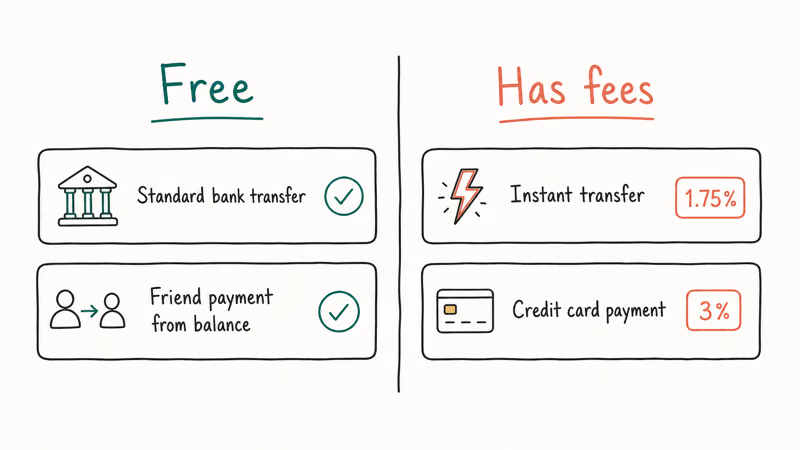
Fees only apply when adding money to your balance.
According to Venmo’s current fee structure, instant transfers cost 1.75% of the amount with a $0.25 minimum and $25 maximum. This 1.75% rate has remained unchanged since 2021. Standard bank transfers remain free but take longer.
Some merchants may charge their own processing fees for Venmo payments, but this isn’t a Venmo fee. Credit card funding (when your balance is empty) triggers a 3% fee, which is why using your balance saves money.
Balance payments cover the common transaction types cleanly.
Restaurant bills, rent payments, and online purchases all process without additional charges when the money comes from your balance rather than a credit card. The money moves instantly with no markup beyond Venmo’s stated fees, and there is no per-transaction percentage taken out the way credit card funding applies a 3% cut. This makes balance payments significantly cheaper than credit card transactions for both small everyday splits and larger one-off bills.
#Bottom Line
Start by checking your Venmo balance before making any payment. If you have enough funds, select Venmo Balance as your payment method during checkout. This avoids card fees and uses money you’ve already received.
If your balance is insufficient, add money from your bank account first or switch to a different payment source. Remember that identity verification is required before you can use your balance for any transactions.
#Frequently Asked Questions
Can I use Venmo Balance for all types of payments?
Yes, you can use Venmo Balance for person-to-person payments, online shopping, and bill payments. The balance works for any transaction where Venmo is accepted as a payment method.
How long does it take to add money to my Venmo Balance?
Standard bank transfers to your Venmo Balance are free and take 1-3 business days. Instant transfers cost 1.75% but typically complete within 15-30 minutes. Weekend transfers may take slightly longer due to banking processing schedules.
What’s the maximum amount I can have in my Venmo Balance?
Venmo doesn’t publish a maximum balance limit for verified accounts. However, weekly spending limits from your balance cap at $6,999.99 for verified personal accounts. Business accounts may have higher thresholds.
Why can’t I see Venmo Balance as a payment option?
Venmo Balance only appears when you have sufficient funds for the full transaction amount. You also need to complete identity verification before using your balance for any payments. The verification process typically takes 24-48 hours after submitting your government ID.
Can I split a payment between my Venmo Balance and a card?
No, Venmo doesn’t support splitting payments across multiple funding sources. You must have enough balance to cover the entire transaction or use a different payment method.
Is my Venmo Balance insured like a bank account?
Venmo balances aren’t FDIC insured. According to Venmo’s terms, your balance is held in a custodial account but doesn’t have the same protections as traditional bank deposits.
Can someone else use my Venmo Balance?
Only the account holder can authorize payments from their Venmo Balance. Anyone with access to your phone and Venmo PIN could potentially make unauthorized payments, so keep your device secure.
Does using Venmo Balance affect my credit score?
No, using your Venmo Balance doesn’t impact your credit score. The balance represents funds you already own, not borrowed money like a credit card.
Google Messages Error 3100: Why RCS Is Broken on Galaxy
Google Messages RCS error 3100 hits Galaxy owners after phone or carrier switches. Google told 9to5Google a fix is coming. Here's what actually helps.
Is This Bank App Real? Spot a Fake App on Your Home Screen
A bank app can land on your home screen from a web page with no install warning. Learn the checks that tell a real banking app from a phishing web app.
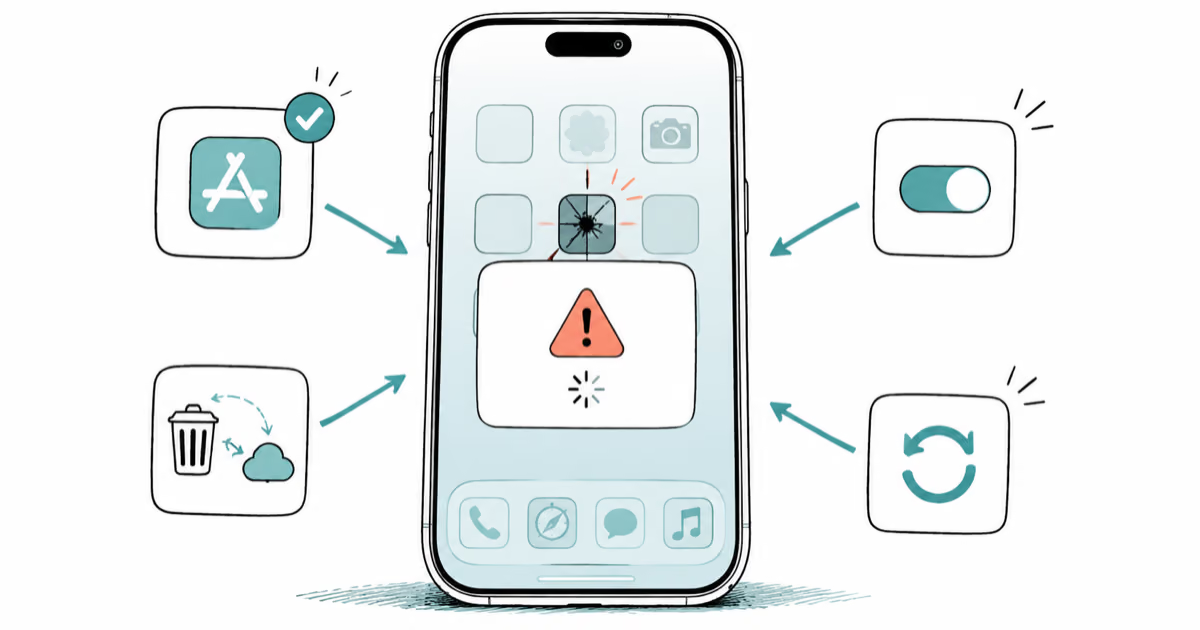
Apps Crashing After iOS 27 Update? Fix Order (2026)
Apps crashing after the iOS 27 update? Update the app in the App Store first, then offload and reinstall to clear stale cache, then restart. The fix order.
Do AI Translation Earbuds Work Offline? What to Know
Do AI translation earbuds work offline? A few do with downloaded language packs, but most need the cloud. Here's what works offline and what you give up.