How to Make Money on Steam: 5 Methods That Actually Work
Learn the 5 real methods to make money on Steam, from publishing games on Steam Direct to trading cards and freelancing for indie developers.
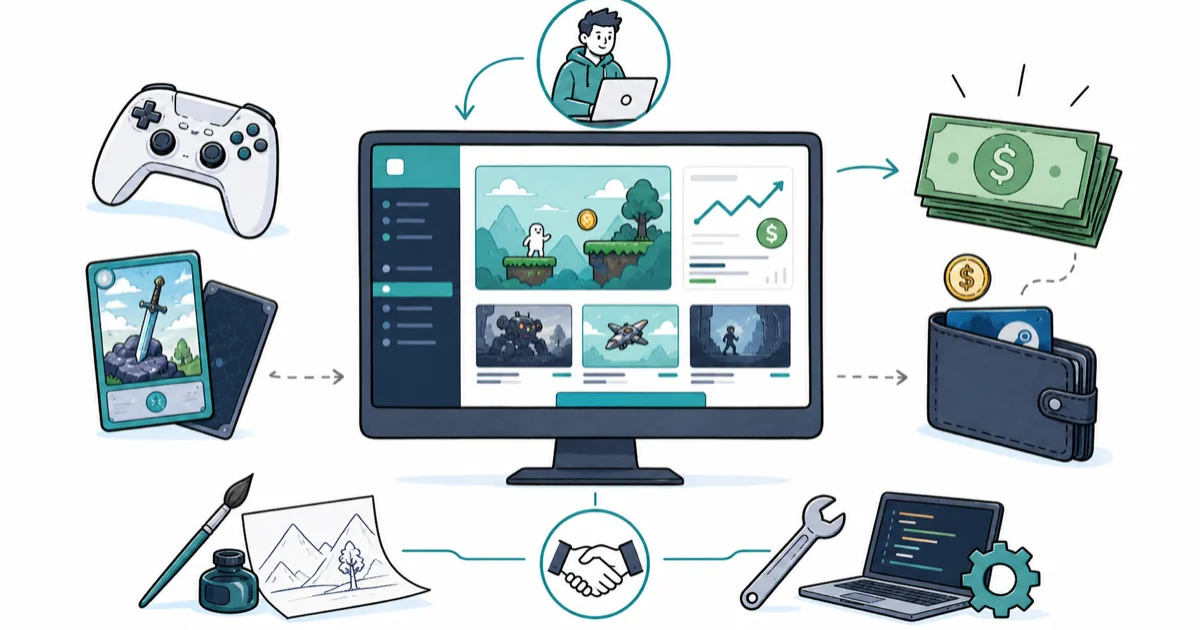
Quick AnswerThe only way to earn real money on Steam is through Steam Direct by selling original games you create. Trading cards and items earn Steam Wallet credit, not bank-withdrawable cash. You can also freelance as a game developer or artist for indie studios on the platform.
Steam is a major PC gaming marketplace, but not every earning path pays cash. The legitimate revenue methods fall into two groups: Steam Direct game sales and adjacent work such as freelancing or affiliate programs.
- Only Steam Direct game sales pay real money to your bank; Market earnings go to Steam Wallet only
- Steam takes 30% of game revenue, dropping to 25% after $10 million in lifetime sales
- Trading cards sell for 2 cents to several dollars depending on rarity and game popularity
- Freelancing for indie studios is the fastest cash route without making your own game
- Affiliate programs for Steam games pay real commissions without game development required
#Can You Make Real Money on Steam?
Yes, but only through one official channel: publishing and selling a game on Steam Direct.
Steam Market sales don’t pay bank cash. When you sell a trading card or in-game item on the Market, the proceeds go directly to your Steam Wallet. That wallet can only be used to buy games and Steam content. According to Valve’s Steam Wallet FAQ, Steam Wallet funds are non-transferable and can’t be converted to cash.
If you want actual money in your bank account, you need to develop and sell a game, or earn income adjacent to Steam through freelancing or affiliate programs.
#How Do You Earn Money Through Steam Direct?
Steam Direct is Valve’s game publishing program.
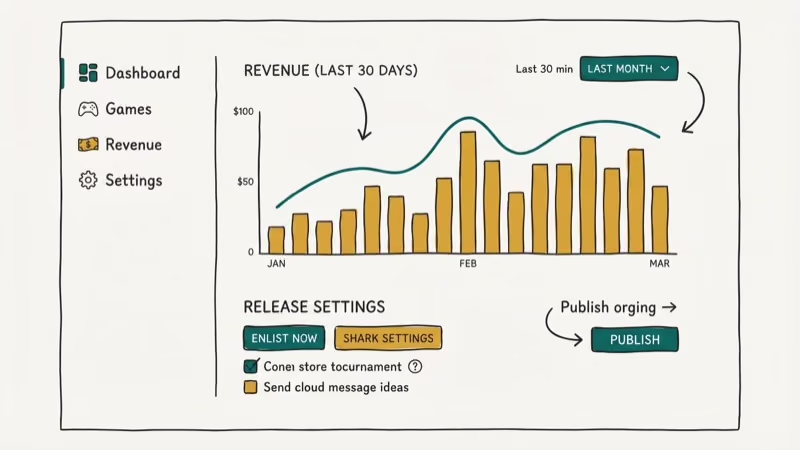 Pay a $100 recoupable fee, submit your game for review, and you keep 70% of revenue when the game sells. The fee recoupes after the first $1,000 in sales.
Valve’s Steamworks payments documentation states that payment minimums are $100 per period, with developers paid around the 30th of the month after the sales period closes. The same partner portal explains that Valve’s revenue share also tapers down for titles that reach high lifetime revenue.
The math is simple. If your game sells 1,000 copies at $5 each, that’s $5,000 gross. You take home $3,500. Positive reviews drive discovery on Steam, so player feedback matters as much as the game itself.
#Earning Steam Wallet Credit Through the Market
Steam Wallet credit doesn’t pay bills,
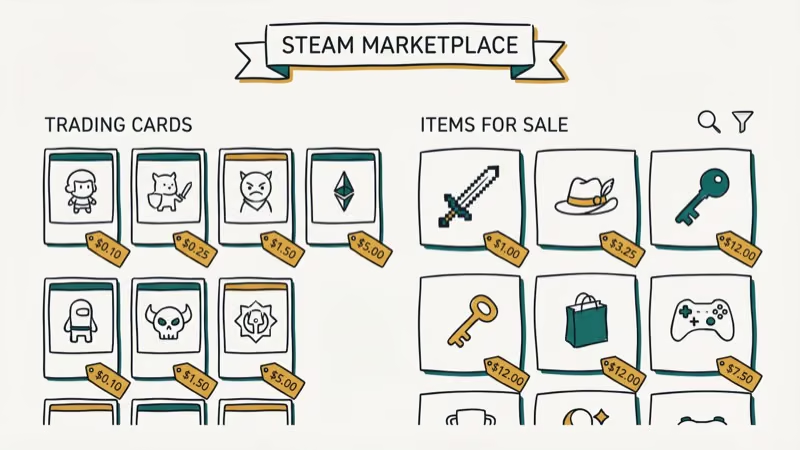 but it offsets your gaming costs if you play regularly.
Trading cards drop automatically while you play eligible games. According to Steam’s trading card FAQ, most games award cards after 30 to 60 minutes of playtime, and a typical set includes 3 to 5 cards.
Common cards sell for 2 to 10 cents. Foil cards and cards from CS2 or DOTA 2 can sell for 50 cents to several dollars each.
Selling accumulated cards can generate a small amount of Steam Wallet credit. That can cover a sale-price indie game every so often if you game consistently.
In-game items in popular titles carry higher values. Some CS2 skins sell for hundreds of dollars, though earning them requires time or money investment. Read the Steam gift card scams guide before trading, since the Market attracts phishing attempts targeting new sellers.
#Freelancing for Steam Developers
Indie studios regularly hire freelancers for programming, 2D and 3D art, sound design, and QA testing.
Developers post actively in the Steamworks partner community and on platforms like Upwork and GameDev.net. Game art commissions start at $25 per asset for basic work and scale significantly for experienced artists. Programming contracts for indie studios typically pay $30 to $75 per hour depending on the technology stack.
This method requires skills but no publishing investment. It’s the fastest route to real money if you have relevant ability. The how to make a text-based game guide is a practical starting point for building game development skills if you’re newer to the field.
#Affiliate and Referral Programs
Third-party sites run affiliate programs
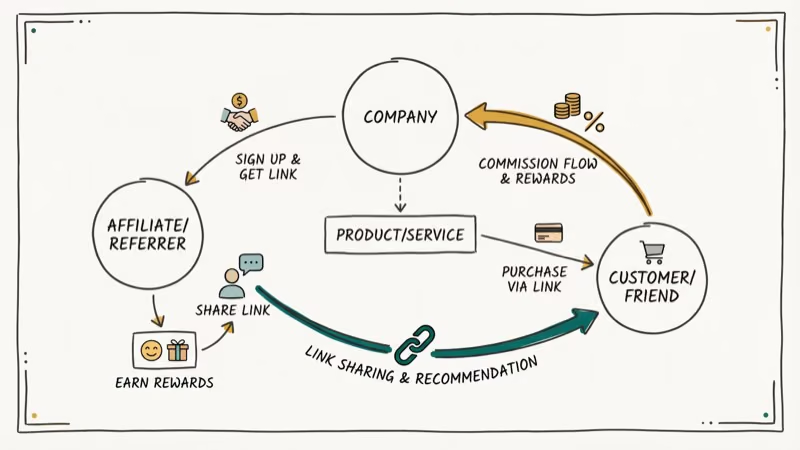 where you earn commissions for directing buyers to Steam games or Steam Wallet codes.
These programs pay real money, not Steam Wallet credit. Commission rates range from 3% to 10% depending on the platform and products. This approach requires an audience first (YouTube channel, blog, or social media), but income scales with traffic. A gaming-focused audience of 10,000 followers can generate $200 to $500 per month in affiliate income at average conversion rates.
#Troubleshooting Common Issues
Steam Direct application rejected. Review Valve’s content guidelines before submitting. Games with prohibited content types are rejected without recourse. According to Valve’s content policy, sexual content, certain weapon depictions, and real-world political imagery face additional scrutiny and rejection risk.
Payment threshold not reached. Steam holds payments until the $100 minimum is met. Slow-selling games may defer payments for several months.
VAC issues affecting your developer account. If you trigger a VAC ban during testing, it can complicate developer access. Keep your developer testing account separate from your main gaming account. You can check the unable to initialize SteamAPI guide if you’re running into technical issues during development.
#Bottom Line
Steam Direct is the only real-money path. It takes work to build a publishable game, but the royalty structure is straightforward and Valve pays reliably. Market items and trading cards offset gaming costs but won’t replace income.
If game development isn’t your goal, freelancing for studios or running a gaming affiliate site are the practical alternatives. Check play Steam games on Chromebook if you’re setting up a budget dev environment.
#Frequently Asked Questions
How much does it cost to publish a game on Steam?
The Steam Direct fee is $100 per game title. Valve recoupes this from the first $1,000 in sales, and developers can track recoupment status in the Steamworks dashboard under the payment report section.
Can Steam Wallet funds be transferred to a bank account?
No. Non-withdrawable, full stop.
What percentage does Steam take from game sales?
Steam takes 30% for games earning up to $10 million lifetime. The cut drops to 25% between $10 million and $50 million, and to 20% above $50 million. Most indie games will never approach those thresholds, so 70/30 is the realistic split for the overwhelming majority of Steam developers publishing their first or second title.
How long does it take to get paid from Steam Direct?
Payments process monthly, approximately 30 days after the sales period ends. The minimum is $100 per period. Balances below $100 roll over to the following month.
Do you need a company to publish on Steam?
No. Individuals publish as sole proprietors with a W-9 (US) or W-8BEN (international) tax form submitted through the Steamworks partner portal before first payment.
What games sell best on Steam?
Action, RPG, and indie puzzle games consistently perform well. According to Wikipedia’s Steam overview, the platform hosted over 50,000 games as of 2023, making discoverability through launch reviews and community features like achievements and Workshop support critical for new releases.
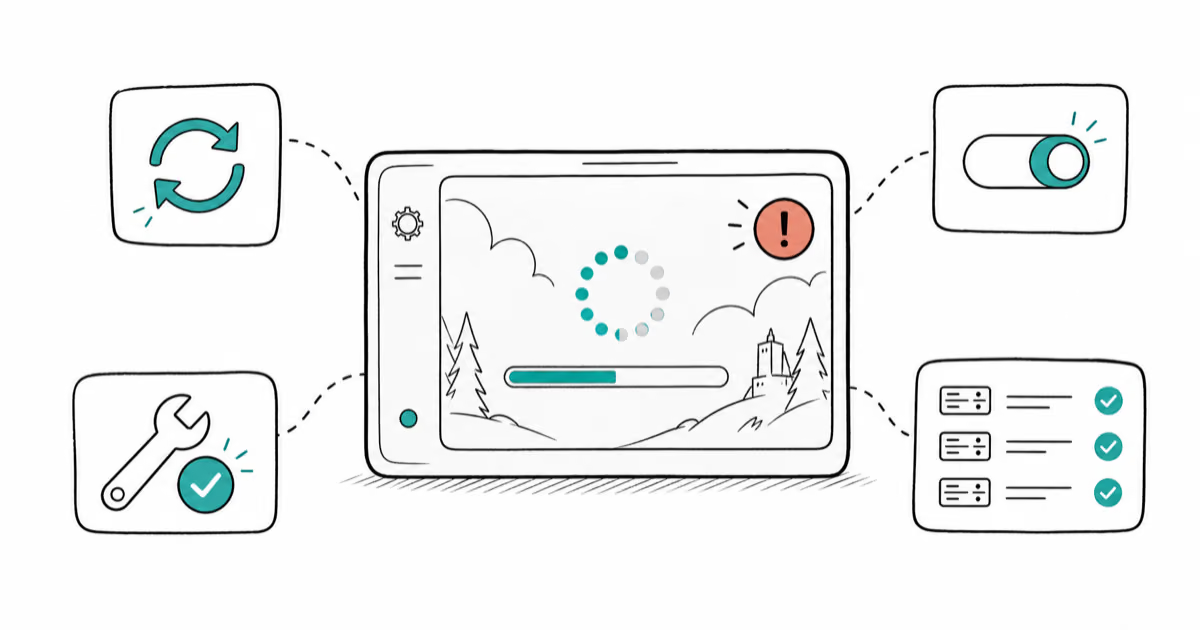
Fortnite Stuck on the Loading Screen? Fix It in 2026
Fortnite stuck on the loading screen? Check server status, fix the Windows N Media Pack and DirectX 11 on PC, clear the console cache, and verify files.
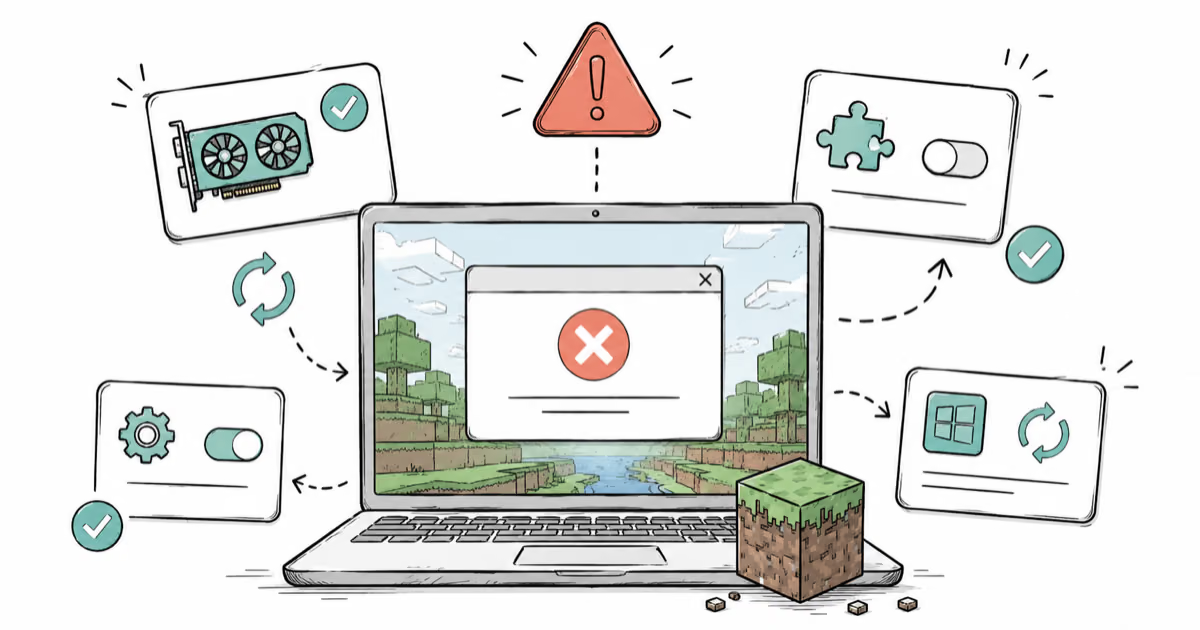
Minecraft Keeps Crashing? Java and Bedrock Fixes (2026)
Minecraft keeps crashing on startup or mid-game? Update your GPU driver, remove mods on Java, and reinstall Gaming Services on Bedrock. Fixes for both.
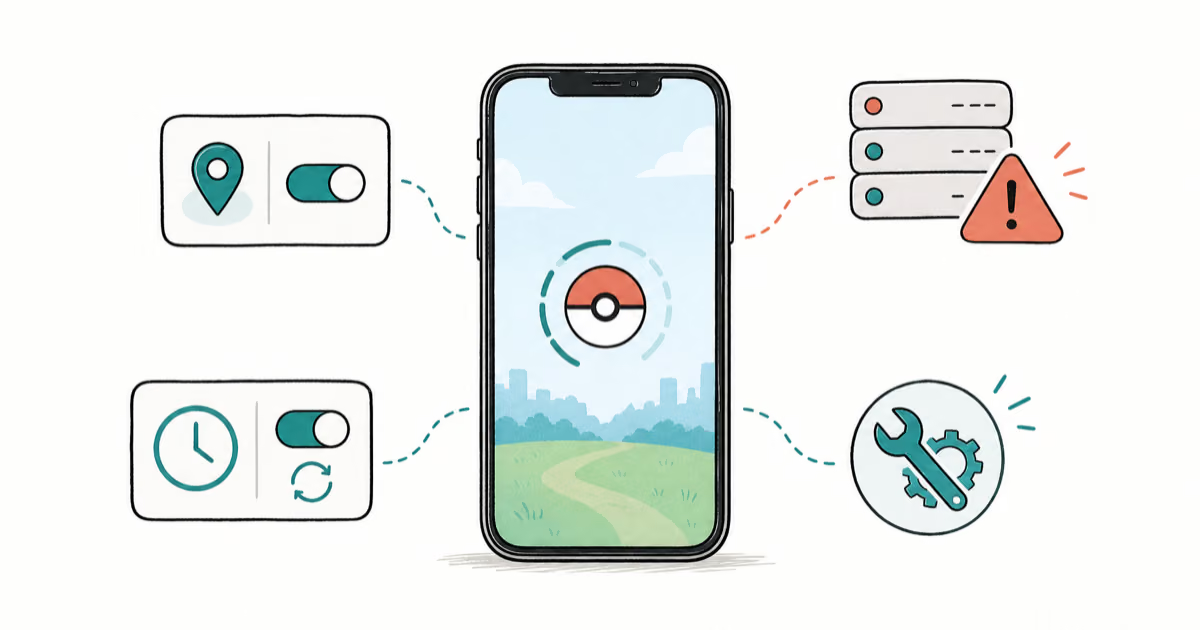
Pokemon GO Not Loading? Fix the Loading Screen 2026
Pokemon GO not loading or stuck on the Pokeball? Check server status, fix automatic date and time, grant location permission, clear the cache, and update.
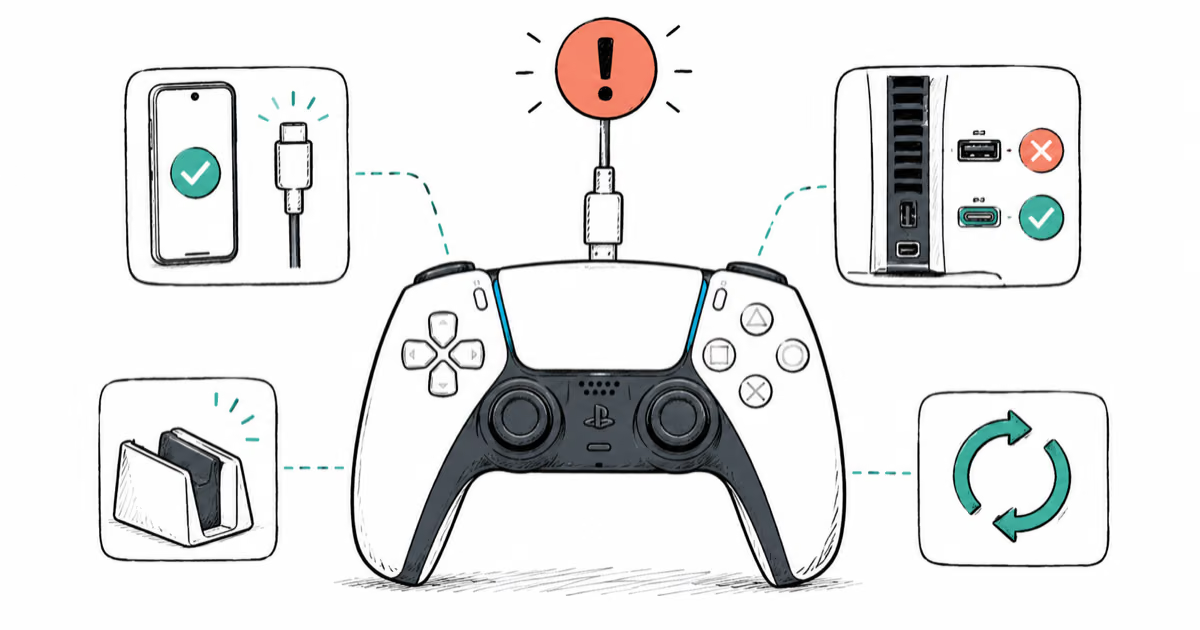
PS5 Controller Not Charging? 9 Fixes That Work (2026)
DualSense not charging? Swap the cable, use a rear port in Rest Mode, clean the USB-C port, and check power settings. 9 fixes for a dead PS5 controller.