How to Make a Text-Based Game: Best 7 Tools (2026)
Learn how to make a text-based adventure game using beginner-friendly tools like Twine, Quest, ADRIFT, and Inform 7. No coding experience required.
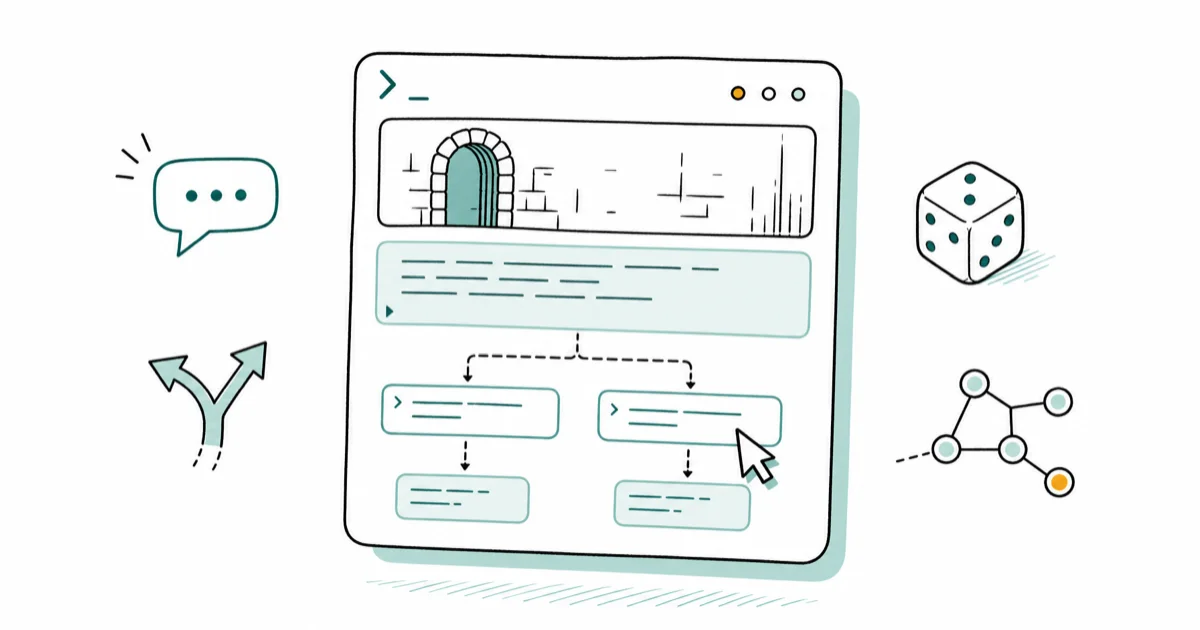
Quick AnswerCreate a text-based game using free tools like Twine for interactive fiction, Quest or ADRIFT for parser-based adventures, or Inform 7 for natural-language game design. No programming experience is needed to get started.
Text-based games are easier to build than you think. All seven tools in this guide run on common platforms, and a complete beginner can publish a working interactive story in under an hour using Twine, with no coding required.
- Twine exports a playable HTML file in minutes with no coding needed
- Quest is MIT-licensed and free; modify its source code if built-in scripting falls short
- ADRIFT hasn’t been updated since 2016; games only run in its own Runner app
- Ren’Py runs on iOS, Android, Windows, Mac, Linux, and the web for the widest reach
- Inform 7 uses plain-English sentences as code, which makes it ideal for writers
#What Makes a Good Text-Based Game?
A text-based game keeps players engaged through choices, consequences, and clear writing. The mechanics are simple: show text, accept input, branch the story. What separates a boring game from an addictive one is meaningful decisions.
Give the player at least two real choices per scene. Make those choices matter.
According to Wikipedia’s history of text adventures, the text adventure format dates to the 1970s with games like Colossal Cave Adventure, and the format has remained popular because it costs almost nothing to build and nothing to distribute. That low barrier makes it a great first game project.
Beginners tend to get frustrated when they start with tools that demand coding before showing any output. Start with Twine. It puts a working game on your screen within the first 10 minutes.
#The 7 Best Tools for Making Text-Based Games
Here are seven proven tools ranked from most beginner-friendly to most powerful.
#1. Twine
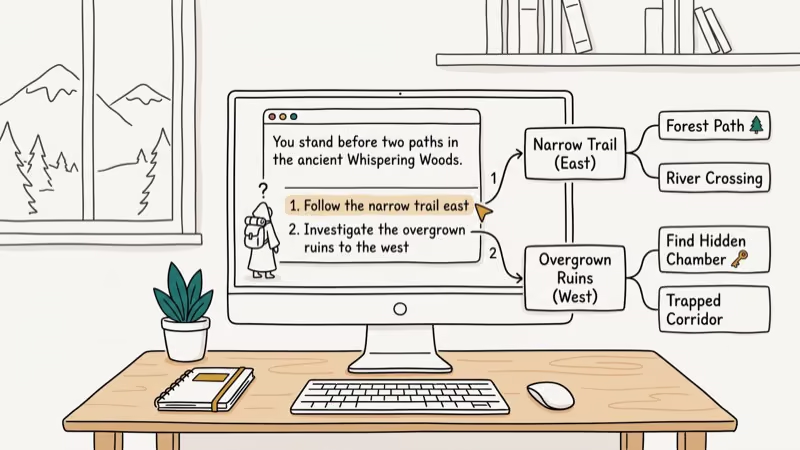
Twine is the go-to for interactive fiction. You write passages, connect them with arrows, and export everything as a single HTML file. No installation needed if you use the web version.
A short dungeon crawler comes together in an afternoon in Twine. The passage editor makes branching feel natural, and the built-in macros handle conditional logic without a single line of JavaScript.
According to Twine’s official documentation, the tool supports CSS, JavaScript, and conditional variables for complex projects. Tutorials cover everything from basic links to full inventory systems.
Available on: Mac, Windows, Web, Linux
#2. Quest
Quest adds images, sound, and video to traditional text adventures without programming knowledge. The scripting language handles complex game logic through a point-and-click interface, which keeps the learning curve low.
Quest is MIT-licensed and completely free. A basic two-room adventure can be up and running before long. The Quest community forum has active members who help beginners when they get stuck.
Available on: Web and Windows (free)
#3. Squiffy
Squiffy comes from the same team that built Quest but focuses on branching storylines rather than parser puzzles. It outputs JavaScript and HTML5 so finished games run in any browser without extra software, and the same projects can be packaged as mobile apps with Adobe PhoneGap.
No inventory. No parser. Just choices.
Check textadventures.co.uk for community examples.
Available on: Linux, Windows, Web
#4. ADRIFT
ADRIFT has one of the cleanest drag-and-drop interfaces for building parser games. Room descriptions, object interactions, and conversation trees all live in a visual GUI with no code typing required.
The catch: ADRIFT has not had an update since 2016. Games built with it only run in the ADRIFT Runner app. That limits your distribution options significantly. Still useful if you prefer visual workflows over text editors.
Available on: Linux (free) and Windows
#5. Inklewriter
Inklewriter is for people unsure whether they want to commit to game development at all. No installation. No setup. Just open the site and write.
It’s free.
The guided tutorials at inklewriter.com teach branching story structure better than most paid courses. Try the Tutorial Story feature first, which walks you through creating a real branching narrative while you work so you’re learning by doing rather than reading documentation. A solid first project before upgrading to more capable tools.
#6. Inform 7
Inform 7 uses natural language as its programming syntax. You write “The brass lamp is in the kitchen. The lamp is lit.” and Inform understands those as game objects with properties. It’s unlike any other coding tool.
The tool ships with two built-in books: Writing with Inform and The Inform Recipe Book, both available at the Inform documentation page. The learning curve is steeper than Twine or Quest. The output is far more sophisticated, though, making it worth the investment once you’re comfortable with the basics of text game design.
Available on: macOS, Linux, Raspberry Pi, FreeBSD, Windows (free)
#7. Ren’Py
Ren’Py is the most polished tool on this list. Built for visual novels, it also supports pure text games. Thousands of finished games built with it are on itch.io.
It’s more complex than the others. Ship at least one Twine or Quest game first. The complexity jump is real.
Games built with Ren’Py can reward players in clever ways. If you’re curious how progression systems work in games, check out how Destiny 2 rewards exploration with exotics for a reference point.
Available on: iOS, Windows, Linux, Android, macOS, Web
#Text Games Require No Coding Skills
No. Six of the seven tools here work through visual interfaces, simple markup, or natural language. Only Ren’Py requires script syntax, and even that is approachable for beginners.
The community at the Interactive Fiction Community Forum consistently recommends Twine and Quest as first tools because neither requires any programming background.
A first-time user can build and publish a 12-scene story on Twine in an afternoon with zero coding experience.
The hardest part is usually deciding what the story is about.
If you’re also into adult games for Android, many of those titles started as Ren’Py projects before the developers added graphics and audio.
#How Do You Structure Your Text Game Story?
Start with a scene map.
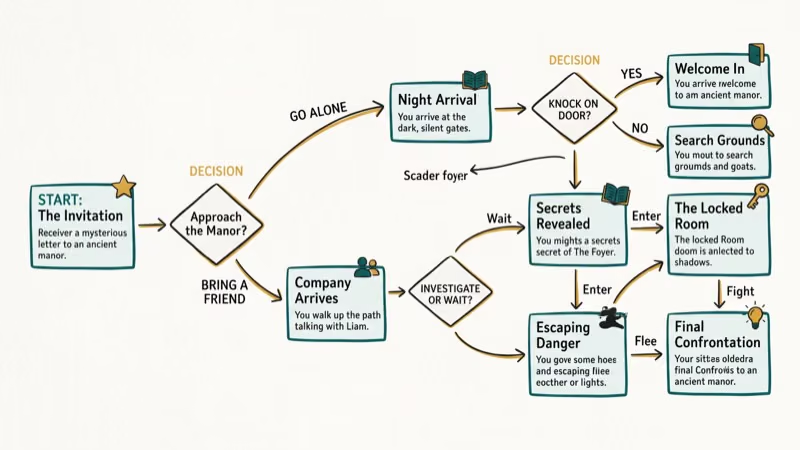 List 5 to 10 scenes before opening any tool.
Writing directly in Twine without planning tends to leave you with orphaned passages. Drawing the map first, even a rough sketch on paper, fixes that problem completely.
8 to 10 passages = a complete short game.
Opening scene, two choices, two mid-scenes each with two outcomes, one convergence point, one ending. That’s the structure. Adjust it once you’ve shipped your first game and understand where players get confused.
Keep descriptions short. Players read faster than most writers expect. Target 60 to 80 words per scene. Think about how fun texting games keep people engaged through brief exchanges: the same pacing applies here.
You can explore board game apps to understand how digital game design handles player choices and replayability before building your own game.
#Common Mistakes to Avoid
New developers make the same four mistakes. First, they start coding before they have a story idea. Fix: write a one-sentence premise before opening any tool.
Second, they write too much text per scene. Players skim. Keep scenes under 80 words.
Third, they skip playtesting. Almost every untested branching game hides a few broken paths that only a second player will catch.
Fourth: wrong tool for day one. Ren’Py is not a beginner tool. Start simple.
#Publishing and Sharing Your Text Game
Once your game is ready, upload it to itch.io.
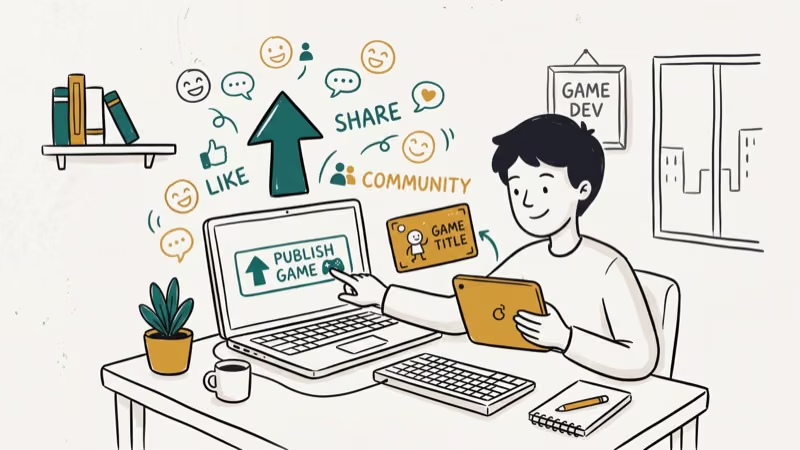 Free to use. Handles payments. Lets you set your own price or go “pay what you want.”
For Twine games, upload the HTML file directly. For Quest and Inform games, export to the appropriate format and verify it runs in the online interpreter before publishing. If you want inspiration for game concepts, check out some of the best fishing games and best farming games to see how simple, repetitive mechanics create compelling game loops that players return to again and again. Those loops translate directly to text game design.
#Bottom Line
Start with Twine. Download it, spend 30 minutes on the tutorial, and publish your first game this week. If you want parser-style gameplay with items and rooms, switch to Quest next. Save Inform 7 and Ren’Py for your second or third project once you understand how branching narrative logic works.
#Frequently Asked Questions
Do text-based games need programming experience?
No. Twine, Quest, ADRIFT, and Inklewriter all work through visual interfaces or simple markup. Inform 7 uses natural-language sentences. Only Ren’Py requires actual script syntax, and even that is beginner-friendly compared to Python or JavaScript.
How long does it take to build a text-based game?
Short games take a weekend. A working Twine adventure comes together fairly quickly once the writing, branching, and playtesting are done.
Can I monetize a text-based game?
Yes. Sell on itch.io, offer in-game purchases, or crowdfund through Kickstarter. Pricing between $1 and $5 is common for short games. “Pay what you want” often outperforms fixed pricing for first-time creators because it removes hesitation entirely.
What format should I export my game in?
HTML is the most portable format. Twine and Squiffy export to HTML by default, so your game runs in any browser with no installation required. Ren’Py creates standalone executables for Windows, macOS, and Linux.
Are there communities for text-based game developers?
Yes. The Interactive Fiction Community Forum is the most active. The r/interactivefiction subreddit has thousands of members sharing work and giving feedback on new projects.
Can I add images or audio to a text-based game?
Most tools support media. Twine, Quest, and Ren’Py all handle images and audio natively. ADRIFT supports sound but its standalone Runner requirement makes distribution harder. For a pure text game, skip the media: it rarely adds to the experience and significantly increases file size.
Which tools work on Mac?
Twine, Inform 7, and Ren’Py all run natively on macOS. Quest and ADRIFT are Windows-only for their desktop versions, though Quest has a web-based editor that works in any browser. Squiffy works on Linux and the web.
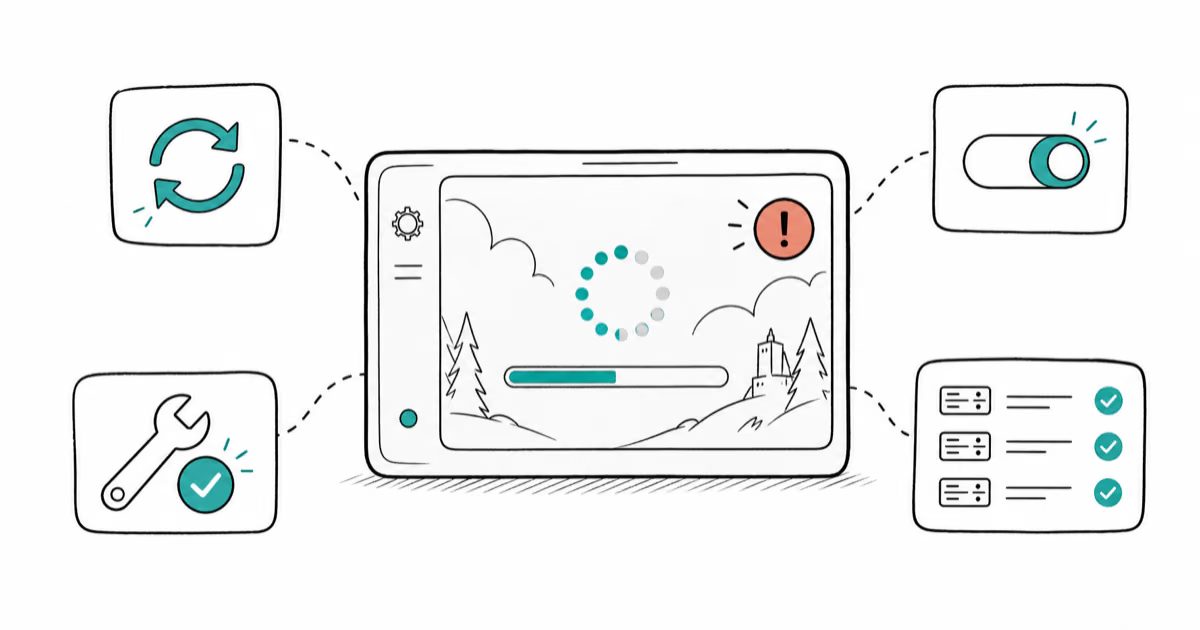
Fortnite Stuck on the Loading Screen? Fix It in 2026
Fortnite stuck on the loading screen? Check server status, fix the Windows N Media Pack and DirectX 11 on PC, clear the console cache, and verify files.
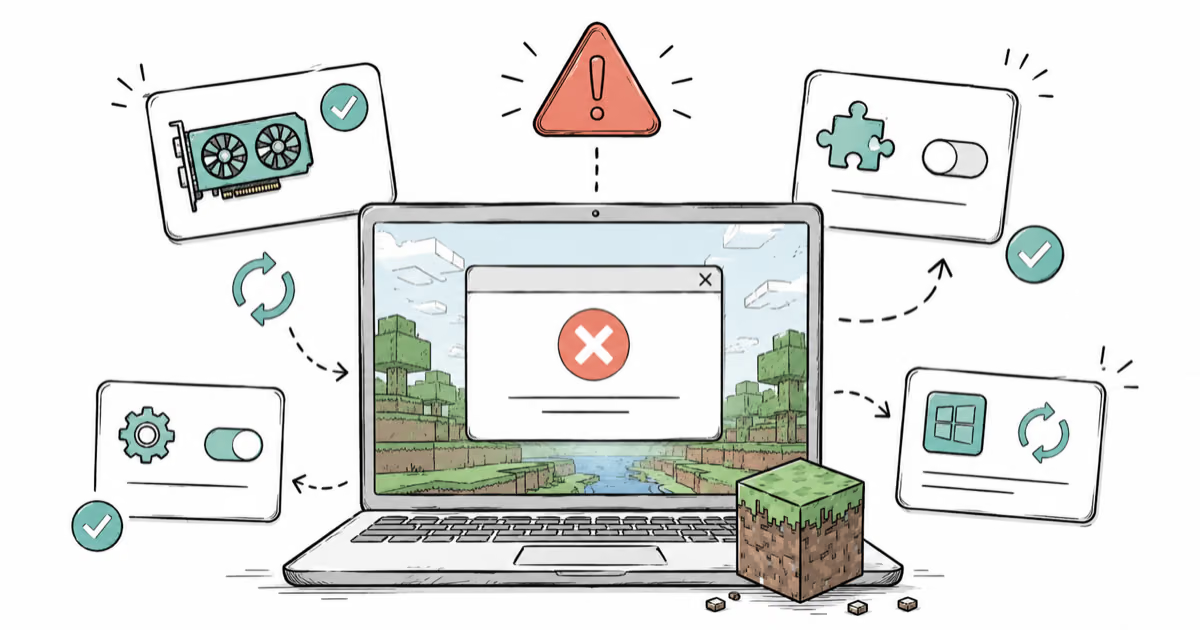
Minecraft Keeps Crashing? Java and Bedrock Fixes (2026)
Minecraft keeps crashing on startup or mid-game? Update your GPU driver, remove mods on Java, and reinstall Gaming Services on Bedrock. Fixes for both.
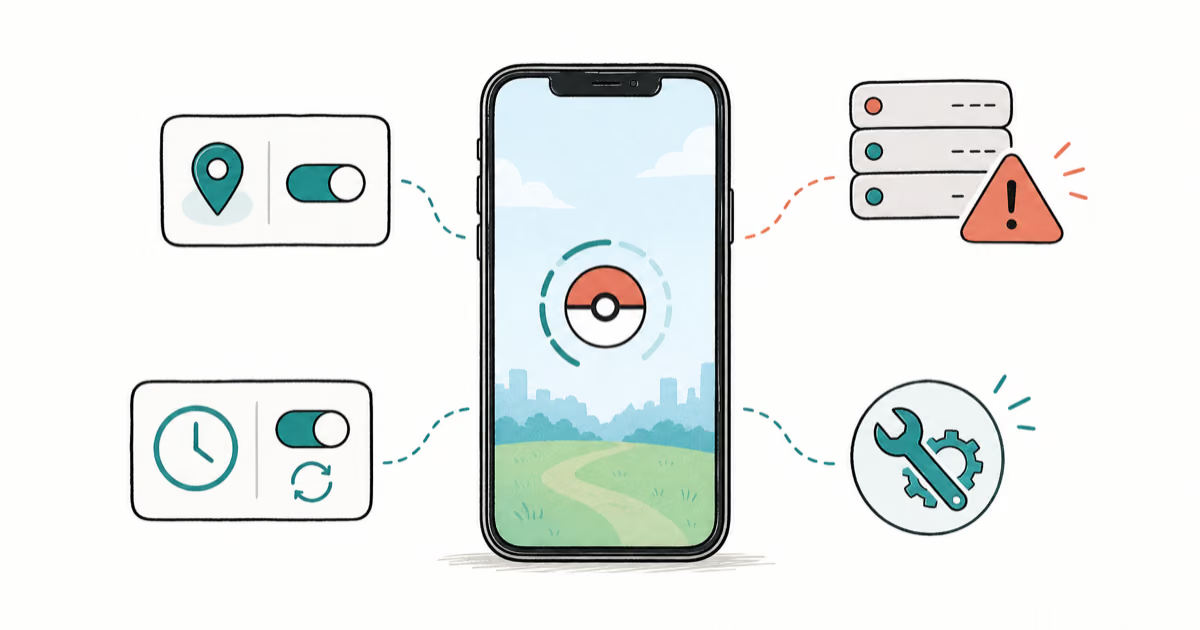
Pokemon GO Not Loading? Fix the Loading Screen 2026
Pokemon GO not loading or stuck on the Pokeball? Check server status, fix automatic date and time, grant location permission, clear the cache, and update.
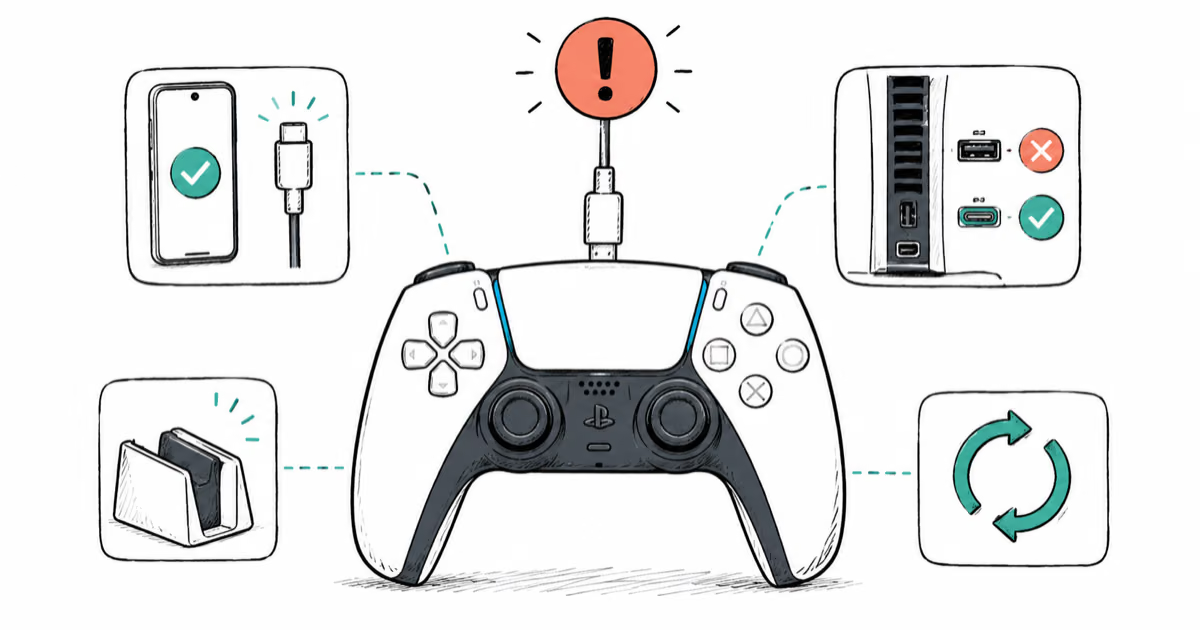
PS5 Controller Not Charging? 9 Fixes That Work (2026)
DualSense not charging? Swap the cable, use a rear port in Rest Mode, clean the USB-C port, and check power settings. 9 fixes for a dead PS5 controller.