Steam Gift Card Scams: 7 Warning Signs to Watch For
Steam gift card scams use romance cons, fake tech support, and prize bait. Learn the 7 red flags and the exact steps to recover after a scam.
Quick AnswerSteam gift card scams trick you into sending Steam wallet codes to scammers posing as romantic partners, tech support, or government agents. No real company, government agency, or employer will ever ask for payment by Steam gift card.
Steam gift card scams stay near the top of consumer fraud reports because the codes convert to cash fast and leave almost no recovery path. Scammers pose as romantic partners, fake IRS agents, or stranded family to talk targets into reading a 16-digit Steam wallet code over the phone. Below are the seven warning signs that hit before any money request lands, plus the exact recovery steps if a code is already shared.
- Steam gift card scams target gamers and casual phone users because redemption codes convert to cash on grey-market resale within minutes and leave no chargeback trail.
- No real company, employer, government agency, or law enforcement office will ever ask you to pay a debt or fee with a Steam gift card.
- Romance scams running for weeks before any money request are the most common Steam card pattern, followed by fake tech support, fake IRS calls, and family emergency cons.
- Common red flags include a refusal to video call, a push to move chat off the original platform, pressure to keep the relationship secret, sudden travel emergencies, and reluctance to answer specific local questions.
- If a code is already shared, call Steam Support within the first hour, file a fraud report at ReportFraud.ftc.gov, and contact your bank or card issuer to dispute the original gift card purchase.
#What a Steam Gift Card Scam Looks Like
A Steam gift card scam is any social engineering attack that ends with you reading the redemption code from a Steam wallet card aloud or photographing it for someone else. The card converts to a Steam wallet balance the moment the code is redeemed, and the scammer immediately drains the wallet by buying tradable inventory, gifting games to a throwaway account, or transferring the balance off-platform via a resale broker.
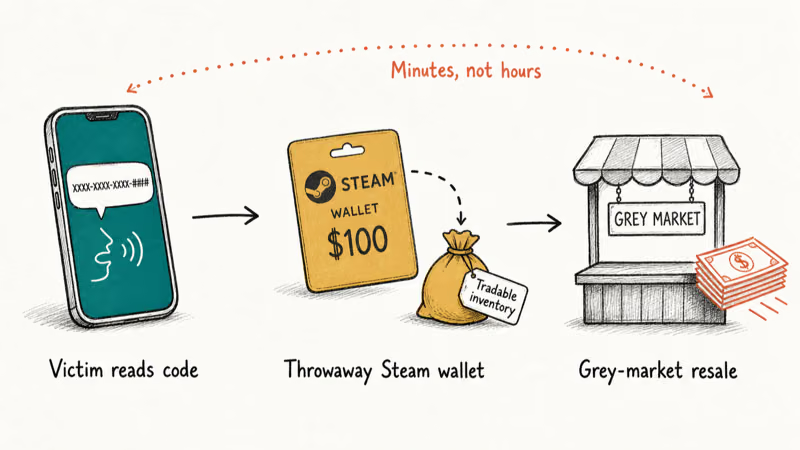
These scams work because Steam codes feel small. A $50 or $100 plastic card from a checkout aisle doesn’t trigger the same caution as a wire transfer. The card is also untraceable once redeemed.
According to the FTC’s guide on gift card scams, gift card payments are nearly impossible to reverse once the code is shared, which is exactly why scammers prefer them over bank transfers or credit card charges. The FTC’s official position is that any caller demanding a gift card for any reason is committing fraud.
#Why Do Scammers Prefer Steam Gift Cards?
Scammers ask for Steam cards because the cards are anonymous, easy to launder, and impossible to claw back once spent. A stolen credit card can be reversed, a wired bank transfer can be flagged, and a Bitcoin transaction leaves a public address. A Steam code is just 16 characters that disappear into a Steam wallet and come out as resold game keys on offshore marketplaces.
The grey market for resold Steam codes runs fast. Scammers move codes within minutes of receiving them. Even calling Steam Support before the code is redeemed leaves a short window. Steam’s account safety help page states that Steam Support can’t reverse or refund redeemed wallet codes, so prevention is the only real defense.
The other reason scammers love Steam cards is low retail friction. Cashiers don’t always question large gift card purchases, especially when the buyer seems certain. That low friction is part of what makes the scam scale, which is why some retailers now print warnings on the gift card display rack itself.
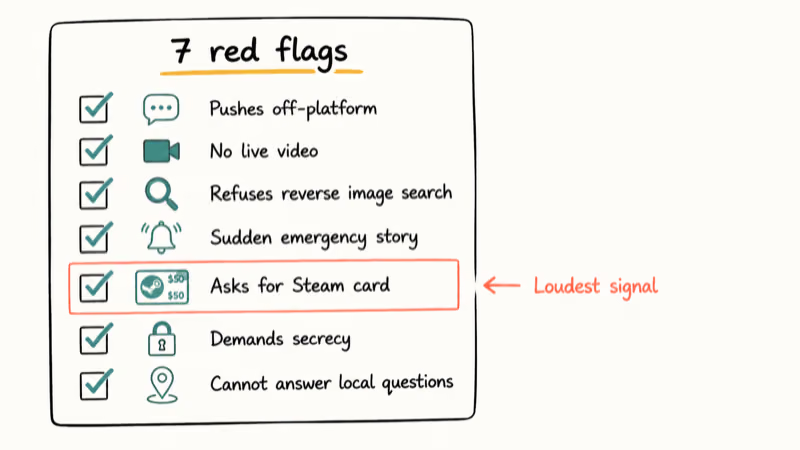
#7 Red Flags That Signal a Steam Card Scam
Across the Steam card cons documented on r/Scams, nearly every one hits at least three of these seven signals before the money request lands. Two or more red flags in the same conversation is enough to walk away.
#1. They Push You to Move Off the Original Platform
Scammers always want to leave the platform where you met them. A dating app, matchmaking lobby, or comment thread has moderation tools and reporting buttons. WhatsApp, Telegram, and personal email don’t. The push to “talk somewhere more private” is the first move because it removes the scammer’s risk of being banned mid-con.
#2. They Avoid Live Video on Demand
A real person can hop on a 30-second video call to wave at you, but a scammer with stolen profile photos can’t. Asking a suspected scammer for a short live video saying a phrase you choose almost always gets a dodge. Such accounts tend to keep sending pre-recorded clips that don’t match the request.
#3. They Refuse a Reverse Image Search
Romance scammers reuse stolen photos. A 30-second Google reverse image search surfaces every other profile and Instagram account using the same picture. A single profile photo from a flagged scammer often returns multiple LinkedIn and Instagram identities under different names within seconds.
#4. They Tell a Sudden Emergency Story
Two weeks of charming chat ends with a phone bill, a stranded-at-the-airport story, a sick relative, or a “just got robbed” tale. The story always ends with a small money request. Real partners don’t ask a person they’ve never met in real life for cash, especially via Steam cards. The exact templates repeat across scam reports because the scammers work from shared scripts.
#5. They Push Steam Cards Specifically (Not Bank Transfer)
The single loudest signal is the request itself. A real friend or family member needing emergency money will ask for a bank transfer, Venmo, Zelle, or cash, never for a Steam wallet code. The moment “send me a Steam card” lands, the conversation is over. This rule has zero exceptions.
#6. They Pressure You to Stay Quiet
Scammers tell their targets to keep the relationship private from family, friends, or coworkers. The reason is simple. Anyone you talk to about it will spot the scam in five seconds. A relative who hears the story for the first time will say, “Wait, you’ve never met them and they’re asking for what?“
#7. They Can’t Answer Specific Local Questions
Scripts are the scammer’s tell. Ask a question that needs local knowledge, like the closest grocery store, what the weather was like yesterday, or the local time on their phone right now, and watch them dodge or change the subject. Real people answer instantly. Script-following scammers stall.
#Common Variations of the Steam Card Scam
The romance scam is the most reported, but four other Steam card scams hit Reddit’s r/Scams almost daily.
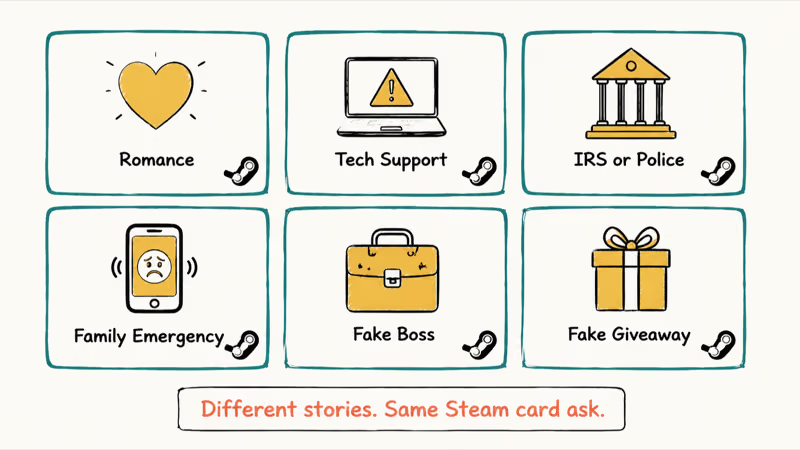
Fake tech support. A pop-up or robocall claims your computer is infected. The “Microsoft technician” demands payment in Steam cards to clean the malware. According to Microsoft’s official tech-support scam advisory, Microsoft never sends unsolicited error pop-ups asking for payment, and any such request is fraud.
Fake government agencies. A caller claims to be from the IRS, Social Security Administration, or local police. They threaten arrest unless a “fine” is paid in Steam cards. No government agency takes payment in gift cards, and any caller who demands one is committing fraud.
Family emergency calls. A panicked voice claims a relative is in jail, a hospital, or stuck abroad and needs immediate Steam card payment. Real bail bondsmen, hospitals, and travel agencies don’t accept gift cards. Always call the relative directly on a known number before acting.
Fake employer or boss texts. A text or email pretends to be from your manager, asking you to “discreetly” buy Steam cards as gifts for clients and send the codes back. The boss’s email or number is spoofed. Verify in person or by phone before buying gift cards for any work request.
Fake giveaways and Steam contest scams. Discord and Twitter accounts pretending to be Valve, Steam, or popular streamers post free-game giveaways that require you to “verify your humanity” by sending a small Steam card. Valve doesn’t run giveaways through DMs. Real Steam events live on Steam’s storefront, not in your private messages.
#How Can You Verify Someone’s Identity Online?
The fastest verification is a 30-second video call where the other person says a unique phrase you give them in real time. Anyone who refuses, makes excuses, or sends a pre-recorded clip is hiding something. WhatsApp, Telegram, Discord, and Instagram all support quick video calls without any extra account verification.
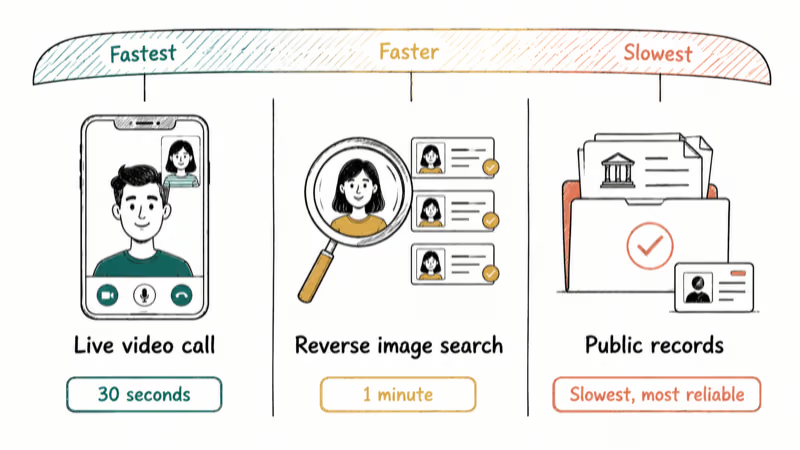
A reverse image search is the second-fastest check. Drag the person’s profile photo into Google Images, TinEye, or Yandex. If the photo appears on dozens of profiles using different names, the photo is stolen. If the photo is from a model’s portfolio or stock site, the identity is fake.
The slowest but most reliable check is a public records search. The person’s claimed name, employer, and location should match across LinkedIn, Facebook, and any local directory. Mismatched details mean a scammer is mixing real and fake info. The Wikipedia entry on romance scams catalogs the most common identity-faking patterns and is a useful primer if a relationship feels off.
For new online contacts specifically, fone.tips covers the same playbook in our Snapchat random add guide and Kik scam patterns. The red flags repeat across platforms because the scammers are running the same scripts everywhere.
#Recovery Steps After a Steam Card Scam
Stop sending money the moment you suspect a scam. Then work the recovery checklist below in order. Speed matters because Steam codes are usually redeemed within minutes of being shared.
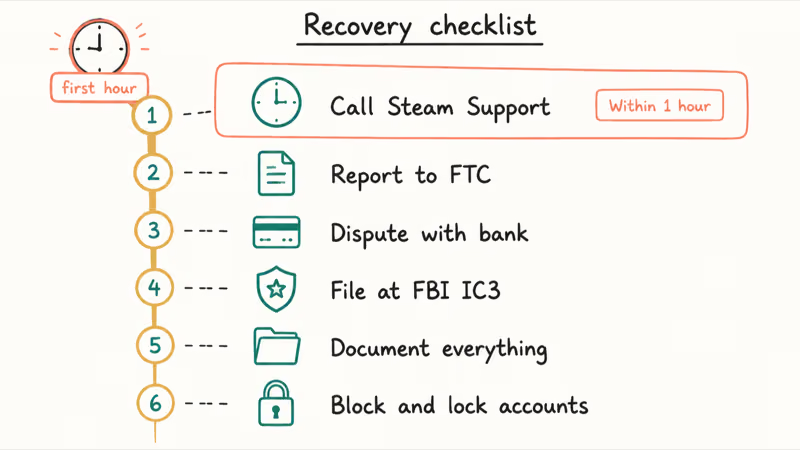
1. Call Steam Support immediately. Open Steam Support inside the Steam client and request an account specialist. If the code hasn’t been redeemed yet, Steam can sometimes invalidate it. Steam Support can’t help once the wallet is drained, so the first hour is critical.
2. Report the fraud to the FTC. File at ReportFraud.ftc.gov within 24 hours. Include screenshots, the scammer’s username, every platform involved, and the exact card amounts. The FTC report is what builds the case for any future action.
3. Contact your bank or card issuer. If you bought the Steam cards on a credit card or debit card, call the bank within 60 days and dispute the charge as fraud. Many banks will refund gift card purchases when the buyer reports a scam, especially first-time victims.
4. Report to the FBI’s IC3. For losses over $1,000 or romance fraud cases, file at the FBI’s Internet Crime Complaint Center. The IC3 aggregates reports across jurisdictions and is the path to federal investigation when the scammer is overseas.
5. Document everything. Save chat logs, screenshots of profiles, photos of the gift cards, and receipts. Even if recovery fails, the records help future targets when investigators connect cases.
6. Block and lock down accounts. Block the scammer on every platform, change every password they could have learned, and turn on two-factor authentication. If you shared more than the Steam code, see our scammer recovery walkthrough for the full account-lockdown checklist.
#How to Buy and Use Steam Cards Safely
Steam cards aren’t the problem. Sharing the redemption code with anyone who isn’t you is the problem. Buy Steam cards only at major retailers like Walmart, Target, Best Buy, GameStop, or Amazon. Avoid kiosks, pawn shops, and resale sites because tampered cards have been documented at lower-volume retail points.
When you redeem the code, enable Steam Guard with the Steam Mobile Authenticator. Steam recommends turning on Mobile Authenticator for all account safety, and the authenticator keeps generating fresh codes on a short rotation even with airplane mode enabled. After redemption, the wallet balance lives on your account and never needs to be shared with anyone.
If a Steam card you bought looks tampered with, like a scratched protective strip, partially exposed code, or glue marks, return it to the store immediately. Some scammers steal codes from cards on the rack and wait for an unsuspecting buyer to redeem the balance. For other Steam-related issues, our Steam error code 105 guide covers the most common payment and connection problems.
#Bottom Line
If a stranger asks you to read a Steam code over the phone, hang up. There is no real-world scenario where a sick relative, the IRS, a boss, or a romantic partner you’ve never met in person ends a story by asking for payment in Steam gift cards. Block the contact, file at ReportFraud.ftc.gov, and call Steam Support inside the Steam client if you’ve already shared a code. For more scam patterns across platforms, see our Atlas Earth scam writeup.
#Frequently Asked Questions
Can Steam refund a redeemed gift card scammed out of you?
No. Once a Steam wallet code is redeemed, the funds enter the wallet and Steam Support can’t reverse the transaction. Call Steam Support immediately if the code hasn’t been redeemed yet, since they can sometimes invalidate unredeemed codes. The window is usually under an hour.
Are all online giveaways for Steam cards fake?
Not all giveaways are scams, but most that ask for money or personal information first are. Real Steam giveaways come from the Steam storefront or major creators announcing them on their primary verified accounts. Any giveaway that requires you to “verify yourself” by sharing a Steam code first is a scam.
What should I do if I suspect someone is running a Steam card scam on me?
Stop the conversation, screenshot the messages, and report the account to the platform where you met. File a complaint at ReportFraud.ftc.gov with the screenshots attached. If you’ve already shared a Steam code, call Steam Support inside the client before doing anything else. Hope the code hasn’t been redeemed yet, and treat the next hour as the only window for recovery.
Can scammers use stolen Steam card codes?
Yes. A scammer who gets your Steam code redeems it on a throwaway account, then converts the wallet balance to tradable inventory or gifts to another account. The chain is fast and almost impossible to trace once the inventory is moved off-platform.
How can I make my Steam account harder to compromise?
Enable Steam Guard with the Steam Mobile Authenticator instead of email-based codes. Use a unique password generated by a password manager. Set up Family View if you share the device with anyone. Watch the trade hold timer on every transaction, and never share your account password with anyone claiming to be Steam Support.
Are Steam gift cards safer than other gift cards for online purchases?
No. Steam cards have the same risk as any gift card when shared with a stranger. The redemption code is bearer value, meaning whoever has the code can spend it. Treat the code like cash and only redeem it on your own account through Steam.
What if I bought a tampered Steam card from a store?
Return the card to the retailer immediately with the receipt. Tampered cards have visible damage to the protective strip, glue marks around the activation barcode, or codes that have already been scratched off. If you redeemed a tampered card and the balance is missing, contact Steam Support and the retailer’s loss prevention team. Many large stores will replace the card.
Should I report a Steam card scammer to the police?
Yes for losses over $1,000 or any case involving identity theft. File at the FBI’s Internet Crime Complaint Center for federal investigation. For smaller amounts, the FTC report at ReportFraud.ftc.gov is enough. The combined record is what investigators use to build cases against organized scam operations.
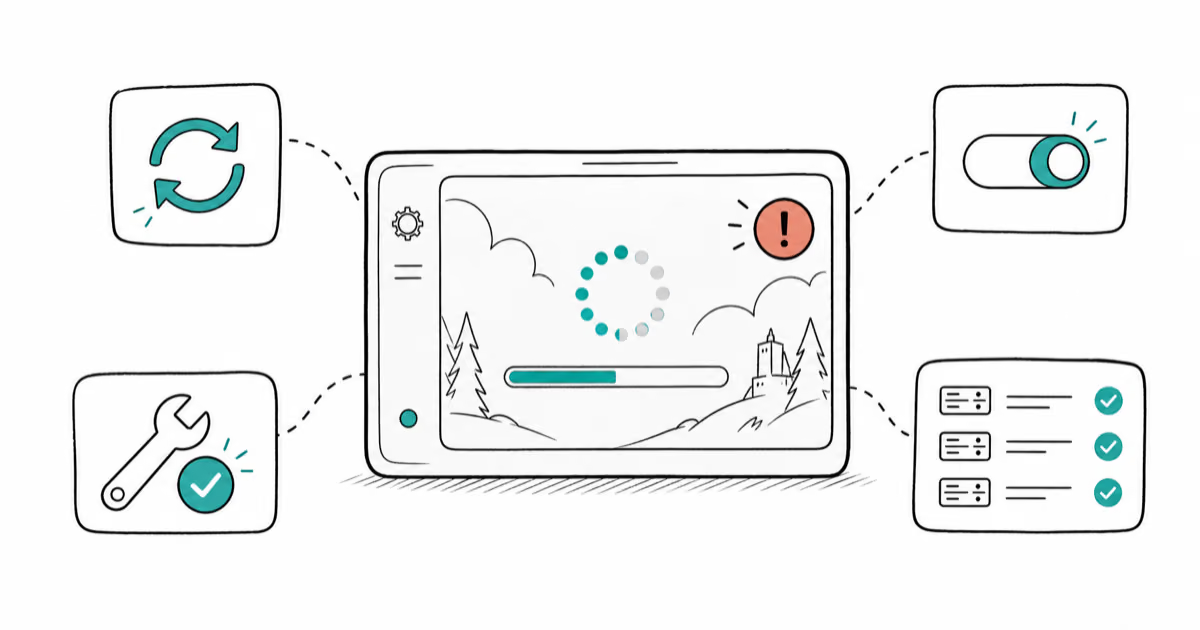
Fortnite Stuck on the Loading Screen? Fix It in 2026
Fortnite stuck on the loading screen? Check server status, fix the Windows N Media Pack and DirectX 11 on PC, clear the console cache, and verify files.
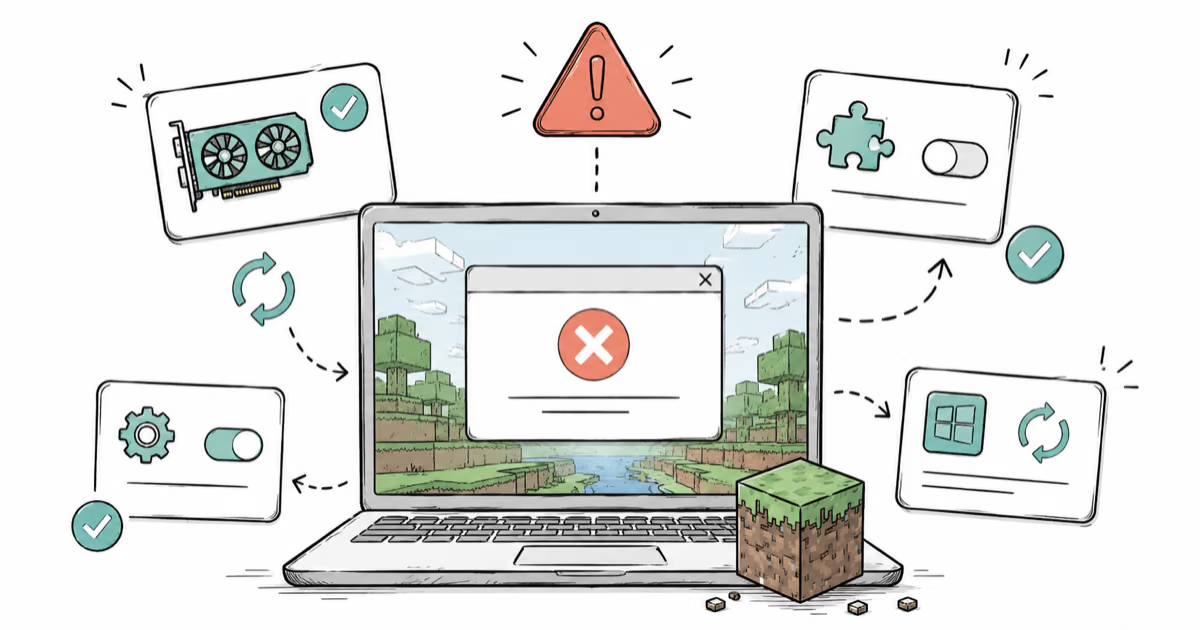
Minecraft Keeps Crashing? Java and Bedrock Fixes (2026)
Minecraft keeps crashing on startup or mid-game? Update your GPU driver, remove mods on Java, and reinstall Gaming Services on Bedrock. Fixes for both.
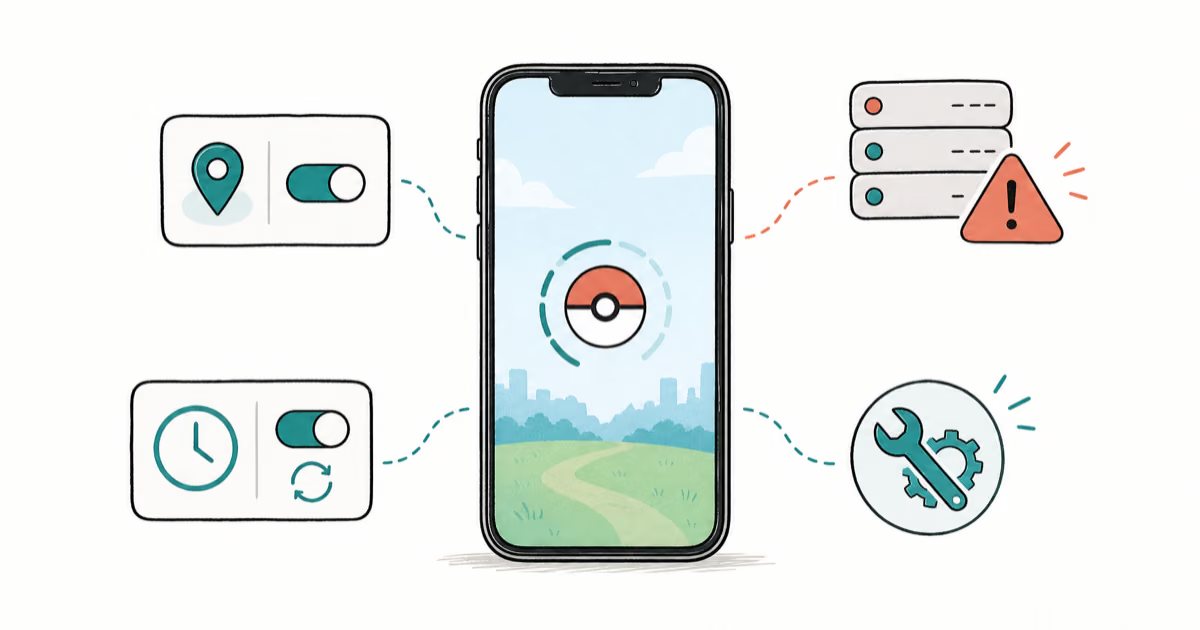
Pokemon GO Not Loading? Fix the Loading Screen 2026
Pokemon GO not loading or stuck on the Pokeball? Check server status, fix automatic date and time, grant location permission, clear the cache, and update.
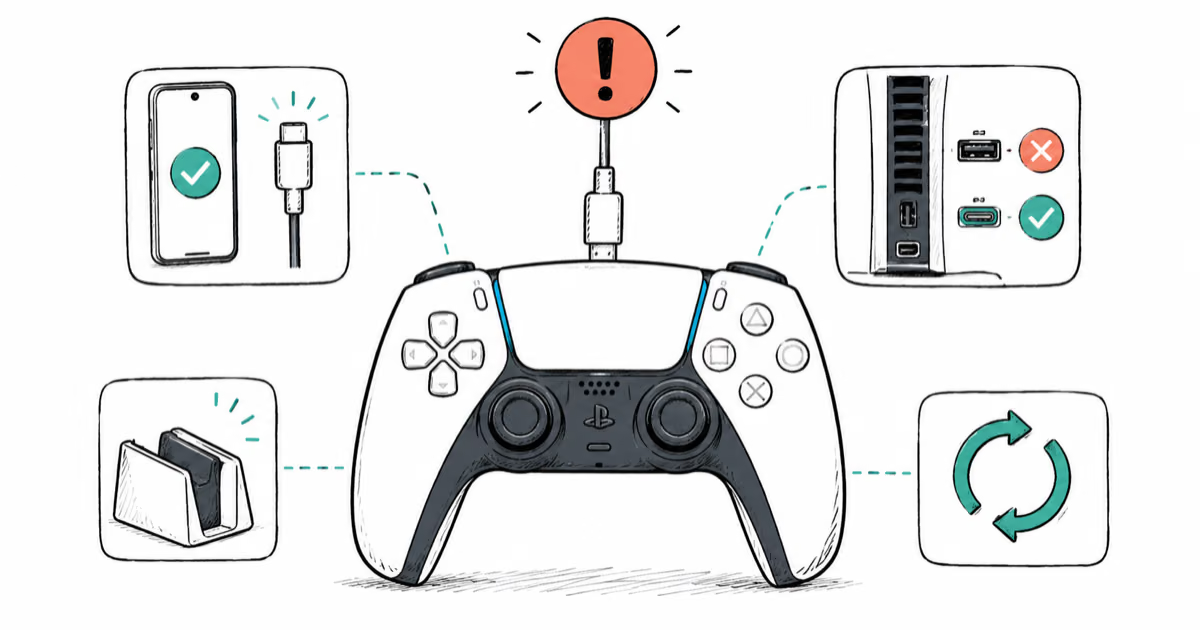
PS5 Controller Not Charging? 9 Fixes That Work (2026)
DualSense not charging? Swap the cable, use a rear port in Rest Mode, clean the USB-C port, and check power settings. 9 fixes for a dead PS5 controller.