How to Fix Outlook Error 0x8004060c: 6 Proven Methods (2026)
Fix Outlook error 0x8004060c caused by oversized PST files with 6 practical methods. Covers compacting, archiving, ScanPST repair, and OST rebuilds.
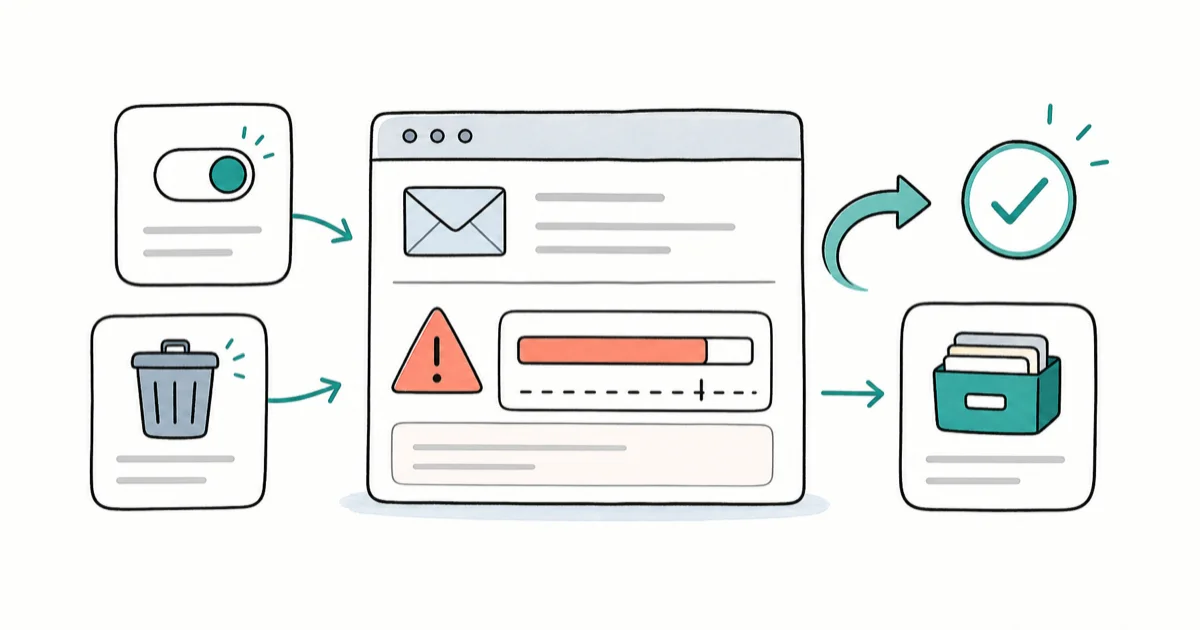
Quick AnswerThe Outlook 0x8004060c error occurs when your PST or OST data file exceeds its size limit. Fix it by compacting the data file through File > Account Settings > Data Files, archiving old emails, and emptying your Deleted Items folder.
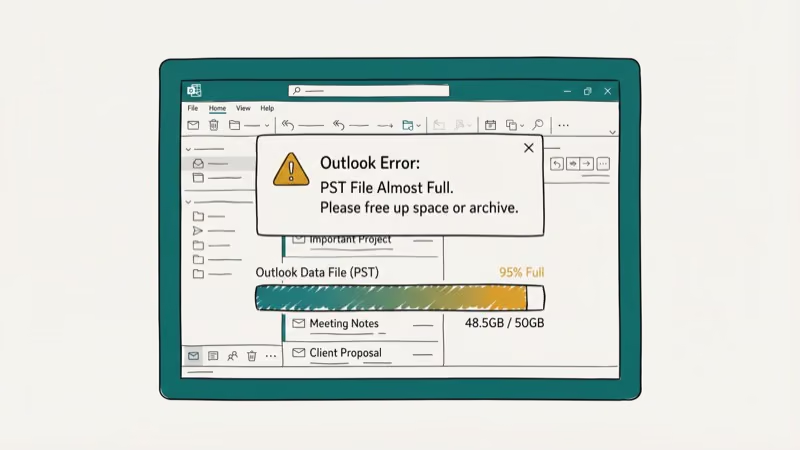
Outlook stops sending and receiving emails and shows “The message store has reached its maximum size” with error code 0x8004060c. Your PST or OST file hit its size ceiling. The fix is to free mailbox space, compact the data file, repair corruption, or rebuild the local cache.
- Error 0x8004060c triggers when your PST or OST data file reaches the 50 GB limit in modern Outlook
- Emptying the Deleted Items folder and compacting the PST file typically frees 2-5 GB immediately
- Archiving emails older than 12 months moves them to a separate file and reduces primary PST size
- The built-in ScanPST repair tool fixes corruption that inflates PST file size beyond actual content
- Recreating the OST file forces a fresh sync from your Exchange or Microsoft 365 server
#What Triggers the 0x8004060c Error?
Error 0x8004060c appears when Outlook’s data file reaches its maximum allowed size. For Outlook 2010 and newer, that limit is 50 GB by default. Older versions like Outlook 2002 had a 2 GB cap, which made this error far more common.
Microsoft’s documentation on data file limits states that PST files above 10 GB start showing performance degradation, and deleted items still occupy hidden space that only compacting can reclaim.
Common causes:
- Large attachments accumulated over years of email use
- Deleted Items folder holding thousands of emails that still count toward the size limit
- Corrupted PST file where internal fragmentation inflates the file size beyond its actual content
- Exchange sync issues creating duplicate cached items in the OST file
This error is part of a family of Outlook storage errors. The 0x80042109 error and 0x80040119 error share some of the same causes and fixes.
#Empty the Deleted Items Folder First
Right-click the Deleted Items folder in Outlook’s folder list and select Empty Folder. Then do the same for Junk Email.
This is the fastest way to free up space. Deleted emails still count toward the PST file size limit until the folder is emptied and the data file is compacted.
Go to File > Options > Advanced and check Empty Deleted Items folders when exiting Outlook to prevent this buildup in the future.
If your Outlook isn’t receiving emails alongside this error, the full PST file is likely blocking both incoming and outgoing mail.
#Compact Your PST File to Reclaim Space
Deleting emails doesn’t automatically shrink the PST file. Compacting does.
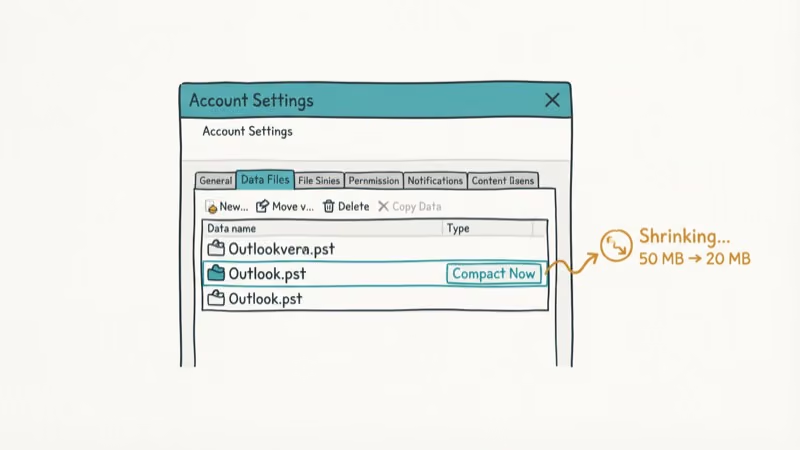
- Close Outlook completely
- Open
Control Panel>Mail(or search “Mail” in Windows Settings) - Click Data Files, select your PST file, and click Settings
- Click Compact Now in the dialog that appears
Compacting removes the empty space left behind by deleted emails. A large PST file can shrink noticeably after compacting because Outlook reclaims dead space from past deletions.
The process takes 5-30 minutes depending on file size. Don’t open Outlook until compacting finishes.
If Outlook reports that the PST file can’t be found during this process, the file may have moved or the profile path is wrong.
#Archive Old Emails to a Separate File
Archiving moves emails older than a date you choose into a new, separate PST file. This permanently reduces your primary data file’s size.
- Go to
File>Info>Cleanup Tools>Archive - Select Archive this folder and all subfolders
- Choose your Inbox or the entire mailbox
- Set the “Archive items older than” date (12 months ago works well)
- Pick a location to save the archive PST file
- Click OK
Based on Microsoft’s archiving guide, auto-archive can also run on a schedule by going to File > Options > Advanced > AutoArchive Settings and configuring it to archive every 14 days for items older than 6 months.
According to Microsoft’s Outlook performance recommendations, keeping your primary PST under 10 GB delivers the best performance. The archive file is accessible anytime through File > Open > Outlook Data File.
#Run the Inbox Repair Tool (ScanPST)
Microsoft’s built-in repair tool fixes internal corruption that causes PST files to grow beyond their actual content size.
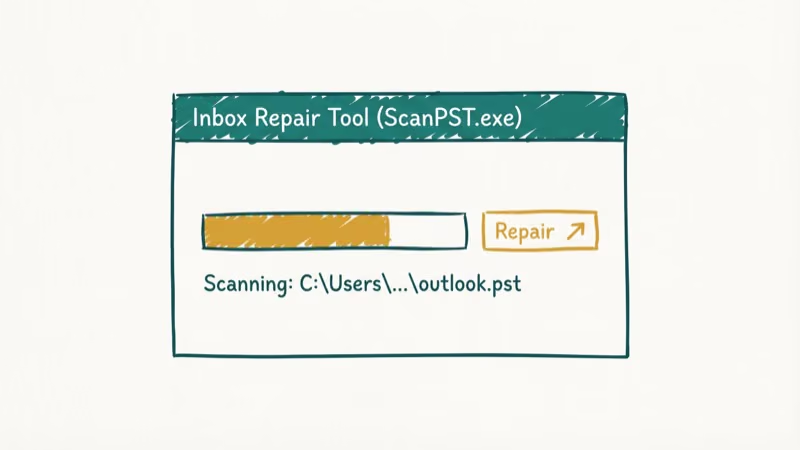
- Close Outlook
- Find ScanPST.exe at C:\Program Files\Microsoft Office\root\Office16 (the path varies by Outlook version)
- Click Browse, select your PST file, and click Start
- If errors are found, check Make backup of scanned file and click Repair
The repair process takes 2-15 minutes depending on file size and corruption level. ScanPST can run multiple passes. According to Microsoft’s repair tool documentation, running ScanPST 2-3 times catches errors that a single pass misses.
After repair, compact the PST file again since the repair process often frees additional hidden space.
If the error 0x800408fc appears during repair, your network connection to the Exchange server may be interfering. Work offline during the repair.
#Should You Recreate the OST File?
If you use an Exchange or Microsoft 365 account, your email data syncs to a local OST file. A corrupted OST triggers 0x8004060c even when the server mailbox is within limits.
- Close Outlook
- Go to %localappdata%\Microsoft\Outlook in File Explorer
- Rename the .ost file (don’t delete it yet)
- Open Outlook and let it create a fresh OST by resyncing from the server
The resync downloads all your mail fresh from the server. This takes 10-60 minutes depending on mailbox size and internet speed.
Once you confirm everything synced correctly, delete the renamed old OST file to reclaim disk space.
#When to Use Third-Party Repair Tools
For severe PST corruption that ScanPST can’t fix, specialized tools dig deeper. A PCMag review of PST repair tools found that dedicated repair software often recovers emails from files that ScanPST declares unrecoverable.
Stellar Repair for Outlook recovers emails from heavily corrupted PST files that Microsoft’s tool gives up on. Wondershare Repairit for Email handles both PST and OST formats.
Some links on this page are affiliate links, which means fone.tips may earn a commission at no extra cost to you.
These tools offer free scanning to preview recoverable data before you pay. Use them only when ScanPST can’t repair the file and you need to recover messages into a new clean PST.
If you’re experiencing the Outlook disconnected error alongside storage problems, fix the connectivity issue first since a disconnected client can’t properly compact or archive.
#Bottom Line
Empty your Deleted Items folder and compact the PST file. Those two steps take under 10 minutes and fix 0x8004060c for most people. Archive old emails monthly to keep file size under control. For corruption, run ScanPST 2-3 times, or use Stellar Repair for cases ScanPST can’t handle.
#Frequently Asked Questions
What is the maximum PST file size in Outlook?
Outlook 2010 and newer support PST files up to 50 GB by default. Outlook 2003-2007 had a 20 GB limit, and Outlook 2002 was capped at 2 GB. The 50 GB limit can be increased through a registry edit, but Microsoft doesn’t recommend it because performance degrades significantly above that threshold.
Will compacting my PST file delete any emails?
No. Compacting only removes the empty space left behind by already-deleted emails. All your current emails, contacts, and calendar items remain untouched.
How often should I compact my Outlook data file?
Monthly compacting prevents file bloat. Set a calendar reminder. If you delete large volumes of email daily, compact every 2 weeks. The process takes 5-30 minutes depending on file size.
Can I split a large PST file into smaller ones?
Yes. Archive old emails to a separate PST, then compact the original. This effectively splits your data. Outlook doesn’t have a built-in split function, but archiving by date range achieves the same result with full search capability across both files.
Why does 0x8004060c appear even after I deleted emails?
Deleting emails doesn’t shrink the PST file. The space from deleted items stays reserved until you compact. Empty your Deleted Items folder, then compact the PST through Control Panel > Mail > Data Files > Settings > Compact Now.
Is it safe to delete the OST file and let it recreate?
Yes, for Exchange and Microsoft 365 accounts. The OST is a local cache of your server mailbox. Deleting it forces Outlook to download everything fresh from the server. Your emails stay safe on the server during this process.
Can this error cause data loss?
The error itself doesn’t delete data. It blocks sending and receiving until you reduce file size. Acting quickly prevents the situation from getting worse. Running ScanPST after hitting the limit protects against corruption that could develop if Outlook repeatedly tries to write to a maxed-out file.

Best Laptop for Running LLMs in 2026: Memory Comes First
The best laptop for running LLMs is a memory purchase first. Compare MacBook unified memory against NVIDIA laptop VRAM, and see what each tier really runs.

How to Run a Local LLM on Windows: A 2026 Setup Guide
Run a local LLM on Windows with LM Studio or Ollama. Pick a model that fits your GPU memory, keep every prompt offline, and skip the monthly bill.

Bluetooth Not Working on Snapdragon X? Fixes for 2026
Bluetooth not working on your Snapdragon X Copilot+ PC? Generic audio, mice, and keyboards work, but vendor apps often lack an ARM build. Fixes inside.
Docker Desktop and WSL2 Not Working on Snapdragon X? Fix It
WSL2 runs fine on Snapdragon X, but Docker Desktop ARM is Early Access and throws WSL errors. Use WSL2 plus native ARM64 Ubuntu and Docker Engine.