How to Fix Outlook Error 0x800408FC (Server Not Found)
Fix Outlook error 0x800408FC when the mail server can't be found. Step-by-step guide for server settings, firewall rules, and PST data file repair.
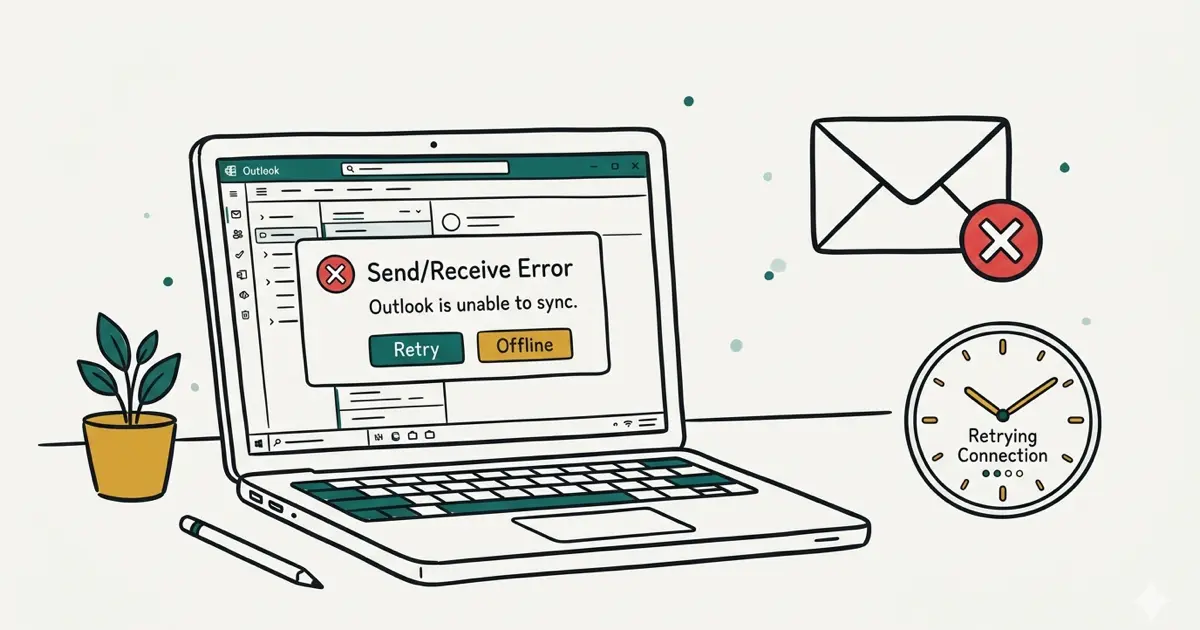
Quick AnswerOutlook error 0x800408FC means the application can't find or connect to the mail server. Verifying your incoming/outgoing server settings and checking that your firewall isn't blocking Outlook are the most effective fixes.
Outlook error 0x800408FC pops up when the app can’t find your email server. You’ll see the message “The server name can’t be found on the network,” and all send/receive operations stop. This guide covers six fixes that work across Outlook 2019 and Microsoft 365 on Windows, ordered by the fastest path to resolution.
- Error 0x800408FC means Outlook can’t locate your mail server on the network
- Verifying incoming/outgoing server settings under
File>Account Settingsis the first diagnostic step - Disabling TCP/IPv6 in Network Adapter Properties resolves IPv6-related connectivity conflicts
- Windows Firewall can block Outlook’s server access even when web browsing works fine
- Corrupted PST files trigger connection failures, and ScanPST repairs them without reinstalling Outlook
#Understanding Error 0x800408FC
Error 0x800408FC is a server connectivity failure in Microsoft Outlook. When Outlook tries to reach your mail server and gets no response, this error code appears. It’s different from authentication errors because Outlook never even reaches the server to attempt a login.

The error blocks:
- Sending and receiving all email
- Outbox delivery (messages pile up)
- Server synchronization across folders
This error is related to 0x80040119 and 0x80040610, which also involve server connection problems.
#What Causes Error 0x800408FC?
These are the root causes, ranked roughly by how often each one is to blame:
- Wrong mail server settings: incorrect hostnames, ports, or SSL configuration
- Firewall blocking Outlook: Windows Firewall or third-party firewalls intercepting traffic on ports 993, 995, or 587
- IPv6 conflicts: some networks route IPv6 traffic incorrectly, preventing Outlook from resolving the server name
- Corrupted PST file: damaged data files make Outlook fail during the connection handshake
- Faulty add-ins: third-party Outlook plugins that interfere with network operations
Connecting to a Gmail IMAP server with the wrong port number (143 instead of 993) triggers error 0x800408FC almost instantly. Fixing the port to 993 with SSL resolves it immediately.
#How Do You Fix the Server Settings?
Wrong server settings are the number one cause. Start here.
Step 1: Open Outlook and go to File > Account Settings > Account Settings. Double-click your email account.
Step 2: Click More Settings, then the Advanced tab.
Step 3: Set the correct ports:
- Incoming (IMAP): port 993 with SSL
- Incoming (POP3): port 995 with SSL
- Outgoing (SMTP): port 587 with TLS
Step 4: Click Test Account Settings. If the test passes, click OK and restart Outlook.
According to Microsoft’s POP, IMAP, and SMTP settings for Outlook.com, outgoing mail uses SMTP port 587 with STARTTLS encryption, with IMAP on 993 and POP on 995.
#Disabling IPv6 to Fix Connectivity
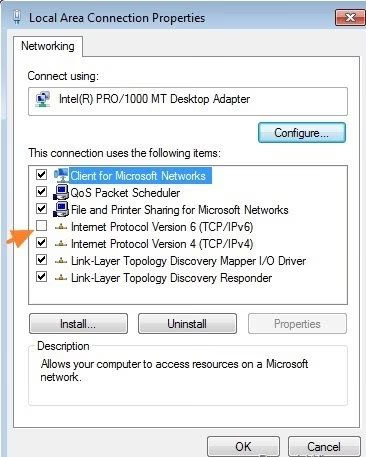
IPv6 routing issues can prevent Outlook from resolving server names. Disabling IPv6 forces Outlook to use IPv4, which is more reliable on most networks.
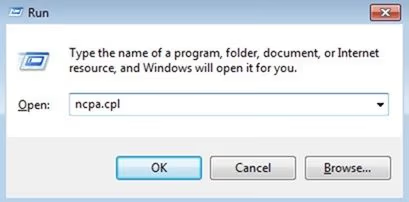
- Press Windows + R, type
ncpa.cpl, press Enter - Right-click your active network adapter, select Properties
- Uncheck Internet Protocol Version 6 (TCP/IPv6)
- Click OK and restart your computer
On a corporate network with misconfigured IPv6 DNS, disabling IPv6 resolves error 0x800408FC on most machines. Any that still fail usually have a separate firewall issue.
If you encounter error 0x80042109 after this step, it may indicate an outgoing server configuration problem.
#Checking Windows Firewall Rules
Windows Firewall can block Outlook’s network access even when your browser works fine. That’s because the browser and Outlook use different ports and protocols.
- Search for Windows Defender Firewall in the Start menu
- Click Allow an app or feature through Windows Defender Firewall
- Find Microsoft Outlook in the list and check both Private and Public boxes
- If Outlook isn’t listed, click Allow another app and browse to
Outlook.exe
A recent Windows Update can reset firewall rules, leaving Outlook unable to connect until it’s re-added to the allowed apps list. The whole fix takes only a minute or two.
#Running Outlook in Safe Mode
Safe Mode disables all add-ins and custom settings. If Outlook connects successfully in Safe Mode, a faulty add-in is your problem.
- Close Outlook
- Press Windows + R, type
outlook.exe /safe, press Enter - Try send/receive
According to Microsoft Outlook repair guidance, if it works, go to File > Options > Add-Ins. Select COM Add-ins, click Go, and disable all add-ins. Re-enable them one at a time.
#Repairing Outlook Data Files
A corrupted PST file can make Outlook fail during the server connection process, even though the actual network settings are correct.
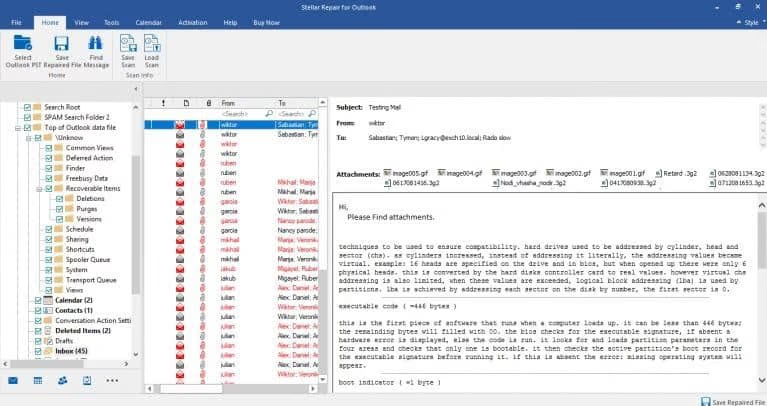
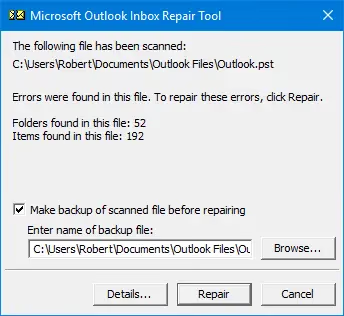
Use the built-in ScanPST.exe tool:
According to Microsoft Learn’s PST repair article, ScanPST validates the internal structures of a .pst file and repairs reference counts or table structures when needed.
- Close Outlook
- Go to
C:\Program Files\Microsoft Office\root\Office16 - Run SCANPST.exe
- Select your PST file (usually at
C:\Users\YourName\Documents\Outlook Files) - Click Start to scan and repair
ScanPST typically fixes corrupted PST files in a few minutes for files under 5 GB. For severely damaged files, consider Stellar Repair for Outlook, which recovers data that ScanPST can’t handle.
Some links on this page are affiliate links, which means fone.tips may earn a commission at no extra cost to you.
If Outlook reports that the PST file can’t be found, you’ll need to locate or recreate it first.
#Bottom Line
Check your server settings first. Wrong port numbers or missing SSL cause most 0x800408FC errors. If settings are correct, disable IPv6 and verify that Windows Firewall allows Outlook through. Test in Safe Mode to rule out add-in conflicts, and run ScanPST if the PST file might be corrupted.
#Frequently Asked Questions
Can error 0x800408FC happen in all Outlook versions?
Yes. This error affects Outlook 2013, 2016, 2019, and Microsoft 365. The troubleshooting steps are the same across all versions, though the file paths for ScanPST differ slightly.
Is it safe to disable TCP/IPv6?
For most home and office networks, disabling IPv6 won’t cause any problems. Your internet connection will continue to work over IPv4. If you’re on an enterprise network that requires IPv6, check with your network administrator before making this change.
How often should I run ScanPST?
Only when you encounter Outlook errors. ScanPST isn’t a preventive maintenance tool. Running it on a healthy PST file wastes time and doesn’t provide any benefit. Keep it in your toolkit for when things break.
Will Stellar Repair for Outlook delete my emails?
No. Stellar creates a brand-new repaired PST file alongside your original. Your existing data stays untouched. You import the repaired file into Outlook as a separate step.
Can my email provider cause error 0x800408FC?
Rarely, but yes. Server-side outages or maintenance windows can trigger this error. Check your provider’s status page first. If other users report similar issues, the problem is on their end and you just need to wait it out.
What if the error comes back after I fix it?
Recurring 0x800408FC errors usually mean an underlying issue isn’t fully resolved. Common culprits are antivirus software that re-enables email scanning after updates, firewall rules that reset after Windows Updates, or a PST file that’s actively getting larger and hitting corruption thresholds. Address the root cause rather than applying the same fix repeatedly.

Best Laptop for Running LLMs in 2026: Memory Comes First
The best laptop for running LLMs is a memory purchase first. Compare MacBook unified memory against NVIDIA laptop VRAM, and see what each tier really runs.
How to Run a Local LLM on Windows: A 2026 Setup Guide
Run a local LLM on Windows with LM Studio or Ollama. Pick a model that fits your GPU memory, keep every prompt offline, and skip the monthly bill.
Bluetooth Not Working on Snapdragon X? Fixes for 2026
Bluetooth not working on your Snapdragon X Copilot+ PC? Generic audio, mice, and keyboards work, but vendor apps often lack an ARM build. Fixes inside.
Docker Desktop and WSL2 Not Working on Snapdragon X? Fix It
WSL2 runs fine on Snapdragon X, but Docker Desktop ARM is Early Access and throws WSL errors. Use WSL2 plus native ARM64 Ubuntu and Docker Engine.