How to Change Your Slack Password Safely in 2026 Guide
Change your Slack password from desktop, web, or mobile, reset a forgotten one via email, and protect your own work account with two-factor authentication.
Quick AnswerTo change your own Slack password, open Slack, go to your profile, choose Account Settings, click expand next to Password, enter your current password, then save a new one. If you forgot it, use Reset your password through email instead.
Learning how to change your Slack password is a basic security habit that takes under two minutes on any device you own. The change-password flow works the same way on the Slack desktop app for macOS and Windows, the iOS and Android apps, and slack.com in any browser.
This guide walks through the desktop, web, and mobile flows for your own Slack account, covers the forgot-password reset path, and shows what to do when your workspace uses single sign-on.
- Sign into your own Slack account, open Account Settings, expand Password, then enter your current and new password to save the change in about 90 seconds.
- If you forgot your password, click Reset your password through email on the sign-in page and use the link Slack mails to your inbox within a few minutes.
- Slack also supports a magic sign-in code, so you can still get into your own workspace using only your email if no password is set.
- Workspaces on single sign-on through Google, Okta, or Microsoft Entra ID can’t change a password inside Slack; you must change it with your identity provider.
- Turn on two-factor authentication after any password change and store the new password in a reputable password manager rather than reusing an old one.
#Slack Password Basics and Why It Matters
Slack accounts don’t always require a password. Many workspaces let you sign in with a one-time magic code sent to your email, and enterprise plans usually route logins through single sign-on instead. That flexibility is convenient, but a strong account password plus two-factor authentication is still the safest setup for personal Slack accounts and small team workspaces.
Set a password if one is missing so you can sign in offline of email, switch devices quickly, and survive an email compromise. According to Slack’s password and sign-in support article, users can change or reset their password from any workspace they belong to, and changes apply to every workspace on that email address. That single-account model is why a strong password matters even if you only use Slack at work.
#Scope This Guide to Your Own Account
Before you make any change, scope this guide clearly. These steps apply only to your own Slack account or a workspace where you have an admin role and explicit permission.
Changing or resetting a password on another person’s Slack account without authorization is unauthorized access. Under the federal Computer Fraud and Abuse Act it can carry both civil and criminal penalties.
Slack’s acceptable use policy also forbids sharing credentials or impersonating teammates, so even an authorized password reset for a coworker should go through your IT or workspace admin instead of a personal handoff. The same rule applies if you’re locked out of an account you do own and have lost access to the email too: the right path is Slack’s account recovery flow, not a workaround.
For shared family or club workspaces, ask the workspace owner. The owner is the one who can re-invite you, change the email tied to your account, or grant admin access.
#How Do You Change Your Slack Password on Desktop or Web?
The desktop app and slack.com both use the same Account Settings page. The steps look identical whether you click through Slack’s macOS or Windows client or sign in via a browser. The desktop flow takes only a couple of minutes end to end.
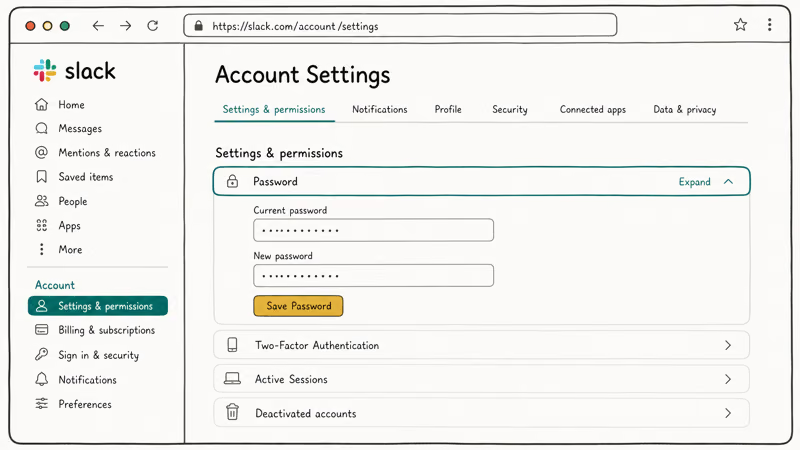
Start by opening Slack and signing into the workspace where you want to update credentials. Click your profile picture in the top right, then choose Profile from the menu. Inside the profile sidebar, click the three dots labeled More and pick Account Settings, which loads my.slack.com in your default browser.
On the Account Settings page, look for the Password section and click Expand. Enter your current password, then type the new one twice.
Slack accepts passwords of 12 characters or more. According to the NIST SP 800-63B digital identity guidelines, verifiers should require a minimum of 8 characters and accept passwords up to at least 64 characters, because length is the primary contributor to password strength. Click Save Password to confirm.
Slack then signs you out of other devices as a safety measure, so you’ll need to sign back in on your phone, tablet, or work browser.
If the Expand button is missing, your workspace is almost certainly on single sign-on. Skip ahead to the SSO section below.
#Change Your Slack Password on iPhone or Android
The mobile apps don’t let you change a password directly inside the app; they redirect you to the web Account Settings page in your phone’s browser. The result matches the desktop walk-through exactly.
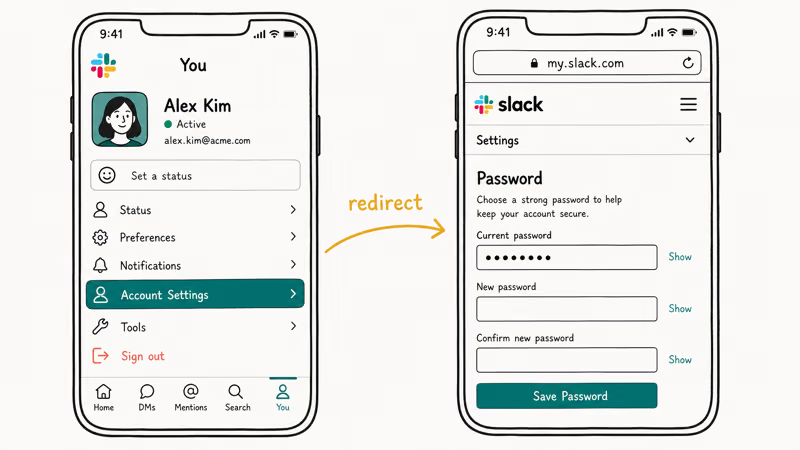
Open Slack on your phone and tap You in the bottom navigation bar to reach your profile. Tap the three dots in the top right, then choose Account Settings. Slack opens your default mobile browser to my.slack.com with your session already authenticated. From there, expand the Password row, enter the current password, choose a new password of at least 12 characters, and tap Save Password.
After you save, Slack signs you out of every active device.
Reopen the Slack app on your phone, sign in with the new password, and re-enable Face ID or biometric unlock if your workspace allows it. That last step keeps day-to-day access fast even though the underlying password is now stronger. While you’re in there, link the Slack login to your password manager so the new credential autofills on every device. Our Bitwarden hands-on review covers a free option that handles Slack autofill on both iOS and Android.
#What Should You Do if You Forgot Your Slack Password?
Forgotten passwords are the most common reason people land on this article, and the fix takes only a working email account. Go to slack.com/signin, enter the email address tied to your account, and click Forgot Password under the password field. Slack mails a reset link to that inbox.
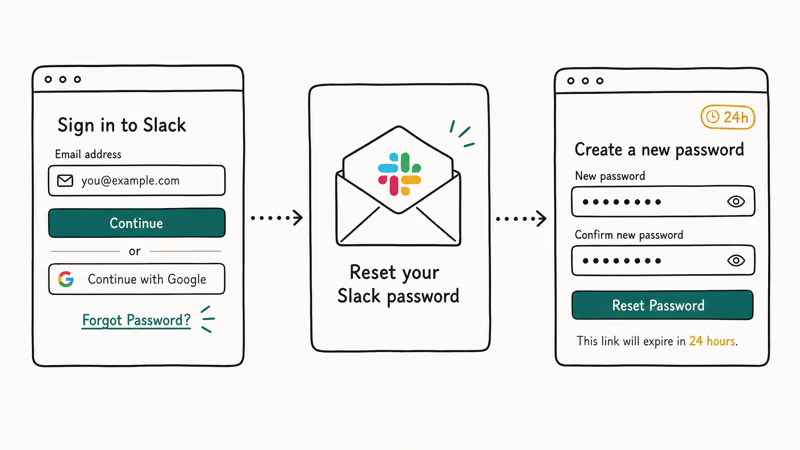
Open the email titled “Reset your Slack password” and click Choose a New Password. The link opens a page where you type a new password twice. After you save it, Slack signs you in immediately and revokes any older sessions. The reset link expires after 24 hours according to the Slack password reset help article, so request a fresh email if the original timed out.
If the reset email never arrives, check Promotions, Updates, Junk, or Spam folders since corporate filters sometimes flag bulk security mail. On Gmail in particular, the message can land in the Updates tab rather than the main Inbox.
Confirm you typed the correct address, then click Resend on the sign-in page.
Workspaces using SSO won’t show a Forgot Password option at all; in that case, follow your IT helpdesk’s identity provider reset flow instead. The same email-based recovery pattern shows up across most major apps; if you’re stuck on a different service, our guide to recovering a forgotten Instagram password follows the same playbook, and the keychain password recovery walkthrough handles the Mac-side equivalent for credentials stored locally.
#Handle SSO and Admin-Locked Workspaces
Workspaces on Slack Enterprise Grid or paid plans frequently require single sign-on through Google Workspace, Microsoft Entra ID, Okta, or another identity provider. With SSO turned on, Slack delegates authentication to that provider, and the Account Settings page hides the Password row entirely. You can’t rotate a Slack-specific password because one doesn’t exist for that account.
Verizon’s 2025 Data Breach Investigations Report reaffirmed that stolen credentials remain the top initial-access vector for breaches involving web applications, which is why locking down the identity provider that fronts Slack is non-negotiable.
Change your password with the identity provider instead.
Google Workspace users can update their password at myaccount.google.com under Security. Microsoft Entra ID users follow Microsoft’s reset your work or school password page. Okta users go to their company Okta dashboard and pick Settings then Change Password.
The new credentials take effect across every SSO-protected app, including Slack, on the next sign-in. If you aren’t on SSO but the Password row is still missing, your workspace admin may have disabled local passwords. Contact that admin through normal channels rather than sharing credentials. Per Slack’s SSO requirements documentation, workspace owners can require SSO and disable password-only sign-in entirely, which is a legitimate enterprise security policy worth respecting because it eliminates the password-reuse risk for the Slack login altogether.
#Turn on Two-Factor Authentication After Any Change
Two-factor authentication is the single highest-value upgrade you can pair with a new password, and Slack supports it on every plan. From the same Account Settings page where you changed the password, scroll to Two-Factor Authentication and click Expand, then Set Up Two-Factor Authentication. You’ll be asked to confirm your password and pick either an authenticator app or SMS.
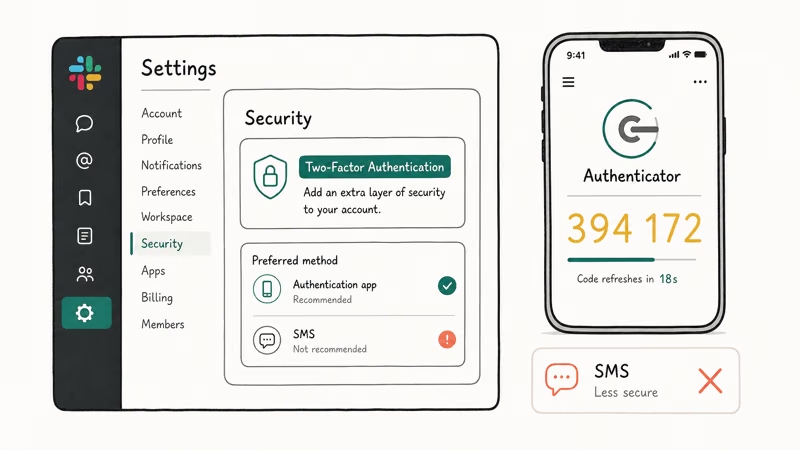
Pick the authenticator app option, not SMS. SMS codes can be intercepted via SIM-swap attacks.
Authenticator apps such as Authy, Google Authenticator, or 1Password generate codes locally on your device. Slack will display a QR code; scan it inside the authenticator, type the six-digit code Slack shows next, and save the backup codes somewhere offline.
With two-factor on, the new password plus authenticator combo adds only a brief extra step to a Slack sign-in on a new device and nothing noticeable on already-trusted devices. Store backup codes in the same password manager vault as the password itself so a lost authenticator phone doesn’t lock you out for good.
#Bottom Line
Change it every 90 days.
For personal Slack accounts and small workspaces without SSO, change your password from the desktop app every 90 days using a 14-character or longer passphrase generated by a password manager. Pair the new password with two-factor authentication and you have closed the two largest gaps that lead to Slack account takeover.
Use Bitwarden or another reputable manager.
A reputable password manager covers a free option that works well for storing the Slack password and 2FA backup codes side by side, and keeping the codes nearby pays off the next time Google can’t verify your account and you need a backup factor on hand. The same vault can also hold your recovery notes for Slack screen sharing if you keep workflow checklists alongside credentials.
If you’re on SSO or an admin-managed workspace, don’t try to work around the missing Password row. Use the identity provider’s reset flow, never ask a coworker for their credentials, and route any teammate password problems through IT. Borrowing Slack credentials, even with permission, violates Slack’s terms of service and almost every enterprise security policy.
Once your password is sorted, the next housekeeping pass is fixing Slack notifications that aren’t working so the secured account actually pings you when it should.
#Frequently Asked Questions
Can I change my Slack password on the mobile app?
The mobile app sends you to the browser to change a password. Tap You, the three-dot More menu, then Account Settings to open my.slack.com.
How long should a Slack password be?
Slack accepts any password of 12 characters or more, but security researchers recommend 14 to 16 characters minimum for accounts tied to work data. Use a random passphrase from a password manager rather than a personal pattern such as a pet name plus birth year, since those patterns appear in cracking dictionaries within seconds. A 16-character random passphrase resists offline cracking attempts for years even against modern GPU rigs, and a manager like Bitwarden can autofill it on every device.
What should I do if I forget my Slack password?
Use the Forgot Password link on slack.com/signin and watch your inbox for the reset email.
Can I use the same password for Slack and other accounts?
No. Reusing a password across services means one breach can expose your Slack workspace too. A password manager makes unique passwords easy and will autofill the new Slack password across desktop and mobile. Pair it with two-factor authentication, and keep your email login equally hardened so a Gmail account recovery flow still works if you ever lose access.
Is two-factor authentication necessary for Slack?
Two-factor is optional but strongly recommended. Turn it on under Account Settings and pick the authenticator-app option rather than SMS.
Why is the Password section missing from my Account Settings?
That usually means your workspace uses single sign-on and hides the local password field. Check with your IT admin about which identity provider runs your Slack login, then change your password with that provider instead. The change applies to Slack and every other SSO-protected app on the next sign-in, so you only do this rotation once per quarter even if you use ten different SaaS tools at work.
How often should I change my Slack password?
Rotate every 90 days for personal workspaces, or any time you suspect an account compromise.
What if I can’t remember the email tied to my Slack account?
Check your inbox for older Slack messages such as channel notifications, mentions, or workspace invites; those reveal which email Slack uses for your account. If you still can’t find it, ask your workspace owner to look you up by name in the Slack admin dashboard, since they can see member email addresses without sharing your credentials.
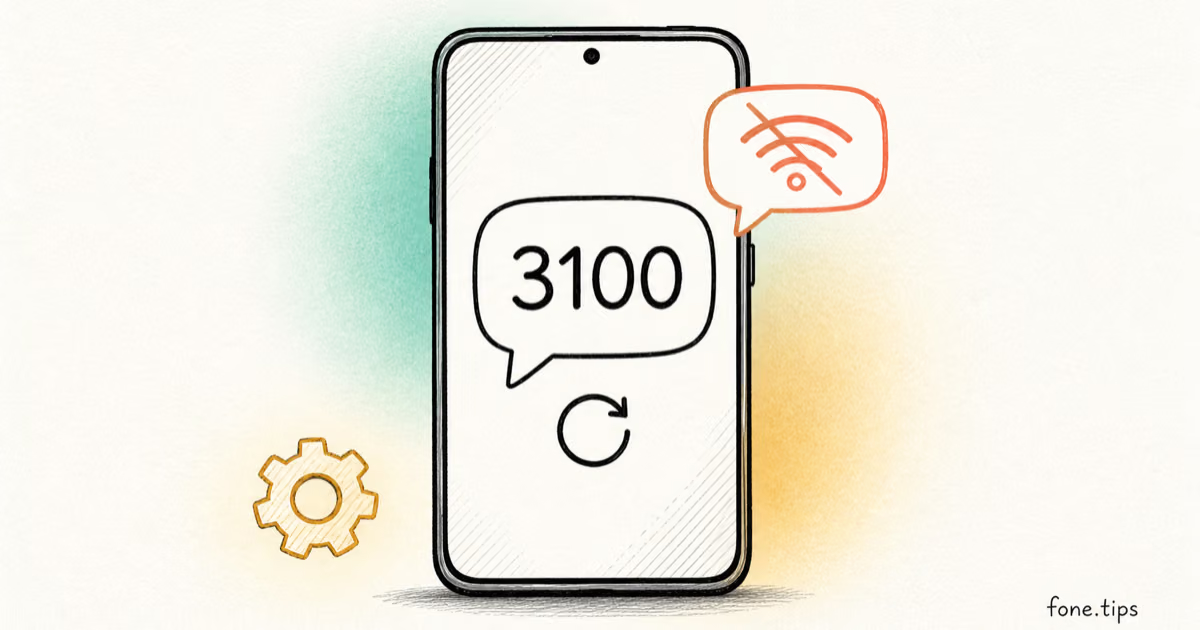
Google Messages Error 3100: Why RCS Is Broken on Galaxy
Google Messages RCS error 3100 hits Galaxy owners after phone or carrier switches. Google told 9to5Google a fix is coming. Here's what actually helps.
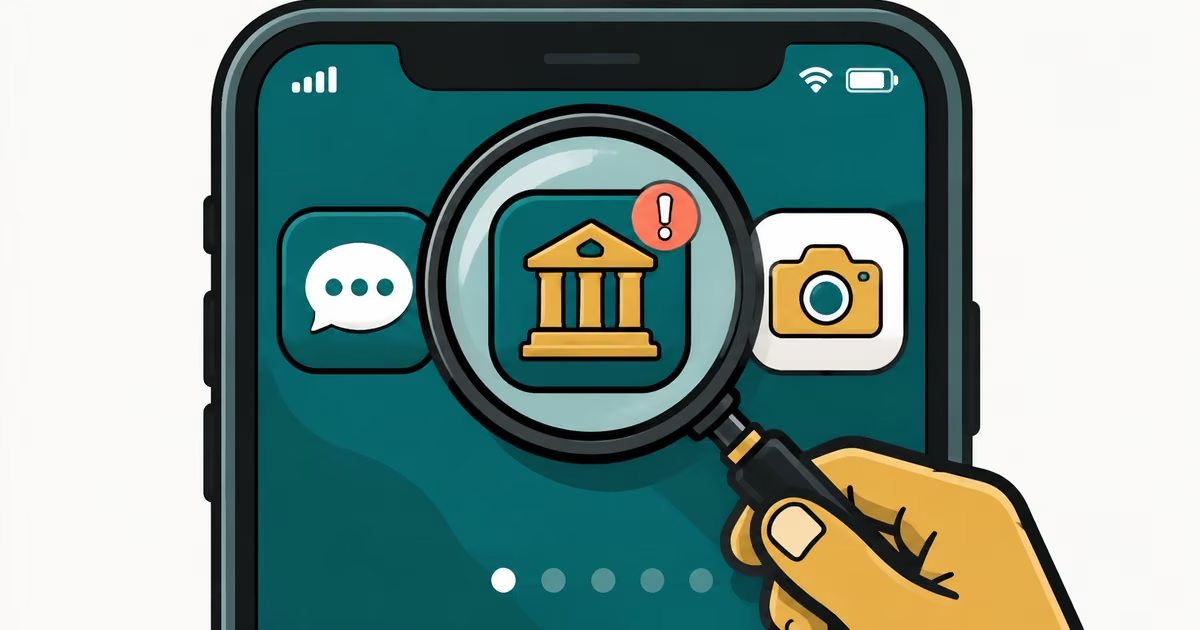
Is This Bank App Real? Spot a Fake App on Your Home Screen
A bank app can land on your home screen from a web page with no install warning. Learn the checks that tell a real banking app from a phishing web app.
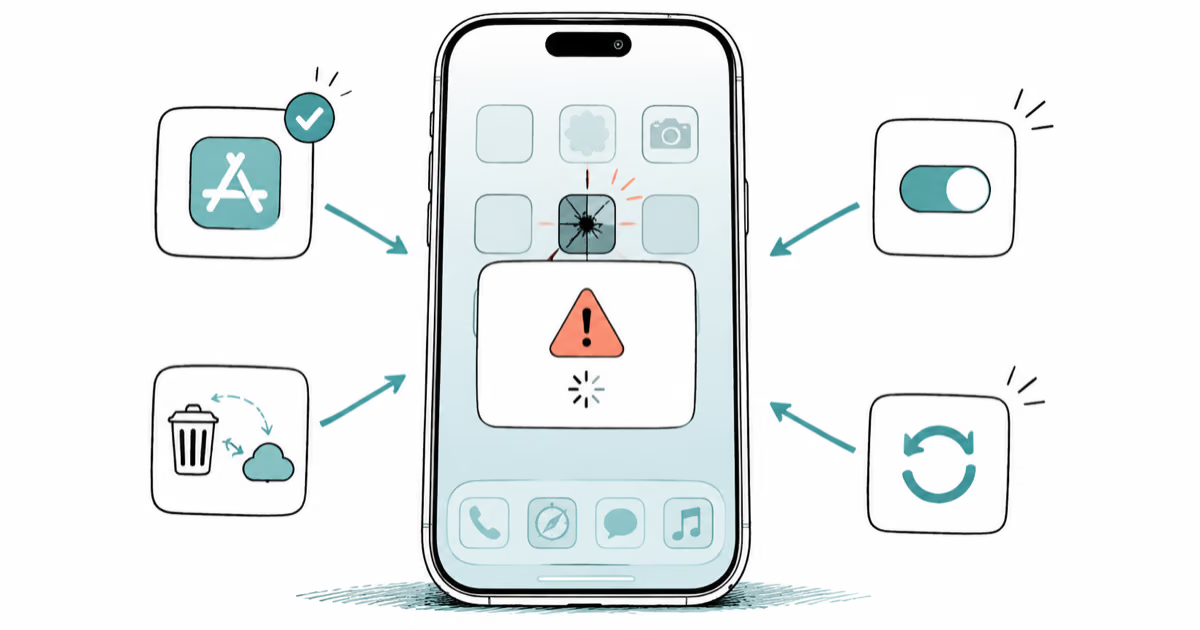
Apps Crashing After iOS 27 Update? Fix Order (2026)
Apps crashing after the iOS 27 update? Update the app in the App Store first, then offload and reinstall to clear stale cache, then restart. The fix order.
Do AI Translation Earbuds Work Offline? What to Know
Do AI translation earbuds work offline? A few do with downloaded language packs, but most need the cloud. Here's what works offline and what you give up.