How to Fix Google Play Store Error Checking for Updates
Fix the Google Play Store "error checking for updates" message with a proven cache-clear, account refresh, date, and storage flow that clears stalls fast.
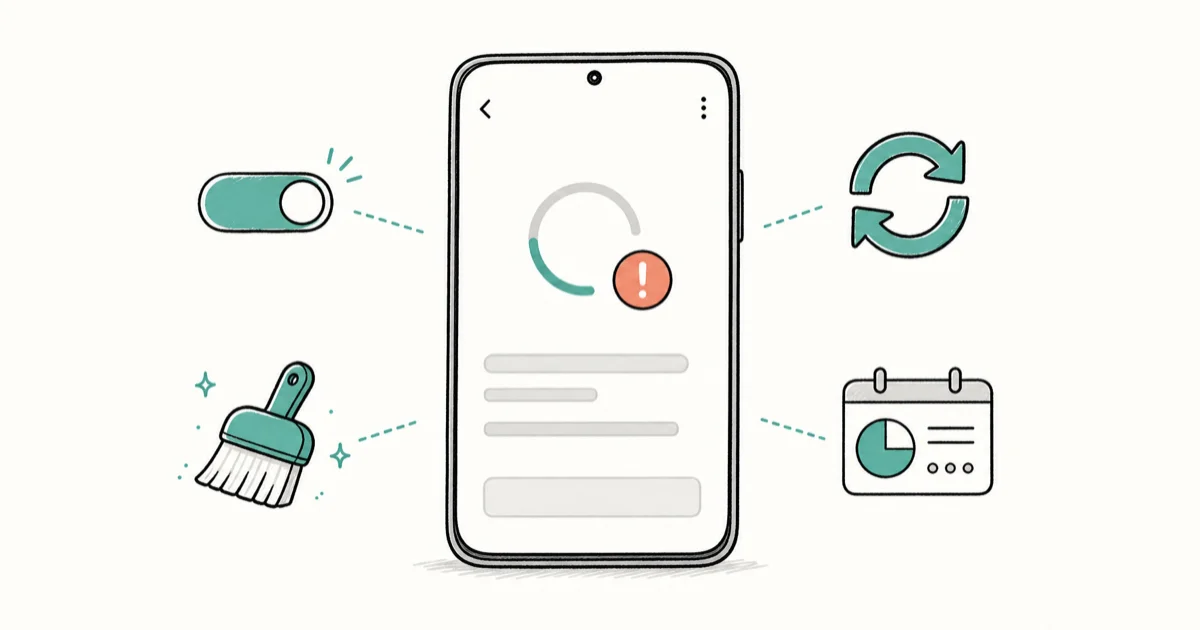
Quick AnswerForce stop Google Play Store and Play Services, then clear their cache from Settings > Apps. If the spinner still hangs, fix the device date and time, disable any VPN, and free at least 1 GB of storage before retrying.
The “error checking for updates” loop usually traces back to a corrupted cache, a stale account token, or blocked servers. The fix flow is short.
- Force-stopping Google Play Store and Play Services, then clearing their caches from
Settings>Apps, resolves most “checking for updates” stalls before any data reset is needed. - A wrong device date or time silently breaks the secure handshake with Google’s servers, so toggling automatic time on usually unsticks the spinner without further steps.
- VPNs, captive Wi-Fi portals, and country mismatches frequently block update checks; switching to a clean mobile network and retrying isolates the cause in seconds.
- Less than 1 GB of free storage stops downloads before they begin, so freeing space under
Settings>Storageis mandatory before troubleshooting deeper. - Removing and re-adding the Google account refreshes the authentication token Play Store uses, fixing cases where every other fix passes but the spinner still hangs.
#What Causes the “Error Checking for Updates” Message?
The message appears whenever the Play Store client can’t finish a secure round-trip to Google’s update service. Start with cache-clear and date-time checks before moving to account or storage fixes.
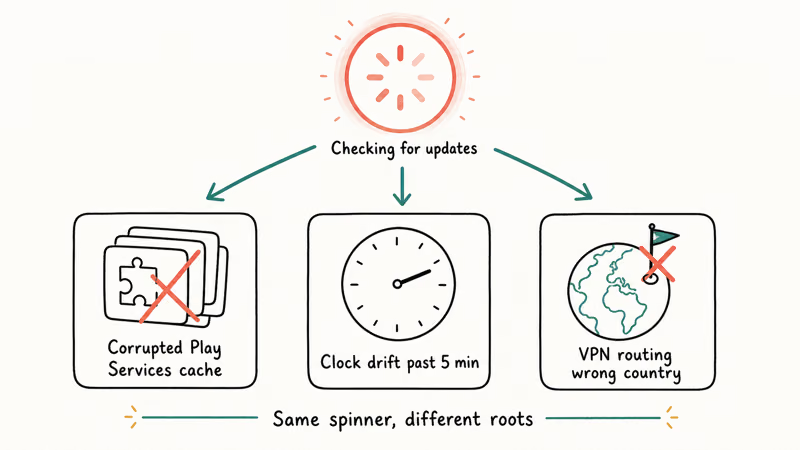
Different triggers can produce the same generic message: corrupted Play Services cache after an update, device clock drift with automatic time off, or a VPN routing traffic through a country where Play Store inventory differs from the account’s registered region. The underlying failure can differ even when Play Store shows the same “checking for updates” loop.
According to Google Play Help’s fix common issues page, the official flow lists 6 fixes in order, with clear cache as fix 1 and clear data as fix 2 because corrupted cache is the most common cause. A stale account token, low storage, and a wrong clock round out Google’s troubleshooting flow.
#How Do You Force Stop and Clear Play Store Cache?
Start with the lightest fix because it resolves most stalls without touching your account or downloads. Force-stopping kills the stuck process, and clearing the cache drops the corrupted update manifest that’s keeping the spinner alive.
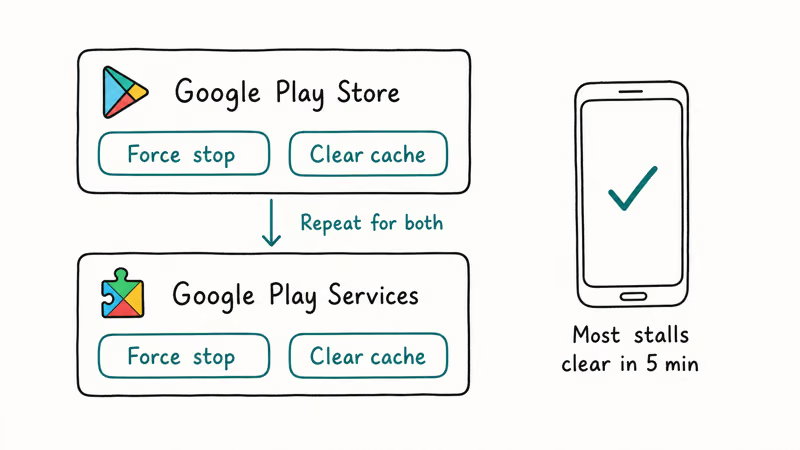
- Open
Settings>Apps>Seeall apps. - Tap Google Play Store.
- Tap Force stop, then confirm.
- Tap Storage and cache > Clear cache.
- Reopen Play Store and retry the update.
If the spinner returns, repeat the same steps for Google Play Services. Services cache causes the loop more often than the Store itself.
For deeper Play Services issues, the guide on fixing Google Play Services that keeps stopping covers the heavier reset path that handles cases when force-stop and cache-clear together aren’t enough and the Services process keeps crashing on every reboot.
#Clear Play Store Data as the Next Step
Clearing data is the next step, but only after cache-clear fails. It wipes Play Store preferences and forces a fresh index.
Your installed apps and purchases stay intact because they live on your Google account, not in local Play Store data. To clear data: Settings > Apps > Google Play Store > Storage and cache > Clear storage. After clearing, reboot the phone, reopen Play Store, accept the terms again, and retry. If cache-clear alone isn’t enough, clearing storage forces Play Store to rebuild the local index.
#How to Fix Date, Time, and Connection Problems
A wrong device clock silently breaks Play Store updates. Google’s servers reject TLS handshakes when the clock drifts.
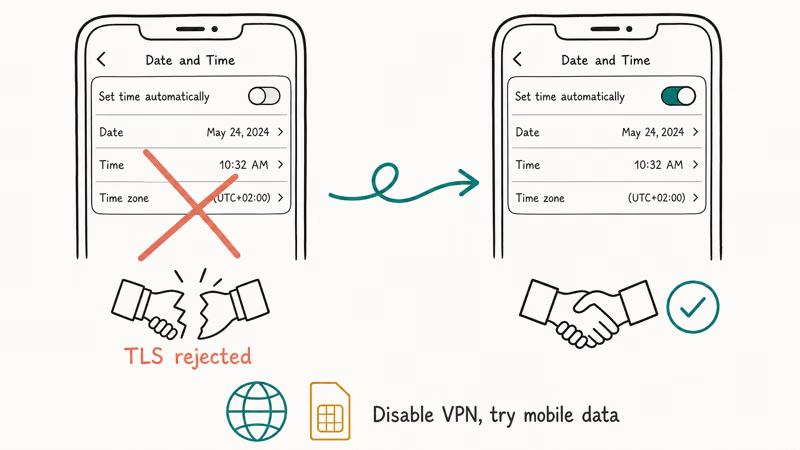
- Go to
Settings>System>Date andtime. - Turn on Set time automatically and Set time zone automatically.
- If you’re on a custom ROM that lacks the automatic option, set the time manually to the correct local time.
- Reopen Play Store and retry.
Then check the connection itself. According to Downdetector’s Google Play status page, user reports can reveal wider outage spikes, so confirm the service is healthy before deeper troubleshooting.
If Downdetector spikes, wait it out. If not, disable any active VPN or proxy and switch to mobile data to get around restrictive Wi-Fi. The Play Store stalls hard on captive portals and on VPNs that route through countries where your Google account isn’t registered. Issues like Gmail not sending emails often share the same network-level root cause.
#How to Free Storage and Reset Your Google Account
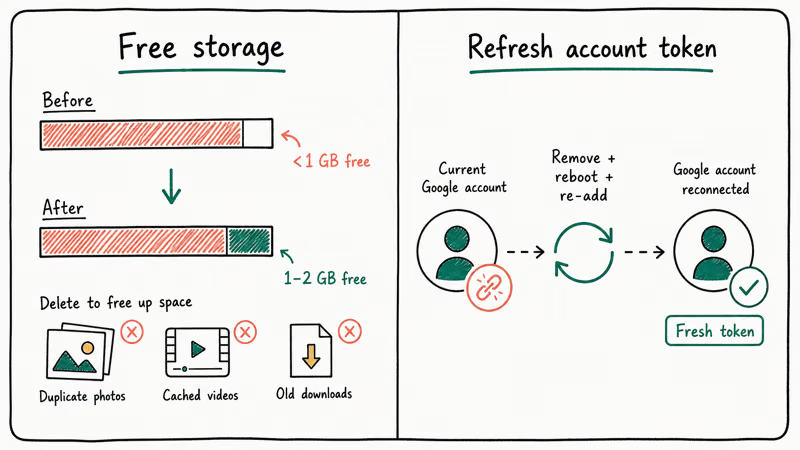
Insufficient storage stops downloads before they start, even if you only need 50 MB for a small app update. Google Play Store reserves headroom for the download, the unpack, and a rollback copy, which adds up fast.
- Open
Settings>Storage(orSettings>Battery anddevice care > Storage on Samsung). - Aim for at least 1 GB free, ideally 2 GB.
- Use Files by Google to clear junk: cached video thumbnails, old downloads, and duplicate photos add up quickly.
- Uninstall unused apps and offload large media to cloud storage.
If storage is fine but the spinner persists, refresh your Google account token. Go to Settings > Passwords and accounts > Google > your account > Remove account, reboot, then re-add the account through Settings > Passwords and accounts > Add account > Google. This forces Play Store to request a fresh authentication token, which often clears the stall when every other fix has passed.
#Advanced Fixes When Nothing Else Works
Try these only after the standard flow fails twice. Each one carries a small risk of side effects, so go in order.
Uninstall Play Store updates. Go to Settings > Apps > Google Play Store > three-dot menu > Uninstall updates. This reverts to the factory version that shipped with your phone, which then auto-updates again on its own. Useful when a recent Play Store update is the culprit.
If downloads sit on “pending” even after the spinner clears, the guide on Google Play Store download pending fixes walks through the queue-side issues. If your browser also acts up after Play Store fixes, the guide on Google Chrome crashes on Android covers the same uninstall-updates pattern.
Reset app preferences. Settings > Apps > three-dot menu > Reset app preferences. This re-enables disabled background services without deleting data. Notification settings and default-app choices reset, so you’ll re-grant some permissions afterward.
Factory reset (last resort). Back up first, then Settings > System > Reset options > Erase all data. This is overkill for a Play Store stall, but if you’ve tried everything and the loop survives a reboot, ROM-level corruption is the likely cause. Before going this far, also clear your clipboard history with the guide on how to clear clipboard on Android to rule out a malformed clipboard payload feeding into the Play Services sync.
#Bottom Line
For Google Play Store stuck on “checking for updates,” start with force-stop and cache-clear on both Play Store and Play Services. That fixes most cache-related stalls quickly.
If the spinner survives, check date and time, disable any VPN, and confirm you have 1 GB free. Account refresh and Play Store update rollback are the 2 heavier moves that handle the stubborn cases. Only factory reset if you’ve exhausted everything else and the loop survives a reboot.
As noted on the Wikipedia entry for Google Play Store, the catalog spans over 2.5 million apps, which is part of why localized propagation lag and update-check stalls happen more often than headlines suggest. Google Play also recommends waiting a few hours after a publisher releases a new version before assuming an update is broken.
#Frequently Asked Questions
Is it safe to uninstall Play Store updates?
Yes, completely safe. Play Store reverts to the factory version and auto-updates again on its own.
Why does the Google Play Store keep saying “checking for updates”?
The most common causes are corrupted Play Store or Play Services cache, a wrong device clock, an active VPN, low storage, or a temporary Play Store outage. Work through them in that order to find the trigger fastest.
Will clearing Play Store data delete my installed apps?
No. Installed apps stay on the device and tied to your Google account. Clearing Play Store data only resets local preferences like auto-update settings, parental controls, the cached app index, and pending download queues. After clearing, reopen Play Store, accept the terms again, sign back into your Google account if prompted, and retry the update; the first reopen takes a bit longer because the app rebuilds its catalog index.
Can a VPN cause Play Store update errors?
Yes. VPNs that route through countries where your Google account isn’t registered, or that block Google’s update servers, will hang the spinner. Disable the VPN, retry, and re-enable only if updates succeed.
How often should I clear the Play Store cache?
No fixed schedule. Clear it only when you hit issues.
Does the wrong date or time really break Play Store?
Yes. Google’s servers reject TLS handshakes when the device clock is off by more than a few minutes, and Play Store surfaces that as a generic update-check error. Turning on automatic date and time fixes it in seconds.
Should I try factory reset for this issue?
Factory reset is the absolute last resort. Try every other fix first, including uninstalling Play Store updates and resetting app preferences. If the loop survives a reboot after all those steps, ROM-level corruption is likely and factory reset becomes a reasonable option.
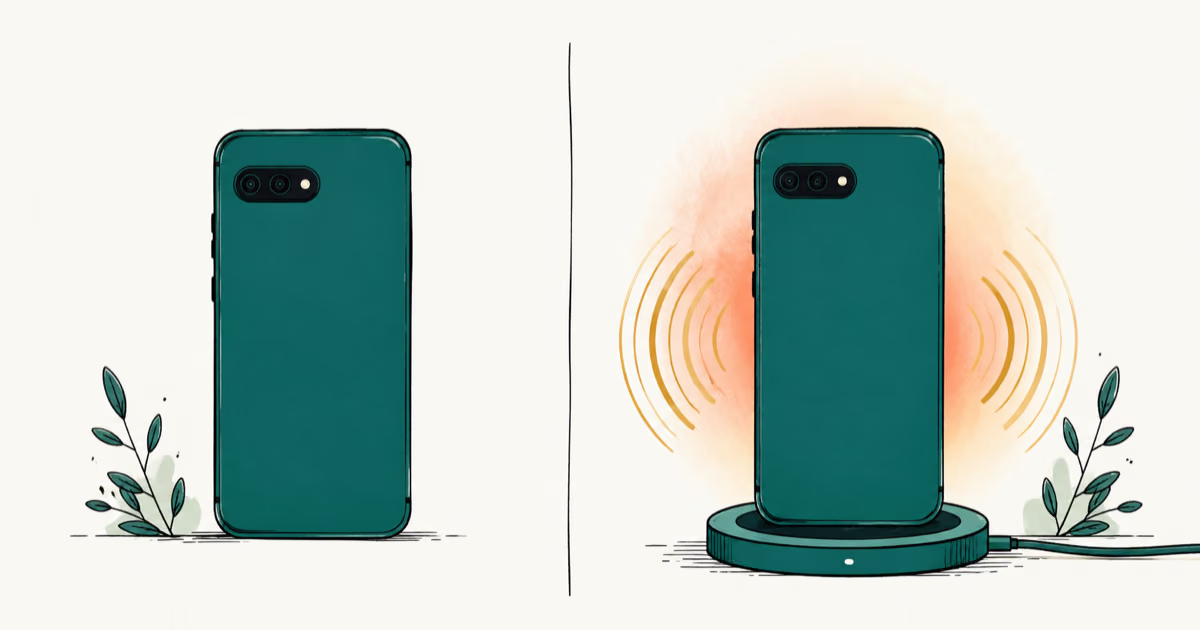
Pixel 11 vs Pixel 10: What Changed and Who Should Upgrade
Pixel 11 vs Pixel 10: same screen and camera resolution, new Tensor G6, 25W wireless, and Gemini Intelligence. Here is who should actually upgrade.

Verizon Not Receiving Texts? How to Fix It in 9 Steps
Verizon not receiving texts? Fix it in 9 steps: check Message Blocking in My Verizon, reset network settings, deregister iMessage, and call support.
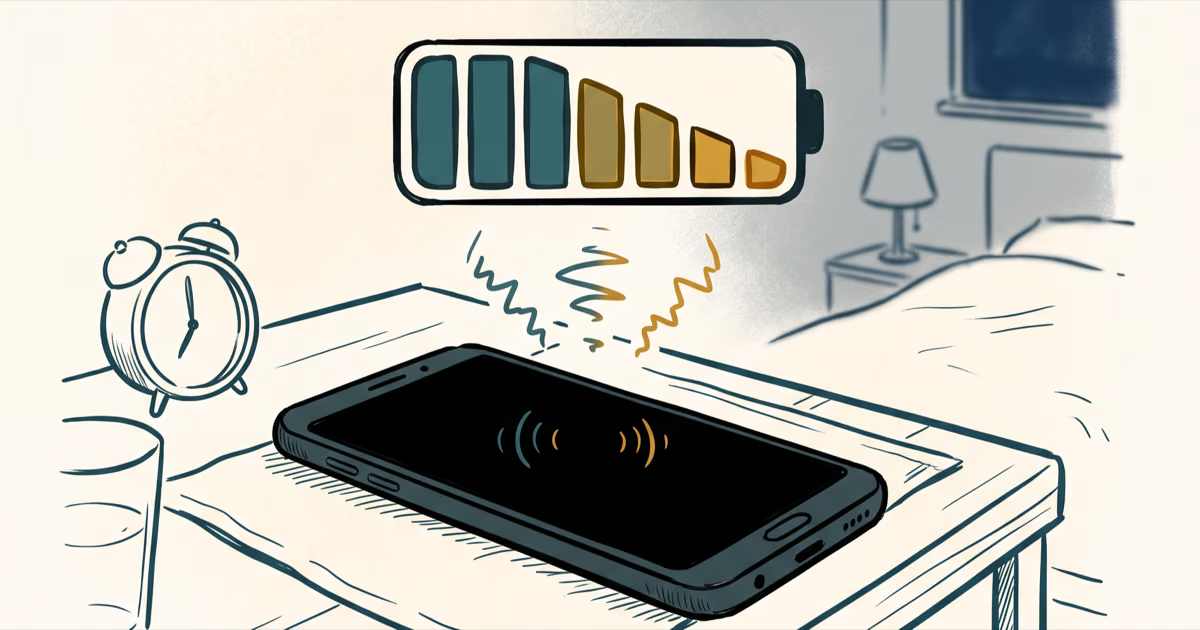
Pixel Battery Drain: What Google's July Fix Really Covers
Google marked the Pixel idle battery drain bug fixed in July, but only some phones got the patch. Here is who is covered, who is not, and what to try.
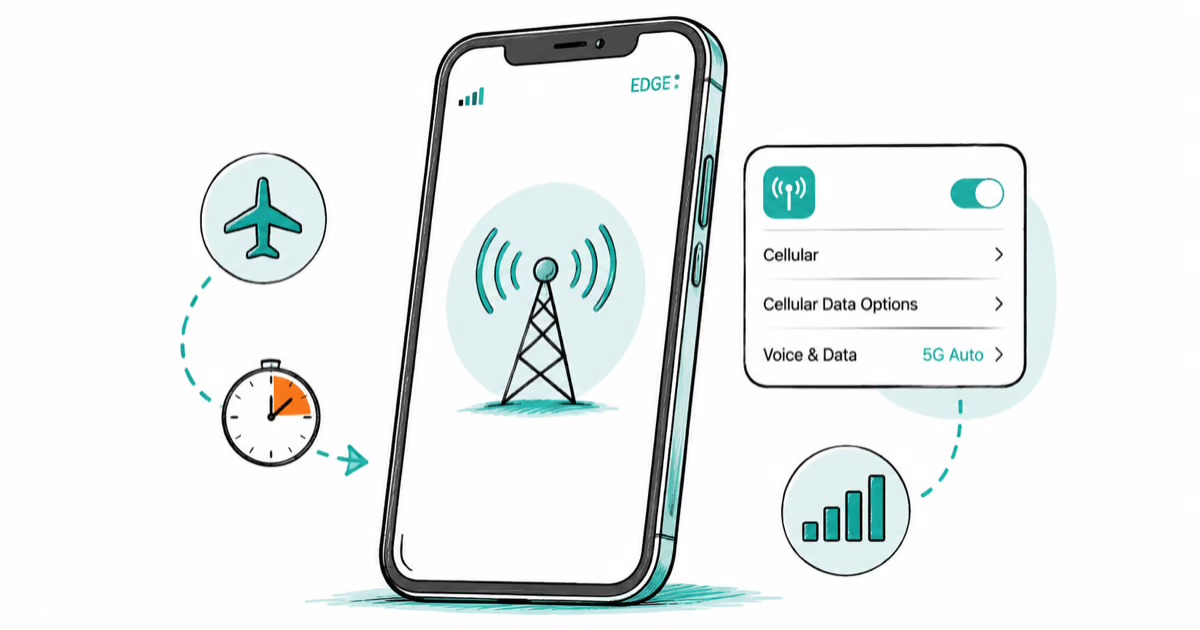
iPhone Stuck on EDGE? How to Get 5G or LTE Back (2026)
iPhone stuck on EDGE with crawling data? Here's why the E icon appears, which settings force 5G or LTE back, and when the problem is your carrier.