How to Fix Gmail Not Sending Emails: A Comprehensive Guide
Gmail not sending emails? Check Google Workspace status, daily send quota, 25 MB attachment limit, blocked recipients, OAuth, and security holds first.
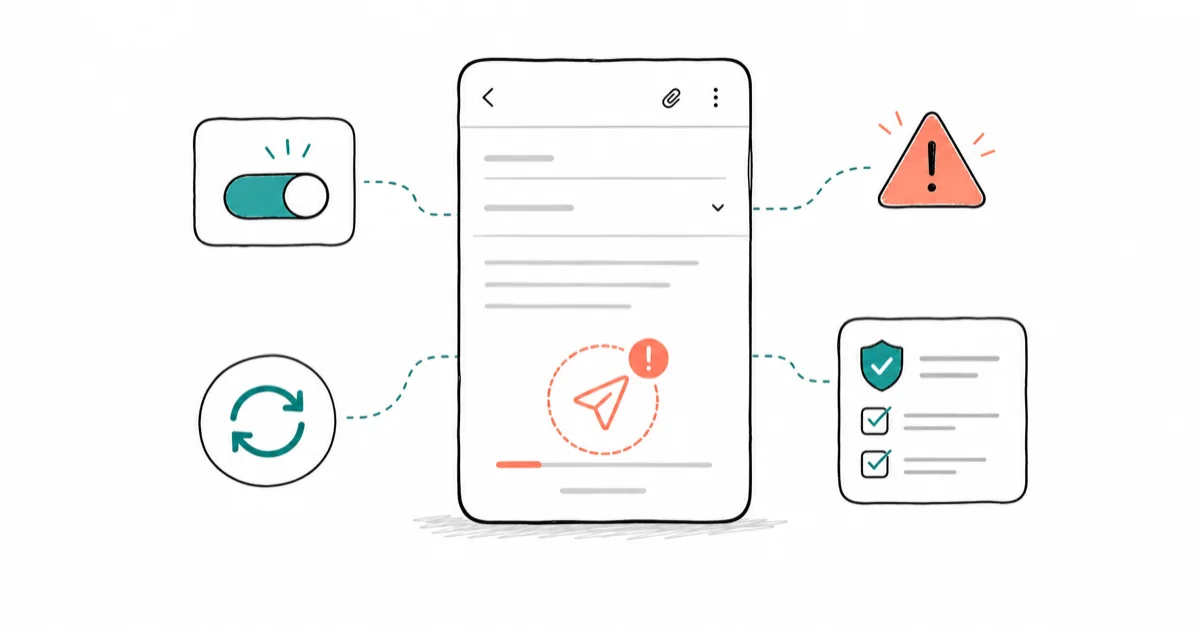
Quick AnswerWhen Gmail won't send, check Google Workspace Status first, then confirm you haven't hit the 500-per-day send quota, attachments are under 25 MB, and the recipient address isn't blocked or bouncing.
Gmail not sending emails is rarely a single bug. It’s usually one of nine specific causes: a Google outage, a hit send quota, an oversized attachment, a blocked recipient, broken OAuth in Outlook or Apple Mail, IMAP misconfiguration, a stale browser cache, a security hold on your account, or a simple typo.
- Free Gmail accounts are capped at 500 outgoing recipients per rolling 24 hours; Google Workspace accounts get 2,000, and hitting either triggers a temporary send block lasting roughly one day.
- Gmail rejects attachments larger than 25 MB and prompts you to upload to Google Drive and share a link, which is the same workaround for ZIP or RAR files containing executables.
- A green dot on the Google Workspace Status Dashboard rules out a service-wide outage in under 30 seconds and saves hours of pointless troubleshooting.
- Third-party clients like Outlook 2021 and Apple Mail need an app password or modern OAuth re-auth whenever Gmail forces a security challenge after a new login location.
- Removing the Gmail account and adding it back refreshes authentication tokens and clears most stuck-in-outbox and “can’t send” errors on Android and iOS in under five minutes.
#Is Gmail Down Right Now?
Before you change a single setting, rule out a Google-side outage. The Google Workspace Status Dashboard is the official source for live Gmail incidents. It updates within minutes of any sending or delivery disruption.
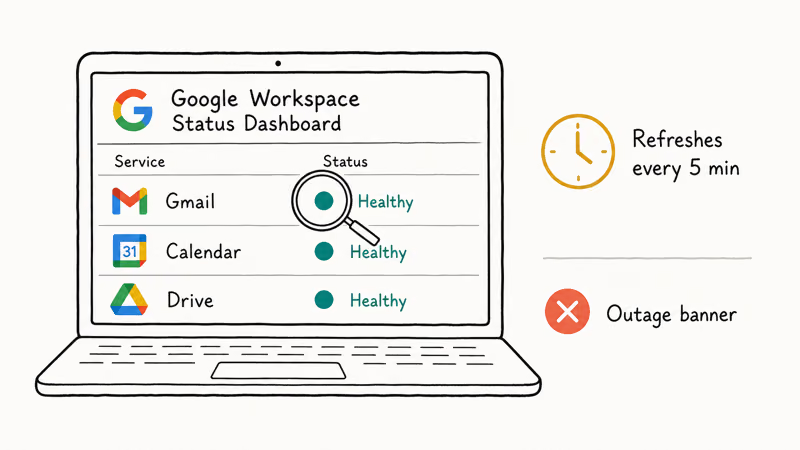
Open the Google Workspace Status Dashboard in a new tab. A green dot next to Gmail means healthy. An orange or red dot signals a known issue, with timeline and affected regions listed below the row.
Check the status dashboard before changing Gmail settings; server-side incidents don’t need local fixes.
If the dashboard shows an outage, there’s nothing to fix on your end. Wait it out. According to the Google Workspace Status Dashboard, the page reports availability for all Workspace apps including Gmail and updates with real-time incident status during active disruptions.
#Daily Send Quota Limits
Gmail enforces a hard sending limit. Google’s Admin Help states that free accounts cap at 500 recipients per 24 hours and Workspace accounts at 2,000.
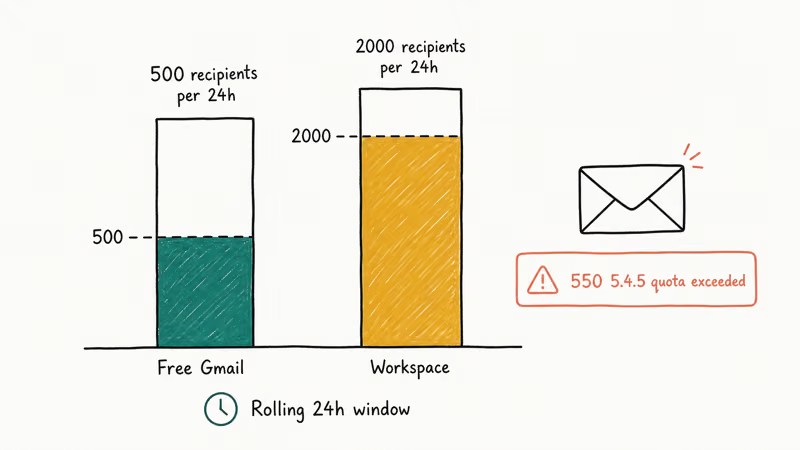
Each To, CC, and BCC slot counts.
Cross the line and Gmail throws a “You have reached a limit for sending mail” error. Queued messages retry one day later.
Watch the bounce notification. If you see “550 5.4.5 Daily user sending quota exceeded” or “421 4.7.0 Rate limit exceeded,” wait 24 hours from your first send in the current window, then resume. Splitting large lists across two accounts is the simplest workaround.
The quota also covers automation. Scripts using the Gmail API, mail merge add-ons, and Apps Script triggers all draw from the same pool. If a script went rogue overnight, you’ll find your normal sends blocked the next morning until the rolling window expires.
#Attachment Size Cap and File Type Blocks
Gmail caps email attachments at 25 MB per message. Google confirms that the 25 MB ceiling covers all attachments combined across the message, not 25 MB per file, so two 15 MB PDFs in the same email already break the limit. Anything larger triggers an automatic Drive upload prompt that converts the file into a sharing link before the message leaves your outbox.
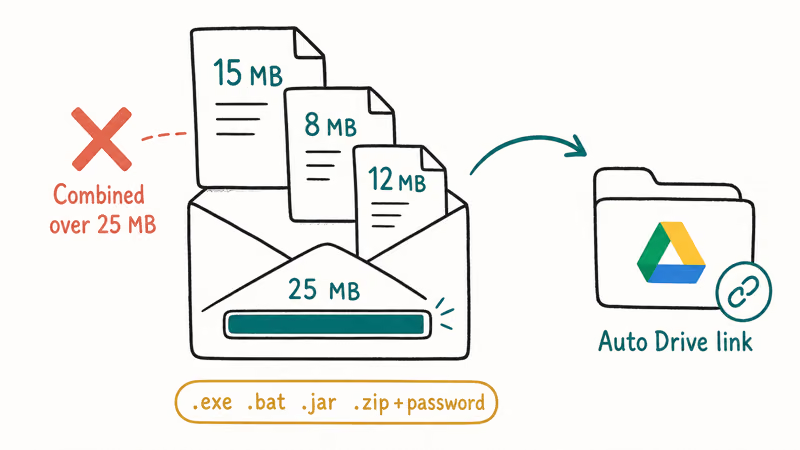
Over the cap, Gmail shows a “Use Google Drive” dialog and swaps the attachment for a Drive link.
A second trap catches video and archive files. Gmail blocks attachments that contain executable code (.exe, .bat, .jar) or password-protected ZIP and RAR archives, even under 25 MB. Compress to 7z without a password, or upload to Drive and share. We’ve documented this for video files in our video compression for email guide.
For batch sending, the 25 MB ceiling is one of the most common silent failures. The message looks sent in your Sent folder. Recipients never receive it because the SMTP delivery quietly stalled at the relay. Always check Sent versus delivery confirmation when attaching anything above 20 MB.
#Recipient Blocks, Bounces, and Typos
Three recipient-side problems mimic a Gmail send failure: a typo, an active block, and a recipient mail server rejection. Each shows a different error pattern.
Start with the bounce notification Gmail returns. If you see “Address not found” or “550 5.1.1 The email account that you tried to reach does not exist,” the address is invalid. Double-check spelling, particularly numbers versus letters (0 vs O, 1 vs l). We track this failure mode in our address not found in Gmail troubleshooting.
A “552 5.7.0” or “421 4.7.0” error points to the recipient’s mail server rejecting your IP, not Gmail itself. Resend without the attachment.
If you previously blocked the recipient through Gmail’s “Block sender” feature, your outgoing messages still send, but their replies bounce. Open Settings > Filters and Blocked Addresses on Gmail web and remove the entry. The fix takes 30 seconds.
#Why Does Outlook or Apple Mail Keep Asking for My Password?
Third-party clients break with Gmail more often than the web app does. Both Microsoft Outlook 2021 and Apple Mail on macOS 14 Sonoma rely on Google’s OAuth 2.0 flow, and any password change, new login location, or security alert forces a re-authentication.
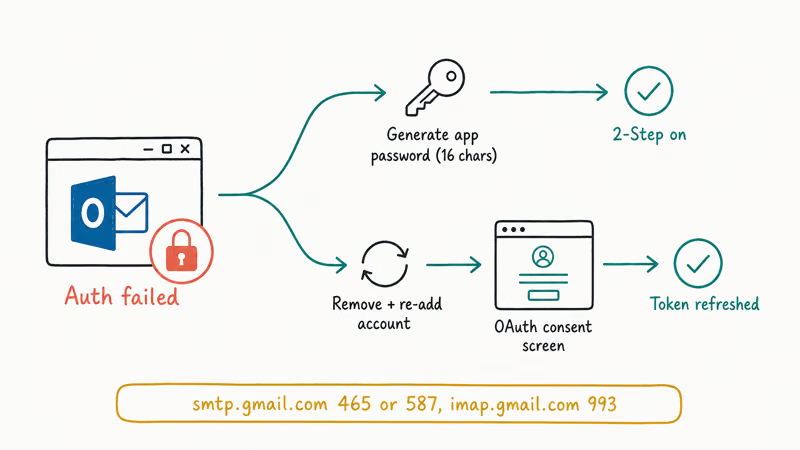
Symptoms are consistent. Outbox stalls, client throws “password not accepted,” Gmail web still works.
- 2-Step on: generate an app password from your Google Account security settings. Paste the 16-character code into the client’s password field, removing spaces.
- OAuth flow: remove the Gmail account from the client, restart the app, and re-add it. The OAuth consent screen will appear and refresh the token.
Removing and re-adding the account is the standard way to refresh a broken Gmail OAuth token in desktop mail clients. The same flow applies to Thunderbird 128 and Apple Mail on iOS 17. Outlook 2019 and older still need app passwords because they don’t support modern OAuth. Use this path when Gmail web still sends normally but the desktop client keeps rejecting the password or leaving messages in the outbox after a security challenge.
For SMTP and IMAP configuration on legacy clients, use smtp.gmail.com on port 465 (SSL) or 587 (TLS), and imap.gmail.com on port 993 (SSL). Username is your full email address. Mismatched ports cause most “can’t connect to outgoing server” errors.
#Browser Cache and Extension Conflicts on Gmail Web
Sometimes Gmail web itself misbehaves. Emails stick in Outbox, the Send button greys out, or the composer freezes mid-draft. The root cause is almost always browser cache corruption or a conflicting extension sitting in the page.
Test in an Incognito window first. Open Chrome Incognito (Cmd+Shift+N on macOS, Ctrl+Shift+N on Windows), sign in, and try sending. If it works in Incognito, your regular profile has a bad cache or a hostile extension. Clear cookies and cache for mail.google.com from Chrome’s Settings > Privacy and Security > Clear browsing data, then restart the browser fully before reloading the Gmail tab to make sure the new auth flow completes cleanly.
Browser extensions are the silent saboteur. Grammarly, Boomerang, and Streak inject into Gmail’s DOM and occasionally break the Send button after a Gmail UI update. Disable extensions one at a time, refresh Gmail, and test send between each. If Chrome itself keeps crashing during this process, our Chrome troubleshooting walkthrough covers the underlying browser fix.
Switching browsers isolates the problem fast. Try Gmail in Firefox or Safari instead. If sending works there, the issue lives in Chrome.
#Google Security Holds and Suspicious Activity Locks
Google freezes outgoing mail when it detects suspicious activity. A new device login, a flagged location, repeated failed sign-ins, or a sudden burst of outgoing messages that looks like a compromise will all trigger a temporary send hold until you verify identity through the normal Google account challenge flow on a trusted device.
Check for the alert at myaccount.google.com/notifications. A red banner saying “Critical security alert” or “Suspicious sign-in prevented” means action is required. Click through, confirm it was you, and the send hold lifts within minutes.
A second hold variant appears after password changes. Gmail forces all sessions to re-authenticate, which silently breaks active SMTP connections. If you changed your password recently and sending broke on the same day, sign out everywhere from your Google Account security page, then sign back in fresh. We document a similar token-refresh pattern in our Slack password change guide where session invalidation breaks sending.
Account recovery is the last resort if Google locks you out entirely. Walk through the identity verification flow with backup phone and recovery email ready. Our Gmail account recovery walkthrough covers the full process if you’ve lost access.
#Bottom Line for Fixing Gmail Send Failures
When Gmail won’t send, start with Workspace Status, quota, attachment cap, recipient validity, OAuth re-auth, browser cache, security hold.
If you’re on a third-party client and authentication keeps breaking, switch to Gmail web or the official Gmail mobile app as a stopgap. Both use Google’s native auth path. They sidestep the OAuth fragility that plagues Outlook and Apple Mail after Google security challenges. For sender errors specifically tied to Outlook configuration, our Outlook error 0x80040119 fix covers the OST file rebuild that resolves stuck outbox issues on Windows.
Recurring sending failures point to one stubborn cause: a stale auth token, a Drive storage cap, or a script eating your quota. Fix the underlying cause once and Gmail stays reliable for months. For formatting tweaks that often get lost when you switch clients, our Gmail signature in replies guide covers the toggle most users miss.
#Frequently Asked Questions
Why does Gmail say “Message blocked” on my outgoing email?
Gmail returns “Message blocked” when spam filters flag your content. Remove the attachment and resend.
How long does a Gmail sending limit last?
Roughly 24 hours from your first send in the current rolling window. Free accounts free up after the 500-recipient quota resets, Workspace accounts after 2,000. There’s no manual override.
Can I send the same email to 1,000 recipients on a free Gmail account?
No. Free Gmail caps at 500 recipients per 24 hours, counting every To, CC, and BCC slot. Split the list across two days, upgrade to Google Workspace, or use a dedicated mail merge service that sends through its own SMTP infrastructure.
Why do my Gmail emails appear sent but never arrive?
Three causes dominate here. Spam folder, server rejection, or sender reputation throttling. Ask the recipient to check spam first.
Does removing my Gmail account from my phone delete my emails?
No. Tokens reset locally; inbox stays untouched.
What attachments does Gmail block?
Gmail blocks executable file extensions including .exe, .bat, .jar, .cmd, .com, .msi, and .scr, plus password-protected archives that hide their contents. Compress to 7z without a password, or upload to Google Drive and share a link instead. The full list lives in Google’s attachment policy documentation.
How do I check if my Gmail app password is correct?
Open your Google Account at myaccount.google.com/apppasswords, find the entry for your client, and confirm it’s still listed. App passwords are 16 characters with no spaces. If you’ve revoked or regenerated one, the old password stops working immediately, and you’ll need to update every client using it.
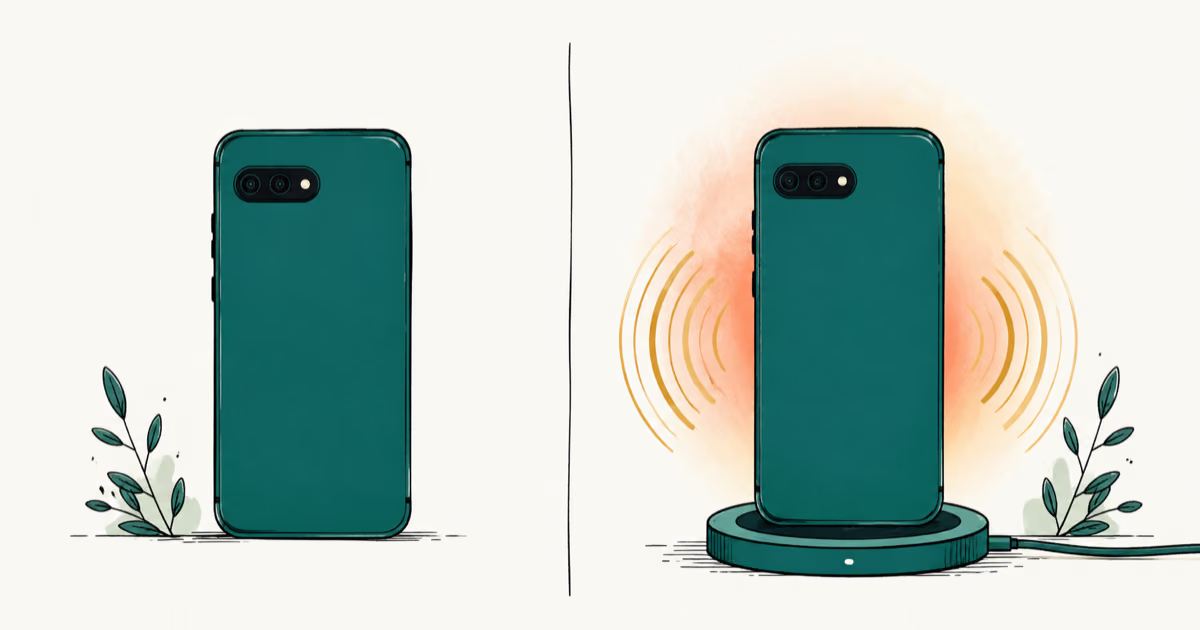
Pixel 11 vs Pixel 10: What Changed and Who Should Upgrade
Pixel 11 vs Pixel 10: same screen and camera resolution, new Tensor G6, 25W wireless, and Gemini Intelligence. Here is who should actually upgrade.

Verizon Not Receiving Texts? How to Fix It in 9 Steps
Verizon not receiving texts? Fix it in 9 steps: check Message Blocking in My Verizon, reset network settings, deregister iMessage, and call support.
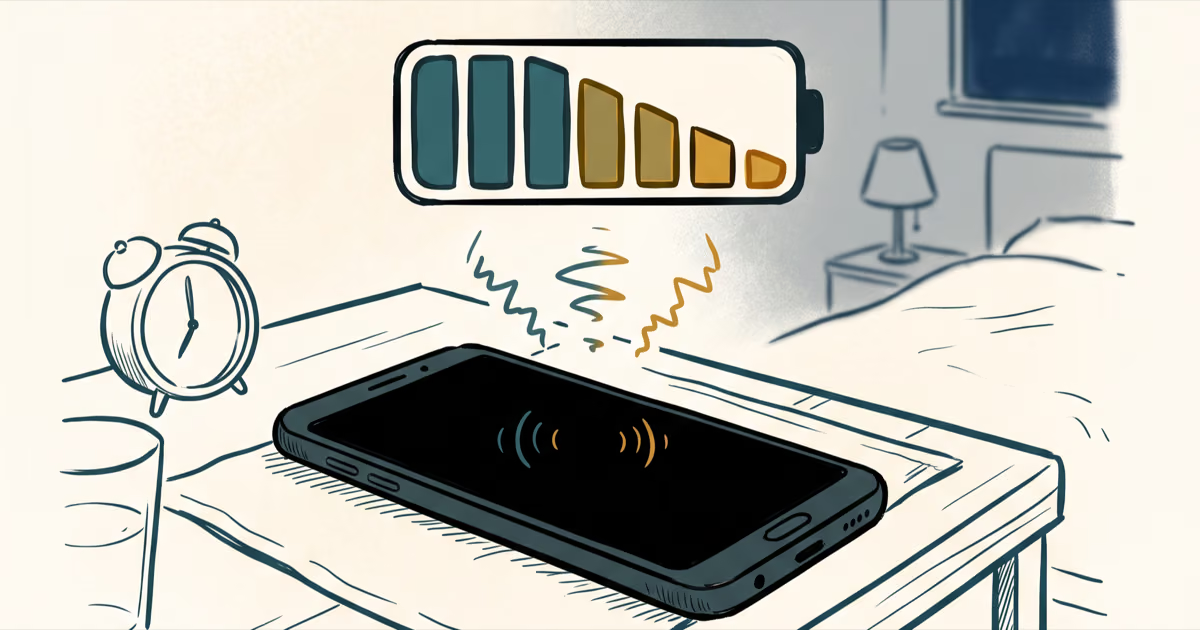
Pixel Battery Drain: What Google's July Fix Really Covers
Google marked the Pixel idle battery drain bug fixed in July, but only some phones got the patch. Here is who is covered, who is not, and what to try.
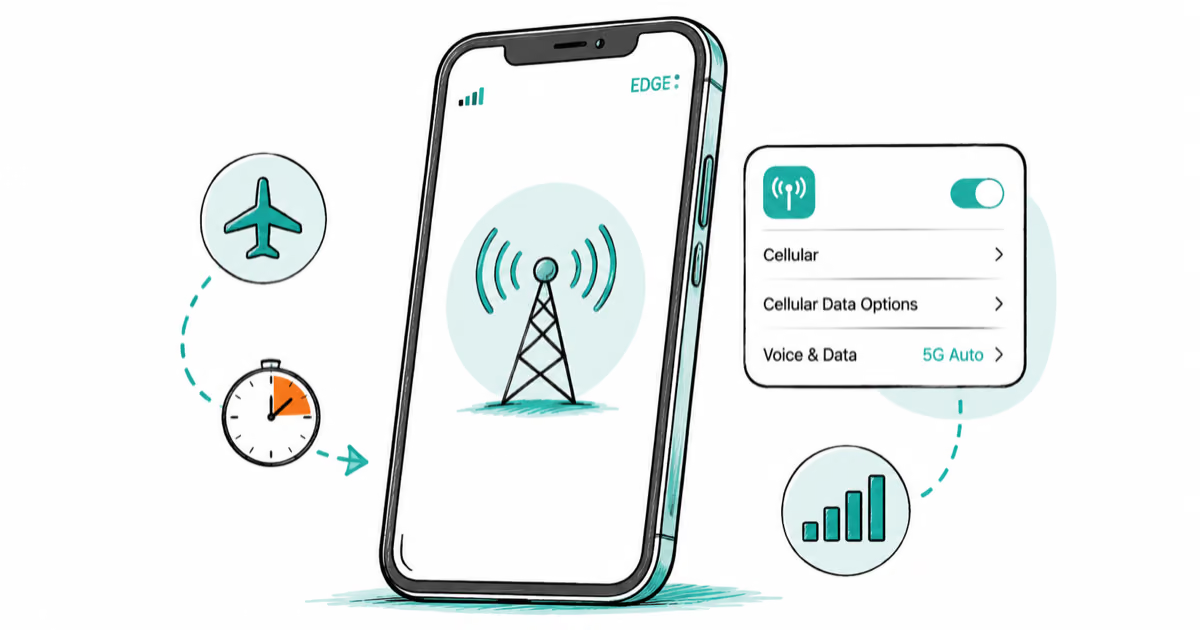
iPhone Stuck on EDGE? How to Get 5G or LTE Back (2026)
iPhone stuck on EDGE with crawling data? Here's why the E icon appears, which settings force 5G or LTE back, and when the problem is your carrier.