How to Fix Google Play Services Keeps Stopping on Android
Fix Google Play Services keeps stopping on Android by clearing cache and data, updating the app, fixing the clock, or re-adding your Google account.
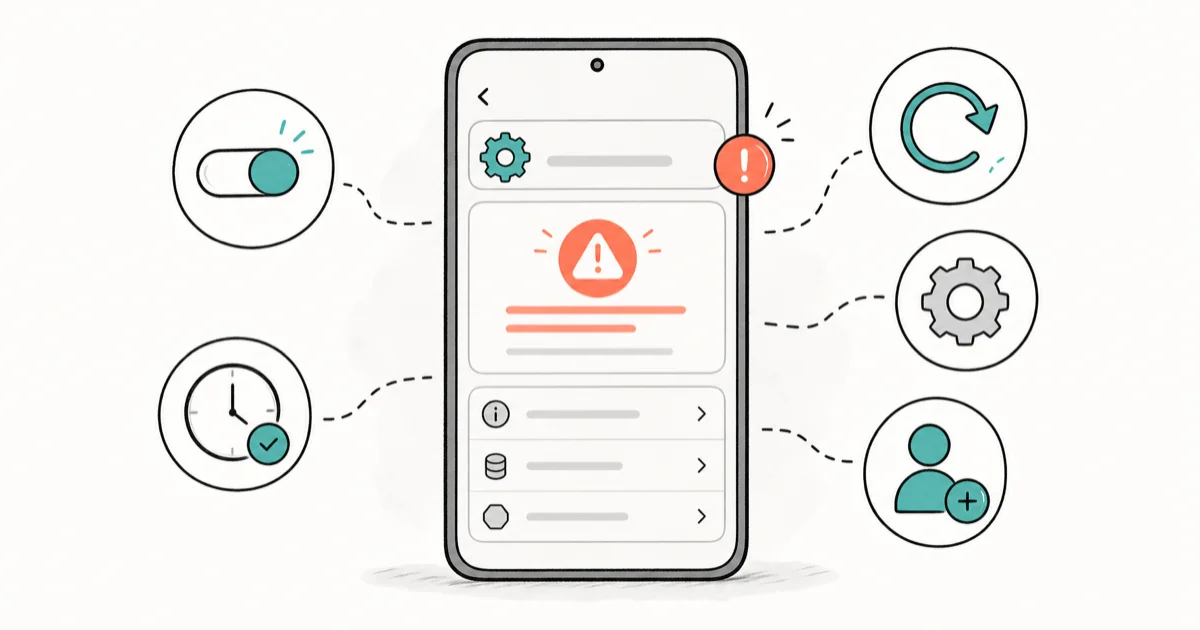
Quick AnswerOpen Settings > Apps > Google Play Services > Storage and tap Clear cache, then Clear data. If the error returns, update Google Play Services through the Play Store and confirm your date and time are set automatically.
The “Google Play Services has stopped” error is one of the most disruptive Android problems because Play Services silently powers Gmail, Maps, login prompts, push notifications, and most third-party apps. The safest fix order starts with cache and data resets, then moves through updates, time settings, account refresh, storage checks, and factory reset only as a last resort.
- Clearing cache then data inside
Settings>Apps>Google Play Servicesfixes most repeat-stopping errors and keeps your installed apps intact. - Outdated Play Services is the second most common trigger, so always check for an update in the Play Store before factory resetting.
- Automatic date and time must stay enabled, because Google’s authentication servers reject token requests when the clock drifts past five minutes.
- Removing and re-adding your Google account refreshes a stale OAuth token and clears the AccountManager state that older devices accumulate.
- Factory reset is the final step, not the first, and you should back up photos, messages, and authenticator codes before erasing the device.
#What Is Google Play Services and Why Does It Crash?
Google Play Services is a background system app that handles authentication, push notifications, location, in-app billing, and the security checks most Android apps depend on. When it crashes, you’ll see banners like “Unfortunately, Google Play Services has stopped” or repeated app freezes. The Play Store may refuse to open. According to the Google Play services help page, the app silently updates in the background, so a half-finished update or a corrupted cache file is often the trigger.
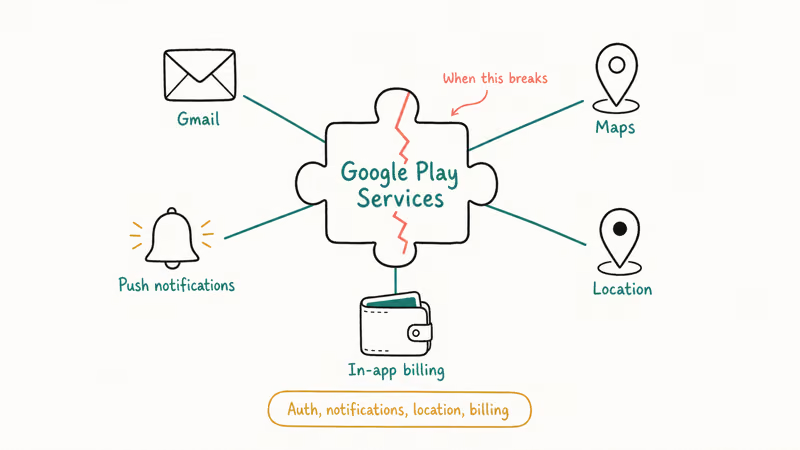
The crash usually traces back to one of eight root causes. The fix order below moves from least to most destructive, starting with reversible settings before any data-erasing step.
| Root cause | Typical symptom | First fix to try |
|---|---|---|
| Corrupted cache | Random stop banners | Clear cache |
| Corrupted user data | App login failures, sync errors | Clear data |
| Outdated Play Services | Login loops on new apps | Update via Play Store |
| Wrong date or time | ”Couldn’t sign in” errors | Toggle automatic time |
| Stale Google account token | Sync failures, repeat stops | Remove and re-add account |
| Android System WebView conflict | Crashes when opening links | Update WebView |
| Low storage | Slowdowns plus crashes | Free 1-2 GB |
| ROM or custom OS mismatch | Crash on every launch | Reinstall stock ROM |
#How Do You Clear Google Play Services Cache and Data?
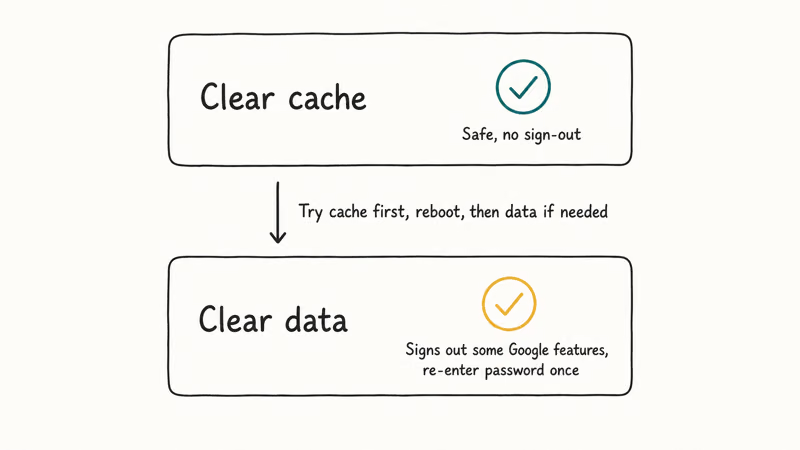
Clearing the cache wipes temporary files without touching your account, and clearing data resets internal state without uninstalling the app. Start with cache-only because it’s the least disruptive option, then use the data wipe if the error returns.
- Open Settings and tap Apps (or Apps & notifications on older skins).
- Scroll to Google Play Services and tap it. If hidden, tap the three-dot menu and choose Show system apps.
- Tap Storage & cache.
- Tap Clear cache and reboot once. Test for the error.
- If it returns, repeat the path and tap Clear data. You’ll be signed out of some Google features and will need to re-enter your password once.
Be patient on the first reboot.
After clearing data, give the device three to five minutes on Wi-Fi so Play Services can rebuild its local state. The error can briefly reappear during this rebuild and then disappear once resync finishes. If you’re also hitting a Google Play error checking for updates, the same cache and data wipe applied to the Play Store app resolves both issues at once.
#Update Google Play Services Through the Play Store
Google rolls out Play Services updates in waves, and a stalled or partial install is a frequent crash trigger. The Play Store doesn’t always show an explicit Update button for system apps, so the trick is to visit the dedicated listing directly.
- Open the Google Play Services listing on your device. (You can also search “Google Play Services” in the Play Store.)
- If an update is available, tap Update. If not, tap About this app and check that the build version is newer than 24.x for 2026.
- After the update completes, force-stop the app from
Settings>Apps>Google Play Services>Forcestop, then reboot.
Update WebView at the same time.
Pair the Play Services update with an Android System WebView update through the same Play Store search. The Wikipedia entry on Google Play Services states that the app launched in 2012 and ships monthly background updates across the Android ecosystem. Google’s developer guide confirms that WebView and Play Services share rendering paths, so a stale WebView drags Play Services down with it.
#Fix Date and Time Settings
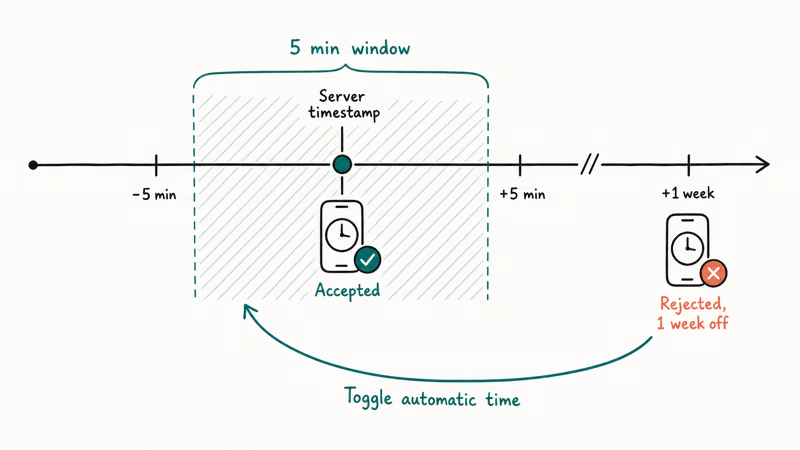
Google’s authentication servers sign tokens with a timestamp window of roughly five minutes. When your phone’s clock drifts beyond that window, the server can reject requests, and Play Services may surface the failure as a crash or sign-in error.
- Open
Settings>System>Date &time. - Enable Set time automatically and Set time zone automatically.
- If those toggles are already on, turn them off, wait ten seconds, and turn them back on to force a resync.
- Reboot and retry the failing app.
Travel breaks the clock more than you’d expect.
If your carrier provides a wrong network time abroad, switch to a Wi-Fi network with a known-good NTP source for the resync, then re-enable mobile data. This same desync sometimes shows up as Gmail not sending emails, since Gmail relies on the same auth tokens.
#Remove and Re-Add Your Google Account
A stale OAuth token inside AccountManager can keep Play Services from refreshing its session, and the cleanest fix is to remove the Google account and add it back. This sounds drastic, but it doesn’t delete any cloud data, only the local credentials on the device.
- Back up authenticator codes and any offline notes first.
- Open
Settings>Passwords &accounts (orSettings>Accountson older Android versions). - Tap your Google account, then tap Remove account. Confirm.
- Reboot the device.
- Return to the same menu and tap Add account > Google. Sign in with your usual credentials and approve the device.
- Wait three to five minutes for contacts, mail, and Drive to resync.
Expect one extra 2FA prompt.
According to Google’s guide to adding or removing an account, removing an account clears the data and saved sign-in session it stored on the device, so you may see one verification prompt the next time you open Gmail or Drive.
#Check Storage, WebView, and Battery Optimization
Three quieter culprits hide behind chronic Play Services crashes. Tackle them in order before considering a factory reset.
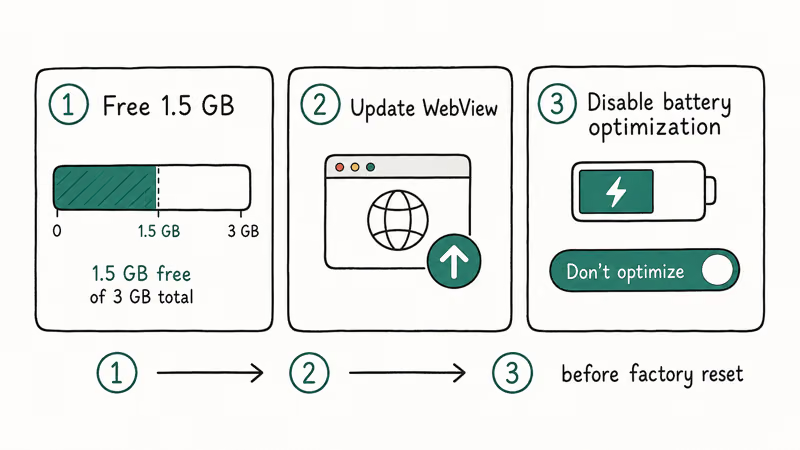
Free at least 1.5 GB of storage. Android’s runtime needs scratch space for Dalvik/ART caches, and Play Services aborts when it can’t write its working files. Open Settings > Storage, delete unused apps, offload high-resolution videos to Google Photos, and re-check the free space.
Update Android System WebView. Search “Android System WebView” in the Play Store and tap Update. A mismatch between WebView and Play Services causes silent crashes when apps render embedded content.
Disable aggressive battery optimization. Open Settings > Apps > Google Play Services > Battery > Battery optimization and pick Don’t optimize for Google Play Services. This stops the OS from killing it in the background, which can otherwise cascade into restart loops on some Android builds.
Don’t skip the outage check.
If you’re hitting broader app crashes such as Google Chrome keeps crashing, the same storage and WebView checks usually fix those at the same time. Downdetector’s Google services page is also worth a quick look, since a small share of “Play Services stopped” reports trace back to short Google outages rather than your device.
#Factory Reset as the Last Resort
A factory reset wipes the device and reinstalls Android from scratch, which clears any corrupted system state. Use it only after the steps above have failed across at least two reboots, and only after a verified backup.
- Back up photos, messages (Samsung Smart Switch or Google One), authenticator codes, and Wi-Fi passwords.
- Open
Settings>System>Resetoptions > Erase all data (factory reset). - Confirm, enter your screen lock, and tap Erase everything.
- After the device reboots, sign in with your Google account during initial setup so Play Services installs from a clean baseline.
Two cautions after a reset: don’t restore the full app list at once, because that can re-import the same corrupted Play Services state. Restore in small batches and reboot between batches.
Custom ROMs are the usual suspect after a clean reset.
If the crash returns even after a fresh wipe, you’re likely on a modified ROM that’s missing the matching Play Services build. Reflash the official stock firmware from your manufacturer’s support site. While you’re rebuilding the device, it’s a good moment to clear your Android clipboard so old data doesn’t carry over.
#Bottom Line
Start with cache, then data, then a Play Services update.
Then move to time settings and the Google account refresh. This sequence keeps the most destructive step, a factory reset, until the reversible fixes have failed.
Reserve the reset for cases where the error survives both a cache wipe and an account refresh, and assume a custom ROM is suspect when nothing else works. If even reinstalling the stock ROM doesn’t help, the device’s flash storage may be failing and a manufacturer service center is your next stop.
#Frequently Asked Questions
Can I uninstall Google Play Services to stop the error?
No, it’s a stock system app, so the uninstall button is hidden. You can disable it from Settings > Apps > Google Play Services > Disable, but most Google apps will stop working until you re-enable it. Clearing data is the closest safe equivalent to a clean reinstall.
Will clearing Play Services data sign me out of all apps?
No, only Google services. You’ll log back into Gmail, Drive, and the Play Store with your usual password. Third-party apps with their own session tokens stay logged in.
How often does Google Play Services update itself?
Roughly every two to four weeks via staged rollout.
Does a VPN cause Play Services to crash?
Sometimes, yes. A misconfigured VPN that blocks Google’s authentication endpoints can trigger sign-in failures that look like Play Services crashes. Disconnect the VPN, clear the cache, and retest. If the error vanishes only when the VPN is off, ask your provider to allowlist Google’s endpoints or switch protocols.
What if Play Services crashes only inside one specific app?
The crash often originates from that app’s outdated SDK rather than Play Services itself. Update the app from the Play Store, clear its cache, then reinstall it. If the same app crashes for other Android users in Kik group chat issues or similar communities, the developer likely has a known incompatibility patch in progress.
Can rooting my phone cause this error?
Rooting itself doesn’t break Play Services. But Magisk modules, Xposed frameworks, or stripped system apps can corrupt the certificate chain. Revert the most recent change first.
Should I install Google Play Services from an APK site?
We don’t recommend it. Play Services validates against Google’s signing keys, so an APK from a third-party mirror can fail signature checks or carry a tampered payload. Always update through the Play Store or, if the device is signed out, through a verified factory reset.
Pixel 11 vs Pixel 10: What Changed and Who Should Upgrade
Pixel 11 vs Pixel 10: same screen and camera resolution, new Tensor G6, 25W wireless, and Gemini Intelligence. Here is who should actually upgrade.

Verizon Not Receiving Texts? How to Fix It in 9 Steps
Verizon not receiving texts? Fix it in 9 steps: check Message Blocking in My Verizon, reset network settings, deregister iMessage, and call support.
Pixel Battery Drain: What Google's July Fix Really Covers
Google marked the Pixel idle battery drain bug fixed in July, but only some phones got the patch. Here is who is covered, who is not, and what to try.
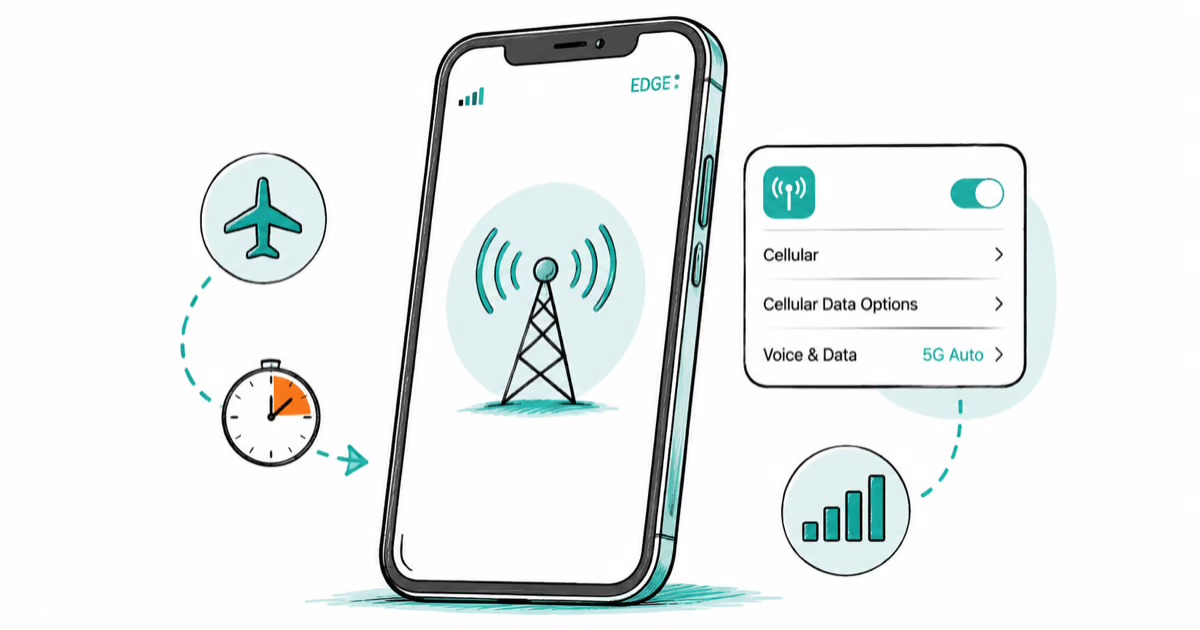
iPhone Stuck on EDGE? How to Get 5G or LTE Back (2026)
iPhone stuck on EDGE with crawling data? Here's why the E icon appears, which settings force 5G or LTE back, and when the problem is your carrier.