Facebook Jail: Why It Happens and How to Avoid It in 2026
Facebook jail blocks posting, commenting, and friend requests after rule violations. Learn the 7 triggers, recovery steps, and how to stay out.
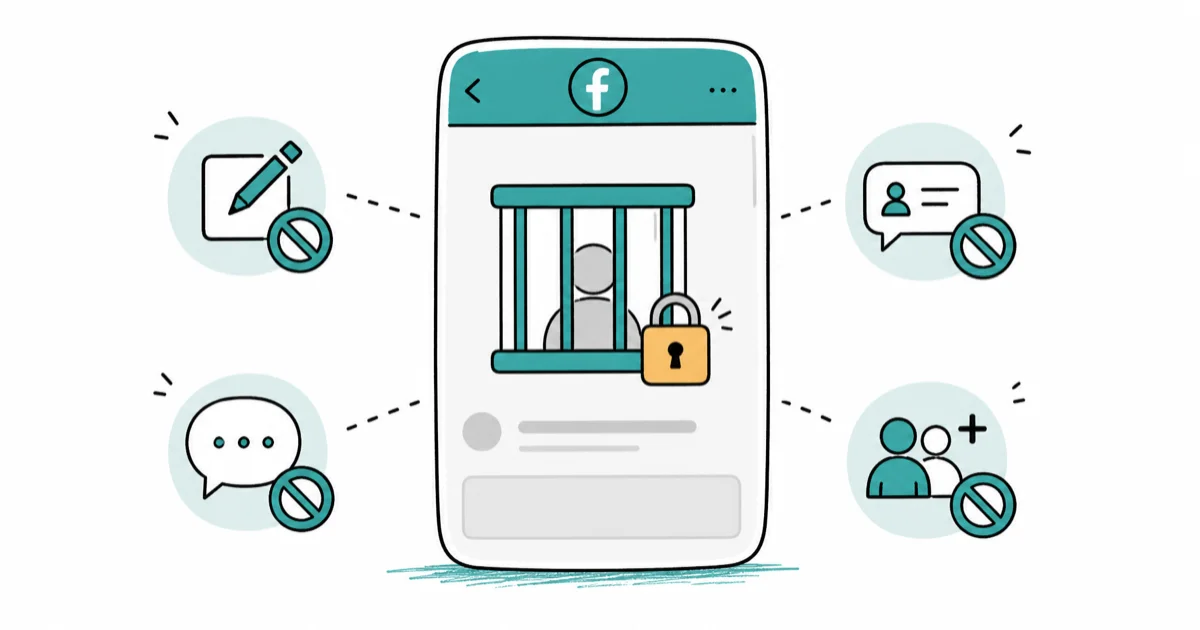
Quick AnswerFacebook jail is a temporary restriction that blocks you from posting, commenting, messaging, or sending friend requests after Meta's automated systems flag your account. Most restrictions last 24 hours to 30 days, but repeat violations can lead to permanent disablement.
Facebook jail is not a real room, but the lockout feels real the first time it happens. Your posts fail, comments disappear, friend requests get blocked, and a blue warning banner tells you that your account violated community standards. For most first-time rate-limit blocks, the restriction lifts automatically at the 24-hour mark with no appeal needed.
-
Facebook jail is an automated restriction from Meta’s integrity systems, not human review.
-
Posting the same link across more than 10 groups within an hour is the single most reliable trigger, even for non-spam content. It’s the most commonly reported cause among small business owners and community managers who run multi-group promotions without pacing their cross-posts across a longer time window.
-
Friend-request rejection rate is tracked by Meta, and a high rate flags your account as suspicious behavior.
-
Re-uploading images found on Google Images without permission can trigger a copyright strike if the rights holder submits a DMCA report through Meta’s Rights Manager system, and three strikes in a rolling window typically result in full account disablement.
-
Serious violations skip the warning tier and go straight to bans.
#Facebook Jail, Explained
Facebook jail is slang for a restriction Meta places on an account when its automated systems detect behavior that violates the platform’s rules. You did not get arrested. You got rate-limited.
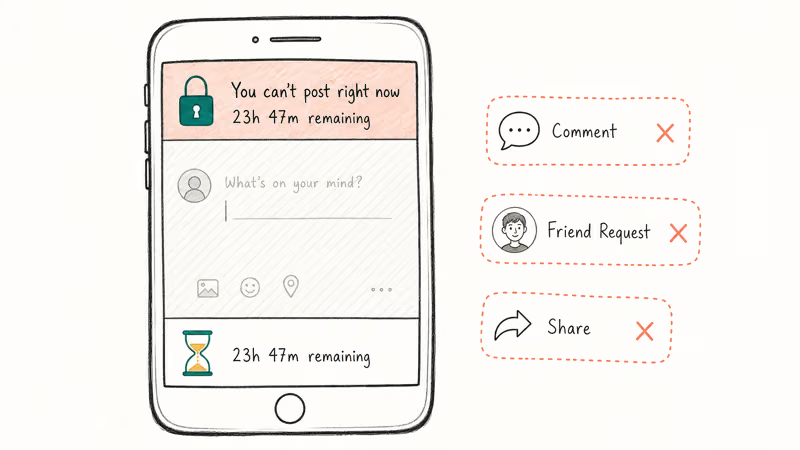
The restriction can block a single feature or every interactive feature at once. Scroll but not post. Post but not comment. Log in but not friend.
According to Meta’s Transparency Center, the company uses a combination of AI classifiers and user reports to decide what action to take, and the enforcement action scales with the severity and frequency of the violation. The scaling is exponential rather than linear — third-time offenders see much longer blocks than second-time offenders for identical behavior.
A first-time “too many posts too fast” trigger typically produces a 24-hour post block with an in-app notification explaining the reason. A second trigger soon after usually escalates to a 7-day block. The system has memory.
#Why Did My Facebook Account Get Restricted?
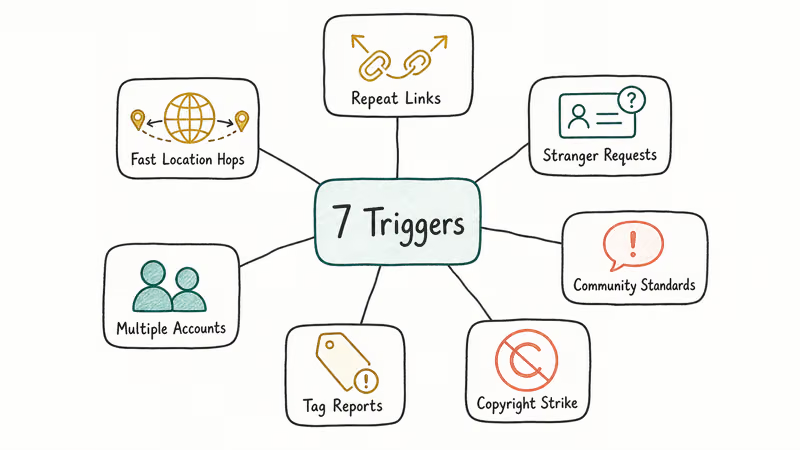
Meta’s automated system flags seven patterns more often than any others. If you got locked out, one of these is almost certainly the reason.
#Posting the Same Link or Message Repeatedly
Cross-posting an identical URL or paragraph to multiple Groups, Pages, or comment sections within a short window looks like spam, even if the content is helpful. Meta’s systems don’t distinguish between a genuine share and a marketing blast. Posting the same product link to several Groups within an hour can trigger a 24-hour messaging block, and repeat attempts within the same week extend the block to 7 days.
#Sending Friend Requests to Strangers
Meta tracks your friend-request acceptance rate. A bad rate flags you. The block usually starts at 7 days and escalates with repeats. According to Meta’s Help Center, Facebook may ask you to confirm how you know someone before sending future requests once this threshold is crossed.
#Posting Content That Violates Community Standards
Hate speech, threats, nudity, graphic violence, sale of regulated goods, and promotion of self-harm aren’t rate-limit violations. They’re community standards violations, and they trigger faster and harsher action. Meta’s Community Standards list every violation category in detail, and the enforcement page confirms severe violations can result in permanent account disablement on the first offense.
For background context, Wikipedia’s Facebook article states that the company has operated since 2004, and its moderation infrastructure has expanded considerably over those 20+ years.
#Copyright and Trademark Strikes
Copyright is unforgiving. Uploading an image, video, or music track registered with Meta’s Rights Manager can trigger an automatic takedown plus a strike against your account. Three strikes in a rolling window usually disable the account. Even a single DMCA counter-notice from a legitimate rights holder can lock your posting ability while the dispute is reviewed, and during that review period you can’t simply delete the disputed content to stop the clock.
#Tagging People Who Report You
Tag-reports stack up fast. If you tag users who then hide or report the tag, Facebook logs each report against your account. When several people hide or report your tags, a second incident can disable the tagging feature for around 3 days.
#Running Multiple Accounts From One Device
Meta’s policy is one account per person. Using the same phone, same IP address, same payment method, or overlapping friend lists to run a secondary account is called inauthentic behavior. When the system matches the accounts, it can suspend all linked accounts at the same time, including the legitimate primary one.
#Logging in From Many Locations Too Fast
VPN-hopping between countries in a single day looks like an account takeover. Facebook may freeze posting until you confirm your identity.
#Facebook Jail Duration by Violation Type
Length depends on the violation tier and your account history. Meta does not publish an exact matrix, but years of user reports point to the following pattern, where each tier carries its own typical first-offense window and a much steeper penalty once the same behavior repeats.
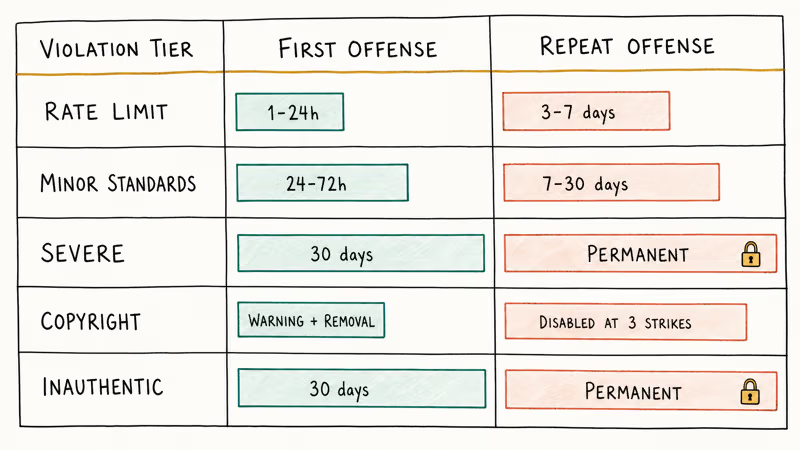
Rate-limit violations (posting too fast, too many requests): 1 to 24 hours first offense, 3 to 7 days on repeat.
Minor community standards violations (bullying language, borderline content): 24 to 72 hours first offense, 7 to 30 days on repeat.
Severe violations (hate speech, threats): 30 days first, permanent on repeat.
Copyright or trademark strikes: Content removed with a warning on first strike; account disabled at the third strike in a rolling 12-month window.
Inauthentic behavior (fake accounts, coordinated activity): 30 days first offense, permanent disablement on repeat.
Trying to access restricted features during an active block surfaces an in-app notification with a countdown timer showing the exact remaining hours. Don’t try to work around the block with a second account — if Meta links them, both accounts get penalized.
#Steps to Get Out of Facebook Jail
You have four paths, and the right one depends on what triggered the block.
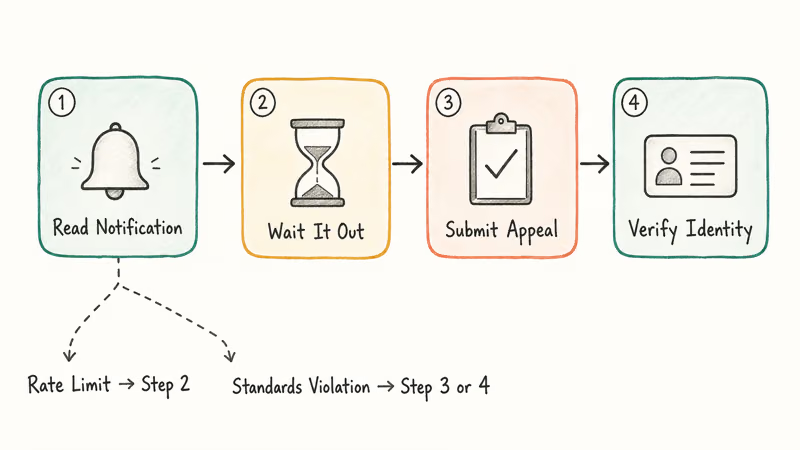
#Step 1: Read the Notification
When you open Facebook, the warning banner or notification tells you which rule you broke and how long the restriction lasts. Don’t skip it. Screenshot it. The reason code determines everything that follows.
#Step 2: Wait It Out (Rate-Limit Violations)
For “too many posts” or “too many friend requests” blocks, the fastest fix is nothing. Don’t log out, don’t switch devices, don’t try to post from a browser. Facebook’s system logs each retry and can extend the block.
Wait for the timer to expire. If you keep getting re-flagged, your behavior pattern is the problem, not the account.
#Step 3: Submit an Appeal (Community Standards Violations)
If you believe Facebook flagged your post by mistake, tap “Disagree with decision” or “Request review” in the notification. You have a short appeal window (usually 30 days) to ask a human to re-examine the decision. Appeals on clear false positives (a news article about hate speech flagged as hate speech) are often overturned within a few days. Appeals on borderline content rarely succeed.
#Step 4: Verify Your Identity (Lockout or Takeover Flags)
If Facebook thinks your account was compromised, the block comes with an identity-verification prompt. Upload a government ID through the secure identity upload tool Facebook provides. The review takes 2 to 5 business days.
Don’t use a fake ID. A mismatch between your ID and your profile name can turn a temporary block into a permanent one.
#How Do I Avoid Facebook Jail in the First Place?
Seven habits keep accounts out of trouble. Together they keep an account clean across years of normal use without triggering a single restriction.
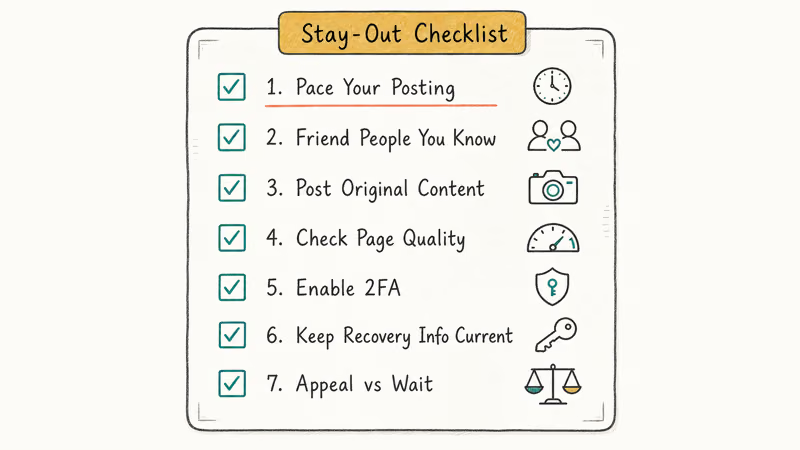
Pace your posting. Don’t share the same link to more than 3 Groups within an hour. Spread the same content over a day or two if you need wide reach. Meta’s systems look for burst patterns, not total volume.
Only friend people you actually know. Building a public audience? Use a Page, not a personal profile. Pages are designed for reach; personal profiles are not. This single switch eliminates most of the friend-request blocks reported by small business owners, creators, and people new to the platform who want maximum follower growth in their first 90 days.
Post original content, or credit the source. If you share a photo you did not take, link back to the original creator or use a licensing service. Screenshotting someone’s Instagram post and reposting it on Facebook is one of the most common copyright triggers.
Check your Page’s quality score. Facebook provides a Page Quality tab that shows active violations, rate-limit warnings, and policy risks. Review it weekly if you run a business Page.
Turn on two-factor authentication. Accounts with 2FA are less likely to be flagged as compromised when you log in from a new location. Use an authenticator app rather than SMS when possible.
Keep your recovery info current. A working phone number and a verified backup email shorten identity verification from 5 days to under 24 hours if you ever get locked out. If your account has been acting strange, checking who unfollowed you on Facebook is a useful first sanity check before assuming a restriction.
Know when to use an appeal versus wait. If the violation is legitimate, appeals won’t help and may extend the block. If the violation is clearly a false positive, appeal on day 1, not day 29.
If your account shows broader trouble signs, like a persistent Facebook session expired error or Facebook something went wrong error, those are usually technical issues, not restrictions, but they’re worth ruling out first.
For takeover concerns, our Instagram hack recovery guide covers the same Meta playbook.
#When an Appeal Gets Rejected
A rejected appeal is not always the end. You have one more tool. The independent Oversight Board reviews a small number of appeals per year for the most consequential cases (permanent account removal, major content removal) and can overturn Meta’s decisions. Its case decisions are binding.
For everyday rate-limit or short-duration blocks, the Oversight Board won’t take the case. The realistic path is to wait out the block, change the behavior that triggered it, and build a clean track record. After a 30-day ban, an account typically returns to full functionality the next day with no lingering restrictions, as long as no new violations occur.
If the restriction hit a business Page rather than a personal profile, Meta offers a dedicated business support channel with faster human review. Regular personal-profile users almost never reach a human outside the formal appeal flow.
#Bottom Line
If you’re in Facebook jail right now, read the notification, screenshot it, and wait for the timer to expire before you try anything else. Appealing a legitimate rate-limit violation just extends the block.
The only two scenarios where action beats waiting are clear false positives on community standards decisions (appeal immediately) and identity-verification lockouts (submit your ID through the official tool on day 1). Once the block lifts, pace your posting, friend only people you know, and post original content. Those three habits will keep most accounts out of jail for good.
#Frequently Asked Questions
Can I use another account while my main account is in Facebook jail?
No. Meta’s systems match accounts by device fingerprint, IP address, and behavioral signals. If you log into a second account from the same phone or home Wi-Fi, Facebook will likely link them, and both accounts can be penalized together.
Does a VPN help me get out of Facebook jail faster?
No. A VPN doesn’t shorten an existing block and often makes things worse.
Will Facebook warn me before sending me to jail?
Usually yes, but not always. Rate-limit violations come with an in-app warning first, then a block if the behavior continues. Community standards violations, especially severe categories like hate speech or threats, skip the warning and go straight to a block or removal. The warning is a grace period you should respect; ignoring it almost always triggers a longer block than a first offense would have received.
How can I tell if I am in Facebook jail or just having a technical problem?
Facebook jail comes with a specific notification that names the restricted feature and the duration. A technical problem (app crash, session expired, network error) does not show a countdown timer. If you see “You can’t post right now” with a date, you are in jail. If you see “Something went wrong”, try clearing the Facebook cache and checking your connection first.
Does logging out and back in reset a Facebook jail block?
No. Logging out and back in has no effect on an active block, and the timer keeps running regardless.
Can I lose my account permanently from Facebook jail?
Yes. Accumulating multiple community standards strikes, three copyright strikes, or a single severe violation (graphic content, credible threats, coordinated inauthentic behavior) can result in permanent disablement. Meta’s enforcement page confirms that repeat offenders face progressively harsher consequences, up to and including permanent loss of the account.
Is Facebook jail the same across Facebook, Instagram, and Messenger?
The enforcement systems are connected because Meta operates all three. A severe violation on Facebook can restrict your Instagram account and Messenger simultaneously if both are linked to the same Meta account. For Instagram-specific restrictions, the messaging is similar but the feature set differs.
Google Messages Error 3100: Why RCS Is Broken on Galaxy
Google Messages RCS error 3100 hits Galaxy owners after phone or carrier switches. Google told 9to5Google a fix is coming. Here's what actually helps.
Is This Bank App Real? Spot a Fake App on Your Home Screen
A bank app can land on your home screen from a web page with no install warning. Learn the checks that tell a real banking app from a phishing web app.
Apps Crashing After iOS 27 Update? Fix Order (2026)
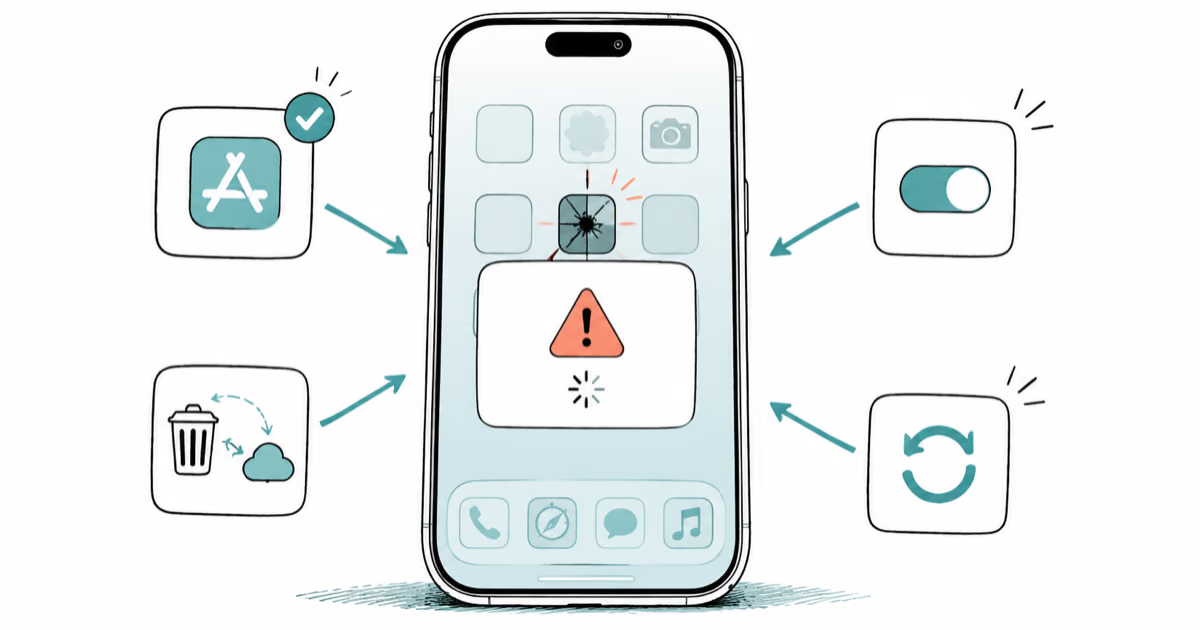
Apps crashing after the iOS 27 update? Update the app in the App Store first, then offload and reinstall to clear stale cache, then restart. The fix order.
Do AI Translation Earbuds Work Offline? What to Know
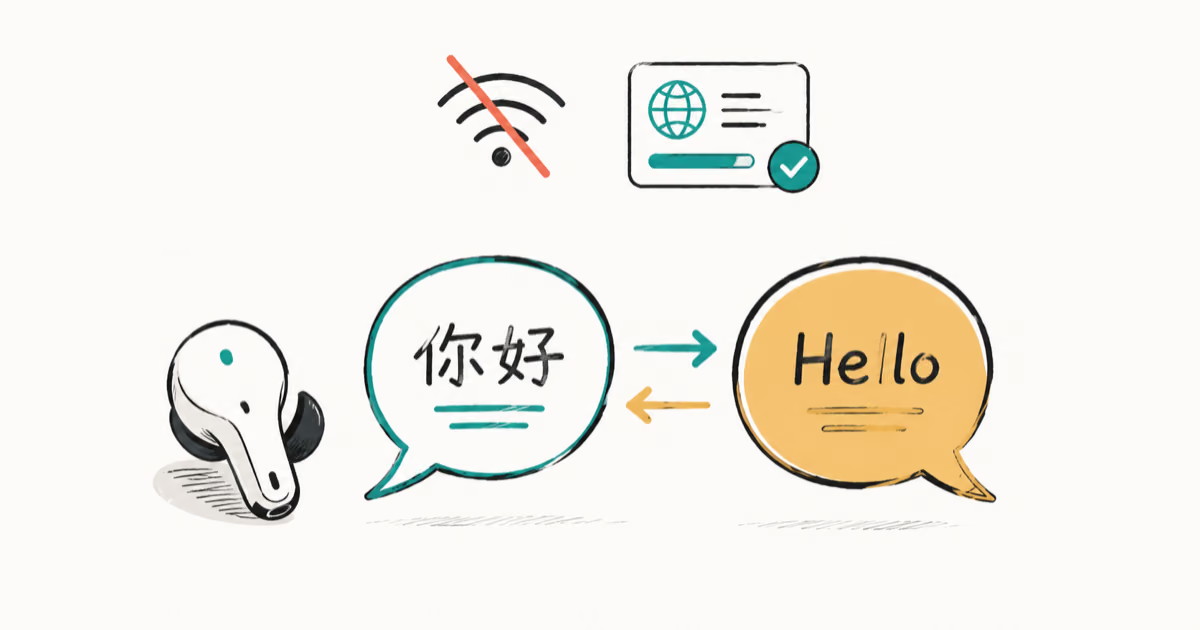
Do AI translation earbuds work offline? A few do with downloaded language packs, but most need the cloud. Here's what works offline and what you give up.