Instagram Hack: How to Protect and Recover Your Account
Defensive Instagram security guide: spot a compromised account, recover access through official Meta tools, and lock down 2FA on the account you own.
Quick AnswerIf your own Instagram account is hacked, reset the password from the official login screen, sign out unknown sessions, and turn on two-factor authentication. Trying to access an account that is not yours is illegal and violates Meta terms.
Losing access to your Instagram is jarring, especially when posts you never wrote start showing up on your own feed. This guide covers only one thing: how to protect, audit, and recover your own Instagram account using official Meta tools. Trying to access an account that isn’t yours, or that you don’t have explicit written permission to manage, is illegal under U.S. computer-fraud laws and violates Meta’s terms of service.
- This guide is only for securing your own Instagram account; unauthorized access to another person’s account is illegal and breaks Meta’s terms of service
- Suspicious-login emails from
security@mail.instagram.comare the fastest signal that someone tried your account, often arriving within minutes of the attempt - Meta’s official password-reset flow on the Instagram login screen restores access in most credential-only compromises when you still control the linked email
- Two-factor authentication through an authenticator app blocks nearly all credential-stuffing attempts, even when your password appears in a public leak database
- Never share recovery codes, login links, or one-time SMS codes with anyone claiming to be Instagram support; Meta will never request them by DM
#What Does an “Instagram Hack” Really Mean?
Most “hacks” aren’t exotic exploits. They’re credential compromises, where someone reuses a leaked password, falls for a phishing DM, or hands a one-time code to a fake “support” account.
We’re explicit about scope: this article is only about your own account. According to the Wikipedia overview of multi-factor authentication, a second factor stops the overwhelming majority of takeover attempts because the attacker never sees the second code. If you’re trying to access an account that belongs to someone else, even a partner, family member, or former coworker, stop reading; that activity is illegal under the U.S. Computer Fraud and Abuse Act and violates Meta’s terms.
Already locked out and seeing a wall asking you to verify? Start with our walkthrough of the Instagram challenge required prompt. That short flow alone resolves a chunk of mid-hack lockouts before you need a full reset.
#Recognizing the Signs of a Compromised Account
The earliest signs are usually email-based. Meta sends an alert from security@mail.instagram.com whenever a new device logs in, your password changes, or your email or phone number is updated. Save those emails. If the action wasn’t you, the “this wasn’t me” link inside each alert is the fastest official rollback.
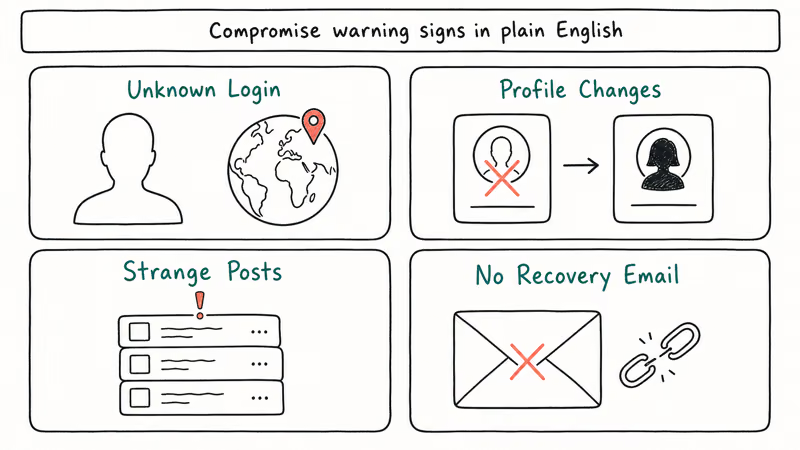
Inside the app, watch for:
- Posts, Reels, or Stories you didn’t publish
- DMs sent from your account that you never typed
- Username, bio, or profile-picture changes you didn’t make
- Unknown devices in Settings → Account Center → Password and security → Where you’re logged in
- Follower or following counts that jump unexpectedly
The Where you’re logged in list often surfaces an unknown device within seconds of a fresh login from a different country, well before any visible in-app behavior changes. If something feels off, see the notes on Instagram suspicious login attempts for the exact decision tree.
#How Do You Recover Your Own Hacked Instagram Account?
If you can still log in, the fastest path is short and only uses Meta’s own tools.
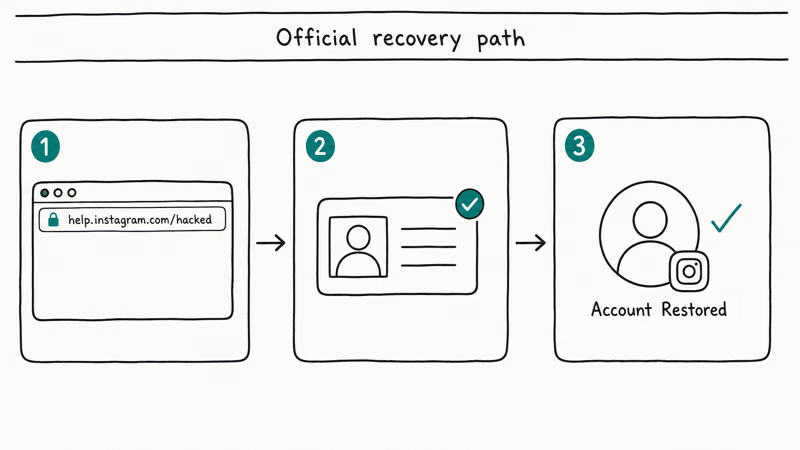
- Go to Account Center → Password and security → Change password and set a new, unique password you’ve never used on another service.
- Open Where you’re logged in and tap Log out on every device you don’t recognize.
- Turn on two-factor authentication with an authenticator app (Aegis, 1Password, Google Authenticator, or Authy). SMS-only 2FA is better than nothing but is bypassable through SIM-swap fraud.
- Review Apps and websites under the same Security menu and remove any third-party connections you don’t actively use.
- Update your email and phone to addresses you fully control, then re-check Login activity ten minutes later to confirm no new strange sessions appear.
If you’re already locked out, use the Get help logging in link on the Instagram sign-in screen, not a random Google result and never a DM that promises to “recover” your account. The official flow walks you through a password-reset email or SMS code, then a video selfie for identity verification when the attacker has changed your email.
Password-reset emails usually land in the inbox within a minute or two, though delivery can lag if your email provider is aggressively filtering, so check the spam folder before requesting a second code. If your SMS code never arrives at all, the workaround is documented in Instagram not sending SMS code.
#Secure Your Account With Built-In Instagram Tools
According to Meta’s Privacy and Safety Help Center, every legitimate hardening tool is grouped in one place. The shortlist worth turning on today:
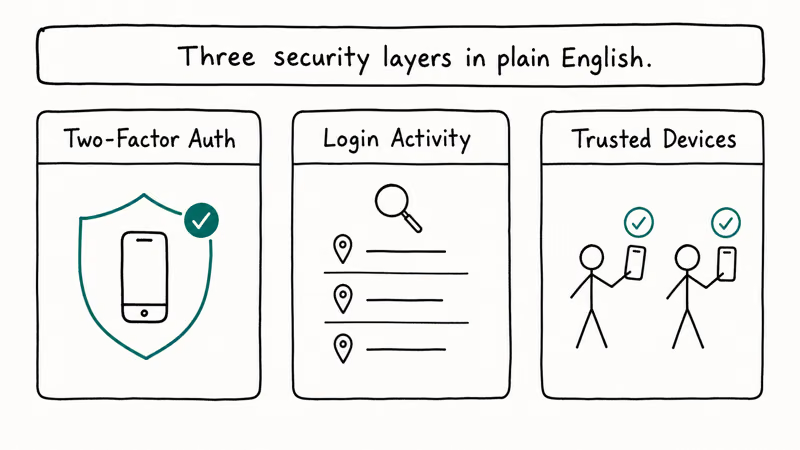
- Two-factor authentication with an authenticator app, plus printed backup codes stored offline
- Login alerts that email and push every new sign-in attempt
- Security Checkup, a guided audit Meta runs that flags weak passwords, missing 2FA, and unfamiliar devices
- Profile lock or a temporary switch to private, useful while you finish hardening
For households with kids on Instagram, Meta also exposes a supervised mode worth reading about. Our overview of Instagram parental controls covers it without overlapping this guide.
It’s also worth reviewing what you’ve made public over the years. The Wikipedia entry on phishing is a good primer on why attackers harvest seemingly harmless profile data, like your birthday and pet’s name, to answer “secret question” prompts elsewhere.
#Common Phishing and Social-Engineering Traps to Avoid
Attackers almost always reach you through a believable message. The three most common patterns are:
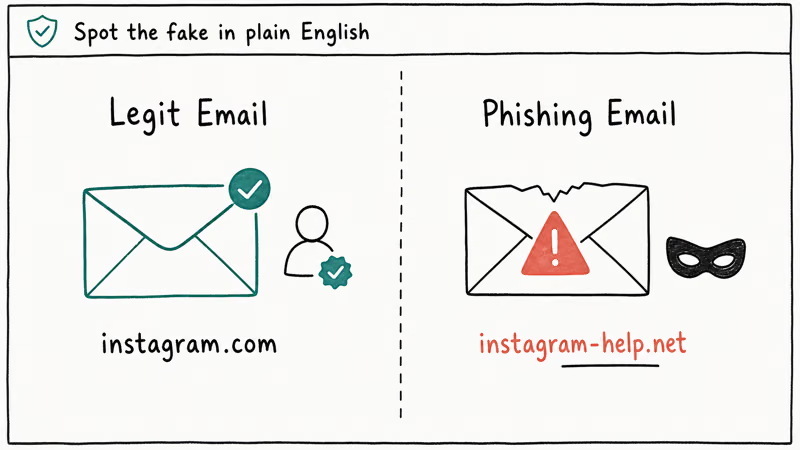
- A “copyright violation” DM that links to a look-alike Instagram login page. The page captures your password the moment you type it.
- A “verification badge offer” that asks for your password and 2FA code in the same form. Meta will never ask for either by DM.
- A “friend in trouble” message asking you to forward a one-time login code that “they sent to your number by mistake”. Forwarding it gives the attacker your account.
Treat anything that asks for codes, passwords, recovery links, or selfie videos outside the official app as hostile. If you accidentally entered a code, jump immediately to the recovery steps above. Privacy-conscious posters may also want to revisit whether you can hide posts on Instagram once the account is back under your control.
#What to Do After You Regain Access
Recovery isn’t finished at “I’m back in.” After login, finish the cleanup.
- Re-check every connected app and revoke anything you don’t recognize, even if it looks branded
- Rotate the password on the email linked to Instagram, because if that mailbox is compromised the attacker can simply reset Instagram again
- Tell your followers in a Story that any suspicious DMs sent during the breach were not from you
- Set the account to private for 24 to 48 hours while you watch for follow-up attempts
If the attacker used your Instagram contacts to phish other accounts, your Gmail may also need attention; we walk through that in Gmail account recovery.
#Bottom Line
For your own account, the recipe is short and boring: a unique password, authenticator-app 2FA, official Meta recovery tools, and skepticism toward anything that arrives by DM. Skip Google’s top “Instagram hack” results entirely, since almost all of them lead to scam sites or paid spyware. Meta’s Help Center and your account’s own Security Checkup are the only tools that consistently work, and they’re free.
For someone else’s account, there is no recipe in this guide. Unauthorized access remains illegal regardless of motive.
Instagram Tips & Tricks
#Frequently Asked Questions
Is it illegal to log into someone else’s Instagram account?
Yes. In the United States, accessing an account without authorization violates the Computer Fraud and Abuse Act, and similar privacy laws apply across the EU, UK, Canada, and Australia. Even guessing a partner’s password counts. Meta’s terms also forbid it and will lead to permanent suspension of your own account if discovered.
What’s the very first thing to do if I think I’ve been hacked?
Open the most recent email from security@mail.instagram.com and tap “This wasn’t me.” Then move into the password reset flow inside the Instagram app.
Is SMS two-factor authentication good enough?
SMS 2FA is far better than no second factor, but it’s vulnerable to SIM-swap attacks, where someone convinces your carrier to move your number to their SIM. We recommend pairing or replacing SMS with an authenticator app like Aegis, 1Password, or Authy, and printing the backup codes for offline storage.
Should I trust accounts that DM me offering to recover my Instagram?
No. Every legitimate Instagram recovery flow happens inside the official app or at instagram.com, and no real Meta employee will ever DM you offering account help. Any DM, comment reply, or third-party app that asks for your password, login link, recovery code, or selfie video is a scam, regardless of how convincing the verification badge looks. Block them through the in-app reporting tool, then warn anyone who already interacted with the scam account so they don’t share their credentials too.
What does Instagram do during the video-selfie verification step?
According to Meta’s Help Center, the short clip is used only to confirm a real person matches the photos on the account, and Meta says it isn’t shown to other users or attached to your public profile. It’s the standard fallback when the attacker has already swapped your linked email and phone, so record in good lighting and follow the on-screen head-turn prompts.
Can my account be banned just because someone hacked it?
Temporarily yes, if the attacker posted policy-violating content. Report it under Help → Report a Problem → Hacked Account and Meta restores standing.
How often should I rotate my Instagram password?
Rotate immediately after any breach, any time you see an unfamiliar device in Where you’re logged in, or after Meta’s Security Checkup flags weak credentials. Otherwise an annual rotation paired with a password manager is enough; constant rotation usually pushes people toward weaker passwords.
Is there any safe “Instagram password recovery tool” I can download?
No. Every desktop or mobile tool advertised as an Instagram password cracker is either a scam, malware, or an attempt to harvest your own credentials. Use only Meta’s in-app recovery, the password reset link on the login screen, or the Account Center.
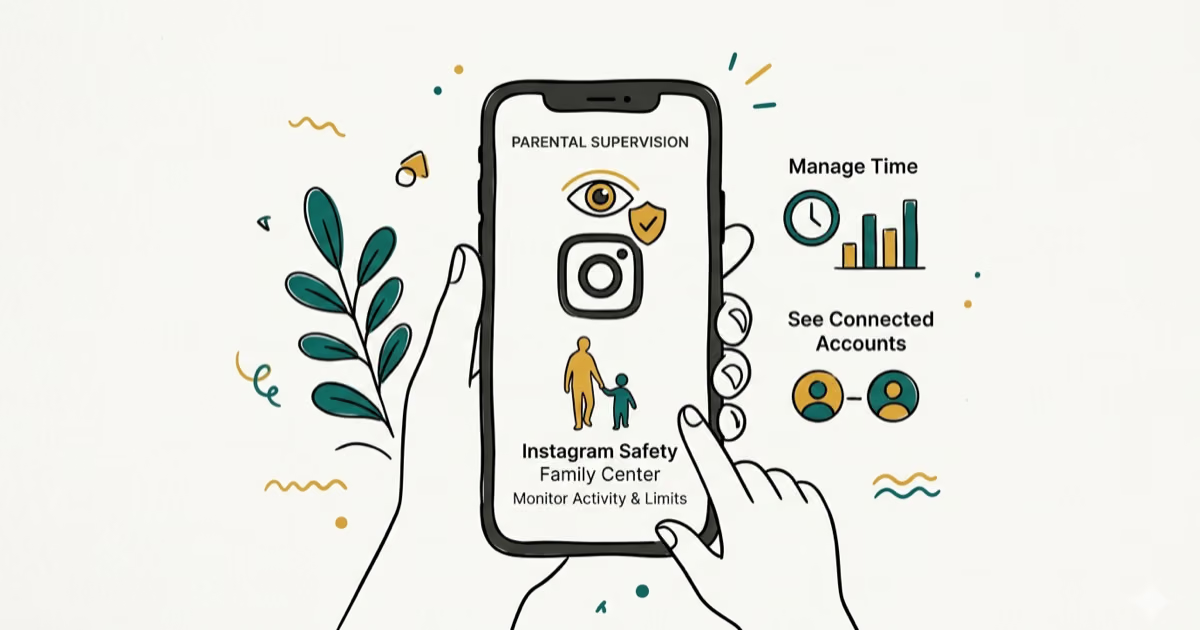
Instagram Parental Controls: Family Center Setup (2026)
Set up Instagram Family Center, privacy settings, Hidden Words, content filters, and time limits with your teen's consent on iPhone or Android.
Instagram Notifications Not Working? Quick Fixes (2026)
Instagram notifications not working? Fix push alerts, DMs, likes, and Stories on iPhone and Android in under 5 minutes with proven 2026 steps.
Instagram "We Limit How Often" Error: How to Fix It 2026
Instagram says "we limit how often you can do certain things"? Wait 24-48 hours, slow down likes and follows, then appeal through Help Center.
Instagram Name Checker: Find Available Usernames Fast
Check Instagram username availability instantly with free tools like Namechk and KnowEm. Find perfect handles and avoid the frustration of taken names.