Electronic Screen Syndrome: Signs, Causes, and Treatment
Electronic screen syndrome (ESS) causes mood, focus, and behavior issues in children from excessive screen time. Learn the signs, causes, and treatments.
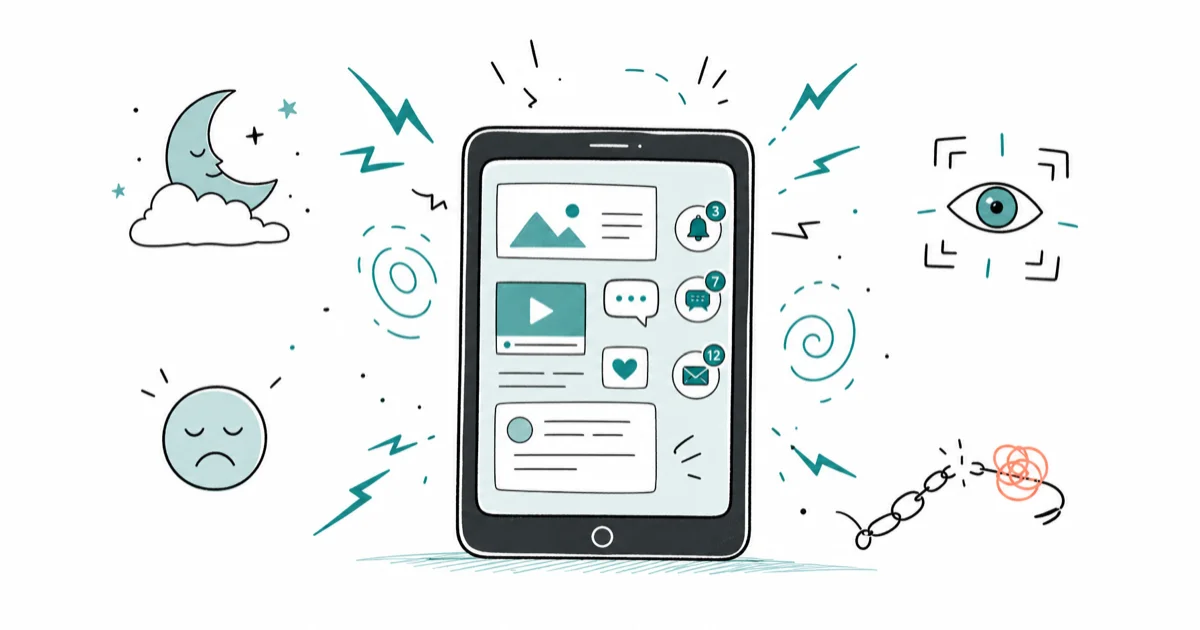
Quick AnswerElectronic screen syndrome is a condition where a child's nervous system becomes overstimulated from excessive screen exposure, leading to problems with mood, focus, and behavior that mimic ADHD and other disorders.
Electronic screen syndrome (ESS) has gone from an obscure clinical observation to one of the most discussed topics in pediatric behavioral health. The usual discussion centers on Dr. Victoria Dunckley’s electronic fast: a screen-free reset followed by stricter daily limits.
- ESS describes nervous system overstimulation from excessive screen use, coined by Dr. Victoria Dunckley
- Children are using devices at increasingly young ages, with many averaging 2 to 4 hours of daily screen time
- ESS symptoms mimic ADHD but disappear once screens are removed
- Boys and kids with ADHD or autism have higher risk
- Treatment is a 4-week electronic fast with no screens at all
ESS affects toddlers to teenagers.
#Understanding Electronic Screen Syndrome
Electronic screen syndrome is an uncategorized disorder coined by Dr. Victoria Dunckley, a child and adolescent psychiatrist who noticed patterns of behavioral and psychiatric disturbances linked to screen use in children she treated. ESS describes a state where the child’s nervous system becomes chronically overstimulated from digital screen exposure. Try the official support flow first before third-party advice.
For tools that enforce screen time limits on a device you manage, see the guide on parental controls.
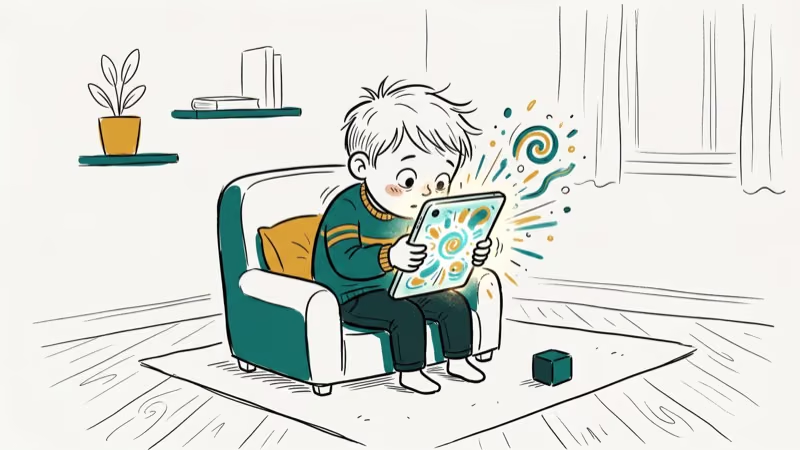
Dr. Dunckley’s 2015 book “Reset Your Child’s Brain” brought the concept to public awareness.
Any digital device triggers ESS. Wikipedia’s screen time article states that 1 hour per day is the recommended maximum for children aged 2 to 5. Most children significantly exceed this.
The key distinguishing feature of ESS is reversibility. Dr. Dunckley’s clinical findings treat symptom improvement after screen removal as one reason to try an electronic fast before assuming a fixed neurological disorder. Her work indicates nervous system dysregulation from screens can reverse once exposure stops.
#How Is ESS Different From Other Conditions?
ESS is frequently misdiagnosed as ADHD because the symptoms overlap. The clinical test is simple: remove screens for 4 weeks.
According to Wikipedia’s article on ADHD, ADHD affects approximately 5-7% of children globally. Many parents and clinicians who suspect ESS find that eliminating screen time for 4 weeks is a reliable diagnostic test: if symptoms resolve, ESS is the more likely explanation than a neurological disorder.
#Signs of Electronic Screen Syndrome in Children
The following signs indicate a child may be experiencing ESS. Children with ESS often show several of these signs at once before treatment starts.

- Over-excitement: Gets too excited too quickly and too often
- Disorganization: Displays opposition, disobedience, and chaotic behavior
- Screen dependence: Can’t stop using screens without significant distress
- Social immaturity: Shows immature behavior that affects friendships
- Academic decline: Shows poor focus and underperformance at school
- Outbursts: Gets raging attacks disproportionate to the trigger
- Mood decline: Becomes unhappy, cranky, or teary outside screen time
- Physical signs: Has dilated pupils and avoids eye contact after screen use
If your child shows more than 3 of these signs consistently, screen time is the first variable to examine. You don’t need a formal diagnosis to run the 4-week electronic fast as a diagnostic and therapeutic test. If your child uses an Android device, you can set screen time limits using Android Screen Time controls to enforce daily limits automatically. For iPhones, you can disable Screen Time settings or reconfigure them with more restrictive limits.
#Common Risk Factors for ESS
Certain children are at higher risk of developing ESS:
- Small age (younger children have less-developed nervous system regulation)
- Male gender (boys show higher rates in clinical observations)
- Sensory processing disorders
- Pre-existing ADHD or autism spectrum disorder
- Addiction-prone temperament
- Psychosocial stressors (family conflict, school difficulties)
- Food sensitivities or allergies (which signal a reactive nervous system)
The risk factors don’t cause ESS directly; they reduce the nervous system’s resilience to overstimulation, which means it takes less screen exposure to produce symptoms in these children.
#Why Does Excessive Screen Time Cause These Symptoms?
Digital screens cause ESS through two main mechanisms: stimulation of the dopamine reward system and suppression of the body’s natural sleep and stress regulation.
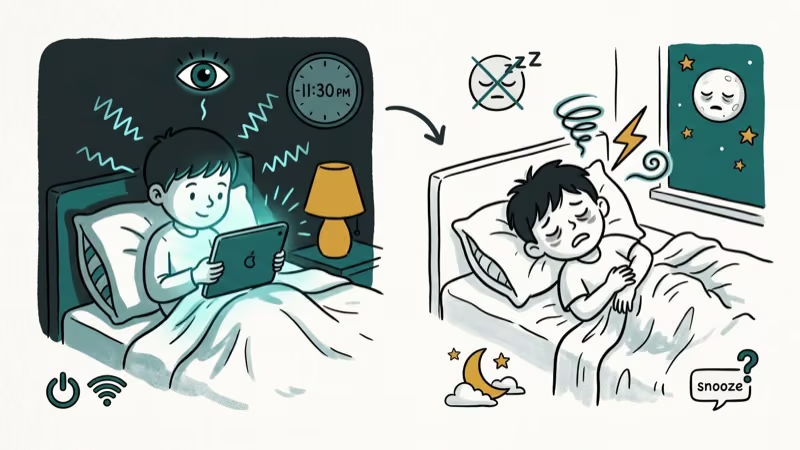
Dopamine stimulation: Fast-moving visuals, game rewards, and social media notifications all trigger dopamine release. This creates a feedback loop where the child needs increasing screen stimulation to achieve the same level of excitement, similar to tolerance in substance use.
Stress system activation: Prolonged screen exposure, especially in the evening, disrupts the body’s natural cortisol rhythm. Wikipedia’s cortisol article confirms that cortisol levels follow a 24-hour pattern tied to light exposure, and artificial screen light delays the natural evening drop. Elevated cortisol leads to sleep problems, irritability, and impaired emotional regulation, which are 3 of the core ESS symptoms.
The combination of dopamine dysregulation and cortisol disruption explains why ESS symptoms look so much like mood disorders: both systems regulate the same emotional and behavioral pathways.
#Screen Time Types: Active vs. Passive
Screen time is divided into active and passive categories, but from an ESS perspective, both carry risk.
Active screen time involves direct engagement: touch screens, keyboards, gaming controllers, social media interaction. Active screen time produces higher dopamine stimulation than passive.
Passive screen time involves watching without interacting: TV, streaming, YouTube. Some studies have suggested passive screen time is less harmful, but Dr. Dunckley’s work found it still causes nervous system activation sufficient to trigger ESS symptoms in susceptible children.
Any screen exposure elevates stimulation above baseline. The total daily dose matters more than the type.
#Treating Electronic Screen Syndrome: The Electronic Fast
The primary treatment for ESS is an electronic fast: a complete elimination of all screen time for a minimum of 4 weeks. This includes TV, gaming, tablets, and smartphones. The fast allows the nervous system to return to baseline.
During an electronic fast, parents commonly watch for:
- Improved sleep as screen exposure drops
- Reduced irritability and outbursts
- Better academic focus and peer relationships by the end of the fast
What replaces screen time during the fast:
- Outdoor physical activity (sports, nature walks, unstructured play)
- Interpersonal activities (board games, cooking together, hugs and physical contact)
- Creative activities (drawing, building, reading physical books)
- Structured hobby time (music, sports leagues, arts and crafts)
After the fast, parents can reintroduce limited, supervised screen time with firm daily limits. The American Academy of Pediatrics recommends no more than 1 hour per day for children aged 2 to 5, and no more than 2 hours for children 6 and older.
#Parental Strategies to Prevent ESS
Prevention is more effective than treatment because the nervous system changes from chronic overstimulation take weeks to reverse.
Set firm screen time limits before ESS symptoms appear. Use parental control apps to enforce the limits automatically rather than relying on child compliance. If your router supports it, Netgear parental controls can block internet access by time of day across all devices on the network. For a broader set of options, geofencing apps can also trigger notifications or restrictions based on location and time of day.
Replace screen time with physical contact and outdoor activity. Research consistently shows that outdoor play and physical touch reduce cortisol levels and improve nervous system regulation in children. The screen time replacement matters as much as the reduction itself.
Model the behavior. Children who see parents on devices constantly have higher rates of screen-related behavioral issues. Family screen-free times (meals, bedtime) establish norms that reduce overall household screen exposure.
#Bottom Line
ESS is a reversible condition that responds well to a structured 4-week electronic fast followed by enforced daily limits. The most important step is recognizing that symptoms you might attribute to a behavioral or neurological disorder could have screen time as a contributing or primary cause.
Run the fast before assuming medication or therapy is the first-line intervention. Screen-related symptoms can improve when exposure is removed, which is why the fast is used as a practical first step. See the best parental control routers guide for hardware that enforces screen time limits across your household’s devices.
#Frequently Asked Questions
Is electronic screen syndrome a recognized medical diagnosis?
ESS isn’t currently listed in the DSM-5 or ICD-11 as an official diagnosis. It was described by Dr. Victoria Dunckley based on clinical observations.
The underlying mechanisms (dopamine dysregulation and HPA axis disruption from excessive stimulation) are well-supported by neuroscience research. Many clinicians use it as a valid working diagnosis even without formal classification.
At what age can electronic screen syndrome develop?
ESS can start at 18 months. Younger children have less-developed regulation, making them more susceptible.
How long does the electronic fast need to last?
A minimum of 4 weeks is needed to allow the nervous system to return to baseline. Dr. Dunckley’s clinical work found that shorter breaks produced temporary improvement that reversed when screen time resumed. Some children with severe ESS symptoms may need 6-8 weeks before behavioral changes stabilize.
Can adults develop electronic screen syndrome?
Adults can develop similar patterns. The treatment is the same: a digital detox followed by daily limits.
Does ESS affect school performance?
Yes. ESS can impair working memory, attention span, and emotional regulation, all of which are required for effective learning. If school performance improves after a screen fast, that improvement can be a clue that screen time was contributing to the problem.
How do I know if my child has ESS or ADHD?
The most reliable clinical test is the 4-week electronic fast. If symptoms resolve or significantly improve after 4 weeks without screens, ESS is the more likely explanation than ADHD. If symptoms persist unchanged, a formal ADHD evaluation is warranted. A pediatrician or child psychiatrist can guide this process, but the fast is a safe and low-cost first step that doesn’t require medication or formal diagnosis.

Best Laptop for Running LLMs in 2026: Memory Comes First
The best laptop for running LLMs is a memory purchase first. Compare MacBook unified memory against NVIDIA laptop VRAM, and see what each tier really runs.
Pixel 11 vs Pixel 10: What Changed and Who Should Upgrade
Pixel 11 vs Pixel 10: same screen and camera resolution, new Tensor G6, 25W wireless, and Gemini Intelligence. Here is who should actually upgrade.
Best Power Bank for iPad in 2026: Pro, Air, and Mini
Best power bank for iPad in 2026. Compare mAh tiers and USB-C PD wattage for iPad Pro, Air, and mini, plus airline Wh math, cables, and travel tips.
Best Power Bank With Built-In Cable: Top 2026 Picks
Best power bank with built-in cable picks for 2026. Compare single USB-C, multi-connector, and retractable laptop banks, plus airline Wh math.