Install Chrome OS on VirtualBox: 2026 Step-by-Step Guide
Install Chromium OS in VirtualBox on Windows or macOS without buying a Chromebook. Covers the official image, VM settings, and what doesn't transfer.
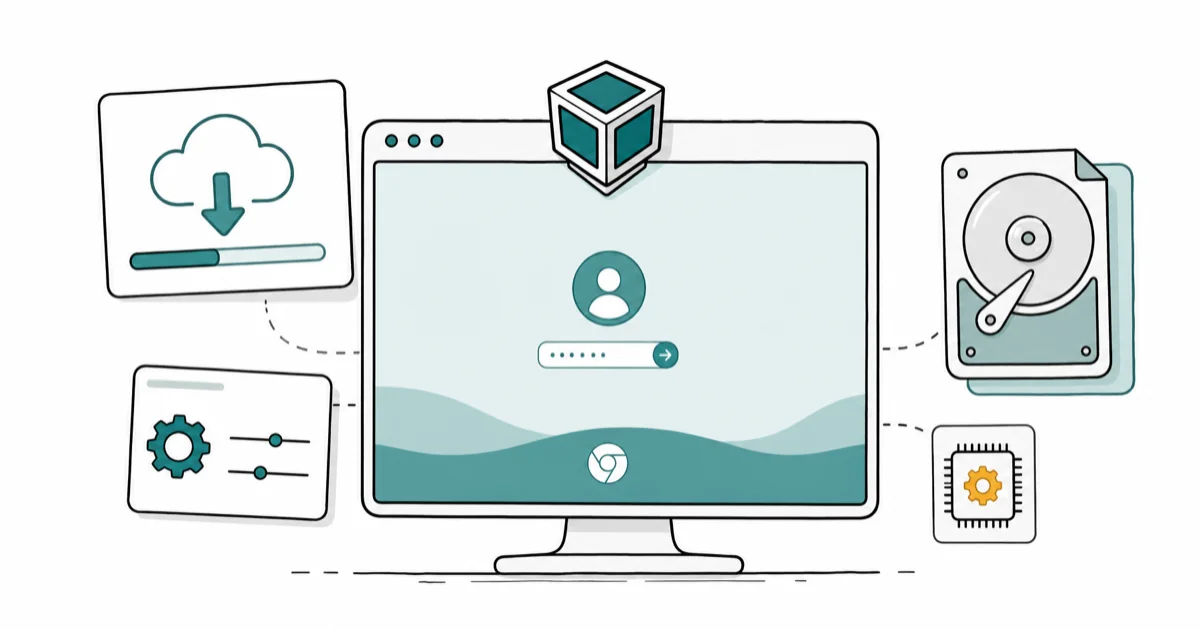
Quick AnswerDownload the latest Chromium OS image from a community build site, create a new VirtualBox VM set to Linux 2.6/3.x/4.x (64-bit), attach the .vmdk as a virtual hard disk, allocate 4 GB RAM and 2 vCPUs, enable EFI under System > Motherboard, and boot. The first launch lands on the Chromium OS welcome screen, where you sign in with a Google account.
If you want to install Chrome OS on VirtualBox to try the Chromebook experience on your own Windows PC or Mac before committing to dedicated hardware, this guide walks through the practical version of that.
The steps below follow the current VirtualBox 7.x flow for creating a Chromium OS virtual machine on Windows or macOS.
One important scope note. Google’s Chrome OS itself isn’t redistributable, so what you actually run in a VirtualBox VM is Chromium OS, the open-source upstream that Google builds Chrome OS on top of. The Play Store, Google Assistant, and several proprietary Google services that ship on a real Chromebook don’t carry over to a Chromium OS VM.
- VirtualBox 7.x is a free open-source hypervisor maintained by Oracle that runs on Windows, macOS, and most Linux distros.
- You run Chromium OS, not Chrome OS. The proprietary Google Play Store, Google Assistant, and verified-boot enterprise features aren’t part of the open-source image.
- Allocate at least 4 GB of RAM and 2 vCPUs to the VM. Older guides suggesting 2 GB predate the modern Chromium UI and feel laggy today.
- Apple Silicon Macs need VirtualBox 7.x’s experimental ARM build because Intel-only Chromium OS images won’t boot under Rosetta-emulated VirtualBox.
- This setup is appropriate for your own development, testing, or personal exploration, not as a daily-driver replacement for an enterprise Chromebook fleet.
#What Chromium OS Is and Isn’t
Chromium OS is the open-source operating system project that Google’s commercial Chrome OS is built from. According to the Chromium project’s licensing page, Chromium OS is BSD-licensed and freely installable for testing, development, or personal use.
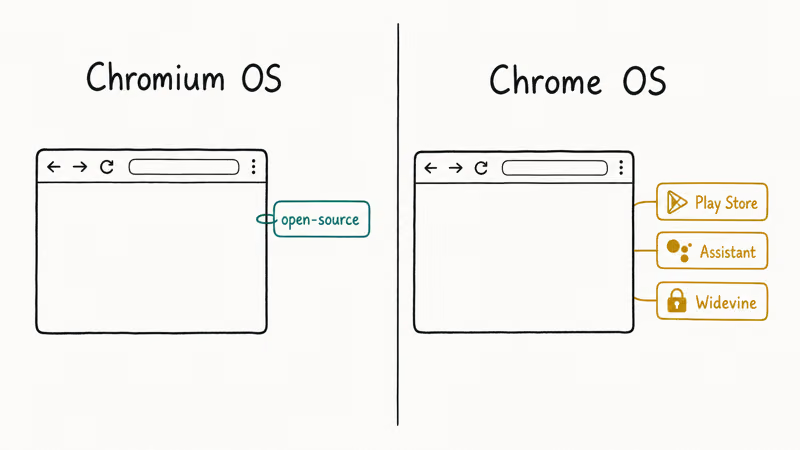
The visible parts are nearly identical to Chrome OS: the same window manager, the same Chrome browser, the same Google login flow.
According to the Chromium project documentation, Chromium OS ships without verified boot key management, without the Widevine DRM module (so Netflix and Spotify won’t play protected content), and without Play Store integration. Each is a Google proprietary addition on top of the open-source base.
Community Chromium OS builds can boot in VirtualBox, but they don’t match a real Chromebook feature for feature. The absence of Widevine means Netflix and other protected streaming services won’t work, and VM performance usually trails dedicated Chromebook hardware.
#How VirtualBox Hosts a Chromium OS VM
VirtualBox creates an emulated x86 PC that the guest OS treats as real hardware. Chromium OS sees a generic Intel CPU, a virtualized AHCI disk controller, an Intel HDA sound card, and a VirtualBox-specific video driver. The hypervisor translates those into native calls on your host.
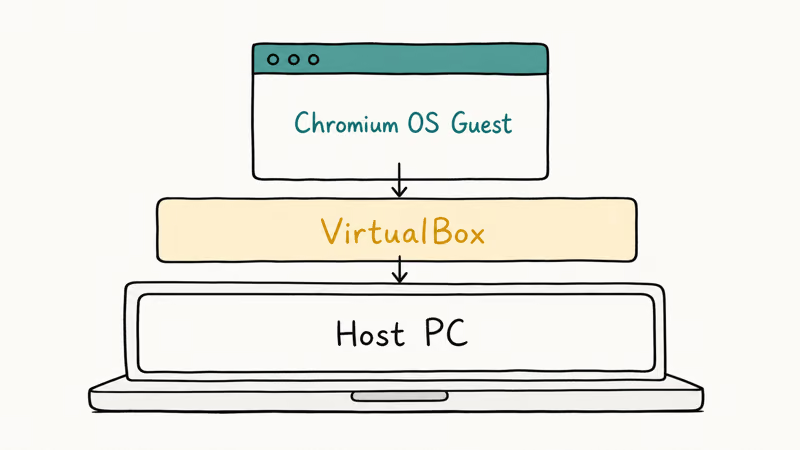
Oracle’s documentation confirms that VirtualBox 7.x supports both Intel VT-x and AMD-V hardware virtualization across 5 host operating systems (Windows, macOS, Linux, Solaris, FreeBSD), which is what makes a usable Chromium OS guest possible at all. The full VirtualBox hypervisor reference lists the version-by-version host support matrix.
The terminology gets thrown around a lot, so here’s the mapping:
| Term | Meaning |
|---|---|
| Host | The OS running VirtualBox (your Windows / macOS / Linux) |
| Guest | The OS running inside the VM (Chromium OS in this case) |
| VM | The configured virtual machine (disk, RAM, CPU, network settings) |
| VMDK | The virtual disk file format VirtualBox uses for Chromium OS images |
| Guest Additions | Optional drivers that improve guest performance, with limited support on Chromium OS |
Oracle’s official VirtualBox manual chapter on virtual storage explains that the VMDK format is fully interchangeable with VMware Workstation, which is useful if you decide to migrate the Chromium VM to a different hypervisor later.
#Why Install Chromium OS on VirtualBox?
The legitimate use cases break down into a few categories.
- Evaluate the Chromebook experience before spending on hardware. Installing a Chromium VM is the cheapest way to see whether the simplified UI suits your workflow.
- Web app development. A clean Chromium environment is useful for testing how a site behaves on what’s effectively a stripped-down browser-only OS.
- Education and training. Schools rolling out Chromebook fleets use VirtualBox installs to train staff on the UI without provisioning physical units.
- Lightweight secondary OS. Some users keep a Chromium VM alongside their main OS as a sandboxed environment for casual browsing isolated from the host.
What it isn’t suitable for: production deployment, anything that needs Google Play, anything that needs DRM-protected streaming, or replacing a managed enterprise Chromebook.
#Prerequisites Before Installing
Three items, each from a legitimate source.
- VirtualBox 7.x, downloaded from the official Oracle VirtualBox site. Pick the installer matching your host OS. The macOS Apple Silicon build is still labeled “developer preview” in 2026; the Intel build is the stable one.
- A Chromium OS image compatible with VirtualBox. The community at chromium.arnoldthebat.co.uk hosts daily and weekly builds; pick the latest stable
vmdkpackage. Verify the SHA-256 hash before importing. - Host system headroom. Plan for at least 8 GB total host RAM (so you can dedicate 4 GB to the VM), 20 GB free disk, and a CPU with hardware virtualization (Intel VT-x or AMD-V) enabled in BIOS/UEFI.
If your host already runs slow under Chrome, the Chromium VM won’t fix that. See our walkthrough on what to do when Google Chrome keeps crashing before you blame the VM.
For host-side responsiveness, our guide on why Chrome is being slow and the Chrome Task Manager walkthrough both apply.
#How Do You Install Chrome OS on VirtualBox?
Here’s the step-by-step flow for a Windows 11 host running VirtualBox 7.x. The macOS flow is nearly identical except for the installer.
Step 1: Install VirtualBox. Run the Oracle installer, accept the default install path, and reboot when prompted. On Windows, the installer briefly disconnects your network adapter while it installs the host-only network driver. That’s expected.
Step 2: Download the Chromium OS image. Save the .vmdk file somewhere you’ll remember, such as a dedicated VMs/ChromiumOS folder.
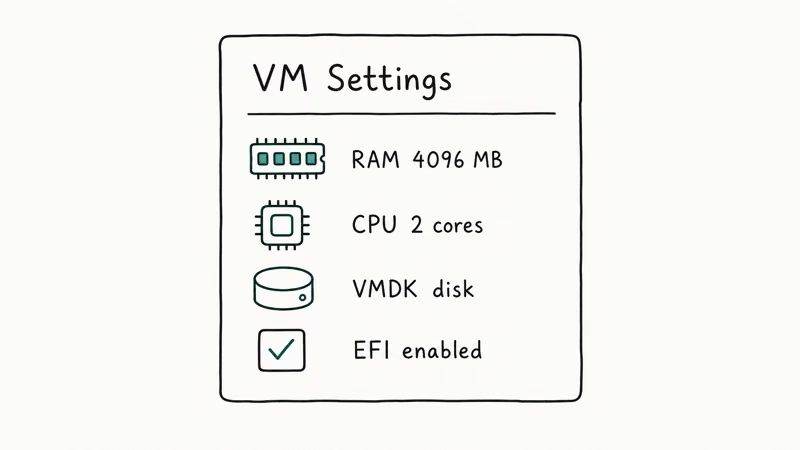
Step 3: Create a new VM. Open VirtualBox, click New, name it “ChromiumOS”, set Type to Linux, and Version to Other Linux (64-bit) (the Chromium kernel isn’t tagged for any specific Linux distro). Allocate 4096 MB of RAM and 2 CPUs.
Step 4: Attach the Chromium image as the disk. On the “Hard disk” screen, choose Use an existing virtual hard disk file, click the folder icon, then Add and point to your downloaded .vmdk. Click Create.
Step 5: Enable EFI. Open the new VM’s Settings > System > Motherboard and check Enable EFI (special OSes only). While you’re in Settings, also make sure Pointing Device is set to USB Tablet rather than the default PS/2 Mouse, otherwise the Chromium cursor jumps around the screen. Modern Chromium builds require EFI; without it the VM hangs on a black screen before the welcome wizard appears.
Step 6: Boot the VM. Click Start. You’ll see the Chromium welcome screen, language picker, and Wi-Fi setup; the VM uses the host’s NAT’d network by default.
Step 7: Sign in. Use any Google account. The sync experience is similar to a Chromebook, with the caveats noted in the scope section above.
Most of the setup time comes from downloading the image and importing the virtual disk.
For the broader Chrome troubleshooting picture once you’re up and running, our guide to what to do when a Chromebook is frozen applies to the VM as well, since most freezes share root causes between physical Chromebooks and Chromium VMs.
#Common Pitfalls After First Boot
A few things that catch first-time users out:
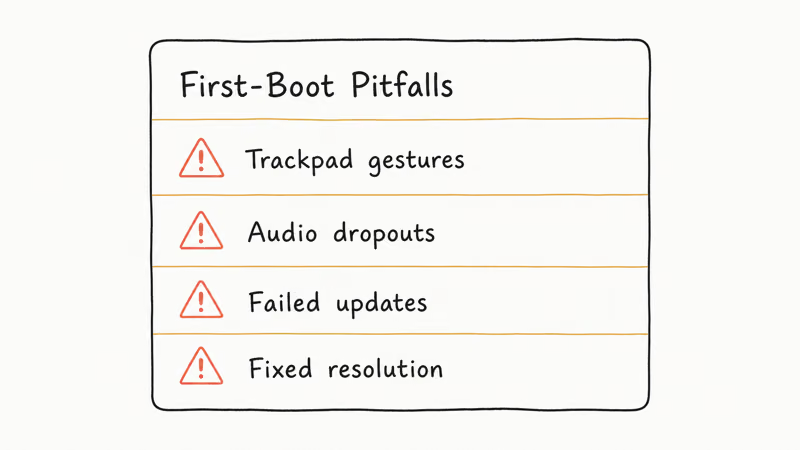
- Trackpad gestures don’t translate. VirtualBox passes through basic clicks but not the multi-finger gestures Chrome OS users learn on real hardware.
- Audio is hit-or-miss. The Intel HDA emulation works most of the time but can drop out after the host sleeps.
- Updates fail by default. Chromium OS’s auto-update tries to fetch signed images from Google’s update servers, which reject community builds.
- Resizing the window doesn’t resize the desktop. Install Guest Additions or accept the fixed-resolution behavior.
#Bottom Line
Installing Chromium OS in VirtualBox is the legitimate path for trying the Chromebook experience on your own hardware. Use the BSD-licensed community builds from chromium.arnoldthebat.co.uk, allocate at least 4 GB RAM and 2 vCPUs, enable EFI, and expect a usable but slower-than-native experience without Play Store or DRM streaming.
Don’t use this setup as a substitute for a managed enterprise Chromebook, and don’t go looking for “Chrome OS” .iso files claiming to bundle Google’s proprietary services. Those distribution channels violate Google’s terms of service and almost always ship with bundled malware. The free Chromium OS image is the legal one. If you decide a real Chromebook fits your needs, our roundup of Chromebooks with backlit keyboards is a reasonable starting point.
#Frequently Asked Questions
Can I install Chrome OS on virtualization software other than VirtualBox?
Yes. The same .vmdk image works in VMware Workstation, VMware Fusion, and Parallels Desktop with minor adjustments to the VM settings. Hyper-V on Windows is more finicky because of how it virtualizes the EFI firmware; expect to convert the image to .vhdx first.
Will Android apps work on Chromium OS inside VirtualBox?
Mostly no.
Will I get the same performance as on dedicated Chromebook hardware?
No, and the gap is meaningful. Virtualization adds overhead, and Chromium OS isn’t built with a “VM-optimized” config the way modern Linux server distros are. A real Chromebook with the same RAM amount will usually feel faster, especially for graphics, media playback, and wake-from-sleep behavior.
Can I share files between my host and the Chromium VM?
Yes, through VirtualBox Shared Folders. Configure it under the running VM’s Devices > Shared Folders menu, pick a host directory, mark it auto-mount, and it’ll appear under /mnt/chromeos inside the Chromium guest after restart. Oracle’s shared-folders documentation walks through the permission edge cases.
Can I install Chrome OS on my physical PC instead?
Chrome OS Flex is Google’s official answer. Google provides installer creation steps and a hardware compatibility list.
How do I remove Chromium OS from VirtualBox?
Right-click the VM in the VirtualBox manager and choose Remove > Delete all files. The .vmdk you downloaded is separate and lives wherever you saved it; delete that file too if you don’t plan to recreate the VM later.
Is this legal in my country?
For Chromium OS (the BSD-licensed open-source build), yes, in every jurisdiction we’re aware of, for personal and development use. For redistributing modified Chrome OS images that include Google’s proprietary components, no. The line between the two is who built the image. Official Chromium project artifacts and BSD-derived community builds stay on the legal side.
Best Laptop for Running LLMs in 2026: Memory Comes First
The best laptop for running LLMs is a memory purchase first. Compare MacBook unified memory against NVIDIA laptop VRAM, and see what each tier really runs.
How to Run a Local LLM on Windows: A 2026 Setup Guide
Run a local LLM on Windows with LM Studio or Ollama. Pick a model that fits your GPU memory, keep every prompt offline, and skip the monthly bill.
Bluetooth Not Working on Snapdragon X? Fixes for 2026
Bluetooth not working on your Snapdragon X Copilot+ PC? Generic audio, mice, and keyboards work, but vendor apps often lack an ARM build. Fixes inside.
Docker Desktop and WSL2 Not Working on Snapdragon X? Fix It
WSL2 runs fine on Snapdragon X, but Docker Desktop ARM is Early Access and throws WSL errors. Use WSL2 plus native ARM64 Ubuntu and Docker Engine.