TextNow Number Lookup: 5 Legitimate Ways to Find the Owner
Identify the owner of a TextNow number using Google, Truecaller, social media, and paid lookup tools. Includes legal framing and harassment response.

Quick AnswerLook up a TextNow number with a quoted Google search, social media platforms, or Truecaller for free, or use paid reverse lookup services like BeenVerified for deeper public-records data. These methods only return information the owner has already published online.
A TextNow number lookup is possible, but limited. TextNow assigns virtual VoIP numbers that aren’t tied to a real identity, so the data trail is whatever the owner left in public.
There are 5 methods that work on both Android and iPhone, and they only return useful results in legitimate situations: documenting harassment aimed at you, vetting a debt collector who left a voicemail, or confirming a small-business contact before sending payment.
- TextNow numbers are VoIP-based and only require an email to register, but they leave digital traces when owners link them publicly
- A Google search with quotation marks around the number can identify an owner when they posted it publicly, but it works in only a minority of cases
- Truecaller returns partial owner data for some TextNow numbers, mainly those saved into other users’ contacts
- Paid reports from BeenVerified, Spokeo, and Intelius cost about $1 for a trial and $20 to $27 per month
- Only verified law enforcement can request raw account data from TextNow, and only with a subpoena, court order, or search warrant
#Your Right to Know vs. the Caller’s Privacy
Before you run any lookup, draw a clear line in your own head: a reverse phone search is only legitimate when you are documenting calls or messages directed at you, your family, or your business. A stranger threatening you from a TextNow number, a debt-collection caller you need to verify before paying, a vendor whose identity you want to confirm, or a recurring scam targeting your household all fit that scope.
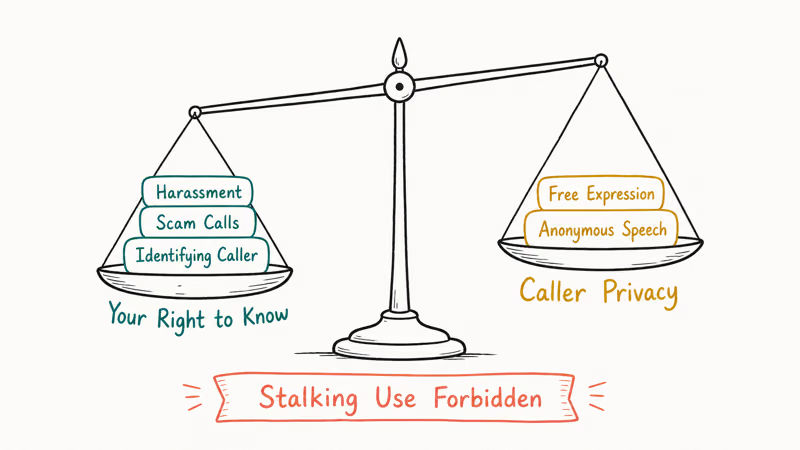
What is not in scope: tracking, doxxing, or harassing another person. Looking up someone else’s TextNow number to surveil an ex, monitor a partner without their consent, or compile information about a stranger you have no relationship with crosses into stalking territory. According to the US Department of Justice’s stalking statute, repeated conduct intended to cause fear or substantial emotional distress is illegal in all 50 states and federally under 18 U.S.C. § 2261A.
Privacy law also matters here.
According to the FCC’s STIR/SHAKEN framework, US carriers have been required since June 30, 2021 to authenticate caller identity and reduce illegal robocalls. The rule doesn’t, however, give private individuals a right to unmask any number they choose. Your own rights kick in when the calls are aimed at you: you can document them, block them, and report them. You don’t have a right to investigate strangers, and you don’t have a right to access another person’s account without permission.
If you aren’t sure whether your situation qualifies, treat it as if it doesn’t qualify. Block the number, report harassment to your carrier, and let law enforcement subpoena TextNow if real-world threats appear. The methods below assume your reason is in scope.
#Why Are TextNow Numbers Hard to Trace?
TextNow gives out free phone numbers that work over Wi-Fi or cellular. Unlike traditional carriers, registration only needs an email address.
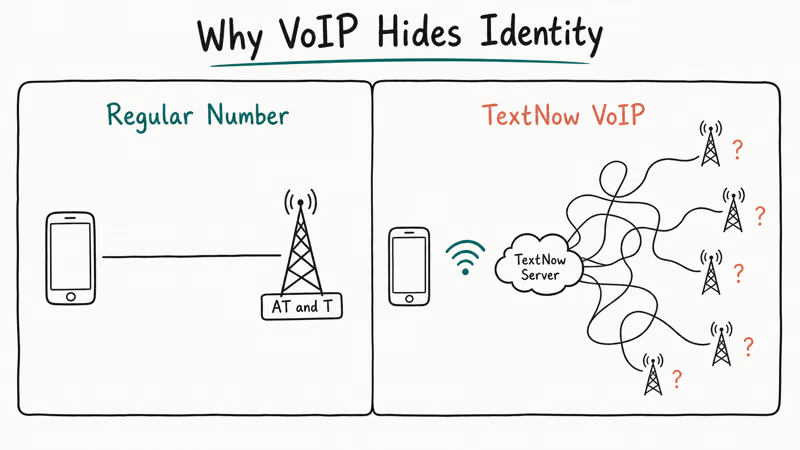
According to TextNow’s privacy policy, the company collects subscriber data including IP addresses, device information, and account registration details, but releases that information only when served with a valid legal order such as a subpoena, court order, or search warrant. Regular users, private investigators, and journalists can’t pull this data, which is why the workarounds below exist at all.
The FCC’s official guidance on Voice over IP also requires VoIP providers to cooperate with traceback requests for illegal calls. That process flows through registered law enforcement channels, not consumers, so even when a number is clearly abusive your direct route is to file a report rather than chase the data yourself.
#How Can You Look Up a TextNow Number for Free?
Three free methods are worth the 5 minutes they take. Start here before paying anything.
#Google Search With Quotation Marks
Put the full phone number inside quotation marks and search Google. The quotes force exact-match results, so if the owner ever posted the number on a forum, classified ad, business listing, or personal site, Google surfaces it. The method costs nothing and takes about 30 seconds.
When a number has been posted publicly, this pass can surface a Craigslist ad with the owner’s first name and city or a listing in a small-business directory. Many numbers return nothing useful. Always run this pass first: it’s free, it’s fast, and it sometimes ends the search before you spend a cent.
#Social Media Platform Search
Type the TextNow number into Facebook, Instagram, and LinkedIn search bars. People often link virtual numbers to social media accounts they manage without locking down search.
Facebook is the most likely to surface a public profile with the owner’s full name. LinkedIn rarely matches a VoIP number at all. Instagram can match a number, but if the linked profile is private you only see the avatar and username.
#Truecaller App
Truecaller’s database is built from contributions by its global user base, so any TextNow number that has been saved into another user’s contacts can show up there. Install the app on Android or iPhone, type in the number, and let the search run.
According to Truecaller’s published product overview, the platform crowdsources caller identity data from a very large global user base, which gives it a wider reach than most competitors. Some TextNow numbers return a name match through Truecaller, while brand new numbers with no contact history won’t produce results, especially when the number has never been saved into another Truecaller user’s address book.
#Paid Lookup Services That Actually Work
When the free pass fails and your situation still qualifies as legitimate, paid reverse phone lookup services search billions of public records, court filings, and data broker indexes. The three best-known options are worth comparing.
#BeenVerified
BeenVerified searches phone directories, social profiles, and public records. Enter the TextNow number on the homepage and the report builds in roughly 60 seconds.
A BeenVerified report on a TextNow number can return the account holder’s name, an approximate age, possible addresses, and associated email addresses. When the footprint is thin, it returns only partial data such as a city and state without a name. A trial report costs about $1, and unlimited monthly access runs around $27.
#Spokeo
Spokeo pulls data from billions of records including phone directories, social networks, and property records. Submit the number on Spokeo’s site and reports return in roughly a minute or two.
What sets Spokeo apart is its monitoring feature, which alerts you when new public data appears for a number. If the person behind the TextNow line creates new social accounts or new public records months later, Spokeo flags it. Reports start at about $0.95 with a trial, or $20 per month for unlimited lookups.
#Intelius
Intelius is one of the older reverse phone lookup directories, running since 2003. It indexes phone records, property data, and court filings.
Intelius can return a full name and city, or a lower-confidence “possible owner” match when the data is thinner. Reports include criminal records, address history, and known associates when available. A subscription costs about $22 per month, or you can buy single reports for a few dollars.
The workflow resembles a reverse email lookup but pivots on phone records instead.
#Signs That a Number Belongs to TextNow
Real virtual numbers come from specific area-code blocks that TextNow recycles. If the area code does not match the caller’s claimed location, the line is probably VoIP.
Truecaller frequently labels TextNow numbers with a “VoIP” or “Possible Spam” tag, which is a quick way to confirm your suspicion before running any lookup. You can also call the number back and listen for the TextNow voicemail greeting, which sounds noticeably different from a standard carrier voicemail. Texting works too: Wi-Fi-only TextNow users won’t receive your message until they reconnect, so a delayed delivery receipt is itself a hint.
#Dealing With Harassment From a TextNow Number
If someone is harassing you from a TextNow number, don’t rely on lookup tools alone. Document, block, then escalate.
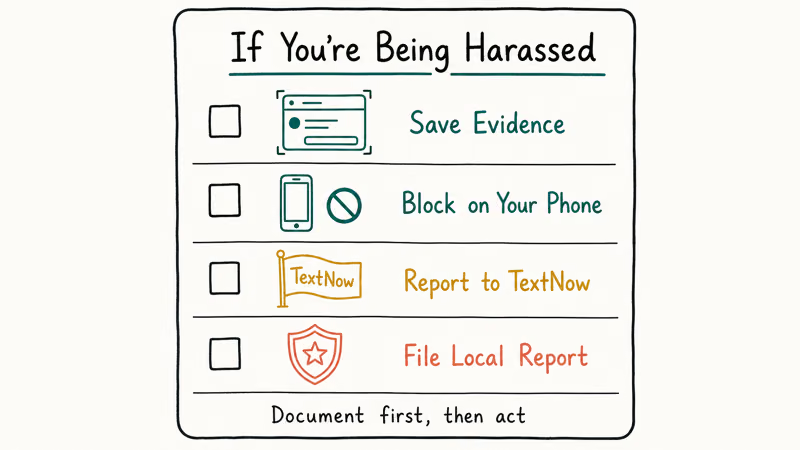
First, save evidence. Screenshot every message, log every missed call with a timestamp, and keep voicemails. According to TextNow’s law enforcement information page, only verified police, sheriff, FBI, or other agencies can request raw account data through their portal, and your screenshots become the foundation of that request.
Second, file a report with local police and provide the TextNow number, your collected evidence, and any context about why you believe you are being targeted. Officers can then submit a subpoena or search warrant to TextNow for the account holder’s IP address, device details, and registration email.
Third, block the number from your phone’s official settings menu and report it through the TextNow app. On iPhone, go to the Phone app, open Recents, tap the info icon next to the number, and choose Block this Caller. On Android, long-press the number in your call history and tap Block. If the calls keep coming from new TextNow lines, contact your carrier support team directly so they can flag the pattern and apply network-level blocks.
Don’t try to find someone’s broader contact details on your own when a real threat is involved. Investigations belong to law enforcement, who have legal authority to pull data you can’t.
#Free vs. Paid Lookup Methods Compared
Free methods cost nothing but only succeed when the TextNow user posted their number publicly or linked it to a social account. Expect a hit in well under half of attempts.
Paid services search billions of records, so they often work even when the number has no obvious public footprint. They cost about $1 to $27 per report depending on whether you stay on a trial or move to a subscription. For a single one-time lookup, a $1 trial from BeenVerified or Spokeo is the best price-to-data ratio. If you also need to find a current address or pull repeated reports for ongoing fraud monitoring, a monthly plan saves money.
#Bottom Line
Start free. Google the number with quotation marks, search it on Facebook and Instagram, and run Truecaller. Those three steps take only a few minutes and resolve a meaningful share of cases.
If they fail and your reason for searching is still legitimate, BeenVerified or Spokeo are the strongest paid options at $1 to $27 per report. For active harassment or threats, skip the DIY route entirely and route the situation to law enforcement, who can compel TextNow to release data through proper legal channels.
#Frequently Asked Questions
Can you trace a TextNow number back to a real person?
Sometimes. Free tools like Google search and Truecaller identify the owner only some of the time, and paid reverse lookup services do better because they search billions of public records.
Is it legal to look up someone’s TextNow number?
Looking up a phone number using publicly available information is legal in the United States and Canada, and aggregator services like BeenVerified and Spokeo operate under federal data-broker rules. Legality flips, however, if you use the results to harass, stalk, or discriminate. Most services require you to agree to terms that ban those uses before you can view any report.
What is a legitimate reason to run a TextNow lookup?
Documenting harassment directed at you, verifying a debt collector who contacted you, confirming a small-business contact before payment, or building a record before reporting threats to police are typical legitimate reasons. Vetting a freelancer who quoted you a price or confirming an unfamiliar voicemail left at your workplace also fit. What is not legitimate: investigating a stranger you have no contact with, monitoring a partner without consent, or compiling data about another person for any non-consensual purpose.
Do free TextNow lookup methods actually work?
They work in a minority of attempts. Google search with quotation marks is the fastest free option, and Truecaller works best when the number has been saved into other users’ contacts.
Can TextNow users see who looked up their number?
No. Reverse lookup services don’t notify the person being searched, and Google, social media, and Truecaller queries are anonymous from the target’s perspective.
What information can a TextNow number lookup reveal?
Results vary by method and by how much data the owner already left online. Free methods typically surface a name and one social profile. Paid services can return a full name, age range, possible addresses, email addresses, social accounts, and sometimes criminal records when those records are public. Brand new TextNow numbers with no online history usually return little or nothing.
Does TextNow share user information with anyone?
Only with verified law enforcement, and only after receiving a subpoena, court order, or search warrant. Regular users, private investigators, and curious individuals can’t pull data directly from TextNow.
How do I block a TextNow number on my phone?
On iPhone, open the Phone app, go to Recents, tap the info icon next to the number, and select Block this Caller. On Android, open the Phone app, long-press the number in your call history, and tap Block number. You can also report the number to TextNow inside the conversation thread by tapping the report option in the app.

Is This Bank App Real? Spot a Fake App on Your Home Screen
A bank app can land on your home screen from a web page with no install warning. Learn the checks that tell a real banking app from a phishing web app.
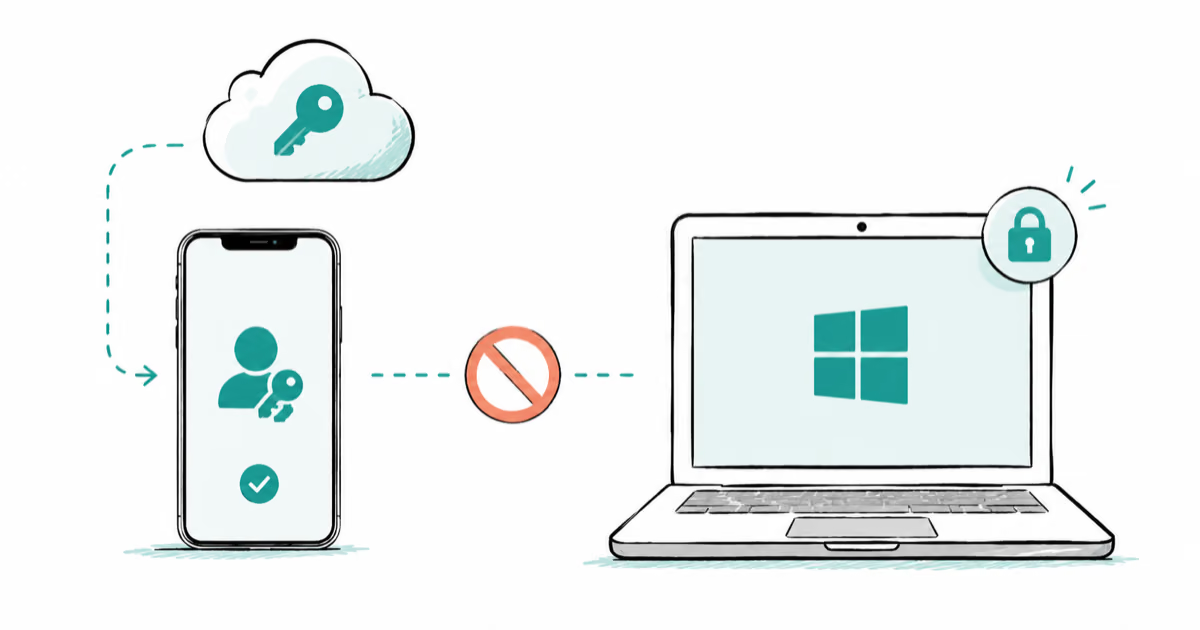
Passkeys Not Syncing Between iPhone and Windows? Read This
Passkeys not syncing between iPhone and Windows is by design, not a bug. Here is why iCloud passkeys skip Windows Hello and the three ways to fix it.
VPN Not Working on Snapdragon X? Why It Fails, How to Fix
Your VPN won't install or connect on a Snapdragon X Copilot Plus PC because Windows on ARM can't emulate the network driver. Here are the fixes that work.

How to Check If a Link Is Safe Before You Click It
Learn how to check if a link is safe with official-first steps: read the real domain, use the app instead, and treat scanners as a second opinion only.