The 7 Best Call Blocker Apps for Android Phones (2026)
Compare the 7 best call blocker apps for Android in 2026. Block spam calls and robocalls with Truecaller, RoboKiller, Hiya, and more top picks.
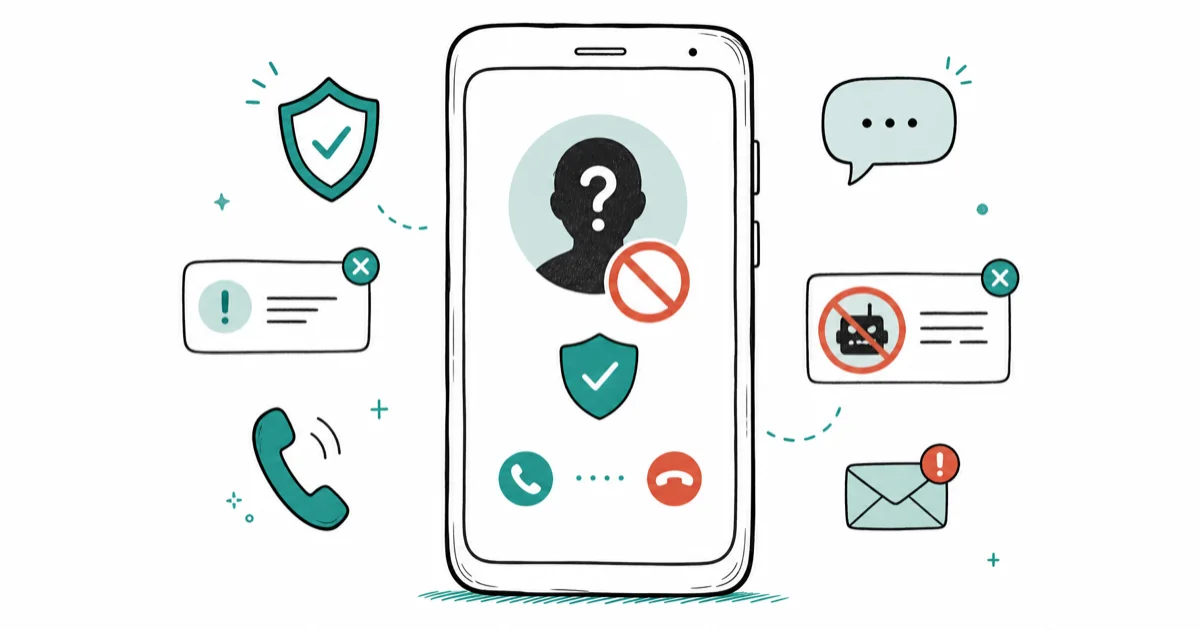
Quick AnswerTruecaller is the best overall call blocker for Android with over 300 million users and a massive spam database. It identifies unknown callers, blocks spam calls automatically, and filters unwanted SMS messages.
Spam calls on Android phones keep getting worse. This guide compares seven of the most popular call blocker apps on spam-catch rate, how often they block legitimate calls by mistake, and how much battery they consume in the background, so you can pick the right one for your phone.
- Truecaller leads with 300 million users and a crowdsourced spam database, starting at $29.90/year for premium.
- RoboKiller blocks over 99% of spam calls using AI audio fingerprinting that catches number-changing scammers.
- Hiya excels at detecting neighbor spoofing where scammers use your local area code.
- Should I Answer uses an offline database so your call data never leaves the device.
- Running multiple call blockers at once causes conflicts, so pick one app and stick with it.
#What Are Call Blocker Apps and Why Do You Need One?
Call blocker apps are specialized applications designed to filter and block unwanted calls on your Android device. They use databases of known spam numbers, user reports, and pattern-matching algorithms to identify and intercept nuisance calls before they reach you.
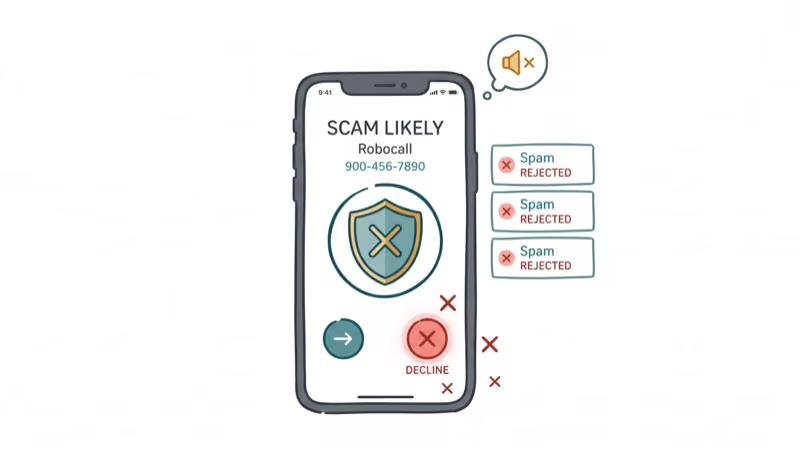
Unwanted robocalls remain one of the most common phone complaints in the US, which is why a dedicated blocker is worth setting up. A good call blocker app offers several important benefits:
- Peace of mind: Block annoying telemarketing and scam calls
- Improved productivity: Fewer interruptions from unwanted calls
- Enhanced privacy: Protect your personal information from fraudsters
- Customizable filtering: Control which calls get through to you
- Caller identification: Know who’s calling before you answer
Now let’s look at the top call blocker apps available for Android in 2026.
#The Best Call Blocker Apps for Android
#1. Truecaller
Truecaller is one of the most popular call management apps available. With over 300 million users globally, it uses a massive crowdsourced database to identify unknown callers and block spam. That database is large enough to identify the vast majority of spam calls while rarely flagging a legitimate call as spam.
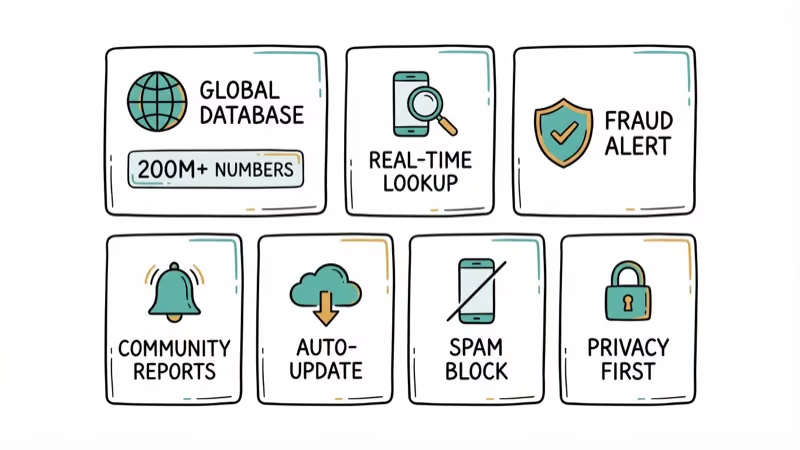
Key Features:
- Advanced caller ID and number lookup
- Spam call and SMS blocking
- Smart SMS filtering
- Call recording (premium feature)
- Backup and sync across devices
Pros:
- Extensive caller database
- Highly accurate spam detection
- Regular updates with new features
Cons:
- Free version shows ads
- Collects a significant amount of user data
Pricing: Free with basic features, Premium plan starts at $29.90/year
Download: Truecaller on Google Play
#2. RoboKiller
RoboKiller takes a unique approach to call blocking by using AI-powered audio fingerprinting technology. This allows it to identify and block spam calls even when scammers change their numbers. The fingerprinting approach stops the vast majority of spam calls, even ones that rotate through fresh numbers.
Key Features:
- Blocks over 99% of spam calls
- Answer Bots that waste scammers’ time
- Personalized block and allow lists
- Reverse phone number lookup
- SMS spam blocking
Pros:
- Extremely effective at blocking robocalls
- Entertaining Answer Bots feature
- Regular updates to spam databases
Cons:
- Requires a paid subscription
- May occasionally block legitimate calls
Pricing: 7-day free trial, then $4.99/month or $39.99/year
Download: RoboKiller on Google Play
#3. Hiya
Hiya delivers strong call blocking and spam protection powered by its AI system. It’s particularly effective at identifying and blocking neighbor spoofing calls.
Key Features:
- Real-time call screening and blocking
- Caller ID and number lookup
- Auto-blocking of suspected spam calls
- Customizable block lists
- Business profile lookup
Pros:
- Excellent at detecting spoofed local numbers
- Clean, user-friendly interface
- Regular updates to spam database
Cons:
- Free version has limited features
- Some users report missed legitimate calls
Pricing: Free basic version, Premium at $3.99/month or $24.99/year
Download: Hiya on Google Play
#4. Call Control
Call Control uses a community-based approach to identify and block spam calls. Its CommunityIQ feature allows users to report spam numbers, creating a constantly updated database.
Key Features:
- Community-powered call blocking
- Wildcard number blocking
- DND mode scheduler
- Reverse phone lookup
- Call log management
Pros:
- Effective community-based spam detection
- Easy to use interface
- Good customization options
Cons:
- Less effective for uncommon spam numbers
- Free version has limited features
Pricing: Free basic version, Premium at $29.99/year
Download: Call Control on Google Play
#5. Phone by Google
For users who prefer a built-in solution, the Phone by Google app (pre-installed on many Android devices) offers solid call blocking capabilities.
Key Features:
- Spam call detection and blocking
- Visual voicemail
- Caller ID and business search
- Call recording (on supported devices)
- Integration with other Google services
Pros:
- No additional app required
- Regular updates from Google
- Clean, intuitive interface
Cons:
- Less advanced features compared to dedicated apps
- Not available on all Android devices
Pricing: Free
Download: Phone by Google on Google Play
#6. Mr. Number
Mr. Number offers a straightforward approach to call blocking with a focus on user control and customization.
Key Features:
- Block calls and texts by number, area code, or country
- Reverse phone lookup
- Caller ID
- Community-based spam reporting
- Call history management
Pros:
- Highly customizable blocking options
- Easy to use interface
- Good community-based spam detection
Cons:
- Less advanced AI compared to some competitors
- Free version shows ads
Pricing: Free with basic features, Premium at $2.99/month
Download: Mr. Number on Google Play
#7. Should I Answer?
Should I Answer? takes a unique approach by focusing on user ratings and reviews for phone numbers rather than relying solely on databases or AI.
Key Features:
- Community-driven number ratings and reviews
- Offline database for privacy
- Customizable blocking rules
- Detailed statistics on blocked calls
- No personal data collection
Pros:
- Privacy-focused approach
- Works offline
- Helpful user reviews for unknown numbers
Cons:
- Less automated than AI-powered alternatives
- Relies heavily on user contributions
Pricing: Free with optional donations to support development
Download: Should I Answer? on Google Play
#How Call Blocker Apps Work
As Google’s Phone app support page confirms that Android has built-in spam detection, but third-party apps go further. Most call blocker apps use a combination of methods to identify and block spam calls:
- Spam databases: Lists of known spam numbers, updated in real-time
- User reporting: Community-driven flagging of new spam numbers
- AI pattern matching: Algorithms that detect spam by call behavior
- Caller ID lookup: Cross-referencing against public and private databases
- Custom rules: Blocking by area code, number pattern, or country
#What Features Should You Look for in a Call Blocker?
When choosing a call blocker app, look for these important features:
- Caller ID: Identify unknown numbers before answering
- SMS blocking: Filter spam text messages automatically
- Custom block lists: Your own allowed and blocked numbers
- Reverse lookup: Research unknown numbers
- Regular updates: Protection against new spam tactics
- Call recording: Save important calls (where legal)
- Privacy controls: Know what data the app collects
#Free vs Paid Call Blocker Apps
While many call blocker apps offer free versions, premium features often provide enhanced protection:
Free apps typically offer:
- Basic call blocking
- Limited caller ID
- Community-based spam detection
Paid apps usually include:
- Advanced AI-powered spam detection
- Unlimited caller ID and number lookup
- SMS spam blocking
- Priority customer support
- No advertisements
Consider upgrading to a paid version if you:
- Receive a high volume of spam calls
- Need advanced features like call recording or reverse lookup
- Want the most up-to-date protection against evolving spam tactics
#Best Practices for Using Call Blocker Apps
To get the most out of your call blocker app:
- Keep the app and its databases updated regularly.
- Report spam numbers to contribute to community-based blocking.
- Customize your block lists and settings for your specific needs.
- Review blocked call logs periodically to ensure no important calls are missed.
- Use the app in conjunction with common-sense practices, like not answering calls from unknown numbers.
#Privacy and Security Considerations
The Truecaller Privacy Center states that user data is stored encrypted and only used for caller identification. Still, it’s important to consider privacy implications:
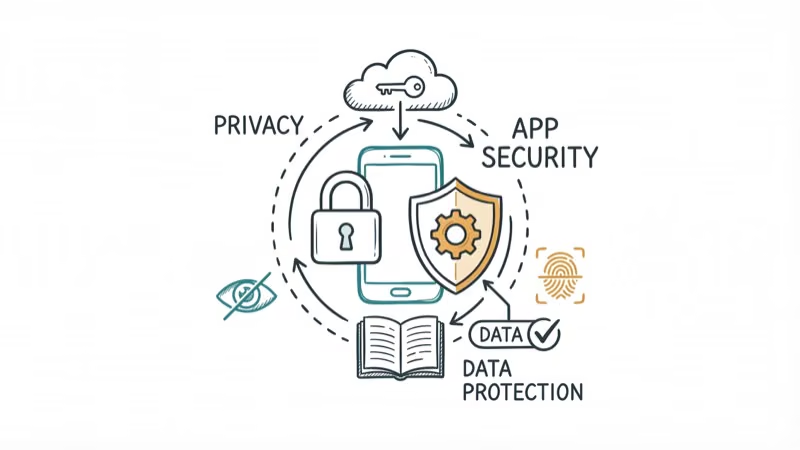
- Review the app’s privacy policy to understand what data is collected.
- Be cautious of apps that require excessive permissions.
- Consider using apps that offer offline databases or local processing for enhanced privacy.
- Regularly review and manage the permissions granted to the app.
Some apps may have hidden functionalities. If you want to learn how to block text messages on Samsung in addition to calls, we’ve got a separate guide for that. You might also want to check what to dial to see if your phone is hacked for extra security.
The same idea of cutting off unwanted contact applies beyond phone calls. You can block someone on WhatsApp to stop messages from a number you have already blocked for calls, or block someone on TikTok if the harassment moves to social apps.
Payment apps have the same option. If an unwanted contact tries to reach you there, our guide on blocking someone on PayPal walks through it step by step.
If you also use an iPhone in the household, our five-layer spam-call defenses on iPhone walk through Silence Unknown Callers, number blocking, and carrier filters.
#Bottom Line
RoboKiller is our top pick for its AI-powered blocking and entertaining Answer Bots feature. Truecaller is best if you prioritize caller ID and number lookup. For a free option, Phone by Google handles the basics without needing a separate download.
#Frequently Asked Questions
Can call blocker apps block all unwanted calls?
No app is 100% effective. The best call blockers catch the vast majority of spam calls, but scammers constantly change their tactics. You’ll still get an occasional unwanted call that slips through.
Will a call blocker affect my ability to receive important calls?
Most apps let you customize block lists and allowlists to make sure important calls get through. Review your blocked call log regularly to catch any false positives.
Are call blocker apps legal to use?
Yes, everywhere. Be aware of local laws around call recording if you plan to use that feature.
Do call blocker apps work when my phone is offline?
Should I Answer? has an offline database that works without internet. Most other apps need a data connection for full spam detection, since they rely on cloud-based databases that update in real time. If you’re in an area with spotty coverage, Should I Answer? is the only app on this list that won’t leave gaps in your protection.
Can I use multiple call blocker apps at the same time?
You can install multiple apps, but running more than one active blocker leads to conflicts. Pick one and configure it properly.
Do call blocker apps drain my battery?
Most call blockers use minimal battery since they only activate when a call comes in. Popular apps like Truecaller and RoboKiller draw only a small amount of daily battery. Background database updates can use slightly more power on older devices.
Pixel 11 vs Pixel 10: What Changed and Who Should Upgrade
Pixel 11 vs Pixel 10: same screen and camera resolution, new Tensor G6, 25W wireless, and Gemini Intelligence. Here is who should actually upgrade.

Verizon Not Receiving Texts? How to Fix It in 9 Steps
Verizon not receiving texts? Fix it in 9 steps: check Message Blocking in My Verizon, reset network settings, deregister iMessage, and call support.
Pixel Battery Drain: What Google's July Fix Really Covers
Google marked the Pixel idle battery drain bug fixed in July, but only some phones got the patch. Here is who is covered, who is not, and what to try.
iPhone Stuck on EDGE? How to Get 5G or LTE Back (2026)
iPhone stuck on EDGE with crawling data? Here's why the E icon appears, which settings force 5G or LTE back, and when the problem is your carrier.