Fix Bluetooth Not Working on Android: 10 Proven Methods
Bluetooth not working on Android? Fix pairing failures, dropped connections, and audio issues with 10 proven solutions. Works on Samsung, Pixel, and more.
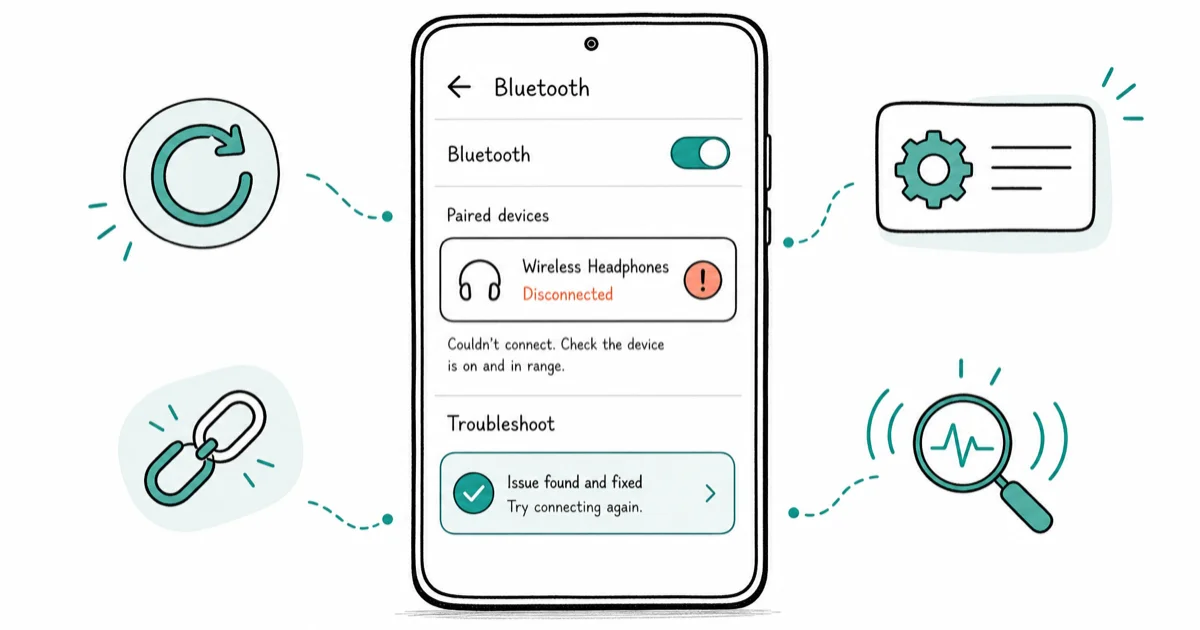
Quick AnswerBluetooth problems on Android are usually fixed by toggling Bluetooth off and on, unpairing and re-pairing the device, or clearing the Bluetooth cache in Settings. Restarting both devices resolves most connection issues.
Your Android phone’s Bluetooth won’t connect, keeps dropping, or won’t show nearby devices. Start at the top and work down.
- Restarting both your phone and the Bluetooth accessory fixes most connection failures in under 60 seconds
- Clearing the Bluetooth cache in Settings removes corrupted data that causes pairing failures without erasing saved pairings
- Bluetooth uses the 2.4 GHz band, so Wi-Fi routers and microwaves within 10 feet can cause interference and dropouts
- Safe Mode isolates third-party app conflicts; if Bluetooth works in Safe Mode, a recently installed app is the culprit
- A factory reset erases all data and should only be used as a last resort after backing up your phone completely
#Why Does Bluetooth Stop Working on Android?
The most common cause is a corrupted Bluetooth cache. Android stores pairing data and connection history in a cache file, and when that file goes bad, the Bluetooth system can’t establish or maintain connections properly.
Other triggers include software bugs after an OS update, interference from other 2.4 GHz devices, and third-party apps that hijack Bluetooth permissions. According to Google’s Android Bluetooth troubleshooting page, OS updates are one of the most commonly cited triggers for Bluetooth problems.
Everyday Bluetooth failures are often resolved by clearing the cache or unpairing and re-pairing the device.
#Basic Fixes for Android Bluetooth
Start with the simplest fixes and work down. Each method takes under 2 minutes.
#Toggle Bluetooth Off and On
Swipe down from the top of your screen to open Quick Settings. Tap the Bluetooth icon to turn it off. Wait 10 seconds, then tap it again. This resets the Bluetooth radio without clearing any saved pairings.
#Restart Both Devices
Power off your Android phone and the Bluetooth accessory. Wait 30 seconds, then turn both back on. This clears temporary memory states that can block connections.
If you’re using a Samsung tablet that won’t turn on, check that guide first before troubleshooting Bluetooth.
#Unpair and Re-pair
Go to Settings > Connected Devices > Bluetooth. Tap the gear icon next to the problem device and select Forget. Put your accessory into pairing mode and reconnect from scratch. This rebuilds the pairing profile cleanly.
#Clear Bluetooth Cache
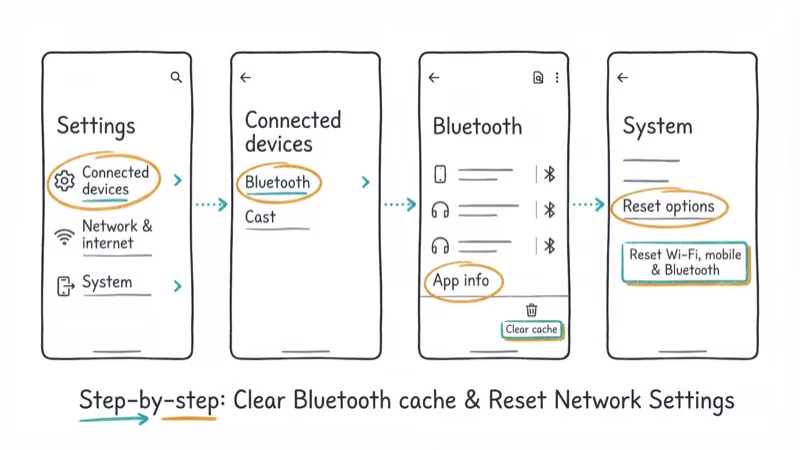
Go to Settings > Apps > Show system apps. Find Bluetooth in the list. Tap Storage > Clear Cache. This removes corrupted temporary data without affecting your paired device list.
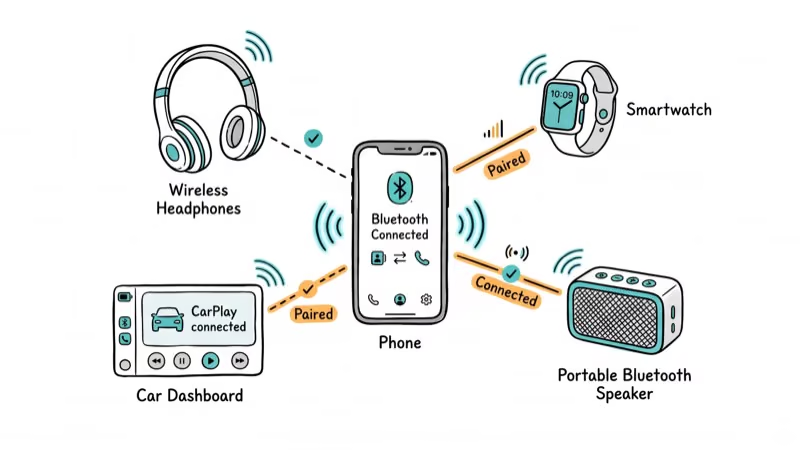
Clearing the cache and restarting is especially useful when a speaker, earbuds, or car system suddenly refuses to reconnect.
#Check for Interference
Bluetooth operates on 2.4 GHz, the same frequency as Wi-Fi routers, microwaves, and baby monitors. Move at least 10 feet away from potential interference sources.
USB 3.0 hardware is a documented source of interference in the same band. The USB Implementers Forum states in its white paper on USB 3.0 radio frequency interference that certain USB 3.0 devices and cables cause “radio frequency interference to wireless devices operating in the 2.4 GHz ISM band,” which is where Bluetooth lives.
Its measurements are of a wireless mouse receiver beside a notebook, not a phone. Treat a nearby USB 3.0 port as worth ruling out, not as a diagnosis.
If your Bluetooth peripheral device shows driver errors on a connected PC, that may also be contributing to the problem.
#Advanced Fixes for Persistent Issues
#Reset Network Settings
Go to Settings > System > Reset options > Reset Wi-Fi, mobile & Bluetooth. This erases all saved Wi-Fi passwords, mobile data settings, and Bluetooth pairings. You’ll need to reconnect to everything afterward.
#Update Android Software
Go to Settings > System > System update > Check for update. Bluetooth bugs are frequently patched in monthly security updates. Samsung and Google both release Bluetooth-specific fixes in their update notes.
#Boot Into Safe Mode
Press and hold the power button, then touch and hold Power off until Reboot to safe mode appears, and tap OK. If Bluetooth works in Safe Mode, a third-party app is blocking it, so uninstall recently added apps one at a time until it stops.
#Wipe System Cache
Turn off your phone. Hold Volume Down + Power together to enter recovery mode. Select Wipe cache partition using the volume buttons and confirm with Power. This clears system-level cached data without touching personal files.
#Factory Reset as a Last Resort
Back up your data first. Go to Settings > System > Reset options > Erase all data (factory reset). This restores your phone to its original state. Only do this if every other fix has failed. According to Google’s factory reset guide, a factory reset resolves most persistent system-level issues that survive other troubleshooting steps.
#What If Bluetooth File Transfer Doesn’t Work?
If Bluetooth file transfer isn’t working, these alternatives move files without Bluetooth:
Nearby Share (now called Quick Share on Samsung) transfers files between Android devices over Wi-Fi Direct. It’s faster than Bluetooth for anything over 10 MB.
USB cable transfer is the most reliable option for large files. Connect your phone to a computer with a USB-C cable, select File Transfer mode in the notification shade, and drag files directly. If you’re transferring to a Mac, check our guide on Android file transfer not working on Mac.
As an Amazon Associate fone.tips earns from qualifying purchases.
If you need to connect multiple Bluetooth speakers simultaneously, make sure your phone supports Bluetooth Multipoint or Dual Audio (Samsung’s implementation).
#Preventing Future Bluetooth Problems
Keep your Android phone updated with the latest security patches. Clear the Bluetooth cache once a month if you connect to multiple devices regularly. Unpair devices you no longer use, as a cluttered pairing list can slow down discovery and cause conflicts with similar device names.
If your Samsung screen rotation isn’t working alongside Bluetooth issues, the problems may share a common cause in corrupted system settings.
#Bottom Line
Start with the basics: toggle Bluetooth, restart both devices, and clear the Bluetooth cache. These three steps solve many everyday Android Bluetooth problems. If those don’t work, reset network settings or boot into Safe Mode to check for app conflicts. Save the factory reset for when nothing else works.
#Frequently Asked Questions
Why does Bluetooth keep disconnecting on my Android?
Frequent disconnections usually point to interference, low battery on the accessory, or a corrupted pairing profile. Forget the device in Bluetooth settings and re-pair it. If it still drops, clear the Bluetooth cache and check for nearby interference sources.
Can a factory reset fix Bluetooth issues?
Yes, it resolves persistent software-level Bluetooth problems. But it erases all data on your phone, so back up everything first. Try all other methods before resorting to a factory reset.
Why does Bluetooth work with music but not phone calls?
Check that Phone Audio is enabled for the paired device. Go to Settings > Connected Devices, tap the gear icon next to your Bluetooth accessory, and verify both Media Audio and Phone Audio toggles are on. If your phone isn’t allowed for voice calls, that’s a separate carrier or permissions issue.
How do I update Bluetooth drivers on Android?
Android doesn’t have separate Bluetooth drivers like Windows. Bluetooth updates come through system updates. Go to Settings > System > System update and install any available updates.
Does Bluetooth drain battery significantly?
Modern Bluetooth 5.0+ uses very little power. Battery impact depends on the phone, accessory, codec, and how long audio is active. Leaving Bluetooth on in standby mode has negligible battery impact.
Why won’t my car connect to my Android phone?
Car infotainment systems often have limited Bluetooth memory. Delete your phone’s pairing from the car’s Bluetooth menu, restart the car’s system, and re-pair from scratch. Make sure your phone is set to Visible in Bluetooth settings during pairing.
Can Wi-Fi interfere with Bluetooth?
Yes. Both use the 2.4 GHz frequency band. If your router is within 10 feet of your Bluetooth connection, try switching the router to 5 GHz only, or move farther away. Most modern devices handle coexistence well, but older routers and accessories can still cause conflicts.
What Android version introduced Bluetooth 5.0 support?
Android 8.0 (Oreo) added Bluetooth 5.0 support. However, your phone’s hardware must also have a Bluetooth 5.0 chip for it to work. Most phones released after 2018 include Bluetooth 5.0 or newer.
Pixel 11 vs Pixel 10: What Changed and Who Should Upgrade
Pixel 11 vs Pixel 10: same screen and camera resolution, new Tensor G6, 25W wireless, and Gemini Intelligence. Here is who should actually upgrade.

Verizon Not Receiving Texts? How to Fix It in 9 Steps
Verizon not receiving texts? Fix it in 9 steps: check Message Blocking in My Verizon, reset network settings, deregister iMessage, and call support.
Pixel Battery Drain: What Google's July Fix Really Covers
Google marked the Pixel idle battery drain bug fixed in July, but only some phones got the patch. Here is who is covered, who is not, and what to try.
iPhone Stuck on EDGE? How to Get 5G or LTE Back (2026)
iPhone stuck on EDGE with crawling data? Here's why the E icon appears, which settings force 5G or LTE back, and when the problem is your carrier.