Best MicroSD Cards for GoPro Hero Cameras (Proven)
Find the best microSD cards for GoPro Hero cameras, with V30 speed ratings, 4K and 5.3K recording needs, capacities, and reliability notes now.
Quick AnswerThe SanDisk Extreme is the best microSD card for GoPro cameras, delivering V30 speeds up to 160MB/s read, waterproof durability, and reliable 4K and 5.3K recording at a mid-range price.
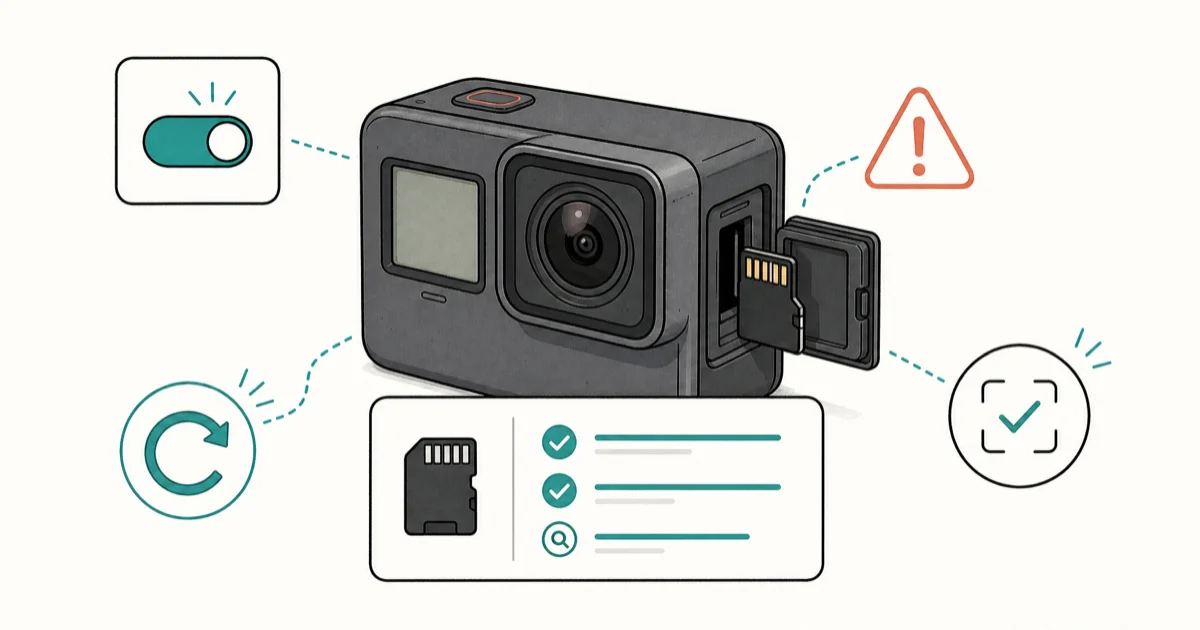
Your GoPro is only as good as the card inside it. A slow microSD card causes dropped frames, recording errors, and corrupted footage at the worst possible moment. The safest picks combine V30 or faster speed ratings, GoPro compatibility, enough capacity for your recording mode, and durable construction for outdoor use.
- Every card on this list carries a V30 rating guaranteeing 30MB/s minimum write speed for 4K and 5.3K
- The SanDisk Extreme reads at 160MB/s and writes at 90MB/s with waterproof and shock-proof construction
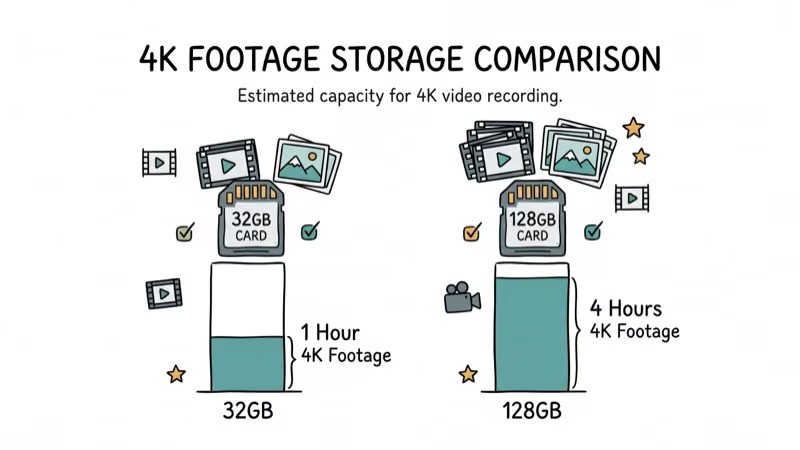
- A 64GB card holds roughly 2 hours of 4K/60fps footage while 128GB stores 4+ hours for full-day shoots
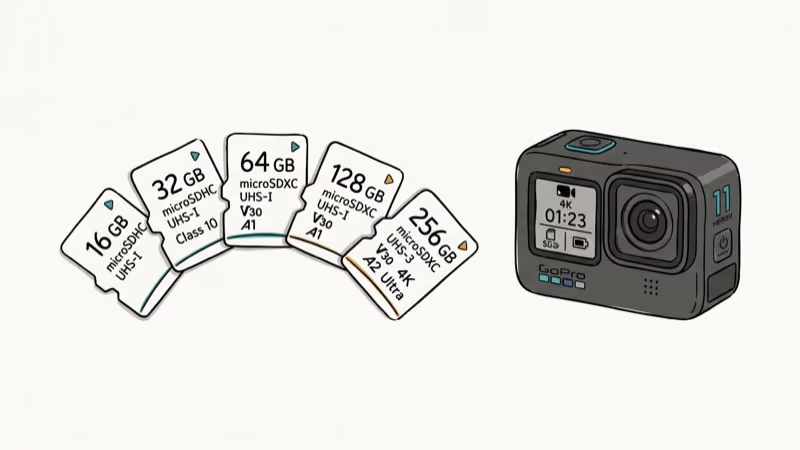
- GoPro HERO5 and newer support microSDXC cards up to 1TB while HERO4 maxes out at 64GB
- Format your card inside the GoPro before each use to prevent recording errors and fragmentation
#Top 5 MicroSD Cards for GoPro
#1. SanDisk Extreme
The SanDisk Extreme is one of GoPro’s recommended card lines. Its published specs list read speeds up to 160MB/s and write speeds up to 90MB/s, with a V30 rating suitable for 4K and 5.3K recording modes.
The card is marketed with waterproof, shockproof, temperature-proof, and X-ray-proof protection. It ships with RescuePRO Deluxe data recovery software.
Capacities: 32GB, 64GB, 128GB, 256GB, 512GB, 1TB Speed class: V30, UHS-I, U3
As an Amazon Associate, fone.tips earns from qualifying purchases. Some links on this page are affiliate links.
#2. Samsung EVO Select
Samsung’s EVO Select balances performance and affordability. Published specs list reads up to 100MB/s and writes up to 90MB/s, and the V30/U3 rating fits 4K recording needs for compatible GoPro cameras.
According to Samsung’s official product page, the EVO Select carries waterproof, temperature-proof, X-ray, and magnetic resistance ratings. The 10-year warranty is longer than most competitors.
Capacities: 64GB, 128GB, 256GB, 512GB Speed class: V30, UHS-I, U3
#3. Lexar Professional 1066x
The Lexar Professional 1066x posts the fastest published write speeds in this lineup at up to 120MB/s. That makes it the best choice for high-bitrate modes like 5.3K/60fps on the HERO12 Black and frequent large-file transfers.
Capacities: 64GB, 128GB, 256GB, 512GB, 1TB Speed class: V30, UHS-I, U3
#4. PNY Elite-X
The PNY Elite-X costs less than the SanDisk and Samsung options while listing up to 100MB/s reads and 90MB/s writes. Its V30/U3 rating is enough for everyday 4K recording, though professional high-bitrate work still favors stronger cards.
Good enough for casual shooting. Not ideal for professional use or the highest resolution modes.
Capacities: 64GB, 128GB, 256GB, 512GB Speed class: V30, UHS-I, U3
#5. Delkin Select
Delkin doesn’t have the brand recognition of SanDisk or Samsung, but their Select line performs reliably. Reads at 100MB/s, writes at 80MB/s. The lifetime warranty stands out at this price point.
The Delkin Select is the budget backup option. Its listed write speeds are the slowest in this lineup, but the V30/U3 rating still fits 4K/30fps or 1080p recording needs.
Capacities: 32GB, 64GB, 128GB, 256GB, 512GB Speed class: V30, UHS-I, U3
#What Do MicroSD Speed Ratings Mean?
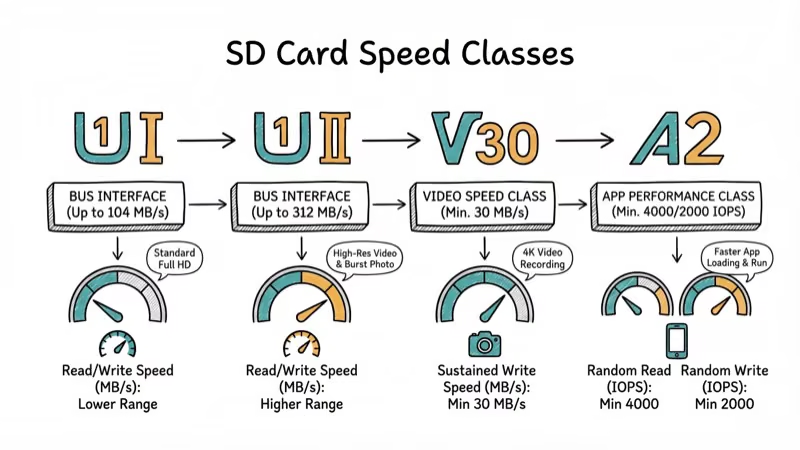
Speed ratings determine whether your card can keep up with your camera’s recording bitrate. Here’s what they mean:
- Class 10: Minimum 10MB/s write. Bare minimum for 1080p video.
- UHS-I: Bus interface up to 104MB/s. Most GoPro-compatible cards use this.
- V30 / U3: Minimum 30MB/s sustained write. Required for 4K recording.
- V60 / V90: Higher tiers for 8K recording. Overkill for current GoPro models.
GoPro recommends V30 or faster for all cameras from the HERO5 onward. Using a slower card triggers “SD ERROR” warnings.
#How Much Storage Do You Actually Need?
Storage depends on your recording settings and bitrate. Use these planning estimates as a rough guide:
| Resolution | 1 Hour File Size | 64GB Holds | 128GB Holds |
|---|---|---|---|
| 1080p/60fps | ~7 GB | ~9 hours | ~18 hours |
| 4K/30fps | ~18 GB | ~3.5 hours | ~7 hours |
| 4K/60fps | ~28 GB | ~2.2 hours | ~4.5 hours |
| 5.3K/30fps | ~35 GB | ~1.8 hours | ~3.6 hours |
For day trips, 64GB covers most shooters. Extended trips or professional work calls for 128GB minimum. Carrying two 128GB cards is smarter than one 256GB card because you reduce the risk of losing all footage to a single card failure.
#Tips for Getting the Best Performance
Format in-camera. Always format your card through the GoPro’s settings menu, not on your computer. The camera creates the exact folder structure and file system it expects. If your GoPro says “SD ERROR” with a new card, formatting in-camera almost always fixes it.
Transfer footage regularly. Don’t let your card stay full for weeks. Regular transfers reduce the chance of file corruption. If you’re using an iPhone, our guide on how to transfer GoPro videos to iPhone covers wireless and wired methods.
Buy from authorized sellers. Counterfeit microSD cards are common on marketplace sites. A fake SanDisk Extreme might show 128GB capacity but actually hold 16GB, corrupting files once it fills up. Buy from Amazon (sold by Amazon, not third-party), Best Buy, or the manufacturer’s store.
Check card health. If playback looks choppy or files go missing, the card may be failing. Learn how to repair GoPro video files that were damaged by a failing card. If you’ve lost files entirely, our guide on the best free SD card recovery tools can help. Consider replacing cards after 2-3 years of heavy use.
#GoPro Model Compatibility Guide
Not all GoPro cameras support the same card sizes:
- HERO12, HERO11, HERO10, HERO9: microSDXC up to 1TB, V30 minimum
- HERO8, HERO7, HERO6, HERO5: microSDXC up to 256GB, V30 recommended
- HERO (2018), HERO5 Session: microSDXC up to 128GB
- HERO4 and older: microSDHC up to 64GB only
Always check your specific model’s documentation. GoPro’s SD card compatibility page confirms that using a card faster than V30 won’t improve recording quality on current models.
#Mounting and Accessories
The right card pairs with the right mount for the best footage. For action sports, a GoPro helmet mount provides stable POV shots without hand vibration. A peephole camera is a completely different use case but demonstrates how small cameras benefit from fast storage.
#Bottom Line
The SanDisk Extreme is the safest choice for any GoPro model. It’s fast enough for 5.3K recording, tough enough for outdoor abuse, and priced fairly. The Lexar Professional 1066x is the upgrade pick if you transfer large files frequently and want the fastest write speeds. The Samsung EVO Select offers the best warranty at a lower price.
#Frequently Asked Questions
Can I use any microSD card with my GoPro?
Technically yes, but cards below V30 speed will cause dropped frames and recording errors in 4K modes. Stick to V30 or faster from reputable brands.
How often should I format my microSD card?
Format before each major shoot or at least once a month during regular use. Always format through the GoPro menu, not your computer.
Will a larger card slow down my GoPro?
No. Card capacity doesn’t affect recording speed. A 512GB V30 card performs identically to a 64GB V30 card from the same product line.
Why does my GoPro say “SD ERROR” with a new card?
This usually means the card isn’t formatted correctly or is counterfeit. Format it in the camera first. If the error persists after formatting, try a different card. Persistent errors point to a fake or defective card.
Is a V60 or V90 card better for GoPro?
Current GoPro models don’t benefit from speeds above V30 because the camera’s internal processing is the bottleneck. Save money and stick with V30.
Can I use the same card in my GoPro and my phone?
Yes, but format the card in whichever device you’re switching to. Different devices use different file system preferences, and reformatting prevents compatibility issues. For wider speed-class and device pairings beyond action cams, see our microSD picks by device and speed class.

Best Laptop for Running LLMs in 2026: Memory Comes First
The best laptop for running LLMs is a memory purchase first. Compare MacBook unified memory against NVIDIA laptop VRAM, and see what each tier really runs.

Pixel 11 vs Pixel 10: What Changed and Who Should Upgrade
Pixel 11 vs Pixel 10: same screen and camera resolution, new Tensor G6, 25W wireless, and Gemini Intelligence. Here is who should actually upgrade.

Best Power Bank for iPad in 2026: Pro, Air, and Mini
Best power bank for iPad in 2026. Compare mAh tiers and USB-C PD wattage for iPad Pro, Air, and mini, plus airline Wh math, cables, and travel tips.
Best Power Bank With Built-In Cable: Top 2026 Picks
Best power bank with built-in cable picks for 2026. Compare single USB-C, multi-connector, and retractable laptop banks, plus airline Wh math.