Best GoPro Helmet Mounts in 2026: 5 Picks Compared
Compare the 5 best GoPro helmet mounts for motorcycle, cycling, skiing, and skating. Includes safety notes, fit tips, and a clear pick for each style.
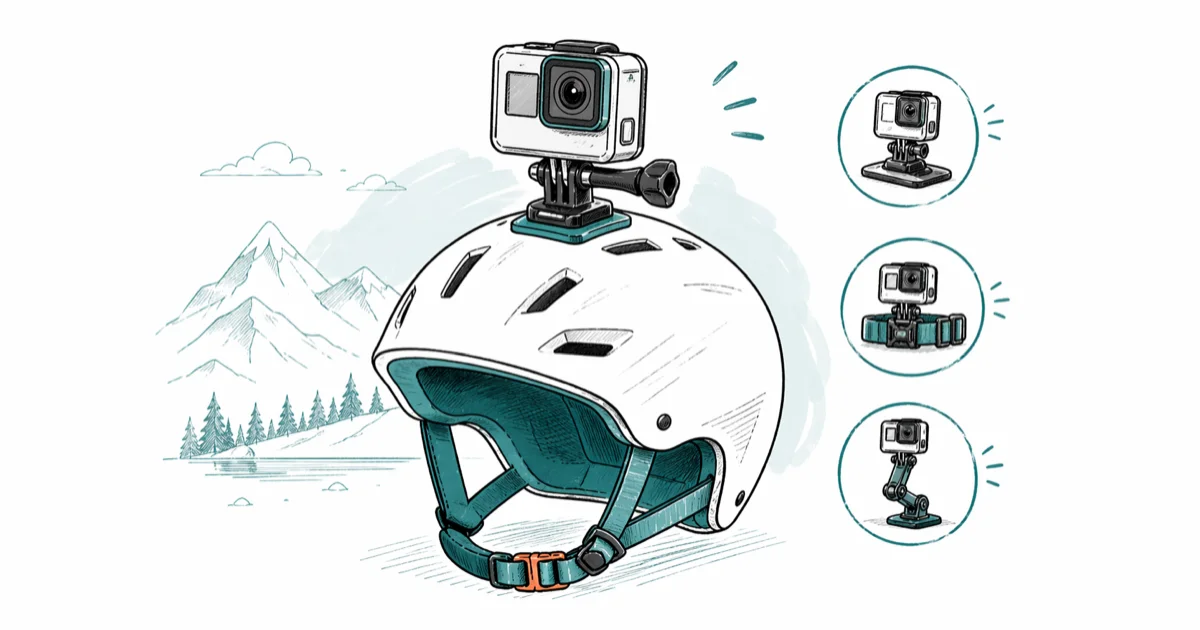
Quick AnswerPick a chin mount for motorcycle POV footage, a vented strap mount for cycling and skiing, and an adhesive front mount for skating or climbing. Chin mounts give the steadiest line-of-sight angle, while strap mounts are the only safe choice for vented helmets.
A GoPro helmet mount sits between you and the footage everyone wants to share, so a bad pick wrecks the whole edit. This guide compares five popular mounts across motorcycle, mountain bike, and ski helmets.
This guide groups the picks by riding style so you don’t waste 20 minutes scrolling reviews for sports you don’t do.
- Chin mounts give the lowest first-person angle (closest to your eyes) and stay locked on full-face motorcycle helmets without adhesive
- Vented helmets (cycling, skiing, climbing) need a strap mount, not adhesive, because foam and vent channels reject 3M VHB tape over time
- Side and top mounts catch wind and snag branches, so they’re weaker picks for fast motorcycle riding than chin mounts
- Apply adhesive mounts at room temperature on a clean surface, then wait 24 hours before riding to let the bond fully cure
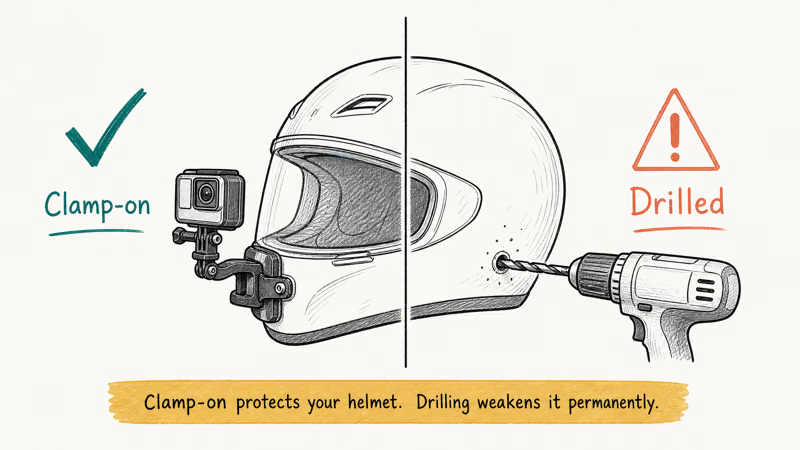
- A mount that breaks helmet certification (DOT, ECE, SNELL) can void crash protection, so never drill, screw, or modify the shell
#Choosing the Right Mount Type for Your Sport
Five mount styles cover almost every helmet shape, and each one solves a different problem.
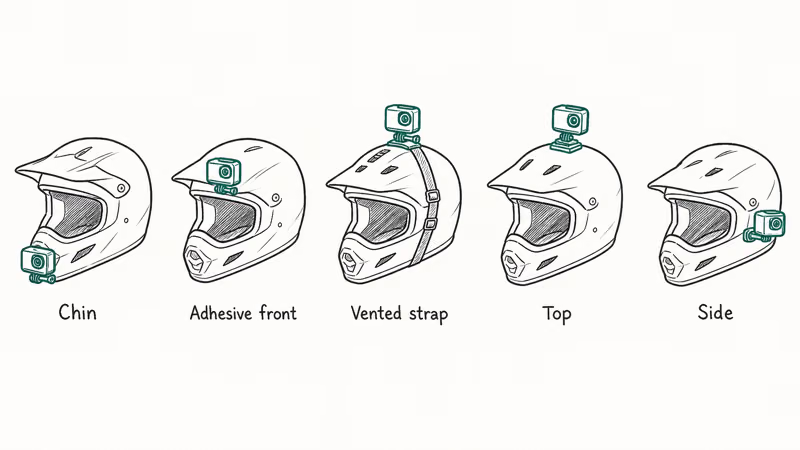
Chin mount. Bolts or clamps onto the chin bar of a full-face motorcycle or downhill MTB helmet. The camera sits below your line of sight and points the same direction your eyes look. Stability is the best of any mount style because the chin bar is rigid carbon or fiberglass.
Adhesive front or side mount. A curved or flat 3M VHB pad sticks to a smooth helmet shell. Best for skate, BMX, climbing, and any solid-shell helmet you ride consistently. Once you place it, repositioning is a project.
Vented strap mount. Two nylon straps thread through helmet vents and lock the mount to the top of a cycling, climbing, or ski helmet. No adhesive, no holes, removes in 30 seconds.
Top mount. Adhesive base on the crown of the helmet for a periscope-style overhead shot. Reads as goofy on motorcycles and snags branches in trees.
Side mount. Mirrors the front + side bracket; useful for off-axis angles in vlogs but catches wind at speed.
Quick decision rule. If you ride a full-face helmet, start with a chin mount. If your helmet has any vent holes, start with a strap mount. Everything else is for solid-shell helmets used in lower-speed activities.
#Top 5 GoPro Helmet Mounts We Recommend
The picks below cover full-face motorcycle helmets, vented cycling helmets, and vented ski helmets without assuming one mount fits every shell.
#GoPro Helmet Front + Side Mount (B01GCKO9Z8)
Best for skate, BMX, snow, and full-face motocross.
GoPro’s first-party adhesive bracket ships with both a curved and flat 3M VHB pad, a J-hook buckle, and a thumb screw. The kit fits skate, BMX, full-face motocross, and most snow helmets with a smooth shell. Once the adhesive cures, removal takes deliberate heat and floss rather than a quick peel.
Pros
- Includes both curved and flat adhesive bases in one box
- Compatible with every GoPro generation since the Hero 3
- J-hook lets you tilt the camera up or down without removing the base
- Bracket arm folds flat when the camera is off
Cons
- Adhesive is permanent; removal needs floss and a hair dryer
- The arm reduces the maximum tilt angle compared to a third-party ball mount
As an Amazon Associate, fone.tips earns from qualifying purchases. Some links on this page are affiliate links.
#GoPro Vented Helmet Strap Mount (B002EF2200)
Best for road bikes, mountain bikes, ski helmets, and climbing.
This is the right mount on this list for a road or mountain bike helmet. Two adjustable nylon straps thread through the vent slots, then a plastic plate locks against the inner shell. Nothing sticks to the helmet itself, so you keep the manufacturer’s safety rating intact.
The strap design keeps the mount centered by threading through the helmet vents instead of relying on adhesive. Light. Fast to swap.
Pros
- Works on any helmet with rectangular vent slots wider than the strap
- No adhesive, so it transfers between helmets in under a minute
- Adjusts for thicker winter snow helmets and lighter road shells
- Cheap enough to buy two (one for each helmet)
Cons
- Strictly for vented helmets; won’t work on full-face or skate helmets
- The plastic buckle creaks slightly over potholes
#Surewo Motorcycle Helmet Chin Mount (B07B7HQXS3)
Our top pick for street, adventure, and motocross full-face helmets.
Surewo’s chin mount is our top pick. The bracket curves around the chin bar and uses a rubber gasket plus two J-shaped clamps to grip without scratching paint.
The clamp-on design holds the camera angle without adhesive on most chin bars. The arm has three pivot joints, so you can dial in the exact pitch and yaw for your sightline.
Pros
- True POV angle from the rider’s eye height
- Includes adhesive pads in case your chin bar shape needs extra grip
- Three-axis pivot for fine angle control
- Steel hardware (not plastic) handles vibration
Cons
- Adds about 60 grams to the chin bar; you feel it on long rides
- Wider chin bars (some adventure helmets) need the optional extension piece
#Telesin GoPro Helmet Chin Mount (B0924DNBJ2)
Best for vloggers who pop the camera on and off often.
Telesin’s chin mount is the lightweight alternative to the Surewo. The frame is single-piece ABS plastic with a quick-release thumb screw that lets you pop the camera off without disturbing the mount.
It’s useful for vlog-style rides where you stop, talk to the camera, and remount. The trade-off is the looser tolerance compared to Surewo’s metal hardware, so re-tighten the bracket on vibration-heavy bikes.
Pros
- Quick-release thumb screw for camera-only removal
- Lighter than the Surewo (about 35 grams)
- Includes a safety tether
- Lower price point if you’re not riding daily
Cons
- Plastic frame loosens faster on vibration-heavy bikes
- Bracket can clip the visor on some helmet shapes; check fit before riding
#PGYTECH 360-Degree Rotation Helmet Mount (B08TR4GW6N)
Best for creators who switch between forward, side, and rear angles in the same ride.
PGYTECH’s mount is the wildcard pick: a rotating aluminum head on an adhesive base. The 360-degree dial lets you swing the camera from forward to side to rear without removing it, which is useful for behind-the-shoulder shots in mountain biking or ski tour vlogs.
The aluminum body holds up better than the all-plastic competitors. The trade-off is weight; at 85 grams this is the heaviest mount on the list, and you’ll notice that on a long day when the camera sits on top of your helmet for hours of rough trail.
Pros
- 360-degree rotation captures multiple angles without remounting
- Aluminum alloy body resists cracking in cold weather
- Compatible with action cameras from GoPro, DJI, and Insta360
- Includes a tethered safety line
Cons
- Adhesive base only; no strap option
- Heavier than purpose-built mounts of the same size
- Premium price for a niche feature
#Is It Safe to Mount a Camera on Your Motorcycle Helmet?
Camera mounts can compromise helmet certification if you modify the shell, so the safest mounts attach without drilling, screwing, or cutting. Helmet certifications including DOT FMVSS 218 in the United States, ECE 22.06 in Europe, and SNELL M2025 all test the helmet as a single unit, and adding holes voids those ratings.
According to FMVSS 218, the United States federal motor vehicle safety standard published in 1974, every certified motorcycle helmet sold in the US must pass impact attenuation, penetration resistance, and chin strap retention tests. The full standard background is laid out in Wikipedia’s motorcycle helmet article, which covers the major global certifications side by side.
Two practical safety rules:
- Adhesive mounts must use 3M VHB pads or equivalent automotive-grade tape. Cheap double-sided tape peels in heat and can release at speed.
- Chin mounts must clear your visor’s full range of motion. Check by flipping the visor up and down with the camera attached before every new helmet pairing.
Most certifying bodies don’t officially endorse helmet cameras, but they don’t prohibit non-modifying mounts either. SHARP, the UK helmet safety scheme, states that anything attached to the helmet shell can affect impact behavior even if it doesn’t look like much.
#How Do You Get Stable Footage From a Helmet Mount?
Stable helmet footage comes down to three things: mount choice, camera settings, and angle.
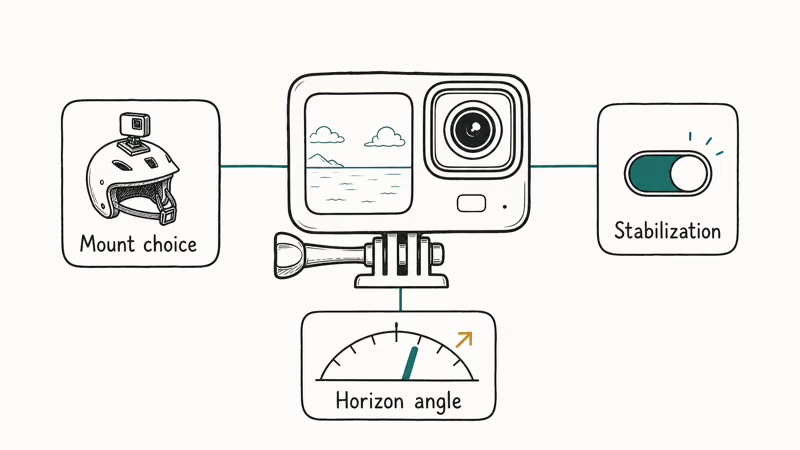
Pick the right mount for the activity, as covered above. A side mount catches wind at speed and shakes more than a chin or top mount; HyperSmooth helps, but it can’t fully hide a loose or wind-loaded mount.
Turn on the camera’s in-body stabilization. GoPro recommends HyperSmooth for any handheld or helmet-mounted footage, and the company states that the algorithm uses gyroscope data captured at high frame rates to lock the horizon. Use the highest setting for any ride above walking pace.
Aim slightly above the horizon line.
New mount users tend to point the camera at the road or trail directly in front of them, which makes the footage feel cramped. Tilt up about 10 to 15 degrees so the horizon sits in the upper third of the frame.
Once you have the footage, you’ll probably want to edit on a phone. We covered how to transfer GoPro videos to iPhone without burning your day on cables, and how to slow down a video on iPhone for the slow-motion shots that helmet cams handle so well.
If you want to add captions to the action, adding subtitles in iMovie takes about a minute per clip.
#Mount Care and Adhesive Maintenance
Your mount is a consumable. Adhesive ages, plastic threads strip, and J-hooks bend. A few habits keep your kit useful for a full season instead of a single weekend.
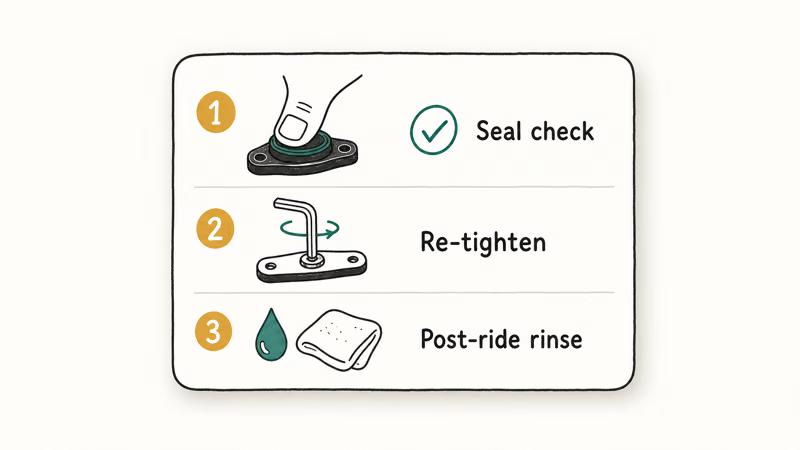
Check the adhesive seal monthly. Press the perimeter of the mounting pad with your thumb after a long ride. If you feel any lift, replace the base before your next ride. Most brands sell replacement bases for under $10.
Re-tighten chin mounts every few rides. Vibration from a four-cylinder bike can loosen plastic threads faster than you’d expect, so keep the right hex key in the kit for mounts that use one. Skipping this check can strip plastic hardware over time.
Clean the mount after wet rides. Salt water, mud, and even sweat speed up corrosion on metal hardware. A quick rinse with fresh water and a microfiber wipe extends the life of the mount.
#When to Replace a Mount or Memory Card
Helmet mounts and the cards inside the camera both wear out. Catching the signs early saves you a lost ride.
Replace the mount itself when the adhesive lifts at any corner. Same goes for a J-hook that won’t hold tension, or plastic that shows hairline cracks near the clamp. None of these are repairable in the field.
Save your memory cards. Helmet mount footage is hard to recover if the SD card corrupts during a ride. Use the recommended SD cards for GoPro Hero 8 and later and rotate two cards so one can stay offloaded. If a card does fail, the GoPro video repair guide covers recovery options.
#Bottom Line
For full-face motorcycle and motocross riders, the Surewo Motorcycle Helmet Chin Mount is our top pick. Steel hardware survives vibration that loosens plastic competitors over a single touring weekend.
Cyclists and skiers with vented helmets should use the GoPro Vented Helmet Strap Mount; it’s the only option on this list that doesn’t modify the helmet shell. Solid-shell skate or BMX riders who want versatility get the GoPro Helmet Front + Side Mount, which covers both angles in one kit and lasts for years.
Skip the side and top mounts unless you have a specific creative reason. They add wind drag and shake without a clear benefit. And whatever you pick, give the adhesive 24 hours to cure before your first ride.
#Frequently Asked Questions
Can I use a GoPro helmet mount with non-GoPro action cameras?
Yes, if the camera uses the universal two-prong GoPro finger interface. DJI Osmo Action, Insta360 One R, and Akaso cameras all fit it; budget cameras may need a $5 adapter bracket.
How do I remove an adhesive helmet mount without damaging the shell?
Slide a length of dental floss back and forth under the adhesive pad to slowly slice the bond. A hair dryer set to medium heat softens the 3M VHB tape and speeds up the process. Work from one corner inward, and avoid prying with a screwdriver; you’ll scratch the clear coat.
Are chin mounts safe on motorcycle helmets?
Chin mounts that clamp around the chin bar without modifying it don’t change the certification of the helmet. Mounts that require drilling, screwing into, or cutting the shell void DOT, ECE, or SNELL certification. The Surewo and Telesin chin mounts in this guide are both clamp-on designs.
How often should I check my helmet mount before a ride?
Every ride, give the camera a firm push to confirm the bond and thumb screw. Monthly, do a deeper inspection of the adhesive perimeter.
Can I use a helmet mount for surfing or water sports?
GoPro cameras are waterproof to 10 meters without a case on Hero 5 and later, so the camera itself is fine. The issue is the mount; adhesive pads weaken in salt water and most strap mounts aren’t designed for repeated submersion. For water sports, use a head strap or a board mount instead, and always add a floaty backdoor in case the mount fails.
What is the lowest-profile mount for a road bike helmet?
The GoPro Vented Helmet Strap Mount. It sits within 15mm of the helmet shell, and the straps tuck under the vent slots.
Does a helmet mount work on a ski or snowboard helmet?
Yes, but pick the mount style by helmet type. Smith, Giro, and POC ski helmets with vent slots accept the GoPro Vented Helmet Strap Mount, which threads through the vent channels without affecting MIPS rotation. Smooth-shell freestyle helmets (Pro-Tec, Sandbox) take the adhesive base, but cold weather makes surface prep and cure time more important. Skip chin mounts entirely on snow helmets.

Best Laptop for Running LLMs in 2026: Memory Comes First
The best laptop for running LLMs is a memory purchase first. Compare MacBook unified memory against NVIDIA laptop VRAM, and see what each tier really runs.
Pixel 11 vs Pixel 10: What Changed and Who Should Upgrade
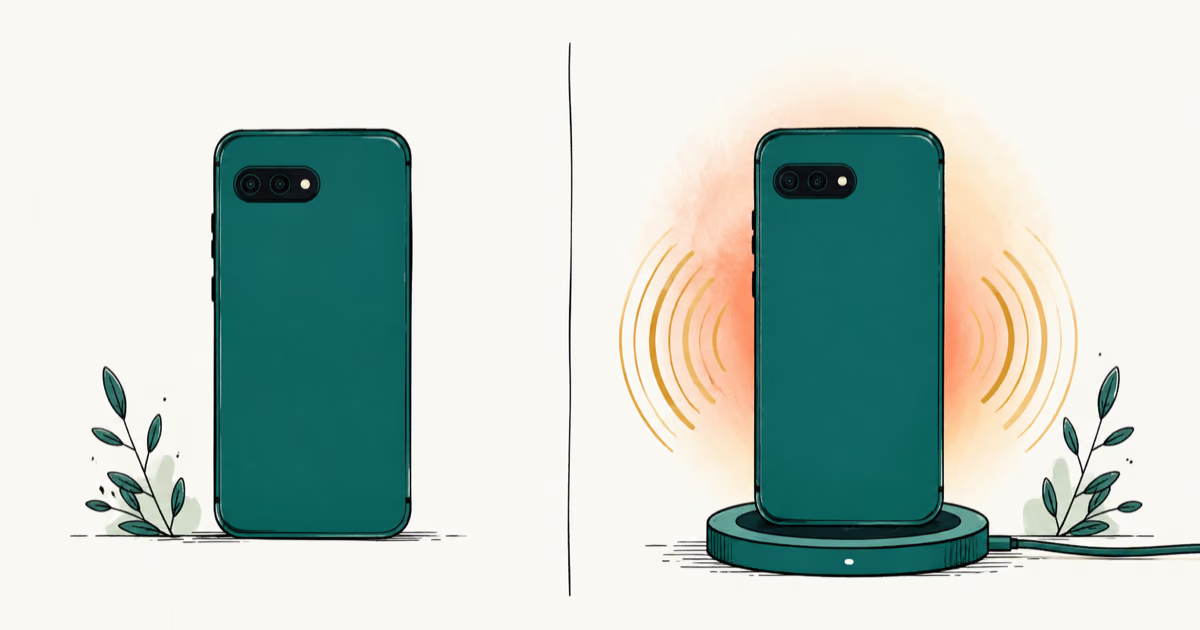
Pixel 11 vs Pixel 10: same screen and camera resolution, new Tensor G6, 25W wireless, and Gemini Intelligence. Here is who should actually upgrade.

Best Power Bank for iPad in 2026: Pro, Air, and Mini
Best power bank for iPad in 2026. Compare mAh tiers and USB-C PD wattage for iPad Pro, Air, and mini, plus airline Wh math, cables, and travel tips.
Best Power Bank With Built-In Cable: Top 2026 Picks
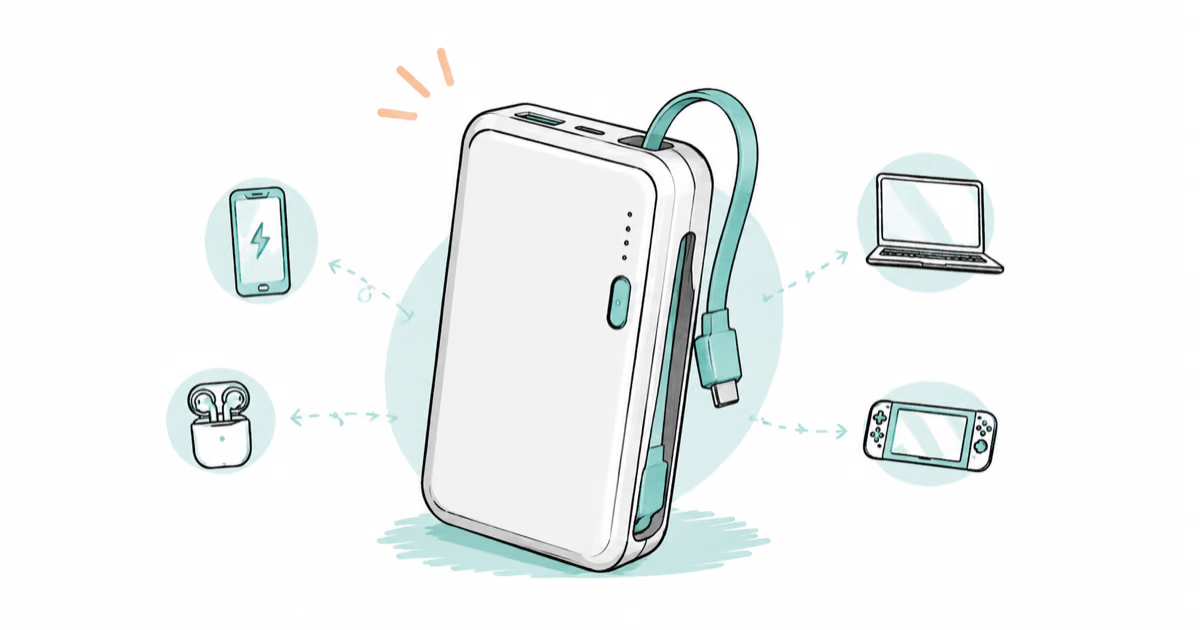
Best power bank with built-in cable picks for 2026. Compare single USB-C, multi-connector, and retractable laptop banks, plus airline Wh math.