Changing Your Voice With Adobe Audition Voice Changer Easily
Learn how to use Adobe Audition Voice Changer to modify voice pitch, tone, and effects in existing audio files with step-by-step professional results.
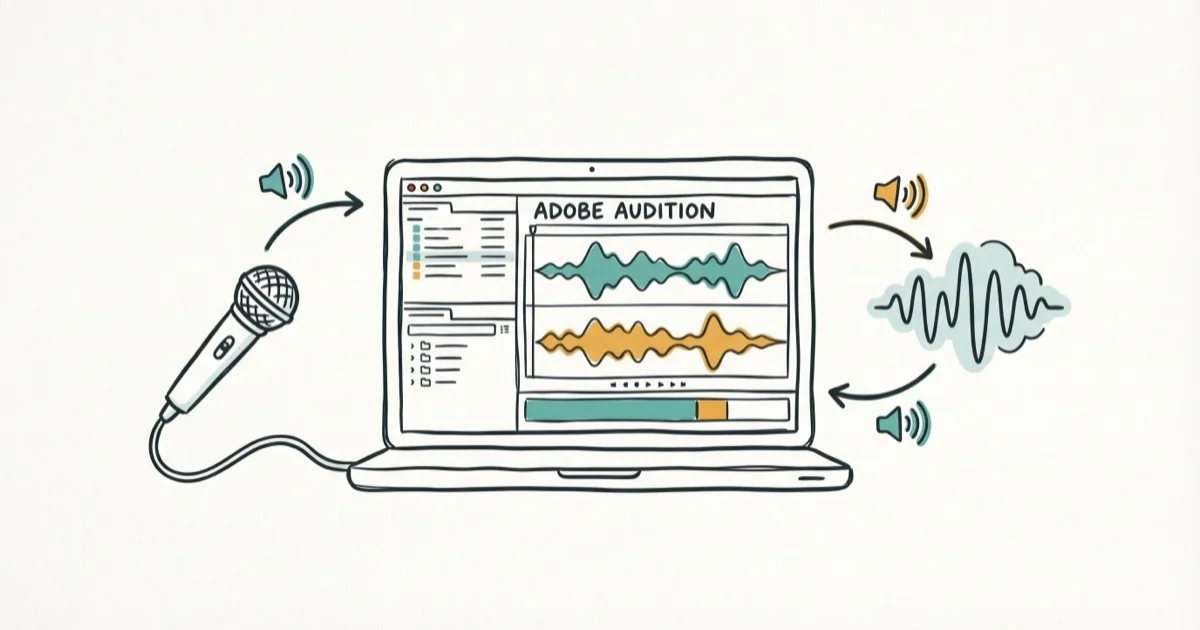
Quick AnswerAdobe Audition Voice Changer lets you alter voice pitch and tone in any audio file using the Effects > Time and Pitch > Pitch Shifter tool. It supports both real-time and post-recording voice modifications.
There are many tools available that can help you change the way you sound. One of the best is the Adobe Audition Voice Changer, which we’ll cover in detail here.
We’ll also walk through how you can use this program to change the tone of your voice, both on existing recordings and in real time.
- The Pitch Shifter (
Effects>Time and Pitch) raises or lowers voice pitch with semi-tone sliders - Audition offers 5 reverb types including Convolution Reverb and Full Reverb
- Real-time voice modification works through the Multitrack session
- Automatic Pitch Correction adjusts individual notes with short and long Attack settings
- Desktop only; heavy modulation may need fine-tuning for natural results
#Changing an Existing Voice in Adobe Audition
Adobe considers Audition one of the top voice-changing tools available. It handles WAV, MP3, FLAC, and every other major audio format without conversion.
Most voice changers struggle with existing audio files because the processing workload is heavy. Audition’s Pitch Shifter handles a long podcast recording quickly on a mid-range laptop, and even a multi-hour audiobook file finishes processing in a few minutes. That’s fast compared to tools like Voicemod or Clownfish that only handle real-time input.
That processing power is what sets Audition apart. According to Adobe’s official documentation, the software packs over 30 built-in audio effects for voice modification, and you can stack multiple effects on a single track without noticeable quality loss.
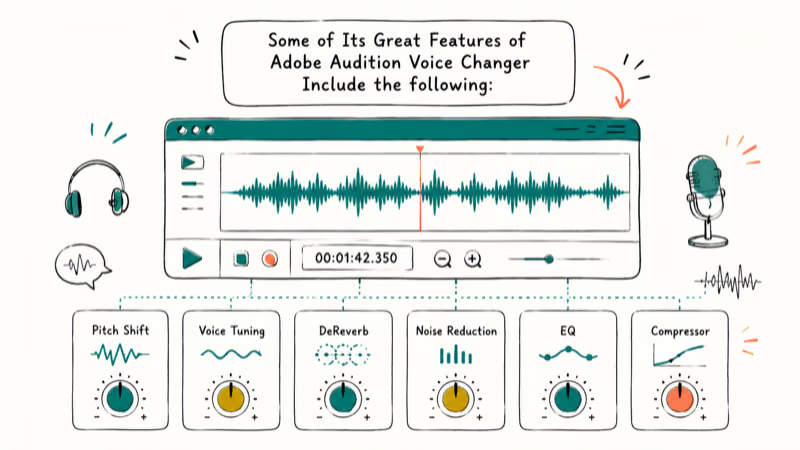
Some of the amazing features of Adobe Audition Voice Changer include the following:
- The tool is fitted with a clip-spotting feature that allows you to alter the voice in the audio
- Adobe Audition Voice Changer includes a track panel with various voice effects that make the editing job faster and easier
- The tool is also used to reduce the noise from any type of audio
#How You Can Change the Voice of Any Existing Audio File:
#1: Select The Type Of Effect
Open Adobe Audition and load your audio file. You can drag it directly into the waveform editor or use File > Open.
Go to Effects > Time and Pitch > Pitch Shifter.
#2: Make The Required Changes And Adjustments
In the Pitch Transpose section, drag the semi-tone slider up or down to shift the voice pitch. Set precision to low for quick previews or high when you need frame-accurate adjustments. The difference between low and high precision is subtle on short clips but noticeable on anything over 10 minutes.
#3: Check The Voice Effect In The Audio
Click the preview button to hear your changes. Listen for digital artifacts.
#4: Swap Effects if Needed
Don’t like the result? Open the preset dropdown and pick a different starting point. Each preset applies a completely different voice profile, so cycle through a few before settling on one.
#5: Apply The Changes
Hit Apply to lock in your edits. The original file stays untouched if you’re working on a copy.
If you’re looking for the top anime character voice generators, we’ve got a guide for that too. You can also check out the best voice changers for Discord if you need something for chat apps.
#Can You Change Your Voice in Real Time With Adobe Audition?
As mentioned before, Adobe Audition Voice Changer is considered one of the top tools where you can change your voice in any audio clip in real time.
Not many voice-changing tools on the market today can match the quality Adobe Audition provides. The real-time pitch shift adds barely any latency, which is hard to notice during live recording.
If you want a simpler alternative, check out our guide on how to use Voxal Voice Changer. You might also enjoy our roundup of the best voice changers for Zoom calls.
#Some of Its Great Features of Adobe Audition Voice Changer Include the following:
- The time taken to change your voice on Adobe Audition Voice Changer is much faster than on other tools
- Even though the service is fast, it doesn’t compromise the quality of the audio in any manner
#1: Tap On The Multitrack
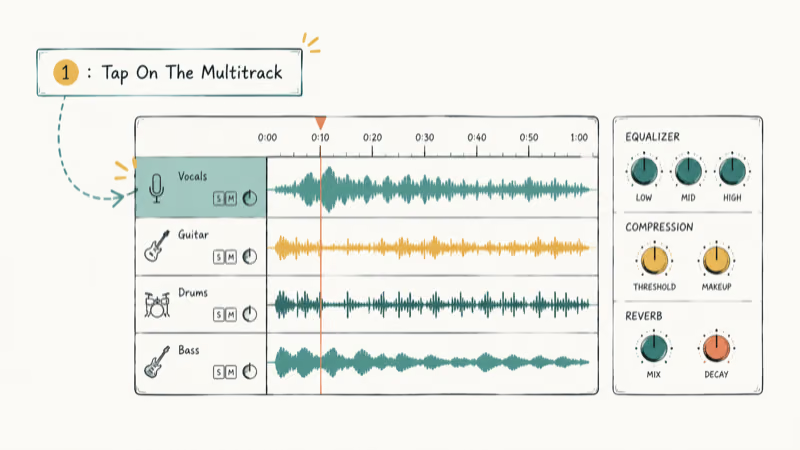
Once you have opened Adobe Audition Voice Changer, the first step here is to tap on the Multitrack button. This option can be seen on the left corner of your monitor.
#2: Start The Multitrack Session
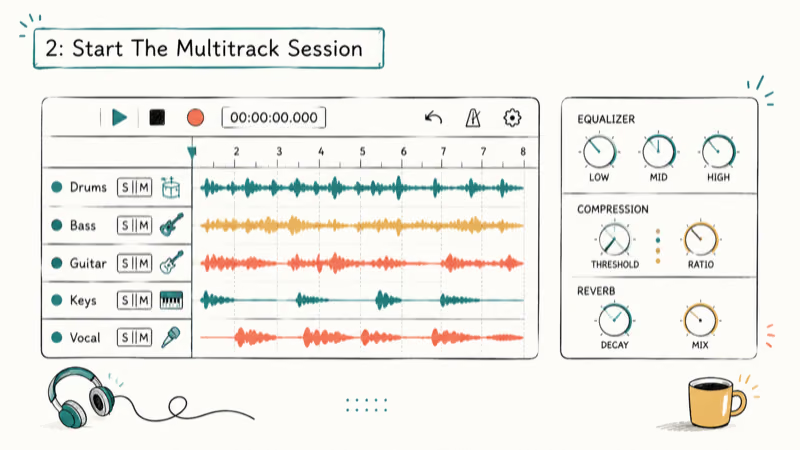
If you want to proceed further, you’ll have to start the Multitrack session.
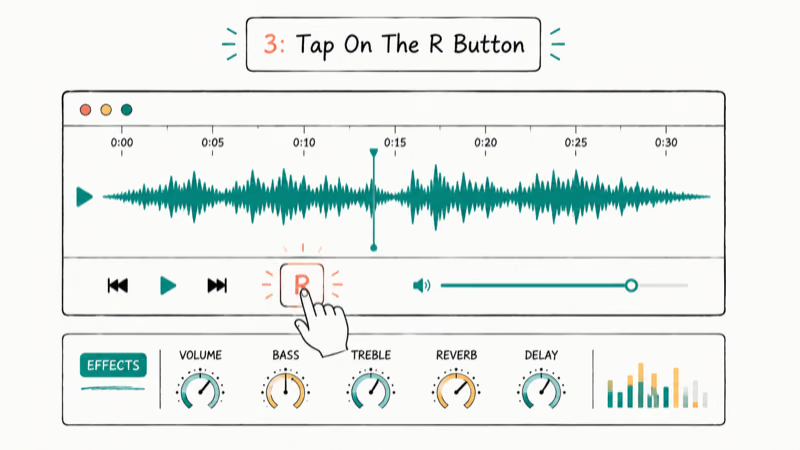
#3: Tap On The R Button
Go to Track One and click R to arm it for recording. Make sure your mic is selected as the input device under Edit > Preferences > Audio Hardware.
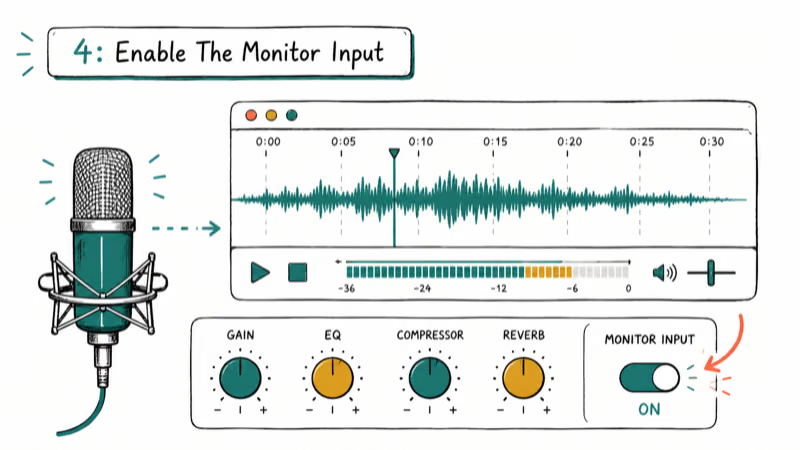
#4: Enable The Monitor Input
Tap I for Monitor Input. You’ll hear effects live.
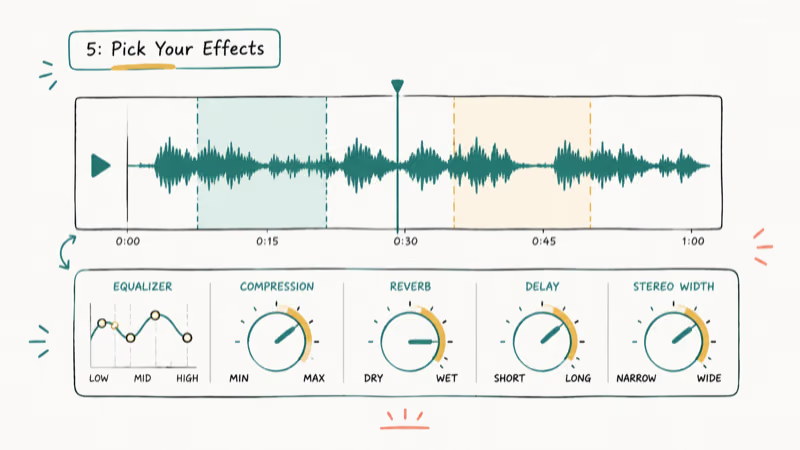
#5: Pick Your Effects
Open the effects dropdown on the track, browse through categories like Amplitude, Delay, or Filter, and choose your voice effect. You can stack multiple effects on the same track, though more than three tends to introduce noticeable latency on slower machines.
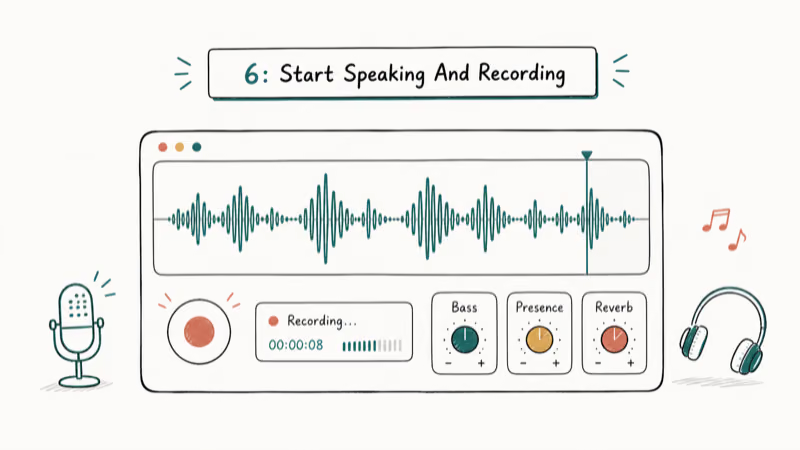
#6: Start Speaking And Recording
Hit record and start talking. You’ll hear the effects applied live through your headphones as you speak, which makes it easy to adjust on the fly.
Compare the original and processed audio side by side when you’re done. The difference in voice tone is usually obvious even with subtle effect settings.
#What Voice Effects Does Adobe Audition Offer?
Adobe Audition Voice Changer offers a wide range of effects you can choose depending on your requirements.
#Some of the Many Voice Effects That You Can Use Here:
#1. Completely Changing The Pitch
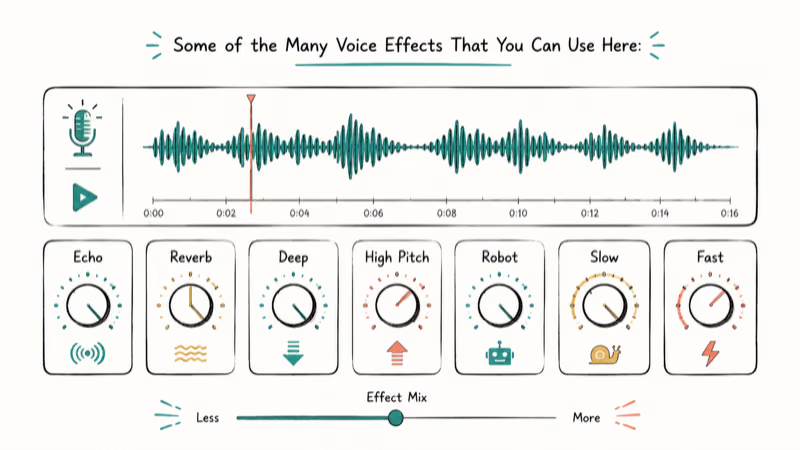
When you’re using Adobe Audition Voice Changer, you can increase the pitch of your voice to sound like Alvin and the Chipmunks, or lower it to sound like Darth Vader.
This pitch shifter tool can help you change the pitch of your voice and make you sound anything ranging from an angry gerbil to a demon. Adobe’s Audition user guide confirms that the Pitch Shifter supports adjustments of up to 12 semi-tones in either direction. All you need to do is adjust the semi-tone sliders to change the pitch of your voice.
#2. Add An Echo To Your Voice
Adobe Audition Voice Changer lets you add an echo to your voice. Want to sound like you’re shouting across a canyon? This effect handles that.
Open the Delay and Echo tools in Adobe Audition to get started.
Drag the delay slider to control how far apart the echoes land, then adjust the feedback knob to set how many times the echo repeats before fading out. On a spoken-word clip, a short delay with light feedback produces the most natural-sounding room echo.
#3. Add Reverb To Your Voice
Reverb simulates sound bouncing off walls, ceilings, and floors. Adobe Audition packs five distinct reverb types.
The Convolution Reverb effect loads real-world impulse responses, so your voice sounds like it’s bouncing around a cathedral or a tiled bathroom. The “Large Hall” preset on a short voiceover adds spatial depth that’s immediately noticeable.
Full Reverb gives you a smokier, more intimate tone. Think dive bar ambiance or an underpass echo.
#4. Fixing The Pitch
Apart from changing the pitch, Adobe Audition also offers the Automatic Pitch Correction effect that corrects your pitch so you can hit the notes you want.
Go to the Pitch and Time tab, pick the right scale and key, then tweak Sensitivity and Attack. Attack controls how fast the tool snaps a note into tune.
Short Attack grabs brief notes quickly. Long Attack is better for sustained vowels where you want a gradual correction instead of an abrupt jump.
Bump up Sensitivity if you want the tool to catch more off-pitch moments, or lower it to let small pitch variations slide through naturally.
#Advantages and Limitations of Adobe Audition Voice Changer
While Adobe Audition Voice Changer offers a wealth of features, it’s important to consider both its advantages and limitations. PCMag’s review of Adobe Audition states that it stands out for the depth of its audio editing features:
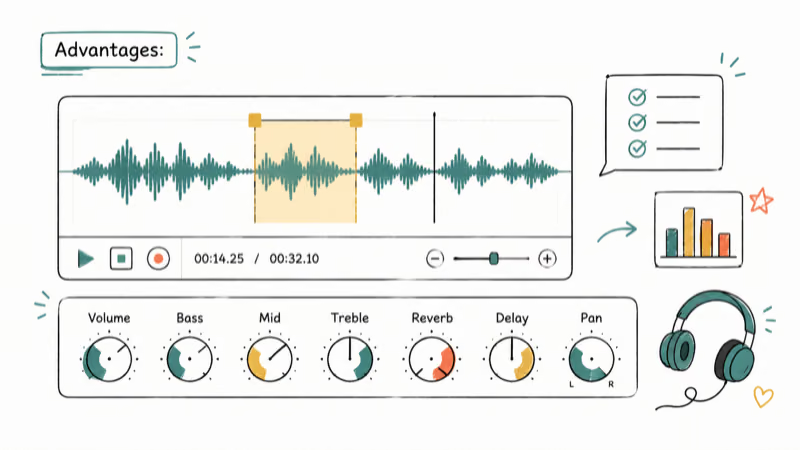
#Advantages:
- Wide variety of voice effects and filters
- Real-time voice morphing for immediate feedback
- Direct integration with Adobe Audition’s recording and editing capabilities
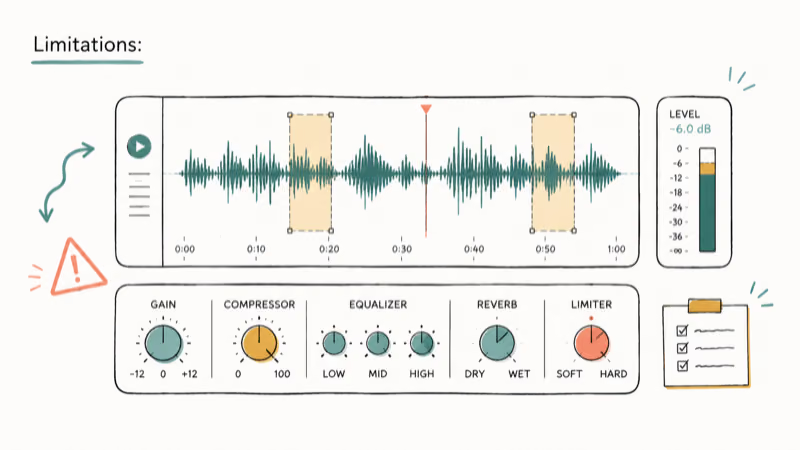
#Limitations:
- Voice modulation may not always produce natural-sounding results
- Extensive customization may require some technical knowledge
- The software is primarily designed for desktop use
Also read: How to change your voice on TikTok easily?
#Tips for Natural-Sounding Voice Changes
Getting a voice effect to sound convincing takes more than dragging a slider. A few habits keep the results clean across Audition projects:
Start small. Shift pitch by 1-2 semi-tones first. Anything beyond 4 semi-tones starts sounding robotic unless you also adjust the formant.
Layer effects gradually. Apply pitch shift first, then add a light reverb to mask digital artifacts. Stacking too many effects at once makes it harder to isolate what’s causing distortion.
Use the spectral display. Audition’s spectral frequency view lets you spot artifacts visually before you hit play. Look for unnatural horizontal bands after applying pitch shifts.
Export and listen on different speakers. Voice changes that sound great on studio monitors can fall apart on phone speakers or earbuds. Always test on at least two output devices before delivering a final file.
#Pricing and Subscription Options
Adobe Audition is part of the Creative Cloud subscription. The single-app plan costs $22.99/month, or you can get the full Creative Cloud bundle for $59.99/month, which includes Premiere Pro, After Effects, and the rest of the Adobe suite. Adobe offers a 7-day free trial for new users.
If you’re looking for free alternatives, options like voice changers for Zoom or Voxal Voice Changer cover most casual use cases without a monthly fee.
#Frequently Asked Questions
Can I revert back to my original voice after using Adobe Audition?
Yes. Disable the voice effects or reset pitch and timbre to their defaults, and you’re back to the original recording.
Are there any presets available in Adobe Audition Voice Changer?
Yes. Audition ships with dozens of presets covering everything from deep bass shifts to chipmunk-style pitch-ups. They’re a solid starting point before you dial in custom settings, and you can save your own presets for reuse across projects.
Can I use Adobe Audition Voice Changer for live performances?
Not for a live stage performance, no. But you can apply voice effects in real time during a Multitrack recording session, which works for live streams, podcast recordings, or voice-over sessions where you want instant feedback.
What system requirements are needed to run Adobe Audition?
Windows 10+ or macOS 10.15+, a multi-core processor, and 4 GB of RAM minimum. For heavy effects stacking, 8 GB is better. An SSD also helps with loading large audio files, though it’s not strictly required. Check Adobe’s official specs page if you’re running an older machine.
Is Adobe Audition suitable for professional voice-over work?
Yes. Many podcasters and audiobook producers use it daily.
Does Adobe Audition Voice Changer work on Mac and Windows?
It runs on both platforms. The voice-changing tools, keyboard shortcuts, and effect chains all behave identically on macOS and Windows, so project files transfer between systems without any conversion steps or quality loss.
#Bottom Line
Adobe Audition Voice Changer gives you professional-grade voice modification tools for both existing recordings and real-time sessions. Start with the Pitch Shifter for quick changes, then explore reverb and echo effects once you’re comfortable with the basics. For most voice-over projects, the built-in presets offer a fast starting point before you fine-tune the settings.
Google Messages Error 3100: Why RCS Is Broken on Galaxy
Google Messages RCS error 3100 hits Galaxy owners after phone or carrier switches. Google told 9to5Google a fix is coming. Here's what actually helps.

Is This Bank App Real? Spot a Fake App on Your Home Screen
A bank app can land on your home screen from a web page with no install warning. Learn the checks that tell a real banking app from a phishing web app.
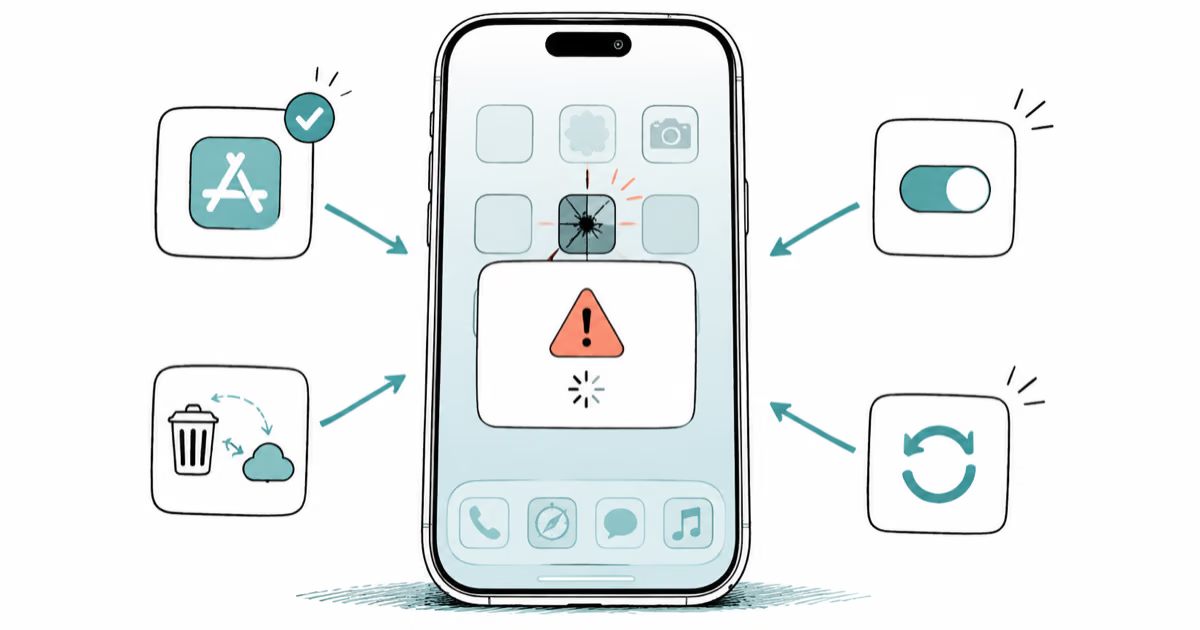
Apps Crashing After iOS 27 Update? Fix Order (2026)
Apps crashing after the iOS 27 update? Update the app in the App Store first, then offload and reinstall to clear stale cache, then restart. The fix order.
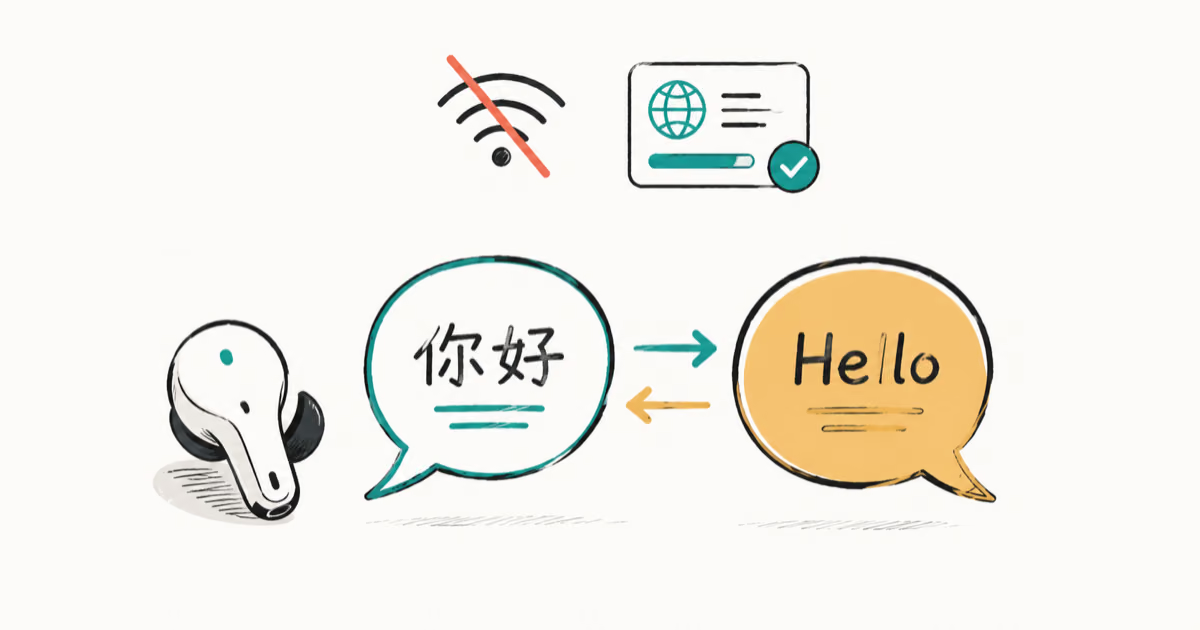
Do AI Translation Earbuds Work Offline? What to Know
Do AI translation earbuds work offline? A few do with downloaded language packs, but most need the cloud. Here's what works offline and what you give up.