How to Add Text to Photos on Android: 5 Best Apps (2026)
Add text to photos on Android using Google Photos, Snapseed, Phonto, and more. Step-by-step instructions with font tips for social media posts.

Quick AnswerYou can add text to photos on Android using Google Photos for basic text, or apps like Snapseed, Phonto, and PhotoDirector for advanced typography with custom fonts, colors, and styles.
Adding text to photos on Android takes about 30 seconds with the right app. Out of the many text overlay apps on Android, these five give the best results for different use cases.
- Google Photos has a built-in Markup tool for basic text overlays and comes pre-installed on most Android devices, so no download is needed to get started.
- Phonto offers over 400 fonts and is purpose-built for typography on photos, making it the best free choice for users who care about font variety.
- Snapseed’s text tool integrates with its non-destructive editing stack, so you can adjust color, brightness, and text all within one app without quality loss.
- For social media content, keeping text within the center 80% of the image prevents it from being cropped by Instagram, TikTok, or Facebook thumbnails.
- Saving edited photos as PNG instead of JPEG preserves text sharpness, especially for images with small font sizes or thin letterforms.
#Which App Is Best for Adding Text to Android Photos?
It depends on what you need. Here’s the quick breakdown of how each app compares on the same photo and text overlay:
| App | Best For | Price | Font Count |
|---|---|---|---|
| Google Photos | Quick captions | Free | Limited |
| Phonto | Typography lovers | Free | 400+ |
| Snapseed | All-in-one editing | Free | Limited |
| PhotoDirector | AI-powered effects | Free (ads) | 100+ |
| Adobe Express | Social media templates | Free tier | 200+ |
Google Photos is the most accessible starting point, since it comes preinstalled on most Android phones. According to its Play Store listing, it has billions of downloads and a consistently high user rating, which speaks to its reliability for basic edits.
#How Do You Add Text Using Google Photos?
Google Photos comes pre-installed on most Android devices. The text tool is buried under Markup, which isn’t obvious. Here’s how to find it:
- Open the Google Photos app and select your image.
- Tap Edit (the three horizontal lines icon).
- Select the Markup icon (the squiggly line).
- Tap Text (the “T” icon).
- Type your text and pick a color from the palette.
- Drag to reposition. Tap Done to save.
Google Photos only offers basic font options and no shadow or outline tools. Text looks clean on solid-color backgrounds but becomes unreadable on busy photos. Google’s support team confirms that the Markup tool handles 1-2 line captions and basic annotations rather than full typography work. For more control, switch to Phonto or Snapseed.
#Adding Text With Phonto: Step-by-Step Tutorial
Phonto is the best free app for typography on Android. It has over 400 built-in fonts, and you can import your own .ttf or .otf files. Font rendering stays sharp even at small sizes.
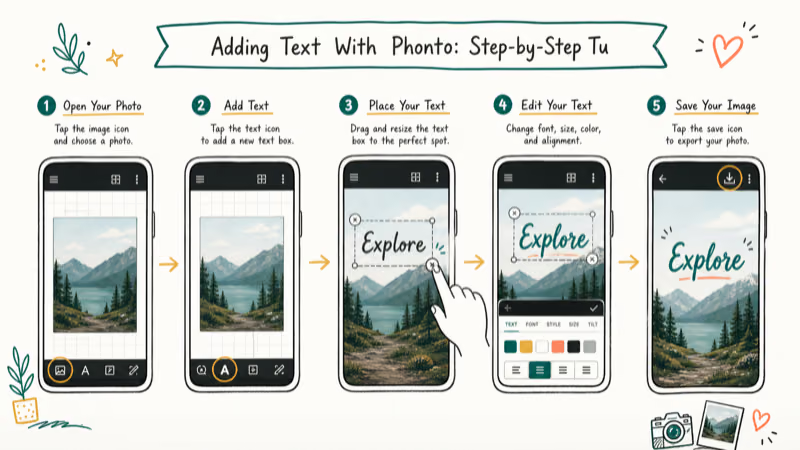
- Install Phonto from the Play Store and open it.
- Tap the camera icon to load a photo from your gallery.
- Tap the screen, then tap the pencil icon to add text.
- Type your text and tap Done.
- Customize with the toolbar:
- Font: Pick from 400+ built-in options or import your own
- Size: Drag the slider to adjust
- Color: Choose from the palette or use the eyedropper tool
- Style: Add shadow, stroke, gradient, or curve effects
- Pinch to resize. Drag to reposition.
- Tap the export icon to save as PNG or JPEG.
Pro tip: Phonto’s curve text feature lets you arc text around objects in your photo. It’s one of the few free apps that handles curved text without distortion.
#Using Snapseed and PhotoDirector for Text Overlays
Snapseed is Google’s pro-level photo editor, and its text tool works within the same non-destructive editing pipeline as all its other tools. According to Google’s Snapseed page, the app supports 29 tools and filters, including a dedicated text overlay feature. The biggest advantage is editing text after applying filters, since changes aren’t baked in until you export.
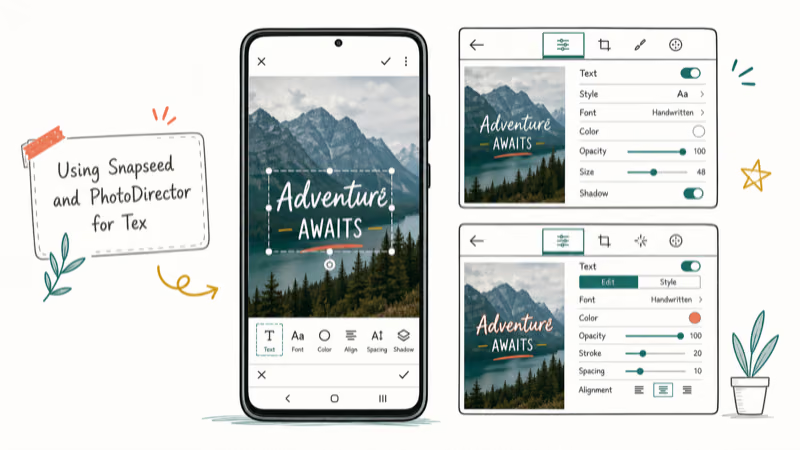
PhotoDirector from CyberLink is a stronger choice if you want AI-powered text effects. It auto-suggests text placements and includes animated text templates for video-style social posts. CyberLink reports that PhotoDirector has been downloaded over 100 million times across platforms, with AI-powered tools that can auto-detect text placement areas in under 2 seconds.
Other solid options:
- Adobe Express: Templates for Instagram stories, TikTok, and Pinterest posts
- Canva: Drag-and-drop design with brand kit support
- PicsArt: Heavy on social features and sticker overlays
#Tips for Making Text on Photos Look Professional
Getting text to look good on a photo is harder than it sounds. A few principles make the difference between amateur and polished results:
Pick fonts that match the mood. Serif fonts work for formal shots. Sans-serif fonts like Montserrat fit modern edits. Script fonts become unreadable below 24pt.
Always add contrast. White text on a bright sky is invisible. Use a dark semi-transparent bar behind the text, add a drop shadow, or apply an outline. On platforms like Instagram, posts with high-contrast text overlays tend to read better and hold attention longer than low-contrast text placed directly on busy backgrounds.
Stay in the safe zone. Keep text within the center 80% of the image. Instagram, TikTok, and Facebook all crop differently, and text near edges gets cut on at least one platform.
Save as PNG. JPEG compression creates ugly artifacts around text edges, especially with thin fonts or small sizes. PNG files are bigger but text stays sharp. The difference is most noticeable on fonts with hairline strokes or when you’re using white text with transparency effects.
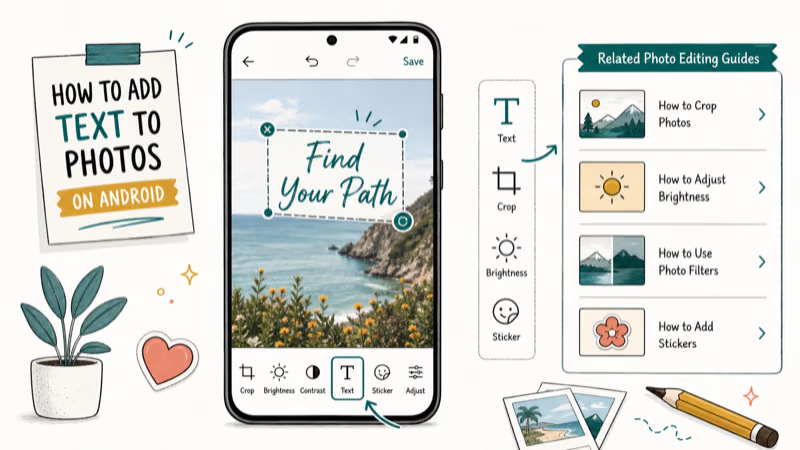
#Related Photo Editing Guides
If you’re working on other photo editing tasks on Android, these guides cover common needs:
- Change photo background to white for clean product shots and portraits
- Remove shadows from photos to fix uneven lighting
- Remove date stamps from photos to clean up old images
- Fix your Android camera not working if you can’t take photos to edit
- Solve Android file transfer issues if you can’t move photos to your computer
#Bottom Line
For basic text on photos, Google Photos handles the job without installing anything. For serious typography work with custom fonts, shadows, and curved text, Phonto is the best free option on Android. Snapseed is the right pick if you want text as part of a larger editing workflow.
Start with Phonto if you’re unsure. Its 400+ font library and zero price tag make it the most versatile choice for most people.
#Frequently Asked Questions
Can I add multiple text layers to a single photo?
Yes. Phonto, PicsArt, and Adobe Express all support multiple text layers on one image. You can position, resize, and style each layer independently. Google Photos only supports one text element at a time.
How can I make text stand out against a busy background?
Add a semi-transparent dark shape behind the text, use a drop shadow, or add a thick outline. Phonto and Snapseed both offer shadow and stroke options. Another trick is placing text over the least busy area of the photo.
Are there copyright concerns when adding text with custom fonts?
Yes. Fonts have licenses just like software. Most fonts bundled inside apps like Phonto are licensed for personal use. If you’re creating commercial content, check the font license or stick to Google Fonts, which are all free for commercial use.
Can I save text designs as templates?
Canva and Adobe Express both let you save designs as reusable templates. Phonto doesn’t have a template feature, but you can save your favorite font and color combinations as screenshots for reference.
How do I add custom fonts to Phonto?
Download the .ttf or .otf font file to your phone. In Phonto, tap the font selector, then tap the + icon. Browse to the downloaded file and import it. The font appears in your list immediately and works like any built-in option.
What’s the best image format for sharing text-heavy photos?
PNG preserves text sharpness and handles transparency. JPEG creates compression artifacts around text edges. For Instagram and TikTok, PNG is better since those platforms re-compress your upload anyway, and starting with a clean PNG produces less visible degradation.
Pixel 11 vs Pixel 10: What Changed and Who Should Upgrade
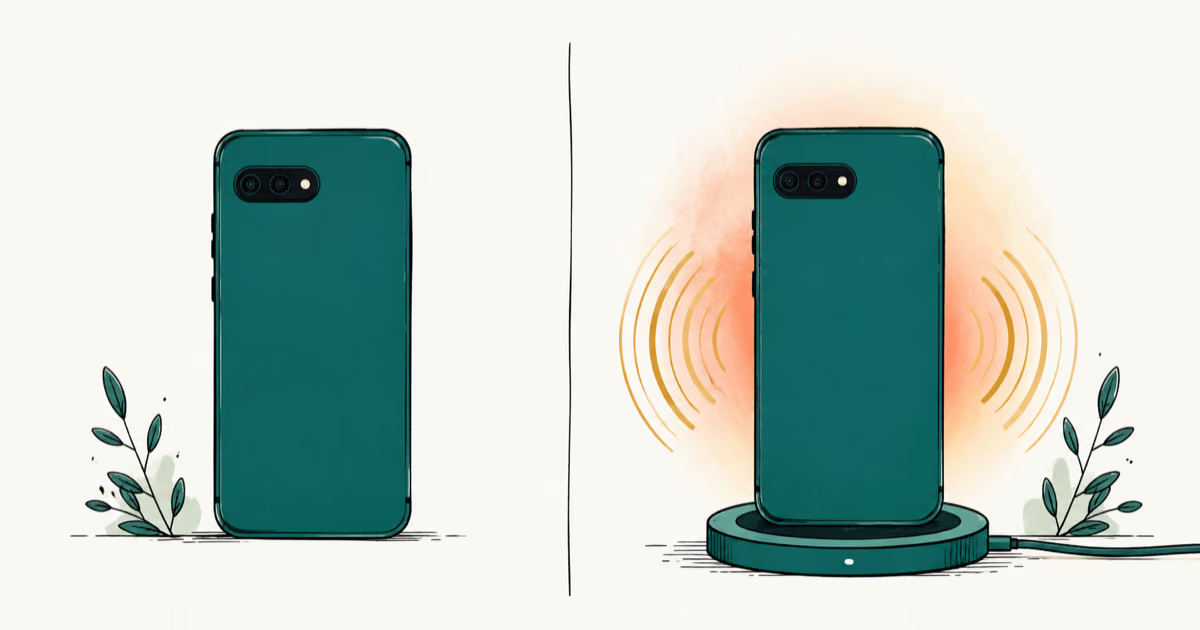
Pixel 11 vs Pixel 10: same screen and camera resolution, new Tensor G6, 25W wireless, and Gemini Intelligence. Here is who should actually upgrade.

Verizon Not Receiving Texts? How to Fix It in 9 Steps
Verizon not receiving texts? Fix it in 9 steps: check Message Blocking in My Verizon, reset network settings, deregister iMessage, and call support.
Pixel Battery Drain: What Google's July Fix Really Covers
Google marked the Pixel idle battery drain bug fixed in July, but only some phones got the patch. Here is who is covered, who is not, and what to try.
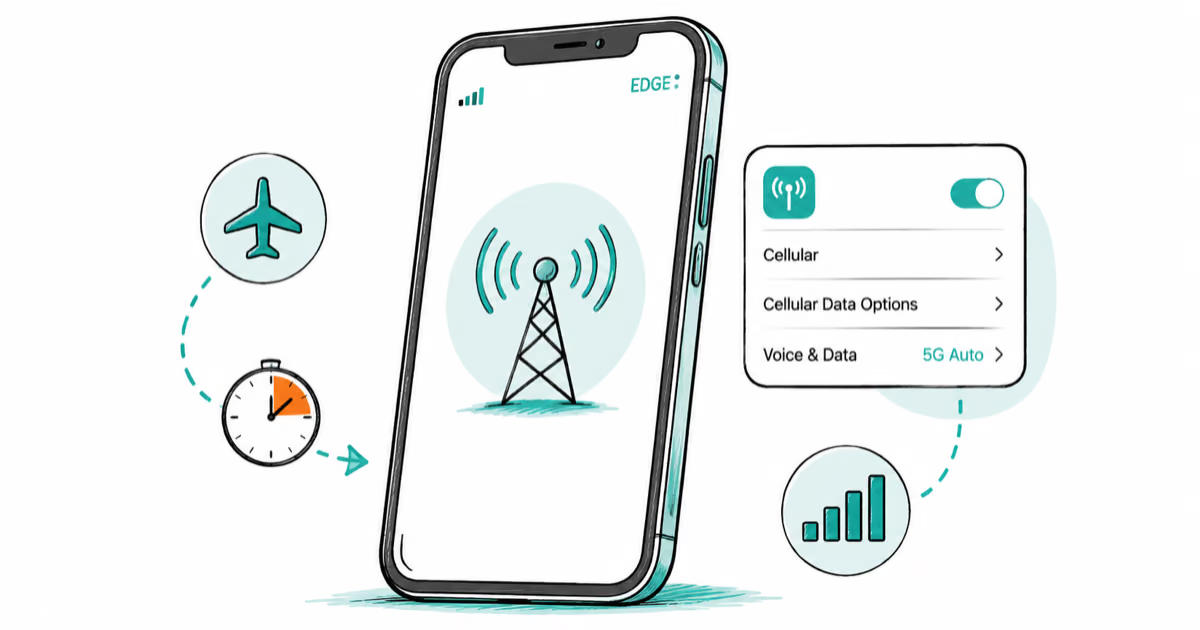
iPhone Stuck on EDGE? How to Get 5G or LTE Back (2026)
iPhone stuck on EDGE with crawling data? Here's why the E icon appears, which settings force 5G or LTE back, and when the problem is your carrier.