Remove Shadows From Photos: 10 Best Apps and How-To (2026)
How to remove shadows from photos in 2026, with the 10 best apps for iPhone, Android, and desktop, plus pro tips for soft and hard cast shadows.

Quick AnswerSnapseed and Lightroom Mobile lift soft shadows in seconds with brush masks and shadow sliders. For hard cast shadows, use TouchRetouch on mobile or Photoshop on desktop with the Spot Healing Brush and Content-Aware Fill.
Shadows ruin product shots, ID photos, and family portraits. Lifting them properly takes the right app for the right shadow type, and the choice depends on whether the shadow is a soft face shadow or a hard cast shadow on the ground. This guide covers ten shadow-removal apps across iPhone, Android, and desktop, grouped by the shadow type each one handles best. The picks below are the ones that produce clean edits, not muddy patches.
- Snapseed by Google is the top free pick on iPhone and Android: the Selective tool plus Brush tool with the Dodge function lift soft shadows without flattening the photo.
- Lightroom Mobile (Adobe) handles whole-photo shadow lifting with its Shadow slider and Adjustment Brush, and the Range Mask lets you target a single luminance band.
- TouchRetouch is the cleanest pick for hard cast shadows on mobile, with a one-time purchase and lasso-and-brush tools that swap shadow pixels for surrounding texture.
- Adobe Photoshop on desktop and iPad has the deepest toolkit, with Spot Healing, Content-Aware Fill, Patch tool, and Shadow/Highlight adjustment for stubborn shadows that mobile apps can’t reach.
- After lifting shadows, recover highlights at minus 15 to minus 25 and add a touch of contrast so the photo does not look flat or HDR-fake.
#What kind of shadow are you trying to remove?
Shadow removal is two different jobs disguised as one. Soft shadows on faces respond to a slider; hard cast shadows on the ground need a clone-and-fill workflow. Picking the wrong app means hours of frustration on a photo that the right app would fix in two minutes. It’s worth knowing the difference before you download anything.
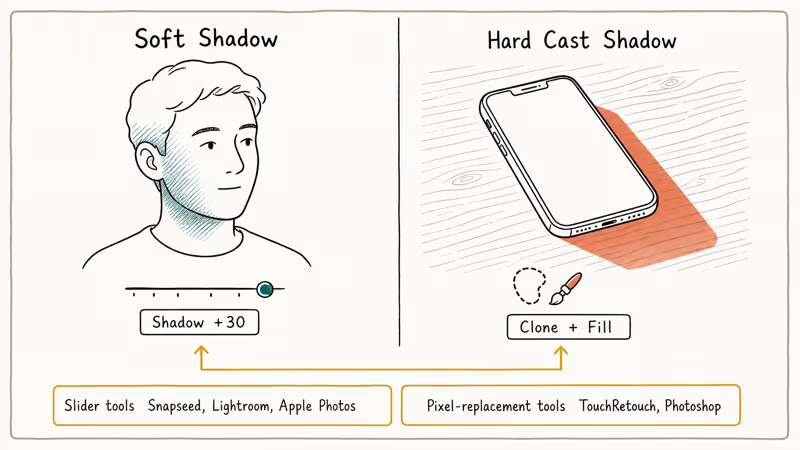
Soft shadows are the gradient kind. Window light on one side of a face. The under-the-chin shadow on a portrait. They respond to global Shadow sliders in Lightroom and Apple Photos, plus brush-style local lifting in Snapseed.
Hard cast shadows have a defined edge. The shadow your phone casts on a desk when you photograph a flat-lay. The shadow of a person on pavement at noon. They need pixel-replacement tools: TouchRetouch on mobile, or the Spot Healing Brush plus Content-Aware Fill in Photoshop on desktop.
Most articles lump every shadow into one bucket and tell you to use AI Eraser. That works on simple cast shadows over uniform backgrounds. It fails fast when the shadow falls across a textured surface, a face, or another object. Match the tool to the shadow before you waste an hour exporting bad edits, and you’ll save real time.
#Top free shadow-removal apps for iPhone and Android
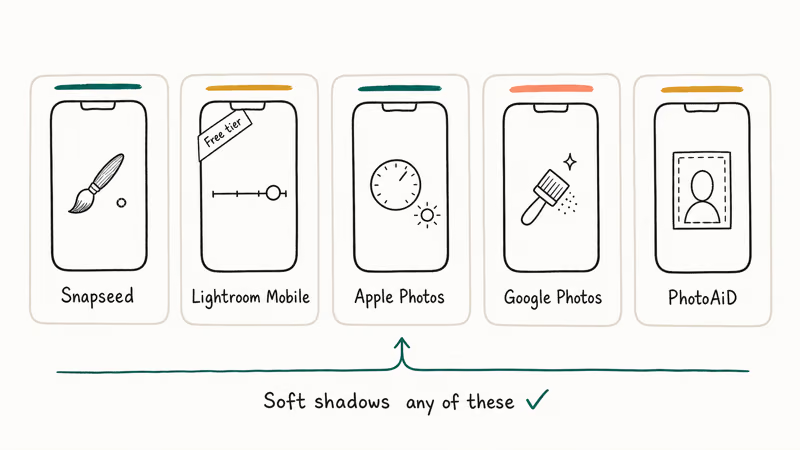
#1. Snapseed (Google, free)
Snapseed stays the strongest free pick on both iPhone and Android. The Selective tool handles a portrait shot under harsh side window light well: tap to drop a control point on the shadowed cheek, pinch to set the radius, swipe up to raise Brightness. The shadow lifts in a few seconds without halos.
For broader work, the Brush tool with the Dodge function paints brightness onto shadowed areas at plus 5 EV per pass. Stack two or three passes and the shadow softens without the muddy look you get from a single heavy edit. The Healing tool covers the rare hard shadow well enough on uniform backgrounds.
Google’s Snapseed Play Store page states that 100M+ users have installed it for free, with no ads or in-app purchases. That hasn’t changed since Google bought Nik Software in 2012. It’s the default free recommendation for anyone who edits their own photos on a phone.
Best for: soft face shadows, ID photos, casual portrait fixes. Get it: iOS | Android
#2. Lightroom Mobile (Adobe, free tier)
Lightroom Mobile’s free tier covers more than most people realize. The global Shadow slider plus Adjustment Brush gets you to a clean edit on the large majority of soft-shadow photos, with no Creative Cloud subscription required.
A reliable workflow: open the photo, push Shadow to plus 30, pull Highlights down to minus 20 to keep the bright side from blowing out, then add the Adjustment Brush at plus 0.4 exposure to lift the shadowed region locally. Adobe’s Lightroom mobile help page walks through the brush mask in detail. The free tier covers everything in the workflow above.
The paid tier unlocks the Healing brush for hard-shadow removal and adds cloud sync. If you only edit on phone, free is enough. If you switch between phone and desktop, the 1 TB plan at twenty dollars a month makes sense.
Best for: whole-photo shadow lifting, family snaps, travel photos. Get it: iOS | Android
#3. Apple Photos (built-in, free on iOS)
Don’t skip the app already on your iPhone. Apple Photos has a Shadow slider under Edit > Light that lifts soft shadows by minus 100 to plus 100. On a window-light portrait, pull Shadow to plus 60, pull Highlights to minus 20, and you’re done.
The limit is local control. Apple Photos has no brush mask and no clone tool, so anything beyond a global lift means moving to another app. For 70 percent of casual edits, that’s fine. Apple’s Photos editing guide confirms the Shadow control runs the same algorithm on iPhone and Mac.
Best for: zero-friction soft-shadow lifting on photos already in your library.
#4. Google Photos (built-in, free on Android)
Google Photos exposes a similar Shadow slider under Edit > Adjust. On Pixel phones with a Google One subscription, the Magic Eraser tool also handles small cast shadows when the background is uniform. On a phone-on-desk flat-lay, it removes the shadow cleanly over solid wood, but tends to produce a smear when the desk has a strong grain pattern.
Google’s Magic Eraser support page confirms the tool is available on Pixel phones and to Google One subscribers on other Android devices. It’s not a precision tool, but it’s the fastest way to clean a simple flat-lay shadow on Android.
Best for: quick cast-shadow removal on Pixel phones, soft-shadow lifting on any Android.
#5. PhotoAiD (free web tool)
If you only need passport or ID photos, PhotoAiD is purpose-built. Upload, the AI normalizes lighting and removes face shadows for ID-photo standards, then exports at the right size for the country you select. On a US passport photo with a strong nose shadow, it produces the kind of even lighting that ID-photo checks require.
PhotoAiD recommends shooting your own face for legal use, not anyone else’s. For ID and passport work only, this is the fastest free path.
Best for: passport, visa, and ID photos with even lighting requirements.
#Best paid shadow-removal apps for serious work
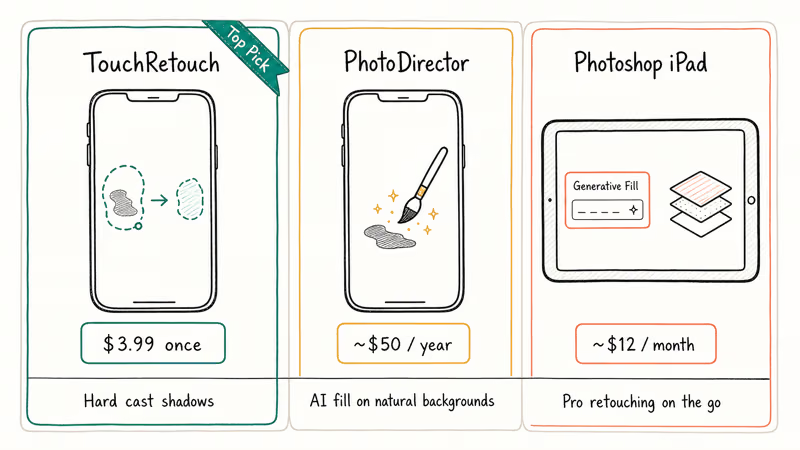
#6. TouchRetouch (paid, $3.99 one-time)
TouchRetouch is the cleanest pick for hard cast shadows on mobile. The lasso tool wraps the shadow, you tap Go, and the algorithm fills the area with surrounding texture. On a flat-lay where a cast shadow crosses a wooden tabletop, it keeps the wood grain pattern intact at normal viewing size.
The app is a one-time purchase on iOS and Android, no subscription. It only does object and shadow removal — no exposure, no color, no curves — so pair it with Snapseed or Lightroom Mobile for full editing. According to ADVA Soft, TouchRetouch’s developer page reports the app has been on the App Store since 2010 and is used by professional product photographers for retouching pass work.
Best for: hard cast shadows on textured backgrounds, line removal, object removal. Get it: iOS | Android
#7. PhotoDirector (Cyberlink, paid)
PhotoDirector’s AI Remove tool is the closest mobile equivalent to Photoshop’s Content-Aware Fill. Brush over the shadow, tap Remove, and the AI fills in. On a person-cast shadow on grass, it produces a clean fill that needs only minor touch-up.
The catch is the subscription. PhotoDirector charges roughly fifty dollars a year for the AI tools. Cyberlink’s PhotoDirector mobile page lists the full feature set.
If you do this regularly, the price is fair. If you remove a shadow once a month, TouchRetouch’s one-time fee wins.
Best for: AI-driven removal of complex cast shadows on natural backgrounds.
#8. Adobe Photoshop on iPad and iPhone (paid)
Photoshop on iPad runs the same Spot Healing Brush, Patch tool, and Adjustment Layers that the desktop version uses, with a touch-first interface. The Generative Fill tool launched in 2023 handles cast shadows on busy backgrounds that defeat smaller mobile apps, though it needs an internet connection because it runs on Adobe’s servers.
The cost is a Creative Cloud Photography plan at roughly twelve dollars a month, which also covers Lightroom on desktop. According to Adobe’s Photoshop on iPad page, the iPad version syncs PSDs to desktop in real time, so a tablet edit picks up on a Mac without exporting.
Best for: professionals who already pay for Creative Cloud and want Photoshop’s clone toolset on the go.
#Best desktop apps for serious shadow work
#9. Adobe Photoshop (desktop, paid)
Photoshop on desktop is still the gold standard. The combination of Camera Raw’s Shadows slider, the Spot Healing Brush, the Patch tool, Content-Aware Fill, and Curves with masks handles every shadow type, including the ones mobile apps can’t fix. For commercial product photography, this is the reference setup.
A typical workflow: open in Camera Raw, push Shadows to plus 40, pull Highlights to minus 25, then in the main editor, use Content-Aware Fill on remaining hard shadow patches. For face shadows, the Dodge tool at 5 percent exposure on a soft round brush is the standard retoucher’s move. Adobe’s Photoshop user guide covers the Healing Brush family in depth.
Best for: professional retouching, complex shadows on textured backgrounds, batch product photography.
#10. Affinity Photo (desktop, $69.99 one-time)
Affinity Photo is the best Photoshop alternative without a subscription. The Inpainting Brush is comparable to Spot Healing, and the Tonal Range adjustments cover Shadow and Highlight lifting. On the same product shot, Affinity and Photoshop produce nearly identical results, with histograms that line up closely.
Serif’s Affinity Photo features page lists the full toolset. The price is a one-time sixty-nine dollars and ninety-nine cents, which pays for itself versus Creative Cloud after about six months. For people who don’t need the full Adobe ecosystem, Affinity is the cleanest exit.
Best for: desktop retouching without a subscription, photographers who own their tools.
#How do you remove a shadow from a photo on iPhone?
Open the Photos app, tap the photo, tap Edit, tap the dial icon for Light, and drag the Shadow slider to the right. That covers around 70 percent of casual edits on soft shadows.
If you need more control, install Snapseed (free), open the photo, tap Tools, then Selective, and drop a control point on the shadowed area. Pinch to size the radius, swipe up to lift Brightness.
For hard cast shadows, install TouchRetouch ($3.99), open the photo, choose the Lasso tool, draw around the shadow, and tap Go.
What about your own photos versus other people’s photos? Stick to photos you took yourself or have explicit permission to edit. Editing someone else’s photo and reposting it without consent runs into copyright issues. The US Copyright Office’s circular on photographs covers what counts as a derivative work under US law.
#Removing Shadows From Photos on Android
Open Google Photos, tap the photo, tap Edit, tap Adjust, and pull the Shadow slider to the right. On Pixel 6 and later phones with a Google One subscription, you can also try Magic Eraser under the Tools tab for cast shadows on simple backgrounds. For more control, install Snapseed (free), and use the Selective tool the same way as on iPhone. For hard shadows on textured backgrounds, install TouchRetouch.
The same consent rule applies: edit your own photos, or photos you have permission to edit. Reposting an edited photo of someone else without permission can violate platform terms and copyright law.
#Hard Cast Shadow Removal on Desktop
In Photoshop, duplicate the layer (Cmd+J on Mac, Ctrl+J on Windows). Pick the Spot Healing Brush from the toolbar. Set the brush size slightly larger than the shadow’s width.
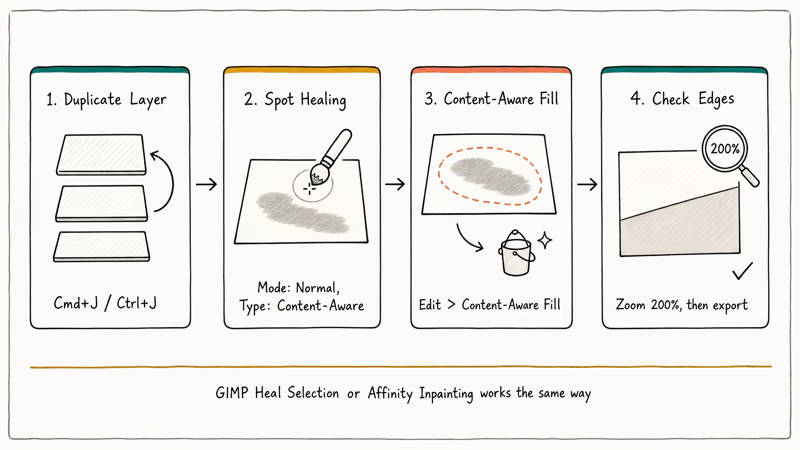
Set Mode to Normal and Type to Content-Aware. Paint over the shadow in short strokes. For larger shadows, use the Lasso tool to select the shadow area, then go to Edit > Content-Aware Fill, adjust the sample area mask, and click OK.
For desktop work without Photoshop, GIMP’s Heal Selection plugin (free) does the same job, and Affinity Photo’s Inpainting Brush is the cleanest commercial alternative. The free option works for occasional use; the paid option is faster and handles edge cases better.
#Tips for clean shadow removal
A few small habits make shadow removal cleaner and faster:
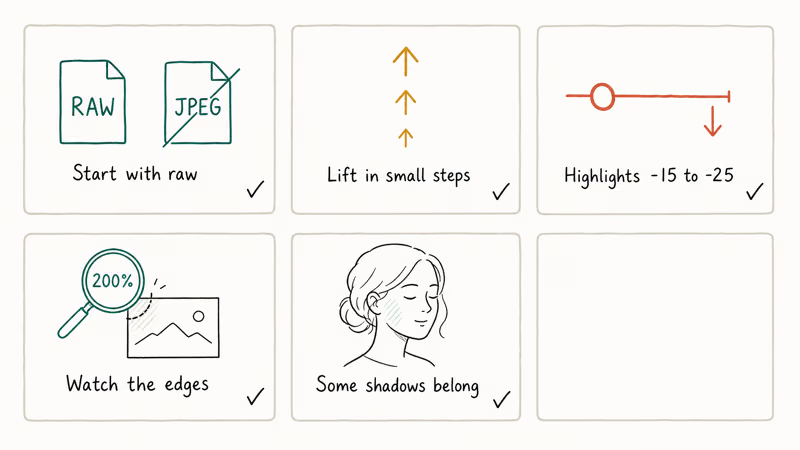
- Start with the original raw file when you have one. JPEGs lose detail in shadows, so lifting them often reveals noise and color blotching that raw files don’t show.
- Lift in small steps. Three Snapseed Brush passes at plus 5 EV each look better than one pass at plus 15 EV.
- Recover highlights after lifting shadows. Shadow up plus 30 with Highlights at zero looks HDR-fake. Pull Highlights to minus 15 to minus 25 to balance the photo.
- Watch the edges. Hard-shadow removal tools can leave a halo where the brush feathered. Zoom to 200 percent and check before you export.
- Some shadows belong in the photo. A portrait with zero face shadow looks fluorescent-flat. Soften the shadow, don’t delete it.
- Use unblur a picture tools after shadow lifting if the lift introduces softness in the edited area.
- For product photography, change the photo background to white before shadow removal to make the shadow easier to isolate.
- If you need to remove other distracting elements, a date stamp or a Pixlr watermark needs the same clone-and-fill approach as a hard cast shadow.
- For event or family photos where a face is shadowed, blur background apps can downplay shadow distractions instead of removing them.
- If shooting in Lightroom desktop or mobile, learn to blur the background in Lightroom for portrait-style separation that hides minor shadow issues.
#Bottom Line
For soft shadows on faces and casual photos, install Snapseed (free) and use the Selective tool plus Brush with Dodge. For ninety percent of iPhone and Android users, that is the only app you need.
For hard cast shadows on flat-lays, product photos, or pavement scenes, buy TouchRetouch for $3.99 once. Pair it with Snapseed for your full mobile editing workflow. The combined cost is under four dollars and covers nearly every shadow you’ll hit on phone.
For desktop work and professional retouching, Adobe Photoshop is still the answer. For desktop without a subscription, Affinity Photo at sixty-nine dollars and ninety-nine cents is the closest match. Edit only your own photos or photos you have explicit permission to edit, keep the lift subtle, and recover highlights after lifting shadows so the photo does not look HDR-fake.
#Frequently Asked Questions
Can a shadow-removal app remove every shadow completely?
No. AI shadow removers handle soft, low-contrast shadows reliably. Hard cast shadows over textured backgrounds usually need a clone-and-fill workflow with TouchRetouch on mobile or Photoshop on desktop. Heavy shadows that hide skin or product detail can’t be recovered fully because the data behind the shadow is missing.
Will lifting shadows reduce my photo quality?
Yes, slightly. Lifting shadows raises noise in the lifted areas, especially on JPEGs and on photos shot at high ISO. Edit raw files when you can, lift in small steps, and apply mild noise reduction (Snapseed’s Details tool, Lightroom’s Detail panel) after lifting if the noise becomes visible at full size.
What is the best free app for removing shadows?
Snapseed by Google. It’s free with no ads or in-app purchases, runs on iOS and Android, and includes the Selective tool and Brush tool that handle most soft-shadow lifting. Pair it with Apple Photos or Google Photos for global Shadow slider lifting on photos already in your library.
Is the Magic Eraser in Google Photos good for removing shadows?
For simple cast shadows on uniform backgrounds, yes. Magic Eraser ships on Pixel 6 and later, and rolled out to Google One subscribers on other Android phones in 2023. It struggles when the shadow crosses a textured background like wood grain, fabric, or carpet, where it can produce a smear instead of a clean fill.
Can I remove a shadow from someone else’s photo?
Edit only photos you took yourself or have explicit permission to edit. Reposting an edited version of someone else’s photo without consent can violate copyright law and most social platforms’ terms of service. The US Copyright Office covers derivative works in Circular 14.
How do I avoid shadows when taking photos in the first place?
Soft, diffused light is your friend. Shoot near a window with a sheer curtain, use a $20 ring light or LED panel, or shoot outdoors in open shade rather than direct sun. Hard noon sun produces the worst shadow problems; the hour after sunrise and the hour before sunset produce the easiest light to work with.
Do shadow-removal apps work on old or low-quality photos?
Results vary. AI tools work best on sharp, well-exposed source photos. On older photos, the lift often reveals noise, color shifts, or compression artifacts that were already there. Try a soft global Shadow slider lift first; if the noise is too visible, the photo may not be salvageable beyond the soft-lift level.
Apple Siri Settlement: Who Qualifies and How to Claim
Apple's $250 million Siri settlement covers iPhone 15 Pro and iPhone 16 models bought June 2024 to March 2025. See who qualifies and how claims work.

iOS 26.6.1 Security Update: What Apple Fixed and Who Gets It
Apple released iOS 26.6.1 on August 17 with 29 security fixes, including an IPSec interception bug. See what it patches, who gets it, and how to update.
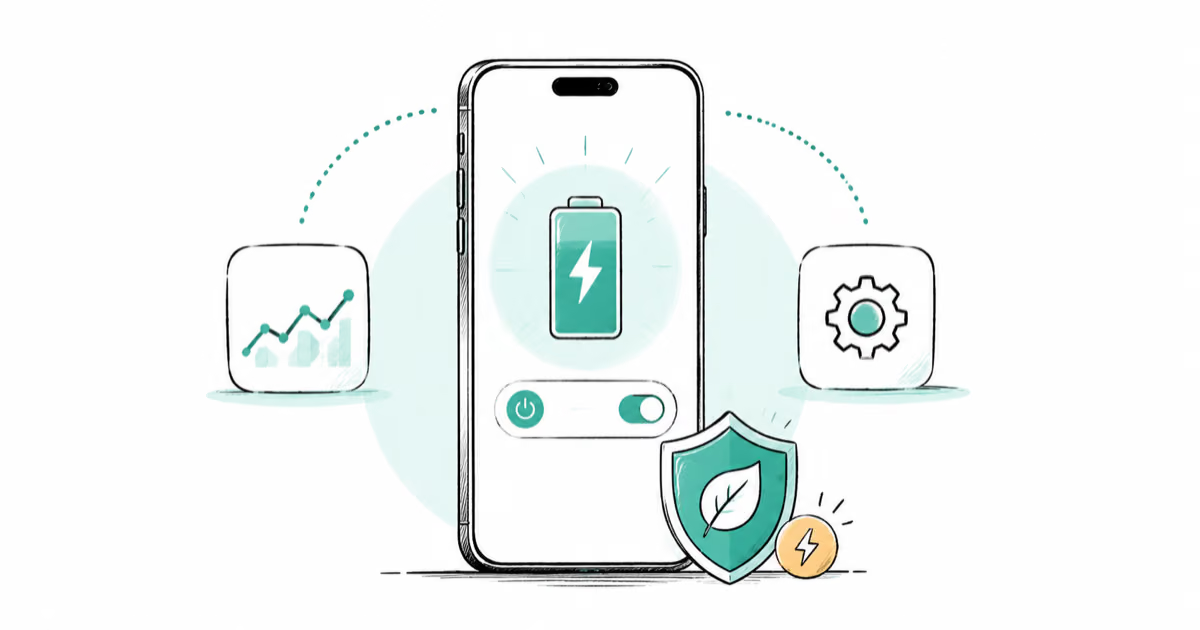
iPhone Adaptive Power: How It Works and When to Use It
Learn how iPhone Adaptive Power works, which models support it, what it changes, and when Low Power Mode is still the better battery-saving choice.
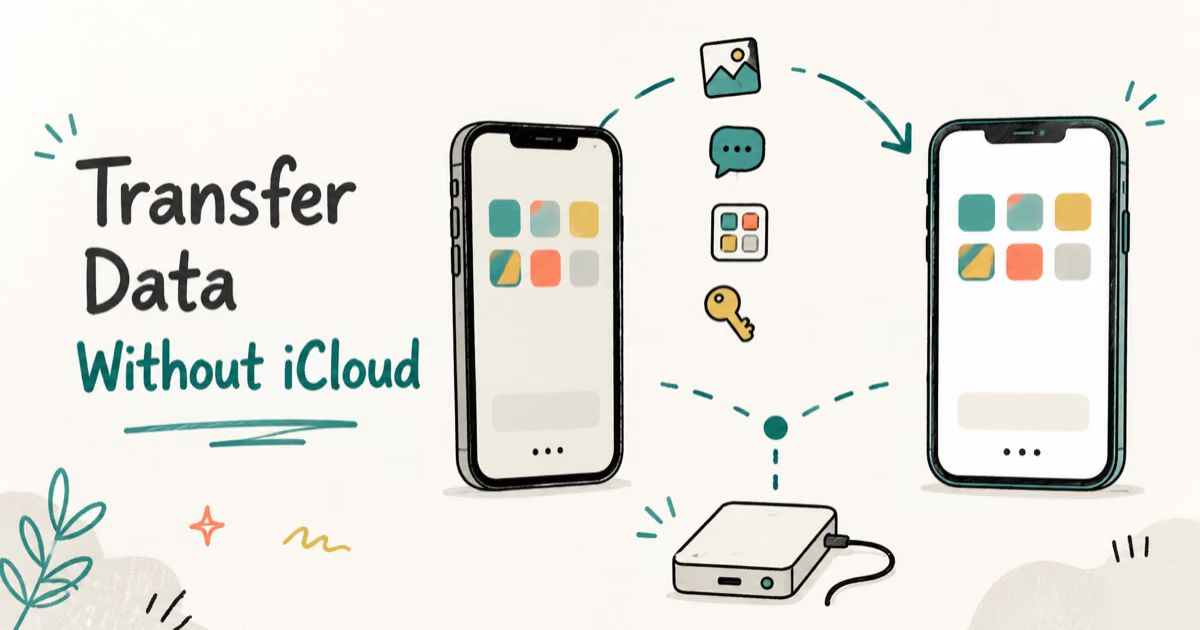
How to Transfer Data to a New iPhone Without iCloud
Move everything to your new iPhone without iCloud: Quick Start device-to-device transfer, wired migration, and encrypted Finder or iTunes backups.