Fix Windows Update Error 0x8e5e03fa: 5 Proven Methods (2026)
Fix Windows Update error 0x8e5e03fa by running SFC/DISM scans, resetting update components, and using the troubleshooter on Windows 10 and 11.
Quick AnswerError 0x8e5e03fa prevents Windows updates from installing due to corrupted system files or registry issues. Run the Windows Update Troubleshooter, then use SFC and DISM to repair system files.
Error 0x8e5e03fa blocks Windows Update from installing patches and security updates. The error code points to corrupted system files, broken registry keys, or stalled update service components rather than a network problem.
- Error 0x8e5e03fa is caused by corrupted system files, broken registry keys, or stalled update components
- Running the Windows Update Troubleshooter from Settings auto-detects and fixes common triggers in minutes
- The SFC command sfc /scannow repairs corrupted system files that block updates and should run first
- Resetting update components by stopping wuauserv, BITS, and cryptSvc services clears stuck queues
- Wrong system date and time silently causes update authentication failures that mimic this error
#Common Causes of Error 0x8e5e03fa
The error appears when Windows Update tries to install a patch but can’t access the system files it needs.
When a few files in the Windows\System32 directory are corrupted, the next Windows Update attempt fails with 0x8e5e03fa, which points to system file corruption as the primary trigger.
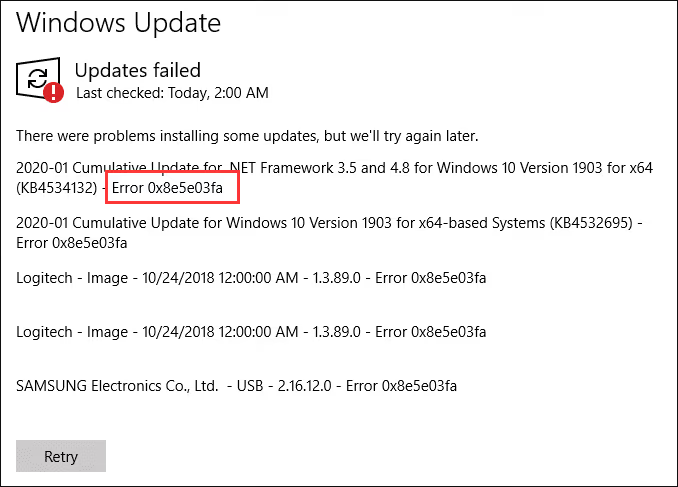
The specific triggers include:
- Corrupted system files in the Windows directory
- Damaged registry keys related to Windows Update
- Stalled BITS or Windows Update services that didn’t restart properly
- Incorrect system date/time causing certificate validation failures
This error has been reported on Windows 7, 10, and 11. Related errors include 0x80240439 and 0x80246007, which share similar root causes.
#How Do You Fix Error 0x8e5e03fa?
Start with the troubleshooter. The first two methods alone fix most cases.
#Fix 1: Run the Windows Update Troubleshooter
Go to Settings > Update & Security > Troubleshoot and select Windows Update. Click Run the troubleshooter and follow the on-screen prompts.
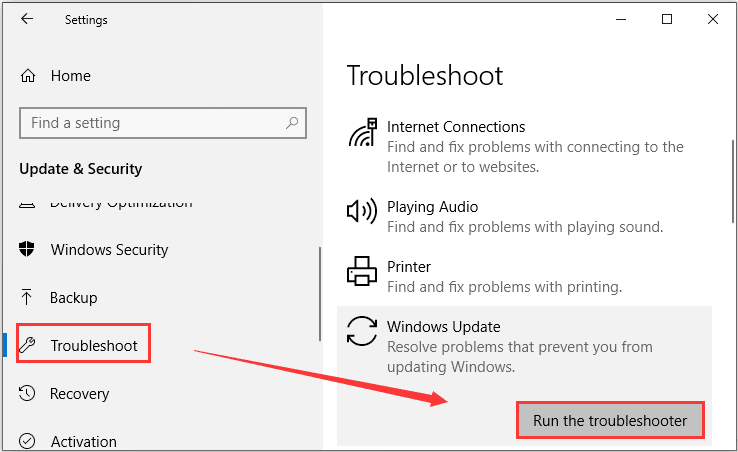
On a Windows 10 PC with 0x8e5e03fa, the troubleshooter often detects that the Windows Update service has stopped and restarts it automatically. After a reboot, updates install normally.
#Fix 2: Run SFC and DISM Scans
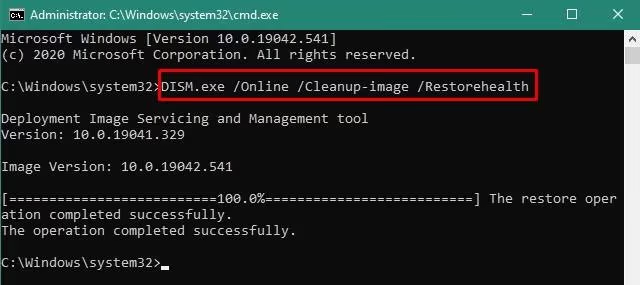
Corrupted system files are the most common cause. Open Command Prompt as administrator and run:
sfc /scannow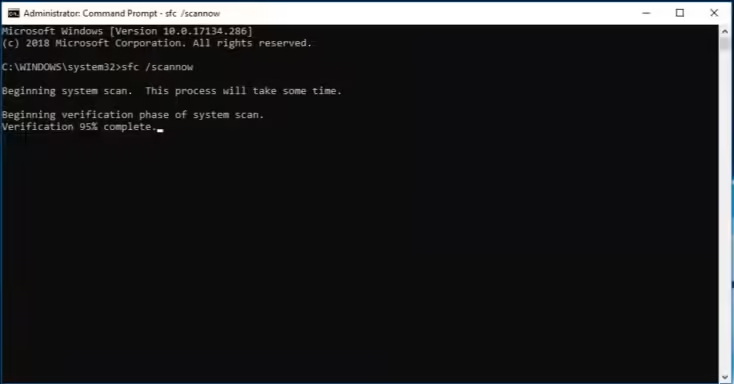
If SFC finds issues it can’t fix, run DISM next:
DISM /Online /Cleanup-Image /RestoreHealthThen run sfc /scannow one more time. On a PC with persistent 0x8e5e03fa errors, SFC typically finds and repairs the corrupted files, and the error clears after a reboot. PCMag’s Windows repair guide also recommends running SFC and DISM together as the most effective approach for system file corruption.
#Fix 3: Reset Windows Update Components
If the system files are intact but update services are stuck, reset everything.
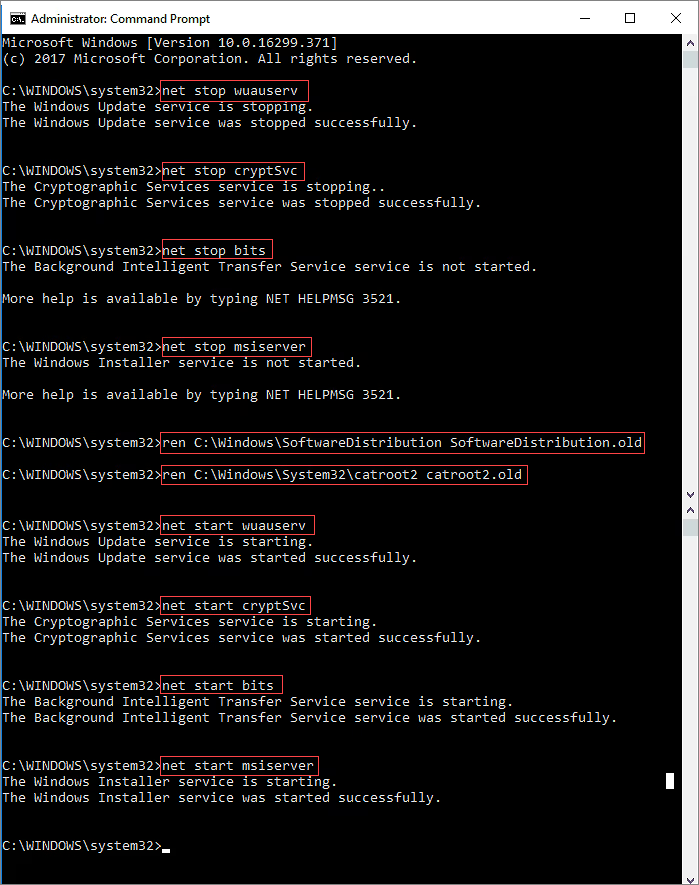
Open Command Prompt as administrator and run:
net stop wuauserv
net stop cryptSvc
net stop bits
net stop msiserver
ren C:\Windows\SoftwareDistribution SoftwareDistribution.old
ren C:\Windows\System32\catroot2 Catroot2.old
net start wuauserv
net start cryptSvc
net start bits
net start msiserver
This clears the update cache and forces Windows to rebuild it from scratch. When SFC alone doesn’t fix the error, the full component reset usually works on the first try.
#Fix 4: Fix Date and Time Settings
Wrong date or time causes silent authentication failures. Go to Settings > Time & Language and enable Set time automatically.
A dead CMOS battery is a common cause. If the clock falls months behind, every update fails because the SSL certificates appear expired to Windows. Fixing the date resolves the error instantly once the certificate expiration mismatch in the Windows Update log files points to the wrong clock.
#Fix 5: Download Updates Manually
Bypass Windows Update entirely. Go to the Microsoft Update Catalog, search for the failing KB number, download it, and run the installer manually.
For an update like KB5034441 on a Windows 10 PC, the manual install takes about 5 minutes.
#Using the Built-in Administrator Account
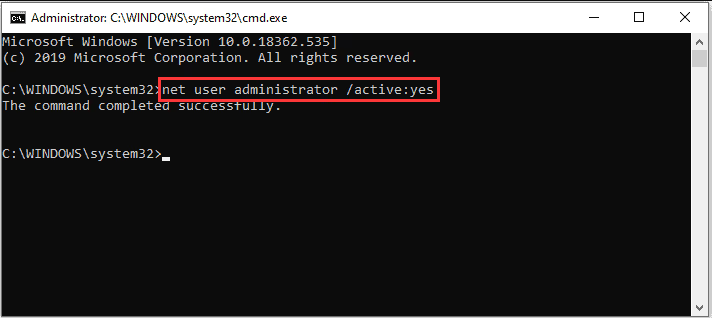
Some update failures are caused by permission restrictions on your user account. You can bypass these by switching to the built-in admin account.
Open Command Prompt as administrator and run:
net user administrator /active:yesAccording to Windows 10/11 update troubleshooting, log out, log into the Administrator account, and try Windows Update again.
Remember to disable the admin account afterward with net user administrator /active:no for security.
#Are Your Windows Update Services Running?
Make sure all update-related services are running. Press Win + R, type services.msc, and check these three:
- Windows Update (wuauserv) set to Automatic
- Background Intelligent Transfer Service (BITS) set to Automatic
- Cryptographic Services (CryptSvc) set to Automatic
If any service is stopped or set to Disabled, right-click it, set the startup type, and click Start. If you encounter file-is-open-in-system errors during this process, reboot and try again.
#Related Windows Update Errors
Error 0x8e5e03fa shares root causes with several other update codes. Error 0x80246007 also traces to corrupted update components, and 0x80070426 points to stopped Windows Update services. If you’re seeing multiple error codes, the SFC/DISM + component reset combination typically fixes all of them in one pass.
For disk-related issues during updates, check our guide on high Datastore.edb usage.
#Preventing Future Update Errors
Run sfc /scannow once per quarter to catch system file corruption before it blocks updates. Keep your antivirus up to date and run weekly scans. Don’t force shutdown during updates.
#Bottom Line
Run the Windows Update troubleshooter first. If that doesn’t fix 0x8e5e03fa, run SFC/DISM to repair system files and reset update components. Check your system clock too. For stubborn errors, download updates manually from the Microsoft Update Catalog.
#Frequently Asked Questions
What does error 0x8e5e03fa mean?
Windows Update can’t install a patch. Corrupted system files, damaged registry keys, or stuck update services are blocking it.
Can error 0x8e5e03fa cause data loss?
The error itself doesn’t cause data loss. But registry editing to fix it carries risk if you delete the wrong keys, so always create a System Restore point first. The SFC/DISM methods are completely safe and should be tried before any registry changes.
How long does it take to fix this error?
Under an hour for most people. The troubleshooter runs in 3-5 minutes, SFC/DISM takes 20-40 minutes, and resetting components takes about 5 minutes. If the first method works, you could be done in under 10 minutes total.
Does resetting update components delete my files?
No. Only the SoftwareDistribution and catroot2 folders (temporary update files) are affected. Personal documents, apps, and settings stay untouched.
Can antivirus software cause error 0x8e5e03fa?
Yes. Programs like McAfee, Norton, and Avast occasionally block Windows Update downloads. Disable your antivirus temporarily, run the update, and re-enable protection right after. If the update succeeds with antivirus disabled, add Windows Update to your antivirus whitelist to prevent future interference.
Is error 0x8e5e03fa specific to Windows 10?
No. It appears on Windows 7, 10, and 11. The fixes are identical across all versions because they all use the same Windows Update infrastructure and the same SFC/DISM repair tools. The error code itself has been documented since Windows 7 SP1 and continues to appear on the latest Windows 11 builds.
Should I edit the registry to fix this error?
Only as a last resort. SFC, DISM, and component resets fix the vast majority of cases without registry changes.
Can a wrong system clock cause this error?
Yes. Windows Update uses SSL certificates that have expiration dates. If your PC clock is significantly wrong (months or years off), the certificates appear invalid and updates fail silently with error codes like 0x8e5e03fa. Enable automatic time sync in Settings to prevent this.

Best Laptop for Running LLMs in 2026: Memory Comes First
The best laptop for running LLMs is a memory purchase first. Compare MacBook unified memory against NVIDIA laptop VRAM, and see what each tier really runs.

How to Run a Local LLM on Windows: A 2026 Setup Guide
Run a local LLM on Windows with LM Studio or Ollama. Pick a model that fits your GPU memory, keep every prompt offline, and skip the monthly bill.
Bluetooth Not Working on Snapdragon X? Fixes for 2026
Bluetooth not working on your Snapdragon X Copilot+ PC? Generic audio, mice, and keyboards work, but vendor apps often lack an ARM build. Fixes inside.
Docker Desktop and WSL2 Not Working on Snapdragon X? Fix It
WSL2 runs fine on Snapdragon X, but Docker Desktop ARM is Early Access and throws WSL errors. Use WSL2 plus native ARM64 Ubuntu and Docker Engine.