MTG Werewolf Commander Guide: Build Winning Tribal Decks
Build a focused MTG Werewolf Commander deck with Tovolar, day/night cycle control, tribal staples, mana planning, protection, and budget tips.
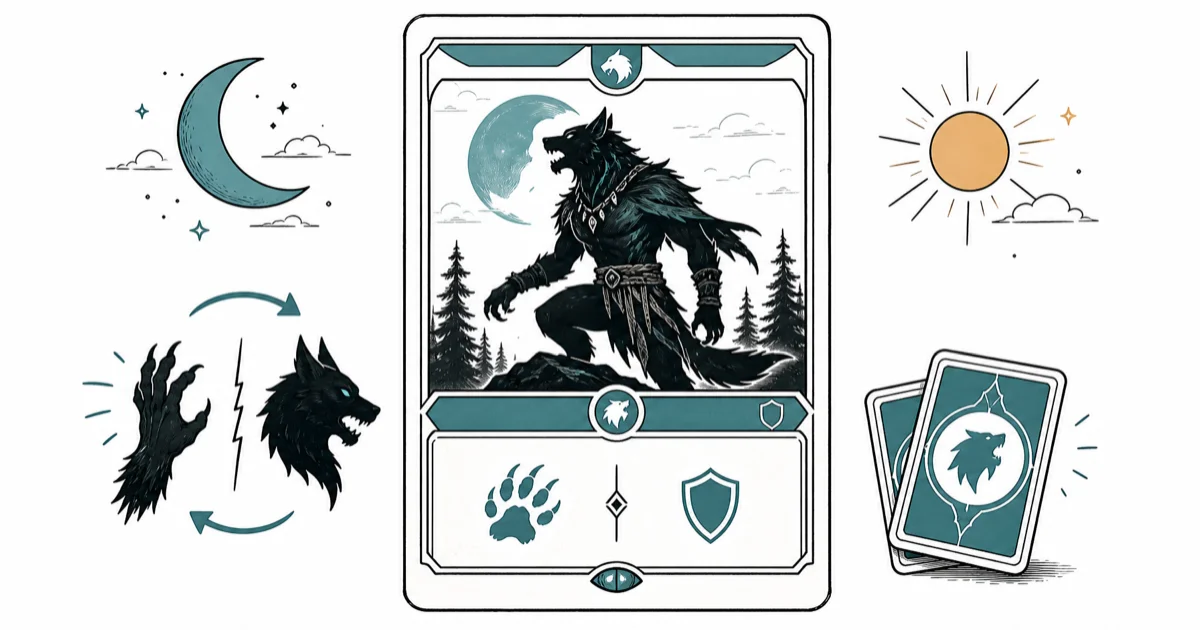
Quick AnswerTovolar, Dire Overlord leads the strongest Werewolf tribal deck. Focus on 30-35 creatures with daybound/nightbound, control the day/night cycle with instant-speed spells, and include transformation enablers like Moonmist for consistent tribal pressure.
Building a competitive Werewolf tribal Commander deck requires mastering the unique daybound/nightbound mechanics that define this aggressive strategy.
Transformation timing makes all the difference in multiplayer games.
- Tovolar, Dire Overlord provides the strongest tribal support with built-in card draw and transformation triggers
- Day/night cycle control determines your creatures’ power level when night equals stronger werewolves
- Pack tactics work best with 30-35 creatures split between werewolves, wolves, and tribal support
- Moonmist acts as your instant-speed transformation tool for surprise combat tricks
- The Celestus functions as both mana source and day/night control, making it essential tribal tech
#Why Werewolf Tribal Works in Commander
Werewolf tribal delivers explosive turns through the day/night transformation mechanic.
Werewolves provide their strongest tempo swings when pilots manage the cycle correctly. The transformation system creates instant board upgrades.
Night triggers transform your entire army instantly — human villagers become 4/4 werewolves, and existing werewolves gain powerful abilities like trample and additional power.
According to Wizards of the Coast’s design articles, the daybound/nightbound system specifically rewards patient play and instant-speed interaction.
This makes the mechanic perfect for Commander’s multiplayer politics and timing games.
#Which Commander Works Best for Werewolf Tribal?
Tovolar, Dire Overlord provides the strongest tribal support among all werewolf commanders.
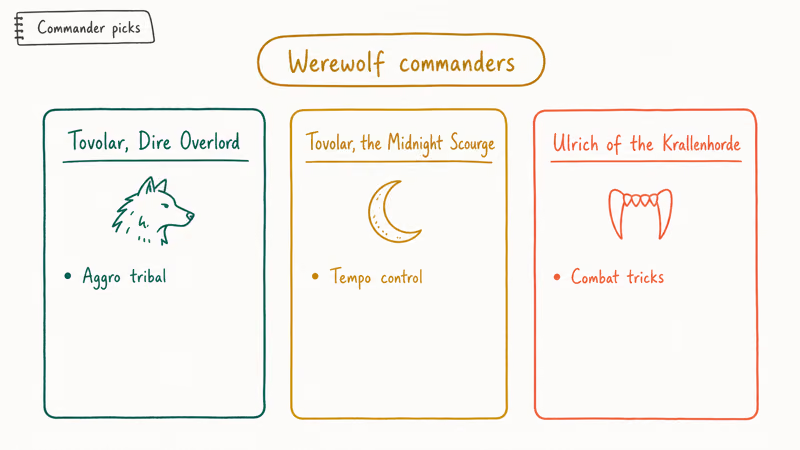
Front Side Benefits: Draws cards when werewolves deal combat damage.
The card advantage werewolf tribal desperately needs comes from this consistent draw engine.
Transformed Power: As Tovolar, the Midnight Scourge, he gives all werewolves +1/+1 and trample across your entire board.
This stat boost can convert close combat situations into decisive victories by creating overwhelming pressure.
Cycle Control: Tovolar forces night when you control three or more wolves/werewolves, giving you agency over transformations.
This ability breaks the dependency on opponents’ spell-casting patterns that cripples other werewolf strategies completely.
Alternative commanders like Ulrich of the Krallenhorde lack consistent tribal support needed for competitive multiplayer pods, where tribal synergies matter more than individual card power levels. Their individual power can’t match Tovolar’s comprehensive tribal enhancement package that includes card draw, anthems, and cycle control all in one legendary creature.
#Essential Cards for Werewolf Tribal
Core Werewolf Creatures provide immediate battlefield impact across all game stages:
- Huntmaster of the Fells creates immediate board presence and life gain when it transforms or enters
- Mayor of Avabruck provides anthem effects for all humans and wolves on both sides
- Tovolar’s Huntmaster delivers direct werewolf tribal support with pack tactics and keyword abilities
- Arlinn, the Pack’s Hope generates wolf tokens while supporting the tribal theme through her loyalty abilities
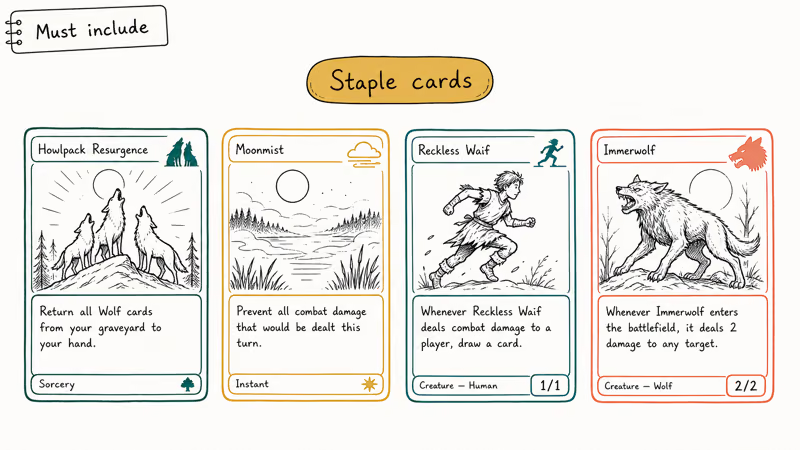
Critical Transformation Tools make the difference between mediocre and explosive games:
- Moonmist enables instant-speed transformations for surprise combat tricks when opponents don’t expect it
- The Celestus provides both mana acceleration and day/night cycle control through its activated abilities
- Immerwolf prevents werewolves from reverting to human form, maintaining your board state permanently once transformed
Builds missing these core pieces lose important functionality that budget alternatives can’t fully replace. Each piece provides a distinct role, whether it’s the instant-speed nature of Moonmist, the dual utility of The Celestus, or the permanent lock that Immerwolf provides against unwanted transformations.
According to MTG community coverage, Vanquisher’s Banner and Herald’s Horn consistently appear in top-performing lists. Both artifacts deliver card advantage crucial for maintaining pressure through multiple turns.
For broader tribal strategies that complement werewolf builds, check our analysis of MTG’s best tribal commanders.
#How Should You Build Your Manabase?
Werewolf tribal functions almost exclusively in Gruul (red-green) colors. Splashing white or black usually adds mana complications without enough payoff.
Run 36-37 lands minimum for consistent performance. Werewolf decks depend on early creature deployment.
Priority Utility Lands:
- Kessig Wolf Run converts any creature into a potential game-ender
- Stomping Ground and Cragcrown Pathway provide untapped color fixing for curve consistency
- Command Tower offers reliable fixing without entering tapped
Budget Alternatives work perfectly fine for most casual Commander groups: Evolving Wilds and Terramorphic Expanse provide adequate fixing without breaking your budget.
#Mastering Day/Night Cycle Control
Day/night transitions based on spell-casting patterns. It becomes day when any player casts two or more spells during their turn. It becomes night when a player casts zero spells during their turn.
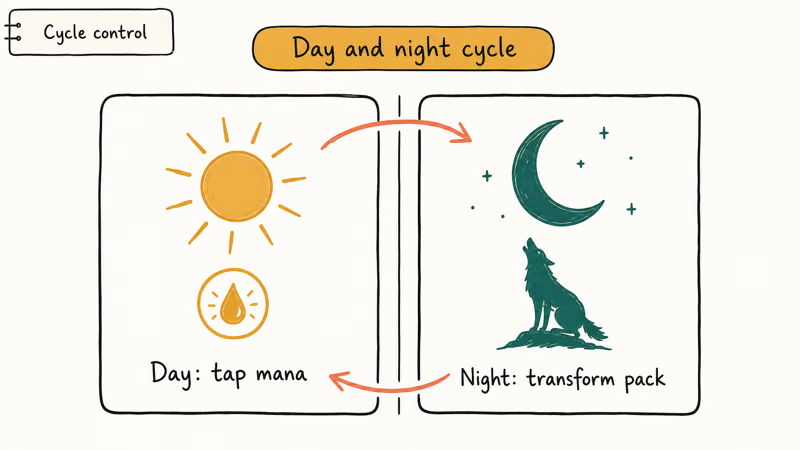
Control Techniques:
- Pass turns without casting spells to force night transitions
- Use instant-speed spells during opponents’ turns to avoid triggering day
- Leverage Tovolar’s night-forcing ability when controlling three or more wolves/werewolves
Decks that ignore cycle management lose much of the tribe’s pressure. Successful werewolf pilots dedicate significant mental resources to spell timing and sequence planning.
Instant-Speed Arsenal:
- Beast Within provides removal without advancing the day/night cycle
- Heroic Intervention protects your board state during opponents’ turns
- Lightning Bolt offers cheap instant-speed damage with flexible timing
Strategic timing principles extend beyond werewolves. Our MTG control deck strategies guide covers instant-speed play patterns that improve any deck.
#Optimal Werewolf Game Plans
Opening Turns (1-3) focus on board development rather than transformation timing: Deploy mana acceleration and early werewolves in human form without worrying about flips.
Don’t focus on transformations yet — board development takes priority over cycle manipulation during these crucial setup turns.
Power Window (4-6) represents werewolf tribal’s strongest phase where everything comes together: Force favorable day/night cycles, then apply pressure to the weakest opponent with transformed creatures.
Most games end during this window when your pack hits its stride.
Late Game (7+) becomes much more challenging for tribal strategies: Werewolves struggle against established board positions and complex game states.
Werewolf decks are strongest when games end before long control engines take over, so plan for early-to-mid game victories.
Combat Mathematics example: Transformed Huntmaster of the Fells deals 4 damage while creating a 2/2 wolf token for immediate board development.
With Tovolar’s anthem effect active, that becomes 5 damage plus a 3/3 token representing enough pressure to demand immediate responses from opponents.
For advanced combat timing that applies to all tribal decks, see our MTG combat optimization guide.
#Common Werewolf Piloting Errors
Transformation Obsession: New pilots focus excessively on flipping creatures instead of applying board pressure. Sometimes attacking with human-form creatures delivers better results than waiting for perfect transformation timing.
Board Overcommitment: Werewolf tribal remains vulnerable to mass removal effects. Successful pilots keep 1-2 threats in hand for post-wipe rebuilding rather than deploying everything immediately.
Cycle Neglect: Players who actively manage day/night transitions gain more control than those who allow natural progression. According to CNET’s gaming strategy coverage, proper timing makes the difference between success and failure in midrange strategies like this.
Tribal fundamentals that strengthen any Commander strategy appear in our comprehensive equipment optimization guide.
#Advanced Werewolf Optimization
Creature Ratios require careful balance: Run 20-25 actual werewolf creatures, supported by 8-10 wolves and tribal enablers like Beast Whisperer or other card advantage engines. Decks below 20 werewolves can lack critical mass for tribal synergies, while builds exceeding 25 werewolf creatures can struggle to include sufficient support spells, ramp, and interaction.
Protection Suite prevents total blowouts: Include 3-4 protection spells like Heroic Intervention, Wrap in Vigor, and Snakeskin Veil to defend against mass removal. Protection is essential for werewolf tribal success in multiplayer environments where board wipes are common.
Budget Considerations: Competitive werewolf lists cost $150-250, with land bases consuming most of the budget. Budget versions using basic lands maintain the core strategy for under $100.
Power Level Assessment: Werewolf tribal peaks at mid-power levels (6-7 on a 10-point scale) due to transformation mechanic limitations.
Our MTG lands optimization guide provides advanced manabase strategies that elevate any tribal deck’s consistency.
#Bottom Line
Start with Tovolar as your commander because he delivers the card advantage and tribal support that makes werewolves competitive in multiplayer. Focus your creature base on werewolves with powerful night-side abilities, include 8-10 instant-speed spells for cycle control, and practice timing until day/night management becomes instinctive.
Werewolf tribal rewards patience and precise sequencing over raw power.
#Frequently Asked Questions
How many werewolves should I run in my deck?
Run 20-25 actual werewolf creatures, supplemented by 8-10 wolves and other tribal support creatures. Fewer than 20 werewolves can lack critical mass for tribal effects, while more than 25 can crowd out support spells.
Can I play werewolves in other Commander color combinations?
Gruul provides the vast majority of playable werewolves, making other color combinations significantly weaker. Stick to two colors unless you’re building a casual deck.
What’s the best way to protect my werewolves from board wipes?
Include 3-4 protection spells like Heroic Intervention, Wrap in Vigor, and Snakeskin Veil. Werewolf decks that survive the first board wipe have a much better chance to rebuild pressure.
Should I include non-werewolf tribal support cards?
Yes, but be selective. Cards like Vanquisher’s Banner and Herald’s Horn provide tribal benefits worth including. Avoid generic tribal cards that don’t specifically benefit wolves or werewolves, as they dilute your deck’s focus.
How important is The Celestus for werewolf tribal?
Essential for competitive builds. The Celestus provides both mana acceleration and day/night control. The ability to manipulate the cycle on demand gives werewolf pilots significantly more agency over their game plan.
What’s the biggest weakness of werewolf tribal?
Werewolf tribal struggles against instant-speed interaction and board wipes more than other aggressive strategies. The transformation mechanic also creates natural inconsistency when you draw transformation enablers without creatures, or vice versa.
Can werewolves compete in high-power Commander pods?
Werewolf tribal caps out at mid-power level due to the inherent limitations of the transformation mechanic. However, most Commander pods operate at casual to mid-power range, making werewolves perfectly viable for typical gameplay.
How much should I budget for a competitive werewolf deck?
A focused werewolf list costs $150-250, with most of the budget going toward lands and key tribal pieces like Huntmaster of the Fells. Budget versions running basic lands can be built for under $100 while maintaining the core strategy.

Fortnite Stuck on the Loading Screen? Fix It in 2026
Fortnite stuck on the loading screen? Check server status, fix the Windows N Media Pack and DirectX 11 on PC, clear the console cache, and verify files.

Minecraft Keeps Crashing? Java and Bedrock Fixes (2026)
Minecraft keeps crashing on startup or mid-game? Update your GPU driver, remove mods on Java, and reinstall Gaming Services on Bedrock. Fixes for both.

Pokemon GO Not Loading? Fix the Loading Screen 2026
Pokemon GO not loading or stuck on the Pokeball? Check server status, fix automatic date and time, grant location permission, clear the cache, and update.
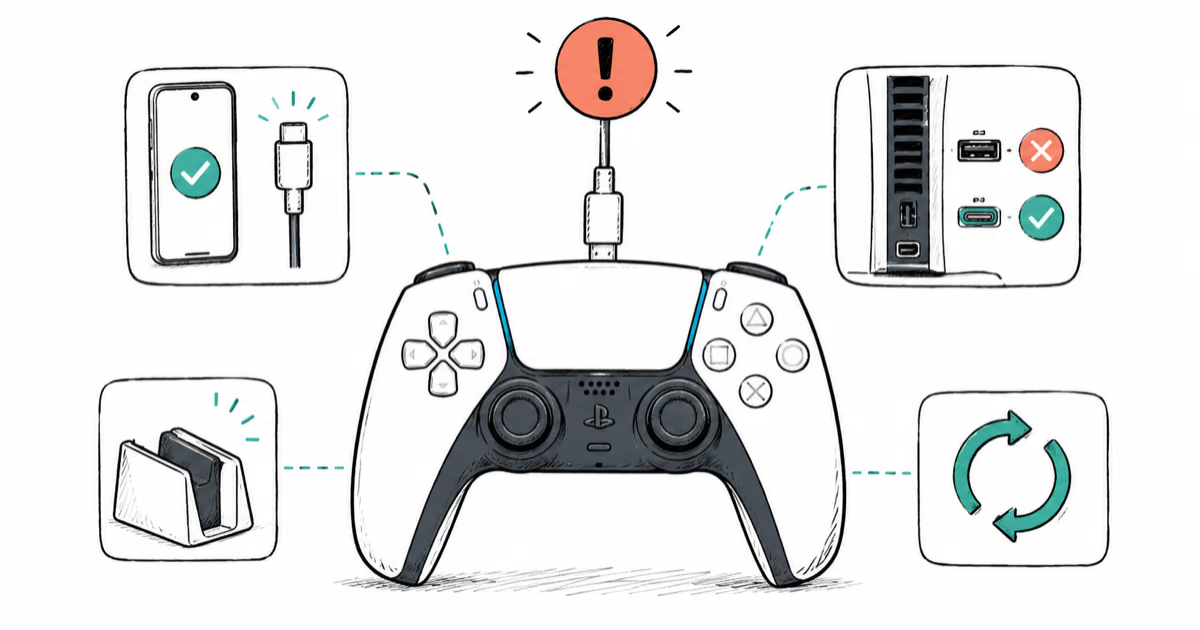
PS5 Controller Not Charging? 9 Fixes That Work (2026)
DualSense not charging? Swap the cable, use a rear port in Rest Mode, clean the USB-C port, and check power settings. 9 fixes for a dead PS5 controller.