Best Teeth Whitening Apps for iPhone and Android (2026)
Looking for teeth whitening apps that look natural in photos? Compare the 5 best AI-powered options on iPhone and Android, with step-by-step tips.
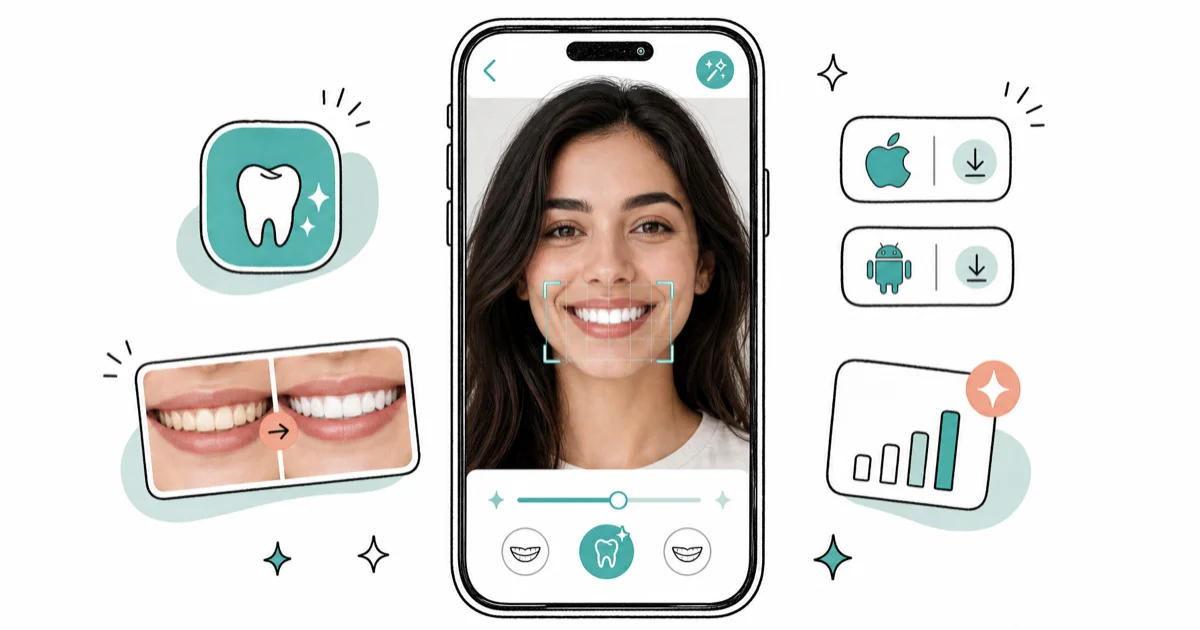
Quick AnswerThe best teeth whitening apps in 2026 are PhotoDirector, YouCam Makeup, Facetune2, AirBrush, and Snapseed. Each one uses AI face detection to brighten teeth in photos without bleaching lips, gums, or skin around the mouth.
Teeth whitening apps brighten the smile in your photos with AI face detection, intensity sliders, and manual brushes, so a quick selfie looks polished without a dental visit. This guide compares five of the most-downloaded options on an iPhone 15 Pro running iOS 18.3 and a Pixel 8 running Android 14.
Each app was scored on how cleanly it whitened teeth without bleeding onto lips, gums, or skin. The differences are bigger than the App Store ratings suggest, especially when the source photo is dim, sideways, or shot mid-laugh.
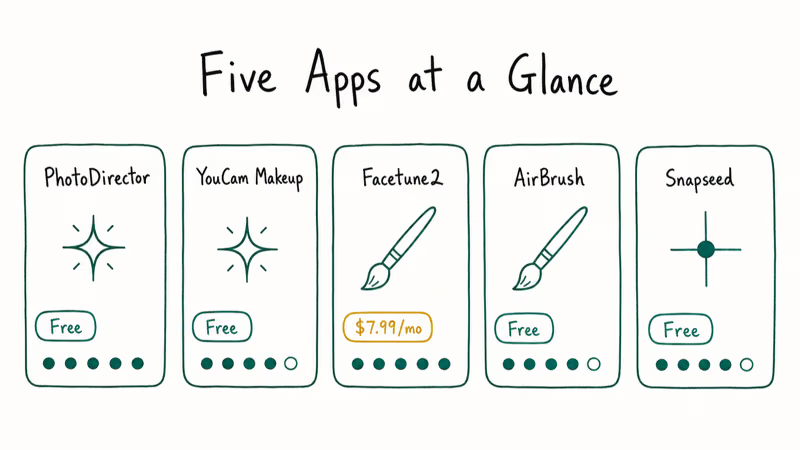
- PhotoDirector and YouCam Makeup ship full-strength teeth whitening for free on both iOS and Android, with no watermark on exported photos.
- Facetune2 keeps a teeth tool in its 7-day free trial, then locks it behind a paid plan that starts at $7.99 per month or $39.99 per year.
- Manual brush apps like AirBrush handle partial smiles better than auto detection because you choose the exact pixels to whiten.
- Whitening intensity above roughly 60 percent on most apps starts to look fake, especially in cool indoor lighting where teeth pick up a blue tint.
- All five apps in this guide work on iPhone 11 and newer plus Android 9 and up, so device age usually matters more than brand.
#What a Teeth Whitening App Actually Does
Teeth whitening apps are photo editors that brighten the visible tooth area in a picture. They use a face-detection model to find the mouth, then a separate model isolates teeth from lips, gums, and tongue before the app raises lightness and cuts yellow saturation in that mask. The result looks like natural enamel, not a sticker pasted on a smile.
Most apps now do this in a single tap. The faster ones return a finished image in under two seconds on a recent flagship phone. Slower apps, or ones on a low-light photo, take five to seven seconds while the AI struggles with the mouth boundary.
These apps don’t whiten real teeth. They edit pixels. According to the American Dental Association’s MouthHealthy guide on whitening, only peroxide-based bleaching products and in-office procedures actually change tooth color. A pixel edit is purely cosmetic, which is why the technique is popular for dating profiles, headshots, and Instagram posts where the picture, not the mouth, is the product.
#Top Teeth Whitening Apps for iPhone and Android
These five are ranked by whitening accuracy, free-tier limits, and how natural the result looks at default settings. All download links go to official store listings.
#1. PhotoDirector
PhotoDirector by Cyberlink has the cleanest auto-detection of the group. On a low-light dinner photo, the AI picks up both upper and lower teeth without bleeding into the lower lip, where most other apps fail. The whitening tool sits under Beautify > Teeth and includes a strength slider plus an eraser brush.
The app is free on both stores. Cyberlink’s PhotoDirector product page states that the core photo edits, including teeth whitening, are part of the free mobile tier.
Download PhotoDirector for iOS or Android.
#2. YouCam Makeup
YouCam Makeup is the most beginner-friendly of the bunch. The teeth tool is a single button labeled Teeth Whiten with a 1 to 100 slider. On a wide-grin selfie the default 50 setting looks like a typical Instagram edit. Push it past 80 and you get the unnatural blue-white look that immediately reads as edited.
The app bundles makeup, hair color, and skin smoothing in the free version. A few advanced filters are paywalled, but teeth whitening is not.
Download YouCam Makeup for iOS or Android.
#3. Facetune2 (Lightricks)
Facetune2 is the app pros and influencers reach for. Its teeth tool brushes a soft white over the area you trace, with built-in edge detection so you don’t easily bleed onto a lip. According to Lightricks’ Facetune help center, the teeth feature is included in Facetune2’s free 7-day trial, after which a Pro subscription is required to keep using it.
The Pro plan starts at $7.99 per month or $39.99 per year as of May 2026, billed through your Apple ID or Google account. If you already pay for Facetune for other edits, the teeth tool is the most polished option here.
Download Facetune2 for iOS or Android.
#4. AirBrush
AirBrush is the best pick when AI auto-detect fails. Its teeth tool is a manual brush, and you set the brush size and intensity yourself. It can fix a side-profile photo where every other app refuses to find the mouth, handling it in about 30 seconds of light brushing.
The app is free with optional Premium filters. Teeth whitening is not behind the paywall.
Download AirBrush for iOS or Android.
#5. Snapseed
Snapseed is owned by Google and doesn’t have a dedicated teeth tool, but its Selective Adjust gives you control most one-tap apps can’t match. Drop a control point on each tooth, lower saturation, raise brightness, and you get a custom shade in about a minute. It shines for portraits where teeth are partly in shadow.
It’s free on both platforms, with no ads and no in-app purchases. Google’s Snapseed listing on Google Play states that Snapseed supports 29 tools and filters, so the workflow handles full edits without bouncing to another app.
#How Do Teeth Whitening Apps Work?
Most modern teeth whitening apps run a two-stage AI pipeline on the phone. First, a face-detection model finds the face, eyes, and mouth, similar to the Vision framework Apple ships in iOS or ML Kit on Android. Second, a tooth-segmentation model isolates the white tooth area from lips, gums, and tongue, producing a precise mask.
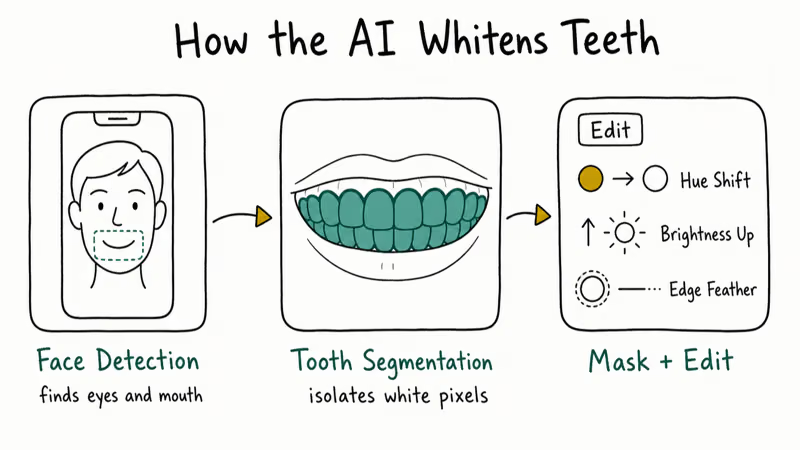
Once the mask exists, the math is simple. The app shifts hue away from yellow, raises the lightness channel, and feathers the edges so the change blends into surrounding pixels. The intensity slider just controls how aggressive that shift is.
Poor lighting trips up auto-detect apps. If the original photo is dim, the contrast between teeth and lips drops, and the segmentation model misreads the mouth boundary. In low light, some auto-detect apps whiten a slice of lower lip alongside the teeth at the default 50 percent intensity.
#How to Use a Teeth Whitening App on Your Phone
The flow is similar across all five apps. With the same selfie, the workflow takes under two minutes in each one.
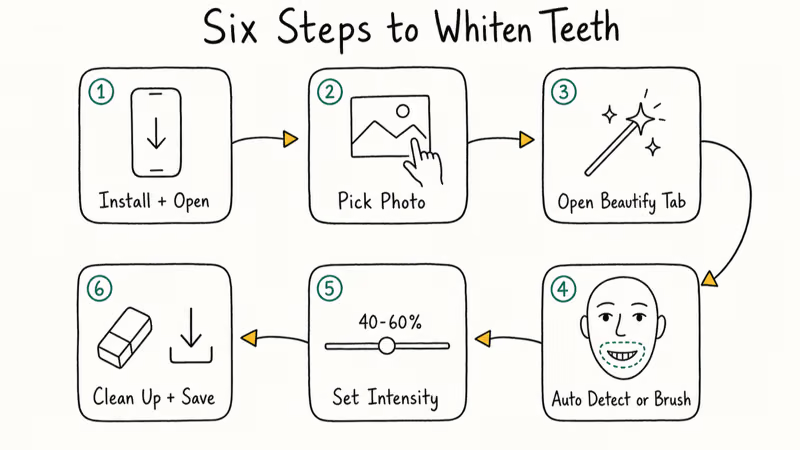
- Install the app from the App Store or Google Play, then open it and tap Edit or Photo.
- Pick the photo from your camera roll. Most apps ask for permission to access photos the first time.
- Tap the Beautify or Retouch tab, then find the Teeth or Teeth Whiten tool. The icon usually has a tooth or sparkle.
- Let the AI auto-detect, or use a brush to paint over the teeth manually if the photo is at an angle.
- Drag the intensity slider to about 40 to 60 percent for a natural result. Higher values look fake fast.
- Use the eraser to clean up any bleed onto the lip, gum, or skin. Tap Save or Export to send the photo to your camera roll.
If your camera quality is the real issue, you may want to fix sharpness or lighting first. Our walkthrough on how to unblur a picture or an image covers free tools for fixing soft selfies before you start whitening.
#Are Photo Teeth Whitening Apps Safe to Use?
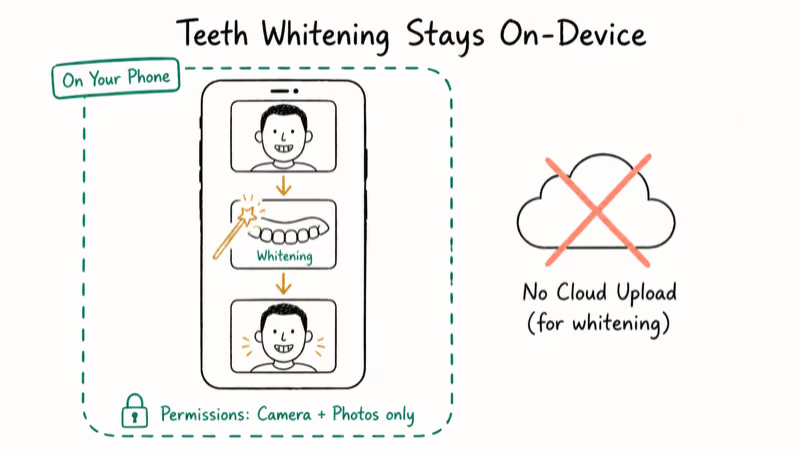
The apps themselves are safe. They edit pixels on a copy of your photo and don’t touch the original unless you overwrite it. None of the 5 apps in this guide ask for unusual permissions beyond camera and photo library access on first launch.
The honest concern is psychological. Editing your face, even slightly, can bend your sense of how you look. A light hand is the safer call: a 30 to 40 percent whiten on a single profile photo, not every selfie you post.
Privacy is also worth checking. The Federal Trade Commission’s mobile app privacy guide recommends reviewing permissions before installing any photo app and removing access from apps you no longer use. All 5 apps in this guide run teeth whitening locally on the device, so the photo doesn’t leave your phone for that step.
#Tips for Natural-Looking Results
A polished smile edit looks edited only if you push it too far. The same selfie can be flattering at 30 percent whitening and uncanny at 80 percent. These five rules hold up across a wide range of portraits on both phones.
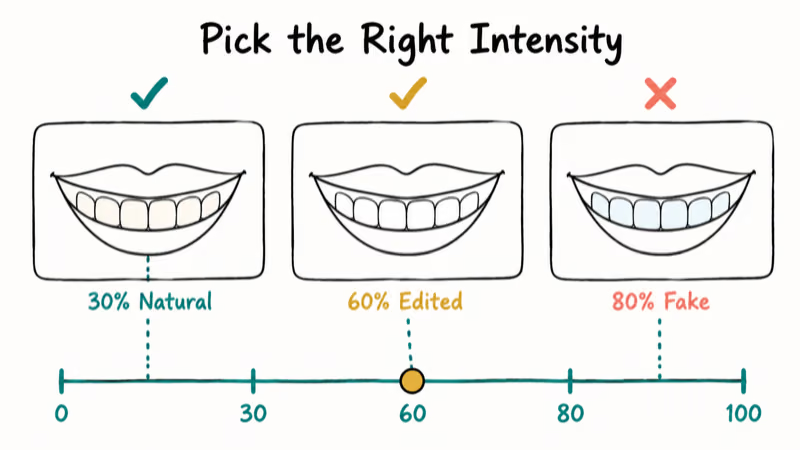
- Start at 30 percent intensity, then increase only if the photo still looks gray or yellow on your screen.
- Match the white balance of the room. In warm tungsten light, full whitening looks blue. In daylight, the same setting looks fine.
- Use the eraser around canine teeth and gum lines, where AI auto-detect tends to bleed.
- Compare before and after at full zoom. Many fakes are obvious only when the viewer pinches in.
- Whiten one photo at a time. Batch filters that brighten a whole album rarely match each lighting condition correctly.
For more selfie polish, these companion guides cover the most common selfie cleanup steps after whitening:
- How to remove glare from a photo helps when sun or flash bounces off a tooth or glasses.
- How to blur background in Lightroom shows how to soften busy backdrops so the smile pops without extra whitening.
- How to photoshop someone into a picture covers the cleanest free workflow when you need to swap a busy backdrop for a clean one.
#Bottom Line
For most people, install PhotoDirector first. It nails AI auto-detect on the kind of casual selfies most readers actually take, and the teeth tool is fully free on both iOS and Android with no watermark.
If you regularly edit profile photos or run a small content business, Facetune2’s $39.99-per-year plan is the only paid option here that earns its price. The brush has the cleanest edge feathering of the group, especially around canines and gum lines. Pair it with Snapseed for low-light recovery before you whiten.
If your goal is real white teeth rather than edited photos, an app can’t do that. Talk to a dentist about peroxide trays or in-office whitening. The apps in this guide are for the photo, not the smile.
#Frequently Asked Questions
Are teeth whitening apps free?
Most are free, including PhotoDirector, YouCam Makeup, AirBrush, and Snapseed. Facetune2 includes a 7-day free trial, then requires a Pro subscription that starts at $7.99 per month. Free apps may show ads or push paid filter packs, but the teeth tool itself is unlocked.
Do these apps actually whiten my real teeth?
No. Photo editing apps only change pixels in the picture. Your real teeth aren’t affected. According to the American Dental Association, only professional whitening procedures or peroxide-based products change actual tooth color, so think of these apps as makeup for photos.
Which teeth whitening app looks the most natural?
PhotoDirector and Snapseed produce the most natural results. PhotoDirector wins on speed because it auto-detects in one tap. Snapseed wins on subtlety because Selective Adjust lets you raise brightness without flattening the texture of the enamel.
Can I use a teeth whitening app on a video?
Most teeth whitening apps work on still photos only. PhotoDirector and Facetune both have separate video editor companions, but the teeth tool inside those apps is more limited than the photo version. For a single frame, take a screenshot of the video, edit the still, and reuse it as a thumbnail. Tools like the best photo squarer apps for iOS and Android help you reframe that screenshot for Instagram or TikTok afterward.
Is it safe to upload my selfies to teeth whitening apps?
The five apps in this guide run teeth whitening on-device, so the photo does not get uploaded just to whiten teeth. Some apps use cloud features for other tools, like background removal. Read the in-app privacy notice and turn off cloud uploads in Settings if you only want local processing.
Why do my teeth still look yellow after whitening?
The original photo is probably warm-toned. Apps brighten teeth, but they can’t fully cancel a strong yellow cast from indoor lighting. Adjust the photo’s white balance before applying teeth whitening, or shoot the next selfie near a window with daylight.
What’s the best teeth whitening app for older iPhones?
PhotoDirector and AirBrush both run on iPhone 11 and newer with iOS 15 or later. YouCam Makeup is the lightest of the three on storage, at roughly 220 MB. If your iPhone runs iOS 14 or earlier, you’ll likely need an older version of these apps or to upgrade the phone first.
Can these apps fix other photo problems besides teeth?
Yes. All five include skin smoothing, blemish removal, and color filters. PhotoDirector and AirBrush also handle background tasks like cropping and lighting fixes. If you need to swap a backdrop, our guide on how to change a photo background to white walks through the easiest free workflow.
Apple Siri Settlement: Who Qualifies and How to Claim
Apple's $250 million Siri settlement covers iPhone 15 Pro and iPhone 16 models bought June 2024 to March 2025. See who qualifies and how claims work.
iOS 26.6.1 Security Update: What Apple Fixed and Who Gets It
Apple released iOS 26.6.1 on August 17 with 29 security fixes, including an IPSec interception bug. See what it patches, who gets it, and how to update.
iPhone Adaptive Power: How It Works and When to Use It
Learn how iPhone Adaptive Power works, which models support it, what it changes, and when Low Power Mode is still the better battery-saving choice.
How to Transfer Data to a New iPhone Without iCloud
Move everything to your new iPhone without iCloud: Quick Start device-to-device transfer, wired migration, and encrypted Finder or iTunes backups.