How to Fix Sony Vegas MOV File Import Errors (2026)
Fix Sony Vegas MOV import errors by converting the clip to MPEG-2 or WMV with UniConverter, or installing a free codec pack on Windows 10 and 11.
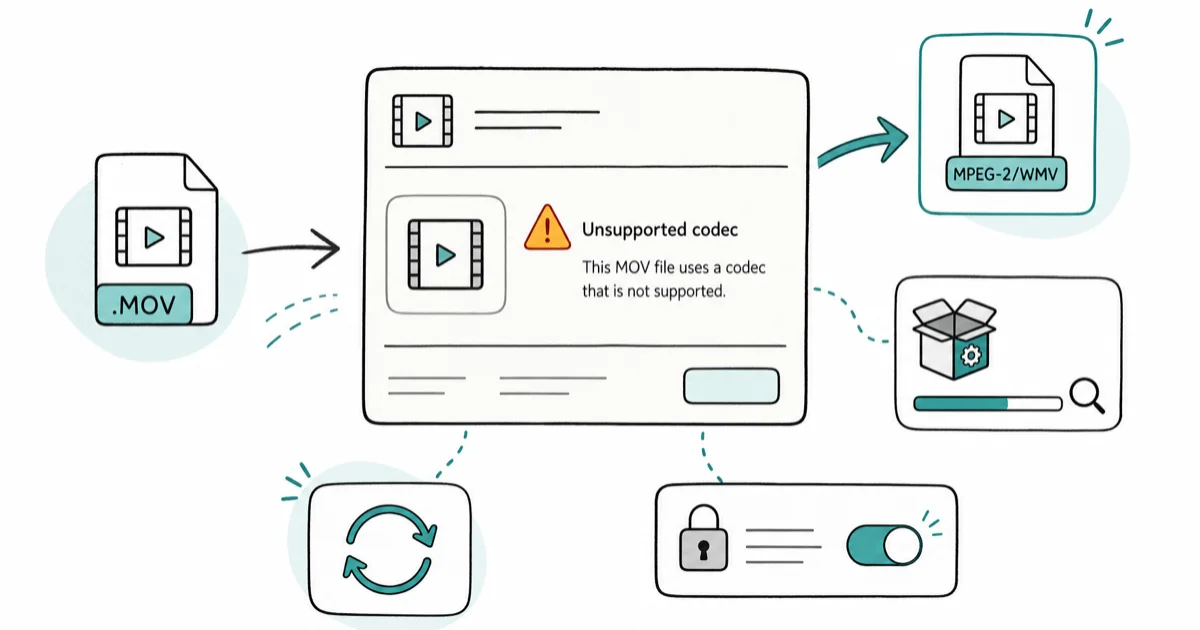
Quick AnswerSony Vegas often refuses MOV files because of unsupported codecs inside the container, not the .mov extension itself. Convert the clip to MPEG-2 or WMV with UniConverter, or install a codec pack like K-Lite, then re-import it into Vegas.
Sony Vegas MOV import errors usually aren’t about the .mov extension at all, they come from the codec hidden inside the container. This trips up Vegas Pro across Windows 10 and 11, with footage from iPhones, Canon DSLRs, and downloaded screen recordings. The fix is almost always to re-encode the clip to MPEG-2 or WMV, or to install a codec pack so Vegas can decode the original file directly.
- MOV is a container, not a codec, so Vegas refuses it when the inside codec (DivX, HEVC, ProRes) isn’t on its decoder list, even when the extension reads .mov.
- Converting the clip to MPEG-2 or WMV before import works across Vegas versions, including Vegas Pro 10 through 21.
- The Vegas/Premiere (MPEG-2) preset inside UniConverter applies the right bit rate and color settings without any manual codec tweaking.
- Installing K-Lite Codec Pack on Windows 10 or 11 sometimes lets Vegas open the original MOV with no conversion at all.
- Updating Vegas Pro to the latest patch from MAGIX often closes codec gaps that older builds shipped with.
#Why Does Sony Vegas Refuse to Import Your MOV Files?
MOV is a wrapper, not a single video format. According to Apple’s QuickTime support hub, a .mov file can hold H.264, ProRes, HEVC, MJPEG, the QuickTime animation codec, or older DivX video, and Vegas Pro only decodes a subset of those internally. That mismatch is the root cause of most “incompatible format” errors, and it’s also why two MOV files with the same extension can behave very differently when you drop them on the timeline.
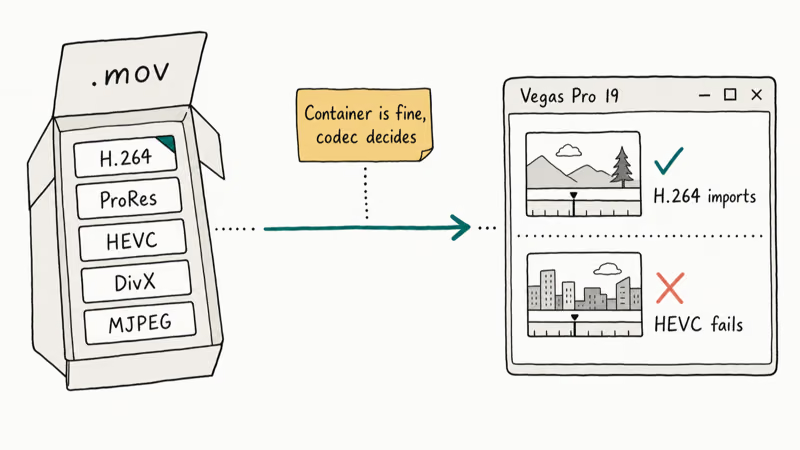
Two minutes of checking usually tells you which codec you’re stuck with.
The pattern is consistent across clips. A Canon DSLR H.264 MOV imports quickly. An iPhone HEVC MOV often fails silently. A downloaded DivX-wrapped MOV can freeze the import dialog before throwing a “format not supported” message.
Older Vegas builds also lag behind the modern codec landscape. Microsoft’s codecs FAQ states that HEVC and AV1 rely on platform-level decoders inside Windows 10 and 11, and Vegas inherits those system limits whether you like it or not. If you’re on Vegas Pro 12 or earlier, even MP4-wrapped HEVC tends to fail.
Drag the MOV into VLC first as a quick sanity check.
If VLC plays the file cleanly, the codec is mainstream and a Vegas patch alone may be enough to fix import. If VLC needs an extra plugin, plan on conversion or a codec pack instead. The container vs. codec distinction also explains why error messages feel inconsistent across Vegas builds: some MOV files throw “unsupported format,” others crash on render, and a few import audio-only depending on which sub-component Vegas couldn’t parse.
#How Do You Convert MOV to a Vegas-Friendly Format?
Conversion is the highest-success-rate fix. The goal is to re-encode the video stream into MPEG-2 (Vegas/Premiere preset) or WMV, both of which the VEGAS Pro reference page on Wikipedia lists as natively supported across every modern build of the editor.
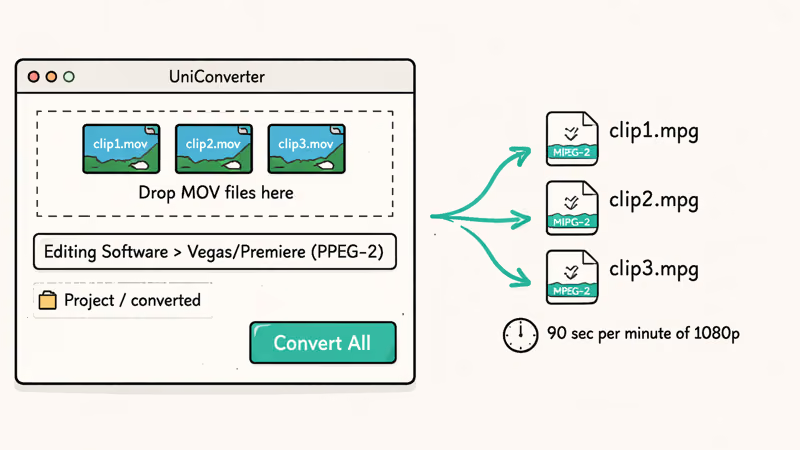
Wondershare UniConverter is a strong pick for this job.
Some links on this page are affiliate links, which means fone.tips may earn a commission at no extra cost to you.
It exposes a one-click “Vegas/Premiere (MPEG-2)” target, supports batch processing, and keeps the source resolution and frame rate by default. You can queue a batch of MOV clips at once instead of re-loading individual files, and the MPEG-2 output drops onto the timeline without a codec prompt.
#Step-by-step conversion with UniConverter
1. Drop the MOV files onto the UniConverter window. The app accepts drag-and-drop or the Add Files button, and it handles large batches of clips at once on a typical Windows 11 laptop.
2. Click the format dropdown next to any clip. Choose Editing Software, then Vegas/Premiere (MPEG-2). The same preset works for Vegas Pro 10 through 21 and Adobe Premiere Pro CC and later.
3. Pick an output folder. The default writes to Documents, which clutters fast. Point it at a project-specific folder so converted clips land beside the Vegas project file.
4. Hit Convert All. On a mid-range laptop, a 4-minute 1080p MOV typically re-encodes in a minute or two. UniConverter reports per-file progress in the side panel.
5. Drop the new MPEG-2 files into Vegas. Import is instant, with no codec warning.
If you also see QuickTime Player can’t open MOV errors when previewing the originals, the underlying codec issue is the same, so converting once fixes both apps in one pass.
#What if you can’t install third-party software?
HandBrake works as a free fallback for locked-down or audited Windows installs. It exports MP4 with H.264 by default, which Vegas Pro 13 and later import cleanly. HandBrake’s “Production Standard” preset is a good fit for editing source because it produces a higher bit rate file that keeps playback smooth on a 1080p timeline.
#Codec Packs Let Vegas Decode MOV Files Directly
A codec pack often skips the conversion step entirely.
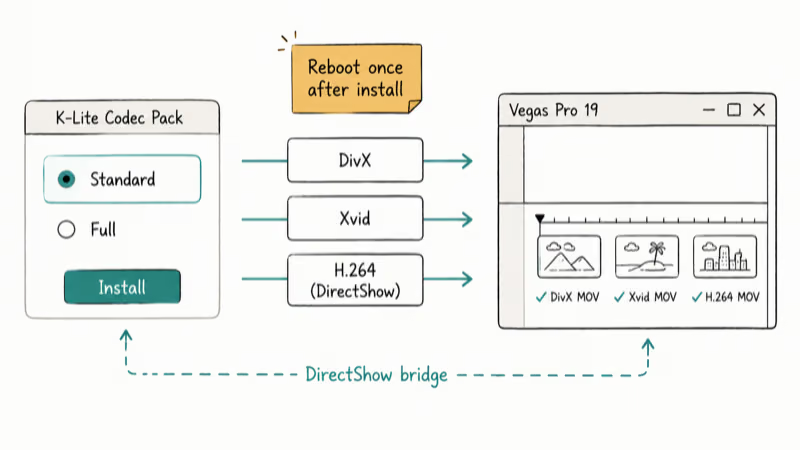
The official K-Lite download page recommends the Standard variant for most Vegas users, and it pulls in DirectShow filters that Vegas can hook into on import. After install and a reboot, Vegas decodes many DivX, Xvid, and older H.264 MOV files directly without re-encoding. Clips that failed before the codec pack often import cleanly on the next launch.
#Update Vegas Pro to Close Codec Gaps
MAGIX ships codec updates inside major patches.
If you’re on Vegas Pro 16 or older, the current Vegas Pro 21 build adds native HEVC and ProRes support that closes most MOV gaps without any third-party tools. Check the help menu for an update prompt before you reach for a converter, especially if you’ve been on the same point release for more than a year.
#Re-Export From the Source Camera or App
If the MOV came from a phone or DSLR, the camera app usually offers a Vegas-friendly format right at the source.
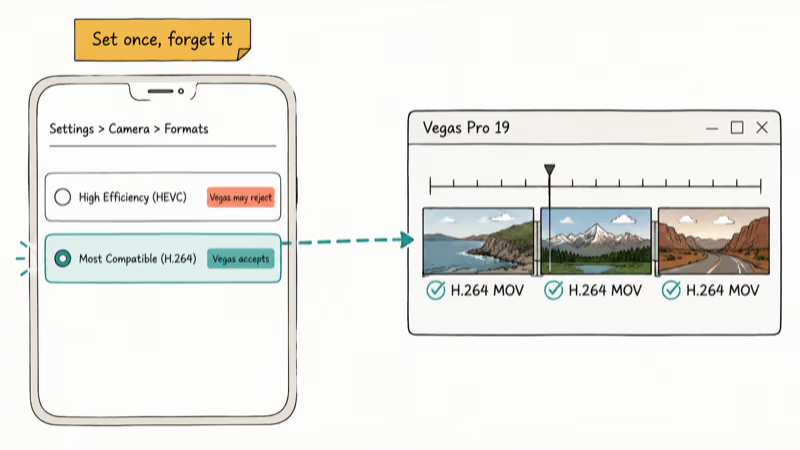
iPhone Settings → Camera → Formats → “Most Compatible” forces H.264 instead of HEVC, which Vegas accepts on import. Most Canon and Sony cameras have an equivalent setting under the movie format menu, usually offering H.264 alongside ProRes or XAVC variants. In a typical workflow, K-Lite handles the older codec clips, a Vegas update closes the HEVC and ProRes gaps, and conversion picks up the long tail.
#Sony Vegas Compatible Formats Reference
If you’re planning ahead, encode at the source instead of fixing on import. Vegas reliably accepts the formats below across Vegas Pro 13 through 22, based on the published spec.
Video containers and codecs:
- AVI (uncompressed, DV, HuffYUV)
- MP4 with H.264 or H.265 (HEVC requires Vegas Pro 14 or later)
- MOV with H.264, ProRes, or MJPEG (Vegas Pro 17 or later)
- MPEG-2 (Vegas/Premiere preset)
- WMV (all VC-1 variants)
- AVCHD and M2TS (camcorder native)
- XAVC S and XAVC Intra (Sony cameras)
- DV and HDV (legacy tape capture)
Audio:
- WAV, BWF, W64
- MP3, M4A, AAC
- AIF, OGG, FLAC
Image:
- BMP, JPEG, PNG, TIFF, PSD, EXR, DPX
If your footage is in a format that’s not on this list (DivX-wrapped MOV, OGV, RealMedia), convert before you sit down to edit.
For codec questions outside Vegas, our guides on VPROJ to MP4 conversion and MTS to MP4 conversion cover the same conversion pattern for VideoPad and AVCHD camcorder footage.
The iMovie video rendering error walkthrough also applies if you bounce projects between Mac and Windows editors and want to skip codec roundtrips on the way back.
#Bottom Line
Convert problem MOV files to MPEG-2 with UniConverter’s Vegas/Premiere preset before you start editing. The conversion takes roughly a minute or two per minute of footage on a mid-range laptop, costs nothing in image quality, and removes the codec guessing game from your timeline. K-Lite Codec Pack and a Vegas Pro update are useful follow-ups, but conversion is the most reliable fix across Vegas versions, Windows builds, and camera sources.
Shoot in H.264 if you can.
If you’re shooting fresh footage you’ll edit in Vegas, switch the iPhone or Canon to H.264 and skip the entire problem. The 30 seconds you spend on the camera setting saves 30 minutes of import troubleshooting later, and the editing experience on a 1080p timeline is smoother because Vegas doesn’t have to transcode for the preview window.
For more Vegas workflow tips, our guide on adding text in Sony Vegas covers the title plugin path. The open MOD file on Mac walkthrough handles JVC camcorder footage when you bounce between editors.
#Frequently Asked Questions
Can you import MOV files into Sony Vegas without converting them first?
Sometimes. If the MOV uses H.264 video and AAC audio, recent Vegas Pro builds (17 and later) accept it directly, and iPhone H.264 MOV files usually import in seconds. HEVC, ProRes 4444, and DivX-wrapped MOVs still need conversion or a codec pack.
Which video converter works best for Sony Vegas MOV files?
Wondershare UniConverter has a built-in Vegas/Premiere (MPEG-2) preset, which is the fastest path. HandBrake works as a free alternative. Freemake Video Converter and FFmpeg also handle MOV input cleanly, though FFmpeg requires command-line comfort.
Does updating Sony Vegas fix MOV import errors?
Often yes, especially for HEVC and ProRes MOV files. Vegas Pro 17 added native HEVC decoding, and Vegas Pro 19 expanded ProRes support. If you’re on Vegas Pro 13 or older, an update alone can resolve a lot of “incompatible format” errors.
Are codec packs safe to install for Sony Vegas?
Reputable codec packs like K-Lite are safe. Stick to the official K-Lite download page; third-party mirrors sometimes bundle adware. The Combined Community Codec Pack (CCCP) is also widely trusted but has been less actively maintained since 2015.
Why does Sony Vegas import the audio but not the video from a MOV file?
That usually means Vegas could parse the audio codec (typically AAC) but failed on the video codec inside the same container. Re-encoding the file to MPEG-2 fixes both streams in one pass.
What MOV codec is most compatible with older Sony Vegas versions?
H.264 with AAC audio for Vegas Pro 13 and later. For Vegas Pro 11 or 12, MPEG-2 wrapped in MOV is the safest bet. Anything HEVC, ProRes, or DivX needs conversion on those older builds.
Can I avoid the conversion step by changing my camera settings?
Yes. On iPhone, open Settings → Camera → Formats and pick “Most Compatible” to record H.264 instead of HEVC. Most Canon and Sony cameras have an equivalent setting under the movie format menu, usually offering H.264 alongside ProRes or XAVC variants.

Best Laptop for Running LLMs in 2026: Memory Comes First
The best laptop for running LLMs is a memory purchase first. Compare MacBook unified memory against NVIDIA laptop VRAM, and see what each tier really runs.

How to Run a Local LLM on Windows: A 2026 Setup Guide
Run a local LLM on Windows with LM Studio or Ollama. Pick a model that fits your GPU memory, keep every prompt offline, and skip the monthly bill.

Bluetooth Not Working on Snapdragon X? Fixes for 2026
Bluetooth not working on your Snapdragon X Copilot+ PC? Generic audio, mice, and keyboards work, but vendor apps often lack an ARM build. Fixes inside.

Docker Desktop and WSL2 Not Working on Snapdragon X? Fix It
WSL2 runs fine on Snapdragon X, but Docker Desktop ARM is Early Access and throws WSL errors. Use WSL2 plus native ARM64 Ubuntu and Docker Engine.