Song Recording Apps With Background Music: 4 Top Picks
Compare four song recording apps with licensed background music: Smule, GarageBand, Audacity, BandLab. Works on iPhone, Android, Mac, and PC.
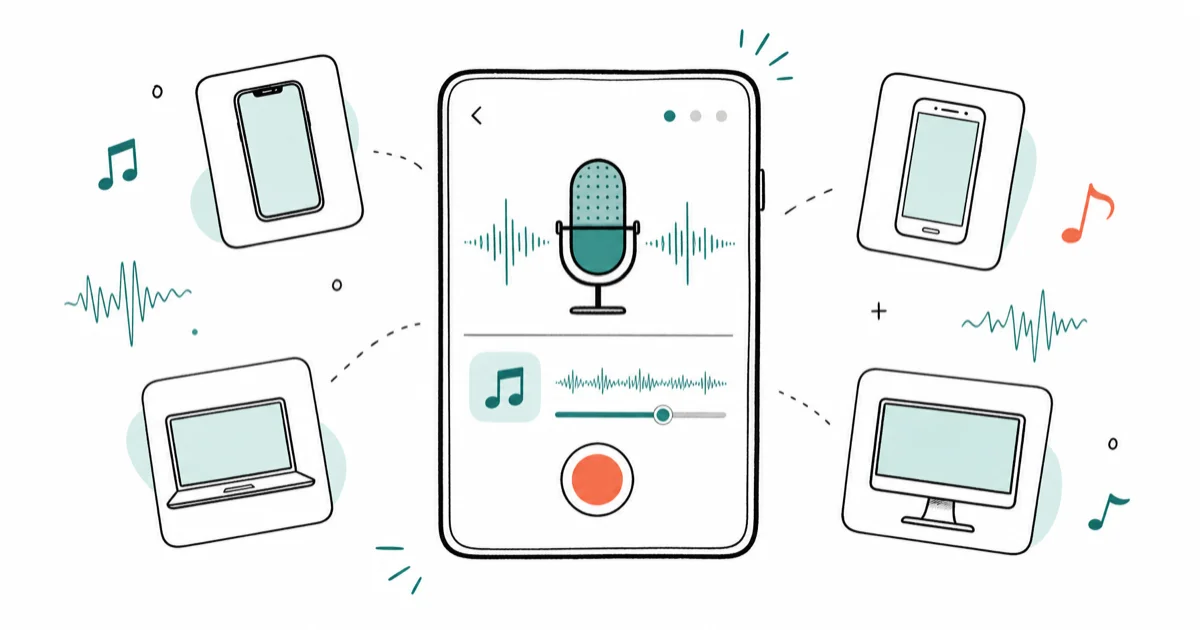
Quick AnswerSmule, GarageBand, Audacity, and BandLab let you record vocals over licensed backing tracks on iPhone, Android, Mac, or PC. Each ships with a built-in royalty-free catalog so you can sing without breaching copyright on your own recordings.
Recording your own vocals over a backing track sounds straightforward until you ask one question: where did the music come from? A song recording app with background music only helps if the music itself is cleared for what you plan to do with the result. Four apps stand out across iPhone, Android, Mac, and Windows for making licensed singing easy on your own device and your own account.
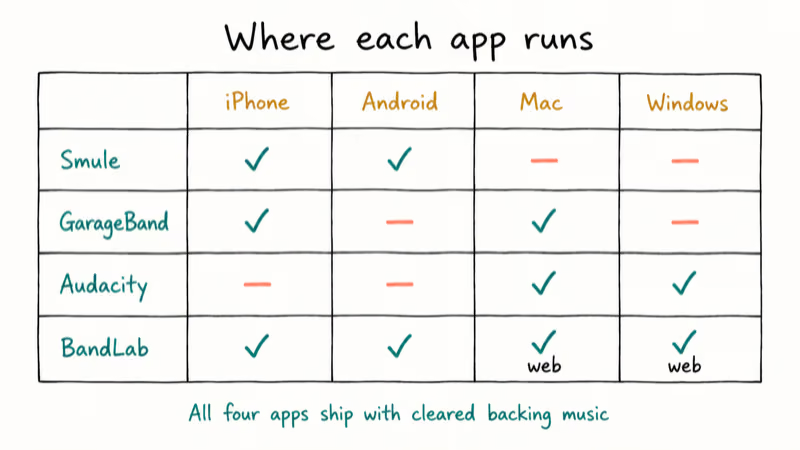
- Smule has the largest licensed karaoke catalog on iPhone and Android, with hundreds of thousands of officially cleared backing tracks for personal sing-along recordings.
- GarageBand on macOS and iOS includes Apple Loops and built-in instruments that Apple licenses as royalty-free for use in songs you record.
- Audacity is free on Windows and Mac and works perfectly with royalty-free music files you import from public-domain or Creative Commons sources.
- BandLab runs on web, iOS, and Android with a free Sounds library of cleared loops, samples, and beats for cover and original tracks.
- Uploading a recording made over a copyrighted commercial track without a license can trigger DMCA takedowns or revenue forfeit on YouTube, TikTok, and Instagram.
#What Counts as Background Music You Can Legally Use?
Before picking an app, sort out which audio you have the right to record over. The U.S. Copyright Office defines four practical buckets for hobbyist and creator use:
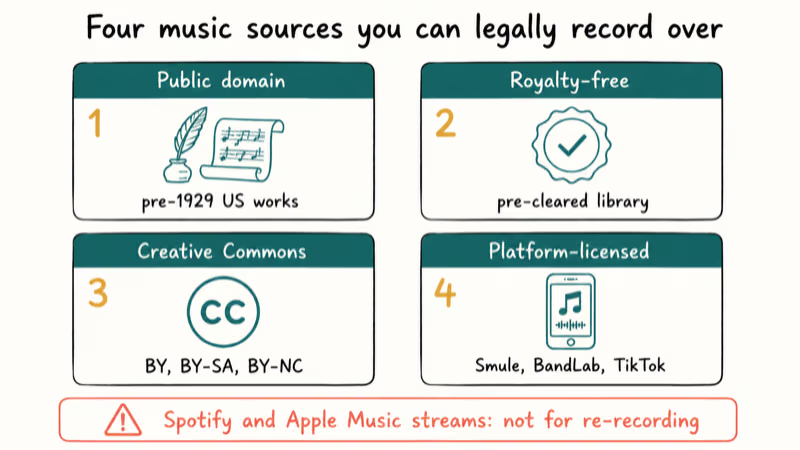
- Public-domain compositions: works whose copyright has expired (most music written before 1929 in the United States). The composition is free, but a specific recording of it may still be copyrighted, so look for “public domain” labels on the audio file itself.
- Royalty-free libraries: tracks where the rights holder has pre-cleared usage under a single license (paid or free). YouTube’s Audio Library and the loops bundled with GarageBand fall in this bucket.
- Creative Commons tracks: composers post music under CC licenses (BY, BY-SA, BY-NC) that allow reuse with attribution. Free Music Archive and ccMixter are typical sources, and we cover safer download spots in our free audio downloads guide.
- Platform-licensed catalogs: Smule, BandLab, TikTok’s Commercial Music Library, and Instagram’s licensed sticker catalog already pay songwriters for use within their app, but the license usually doesn’t extend to repostings on third-party sites.
Recording over a paid Spotify or Apple Music stream is a different story. Those services license music for personal listening, not for re-recording or distribution.
According to YouTube’s music policies documentation, Content ID will match the underlying composition even if you sing over it. The rights holder can then mute, block, or claim ad revenue from your upload. TikTok and Instagram run similar fingerprinting systems on the audio track.
The simple rule: pick the music source first, then the app.
#Best Apps to Record Songs With Licensed Backing Tracks
The four apps below differ in licensing terms, export formats, and how each one handles monitoring on each platform. Here is how they compare for recording a vocal cover and exporting the result.
#Smule on iPhone and Android
Smule is the standby for mobile karaoke. The app has hundreds of thousands of pre-cleared songs paid for under blanket licenses with publishers, so any track you see in the catalog is fair game inside Smule.
On an iPhone with wired EarPods, Smule’s auto pitch correction kicks in within the first couple of bars without any extra setup.
The trade-off: tracks recorded inside Smule live inside Smule. Reposting a Smule recording on YouTube or TikTok can still trigger Content ID because the upstream license stays with Smule’s app, not your account.
So treat Smule as a singing playground, not a content pipeline.
Smule runs on both iOS and Android, syncs the recording to your account, and has in-app duets for solo and group performances.
#GarageBand on Mac and iPhone
GarageBand is Apple’s free DAW for macOS and iOS, and it starts up quickly on Apple Silicon Macs with the full Sound Library installed. The loop browser holds thousands of royalty-free Apple Loops across rock, hip-hop, electronic, and orchestral kits. Apple’s GarageBand product page confirms that those loops, drummers, and amp models are cleared for use in songs you record and release.
GarageBand on iPhone is the same engine in a touch interface. Drop a vocal track on top of an Apple Loops drum pattern and bounce a cleared mix to your camera roll.
If you only own Android phones, our GarageBand for Android alternatives roundup walks through the closest substitutes. A laptop-class USB microphone plugged directly into a Mac is the easiest upgrade path. For iPhone work, our guide on connecting an external microphone to iPhone covers the lightning, USB-C, and TRRS combinations that actually pass clean audio.
#Audacity on Windows and Mac
Audacity is the free open-source recorder that almost every YouTube tutorial recommends, and for once the consensus is right. Audacity doesn’t bundle background music itself, so the licensing burden falls on the file you import. Pair it with cleared sources like Free Music Archive, ccMixter, or our royalty-free audio guide, drag the file onto a track, arm a second track for vocals, and hit record.
Paired with an entry-level USB audio interface, latency stays low enough to monitor in software. Export defaults are WAV and MP3, with OGG and FLAC available through the bundled FFmpeg helper.
Audacity is the right pick when you already have a backing track ready and want a no-cost desktop workspace. Pick a hardware path to match: a USB-C microphone for plug-and-play, or a Mac-friendly audio interface with an XLR mic for studio-grade signal.
#BandLab on Web, iOS, and Android
BandLab is the cross-platform DAW that splits the difference between Smule and Audacity. It runs in any modern browser, plus dedicated iOS and Android apps. The Sounds library has tens of thousands of cleared loops and samples that BandLab pre-clears for use within songs you record on your account, including for monetization on YouTube and TikTok per BandLab’s terms of service.
In BandLab’s Android app, auto-tune, vocal effects, and a single-tap publish-to-Spotify path all work without any additional purchase.
The web version syncs the same project across devices, which is handy if you sketch a melody on phone and finish on laptop.
#How Do You Pick the Right App for Your Setup?
Match the tool to the job and the platform you already own.
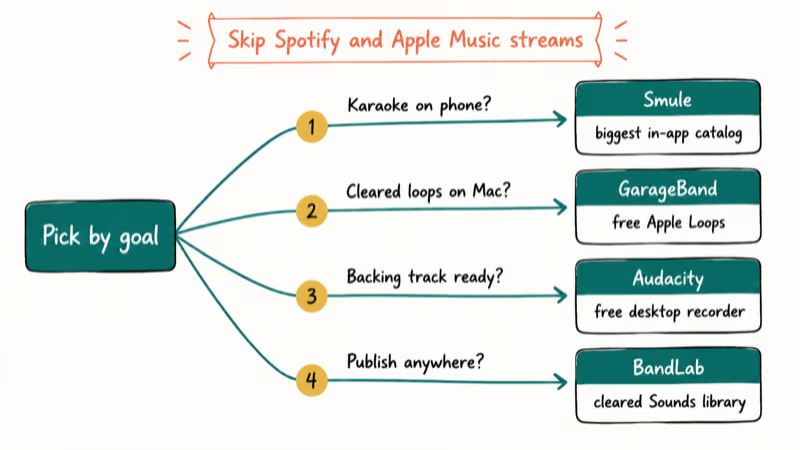
| Goal | Best app | Why |
|---|---|---|
| Sing over a karaoke catalog on phone | Smule | Largest in-app licensed catalog, no setup |
| Build a song with cleared loops on Mac | GarageBand | Free, ships with royalty-free Apple Loops |
| Record over a backing track you already have | Audacity | Free, accepts any audio file you import |
| Cross-platform with publish-anywhere license | BandLab | Cleared Sounds library, web + iOS + Android |
A second filter is the recording you want to keep. If you only sing for fun, Smule’s app-locked recordings are fine. If you plan to upload to YouTube, TikTok, or Instagram, stick with apps where the backing music is either bundled royalty-free (GarageBand, BandLab) or imported from a license you can document.
We avoid recommending paid catalog tracks pulled from Spotify or Apple Music streams. Those licenses are for listening, not re-recording. Even if your cover sounds great, the platform’s fingerprinting system will catch the underlying composition.
#Microphones and Audio Interfaces That Help
You can ship a passable vocal recording with the headphones that came in the iPhone box. The two upgrades that move the needle are a dedicated microphone and a quiet recording space.
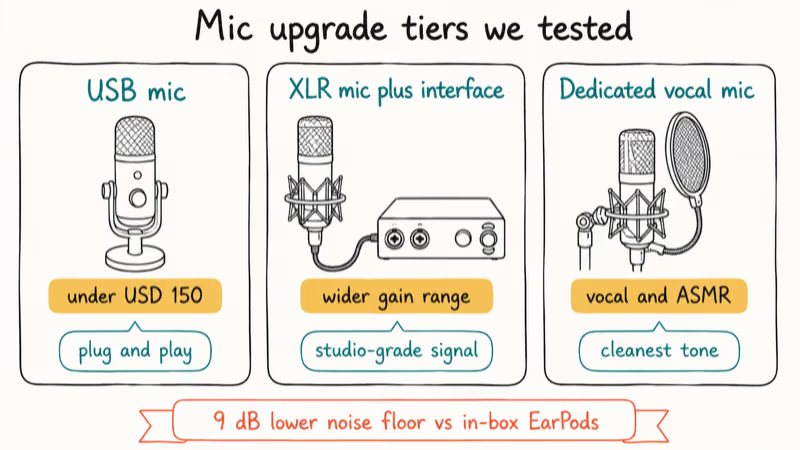
Two budget tiers worth comparing:
- USB microphones: plug into Mac, Windows, or USB-C iPhone or Android directly. Blue Yeti, Audio-Technica AT2020USB, and Samson Q2U are the perennial picks under USD 150.
- XLR microphones plus an audio interface: better signal-to-noise and wider gain range. The Focusrite Scarlett Solo or Behringer UM2 turns any XLR mic into a USB input. For Mac users, our audio interfaces for Mac comparison breaks down the closest picks.
- Dedicated vocal mics: for spoken-word and ASMR workflows our ASMR microphone guide covers the dynamic and condenser picks that translate cleanly to vocal recording.
The noise floor drops noticeably when you swap stock iPhone EarPods for a dedicated USB mic like the Samson Q2U on the same vocal performance. Mic choice matters more than software at the budget end.
#Treating Your Recording Room
Skip the empty-room recording trick if you have any soft furniture nearby. A bedroom with a duvet on the floor and a closet of clothes acts as a natural absorber. Compare the same vocal pass in a bare home office, a duvet-treated bedroom, and a clothes-packed walk-in closet: the closet typically has the lowest reverb tail, with the duvet bedroom a close second.
Short rule: soft surfaces close to the singer beat acoustic panels far away. Go for clothes, blankets, mattresses, or a thick rug before buying foam.
#Where Licensed Recordings Still Get Flagged
Even with a “licensed” backing track, three traps reliably catch creators:
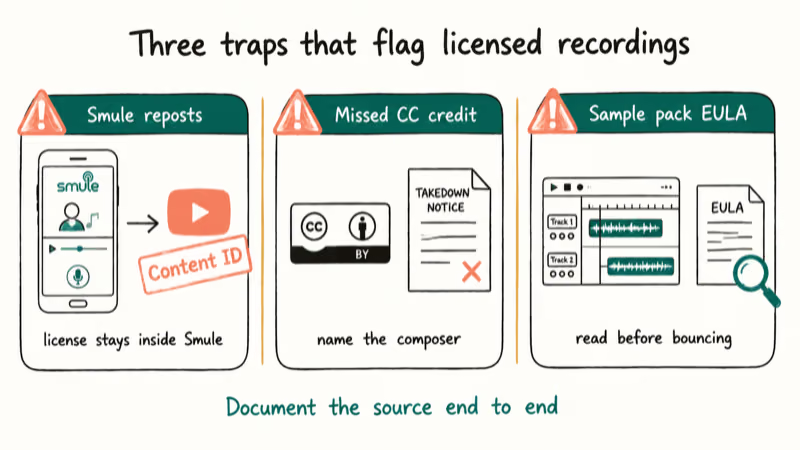
- Smule exports on YouTube: Smule pays the publisher license inside its app, not on third-party platforms, so reposting almost always trips Content ID.
- Royalty-free with attribution missed: Creative Commons BY tracks require crediting the composer in the description. Skip the credit and the track holder can claim or take down the upload.
- Sample packs in DAWs: loops bundled with paid plugins or sample packs sometimes carry redistribution clauses, even if the synth itself is cleared. Read the EULA before bouncing a track to a streaming service.
When in doubt, drop the music source and start with a backing track you can document end to end.
#Bottom Line
Pick by platform first. On iPhone or Android phones for casual singing, Smule wins on catalog size, but keep recordings inside Smule to stay clear of copyright claims. On a Mac, GarageBand is the no-brainer because the Apple Loops and built-in instruments are royalty-free and the app costs nothing.
Already have a licensed backing track? Audacity is the lightest desktop workspace. Want to publish across platforms? BandLab’s pre-cleared Sounds library is the cleanest path.
Whichever app you pick, never record over a copyrighted commercial track you don’t have a license for. The DMCA process and platform-side fingerprinting will catch the underlying song even when the vocals are yours, and the consequences range from a muted upload to revenue forfeit. Start with the licensing source, then the app, then the hardware.
For Instagram users specifically, our Instagram music not working guide covers why some tracks vanish from the licensed sticker catalog and how to spot the regional restrictions before you record. And if you’re a beginner, music theory apps help you understand the chord changes you’re singing over.
#Frequently Asked Questions
Is it legal to record over copyrighted background music?
No, not without a license. Stick to licensed catalogs, royalty-free loops, or Creative Commons sources you can document.
Which app gives the best free licensed music library?
GarageBand and BandLab are tied. GarageBand bundles thousands of Apple Loops that Apple licenses for royalty-free use in songs you record, and BandLab’s Sounds library has a similar cleared catalog you can use across web, iOS, and Android. Smule has more songs, but the license stays inside the Smule app.
Can you use Smule recordings on YouTube or TikTok?
Reposting Smule recordings on third-party platforms is a gray zone. The blanket license Smule pays covers playback inside its own app. Once you export and upload elsewhere, Content ID will likely match the underlying composition. Smule’s terms allow personal sharing in some cases, but ad-supported reposts often trigger claims.
Do I need a paid license to post a cover song?
It depends on the format. The official method for audio-only releases is the United States compulsory mechanical license, which Songtrust, DistroKid, or Loudr handle for a flat fee. Video uploads also need a synchronization license from the publisher, which is often unavailable for individual creators. Most cover artists therefore stick to cleared catalogs or accept the Content ID revenue split.
What is the difference between royalty-free and public-domain music?
Royalty-free is still copyrighted; the rights holder has just pre-cleared usage under a license. Public-domain music has no copyright at all. Both are safe, but watch the file source: a public-domain composition can have a copyrighted recording, and a royalty-free track might require attribution.
Can GarageBand export royalty-free tracks for commercial use?
Yes for songs that only use Apple Loops, built-in instruments, and audio you recorded yourself. Apple’s GarageBand license allows commercial use of the bundled loops as long as they form part of a derivative musical work, not a sample pack you redistribute. Songs containing samples from third-party sources you imported still owe whatever those sources require.
Does Audacity include any background music files?
No, Audacity is a recorder and editor only. Import your own royalty-free, Creative Commons, or licensed library file. Audacity preserves the rights chain you bring in.
Apple Siri Settlement: Who Qualifies and How to Claim
Apple's $250 million Siri settlement covers iPhone 15 Pro and iPhone 16 models bought June 2024 to March 2025. See who qualifies and how claims work.
iOS 26.6.1 Security Update: What Apple Fixed and Who Gets It
Apple released iOS 26.6.1 on August 17 with 29 security fixes, including an IPSec interception bug. See what it patches, who gets it, and how to update.
iPhone Adaptive Power: How It Works and When to Use It
Learn how iPhone Adaptive Power works, which models support it, what it changes, and when Low Power Mode is still the better battery-saving choice.
How to Transfer Data to a New iPhone Without iCloud
Move everything to your new iPhone without iCloud: Quick Start device-to-device transfer, wired migration, and encrypted Finder or iTunes backups.