Best Music Theory Apps: 8 Top Picks for iOS and Android
Perfect Ear is the best music theory app with ear training, rhythm, and theory for $2.99. Compare 8 top apps for iOS and Android in our 2026 guide.
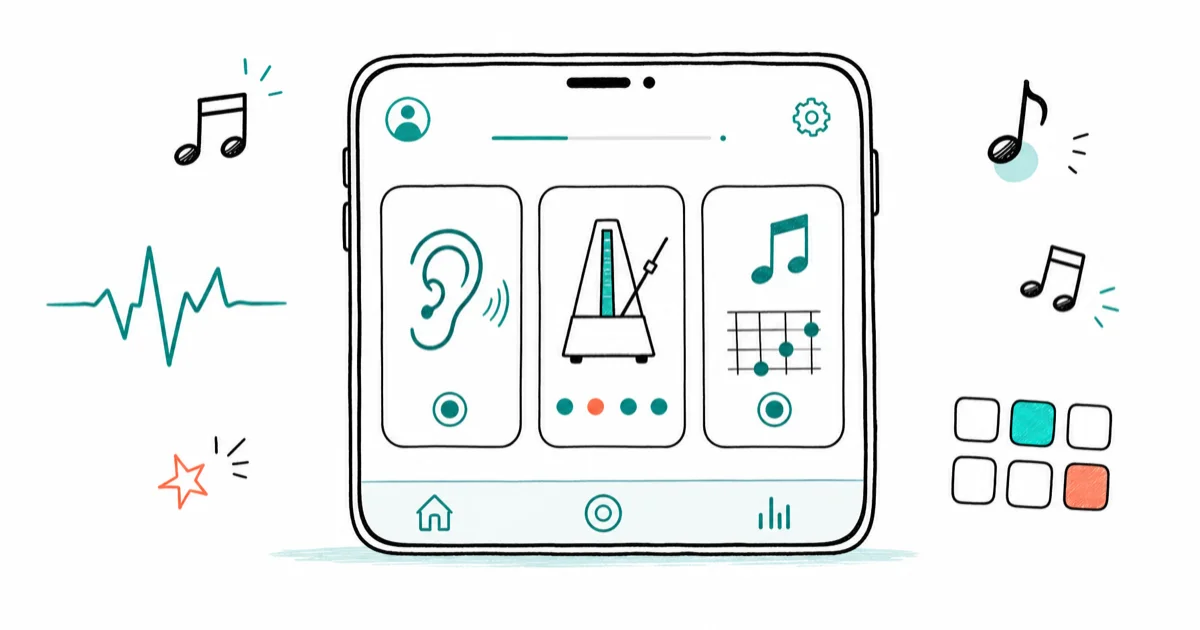
Quick AnswerPerfect Ear is the top pick for its comprehensive three-part approach covering theory, ear training, and rhythm at an affordable $2.99 price.
Learning music theory doesn’t require expensive classes or a private tutor anymore. The best music theory apps break down complex concepts like intervals, chord progressions, and rhythm patterns into bite-sized exercises you can practice during a 10-minute bus ride. This guide compares eight apps on lesson quality, exercise variety, and how well each one builds real skill.
- Perfect Ear covers theory, ear training, and rhythm in three sections for a one-time $2.99 payment
- Tenuto offers 24 exercises with animated lessons for $3.99 but is available only on iOS
- EarMaster is free on iPad with support for external microphones and MIDI controllers
- Functional Ear Trainer uses a key-relative method that builds aural skills through short daily practice sessions
- Complete Ear Trainer offers 150+ drills across three modes including an arcade mode for $3.99
#Which Music Theory Apps Rank Best?
#1. Perfect Ear
Perfect Ear is the most complete music theory app on this list. It’s split into three dedicated sections: theory, ear training, and rhythm. The theory section teaches fundamentals through interactive lessons rather than walls of text. The interval identification exercises build accuracy quickly with short daily sessions.
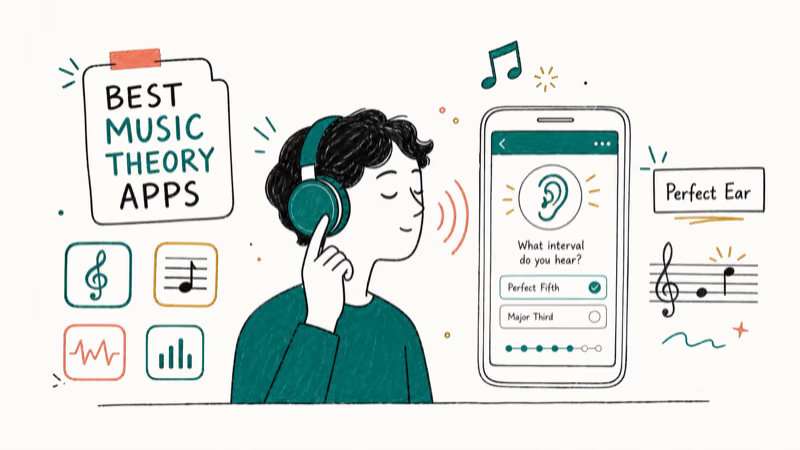
What’s included: Interval recognition, chord identification, rhythm training, sight-reading exercises, guitar fretboard trainer, absolute pitch trainer.
Why it’s #1: At $2.99 one-time, it’s cheaper than a single private lesson and contains months of structured content.
Platform: Android and iOS.
#2. Tenuto
Tenuto offers 24 structured exercises covering note identification, key signatures, intervals, chords, and scales. The animated lessons make abstract concepts visual. The chord identification exercises are among the most polished and effective for intermediate learners.
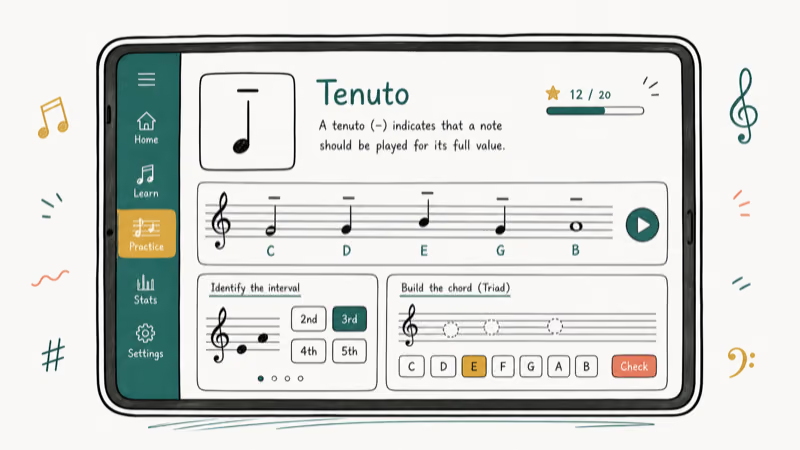
Why it’s #2: The exercise variety is strong and the animations actually help with understanding. At $3.99 one-time, it’s affordable.
The tradeoff: iOS only. No Android version exists. This limits its audience significantly.
Platform: iOS only.
#3. EarMaster
EarMaster is free for iPad users with all features unlocked. Its standout feature is support for external microphones and MIDI controllers, which lets you sing or play your instrument and get real-time feedback on pitch accuracy. Connect a USB MIDI keyboard and the interval singing exercises give tight, responsive pitch feedback.
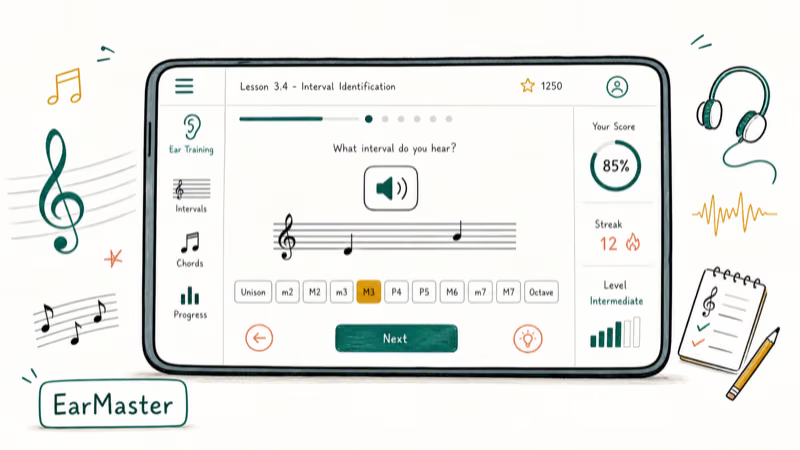
EarMaster’s MIDI integration is rare among mobile apps and typically found only in desktop software.
The tradeoff: iPad only. No iPhone or Android support.
Platform: iPad only.
#4. Piano Companion
Piano Companion works as a reference tool alongside your practice. Its chord and scale dictionaries let you look up any chord voicing or scale pattern instantly. The built-in virtual piano responds to touch with realistic key weighting. It works best as a quick-reference companion during songwriting sessions rather than as a primary learning tool.
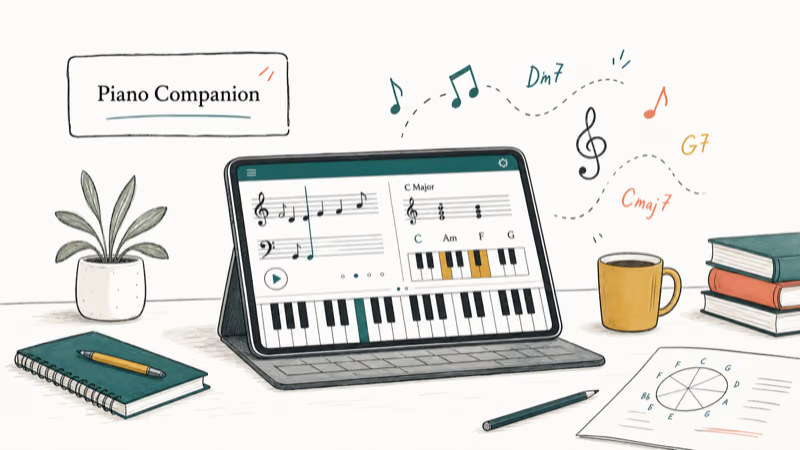
Platform: Android and iOS. Free version available, premium unlocks all features.
#5. Music Theory Basics
Music Theory Basics covers fundamentals from note reading through complex rhythm patterns. The quizzes and puzzles make learning more engaging than straight lectures. The app costs more than most on this list, so grab the demo version first to see if the teaching style works for you.
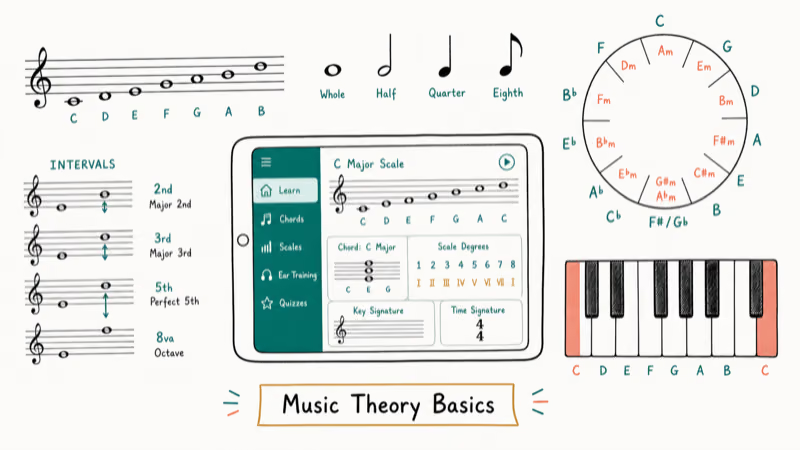
Platform: iOS only.
#6. Music Theory Helper
Music Theory Helper is the best free option for Android users who want basic theory coverage without spending money. It covers chords, intervals, scales, and the circle of fifths with a clean interface. The ear training module works well for beginners but lacks the depth of Perfect Ear or EarMaster for intermediate and advanced students.
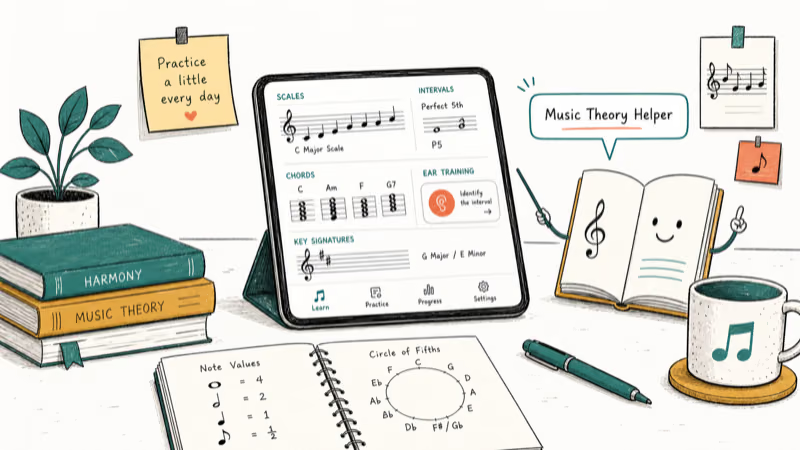
Platform: Android only. Free.
#7. Functional Ear Trainer
Functional Ear Trainer takes a unique approach by teaching you to hear notes in relation to a musical key rather than in isolation. The developers say short daily practice sessions build aural skills over time. The key-relative method does help learners identify chord functions within songs over time.
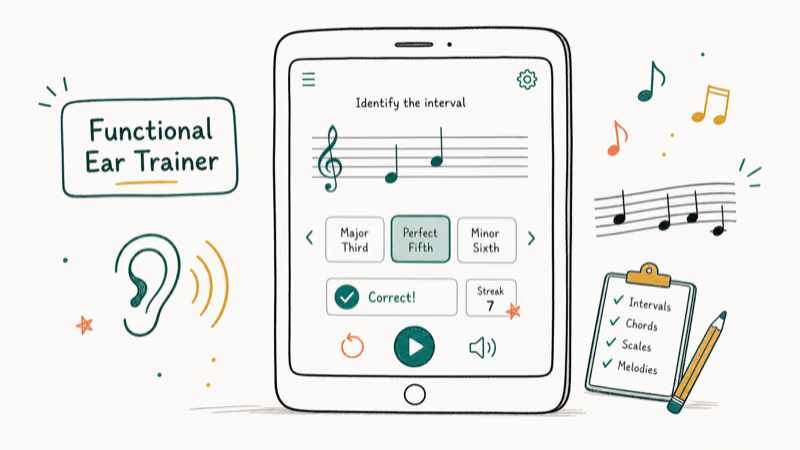
Platform: Android and iOS. Free with in-app purchases.
#8. Complete Ear Trainer
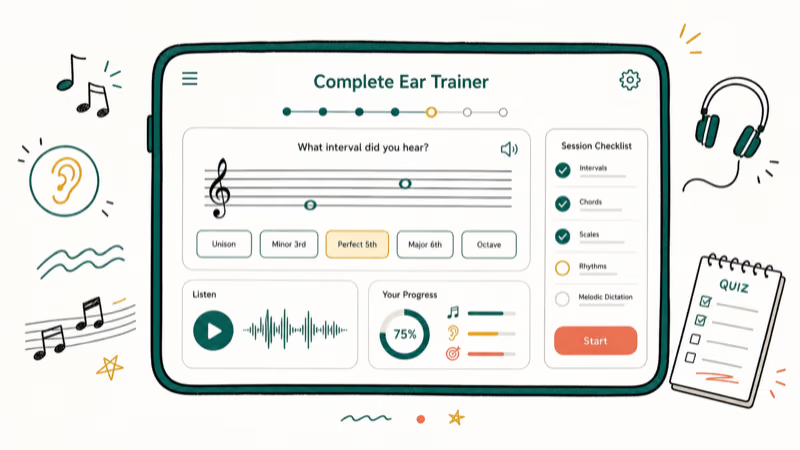
Complete Ear Trainer offers three modes: easy, classic, and arcade. The arcade mode gamifies ear training with timed challenges and scoring, which makes repetitive drills more engaging. Over 150 drills cover intervals, chords, scales, rhythm, and melody dictation. At $3.99, it’s strong value for the drill quantity.
Platform: Android and iOS.
#Do Music Theory Apps Actually Work?
Music theory apps work best as supplements to real instrument practice, not replacements. Dedicated daily app practice does noticeably sharpen interval recognition over a few weeks. That’s a meaningful gain.
According to music theory background, however, apps can’t replace the physical experience of playing an instrument. Ear training apps train your brain to recognize sounds, but you still need hands-on practice to translate that knowledge into musical performance.
The ideal approach: 10-15 minutes of app-based ear training daily, combined with your regular instrument practice. The app handles the theory and ear training repetition that’s tedious during a normal practice session.
For musicians shopping for hardware, check our guides on tablets for musicians and roll-up piano keyboards for portable practice setups.
Producers working in a DAW should also see our control surfaces for Logic Pro X guide for tactile mixing options. If you want to record your own music, our song recording app guide covers mobile recording options.
Video editors working on music content should check our After Effects alternatives for affordable production tools.
#What to Look for in a Music Theory App
Not every app teaches theory the same way. The strongest picks pair short written lessons with interactive drills, so you read a concept and then immediately apply it. Apps that lean only on text are slower to build real recall.
Three features separate a useful app from a flashcard clone. Look for adaptive difficulty that tracks your weak intervals, an ear training section (not just visual quizzes), and offline support for practice on the go.
Price model matters too. One-time purchases like Perfect Ear and Tenuto avoid recurring fees, while some free apps gate ear training behind subscriptions. According to the broad overview in music education research, structured, repeated practice is what drives skill gains, so pick an app you’ll actually open every day.
#How Music Theory and Ear Training Differ
Music theory and ear training are related but distinct skills, and most apps cover them in separate sections. Theory is the written grammar of music: scales, key signatures, chord construction, and notation. Ear training is the listening skill that lets you name what you hear.
You need both to read and play fluently. Theory tells you why a chord progression works, while ear training lets you transcribe a melody by ear without sheet music in front of you.
Britannica’s overview of musical notation states that written notation standardizes how pitch, duration, and rhythm are recorded across instruments. Apps like Perfect Ear and EarMaster build on that foundation by linking the symbol you see to the sound you hear, which is the bridge a pure theory textbook can’t cross.
#Building a Daily Practice Habit
Consistency beats marathon sessions. Ten focused minutes a day builds aural memory faster than a single two-hour cram once a week, because interval recognition relies on repeated, spaced exposure.
Tie practice to an existing routine. Open the app during your commute, before your instrument warm-up, or right after coffee so the habit attaches to a trigger you already have.
Track your streak and target one weak area at a time. If perfect fourths trip you up, drill only those for a week before moving on. Most apps on this list let you filter exercises so you can isolate the intervals or chords you keep missing.
#Common Mistakes Beginners Make
The biggest mistake is treating the app as a replacement for an instrument. Apps train recognition, but you still need to play notes with your hands to internalize them. Pair every app session with real practice.
Another trap is rushing through theory to reach the fun ear training games. Skipping the fundamentals leaves gaps that surface later when chord progressions stop making sense. Work the theory section in order.
Finally, beginners often switch apps too soon. Each app has a different teaching rhythm, and jumping around resets your progress tracking. Give one app at least three weeks before deciding it’s not for you.
#Bottom Line
Perfect Ear is the best music theory app for most learners. Its $2.99 price gives you structured lessons in theory, ear training, and rhythm across both Android and iOS. EarMaster is the best free option if you have an iPad and want MIDI controller integration. If you’re on Android and want something free, start with Music Theory Helper for the basics and upgrade to Perfect Ear when you’re ready for deeper content.
#Frequently Asked Questions
Are these music theory apps suitable for beginners?
Yes. Perfect Ear, Music Theory Basics, and Music Theory Helper all start with fundamental concepts like note names, basic intervals, and simple rhythms. You don’t need prior music knowledge to begin.
Do I need to pay for these apps?
EarMaster is completely free on iPad. Music Theory Helper is free on Android. Perfect Ear ($2.99) and Complete Ear Trainer ($3.99) are one-time purchases with no subscriptions. Tenuto is $3.99 on iOS.
Can I learn to play an instrument with these apps?
These apps teach music theory and ear training, not instrument technique. Piano Companion includes a virtual keyboard for chord reference, but it’s not a substitute for a real piano or guitar. Use these apps alongside instrument lessons for the best results.
Are these apps available on both Android and iOS?
Perfect Ear, Functional Ear Trainer, Complete Ear Trainer, and Piano Companion work on both platforms. Tenuto and Music Theory Basics are iOS only. Music Theory Helper is Android only. EarMaster is iPad only.
Do these apps require an internet connection?
Most features work offline after initial download. Some apps need internet for leaderboards, cloud sync, or downloading additional exercise packs. Perfect Ear and Complete Ear Trainer both work fully offline.
How long does it take to learn music theory with an app?
Basic concepts (note names, major scales, simple intervals) take 2-4 weeks of daily 15-minute practice. Intermediate topics (chord progressions, modes, complex rhythms) take 3-6 months. Advanced ear training (hearing chord functions, transcribing melodies) takes 6-12 months of consistent daily practice.
Can these apps help with songwriting?
Piano Companion’s chord and scale dictionaries are directly useful for songwriting. Perfect Ear’s theory lessons teach the harmonic concepts that underpin chord progressions and melody writing. Ear training from any of these apps helps you identify and recreate sounds you hear in music you admire.
Which app is best for guitar players?
Perfect Ear has a dedicated guitar fretboard trainer that teaches note positions across all strings and frets. It’s the only app on this list with guitar-specific exercises built in.
Apple Siri Settlement: Who Qualifies and How to Claim
Apple's $250 million Siri settlement covers iPhone 15 Pro and iPhone 16 models bought June 2024 to March 2025. See who qualifies and how claims work.
iOS 26.6.1 Security Update: What Apple Fixed and Who Gets It
Apple released iOS 26.6.1 on August 17 with 29 security fixes, including an IPSec interception bug. See what it patches, who gets it, and how to update.
iPhone Adaptive Power: How It Works and When to Use It
Learn how iPhone Adaptive Power works, which models support it, what it changes, and when Low Power Mode is still the better battery-saving choice.
How to Transfer Data to a New iPhone Without iCloud
Move everything to your new iPhone without iCloud: Quick Start device-to-device transfer, wired migration, and encrypted Finder or iTunes backups.