Pokemon Go Nest Migration: Schedule, Tracking, and Tips
Pokemon Go nest migration explained: when nests rotate, how Niantic picks species, and the community trackers we use to find new spawns each cycle.
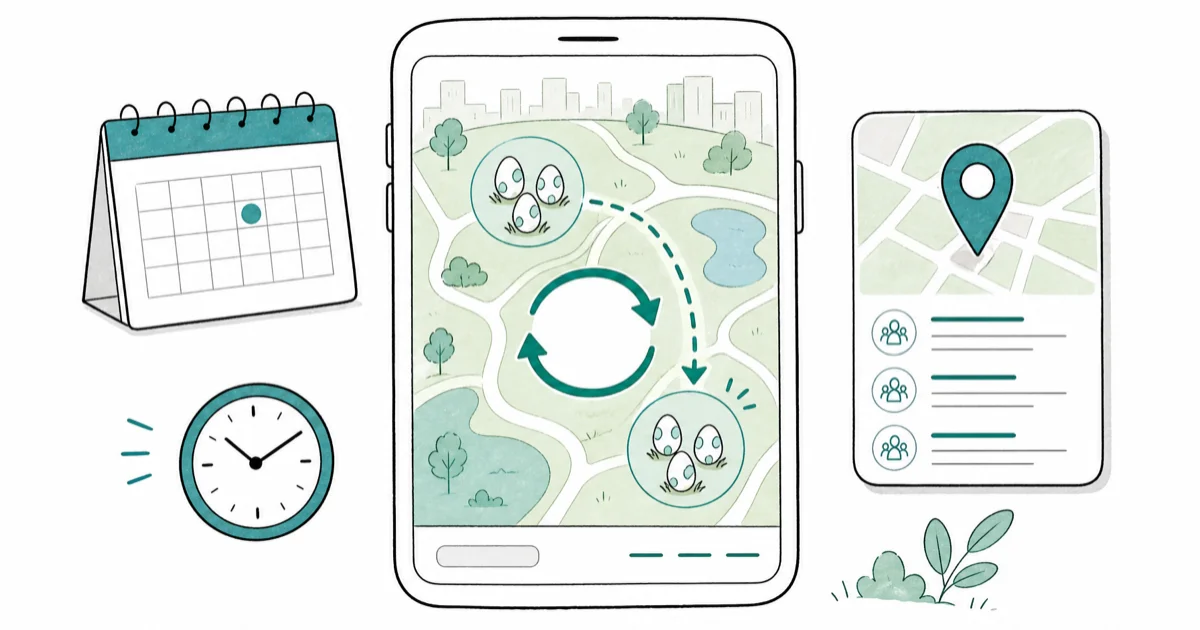
Quick AnswerPokemon Go nests rotate every 14 days at 7pm UTC on Wednesday or Thursday. Niantic reassigns each nest to a new species, and community trackers like The Silph Road's Nest Atlas log the changes within hours.
Pokemon Go nest migration is the bi-weekly reshuffle that decides which species spawns at parks, college campuses, and other Niantic-flagged “nest” locations. Knowing when migration hits and which trackers report fastest helps you avoid walking an empty park. Use your own account, stay inside Niantic’s terms, and stick to community-mapped spawn data. No scanners, no spoofing, no third-party APIs that pull from the game server.
- Nest migrations occur every 14 days at 7pm UTC, usually landing on a Wednesday or Thursday depending on the cycle alignment.
- Each nest rotates to one new species per migration; the prior species moves out completely until a future cycle pulls it back.
- The Silph Road’s Nest Atlas, GoNestList, and large local Discord servers are the three sources to cross-check after every rotation.
- Nest spawns share the same shiny rate as wild encounters, but they tend to roll lower IVs because nest catches are tuned to be beginner-friendly.
- Only certain species enter the nest pool. Fully evolved, mythical, and most legendary Pokemon never appear, so target Stage-1 grinds first.
#What Counts as a Nest in Pokemon Go?
A nest is a specific park, plaza, or green-space polygon that Niantic has tagged in OpenStreetMap data as eligible for boosted spawns of one species. Not every park qualifies. The game uses OSM landuse, leisure, and natural tags pulled from a 2017 snapshot, with periodic refreshes since.
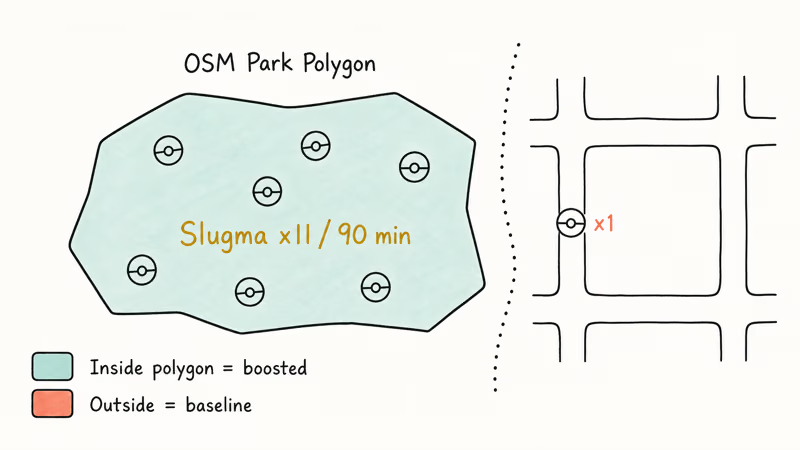
If your local park is missing from OSM, it can’t host a nest. That’s a knowledge gap most casual players don’t realize until they spend two hours grinding the wrong location.
Inside a nesting park, the assigned species appears at roughly 3 to 5 spawn points per hour, layered on top of the normal biome spawns. The boost only applies inside the polygon. Step one block outside and you’re back to baseline rates.
That density gap is what makes nests worth the trip: nesting species appear more often inside the mapped polygon than in surrounding streets. Nest data alone won’t help if the game can’t find your location, so confirm a clean GPS lock first.
According to The Silph Road’s research nexus, the nest pool rotates through many species across migration cycles, with only a subset active at any given time.
#When Does the Next Nest Migration Happen?
Migrations land on a 14-day cadence, alternating Wednesday and Thursday at 7pm UTC (3pm Eastern, noon Pacific). Niantic doesn’t pre-announce the exact swap moment, but the community has tracked the cycle since 2017, and the pattern is reliable enough that you can plan a “first scout” walk for the morning after.
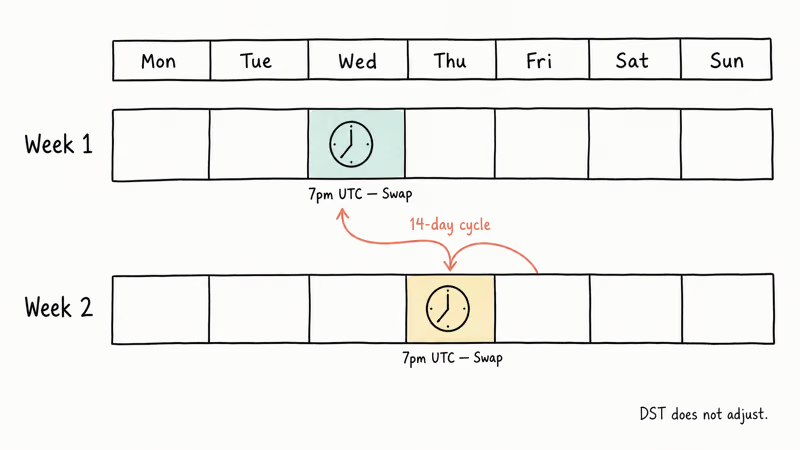
To convert UTC to your local time, the Time and Date converter handles daylight saving shifts automatically, which matters because the rotation doesn’t adjust for DST.
A few cycles per year drift by 24 hours when Niantic ships a major event update mid-week. The June 2024 Solstice event pushed a migration from Wednesday to Friday, and the August 2025 Go Fest aftermath skipped a rotation entirely. When that happens, the Discord nest channels light up within an hour.
If your tracking app or device says the wrong time, fix the clock first. The walkthrough on Pokemon Go failed to detect location covers the GPS and time-sync fixes that throw off in-game timing for some Android builds.
#How to Track Which Pokemon Spawned After Migration
Three sources cover the strongest community-reported nest data in North America, Europe, and Japan after each migration. Check them in this order:
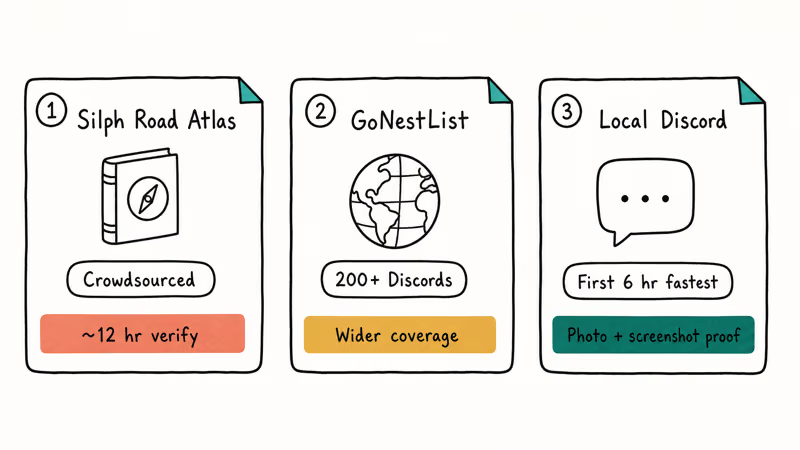
1. The Silph Road Nest Atlas. Crowd-sourced, opens reports the moment migration drops. Every park has a confirmation count, so wait for at least 3 confirms before driving across town. The atlas is hosted at thesilphroad.com/atlas and works on phone and desktop.
2. GoNestList. Aggregates Discord reports from 200+ regional servers. The interface is rougher than Silph Road, but the geographic coverage is wider, especially for suburban parks that don’t have a dedicated local Discord.
3. Local Pokemon Go Discord servers. Search “Pokemon Go [your city]” on disboard.org. Most metros have a server with a dedicated #nest-reports channel where players post photos of the nest sign and a screenshot of their catch log. Local Discord is often fastest for early migration reports, especially before Silph Road has enough confirmations.
For metro areas with strong communities, nest data usually appears quickly. Rural and small-town nests can take much longer, and some never reach confirmation, so cross-reference with neighbors when possible.
Use the Silph Road Atlas as the first pass, then confirm with Discord or a walk before you commit travel time. Travel time is the variable that decides whether you bother.
If you’re hunting a specific Pokemon, the guides on where to find Charmander in Pokemon Go and Magikarp nest locations walk through species-specific tracking patterns that build on the Atlas data.
#Which Species Are Eligible for Nest Spawns
The nest pool is intentionally narrow. Niantic excludes anything that would break the gameplay economy:
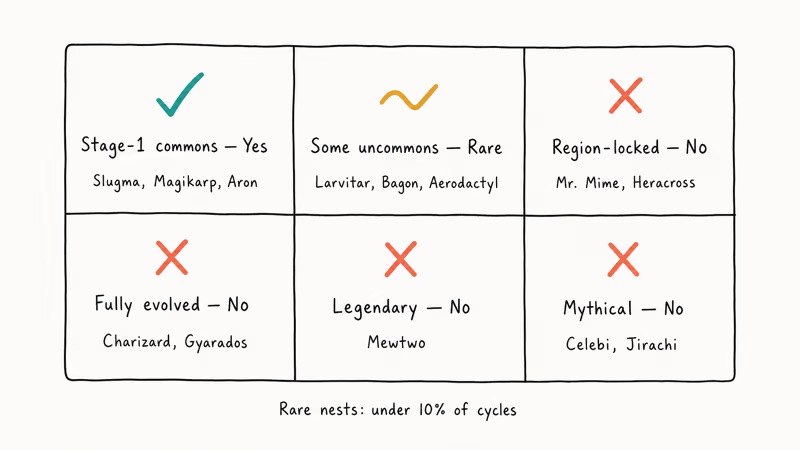
- Fully evolved Pokemon (Charizard, Blastoise, Gyarados, Tyranitar): never nest. You evolve them from candy.
- Most legendary and all mythical Pokemon (Mewtwo, Celebi, Jirachi): never nest. They appear in raids and special research.
- Region-locked Pokemon (Kangaskhan, Mr. Mime, Heracross, Tropius): never nest outside their regions.
- Stage-1 and Stage-2 commons (Slugma, Magikarp, Aron, Bagon, Beldum): the bulk of the rotating pool.
- Some uncommons (Aerodactyl, Lapras, Snorlax, Larvitar): occasional rare-nest cycles.
A “rare nest” cycle hitting Larvitar or Bagon is the gold standard. A single afternoon at one can produce enough candy to evolve and power up the final form. The Silph Road’s nest research community has found that only a small share of confirmed nests in any given cycle pull from the rare pool, so plan accordingly when one shows up nearby.
Wikipedia’s overview of Pokemon Go gameplay mechanics states that the game uses a layered biome system, and the nest layer sits on top of biome spawns rather than replacing them.
A confirmed Larvitar nest can provide enough candy for a Tyranitar evolution faster than normal biome hunting, especially if you save Pinap Berries for each catch.
#Tips for Catching More Pokemon at a Nest
Once you’ve confirmed a nest is active, these adjustments squeeze more value out of each visit:
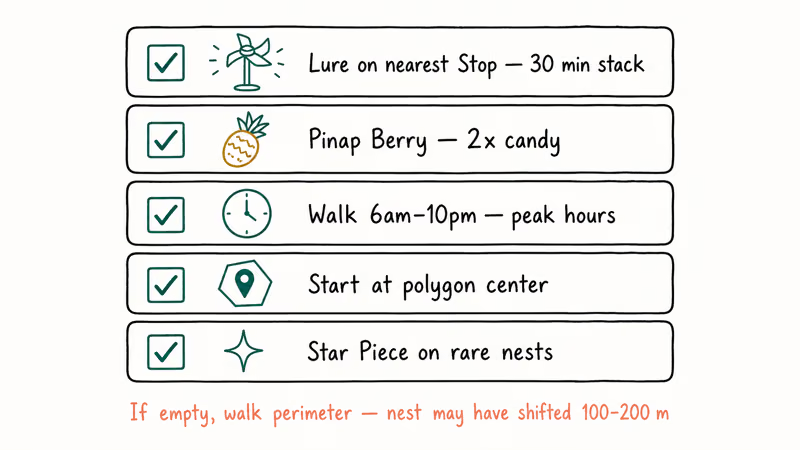
- Set a Lure Module on the closest PokeStop. Lures stack with nest spawns, so the spawn rate near the stop roughly doubles for 30 minutes.
- Bring Pinap Berries. Doubles candy per catch. Stockpile during Community Day events when berries are easier to farm.
- Time your walk for active hours. Spawn rates drop slightly between 2am and 6am local time. Migration day afternoons usually draw the most reports.
- Start at the OSM polygon center. Spawns clump near the geometric center of the nesting polygon, not the perimeter.
- Save a Star Piece for big catches. A confirmed rare nest is one of the few chances to power-stack a Star Piece with multiple high-XP catches.
If you walk into a confirmed nest and see only baseline biome spawns, the most likely cause is that Niantic adjusted the OSM data and the nest moved 100-200 meters. Walk the perimeter once before assuming it’s gone.
For team play, picking the right team color matters less for nests but more for the gym defense after you’ve evolved your nest catches. Worth thinking through before your next gym push.
#What This Guide Stays Away From
Some things you might find in older nest guides have no place here because the policy line matters.
Real-time spawn scanners, third-party map overlays that pull from Niantic’s servers, and GPS spoofing tools stay out of scope. The official Pokemon Go terms of service state that automating gameplay or falsifying location data is grounds for account termination. Niantic’s enforcement team announced in a 2023 update a three-strike system: soft ban, suspension, and permanent ban for repeat violations.
The piece on Pokemon Go soft bans covers what triggers them and how recovery works for legitimate accidents. The official Niantic support tool for ban appeals is the in-app “Help” menu inside Pokemon Go’s settings, not any third-party recovery service.
This guide assumes you’re playing on your own legitimate Pokemon Go account, walking to nests yourself or as a passenger, and using only community-volunteered data. That’s the legal and policy line. It’s also the line that keeps your account in good standing for the long haul.
Want more high-density spawn spots? The best places for Pokemon Go guide maps them.
#Bottom Line
Treat each migration like a scouting mission. Check Silph Road and your local Discord on Wednesday or Thursday afternoon, pick one nest within 20 minutes of home, and confirm with your own eyes before bringing friends. If the rotation pulls a rare cycle (Larvitar, Bagon, Beldum, Aerodactyl, Lapras, Snorlax), commit a full afternoon — otherwise, skip and wait for the next two-week swap.
Pokémon GO Guide
#Frequently Asked Questions
How long does a Pokemon Go nest migration last before the next one?
Each migration lasts 14 days. The next one drops at 7pm UTC on the alternating Wednesday or Thursday. The cycle has held steady since 2017, with only occasional 24-hour drifts when major events ship.
Do shiny Pokemon spawn at nests?
Yes. The shiny rate at a nest is the same as in a wild encounter for that species, which is roughly 1 in 500 for most Pokemon. Because nests pump up the spawn count, you statistically encounter more shinies per hour at a confirmed nest than during normal walks.
Why are Pokemon at nests usually weaker?
Nest spawns roll lower Individual Values (IVs) on average than wild spawns. Niantic tunes nest spawns to be catch-friendly for newer players, so the trade-off is more spawns at lower stats. If you want a high-IV version of a nesting species, catch one wild outside the nest area.
Can I request a new nest in my neighborhood?
Not directly. You can submit OpenStreetMap edits, but Niantic refreshes its OSM snapshot on its own schedule.
What’s the difference between a nest and a spawn point?
A spawn point appears hourly and produces one Pokemon. A nest is a polygon of spawn points biased toward the same species.
Does the migration affect raids or research tasks?
No. Raids run on a separate weekly schedule managed by Niantic’s event calendar, and field research tasks rotate monthly on their own pace. Nest migration only changes which species appears at nesting parks, not what’s in the raid pool, the task rewards, or any current Community Day or Spotlight Hour event lineup.
Can I track migration history for a specific park?
Yes, on The Silph Road Nest Atlas. Click any park and you’ll see a chronological log of every migration that park has hosted, sometimes going back several years. This helps predict whether your local park is a “low-tier” nest that mostly cycles common Pokemon or a “rare nest” that occasionally pulls Larvitar or Bagon.

Pokemon GO GPS Signal Not Found: 7 Proven Fixes (2026)
Pokemon GO GPS signal not found? Seven ordered fixes for Android and iPhone covering precise location, permissions, mock-location, and more.

TweakBox Pokemon GO Review: Does It Still Work in 2026?
TweakBox Pokemon GO no longer works for most users. Learn why it fails, what Niantic's ban policy means for your account, and 3 safer alternatives.

How to Auto Walk in Pokemon GO Without Getting Banned
Auto walk in Pokemon GO using Adventure Sync or GPS tools. Compare safe methods vs ban-risky ones and learn how Niantic enforces its three-strike policy.
How to Find Magikarp Nests in Pokemon GO (2026 Guide)
Find Magikarp nests in Pokemon GO using community maps, water biomes, and rainy weather boosts. Plus candy farming tips to evolve Gyarados fast.