Quickset64: What It Is and Whether to Keep It on Your Dell
Quickset64.exe is the Dell QuickSet hotkey and power utility on older Latitude laptops. Learn what it does and when to swap it for Dell Power Manager.
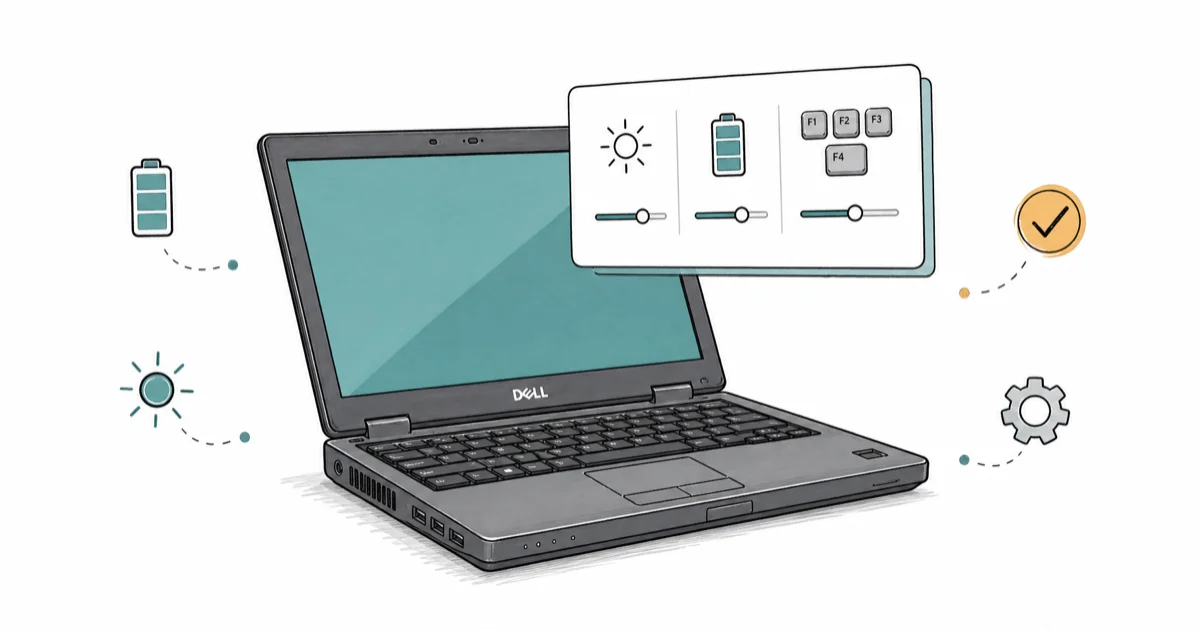
Quick AnswerQuickset64.exe is the legitimate Dell QuickSet utility that controls hotkeys, brightness, and battery profiles on older Dell business laptops. The real file is signed by Dell and lives in C:\Program Files\Dell\QuickSet. Keep it on Latitude or Precision systems, and replace it with Dell Power Manager on newer machines.
Quickset64.exe shows up in Task Manager on older Dell Latitude, Precision, and Vostro laptops because it ships with the Dell QuickSet utility that controls hotkeys, brightness, and the battery profile pickers. To verify it, check the file path, publisher signature, and current Dell support page for your service tag.
This guide assumes the Dell is your own computer, since changing system services or removing OEM utilities on a borrowed or work-managed device may violate the owner’s policy.
- Quickset64.exe is the 64-bit build of Dell QuickSet, an OEM hotkey and power-profile utility preinstalled on Dell business laptops from 2009 through roughly 2020
- The legitimate file is signed by Dell Inc. and sits in
C:\Program Files\Dell\QuickSet\quickset.exe; anything in AppData, Temp, or a random user folder is suspicious - Dell deprecated QuickSet in favor of Dell Power Manager on modern Latitude, Precision, and XPS lines and removed the installer from the support catalog for Windows 11 24H2 and later
- The process normally has a light idle footprint, so removing it for performance reasons is rarely worth the loss of Fn-key brightness, volume, and wireless toggles
- Reinstall by downloading the build that matches your service tag from
dell.com/support, never from third-party DLL or EXE archive sites that bundle adware
#What Quickset64.exe Actually Does
Dell QuickSet is the OEM bridge between the dedicated keys on a Dell business laptop and the matching Windows function. Press the brightness key on a Latitude E7470 and QuickSet draws the on-screen indicator, talks to the embedded controller, and writes the new value to the panel. The 32-bit executable is quickset.exe. The 64-bit build, which is what 64-bit Windows runs on every Dell laptop made after 2009, is Quickset64.exe.
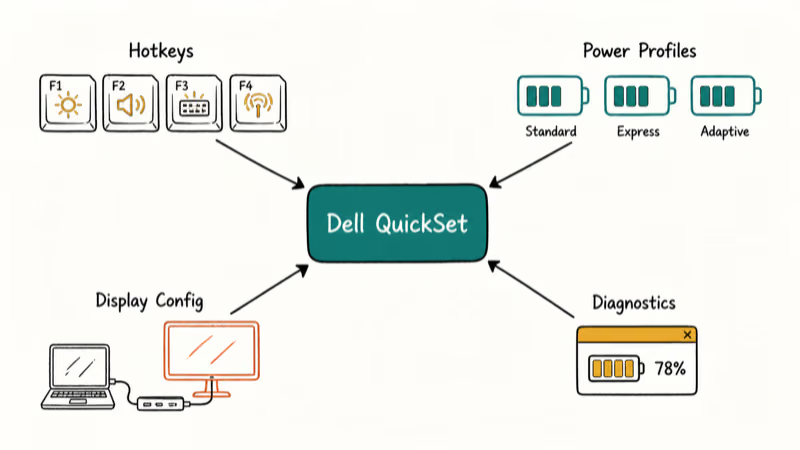
The utility wraps four hardware surfaces.
Hotkeys come first. Brightness, volume, keyboard backlight, the wireless radio toggle, and the projector switching keys all route through QuickSet on Latitude, Precision, and Vostro hardware. Press one and QuickSet handles the indicator overlay plus the embedded-controller call that actually changes the setting. Without it the keys still register, but Windows treats them as generic media buttons and the on-screen brightness or volume slider doesn’t appear, which makes presentations and dark-room work clumsier than it needs to be.
Power profiles come second. QuickSet exposes Dell’s battery health presets (Standard, Express Charge, Adaptive) and surfaces the AC-adapter wattage detection that Latitude firmware uses to throttle CPU draw on the wrong charger.
Display configuration comes third, mostly for laptops with a docking-station port array. Diagnostic indicators come fourth, including the battery-meter popup that appears when you tap the dedicated battery button on older Latitude lids.
Dell’s QuickSet support page states that the 11 branch covers more than 40 Latitude, Precision, and Vostro models running Windows 7, Windows 10, and Windows 11. The page also confirms that Dell builds and signs every release in-house, so the digital signature on a real copy reads Dell Inc.
Resource use is the part most people get wrong. QuickSet normally sits idle between hotkey events because the hot path is a kernel-mode keyboard filter driver. The user-mode tray component does little until you press a key. Because the driver only wakes on a keypress, Task Manager usually shows the tray process near the bottom of the CPU column except for brief spikes when you tap brightness or volume.
#Is Quickset64.exe Safe or a Malware Imposter?
The real file is safe. Dell signs every QuickSet release, the binary ships through Dell Update and Windows Update on supported systems, and mainstream antivirus engines treat it as a trusted publisher.
The catch is the name. “Quickset64.exe” sounds generic enough that adware authors love to plant lookalikes inside the user profile, and two quick checks settle the question.
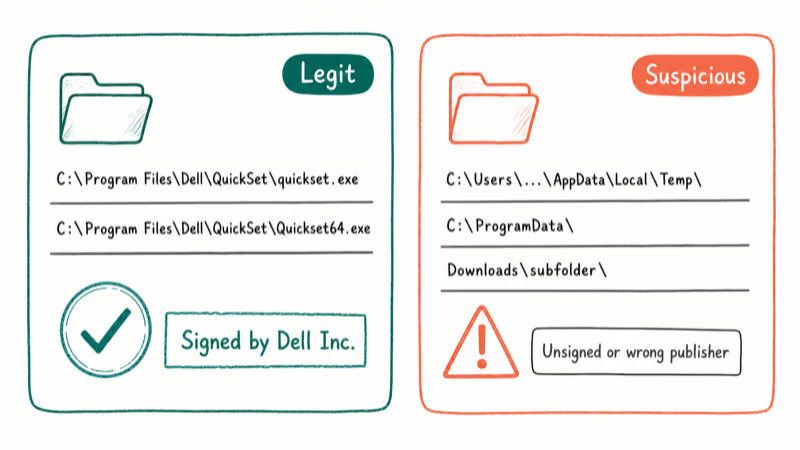
File location. Open Task Manager, press Ctrl+Shift+Esc if it’s not already running, switch to the Details tab, right-click the Quickset64.exe entry, and choose Open file location. File Explorer pops to the folder Windows actually launched the binary from, which is the only path you should care about for this check. The legitimate folder is one of two paths, both under Program Files:
C:\Program Files\Dell\QuickSet\quickset.exe
C:\Program Files\Dell\QuickSet\Quickset64.exe
A copy in C:\Users\<you>\AppData\Local\Temp\, C:\ProgramData\, a sub-folder of Downloads\, or any path that doesn’t start with Program Files\Dell\QuickSet is suspicious by default. Quarantine it and run a scan with Microsoft Defender or Malwarebytes before you do anything else.
Digital signature. Right-click the file in File Explorer, choose Properties, then open the Digital Signatures tab. The signer name should read Dell Inc. (or the historical Dell Computer Corporation on very old builds), and the signature status should report OK. Microsoft’s signed-binary documentation confirms that an unsigned executable, a “verification timed out” status, or a publisher field that doesn’t match the expected vendor is one of the strongest local indicators of tampering.
The file size is another quick sanity check. Real Quickset64 builds run between 1 MB and 4 MB depending on the version. A 30 MB executable named Quickset64.exe is almost certainly a wrapped installer for something else.
If both checks pass and the file lives in Program Files\Dell\QuickSet, you’re looking at the genuine helper.
#Should You Keep Quickset64 on a Modern Dell?
It depends on the hardware. Dell quietly retired QuickSet for the consumer XPS line years ago and finished moving Latitude and Precision to Dell Power Manager for batteries plus Dell Pair and Dell Display Manager for peripherals. Dell’s Latitude support catalog lists Power Manager as the current installable for battery and thermal control on every model from the 7000 and 9000 series shipped after 2018.

QuickSet’s installer is no longer offered for Windows 11 24H2 on the newest Latitude families. Dell’s release notes for the 11.x QuickSet branch explicitly mark Windows 11 24H2 and Windows 12 as out of scope, and Power Manager picks up the function-key behaviour through a new system-tray service.
A short decision rule covers most cases:
- Latitude or Precision shipped before 2018. Keep QuickSet. The hotkeys, projector toggle, and Express Charge presets have no clean equivalent in the modern utilities for that hardware.
- Latitude, Precision, or XPS shipped 2019 or later. Uninstall QuickSet and install Dell Power Manager from
dell.com/support. You get the same battery presets plus thermal management for the modern CPU silicon. - Vostro or Inspiron. Either is fine. QuickSet’s hotkeys still work, but Power Manager covers more of the current consumer feature set.
Removing QuickSet on a hardware generation that depends on it can disable Fn-key brightness and volume control until you reinstall the right utility from the support page for that service tag. On those older Latitude and Precision models the brightness slider and wireless toggle often stop responding after the next reboot, and the only reliable fix is to reinstall the QuickSet build Dell published for that exact service tag.
#How to Uninstall and Reinstall Quickset64 the Right Way
Use the official path. Manual deletion of C:\Program Files\Dell\QuickSet\ leaves orphan registry keys and a stuck Dell QuickSet service that still tries to start at boot.
#Uninstall
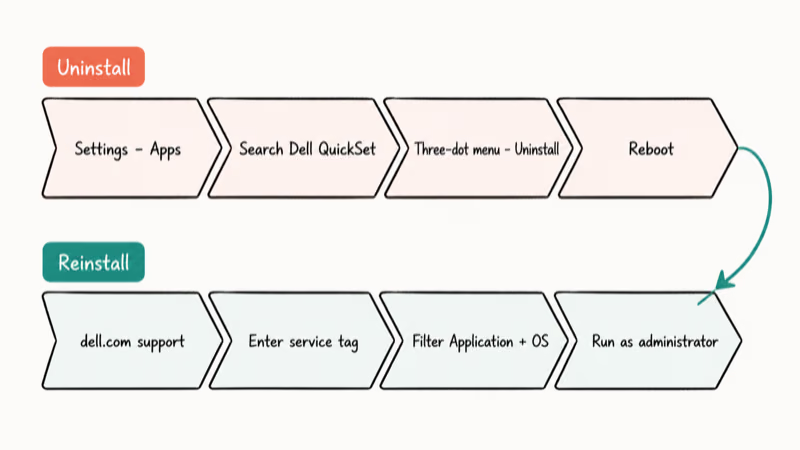
- Open
Settings>Apps>Installedapps on Windows 10 or 11. - Type Dell QuickSet into the search box.
- Click the three-dot menu and choose Uninstall.
- Reboot once Windows confirms the removal.
If the entry doesn’t appear, the package is registered as Dell Quickset64 or just QuickSet on older builds. Sort by publisher and look for the Dell Inc. entries.
#Reinstall
The only safe source is Dell’s own catalog.
- Go to Dell Drivers and Downloads and enter your service tag, or let the page detect the model automatically.
- Filter the list by Application and Operating system.
- Download the newest Dell QuickSet Application entry that lists your Windows version as supported.
- Right-click the installer, choose Run as administrator, accept the EULA, and let Setup finish.
- Reboot. Test the brightness and volume keys to confirm the hotkey layer is back.
A handful of vintage Dell laptops won’t show QuickSet at all on the newest support catalog. In that case, search the legacy section by the exact model name (for example, “Latitude E6440 drivers”) and look for the newest QuickSet build that Dell lists for that model and Windows version. Older entries usually sit under the Application category with a date several years back, so sort the list by date and match the package to your Windows version before downloading.
Stay off third-party “DLL fixer” or “EXE archive” sites. Microsoft’s Defender guidance on third-party EXE downloads confirms that downloads of system utilities from unofficial mirrors are one of the top vectors for unwanted-software infections on Windows. The Dell support page is the only QuickSet source you should trust.
#What Happens at Boot and How to Verify It’s Healthy
Dell QuickSet adds a small service named Dell Quickset Application (display name) and registers quickset.exe and Quickset64.exe to start through that service plus a Run-key entry for the tray icon. Both the service and the Run entry are visible in standard Windows tools.
Open Task Manager, switch to the Startup apps tab, and look for Dell QuickSet. Status should read Enabled and Startup impact Low on healthy installs.
Open services.msc, scroll to Dell Quickset Application, and confirm Status is Running and Startup type is Automatic. If the service is Stopped but Quickset64.exe still runs, you’re probably looking at a leftover after a partial uninstall. Re-running the uninstaller and rebooting clears the state.
For a deeper look, grab Microsoft Sysinternals Process Explorer. It reports the loaded modules, publisher signature, and parent process for Quickset64.exe in one view.
If you also see other Dell-named processes you don’t recognize alongside QuickSet, our explainer on Datastore.edb covers the Windows Update database file that often gets confused with vendor-specific utilities, and the walkthrough for the Toaster.exe process covers another notification-related binary that surfaces on enterprise laptops.
#Common Quickset64 Issues and Quick Fixes
Three problems account for most QuickSet support threads.
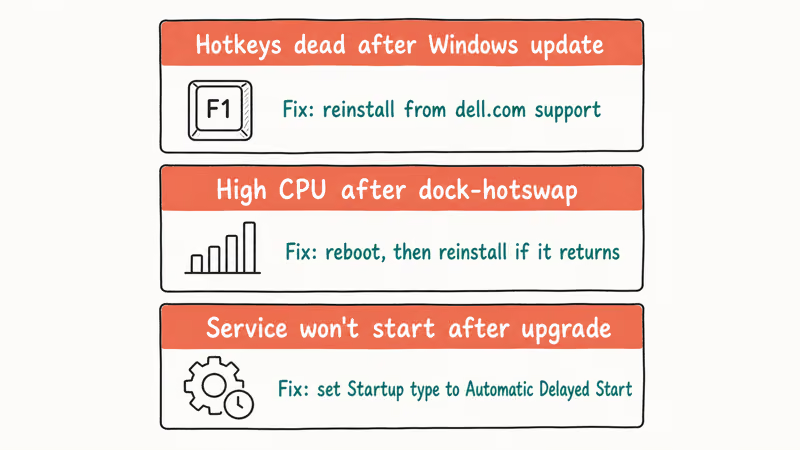
Hotkeys stopped responding after a Windows feature update. Reinstall QuickSet from the Dell support page using the build for your current Windows version. Feature updates occasionally replace the Dell-supplied keyboard filter driver. If the brightness and volume keys still don’t respond after a fresh install, our walkthrough on unlocking a stuck Dell laptop keyboard covers the embedded-controller reset that brings the hotkey layer back when QuickSet alone isn’t enough.
Quickset64.exe consumes high CPU. Real QuickSet idles near 0% CPU. A persistent 5-15% draw is almost always a stuck event-handler loop after a docking-station hot-swap. Reboot first, then reinstall QuickSet if the draw returns.
Service won’t start after upgrade. Switch the startup type to delayed automatic. Open services.msc, right-click Dell Quickset Application, choose Properties, set Startup type to Automatic (Delayed Start), and click Start. Delayed start gives the embedded-controller driver time to initialize on Windows 11 systems where the standard Automatic mode races the driver, and once both are loaded the QuickSet tray icon appears within a few seconds of sign-in just like before the upgrade broke it.
If you want a process-management primer that covers the broader Windows side, the Chrome Task Manager walkthrough explains the same Details-tab investigation steps you’d use on any unfamiliar binary, and the breakdown of how Microsoft Compatibility Telemetry hits the disk covers a Windows-side equivalent that often shows up alongside Dell processes on enterprise laptops.
#Bottom Line
Leave Quickset64 alone on any Latitude or Precision shipped before 2018. The hotkeys and battery presets have no clean replacement on that hardware, and the resource cost is invisible. On modern Dell hardware, uninstall QuickSet through Settings > Apps and install Dell Power Manager from the support page for your service tag. Don’t manually delete the folder, don’t grab the installer from a third-party EXE site, and never trust a copy that lives outside C:\Program Files\Dell\QuickSet.
#Frequently Asked Questions
Is Quickset64.exe a virus?
No, not the real one. The legitimate Quickset64.exe is signed by Dell Inc. and ships in C:\Program Files\Dell\QuickSet\. A copy in any other folder, especially under AppData, Temp, or ProgramData, is suspicious and worth scanning with Microsoft Defender or Malwarebytes before you do anything else.
Do I need Quickset64 on my Dell laptop?
Only if your Dell shipped with it. You need it if your Dell shipped with QuickSet preinstalled and you want the brightness, volume, keyboard backlight, and wireless toggle keys to work without third-party software. On modern Latitude, Precision, and XPS laptops Dell has moved this functionality to Dell Power Manager and Dell Pair, so QuickSet is optional or even unsupported, depending on the model.
Where do I download the official Quickset64 installer?
From dell.com/support only.
Enter your service tag or auto-detect the model, filter by Application and Operating system, and download the latest Dell QuickSet Application entry that lists your Windows version as supported. Avoid third-party DLL or EXE archive sites, since they regularly bundle adware with the installer, and the version they hand you may be the wrong build for your specific Latitude or Precision generation, which can break the hotkeys instead of fixing them.
Will uninstalling Quickset64 break anything?
Only the Fn-key layer. Brightness, volume, keyboard backlight, and projector toggle stop working on hardware that needs QuickSet. Drivers and BIOS keep running.
Why does Quickset64.exe use so much memory?
It usually doesn’t. Real Quickset64 normally has a light idle footprint. A persistently higher draw usually means a stuck event handler after a docking-station swap, a conflict with a third-party brightness utility, or a corrupted install. Reboot once, then reinstall QuickSet from the Dell support page if the issue returns.
Is Quickset64 still supported on Windows 11 24H2?
No. Dell removed QuickSet from the support catalog for Windows 11 24H2 and later, and Dell Power Manager now provides the battery-profile and thermal-management surface on supported hardware. Older Latitude and Precision laptops can still run the Windows 10 or Windows 11 22H2 build of QuickSet without issue, but newer machines should use Power Manager instead.
How do I tell QuickSet apart from Dell Power Manager?
The tray icon and the panel layout give it away. QuickSet’s tray icon is the Dell logo with a small slider, and the popup groups hotkeys, brightness, and Express Charge in one panel. Dell Power Manager has a Windows 11-style interface with separate Battery, Thermal, Alerts, and Charge tabs. The two can coexist on transitional hardware but do the same job for battery presets, so pick one and uninstall the other to avoid conflicting hotkey handlers.

Best Laptop for Running LLMs in 2026: Memory Comes First
The best laptop for running LLMs is a memory purchase first. Compare MacBook unified memory against NVIDIA laptop VRAM, and see what each tier really runs.
How to Run a Local LLM on Windows: A 2026 Setup Guide
Run a local LLM on Windows with LM Studio or Ollama. Pick a model that fits your GPU memory, keep every prompt offline, and skip the monthly bill.
Bluetooth Not Working on Snapdragon X? Fixes for 2026
Bluetooth not working on your Snapdragon X Copilot+ PC? Generic audio, mice, and keyboards work, but vendor apps often lack an ARM build. Fixes inside.
Docker Desktop and WSL2 Not Working on Snapdragon X? Fix It
WSL2 runs fine on Snapdragon X, but Docker Desktop ARM is Early Access and throws WSL errors. Use WSL2 plus native ARM64 Ubuntu and Docker Engine.