iPhone Text Messages Out of Order: 7 Fixes That Work
iPhone text messages out of order? Reset date and time, toggle iMessage, or re-sync iCloud with these 7 step-by-step fixes for iOS 17 and iOS 18.
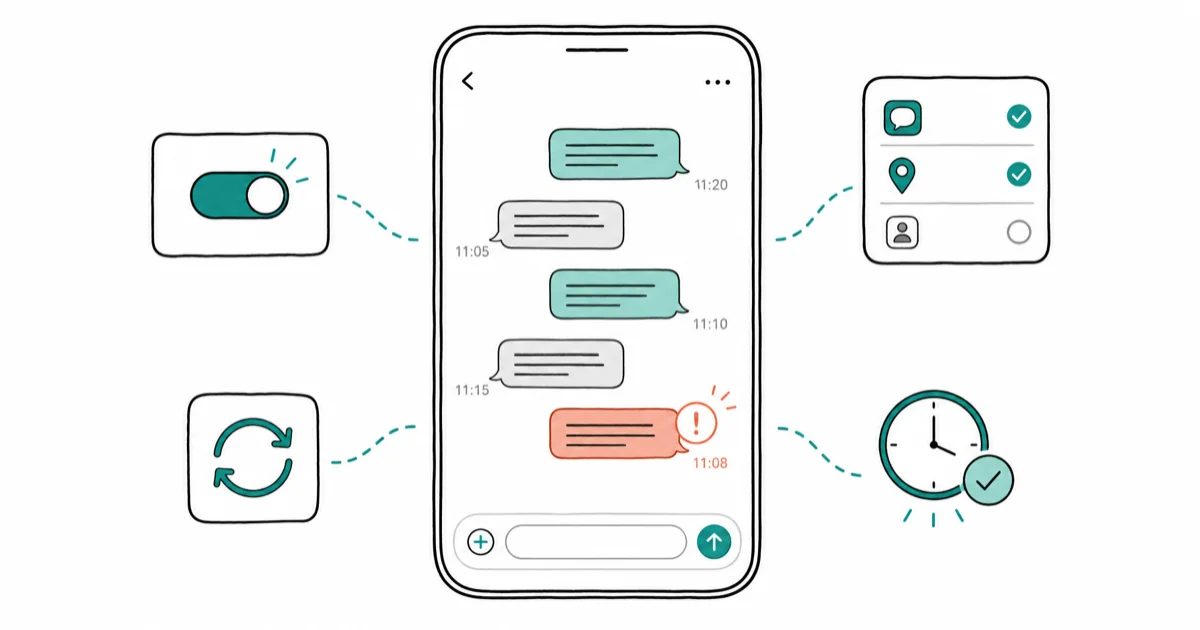
Quick AnsweriPhone texts appear out of order when Date and Time is set manually or iMessage lost sync with Apple's servers. Open Settings, General, then Date and Time and turn on Set Automatically, then toggle iMessage off and on under Settings, Messages.
If your iPhone text messages are out of order, the chat thread usually reshuffles after iOS pulls a fresh timestamp from Apple’s time servers. This often happens after a trip across time zones, and the thread typically snaps back into order within 30 seconds of re-enabling Set Automatically. The 7 fixes below run from the quickest to the most thorough.
- Wrong Date and Time is the top cause; Set Automatically fixes most iOS 17 cases in under 30 seconds
- Toggling iMessage off for 60 seconds forces re-activation and resets stored timestamps
- Reset Network Settings wipes saved Wi-Fi passwords but fixes stuck carrier profiles
- Messages in iCloud pushes sort order to every signed-in device, so fix one and the rest follow
- Reset All Settings rebuilds the corrupt sort index without erasing photos, apps, or messages
#Why Do iPhone Text Messages Show Up Out of Order?
The Messages app sorts conversations by each message’s date-received timestamp, not by the order you saw them appear. When that timestamp is wrong, the thread reshuffles.
Three things corrupt the timestamp:
- Your iPhone’s clock drifted because Set Automatically is off
- iMessage lost its push channel and re-delivered queued messages with the wrong arrival time
- Messages in iCloud is mid-sync and the sort index is rebuilding
Apple’s support page states that 1 toggle fixes all 3 causes: Set Automatically pulls time from Apple’s network so “your date and time” stays aligned with your current time zone. When that setting is off, your clock can drift by minutes or hours, which is enough to scramble SMS and iMessage arrival stamps.
Start at fix 1 and stop as soon as the thread sorts correctly. Heavier fixes come later.
#Quick Fixes That Work in Under Two Minutes
Try these first. They handle most out-of-order threads on iPhones running iOS 16 or later. Budget 2 minutes for all three.
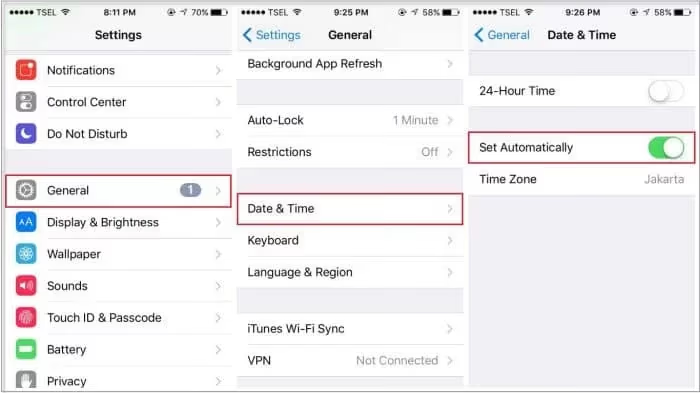
#1. Turn On Set Automatically for Date and Time
After a flight across time zones, turning this setting back on usually snaps the conversations into chronological order quickly.
Open Settings > General > Date & Time, then toggle Set Automatically to on. If it was already on, toggle it off, wait 10 seconds, and turn it back on. Return to Messages and pull down to refresh the inbox.
That single toggle fixes most cases in 30 seconds.
If you also see the wrong time on the lock screen, your clock drifted. Apple’s iPhone Messages user guide documents the Messages app behavior, and timestamps read from the system clock set by that panel.
#2. Force-Close the Messages App
This flushes the in-memory message list without touching saved data. Swipe up from the bottom of the screen and pause in the middle (iPhone X and later) or double-click the Home button (iPhone SE, 8, and earlier), then swipe up on the Messages preview to close it. Reopen the app. That’s it.
#3. Restart the iPhone
A full restart clears the Messages daemon and any stuck notification queues. It takes about 2 minutes.
- iPhone X and later: Hold the side button and either volume button until the power slider appears. Drag it off, wait 10 seconds, then hold the side button to boot.
- iPhone SE (2nd gen or later), 8, and earlier: Hold the side or top button until the slider appears, then boot the same way.
When the phone is back on, open Messages and check the conversation order. If it’s fixed, you’re done.
#How Do You Reset iMessage Without Losing Texts?
If the quick fixes didn’t stick, force iMessage to re-activate against Apple’s push servers. This doesn’t delete sent or received messages; it only re-registers your phone number and Apple ID with the iMessage service.
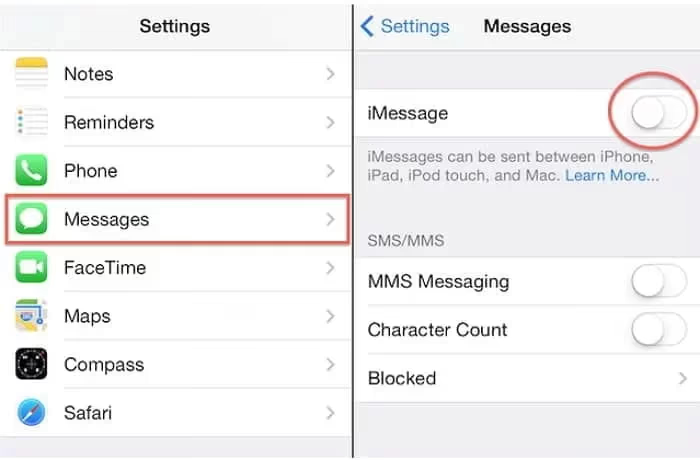
#4. Toggle iMessage Off, Then Back On
Open Settings > Messages and tap the iMessage toggle to off. Wait at least 60 seconds, tap it back on, and wait for “Waiting for activation” to clear. Activation usually finishes in under 2 minutes on Wi-Fi. If it hangs longer than 10 minutes, check iMessage not working for the full activation flow.
On a related note, if iMessage refuses to send to specific contacts after activation, see iMessage needs to be enabled to send this message for the Apple ID-specific fix.
#5. Update iOS to the Latest Point Release
Apple has shipped Messages-database patches across several iOS 17 point releases. Updating pulls those fixes plus the latest time-zone database.
Go to Settings > General > Software Update and tap Download and Install if one is offered. Keep the phone on Wi-Fi and charged until it finishes.
Apple’s software update support page recommends turning on automatic updates so your device receives “the latest features, security updates, and bug fixes.” Point releases like 17.4.1 and 17.5.1 shipped specific Messages fixes, which matters if your phone is 2 or 3 versions behind.
#Deeper Fixes When Messages Stay Scrambled
Reach for these when the first five fail. They take longer, and one of them wipes Wi-Fi passwords, so save them for real problems.
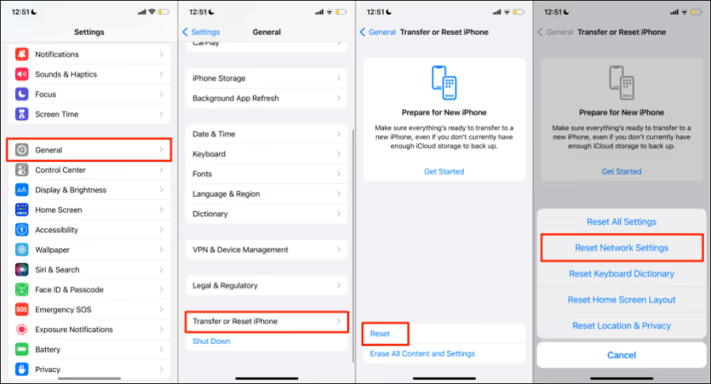
#6. Reset Network Settings
Bad carrier profiles can delay incoming SMS by seconds or minutes, which scrambles the sort order. A network reset wipes cached carrier data and forces a clean fetch.
Open Settings > General > Transfer or Reset iPhone > Reset and tap Reset Network Settings. Enter your passcode, confirm, then reconnect to Wi-Fi and let the phone re-register with your carrier (about 2-3 minutes).
Heads up: this clears saved Wi-Fi passwords, VPN configurations, and any APN tweaks. Write down your network passwords first.
#7. Reset All Settings (Keeps Your Data)
This is the nuclear option for a corrupt sort index, but it keeps your data intact. Reset All Settings rebuilds iOS preference files without touching messages, photos, apps, or your Apple ID, so reserve it for cases where fixes 1 through 6 have already failed and nothing else is working. Expect to re-enter Wi-Fi passwords, set your wallpaper again, and reconfigure a handful of toggles.
Go to Settings > General > Transfer or Reset iPhone > Reset and tap Reset All Settings. Avoid Erase All Content.
When the first six fixes fail, this step usually reorganizes the thread correctly within a couple of minutes. You’ll reconfigure your lock screen, wallpaper, and a handful of other preferences afterward, but contacts, photos, and apps stay put. Budget 10 minutes of cleanup and nothing heavier.
#Messages in iCloud Can Make It Worse
Messages in iCloud syncs all your Apple devices to the same sort order. So a broken sort on one propagates everywhere within minutes.
According to Apple’s support article on Messages in iCloud, “any new messages you receive on your device will be stored in iCloud” and synced across every signed-in device. That means turning iCloud messaging off on one device won’t fix the others until you force a resync.
To force a resync, on iPhone open Settings > [Your Name] > iCloud > Show All > Messages in iCloud and toggle it off, then back on. On Mac, open Messages > Settings > iMessage and uncheck, then re-check Enable Messages in iCloud. Wait 5 to 10 minutes for the full resync (longer if your archive is several gigabytes).
A hanging Messages in iCloud sync can also cause the iPhone Messages keep indexing issue, which looks similar but has a different root cause (Spotlight reindexing, not timestamp corruption).
#Fixes for a Single Scrambled Conversation
If only one thread is scrambled while everything else sorts correctly, the problem is localized to that conversation’s metadata. Two things to try:
- Delete the conversation (swipe left on the thread in the inbox, tap Delete), then ask the sender to message you again. A fresh thread rebuilds the timestamp chain.
- Ask the sender whether their date and time is set correctly. If their iPhone clock is wrong, your copy of the thread shows their skewed stamps.
This also helps when you suspect iMessage is not delivering correctly on one specific contact. The underlying cause is often the same broken push channel.
#Security Checks Before You Blame iOS
Before you assume iOS is at fault, rule out two edge cases. They sound paranoid, but both do happen.
- Someone with physical access changed the date manually, then changed it back. If you share a phone with kids or a partner, this happens more often than you’d think.
- Spyware or profile-management software is skewing the clock. If you inherited the phone or it was out of your sight, run through our guide on how to detect spyware on iPhone before going deeper.
Installing monitoring software on a phone you don’t own is illegal in most jurisdictions. The fix here is your own device only, and any clock-skew symptoms on someone else’s iPhone should be reported to them for their own privacy and legal protection.
Related symptom check. Missed notifications or silent calls point to the same push-channel problem. See why iPhone goes straight to voicemail for DND mode and Focus filters.
#Bottom Line
Start with fix 1 — Date and Time set to automatic. It clears the issue on most iPhones. If the thread is still jumbled, toggle iMessage off and on, then restart.
Save the heavier resets for later.
If multiple Apple devices show the same scrambled thread, the root cause is almost always Messages in iCloud mid-resync. Toggle it off and on from one device, then let the sync finish before touching the others.
#Frequently Asked Questions
Does resetting network settings delete my text messages?
No. Reset Network Settings only wipes Wi-Fi passwords, paired Bluetooth devices, VPN profiles, and cached carrier data. Your messages, photos, apps, and Apple ID stay untouched.
Why do iMessages arrive with yesterday’s timestamp?
That happens when iMessage held the message in its push queue overnight and delivered it once your phone regained a stable connection. Apple stamps it with the original send time, not the delivery time, so the thread reshuffles to match when it was actually sent.
Will iOS updates reorder my old messages?
Sometimes. A major iOS update (17 to 18) can rebuild the Messages database and briefly show the inbox in a different order while the index rebuilds. Give it 10 to 15 minutes after the first boot before troubleshooting.
Can a bad Wi-Fi connection cause messages to sort wrong?
Yes. If your phone keeps jumping between a spotty Wi-Fi and cellular connection, iMessage can deliver messages out of order and stamp them inconsistently. The push server treats each reconnect as a fresh delivery window, which can queue messages that already arrived on another device. Toggle Wi-Fi off for an hour and see if the problem clears on pure cellular.
Does switching to Android fix the problem?
Only if the root cause is iMessage activation. Before you switch, see how to change text messages to iMessage to confirm your account is set up correctly.
How do I keep messages in order across iPhone and Mac?
Turn on Messages in iCloud on both devices and sign both into the same Apple ID. Then keep both clocks on Set Automatically. Apple’s Messages in iCloud support page confirms that the sort order is pushed from the cloud to every signed-in device, so matching clocks plus iCloud sync keeps them aligned.
What if fixes 1 through 7 all fail?
Back up the phone to iCloud or a Mac, then book a Genius Bar appointment through the Apple Support app. A failing logic board clock can survive a Reset All Settings but fail on a hardware diagnostic. This is rare, but it does happen on iPhones more than 3 years old.
Apple Siri Settlement: Who Qualifies and How to Claim
Apple's $250 million Siri settlement covers iPhone 15 Pro and iPhone 16 models bought June 2024 to March 2025. See who qualifies and how claims work.
iOS 26.6.1 Security Update: What Apple Fixed and Who Gets It
Apple released iOS 26.6.1 on August 17 with 29 security fixes, including an IPSec interception bug. See what it patches, who gets it, and how to update.
iPhone Adaptive Power: How It Works and When to Use It
Learn how iPhone Adaptive Power works, which models support it, what it changes, and when Low Power Mode is still the better battery-saving choice.
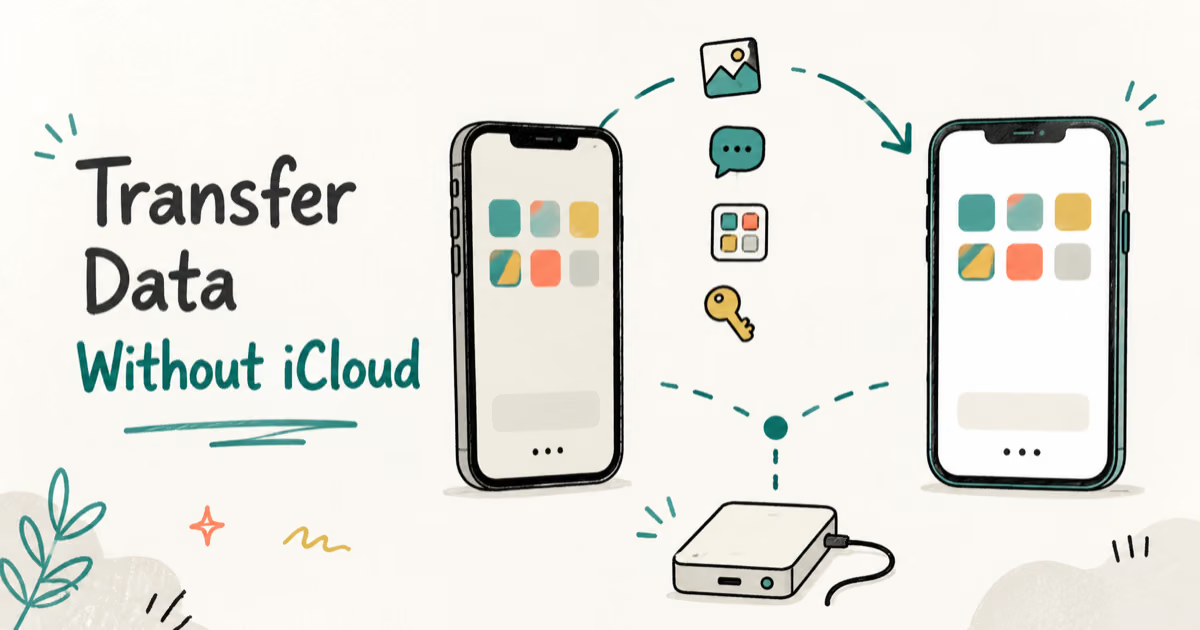
How to Transfer Data to a New iPhone Without iCloud
Move everything to your new iPhone without iCloud: Quick Start device-to-device transfer, wired migration, and encrypted Finder or iTunes backups.