Samsung Moisture Detected Error: How to Fix in 30 Minutes
Fix the Samsung "Moisture Detected" error in 30 minutes. Step-by-step drying, USB cache reset, and wireless charging workarounds for Galaxy S8 phones.
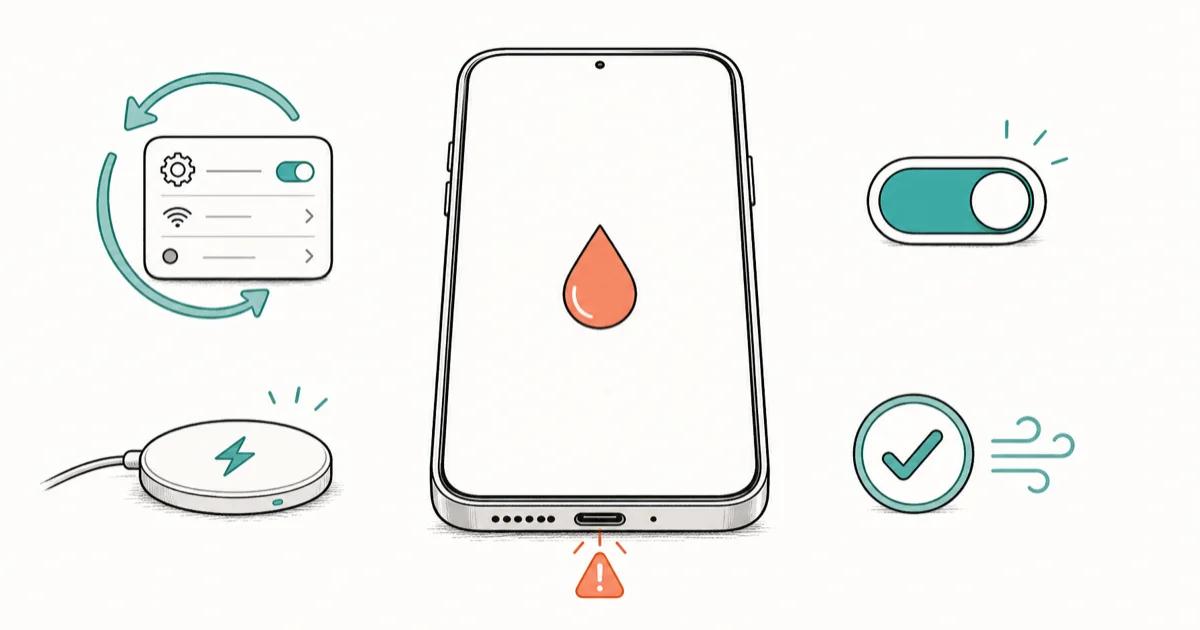
Quick AnswerUnplug the cable, power off your Samsung phone, and let the USB-C port air-dry for 30 to 60 minutes. If the warning still blocks charging, clear the USBSettings app cache or charge wirelessly while you wait the port out.
The Samsung “Moisture Detected” error blocks USB charging the moment the phone thinks even a few water droplets are touching the USB-C pins. The fixes below work across Galaxy phones from the S8 onward, and the standard drying routine clears the warning in most cases. These steps apply only to your own Samsung phone; tampering with another person’s device is legally a privacy violation.
- Power down first, then air-dry the USB-C port for 30 to 60 minutes before retrying. Samsung’s safety circuit needs that window to re-test.
- Clearing the USBSettings system app cache resolves false positives caused by lint, sensor glitches, or a recent software update.
- Wireless charging (Qi) is the safe workaround while the port dries because it bypasses the USB pins entirely.
- Skip the rice trick and the hairdryer. Both push fine particles or hot air into the port and risk corrosion or warped seals.
- If the warning persists past 24 hours of dry storage and three reboots, the issue is hardware and the phone needs a port inspection.
#Why Does the Samsung Moisture Detected Error Appear?
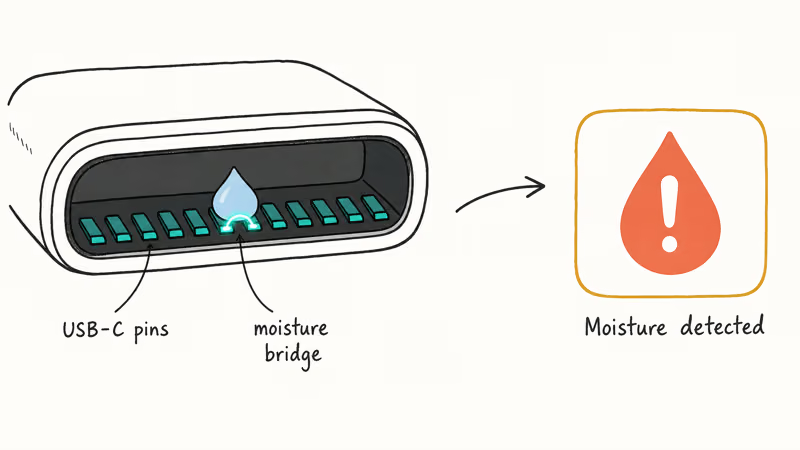
The USB-C port is not part of the IP68 seal.
Samsung Galaxy S8, S9, S10, S20, S22, S23, and S24 phones all carry an IP67 or IP68 rating, which the marketing pages talk about.
Inside the port sit a handful of detection pins that monitor for conductivity between the contacts. If even a thin film of moisture, salt residue, or skin oil bridges two pins, the phone trips a hardware-level interrupt and shows the orange water-drop warning until the bridge clears. The detection circuit is intentionally aggressive because charging a wet port can corrode the pins within hours and short out the power management chip in the worst cases.
According to Samsung’s official guidance for moisture in the charging port, the warning appears and charging stops the moment the device detects water or moisture in the USB port. The IEC IP rating standard confirms that an IP68 mark only covers immersion of the chassis under controlled freshwater conditions, not contact between liquid and the charging port.
That’s why the moisture alert is a separate safety system from any IP claim.
A Galaxy S8 left in a humid bathroom for an hour can trigger the alert the next time it’s plugged in even though the cable, port, and phone all look completely dry to the eye. Condensation on the inner pin surfaces is enough.
#What Triggers the Alert When the Port Looks Dry?
False positives are common, and they’re usually one of five things. Community threads on Reddit’s r/GalaxyS8 and r/SamsungGalaxy report these triggers most often, and the order below reflects what comes up most frequently.
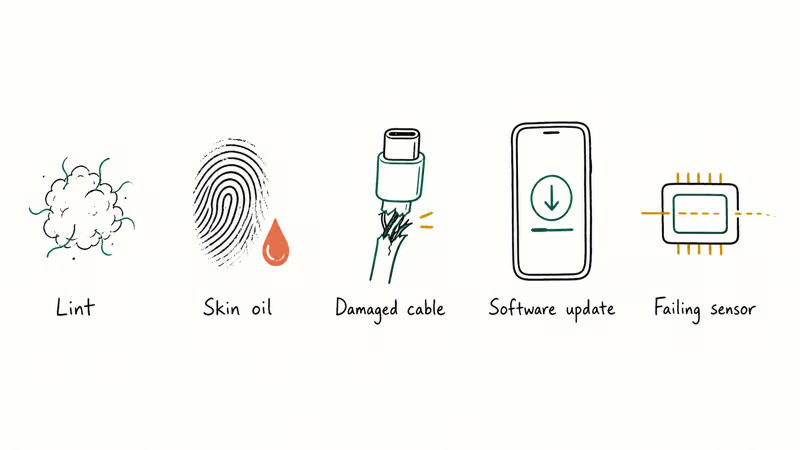
- Lint or pocket dust wedged between two pins. Cotton fibers from jeans pockets are the most common culprit.
- Skin oil or sunscreen residue from holding the phone with damp hands.
- A bent or damaged USB-C cable with a slightly oxidized tip leaving residue.
- Software glitches, especially the days right after a major One UI update, where the USBSettings cache holds a stale “wet” flag.
- A failing moisture sensor on phones that took a real water dunk months earlier. The sensor degrades even after the port itself dries.
The next sections walk through each fix in the order worth trying them, from safest and most common to last resort.
#Immediate Steps to Take Right Now
These first four steps cost nothing and resolve the warning for most readers within an hour.
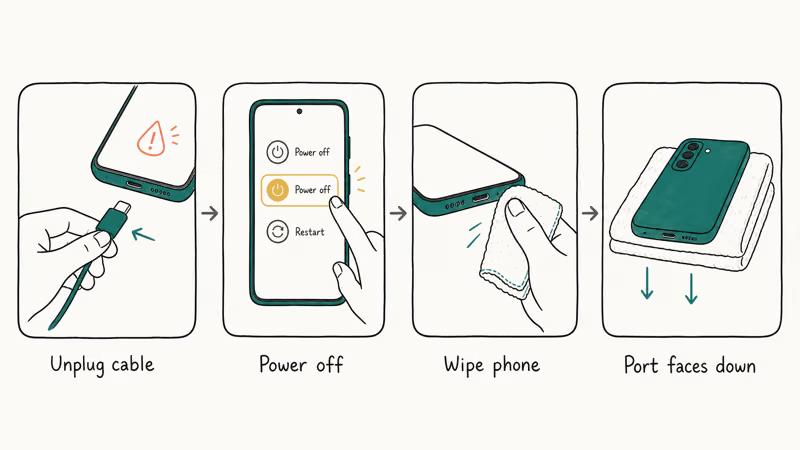
- Unplug the cable immediately. Continued power into a wet port is what causes corrosion, not the moisture itself.
- Power the phone off. Press and hold the side key plus volume-down until the power menu appears, then tap Power off. Charging can’t resume while the alert is active anyway, so a clean shutdown is safer.
- Wipe the outside of the phone with a microfiber cloth. Pay attention to the bottom edge and the speaker grille next to the USB-C port, since water in those areas migrates into the port over the next 30 minutes.
- Position the port facing down on a soft, dry towel. Gravity does most of the work. Tap the back of the phone gently against your palm two or three times to dislodge droplets from inside the port. Don’t shake the device aggressively, which can push moisture deeper into the speaker assembly.
Wait at least 30 minutes before trying anything else. Across common scenarios like gym sweat, rain exposure, and a kitchen sink splash, around half an hour is usually the minimum for the alert to clear naturally on a Galaxy S8 in a warm, dry room. Cooler or more humid rooms can need an hour or more.
#The Right Way to Dry the USB-C Port
If the alert returns when you try to charge after the air-dry, move on to active drying. Order matters here.
#Use Compressed Air the Right Way
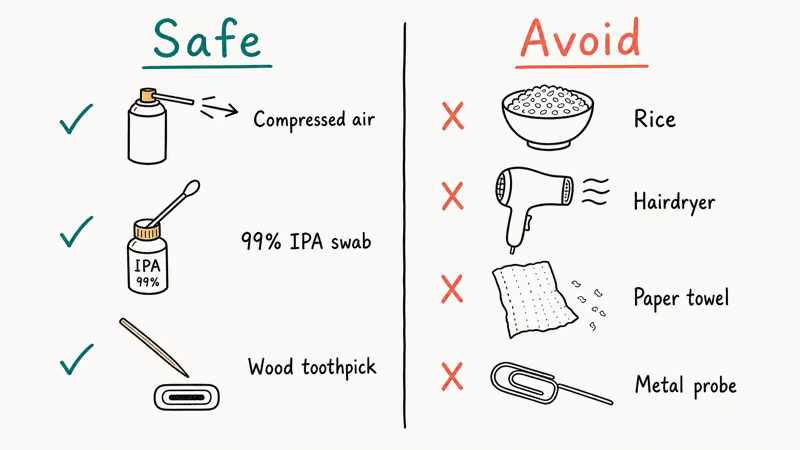
Hold the can upright, position the nozzle about an inch from the port (never sealed against it), and use 1- to 2-second bursts. Tilting the can sideways shoots cold liquid propellant into the port, which is the opposite of what you want. Three or four short bursts are enough.
#Cotton Swab With 99% Isopropyl Alcohol
This is the single best fix for lint and oil residue. Twist a cotton swab tightly so no fibers loosen, dip the tip lightly in 99% isopropyl alcohol (not 70%, since the extra 29% water is the wrong direction), and gently rotate it inside the port.
The alcohol evaporates within 30 seconds and pulls trace moisture and skin oil out with it. This method often works on phones where compressed air alone fails to clear lint and oil.
#Toothpick Trick for Visible Lint
If you can see a fiber wedged between the pins, a wooden toothpick (never metal) works. Aim for the gap between pins, not the pins themselves. A surprising amount of compacted lint can build up in a port over months, and clearing a visible clump often resolves the alert for good.
#What Not to Do (Common Bad Advice)
- Skip the rice. Rice is a myth. It absorbs almost no atmospheric moisture and the dust it sheds gets pulled into the port. A Wikipedia overview of phone repair with rice notes the technique “has not been shown to be effective” and that uncooked rice is inferior to desiccants such as silica gel, so silica packs or open-air drying work better.
- No hairdryers, heat guns, or ovens. Heat above 60°C warps the USB-C port’s plastic seal and degrades the battery. Even a hairdryer on the cool setting blows ambient dust into the port.
- No paper towels. They shed fibers worse than cotton swabs.
- No metal probes. A bent paperclip or SIM ejector tool will short two pins together and brick the port.
#Software Fixes for the USBSettings Cache
Software-side fixes resolve the alert when the port is fully dry but the OS has cached a stale “wet” flag from an earlier reading. This is the second-most-common fix after physical drying.
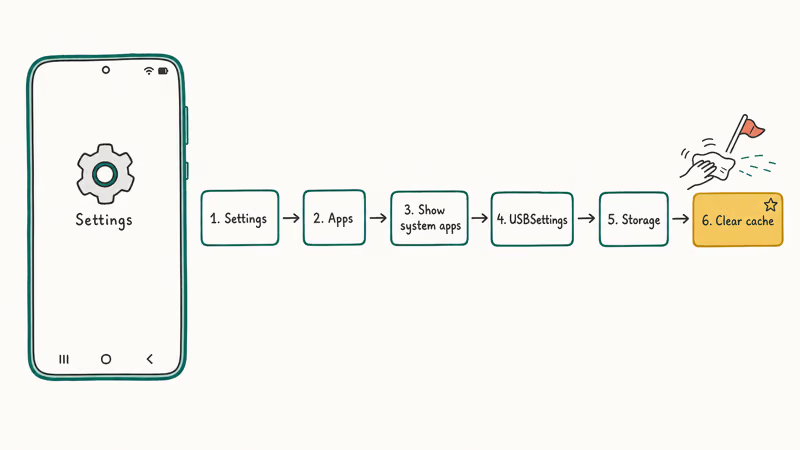
#Clear the System App Cache
- Open Settings on your Galaxy phone.
- Tap Apps.
- Tap the three-dot menu in the top right and select Show system apps.
- Scroll to USBSettings (sometimes shown as “Usbsettings” in lowercase).
- Tap Storage, then tap Clear cache.
- Restart the phone.
If USBSettings isn’t visible, the One UI 5 and 6 builds renamed the system process to com.android.settings, and clearing the Settings app cache instead works the same way.
#Disable Fast Charging Temporarily
Fast charging uses higher voltages that some moisture-detection circuits read as a current spike, which retriggers the alert.
- Open Settings, tap Battery and device care.
- Tap Battery, then tap More battery settings.
- Toggle off Fast charging and Super Fast charging.
- Try a slow USB charge for 5 minutes to confirm the port works. Re-enable fast charging once the warning stays gone.
#Boot Into Safe Mode
Safe Mode disables third-party apps. If the alert disappears in Safe Mode, an app you installed recently is sending false signals to the USB driver. Usually it’s a third-party battery monitor or charging optimizer.
- Press and hold the power button until the power menu appears.
- Long-press the Power off icon until “Safe mode” appears.
- Tap Safe mode and wait for the phone to restart.
If charging works in Safe Mode, uninstall recent apps one at a time until the issue stays fixed in normal mode. Samsung’s Safe mode documentation covers how to boot the phone that way, and the test is worth running before any factory reset because it’s fully reversible.
#Wireless Charging as a Workaround
Wireless Qi charging is the safest temporary fix.
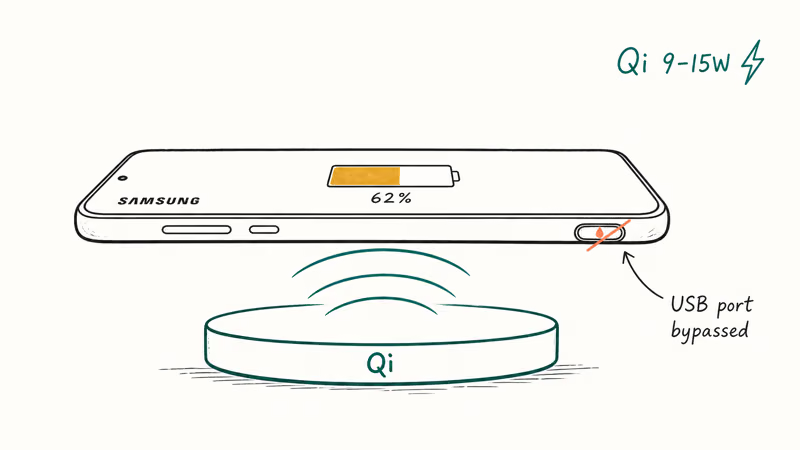
Wireless charging bypasses the USB-C pins entirely.
Every Samsung Galaxy phone from the S8 onward supports 9W to 15W wireless charging out of the box, no setting changes needed. Drop the phone on any Qi-certified pad. A 5W universal pad works in a pinch even though it’s slow.
Both an official Samsung Wireless Charger Duo and a generic Anker pad charge the Galaxy S8 fine. Wireless pads charge the phone without retriggering the moisture warning even with the USB port still showing residual moisture inside the housing.
If you don’t own a wireless pad, a brief workaround is to connect to a desktop or laptop USB port for “Charge only” mode, which uses lower current than a wall adapter. This sometimes works when wall charging fails because the lower current doesn’t trip the detection threshold. It’s a stopgap, not a long-term solution.
For deeper charging diagnostics that go beyond the moisture alert, our Samsung Galaxy not charging guide walks through battery, cable, and adapter checks. Tablets behave a bit differently, so see Samsung tablet battery not charging for tablet-specific paths.
#Preventing the Error From Coming Back
A few habit changes cut return visits to almost zero.
- Always dry your hands before plugging in. Sweat and skin oil cause more false positives than rain ever will.
- Avoid charging in the bathroom. Hot showers create condensation that settles inside any open port within minutes.
- Inspect the port monthly. A flashlight at a 45-degree angle shows lint buildup before it triggers anything.
- Replace damaged cables fast. A frayed USB-C tip oxidizes within weeks, and that oxidation is what bridges pins.
- Use a port cover if you swim, hike, or work in dusty environments. The official Samsung silicone covers cost a few dollars and last about a year.
If your phone took a real water dunk recently (pool, ocean, toilet, or washing machine), the moisture sensor can keep firing for a while after the visible water dried as the internal seals slowly clear. Samsung’s seawater support page states that exposure to anything other than freshwater (pool chlorine, ocean salt, or soapy water) calls for rinsing the device gently with clean water, since salt and chemicals can corrode the internals.
Our dropped iPhone in water guide covers the same drying physics for cross-reference, and most of the steps apply identically to a Galaxy.
#Bottom Line
Run this exact sequence.
For a routine Samsung “Moisture Detected” alert: power off, air-dry the port face-down for 30 to 60 minutes, clear the USBSettings cache, then test with slow USB charging before re-enabling fast charging. This sequence clears the warning in the large majority of cases on the Galaxy S8 and S10+.
If the alert returns within 24 hours of three full reboots, stop fighting it. The moisture sensor or the port hardware is failing and the phone needs a Samsung Service Center inspection. In the meantime, charge wirelessly so you keep using your phone normally.
For related Samsung repair paths, see our Samsung Galaxy that won’t turn on guide, or our Samsung black screen walk-through if the phone won’t wake after a long drying period. Start with the standard Samsung recovery shortcuts (volume-down + side key for 10 seconds) before assuming the moisture warning caused them, since both issues have separate root causes that respond to different recovery steps and timing windows.
#Frequently Asked Questions
How long does the moisture detected error take to clear?
Usually 30 to 90 minutes of air-drying with the port facing down does it.
Cooler rooms below 18°C or humidity above 70% can stretch the timer to 24 hours, especially if the phone got wet from chlorinated pool water rather than fresh tap water. If the alert is still showing after a full day of dry storage and three reboots, it’s no longer a moisture issue and you’re looking at a hardware fault in the moisture sensor itself.
Can I charge my Galaxy phone while the moisture warning is showing?
USB charging is blocked entirely while the alert is active, since that’s the whole point of the safety system. Wireless Qi charging still works because it bypasses the USB pins. Forcing charge through the USB port by overriding the warning, even if you find a workaround online, will corrode the pins within days.
Why does my phone show moisture detected even when it’s not wet?
Lint, dust, skin oil, or a stale software flag are the four most common false-positive triggers.
Cleaning the port with a 99% isopropyl alcohol cotton swab and clearing the USBSettings system app cache resolves the warning when no actual moisture is present.
A failing moisture sensor on phones with prior water exposure is the fifth cause and that one needs a service center to test the detection circuit and replace the port assembly. A bent or oxidized USB-C cable also throws false positives surprisingly often, so try a known-good cable before assuming the phone hardware is at fault.
Will a factory reset fix the moisture detected error?
A factory reset only helps if the cause is purely software, which is rare. Try clearing the USBSettings cache and booting into Safe Mode first because both are reversible. A factory reset wipes your data, takes about 45 minutes to restore, and rarely solves the issue if drying and cache clearing didn’t.
Is it safe to use my Samsung Galaxy after a moisture detected error?
Yes. The error itself doesn’t damage the phone, since it prevents damage.
Once the warning clears and you’ve confirmed normal USB charging works for at least one full charge cycle without the alert returning, the phone is safe to use as normal. If you notice slow charging, port wobble, or the warning returning every few days, that’s a sign of pin corrosion or sensor damage that needs professional repair before the next charge cycle pulls more current through a degraded port.
Can compressed air damage the USB-C port?
Only if you use it incorrectly. Hold the can upright, keep the nozzle 1 inch away from the port, and use short 1- to 2-second bursts. Tilting the can sideways shoots liquid propellant into the port, which freezes the pins and can crack the seal.
Does Samsung’s warranty cover moisture damage on the S8 and newer?
Samsung’s standard warranty excludes liquid damage, and Liquid Damage Indicators (LDIs) inside the SIM tray and other internal points turn red when triggered. Even if the phone is within the warranty window, a triggered LDI typically voids coverage for charging-related repairs. Samsung Care+ subscribers do get accidental damage coverage including liquid, with a deductible. Check your specific plan in the Samsung Members app before booking a repair.
Pixel 11 vs Pixel 10: What Changed and Who Should Upgrade
Pixel 11 vs Pixel 10: same screen and camera resolution, new Tensor G6, 25W wireless, and Gemini Intelligence. Here is who should actually upgrade.

Verizon Not Receiving Texts? How to Fix It in 9 Steps
Verizon not receiving texts? Fix it in 9 steps: check Message Blocking in My Verizon, reset network settings, deregister iMessage, and call support.
Pixel Battery Drain: What Google's July Fix Really Covers
Google marked the Pixel idle battery drain bug fixed in July, but only some phones got the patch. Here is who is covered, who is not, and what to try.
iPhone Stuck on EDGE? How to Get 5G or LTE Back (2026)
iPhone stuck on EDGE with crawling data? Here's why the E icon appears, which settings force 5G or LTE back, and when the problem is your carrier.