KoPlayer Pokemon Go: The Risks Behind Emulator Play
KoPlayer for Pokemon Go violates Niantic's terms and triggers shadowbans. Here's how detection works and the safer options that keep your account safe.
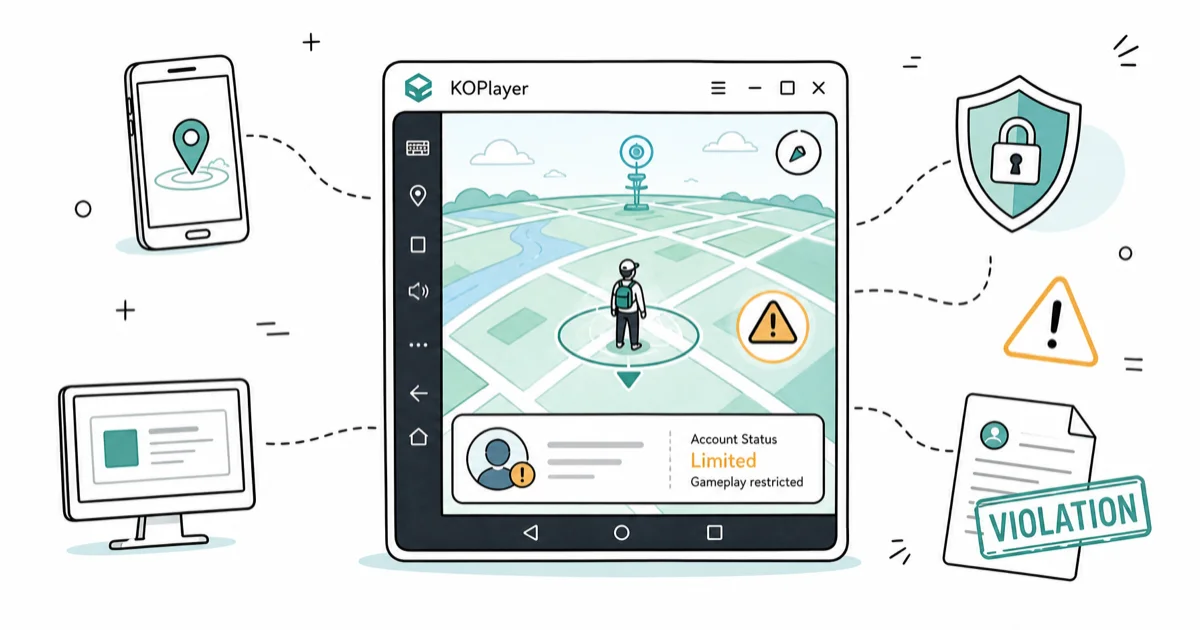
Quick AnswerRunning Pokemon Go on the KoPlayer Android emulator violates Niantic's third-party software policy and triggers warnings, suspensions, or permanent bans under the three-strike enforcement system. Play on a real Android phone or iPhone to keep your trainer profile safe.
KoPlayer Pokemon Go tutorials usually pitch the same trade. Run the game inside an Android emulator, get a bigger screen, lose the walking. The catch is that Niantic treats emulators as cheating software, so the same setup that lets you tap from a desktop also marks your account for enforcement. This guide covers how detection works and which legitimate routes give you the same comfort.
- Niantic’s three-strike policy escalates from a warning to a seven-day suspension and finally a permanent ban for emulator or GPS-spoof use
- KoPlayer runs Android 4.4.2 inside a virtual machine, which Pokemon Go’s Play Integrity check fingerprints through OS, sensor, and graphics signatures
- Shadowbans typically hide rare encounters, raid invitations, and gym placements for a week or longer, with no in-game alert that the account is restricted
- Pokemon Go’s terms of service prohibit automation tools, bots, modified clients, and emulators as a single class of unauthorized software
- Adventure Sync, Remote Raid passes, and the Campfire app replicate most play-from-home benefits without breaking any rule
#How KoPlayer Fits Into the Pokemon Go Conversation
KoPlayer is a Windows-based Android emulator that boots a virtual Android 4.4.2 device inside a desktop process. The marketing pitch sells it as a way to run mobile apps on a bigger screen with keyboard or gamepad controls. A noisy corner of the Pokemon Go community uses it as a vehicle for GPS spoofing and multi-account farming.
The appeal’s easy to understand. Walking isn’t always available.
That convenience is exactly what Niantic flags. Pokemon Go’s third-party software policy treats KoPlayer the same way it treats more notorious tools like PGSharp and the older iSpoofer. According to Niantic’s Pokemon Go Terms of Service, accessing the game through unauthorized third-party software is a violation. That stays true whether you actively spoof your GPS, run multi-instance, or just tap your phone with the emulator open in the background.
#Why Does Niantic Ban Emulator Users?
Niantic’s stated reason hasn’t changed since 2017. Emulators and location-spoofing tools damage gameplay for legitimate trainers. When one account warps from spawn to spawn, it claims rare Pokemon, gym slots, and PvP rankings that real players grinding miles in the rain spent hours earning.
The integrity of leaderboards, the local raid economy, and in-person Community Day events all depend on every device being a real device in a real place. The Pokemon Go community Wikipedia entry documents repeated waves of emulator and spoofer bans dating back to the game’s first year.
A second reason is contractual.
Pokemon Go ships with a third-party software clause that mirrors the wording used by most live-service games. The clause covers automation tools, bots, modified clients, and emulators as a single class.
Because KoPlayer fits the emulator bucket on its own, the question Niantic answers in enforcement isn’t whether the trainer spoofed location. It’s whether the session was launched from a real consumer device. On a desktop emulator like KoPlayer, the Play Integrity check commonly refuses to load the game past the Niantic logo even with no GPS modification active, because the virtual device fails hardware attestation.
The third driver is liability. Niantic’s three-strike discipline policy confirms that the framework escalates from a warning to a temporary account suspension and finally a permanent ban on the third strike. That published ladder makes it easier for Niantic to defend the in-game economy against anti-cheat lawsuits if it ever comes to that.
#How Does Pokemon Go Detect KoPlayer?
We’ll keep this section deliberately high-level. Niantic doesn’t publish the exact heuristics, and tutorials that walk through bypassing detection are exactly what the three-strike policy is designed to punish.
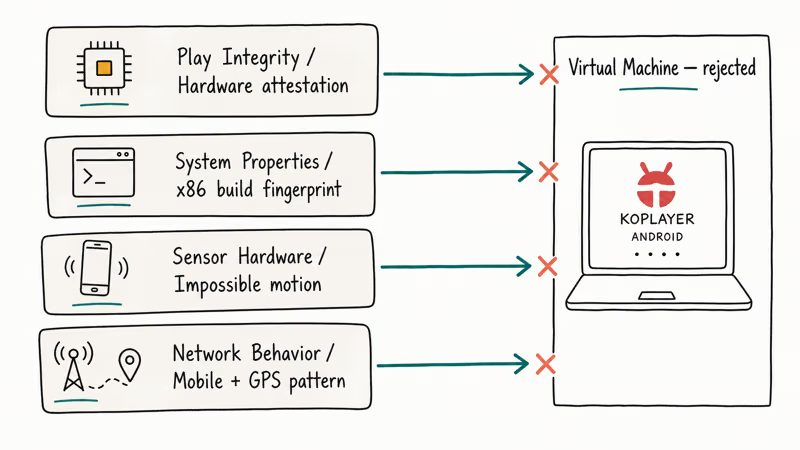
What public anti-cheat documentation does say is that Pokemon Go layers four signals. Google Play Integrity (the successor to SafetyNet) returns a hardware-backed attestation that fails by design on virtual devices, including KoPlayer.
The game also checks system properties for build fingerprints associated with x86 emulator kernels. It looks for sensor hardware that reports impossible motion patterns. And it compares network behavior against the typical mobile-data plus GPS pattern that real phones produce. None of these checks need an internet round trip; they all run on device before the login screen appears.
Once an emulator flag is attached to a Google account, switching back to a real phone doesn’t clear it: raid invitations and rare encounters can stay suppressed while the ban is active. The flag follows the trainer profile, not the device. That’s why some players cycle through several fresh emulator setups before realizing the warning is tied to the account, not the install.
The takeaway isn’t that KoPlayer occasionally evades detection. It’s that Pokemon Go assumes any virtual environment is a cheat environment until proven otherwise, and the proof doesn’t exist for a free Windows emulator.
#Niantic’s Three-Strike Enforcement Policy
Niantic’s enforcement framework has been public since 2019. Strike one is a written warning attached to the trainer profile, with a soft ban that hides rare Pokemon, raids, and EX Raid eligibility for several weeks. Strike two is a 7-day suspension that locks the entire account, shop and friend list included. Strike three is a permanent ban that wipes the trainer’s progress, badges, and Pokedex entries.
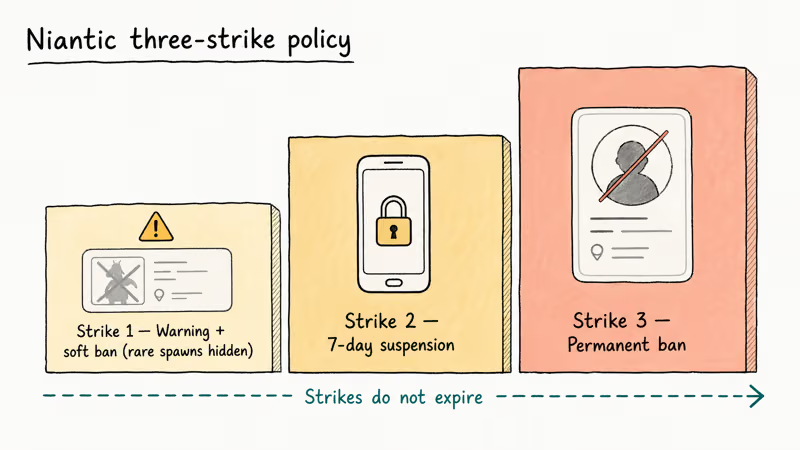
According to Niantic’s three-strike documentation, the 3 strikes don’t expire. A warning issued in 2022 still counts toward the second-strike threshold in 2026.
Players who buy ban-immunity subscriptions from third-party emulator vendors are paying for marketing copy, not protection. The strike record is held server-side on Niantic’s infrastructure and isn’t affected by the client.
The most common pathway into strike one is the combination this article warns against. Launching Pokemon Go inside KoPlayer triggers the Play Integrity failure, the trainer profile is flagged, and a soft ban warning appears the next time the trainer logs in from any device. Trainers who clear the warning by switching to a real phone and behaving normally for several months can sometimes avoid escalation. The only guaranteed path is to stop using emulators entirely.
#What Shadowbans Look Like in Practice
Niantic’s shadowban is silent.
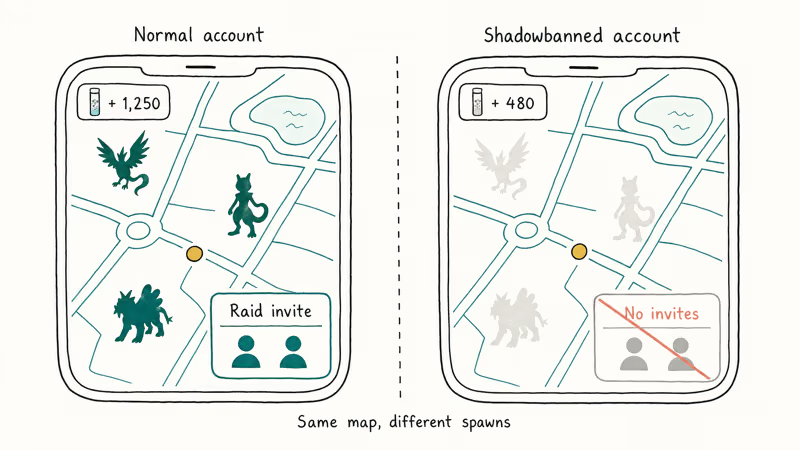
What changes after a flag is the spawn pool. Rare Pokemon stop appearing, raid lobbies don’t show invites, and gym battles register lower stardust. Trainers often spend a week assuming the spawns are just bad before noticing the pattern. The game still loads, the map still shows Pokestops, and the trainer can still spin them, so the lock looks like normal play until rare encounters drop to zero.
Niantic’s published guidance recommends waiting out the soft ban for 7 days without making further policy violations. Niantic also recommends reporting any account that appears to be cheating through the in-game support form rather than through forums or Reddit threads.
The real cost of the shadowban is event-shaped. Community Day, GO Fest, and limited research tasks all depend on the spawn pool and raid invitations that the shadowban hides. A trainer who triggered KoPlayer detection two days before Community Day will see the event pass entirely, with no Shiny encounter rate, no community boost, and no refund for the missed window.
#Legitimate Ways to Play Pokemon Go on a Bigger Screen
Most trainers reach for KoPlayer because they want the visuals on a bigger display, the convenience of a desktop session, or the ability to play when a real phone is inconvenient. Pokemon Go has shipped enough first-party features over the past three seasons that most of those needs no longer require third-party tooling.
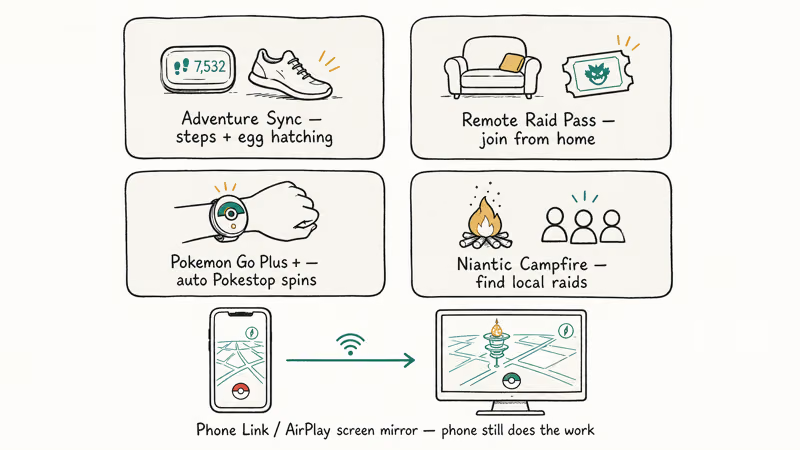
Adventure Sync is the official integration with Apple Health and Google Fit. It counts steps and hatches eggs from a phone in your pocket while you do anything else.
Remote Raid passes let you join raids from home without leaving the couch. The Pokemon Go Plus + Bluetooth accessory automates Pokestop spins from the wrist. Niantic Campfire is the official social companion app for finding raid groups, route lures, and local trainers without joining unsanctioned Discord servers.
If the goal is a desktop-class screen specifically, the best legitimate path is screen mirroring an Android phone to a Windows or Mac display through Phone Link or AirPlay. The phone still does the actual game work. The phone is what the integrity check sees; the mirroring software just shows a copy of the screen. This is one of the rare setups where the convenience of a big monitor doesn’t cost you compliance.
Trainers who specifically want emulator visuals should know that the warning extends to the whole class of tools. BlueStacks for Pokemon Go and Nox, MEmu, and LDPlayer all trip the same Play Integrity heuristics. Switching emulators isn’t a workaround; the next ban arrives just as fast.
#Bottom Line
KoPlayer is a working Windows emulator and a fully functional broadcast signal to Niantic’s anti-cheat. If your goal is to keep an account you’ve invested years and dozens of Community Days into, run Pokemon Go on the phone or tablet that already passes Play Integrity. Use Adventure Sync, Remote Raid passes, and Campfire to fill the convenience gap.
If your goal is to test how the three-strike policy works on a throwaway account, KoPlayer will get you there in a single week and you’ll lose that account.
The single recommendation from this guide is specific: don’t log a main trainer into KoPlayer, even once. The Play Integrity flag is permanent on the trainer profile, and the cost of starting a fresh account is steeper every time Niantic adds another seasonal feature locked behind level 30 or higher.
Pokémon GO Guide
#Frequently Asked Questions
Is KoPlayer safe to use for any Android app?
KoPlayer itself is a legitimate emulator and works well for productivity apps and games that don’t run anti-cheat. The risk is specifically in pairing it with games like Pokemon Go that ship Play Integrity checks. Note-taking apps, drawing apps, and single-player games that skip device attestation generally run fine. Pokemon Go is unusual because Niantic added its own emulator heuristics on top of the Play Integrity check.
Will Niantic ban my account just for installing KoPlayer?
The ban triggers on Pokemon Go launching inside KoPlayer, not on having KoPlayer installed alongside other software. You can keep KoPlayer on the same Windows machine you use for desktop work as long as you never sign into Pokemon Go through it.
Can a VPN hide that I’m using KoPlayer?
A VPN moves your IP address but doesn’t change the Play Integrity attestation, which is what flags the emulator in the first place. The VPN industry sometimes markets itself as a Pokemon Go workaround, but the technical reality is that Niantic’s checks happen on device before the login request leaves the network. Switching VPN providers, regions, or protocols has no effect on the integrity verdict.
How long does a Pokemon Go shadowban last?
A shadowban triggered by emulator detection typically runs about 7 days before rare spawns reappear. Niantic doesn’t publish a precise table, and longer locks of multiple weeks have been reported for repeated offenses. Saving screenshots of your map at the start of the period helps confirm which spawns the shadowban actually muted.
Are there emulators that Pokemon Go does allow?
No officially supported emulator exists for Pokemon Go on Windows or Mac. Niantic’s third-party software policy treats every desktop emulator as a violation regardless of brand, performance, or whether GPS spoofing is active.
Should I appeal a Pokemon Go ban from KoPlayer use?
Appeals filed by trainers who admit emulator use are typically denied.
What happens if my friend logs into my account from KoPlayer?
The strike attaches to the trainer profile, not the device. If a friend logs into your account on their KoPlayer setup and triggers the integrity check, the warning, suspension, or ban moves to your account when you log in next, regardless of where you actually live or play.
Can I fix a Pokemon Go location error without using emulators?
Most “failed to detect location” issues come from high-accuracy mode being disabled in Android location settings or Background App Refresh being off on iOS. Our Pokemon Go failed to detect location walkthrough covers the standard fixes that work on a real phone. None of those steps require emulator software or third-party GPS overrides.
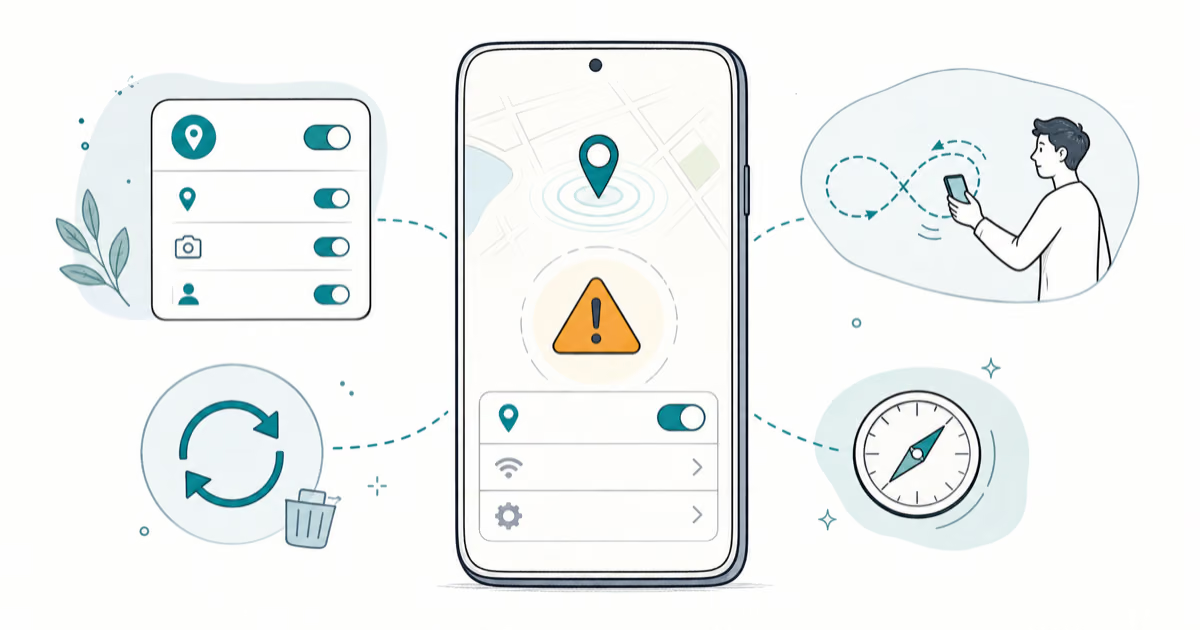
Pokemon GO GPS Signal Not Found: 7 Proven Fixes (2026)
Pokemon GO GPS signal not found? Seven ordered fixes for Android and iPhone covering precise location, permissions, mock-location, and more.
TweakBox Pokemon GO Review: Does It Still Work in 2026?
TweakBox Pokemon GO no longer works for most users. Learn why it fails, what Niantic's ban policy means for your account, and 3 safer alternatives.
How to Auto Walk in Pokemon GO Without Getting Banned
Auto walk in Pokemon GO using Adventure Sync or GPS tools. Compare safe methods vs ban-risky ones and learn how Niantic enforces its three-strike policy.
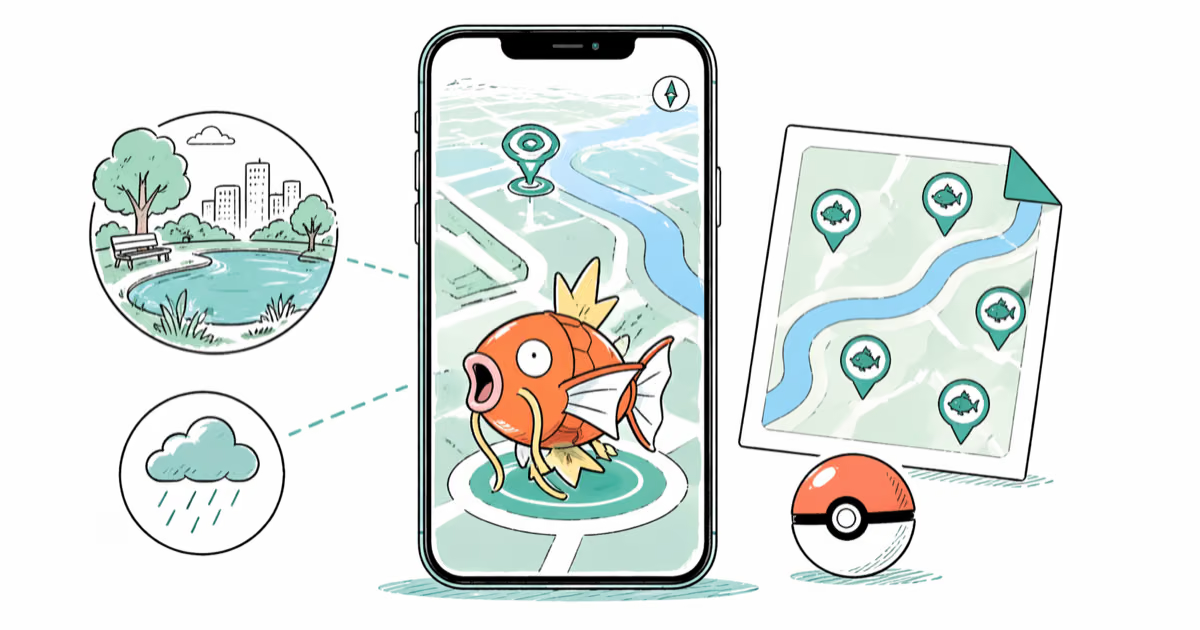
How to Find Magikarp Nests in Pokemon GO (2026 Guide)
Find Magikarp nests in Pokemon GO using community maps, water biomes, and rainy weather boosts. Plus candy farming tips to evolve Gyarados fast.