How to Spot and Avoid Kik Scams: A Complete 2026 Guide
Spot the 5 most common Kik scams (catfishing, gift cards, sextortion, romance, phishing) and protect your account with these proven safety steps.
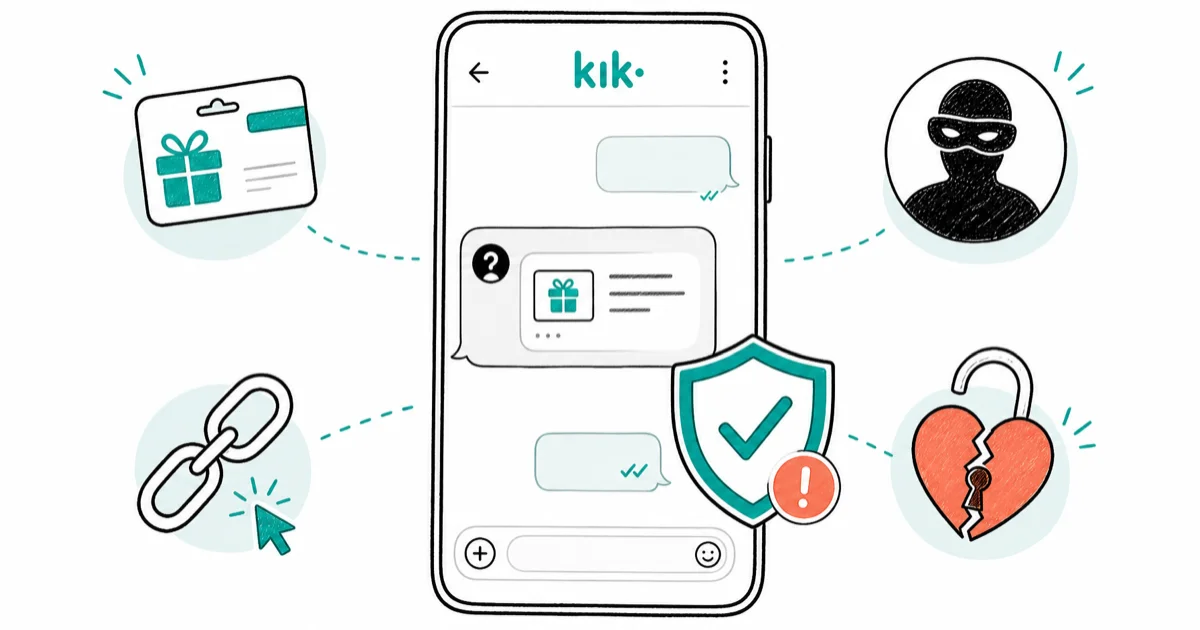
Quick AnswerThe fastest way to spot a Kik scam is when a stranger pushes you to move chats off-platform, asks for gift cards or explicit photos, or sends a link before you trade more than a few messages.
Kik scams follow a small set of predictable plays: catfishing, gift card requests, sextortion, long-form romance fraud, and phishing links. The platform’s anonymity (no phone number required to sign up) makes Kik a favorite hunting ground for fraud, but the warning signs are easier to spot than they look once you know what scammers actually do.
- Scammers usually open on a dating app or social network, then push you to switch to Kik because cross-platform bans are harder to enforce there.
- The five most common Kik scams are the “premium girl” pitch, gift card requests, sextortion, long-form romance fraud, and phishing links that load malware or harvest data.
- Gift cards (Walmart, Steam, Amazon, Apple) dominate scam payment requests because redeemed codes are nearly untraceable.
- Bots send the bulk of opening messages, but high-value cons like romance fraud and sextortion are humans working from scripts and stolen photos.
- Block, report inside Kik using the “Spam or abuse” option, and file a complaint at reportfraud.ftc.gov if money or images changed hands.
#Why Kik Is a Magnet for Scammers
Kik launched in 2010 as a phone-number-free messenger built around usernames. According to Wikipedia’s Kik Messenger entry, the app requires only a username, email, and birthdate to register, with no phone number tied to the account. That same low-friction signup is what makes Kik attractive to fraudsters: a banned account can be replaced in under a minute, and the username-only model gives victims no easy way to track the real person behind the screen.
Scam traffic also funnels in from other platforms. Common opening lines include “hey :) wanna chat on Kik?” and “I’m shy here, my Kik is…” in DMs on dating apps, social networks, and forums.
Once the conversation crosses over, the originating app loses the ability to ban the actor, so the fraud window stays open. If you’re new to the app, our breakdown of whether Kik is a dating app explains why dating-app users are especially exposed.
#How Do Kik Scams Typically Start?
Almost every Kik scam follows the same opening sequence. A stranger introduces themselves, the conversation feels effortless, and soon you’re being asked for something — money, photos, or a click. Early scam contact usually fits one of three categories: a flirty stranger pushing you to a “premium” channel, a too-friendly investor offering a “tip,” or a bot blasting a shortened URL.
The mechanics are deliberate. Conversation starts on a public platform (dating app, gaming forum, social network) where moderation is heavier. The scammer asks to switch to Kik because they “feel safer” or “use it more.” On Kik, identity verification is non-existent, payment requests are unmoderated, and links open without warnings. By the time you sense something is off, the scammer has already lined up the ask.
If you’ve already exchanged messages and feel uneasy, your most useful move is to stop replying immediately. Don’t argue, don’t try to “test” them. Silence is the cleanest exit, since active engagement just confirms your account is responsive.
#The 5 Most Common Kik Scams Right Now
Five repeat patterns account for the most common Kik scam complaints. Each one targets a different motivation: curiosity, lust, loneliness, greed, or panic.
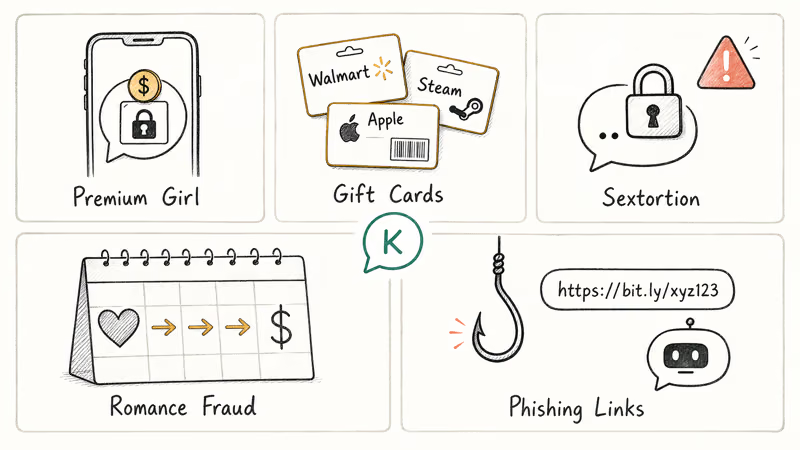
#1. The “Premium Girl” Pitch
A profile claiming to be a young woman messages you on a dating app, suggesting Kik for “more fun.” After a few flirty exchanges, she explains she only sends photos or videos through her “premium” account, which costs anywhere from $20 to $200.
Once you pay, the account goes silent or blocks you. The same stolen photos appear on dozens of accounts simultaneously, and a quick reverse image search usually surfaces them. This pitch is purely transactional fraud, and Kik’s terms of service prohibit it.
#2. Gift Card Requests
Romance scammers, fake “investors,” and impostor “support agents” all funnel victims into the same payment method: gift cards. According to the Federal Trade Commission’s consumer alert on gift card scams, only scammers tell you to pay with a gift card, and there is no legitimate reason a romantic interest, employer, or government agency will ever ask you to do this.
Walmart, Apple, Amazon, Steam, and Google Play cards are the favorites because the codes can be resold on third-party marketplaces almost immediately. Our long-form guide on Steam gift card scams covers how the resale economy works in detail.
#3. Sextortion
The blackmailer poses as a flirty match, gets you to send explicit photos or video, and then demands money to keep the images private. Threats often include screenshots of your contact list (sometimes real, often bluffed).
The FBI’s Internet Crime Complaint Center (IC3) recommends reporting the incident immediately rather than paying, since paying rarely ends the extortion. Sextortion against minors is a federal crime in the US, and the National Center for Missing & Exploited Children operates a takedown service for affected images.
#4. Long-Form Romance Fraud
Romance scams are the slow-burn version of the premium girl pitch. The scammer invests weeks building rapport, often using stolen photos of real people pulled from Instagram or military social media accounts.
After trust is built, an “emergency” arrives: a sick relative, a stuck flight, an investment opportunity. The asks start small ($50 for “data”) and escalate ($5,000 wired through Western Union). When the money or your patience runs out, the scammer disappears, leaving the victim with no recourse since identity was never verified.
#5. Phishing Links
Bots and lower-effort human scammers blast shortened URLs with bait like “is this you in this video?” or “you won a $100 Amazon card.” The link typically loads a credential-harvesting page (mimicking Kik, Instagram, or your bank) or pushes a malware install on Android.
iPhone users are usually steered to fake App Store popups. If you ever land on a page asking you to log back into Kik, close the tab. The real Kik never asks for password re-entry through a chat link.
#What Are the Warning Signs of a Kik Scammer?
Most scam profiles share a small cluster of tells. The bigger the overlap, the higher the risk:
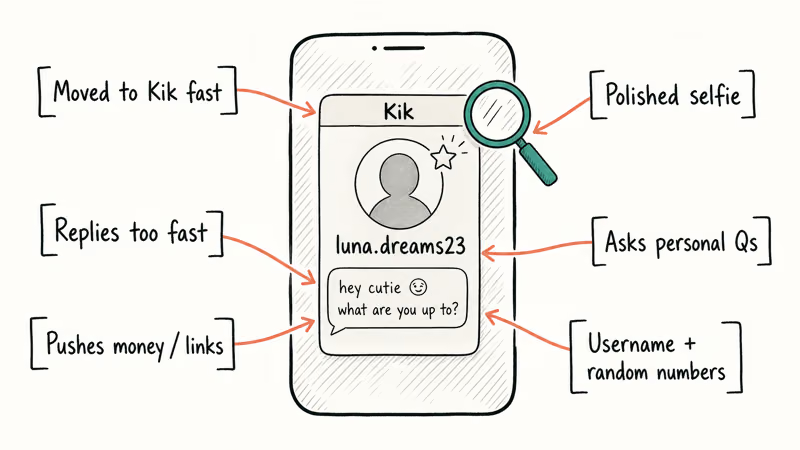
- The conversation moved to Kik within the first 5 messages on another platform.
- The profile photo is a polished selfie, often with luxury-brand props or beach backgrounds.
- Replies feel too fast, too generic, or oddly mismatched to your specific questions (a bot signal).
- They ask personal questions (location, age, whether you live alone) before sharing anything about themselves.
- Within an hour or two they steer toward money, premium content, or a link.
- The Kik username has random numbers or recent letters (e.g.,
lisa_xy7392).
A reverse image search (Google Lens or TinEye) takes 10 seconds and exposes most stolen photos.
#How to Stay Safe on Kik
Most users get scammed because they treat Kik like a public social network. It isn’t. Kik is an anonymous chat app with almost zero identity verification. Treat it accordingly.
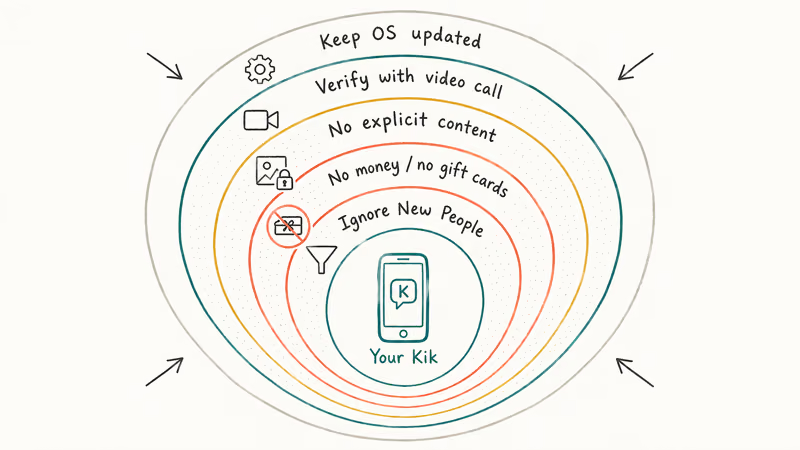
Use these defenses, especially if you accept messages from strangers:
- Lock down “New Chats” filtering. Go to Kik Settings → Chat Settings → Ignore New People. Messages from non-contacts get filtered into a separate folder so you control when (and whether) you respond.
- Never send money or gift cards to anyone you haven’t met in person, regardless of how long you’ve talked. Kik has no payment system, so any money request is by definition off-platform and unrecoverable.
- Don’t share explicit content. Once images leave your device, you lose all control. The Take It Down service (run by NCMEC) can help remove leaked images, but prevention is faster than recovery.
- Verify who you’re talking to. Reverse-image-search profile photos, ask for a video call early (scammers refuse), and cross-check the username on other platforms. If you’re researching unfamiliar Kik usernames, our Kik friend finder roundup explains which lookup tools are safe.
- Keep your real identity offline. Don’t share your full name, address, employer, or family details. A scammer with that information can pivot to identity fraud or doxxing even if you stop paying them.
- Update Kik and your OS regularly. Phishing links sometimes exploit unpatched bugs. iOS and Android security updates close those gaps.
The same defenses help on adjacent platforms. Our Kik vs WhatsApp comparison shows how messaging apps stack up on safety features. This advice applies only to your own Kik account. Logging into anyone else’s account without permission violates Kik’s terms and US privacy law (the Computer Fraud and Abuse Act).
#What to Do If You’ve Been Scammed on Kik
Speed matters. The first hour after a scam is your best window to limit damage.
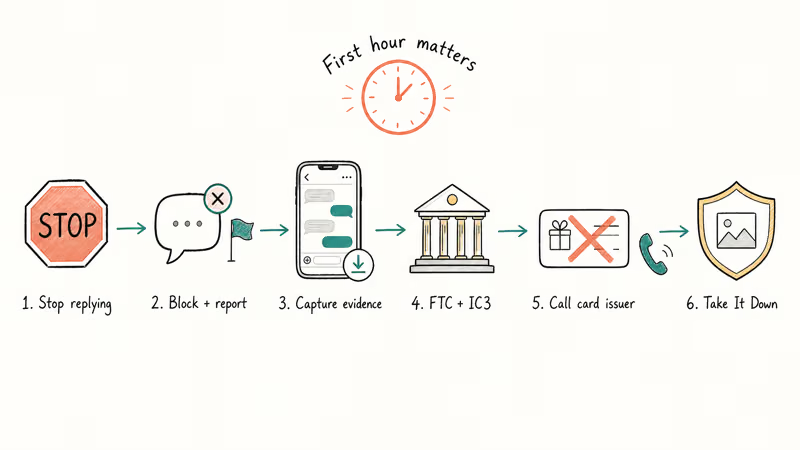
Do this in order:
- Stop all communication. Don’t pay more, don’t argue, don’t try to “negotiate” image takedowns.
- Block and report inside Kik. Open the conversation, tap the user’s name at the top, choose Report → select Spam or abuse (or the closest option for sextortion: Inappropriate content / Other).
- Screenshot the conversation. Capture the username, the request, the timestamps, and any payment details before the scammer deletes their account.
- Report to the FTC at reportfraud.ftc.gov if money changed hands. Add the IC3 complaint at ic3.gov for federal investigators.
- If gift cards were involved, call the issuer immediately (Apple, Steam, Amazon, Walmart). Sometimes the codes haven’t been redeemed yet and can be frozen.
- If explicit images were shared, contact NCMEC’s Take It Down (free, anonymous, works for content of users under 18) or StopNCII.org (for adults).
Once the immediate damage is contained, our guide on tracking down someone who scammed you walks through what investigators actually have access to and what’s realistic to recover. If you’re worried the scammer obtained enough to compromise your phone, run our iPhone spyware detection checklist before assuming your device is clean.
If you decide Kik isn’t worth the headache, you can delete your Kik account permanently from the same Settings menu.
#Bottom Line
If a stranger pushes you to Kik and asks for money, gift cards, or photos within the first day, that’s a scam — block, screenshot, and report through Kik’s in-app option, then file at reportfraud.ftc.gov if you lost money.
Protecting yourself starts with treating Kik like the anonymous chat app it really is, not a vetted social network. Turn on “Ignore New People,” verify identities with video calls before trusting anyone, and never pay through gift cards no matter the story.
#Frequently Asked Questions
Can a Kik scammer actually hack my phone?
Not directly through a chat. Kik scammers rely on phishing links, fake login pages, or tricking you into installing apps from outside the App Store or Play Store. As long as you don’t tap suspicious URLs and keep your OS updated, the malware vector is small. The bigger risk is what you voluntarily share: photos, addresses, payment info.
Is every unsolicited message on Kik a scam?
No, but treat first messages from strangers with caution. Plenty of legitimate users join group chats or hobby communities. The red flag is when an unknown account moves quickly toward off-platform contact, money, or explicit content. Slow conversations from real people generally don’t push for anything in the first session.
Will Kik refund me if I get scammed?
Kik is not a payment platform and doesn’t refund money lost in scams. Any payments happen off-Kik (gift cards, wire transfers, Cash App), so your only recovery path is through the payment provider, your bank, or law enforcement. Reporting the account inside Kik helps stop the scammer from targeting others, but it won’t reverse your loss.
How do I report a Kik scammer?
Open the chat with the suspicious account, tap their username at the top of the screen, and select Report. Choose Spam or abuse for run-of-the-mill scams, or Inappropriate content for sextortion. Kik reviews reports and bans verified accounts, but the same person can sign up again under a new username, so blocking is essential alongside reporting.
Are Kik bots really that common?
Yes. Kik bots are common enough that unsolicited messages should be treated cautiously. Bots send identical opening lines, respond very quickly, and often blast shortened links right out of the gate. Real users tend to ask actual questions and don’t lead with a URL.
Should I pay a sextortion demand to make it stop?
No. The IC3 and the FBI consistently advise against payment because compliance signals to the extortionist that you’ll pay again. Most sextortion cases escalate after the first payment, with new threats and higher demands. Reporting to law enforcement and using NCMEC’s Take It Down service is the route that actually protects you long-term.
What’s the safest way to use Kik for legitimate chats?
Stick to people you’ve already verified through another channel (real friends, an online community where you’ve interacted for months, etc.). Turn on Ignore New People in settings so unknown accounts get filtered. Never share your full name, location, or financial details, and treat any conversation that pivots to money or links as a scam until proven otherwise.
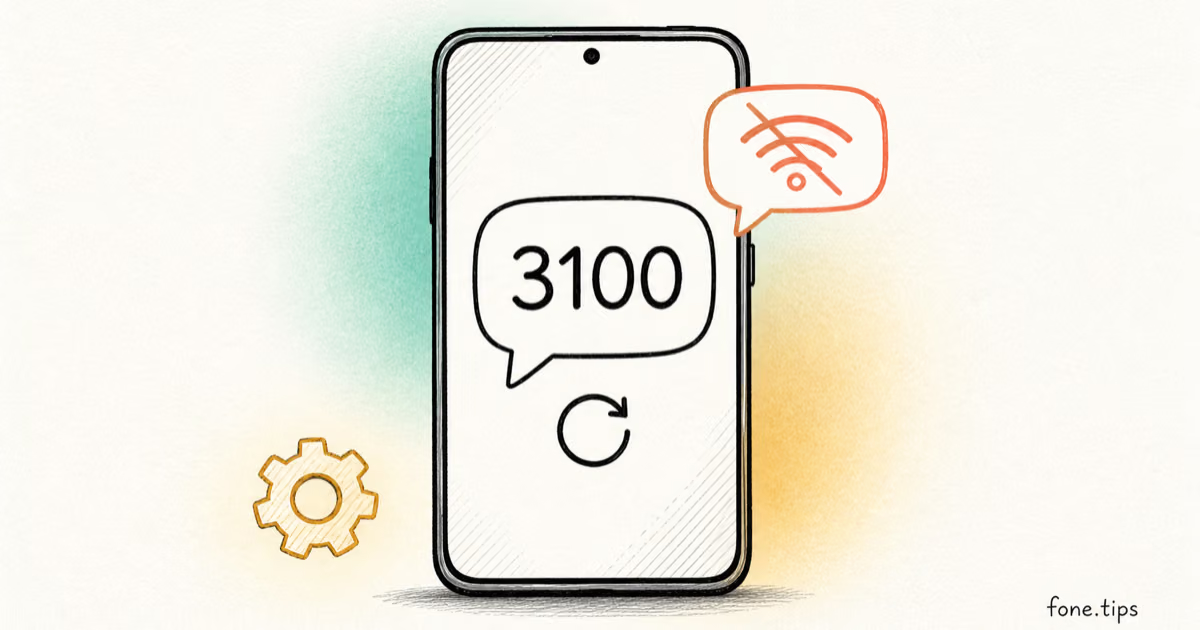
Google Messages Error 3100: Why RCS Is Broken on Galaxy
Google Messages RCS error 3100 hits Galaxy owners after phone or carrier switches. Google told 9to5Google a fix is coming. Here's what actually helps.
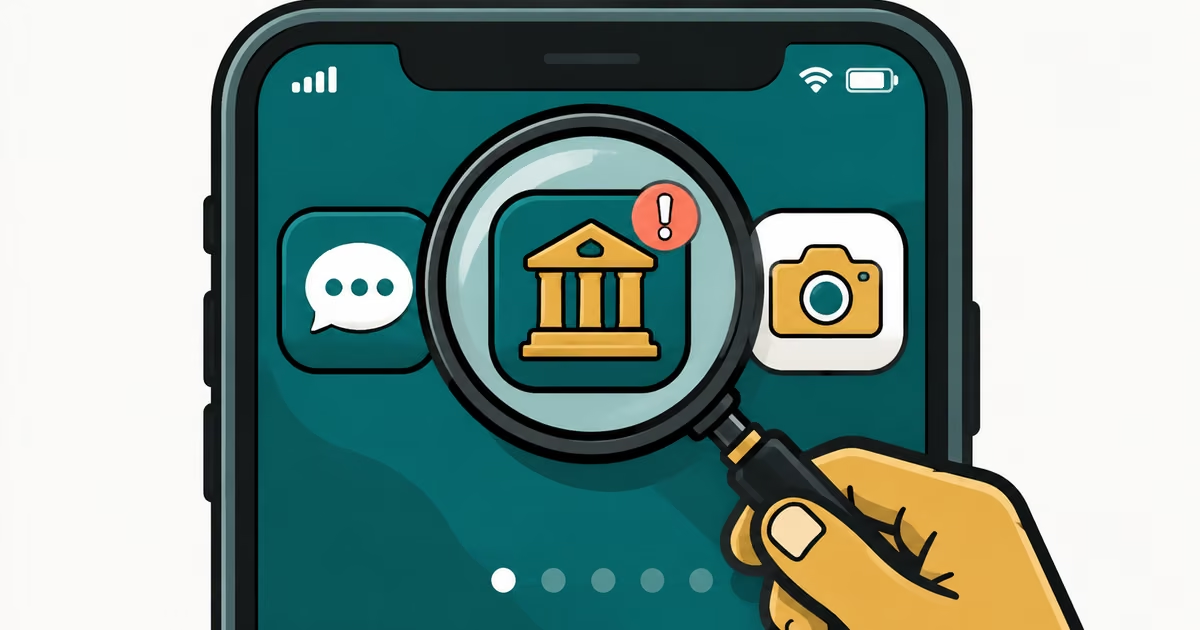
Is This Bank App Real? Spot a Fake App on Your Home Screen
A bank app can land on your home screen from a web page with no install warning. Learn the checks that tell a real banking app from a phishing web app.
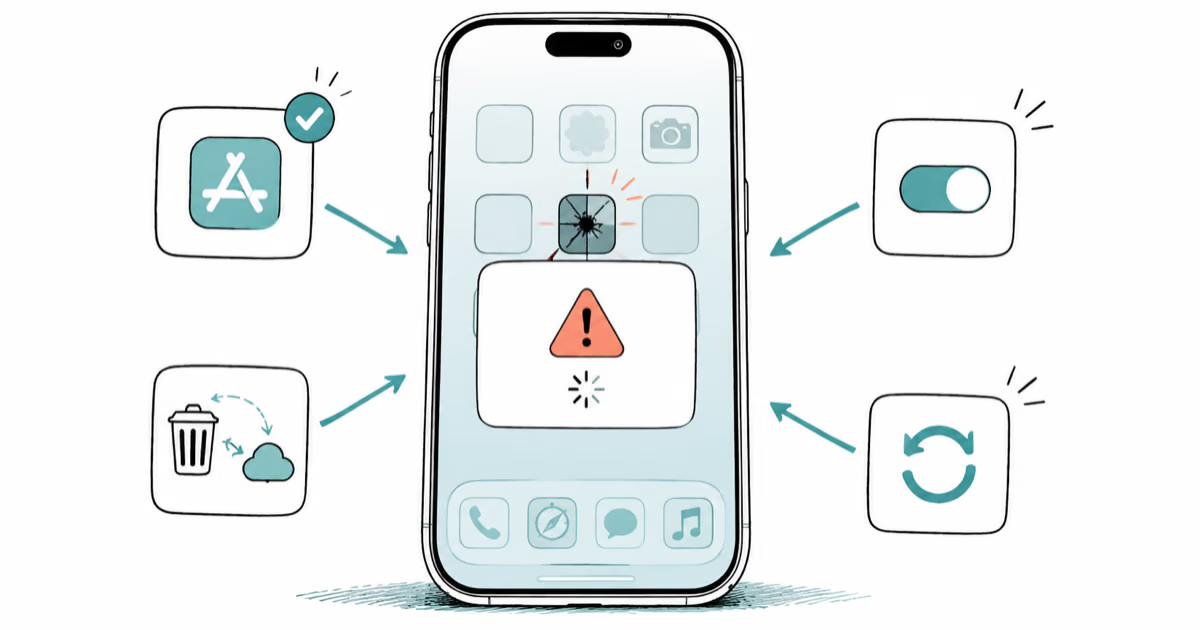
Apps Crashing After iOS 27 Update? Fix Order (2026)
Apps crashing after the iOS 27 update? Update the app in the App Store first, then offload and reinstall to clear stale cache, then restart. The fix order.
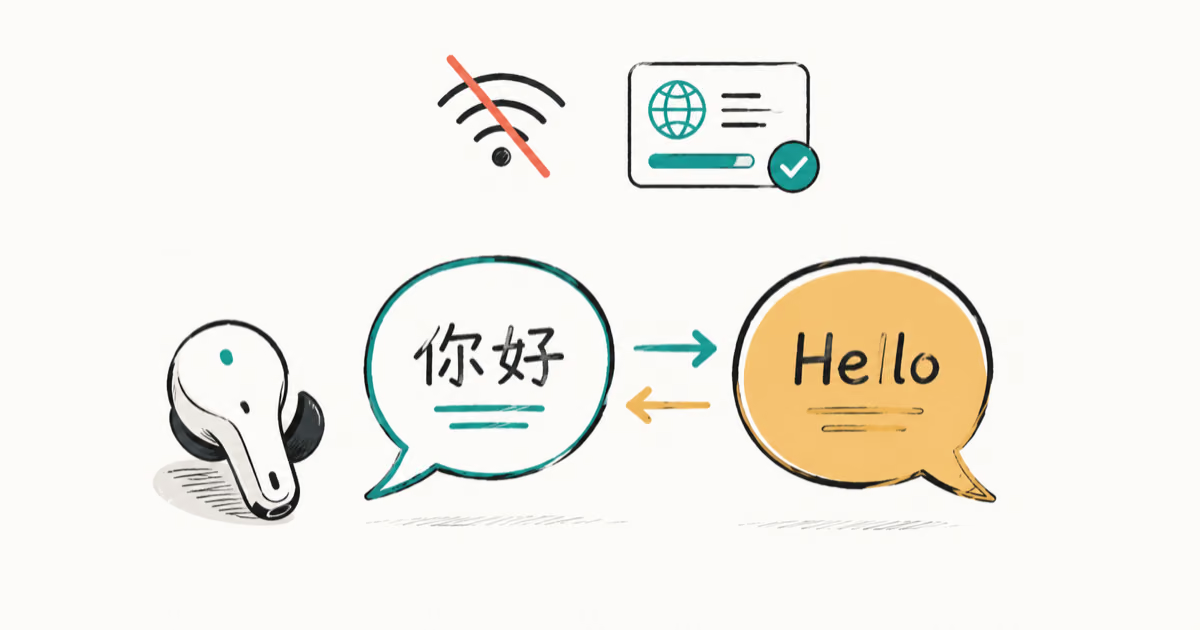
Do AI Translation Earbuds Work Offline? What to Know
Do AI translation earbuds work offline? A few do with downloaded language packs, but most need the cloud. Here's what works offline and what you give up.