How to Export WhatsApp Chat on Android and iPhone (2026)
Export WhatsApp chats on Android or iPhone in under a minute. Built-in steps, the 40000-message cap, PDF conversion, and Advanced Chat Privacy.
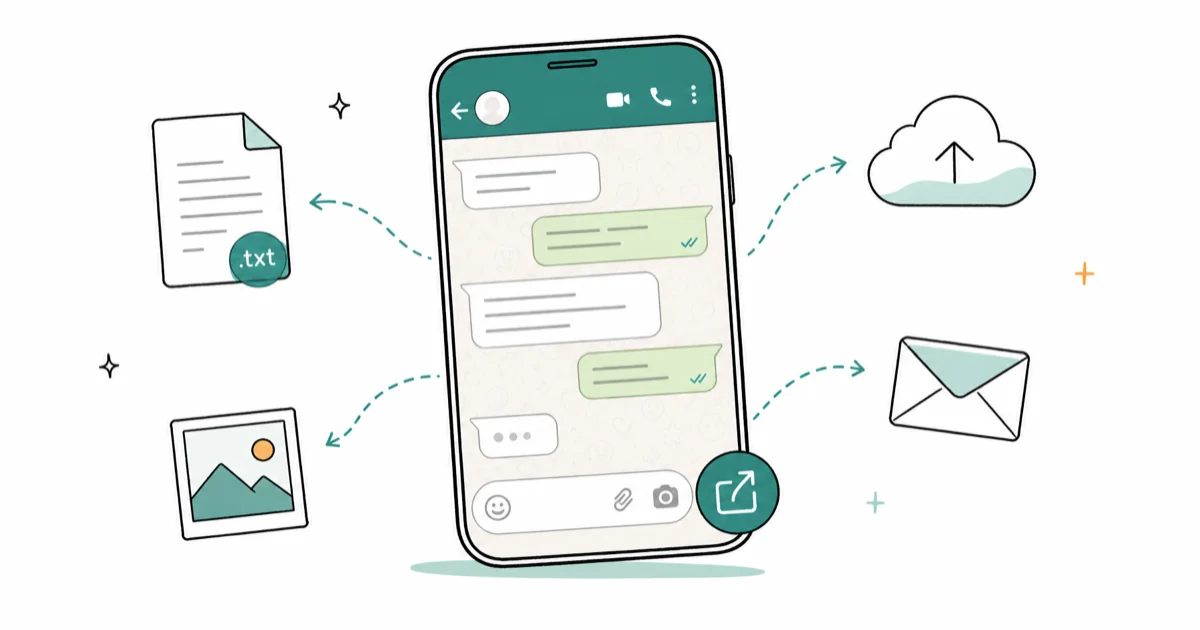
Quick AnswerOpen the chat, tap the three-dot menu on Android or the contact name on iPhone, pick Export Chat, and choose with or without media. WhatsApp hands you a .txt file you can email, save to cloud storage, or print in seconds.
WhatsApp’s export feature is one of those buttons most people never touch until they suddenly need a chat out of the app. Maybe you’re switching phones, saving evidence for a dispute, or you just want a human-readable record before deleting a thread. On a current Android phone or iPhone, the whole flow takes only about 20 seconds.
The catch lives downstream. What you get is a read-only text file, not a backup WhatsApp can restore. Keep reading if you want a portable copy that opens in any text editor.
- Android path: three-dot >
More>Export Chat; iPhone path: contact name > scroll > Export Chat. - WhatsApp caps exports at 40000 messages without media or 10000 with media per run.
- Output is a plain .txt file you can’t re-import; exports are archives, not backups.
- If Export Chat is missing, someone enabled Advanced Chat Privacy on the thread.
- Once the .txt leaves WhatsApp it isn’t encrypted, so secure or delete it after use.
#How to Export a WhatsApp Chat on Android
Open the chat, tap the three-dot menu in the top-right corner, then go to More > Export chat. WhatsApp asks whether to include media. Pick one and the Android share sheet opens.
If the plan is to move history to a new handset, the WhatsApp transfer or backup process is a different workflow entirely.
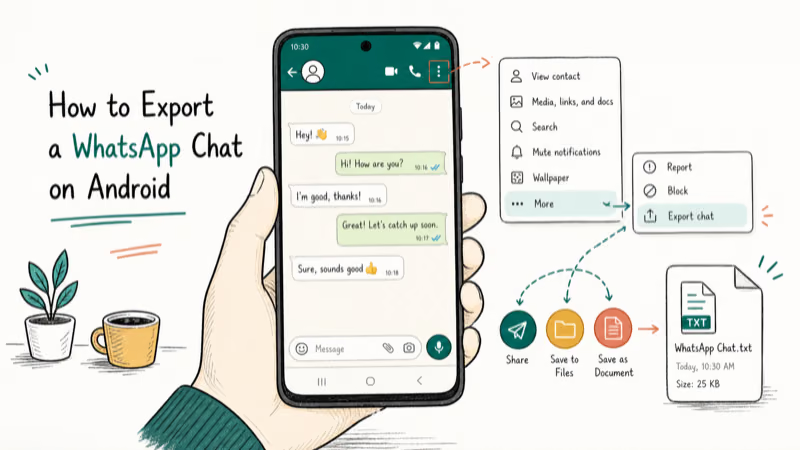
The two options behave very differently in practice:
- Without media produces a .txt file only, up to 40000 messages. Small, fast, opens anywhere.
- With media zips the .txt together with photos, voice notes, and short videos, capped at 10000 messages.
A medium-sized thread of a few thousand messages exports in well under a minute without media. Adding media can stretch the same chat into a zip tens of megabytes large that takes longer to package, and slower still on older Android hardware. Phone storage matters more than CPU here.
The path is the same on Samsung, Pixel, OnePlus, Xiaomi, and any other Android brand running WhatsApp 2.24 or later.
#How to Export a WhatsApp Chat on iPhone
Open the chat and tap the contact or group name at the very top of the screen. Scroll down through the info page and you’ll find Export Chat near the bottom, above the delete options.
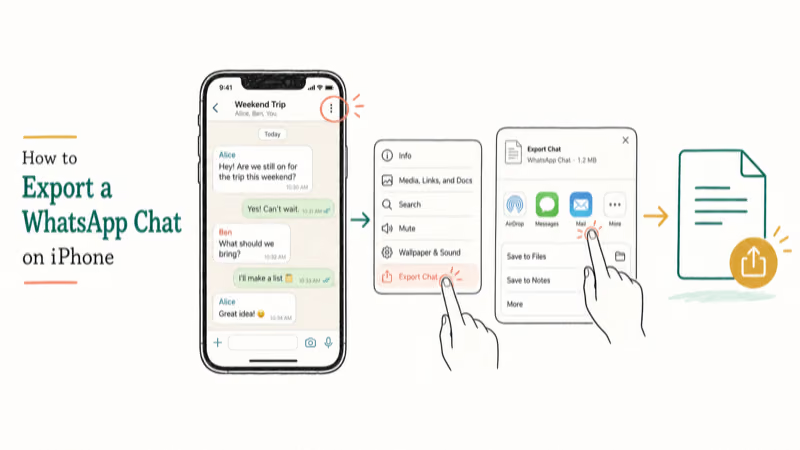
Tap it, choose Attach Media or Without Media, and the iOS share sheet shows up. AirDrop, Mail, Files, Messages, Google Drive, and any other share-compatible app are one tap away. WhatsApp’s official export help page confirms that the 40000-message and 10000-message caps apply identically on iPhone and that the limit is driven by the size of the resulting email attachment rather than any iOS-specific constraint.
AirDrop to a nearby MacBook is near-instant for a text-only export. Picking Mail instead opens a compose window with the .txt already attached, which is the most reliable route if the recipient is yourself.
#What the Exported File Contains
Open the .txt file and each line follows a predictable pattern:
12/30/24, 10:42 AM - Jane: Hey, are you free this weekend?
12/30/24, 10:45 AM - You: Yes! What did you have in mind?
Timestamps, sender names, and message text land in chronological order. Emojis survive on modern editors but sometimes render as boxes in legacy tools.
One thing that surprises people: deleted messages don’t appear. If someone deleted a message before the export ran, it won’t show up. Disappearing messages that already expired are also missing from the file. View once photos leave a “media omitted” placeholder even when you pick the with-media option, because WhatsApp never writes them to disk in the first place, and the export just reads whatever is already there.
#What Happens When You Hit the 40000-Message Limit?
This is the single biggest complaint about the built-in export, and it’s a real wall rather than a bug. Long-running group threads with five years of messages simply can’t leave WhatsApp through the in-app menu.
Two realistic workarounds exist:
Export in batches. WhatsApp has no date-range picker, so batching means exporting periodically and archiving each file. Tedious but free, and it preserves the full audit trail if you start early.
Use a desktop extractor. Paid tools like iMazing on macOS and Windows read the encrypted WhatsApp database from an iPhone backup and export full chat history without the 40000 cap. For Android, MobileTrans pulls from a local msgstore backup on the device.
Some links on this page are affiliate links, which means fone.tips may earn a commission at no extra cost to you.
Our whatsapp-export-more-than-40000-messages guide walks through the full setup for both platforms.
Against a multi-year iPhone backup with a group thread well past the in-app cap, a desktop tool like iMazing can export the full history in a few minutes and produce a single PDF plus separate media folders. The desktop approach is the only realistic path for multi-year histories.
#How to Export a WhatsApp Chat to PDF
WhatsApp doesn’t write PDF directly, but converting the .txt file takes two minutes with tools you probably already use.
- Export the chat as a .txt file using the steps above
- Open Google Drive, drag the file in, open it with Google Docs
- Go to
File>Download>PDF Document(.pdf)
For a cleaner result, paste the raw text into a new Google Doc first. Tweak font size, line spacing, and page breaks before saving. The export WhatsApp chat to PDF guide covers three other methods when you need branded headers, redacted phone numbers, or court-ready formatting that will hold up if you ever hand the file to a lawyer or HR.
#The Advanced Chat Privacy Setting You Need to Know About
WhatsApp rolled out Advanced Chat Privacy in 2025. It changed the export rules in a single update. If anyone in a chat turns it on, the Export Chat option disappears from the menu for every participant, not just the person who enabled it.
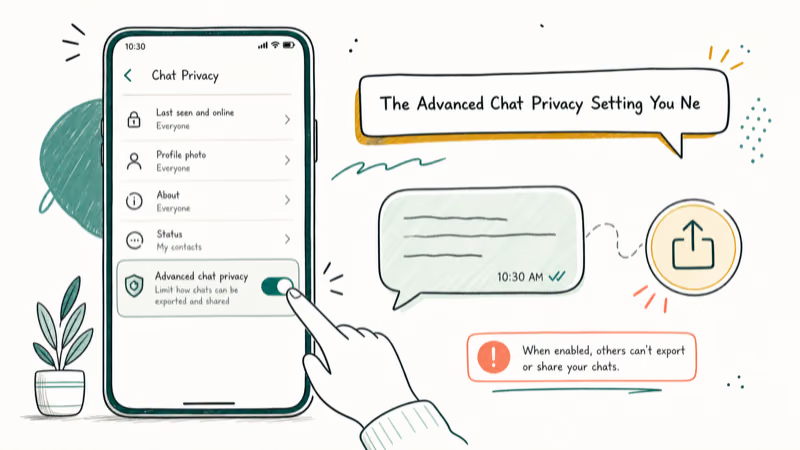
Checking a chat takes two taps. Tap the contact or group name at the top. A line reading “Advanced Chat Privacy: On” confirms the block is active.
You can enable the same toggle for your own chats: tap Advanced Chat Privacy on the chat info screen and flip it on. WhatsApp posts a system message in the thread so everyone can see who turned it on. The WhatsApp blog announcement for Advanced Chat Privacy states that the feature also prevents auto-downloaded media from saving outside WhatsApp and stops the chat’s content from being used by AI features such as Meta AI summaries.
Worth knowing: the setting blocks export and auto-save, but copy-paste of individual messages still works. Screenshots aren’t blocked either. It’s a friction barrier rather than a hard seal.
#Troubleshooting: Why Is the Export Failing?
A handful of failure patterns cover most of the trouble people run into with this feature.
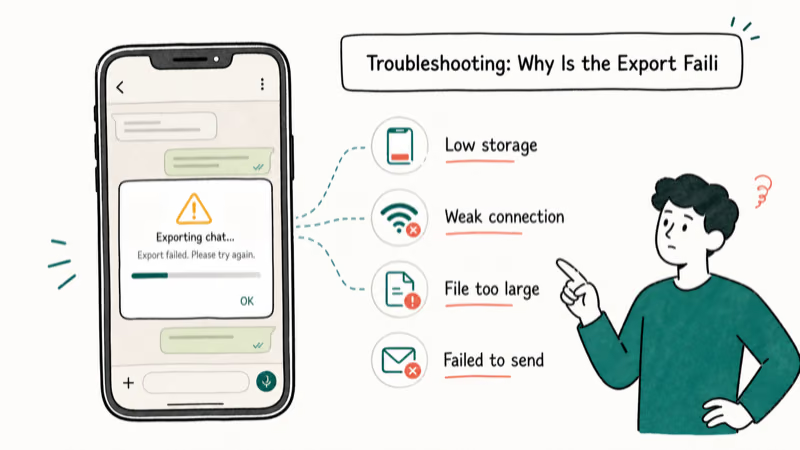
“Export chat” option is missing. Since 2025, the usual culprit is Advanced Chat Privacy. Less common: a badly out-of-date WhatsApp install. Update through the App Store or Play Store and retry.
Export fails mid-way. Almost always a storage issue on the device. WhatsApp has to assemble the zip before the share sheet can open, and a nearly full phone will choke on a large group thread; free up a few hundred megabytes, reboot if the problem persists, and try again without media to cut the package size down further before giving up.
File arrives empty or truncated. This happens when the destination is email and the attachment exceeds the provider’s cap. Gmail’s limit is 25 MB for outbound attachments, according to Google’s Gmail attachment help. Route the export to Drive, iCloud, or AirDrop instead.
Emojis render as boxes. Open the file in a Unicode-aware editor. VS Code, Sublime Text, Google Docs, and Apple Notes all handle the emoji set correctly.
If the backup side of things is also broken, the WhatsApp backup not working guide covers the five most common fixes. For re-import questions, the import WhatsApp chat walkthrough explains why the exported .txt can’t flow back into the app.
#Where to Store the Exported Archive
Once a chat leaves WhatsApp it stops being encrypted, and a years-long archive with media can run into tens of gigabytes. A portable SSD keeps every exported .txt and media folder in one place that survives a phone upgrade. A drive like the Samsung T9 keeps the files readable on any Mac, Windows, or Android machine.

- Sustained 2,000 MB/s holds up under long ProRes / 4K timelines
- Aluminum heatsink keeps speed during 30-min+ transfers
- 3-meter drop protection rates higher than most competitors
Last updated on Jun 13, 2026
As an Amazon Associate fone.tips earns from qualifying purchases. Prices and availability on Amazon are accurate as of the date above and subject to change.
#Bottom Line
Reach for the built-in export first. It covers almost every short- or medium-lived chat in under a minute, and exporting without media sidesteps the biggest failure modes. For archives over 40000 messages, iMazing on iPhone or MobileTrans on Android is the only realistic path, because the in-app export will silently truncate. And if Export Chat has vanished from the menu entirely, check Advanced Chat Privacy on the chat info screen before reinstalling WhatsApp or reaching out to support.
#Frequently Asked Questions
Can I export a WhatsApp chat without the other person knowing?
Yes. WhatsApp does not notify anyone when you tap Export Chat. The one exception is Advanced Chat Privacy: if anyone in the thread has it enabled, the export button disappears for everyone, but no notification fires when you try.
Why is WhatsApp capped at 40000 messages per export?
The limit comes from email attachment size rather than a WhatsApp server rule. WhatsApp’s own export help documentation states that exports without media are capped at 40000 messages and exports with media at 10000 messages. The only workaround for longer threads is a desktop extractor that reads from a phone backup instead of going through the in-app share sheet.
Does the exported chat include deleted messages?
No, they’re already gone. Screenshots captured before deletion are the only way to preserve them.
Can I re-import an exported WhatsApp chat back into the app?
No, you can’t. The .txt export is a document, not a backup. Restoring chat history to WhatsApp requires a proper backup from Google Drive, iCloud, or a local msgstore file, which is a completely separate workflow. Treat the export as an archive you can read, search, and print, nothing more.
What’s the difference between exporting and backing up WhatsApp?
A backup captures the full chat database in a format WhatsApp can restore on a new install or device. An export captures a single thread as a plain-text document you can open anywhere. Backups live on Google Drive or iCloud; exports live wherever you send them (email, Drive, AirDrop, Files). Use backups when switching phones; use exports when you need a portable, human-readable copy outside WhatsApp.
Can I export a WhatsApp group chat the same way?
Yes, the flow is identical. Open the group, tap the group name at the top, scroll down to Export Chat. Because multiple people are posting, group threads hit the 40000-message cap much faster, and the desktop tool route becomes necessary sooner.
Why can’t I find the Export Chat option on iPhone or Android?
Three likely reasons. The chat has Advanced Chat Privacy turned on, your WhatsApp version is outdated, or you’re looking in the wrong menu. On Android the path is three-dot menu > More > Export Chat; on iPhone it’s contact name > scroll down > Export Chat. If the option is still missing after updating and checking the privacy toggle, try re-installing WhatsApp and signing back in.
Is the exported chat file secure once it leaves WhatsApp?
No. End-to-end encryption only protects messages in transit and at rest inside WhatsApp. Once the .txt is in your email or cloud storage, anyone with access to that account can open it. Store exports of sensitive conversations in an encrypted folder, a password manager’s file vault, or delete them after use.
Google Messages Error 3100: Why RCS Is Broken on Galaxy
Google Messages RCS error 3100 hits Galaxy owners after phone or carrier switches. Google told 9to5Google a fix is coming. Here's what actually helps.

Is This Bank App Real? Spot a Fake App on Your Home Screen
A bank app can land on your home screen from a web page with no install warning. Learn the checks that tell a real banking app from a phishing web app.
Apps Crashing After iOS 27 Update? Fix Order (2026)
Apps crashing after the iOS 27 update? Update the app in the App Store first, then offload and reinstall to clear stale cache, then restart. The fix order.
Do AI Translation Earbuds Work Offline? What to Know
Do AI translation earbuds work offline? A few do with downloaded language packs, but most need the cloud. Here's what works offline and what you give up.