How to Get Free RDP Access: 5 Methods That Work in 2026
Get free RDP using Azure for Students, Oracle Cloud, Google Cloud, and AWS free tiers. Setup steps, credit limits, and which method lasts longest.
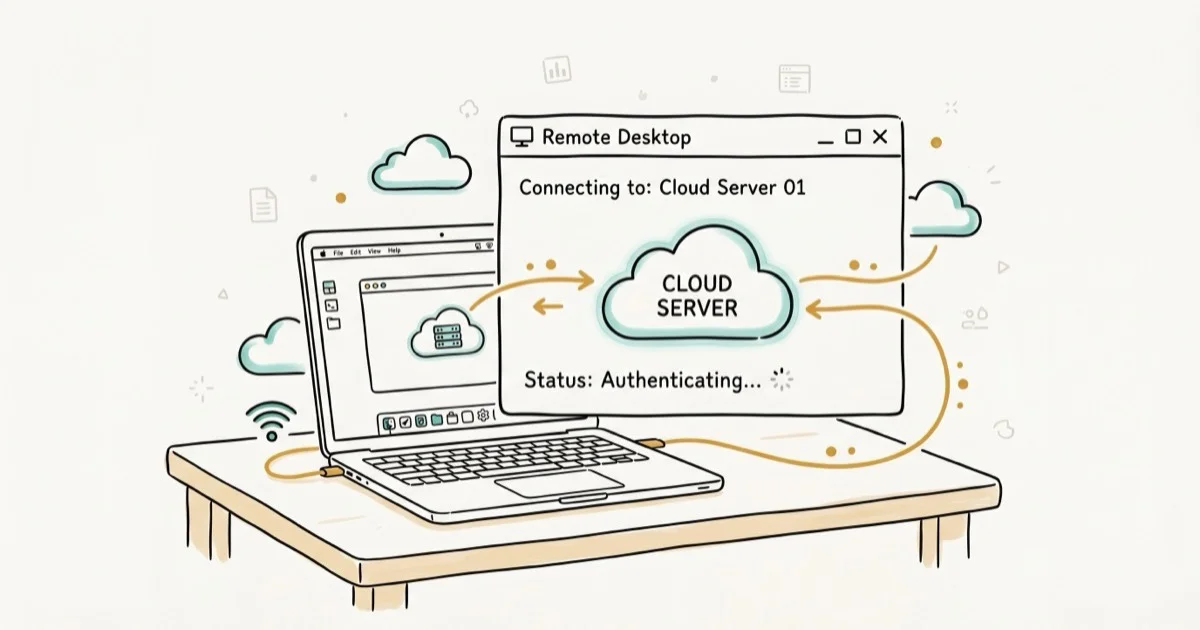
Quick AnswerTo get free RDP, sign up for Microsoft Azure for Students to receive $100 in credits and create a Windows Server virtual machine. Alternatively, Oracle Cloud's Always Free tier provides permanent free compute instances you can configure for RDP access.
Free RDP access is available through cloud provider free tiers and student programs. Microsoft Azure for Students offers one of the fastest setups, while Oracle Cloud’s Always Free tier lasts the longest since there’s no expiration. Here’s how each method works and which is right for your use case.
Before changing these settings, use the steps only on your own device, computer, or account, or with explicit permission from the owner. Unauthorized access can violate law, privacy rights, and platform terms, so don’t use this guide to bypass someone else’s controls. When available, start with the official support option, built-in settings menu, or vendor documentation before trying manual fixes, especially if the device or account belongs to work, school, or another person.
- Microsoft Azure for Students provides $100 in free credits with a valid .edu email, enough for several months of Windows Server VM access.
- Oracle Cloud’s Always Free tier provides permanent compute instances with no time limit or credit card expiration required.
- Google Cloud and AWS both offer 12-month free tiers with $300 and $200 in credits respectively for new accounts.
- Free RDP tiers come with limited compute resources, so running resource-intensive applications may exhaust allocation and trigger charges.
- All cloud RDP methods require you to configure Windows Server and open TCP/UDP port 3389 for the Remote Desktop Protocol connection.
#Method 1: Microsoft Azure for Students ($100 Free Credit)
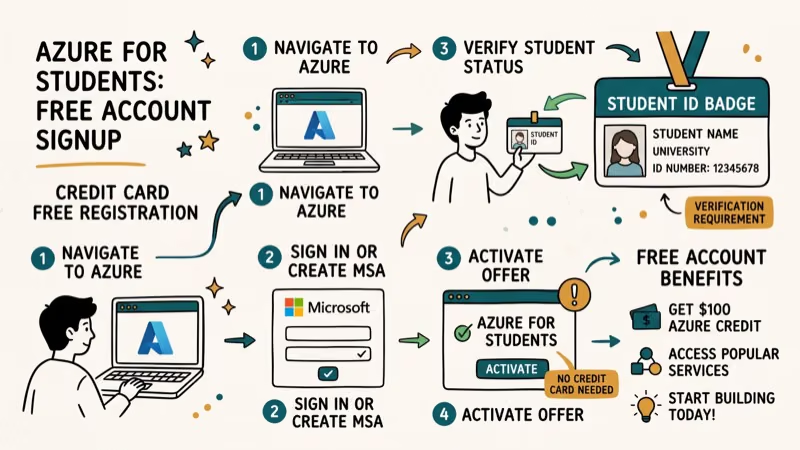
Azure for Students is the best option for anyone with a college or university email address (.edu). It gives $100 in free credits without requiring a credit card, and credits last 12 months.
- Go to azure.microsoft.com/free/students and click “Activate Now.”
- Sign in or create a Microsoft account.
- Verify with your .edu email address (Azure sends a verification code automatically).
- Once credits are applied, go to Virtual Machines and click “Create a Resource.”
- Select Windows Server 2022 Datacenter as the image.
- Choose a B1s instance (1 vCPU, 1 GB RAM) to stay within free tier limits.
- Set your administrator username and password. These are your RDP login credentials.
- Under Networking, ensure port 3389 (RDP) is allowed in the inbound port rules.
- Click “Review + Create” and then “Create” to deploy the VM.
- After deployment, click “Connect” and download the .rdp file to connect from any device.
The full setup from account creation to a working RDP connection is quick, and the B1s instance handles web browsing and light office work without issues. According to Microsoft’s Azure documentation, the B1s VM tier is specifically designed for workloads with low CPU requirements, making it suitable for free-tier RDP use.
#Method 2: Oracle Cloud Always Free Tier (No Expiration)
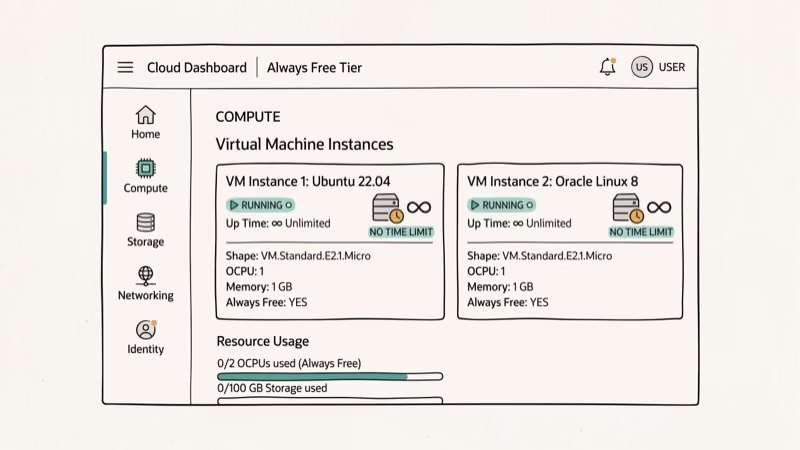
Oracle Cloud’s Always Free tier has no time limit and no credit expiration. It includes 2 AMD-based compute instances (each with 1 OCPU and 1 GB RAM).
- Create an account at cloud.oracle.com. A credit card is required for identity verification, but Always Free resources aren’t charged.
- Go to
Compute>Instancesand click “Create Instance.” - Choose Windows Server as the image (note: Windows instances require upgrading to paid; use Ubuntu + xRDP instead for a fully free Windows-like remote desktop experience).
- For a free Windows RDP experience, deploy a Windows Server image and confirm it stays within Always Free compute specs.
- Configure the security list to allow port 3389 for inbound traffic.
- Connect using the public IP address and your administrator credentials.
Oracle’s Always Free tier has attracted a large community of developers using it for free compute resources globally, as highlighted on Oracle’s cloud platform page. The key advantage over Azure is that the free allocation never expires as long as the account remains active.
#Free RDP From Google Cloud, AWS, and GitHub
Google Cloud and AWS also provide free tiers, though both have 12-month time limits for their credit offers.
Google Cloud Free Tier gives $300 in credits valid for 90 days, plus an Always Free f1-micro instance (not Windows-capable, requires Linux + xRDP). The credit period covers Windows Server VMs if you deploy quickly. At typical small-instance rates, $300 in credits is enough for roughly a few months of an e2-micro Windows instance.
AWS Free Tier provides 750 hours per month of t2.micro or t3.micro Windows Server for 12 months. The Verge’s cloud computing coverage confirms that AWS’s free Windows tier states that the 750-hour monthly allowance covers running one Windows Server instance continuously for the entire month (730 hours) with 20 hours to spare. After 12 months, charges apply.
GitHub Student Developer Pack also includes cloud credits from partners including DigitalOcean, which provides $200 in credits valid for 1 year. This requires a GitHub account with verified student status.
#How Do You Connect to Free RDP on Windows, Mac, and Android?
Once you have a cloud VM with RDP access configured, the connection process differs by device.
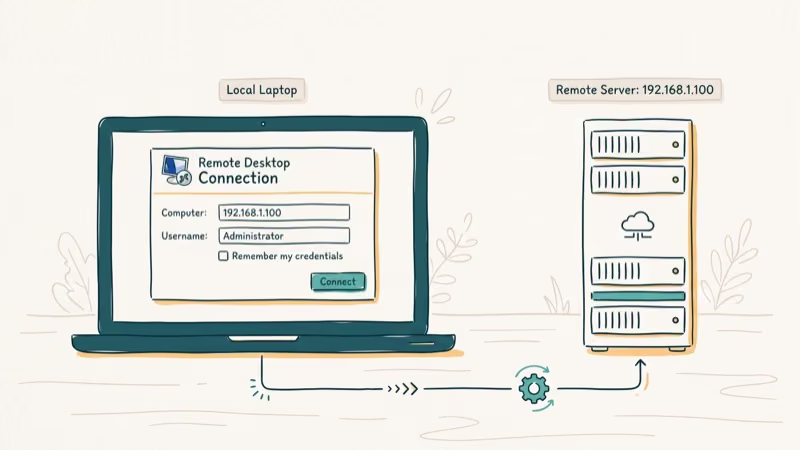
Windows: Open “Remote Desktop Connection” (search in Start menu), enter the VM’s public IP address, and log in with your administrator credentials. The app is built into every Windows version from Windows 7 onwards.
Mac: Download Microsoft Remote Desktop from the Mac App Store. Add a new PC using the VM’s IP address. The experience is nearly identical to the Windows client. You can also use your Mac’s built-in screen sharing capabilities for local connections by reviewing our Google Hangouts screen share guide for general screensharing concepts.
Android and iOS: Download the Microsoft Remote Desktop app from the Play Store or App Store. Create a new connection with the VM’s IP address and your credentials. RDP over cellular data works but requires a stable connection for smooth performance.
Use a VPN when connecting over public networks. See what a VPN is on iPhone for background.
#Free RDP Limitations and Usage Tips
Cloud free tiers all have resource constraints. The Azure B1s instance (1 vCPU, 1 GB RAM) handles light workloads well but will lag under sustained CPU load. Oracle’s Always Free instances perform similarly.
To stay within free-tier limits: monitor your CPU credits in the cloud portal weekly, avoid running background processes that consume idle resources, and shut down the VM when not in use. All major providers send billing alerts when usage approaches paid thresholds.
#Is Free RDP Safe to Use?
Yes, when properly configured. The main security considerations are:
Use strong passwords: RDP accounts with weak passwords are frequently targeted by automated brute-force attacks. Use a password with at least 12 characters including numbers and symbols. In 2023, Microsoft’s security data states that over 3.5 million RDP brute-force attacks were detected daily across Azure, making strong credentials essential.
Enable Network Level Authentication (NLA): Enabled by default on Windows Server 2019+. Verify this in System Properties > Remote settings.
Limit access by IP: Cloud providers let you restrict which IP addresses can connect to port 3389. Limiting this to your home or office IP prevents unauthorized connection attempts entirely.
If you need to reset admin credentials for your Windows instance, see our guide on how to reset admin password on Windows 10. For Windows Server instances, our change password on Windows Server 2012 guide covers the server-specific process.
#Bottom Line
Microsoft Azure for Students is the fastest path to free RDP if you have a .edu email, and the $100 credit covers several months of use. Oracle Cloud’s Always Free tier is the best long-term option since it doesn’t expire. For ongoing RDP needs, plan to transition to a paid tier or cycle through new free-tier accounts before credits run out. If you need to activate Windows on your VM, see our guide on how to activate Windows 10 for free.
#Frequently Asked Questions
Can you get free RDP without a credit card?
Microsoft Azure for Students doesn’t require a credit card — just a valid .edu email address. Oracle Cloud requires a credit card for identity verification but won’t charge you for Always Free resources. Most other cloud providers require credit card verification even for free tiers.
How long does free RDP from Azure last?
Azure for Students credits ($100) last 12 months from account creation. Once credits expire, the VM shuts down unless you upgrade to a paid account. Use the Azure cost calculator to estimate how long your $100 will last based on the VM size you choose.
What’s the difference between RDP and VNC?
RDP (Remote Desktop Protocol) is Microsoft’s proprietary protocol using TCP/UDP port 3389. It’s faster and more efficient on Windows systems than open alternatives. VNC is cross-platform but typically slower and lacks RDP’s compression and bandwidth optimization. For Windows-to-Windows remote access, RDP is almost always the better choice in terms of performance, security, and ease of setup. VNC becomes relevant when you need to connect to non-Windows machines or when you’re behind firewalls that block port 3389 but allow VNC ports.
Can I run free RDP on a mobile device?
Yes. Microsoft’s official Remote Desktop app is available for Android and iOS. Both apps support the same connection process as the desktop clients, using the VM’s IP address and administrator credentials. Mobile RDP works well for basic tasks but isn’t ideal for mouse-intensive applications.
What happens when free RDP credits run out?
Your VM will stop running once credits are exhausted or the 12-month period ends. Data on the VM’s disk persists temporarily after the VM stops, but the instance becomes inaccessible until you add a payment method or upgrade your account. Always export important files or create a disk snapshot before credits run low. Most cloud providers send email alerts at 50% and 90% credit usage, so you’ll typically get advance warning. If you’re on Azure for Students, you can check remaining credits at any time in the Cost Management section of the Azure portal.
Is RDP secure for remote work?
RDP is secure when configured correctly with strong passwords, Network Level Authentication, and IP restrictions. Without these measures, an exposed RDP port is a common attack target. For additional security, route your RDP connection through a VPN rather than exposing port 3389 to the public internet.

Is This Bank App Real? Spot a Fake App on Your Home Screen
A bank app can land on your home screen from a web page with no install warning. Learn the checks that tell a real banking app from a phishing web app.
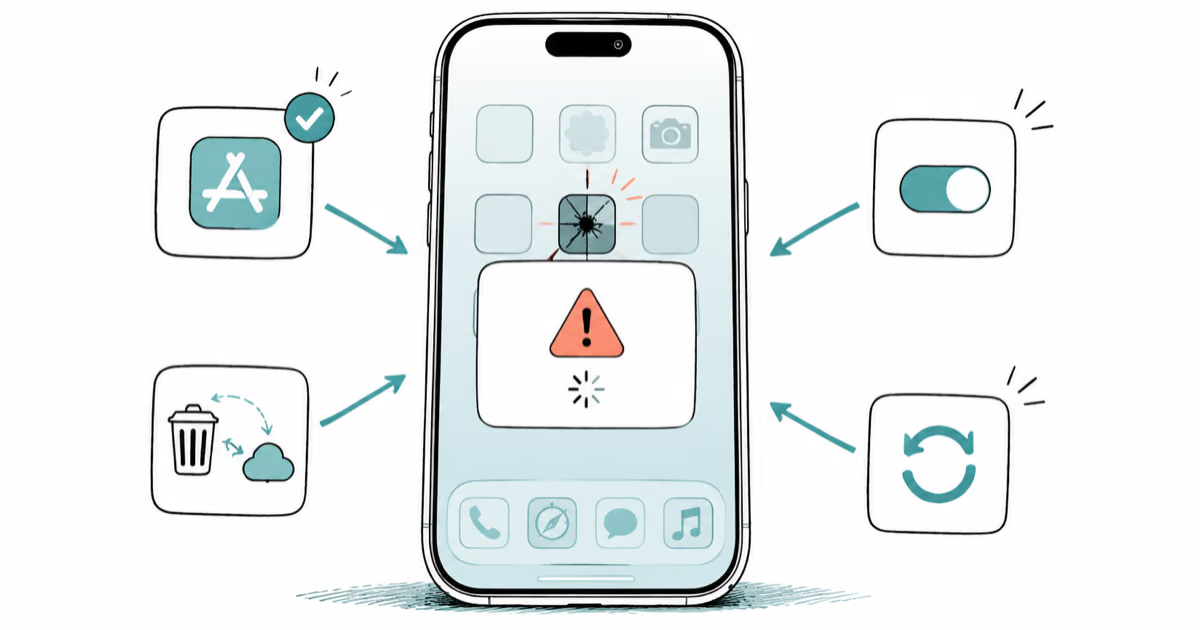
Apps Crashing After iOS 27 Update? Fix Order (2026)
Apps crashing after the iOS 27 update? Update the app in the App Store first, then offload and reinstall to clear stale cache, then restart. The fix order.
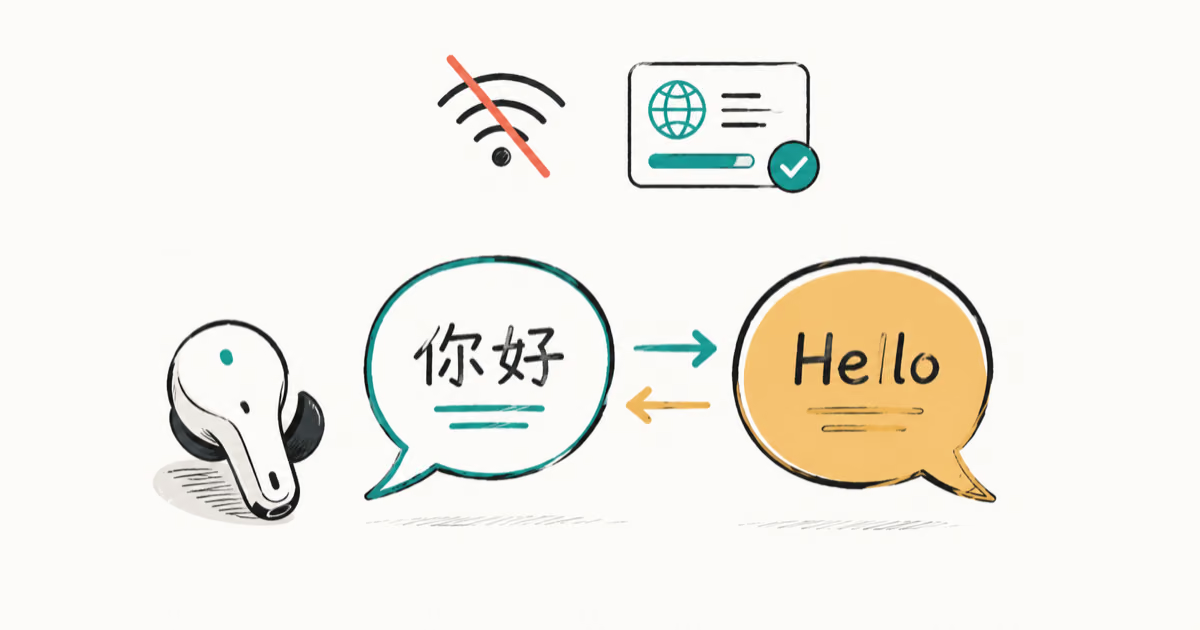
Do AI Translation Earbuds Work Offline? What to Know
Do AI translation earbuds work offline? A few do with downloaded language packs, but most need the cloud. Here's what works offline and what you give up.
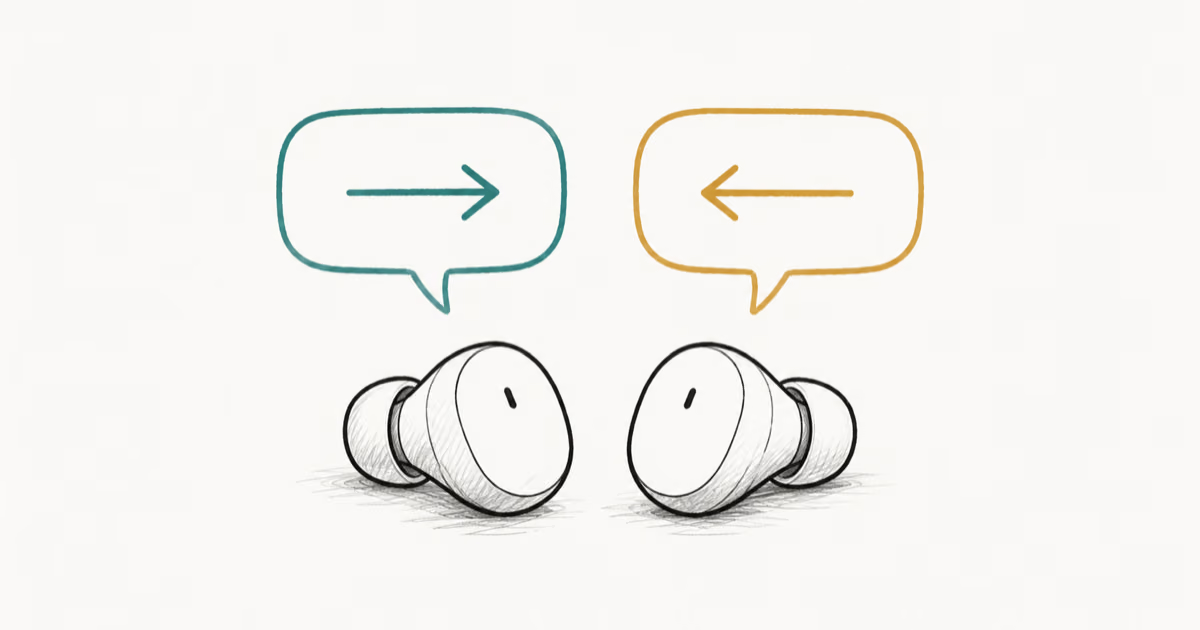
How to Set Up Translation Earbuds (Pairing and Modes)
How to set up translation earbuds: charge, install the app, pair over Bluetooth, pick two languages, and choose a mode. A step-by-step first-use guide.