Words With Friends Tips and Tricks That Actually Work
Words with Friends tips that work: official power-ups, two-letter words, bonus tile strategy, and helper tools Zynga itself permits to lift your score.
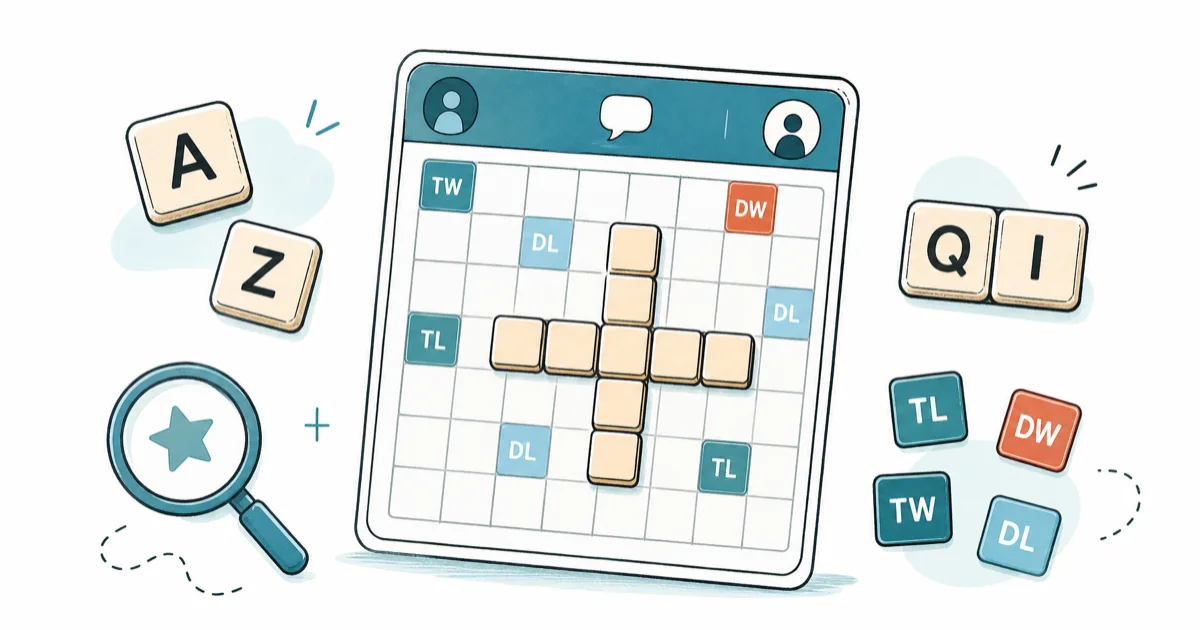
Quick AnswerWords with Friends rewards three habits: leaning on official power-ups like Word Radar and Hindsight, memorizing two-letter words such as qi and zo, and stacking high-value tiles on TL, DW, TW, or DL squares.
Words with Friends has crossed 200 million downloads, and most of those players still leave free points on the board every game. The match isn’t decided by raw vocabulary as much as by how you use the rack, the bonus squares, and the helpers Zynga built into the app.
- Zynga ships four official power-ups in Words with Friends 2: Word Radar, Hindsight, Swap Plus, and the Word Strength Meter
- Two-letter words like qi and zo each score 11 base points and become 33 on a Triple Word square
- Bonus tiles (TL, DW, TW, DL) are where matches are won, often on three-letter or four-letter plays
- Helpers like Wolfram Alpha’s anagram solver and the official Zynga dictionary stay inside the rules of the game
- Daily missions and seasonal events hand out free power-ups so paid coins are rarely needed
#Why Most Players Plateau at Words With Friends
Treat the rack as a math problem, not a vocabulary test.
Every turn has a high-scoring play hiding in it once you check the bonus squares, count tile values, and rotate the seven letters into pairs. The highest-scoring move is usually a 3 to 5 letter word on a colored square, not a long word in the open field. The plateau is rarely a vocabulary problem; it’s a tile-placement problem hiding behind a vocabulary excuse.
Zynga draws the line on what counts as fair play.
The official Words with Friends 2 page on the App Store describes power-ups as features that “help players of all skill levels enjoy the game,” which tells you the helpers we cover below are part of the design, not a workaround.
Players who think the only way to win is brute-force vocabulary tend to plateau fast. The faster path is to learn the small set of two-letter words, train your eye for bonus squares, and let the in-app tools fill in the rest. If you enjoy this format, the genre is broader than you might think; our roundup of word board games walks through the tabletop cousins of the app.
#What Are the Official Power-Ups Inside Words With Friends?
The game ships with four built-in power-ups. They live behind the lightning-bolt icon next to your rack and refill from daily missions, weekend events, and Solo Series wins.
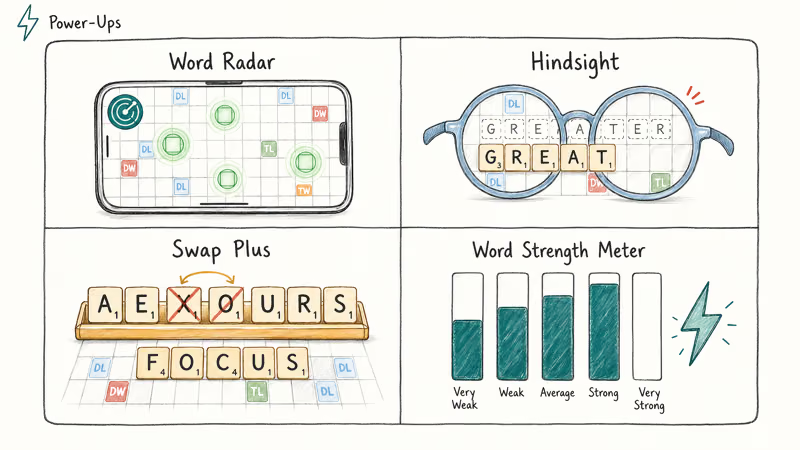
Word Radar highlights every legal landing spot for two seconds. Tap the green icon and light-green squares appear on every empty square you can play through. According to Zynga’s Words with Friends help page, Word Radar is meant for players who freeze up when the board fills with parallel plays. It earns its keep most in the late game, when the board has gone wall-to-wall.
Hindsight activates after your turn and reveals the highest-scoring word you could have played instead. The icon looks like blue glasses. You can’t take the move back, but using Hindsight on every turn for a week tends to lift your next-turn scores noticeably, because it trains your eye for the patterns you keep missing.
Swap Plus is the closer.
The standard swap costs your entire turn, but Swap Plus lets you dump bad letters and still play a word on the same turn. In a close match, that saved turn can be worth dozens of points compared with a forced standard swap. It’s the power-up to hoard for the endgame.
Word Strength Meter is the simplest tool of the four. After you place letters on the board, the green lightning bolt rates the play out of five bars. If the meter only fills two bars, there’s almost always a stronger word hiding on the same rack.
If you’d rather train without help first, our breakdown of Antiwordle strategy shows how reverse-Wordle players sharpen letter sense, and the same drills carry over.
#Which Two-Letter Words Win the Most Games?
Two-letter words are the single highest-leverage thing to memorize. They squeeze into tight gaps, build parallel scores down the side of an existing word, and turn one bonus square into two scoring words on the same turn.
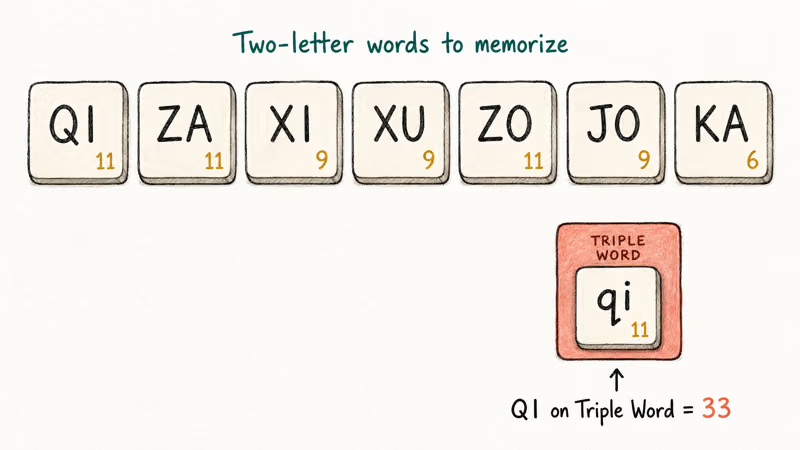
Here is the short list every Words with Friends regular should know:
- qi scores 11 base points and uses the dreaded Q without a U
- za scores 11 base points and is short for pizza in the official dictionary
- xi scores 9 base points
- xu scores 9 base points (a Vietnamese coin denomination)
- zo scores 11 base points (a hybrid yak)
- jo scores 9 base points
- ka scores 6 base points
According to Merriam-Webster’s Official Scrabble Players Dictionary listing, there are 107 valid two-letter words in the OSPD, and the Words with Friends dictionary recognizes most of them. Memorize 15 and your turn average will climb without any other change.
Stack one on a Triple Word tile.
Drop qi on a TW square and you score 11 points twice (once for the word, once for parallel scoring) and then triple it. That’s a 33-point play from two tiles.
#Bonus Tile Strategy: Where Matches Are Decided
The colored squares decide most matches. The board has four bonus types: Triple Letter (TL), Double Letter (DL), Triple Word (TW), and Double Word (DW). Hitting a TW with a high-value letter is more valuable than burning a seven-letter bingo on the open field.
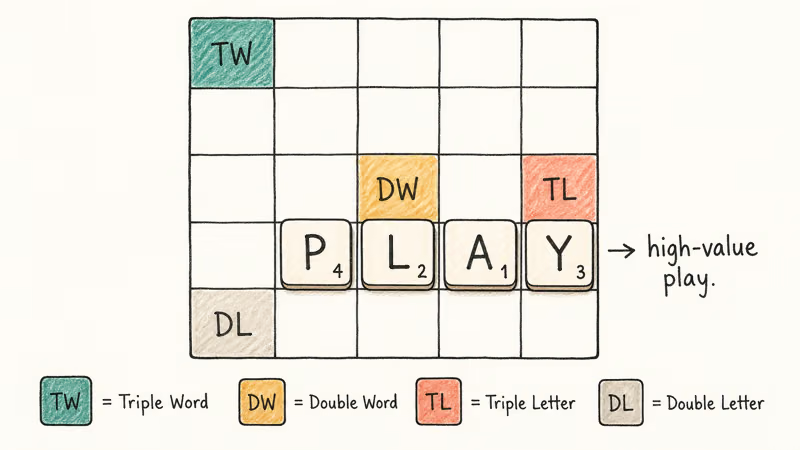
Three rules cover almost every situation:
- Stack high-value letters (J, Q, X, Z) on TL squares. A single Q on a TL is worth 30 points before any word multiplier.
- Place short words across two bonus squares when possible. A four-letter word that hits a DL on one end and a TW on the other can outscore a 50-point bingo bonus.
- Block opponent bonus access. When you can’t reach a TW yourself, place a word that runs alongside it so your opponent can’t hook into it on their next turn.
The player who controls the most Triple Word squares usually wins, regardless of vocabulary. According to Stefan Fatsis’s Word Freak chapter on competitive Scrabble, the same principle dominates tournament play: tile placement beats raw word knowledge.
Don’t hoard high-value tiles.
A common mistake is saving the Q or Z for a “perfect” play that never arrives. Burn the high-value tile when a TL square is available, even on a short word. Holding a Z for nine turns waiting for a TW just gives your opponent time to block it.
#Helper Tools Allowed Under Zynga’s Terms
The line is sharper than most players realize. Helpers that work outside the app, like anagram solvers and dictionary lookups, don’t break Zynga’s terms of service. What does break them is anything that automates moves, photographs the board through the app, or modifies the game client.
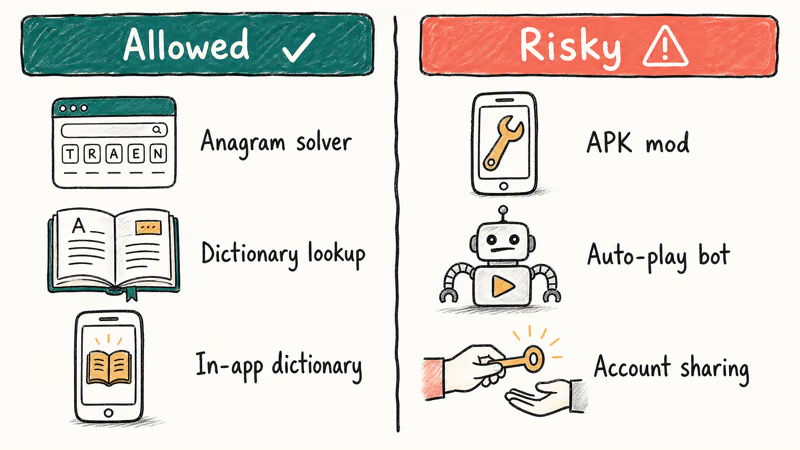
Allowed helpers, based on a read of Zynga’s terms of service:
- Wolfram Alpha anagram solver. Type “scrabble” followed by your tiles into the search box and get a sorted word list. It pulls from a public dictionary and never touches the game.
- Merriam-Webster’s word checker. Useful for confirming whether a word like “qoph” is valid before you risk a turn.
- Built-in app dictionary. Words with Friends has a free dictionary lookup on tablet view that confirms whether a word is legal without committing the play.
Not allowed and risky:
- APK mods or modified clients. Zynga’s anti-cheat will flag accounts running modified builds.
- Bots that auto-play turns. These violate the ToS and ruin matches for the human on the other side.
- Account-sharing services. Shared accounts get banned and lose the game history.
When in doubt, ask whether the tool changes anything inside the app. A solver on another tab is fine. A patched client is not.
For another low-pressure word game in the same family, the strategy roundup over at best board game apps covers titles that let you practice rack management without the social pressure of a live opponent.
#Free Power-Ups Without Spending Coins
Power-ups don’t have to cost money. The game funnels free ones through three channels.
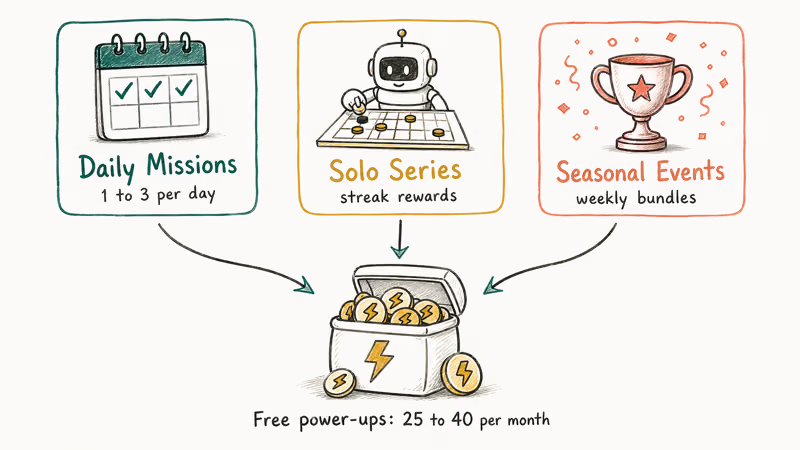
Daily missions rotate every 24 hours. Most ask for routine plays (use a vowel on a TL, play a four-letter word) and pay out one to three power-ups. Hitting the daily missions every day for a week typically nets 10 to 15 power-ups.
Solo Series matches against the AI hand out power-ups for completing a streak. Clear levels 1 through 5 on a lunch break.
Seasonal events like the Lighthouse League and weekly tournaments can pay out larger bundles, but event calendars and rewards change too often to cite an old Google Play listing. Check the live Words with Friends 2 app before spending coins around a specific event.
Stacking these three sources is enough to keep a competitive stash without ever buying coins. A typical player’s free haul is roughly 25 to 40 power-ups per month with daily missions and one Solo Series streak per week.
#Bottom Line
Strong Words with Friends play comes down to four habits: use the four official power-ups every chance you get, memorize 15 of the two-letter words, treat bonus squares as the real battlefield, and rely only on helpers Zynga itself permits. Start with the Word Strength Meter on every play, since it’s free and trains your eye for stronger moves. Add Hindsight on every turn for a week and the patterns will start showing up unprompted.
For more genre crossover ideas, our reads on anime board games and family game apps cover related communities worth exploring after a tournament run.
If you want to step further from the letter tiles, our roundup of cool clan names for CoD and CoC is fun naming inspiration, and the best camera games list is a solid palate cleanser when you’ve stared at the board too long.
#Frequently Asked Questions
Are word finder tools allowed in Words with Friends?
External tools that run in another browser, like Wolfram Alpha or Merriam-Webster’s checker, don’t break Zynga’s terms of service because they never touch the game client. What does break the terms, and what Zynga’s anti-cheat team actively scans for, is anything that modifies the app client itself or automates moves on your behalf, including APK mods, photo-based board readers, and bot scripts that play turns without human input.
What’s the highest-scoring two-letter word?
Qi and za both score 11 base points.
How do I get free power-ups every day?
Complete the three daily missions, finish at least one Solo Series match against the AI, and watch for weekend events. That routine pays out 25 to 40 power-ups per month without spending any coins.
Does the Word Strength Meter cost anything?
No. The Word Strength Meter is part of the base game and unlimited. Tap the green lightning bolt after placing tiles to see how your word ranks against alternatives.
Can my opponent see when I use a power-up?
Yes, the app sends a small notification.
Will using Wolfram Alpha get me banned?
No. Wolfram Alpha runs in a separate browser and never touches the game client.
How long does it take to memorize the two-letter words?
Most players nail the core 15 two-letter words in about a week of daily play. Drilling them through anagram apps cuts that to two or three days, and the score lift shows up immediately.
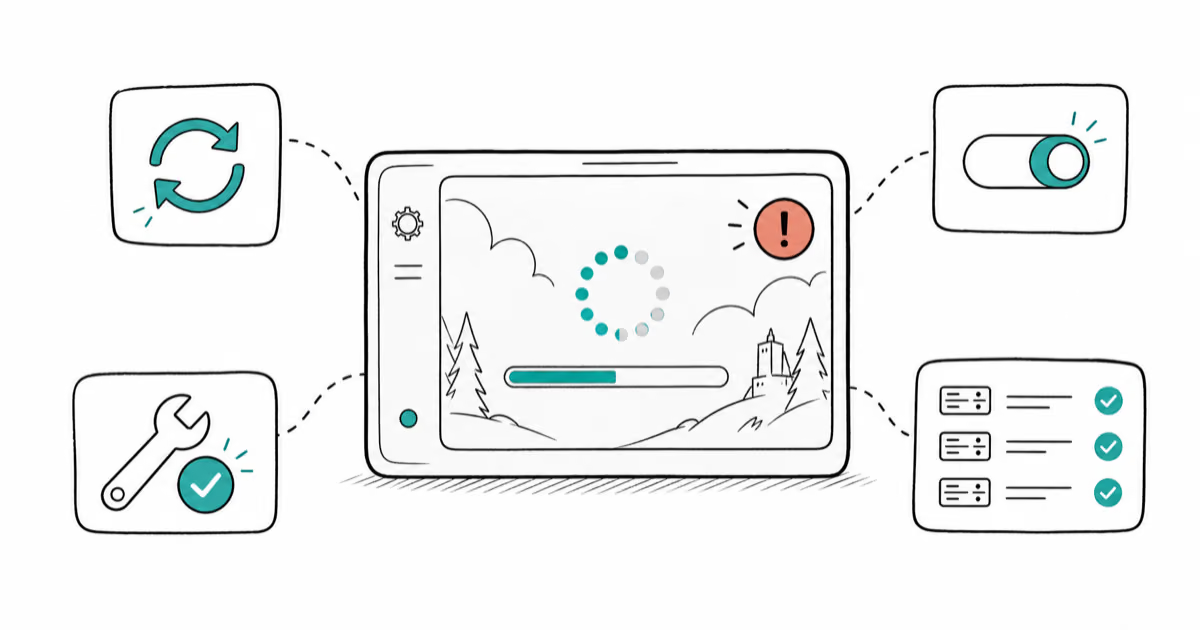
Fortnite Stuck on the Loading Screen? Fix It in 2026
Fortnite stuck on the loading screen? Check server status, fix the Windows N Media Pack and DirectX 11 on PC, clear the console cache, and verify files.
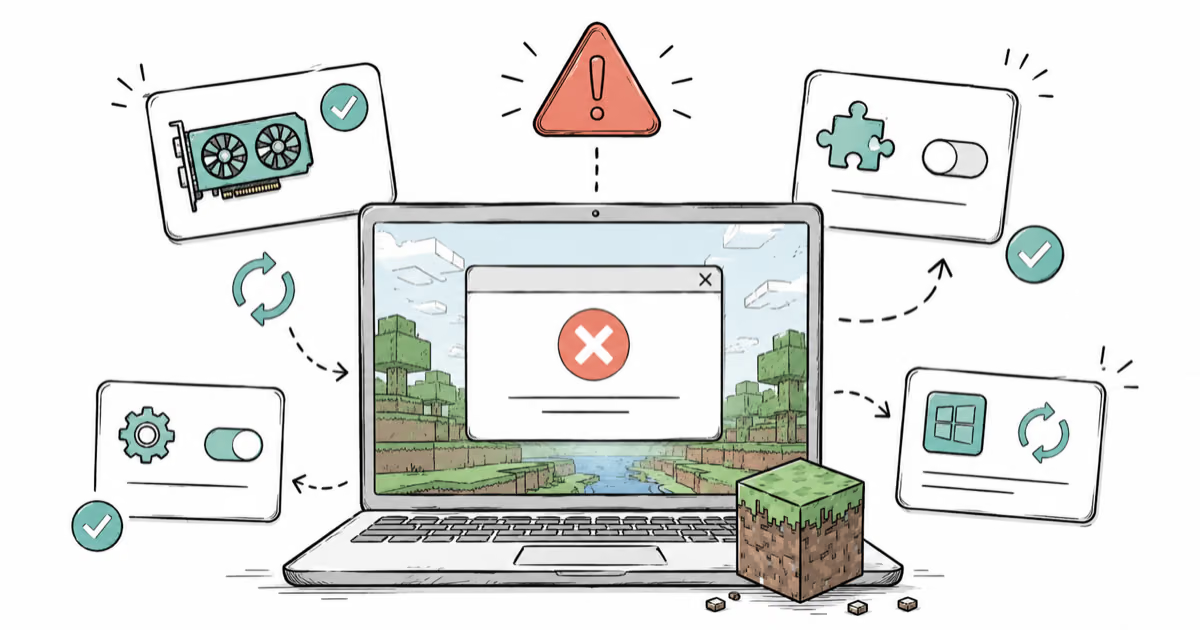
Minecraft Keeps Crashing? Java and Bedrock Fixes (2026)
Minecraft keeps crashing on startup or mid-game? Update your GPU driver, remove mods on Java, and reinstall Gaming Services on Bedrock. Fixes for both.
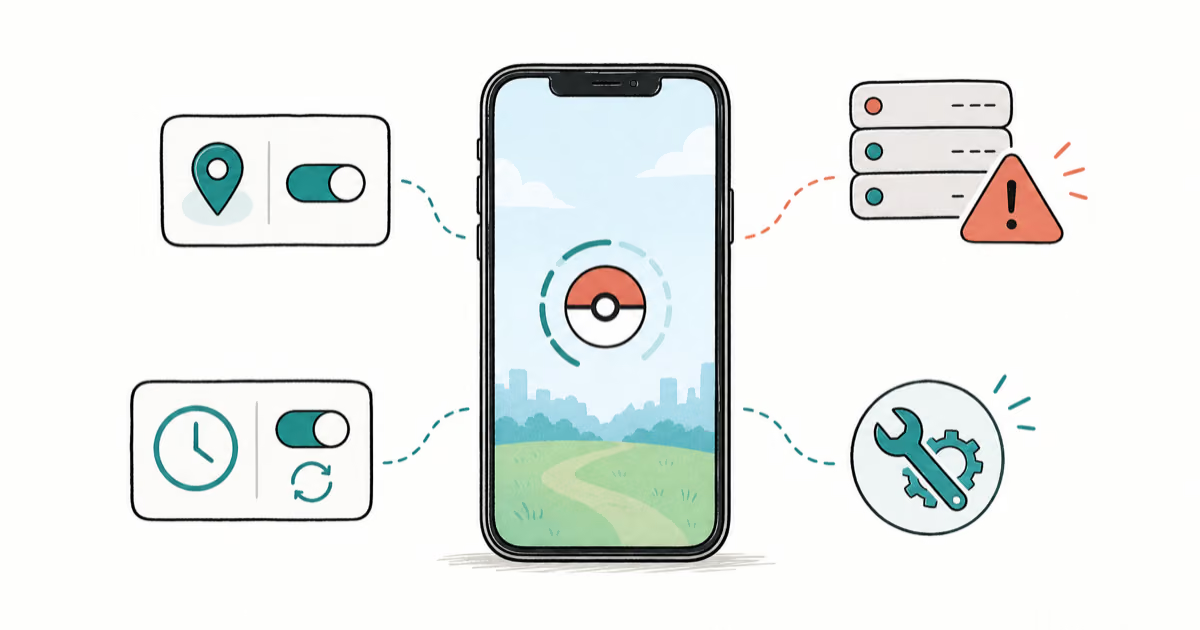
Pokemon GO Not Loading? Fix the Loading Screen 2026
Pokemon GO not loading or stuck on the Pokeball? Check server status, fix automatic date and time, grant location permission, clear the cache, and update.
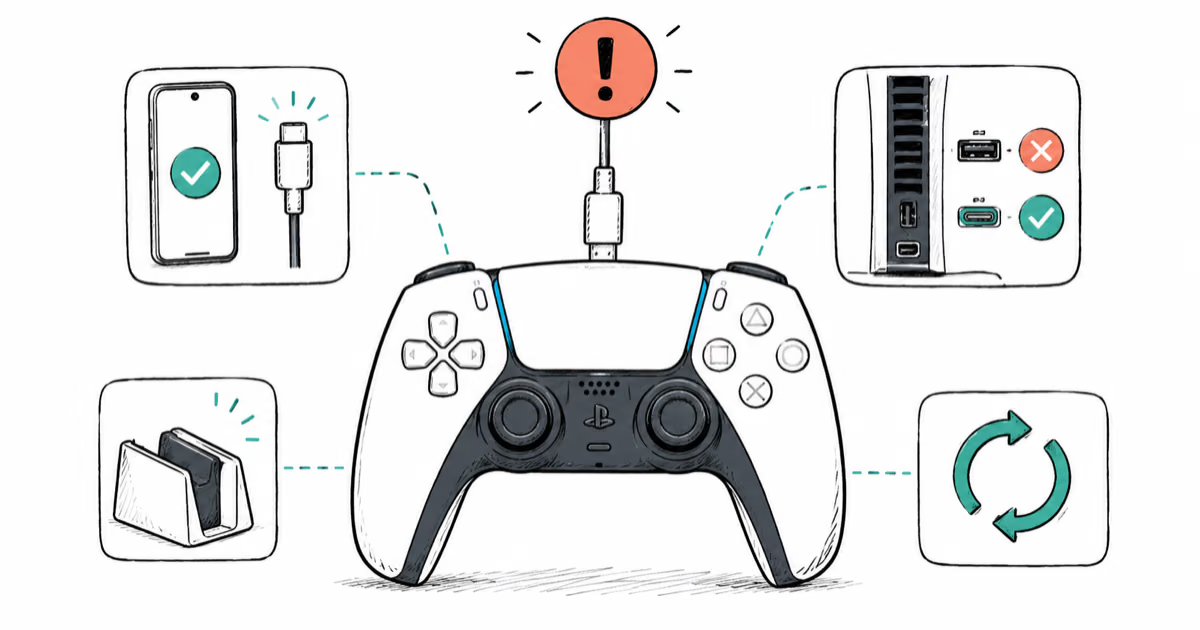
PS5 Controller Not Charging? 9 Fixes That Work (2026)
DualSense not charging? Swap the cable, use a rear port in Rest Mode, clean the USB-C port, and check power settings. 9 fixes for a dead PS5 controller.