Best Word Board Games 2026: 12 Vocab-Building Picks
Compare 12 word board games by age range, player count, pace, and format, from Scrabble and Codenames to Bananagrams and kid-friendly picks.
Quick AnswerScrabble, Codenames, and Bananagrams remain the three strongest word board games for adults, while Scrabble Junior and Boggle Junior work best for players under ten. Pick by player count and age range first, then by how much strategy versus speed you want.
Word board games stay one of the most reliable categories on a family game shelf because they scale across ages, group sizes, and skill levels without needing tech or batteries. The picks below cover classic letter-tile games, modern party hits, kids’ introductions, and challenging options for serious word lovers, with the main tradeoffs called out by age range, player count, pace, and format.
- Scrabble has anchored the category since 1948 and stays the gold standard for two to four players who want strategic letter placement
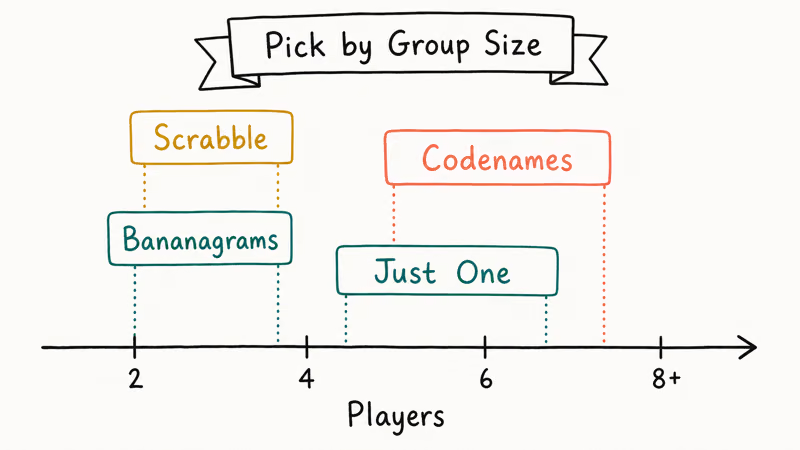
- Codenames scales from 2 to 8+ players, the widest player range among the major word games in this guide
- Bananagrams ships in a 144-tile banana pouch with no board required, making it the most travel-friendly pick in this roundup
- Wordle: The Party Game and Just One released after 2018 and are the strongest modern entries for casual groups
- Scrabble Junior starts at age 5, the lowest age floor among full-format word board games in this guide
#What Is the Best Word Board Game for Building Vocabulary?
Scrabble is the best word board game for building vocabulary in most households because it forces players to think about letter values, prefixes, and suffixes on every turn. According to Wikipedia’s Scrabble entry, the standard game ships with 100 letter tiles distributed by English-language letter frequency, which trains players to recognize how often each letter appears in real words.
Scrabble pushes longer vocabulary stretches because the point system rewards rare letters; Bananagrams stays faster and leans toward shorter common words.
For younger players, Boggle Junior and Scrabble Junior beat the open Scrabble board because the simpler grids and pre-printed word options keep new readers engaged without frustration.
Adults who want the vocabulary workout without the slow pace usually land on Quiddler or A Little Wordy. Both compress the word-building loop into shorter rounds and skip the long stretches where Scrabble stalls on dictionary disputes. Quiddler in particular hits the sweet spot for analytic players who don’t want to commit an entire evening to a single match.
#Classic Word Board Games That Still Earn Their Shelf Space
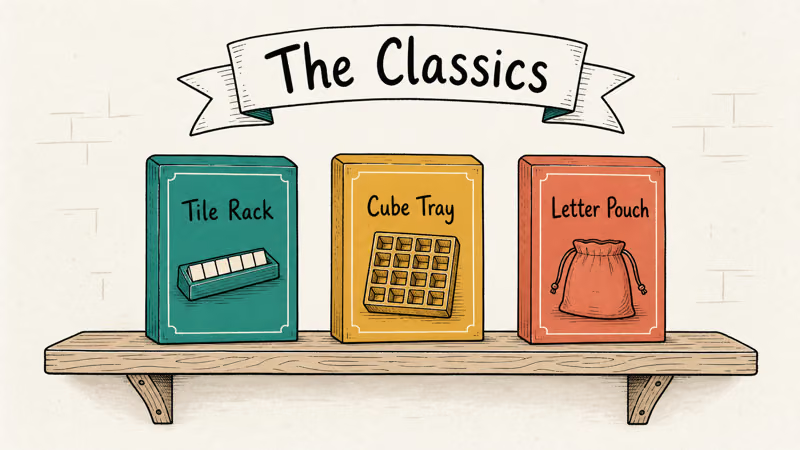
#Scrabble
Scrabble is the genre’s reference point. Players draw seven letter tiles, build words on a 15x15 grid, and score based on letter values plus premium squares. According to the North American Scrabble Players Association, tournament play uses the Official Tournament and Club Word List, which means casual house rules and tournament rules drift apart fast.
Recommended for 2 to 4 players, ages 10 and up. Setup takes three minutes; a full game runs 45 to 90 minutes. Pick a word list before turn one.
#Boggle
Boggle is the speed version of letter-tile word hunting. Players shake a covered grid of 16 letter cubes, then race a three-minute sand timer to write down every word they can trace by adjacent letters. The compact design makes it easy to throw in a backpack.
Recommended for one or more players, ages 8 and up. The 4x4 grid is the standard; the larger 5x5 Big Boggle suits groups wanting longer rounds.
#Upwords
Upwords takes Scrabble’s grid concept and adds vertical stacking. Players can build words on top of existing tiles by stacking up to five letters high, which opens new strategic angles like blocking and rebuilding. The raised game grid keeps stacks from sliding, and it’s a useful pick for households that already play Scrabble and want a fresh angle.
Recommended for 2 to 4 players, ages 10 and up. Plan for 45 to 60 minutes per game.
#Modern Word Board Game Picks
#Codenames
Codenames flipped the word-game format on its head when it launched in 2015. Two teams have a Spymaster who gives one-word clues that link several agent names on a shared 5x5 grid; the team that contacts all of its agents first wins, while the assassin word ends the game on the spot. Wikipedia’s Codenames entry confirms that the game won the 2016 Spiel des Jahres, the German game industry’s top award.
Codenames supports the broadest table in this guide, officially scaling from 2 to 8+ players. It’s our top pick if your “group” is really a small party.
#Bananagrams
Bananagrams ships as 144 letter tiles in a banana-shaped fabric pouch and skips the board entirely. Each player races to build their own crossword grid; first one to use every tile wins. According to Wikipedia’s Bananagrams entry, the game launched in 2006 and has stayed popular because it sets up in 30 seconds and packs flat enough to live in a suitcase.
Recommended for 1 to 8 players, ages 7 and up. Rounds stay quick once everyone knows the peel-and-dump rhythm.
#Wordle: The Party Game
The Wordle phenomenon went tabletop in 2022 with a dry-erase board format. One player picks a secret five-letter word, and the others use letter-by-letter feedback to guess it in as few attempts as possible. The four-mode design (Classic, Speed, Teams, Timed) keeps the format from getting stale. If you also enjoy adversarial word puzzles, our Antiwordle guide covers the opposite-day variant.
Recommended for 2 to 4 players, ages 14 and up.
#Which Word Board Games Work Best for Large Groups?
For groups of six or more, Codenames, Just One, and Taboo are the strongest fits for room-wide play. Codenames splits naturally into two teams and stays balanced even with uneven player counts. Just One is fully cooperative, so nobody waits long for a turn, and the duplicate-clue elimination rule guarantees laughs.
Taboo is the rowdiest pick. One player describes a target word without using five “taboo” words; teammates race against a buzzer to guess. The 1000-card box keeps replay value high across multiple parties. If your group leans toward video-game party formats, the games like Jackbox roundup covers crossover options.
Scrabble, Bananagrams, and Boggle all hit a wall past four or five players because grids and tile pools were not built for crowds. Save those for game nights with smaller cores.
#Family-Friendly Picks for Kids and Beginners
#Scrabble Junior
Scrabble Junior is a double-sided board game. The starter side has pre-printed word grids that kids can match with letter tiles, training letter recognition before they have to build words from scratch. The reverse side has a blank grid for older kids who are ready for the standard format.
Recommended for 2 to 4 players, ages 5 and up.
#Tapple
Tapple is a category-and-letter game built around a hand-held wheel of 20 letter buttons and a 10-second timer. A player flips a category card (“kitchen appliances,” “movie titles”), then the wheel passes around the table while players name a matching word and press their letter button. The pace stays brisk and the rules are easy enough for new readers.
Recommended for 2 to 8 players, ages 8 and up.
#Boggle Junior
Boggle Junior is for the youngest crowd in this roundup. Kids match letter tiles to spell words shown on picture cards, which builds letter-sound association before competitive play starts. The 40 picture cards have two difficulty levels, so it grows with a child over a year or two.
Recommended for one or more players, ages 3 and up. For more app-based options that pair with these games, our best board game apps list covers companion picks.
#Challenging Word Board Games for Serious Players
#Quiddler
Quiddler is a card-based hybrid that takes Scrabble’s word-building loop and pairs it with Rummy-style hand management. Players are dealt a hand each round and try to spell out all of their cards using the letter combinations. Bonus points for the longest word and most words make endgame strategy interesting.
Recommended for 1 to 8 players, ages 10 and up. The 118-card deck and short round structure make it our top pick for adults who want focused word play in under an hour.
#Letter Jam
Letter Jam is fully cooperative. Each player has a hidden letter; teammates take turns building words that include those letters as clues to help everyone deduce their own letter. It’s the most “puzzle”-feeling game in the roundup, and good groups can solve it in 20 to 30 minutes. The cooperative format is rare in word games and a strong fit for couples or close friend groups.
Recommended for 2 to 6 players, ages 10 and up.
#A Little Wordy
A Little Wordy is from the publisher of Exploding Kittens and condenses competitive word play into two-player rounds. Each player builds a secret word from a set of letter tiles, then trades cryptic clue cards to figure out their opponent’s word first. It runs in 15 minutes, which makes it good as a warm-up or a tiebreaker between bigger games.
Recommended for 2 players, ages 10 and up.
#How to Choose the Right Word Board Game
Five questions shape the right pick faster than reading more reviews:
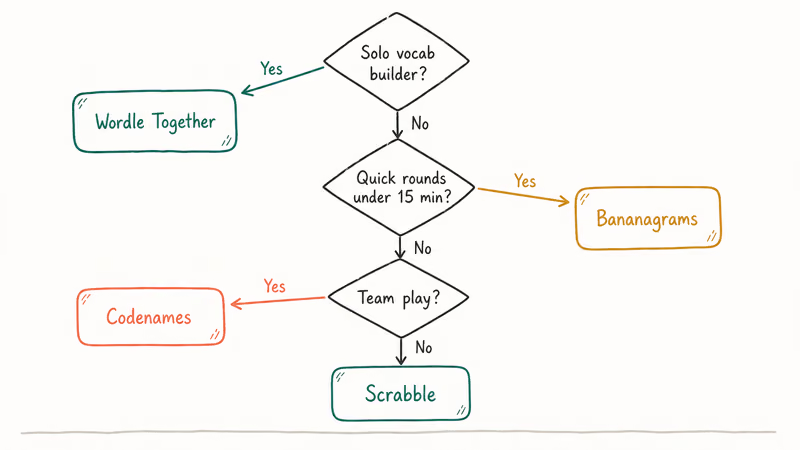
- How many players? Two-player households should look at Quiddler, A Little Wordy, or head-to-head Scrabble. Five or more, jump straight to Codenames, Just One, or Taboo.
- What ages are at the table? Under 8, default to Boggle Junior or Scrabble Junior. Mixed ages 8 to 14, Tapple and Bananagrams balance speed and accessibility better than the longer strategic games.
- How long do you want each game to run? Bananagrams and Boggle finish in under 10 minutes per round. Scrabble and Upwords are evening commitments.
- Competitive or cooperative? Letter Jam and Just One are the only fully cooperative titles in this roundup. Everything else is competitive.
- Travel or home? Bananagrams and Boggle pack flat. Scrabble, Upwords, and Wordle: The Party Game need a tabletop and storage space.
Related reads for deeper coverage:
- Strategic thinking in the digital cousin of Scrabble: Words With Friends tactics
- Themed board-game roundups outside the word category: anime board games guide
#Bottom Line
If you can buy only one word board game in 2026, get Scrabble. It’s the most-played title in the category for a reason, and the strategic depth pays off across years of play.
If you already own Scrabble and want a second pick, get Codenames. It handles every player count from 2 to 9 without breaking and works for casual groups that won’t sit through a full Scrabble match.
For families with kids under ten, start with Scrabble Junior or Boggle Junior and trade up to the standard versions once your kids can spell five-letter words without help. Skip Wordsmithery and Word on the Street unless you specifically want their formats; the other ten picks here cover the same use cases with better production quality.
#Frequently Asked Questions
Are word board games actually good for vocabulary?
Yes, especially for kids and casual players. The repeated exposure to less-common letters and short common words trains recall faster than reading alone. Tournament-level Scrabble players memorize multi-thousand-word lists, but you don’t have to reach that bar to benefit. Even casual weekly play moves the needle.
What is the best word board game for two players?
Quiddler and A Little Wordy are both built around two-player rounds and run faster than head-to-head Scrabble. Quiddler scales up if a third or fourth player joins, while A Little Wordy stays strictly two-player. Head-to-head Scrabble works fine but tends to drag past the 30-minute mark once both players are out of premium-square plays. If you want a head-to-head Scrabble match that feels brisk, set a 60-second turn timer and skip the dictionary challenge rule.
Can word board games help kids with reading?
Boggle Junior and Scrabble Junior are designed for early readers and pair letter recognition with simple word patterns. Tapple works once kids can spell most three- to five-letter words independently. Pediatric reading specialists generally recommend mixing tactile letter games with reading practice.
Which word game scales to the largest group?
Codenames officially supports 2 to 8+ players, and Just One handles 3 to 7. Taboo works for 4 or more. For bigger parties, split into two tables and run parallel games rather than cramming everyone into one round.
Are there cooperative word board games?
Yes. Letter Jam and Just One are fully cooperative, which means everyone wins or loses together. Codenames has a one-versus-many variant called Codenames Duet that’s also cooperative.
How long does a typical word board game take?
Bananagrams and Boggle rounds finish in under 10 minutes. Codenames and Tapple usually run 15 to 30 minutes. Scrabble and Upwords are 45 to 90 minutes depending on how analytical the players are.
Do digital versions match the experience of physical board games?
For solo or remote play, the digital versions of Scrabble (Words With Friends), Wordle, and Codenames work well. Around a real table with snacks and conversation, the physical games still feel different in a way most players notice within a round or two.
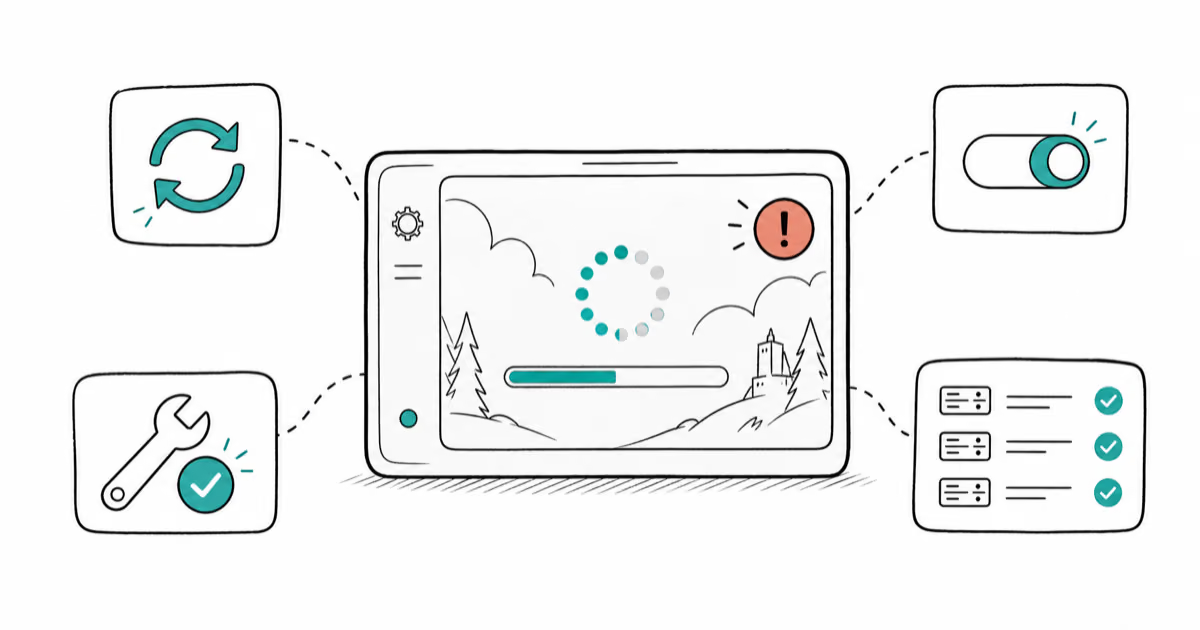
Fortnite Stuck on the Loading Screen? Fix It in 2026
Fortnite stuck on the loading screen? Check server status, fix the Windows N Media Pack and DirectX 11 on PC, clear the console cache, and verify files.
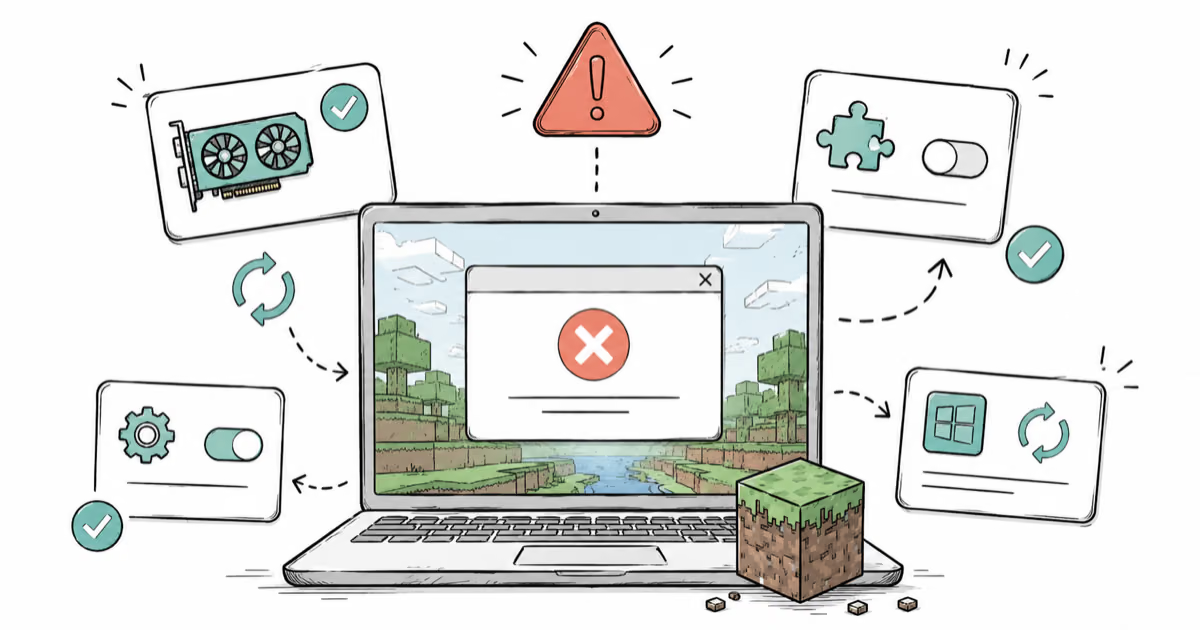
Minecraft Keeps Crashing? Java and Bedrock Fixes (2026)
Minecraft keeps crashing on startup or mid-game? Update your GPU driver, remove mods on Java, and reinstall Gaming Services on Bedrock. Fixes for both.
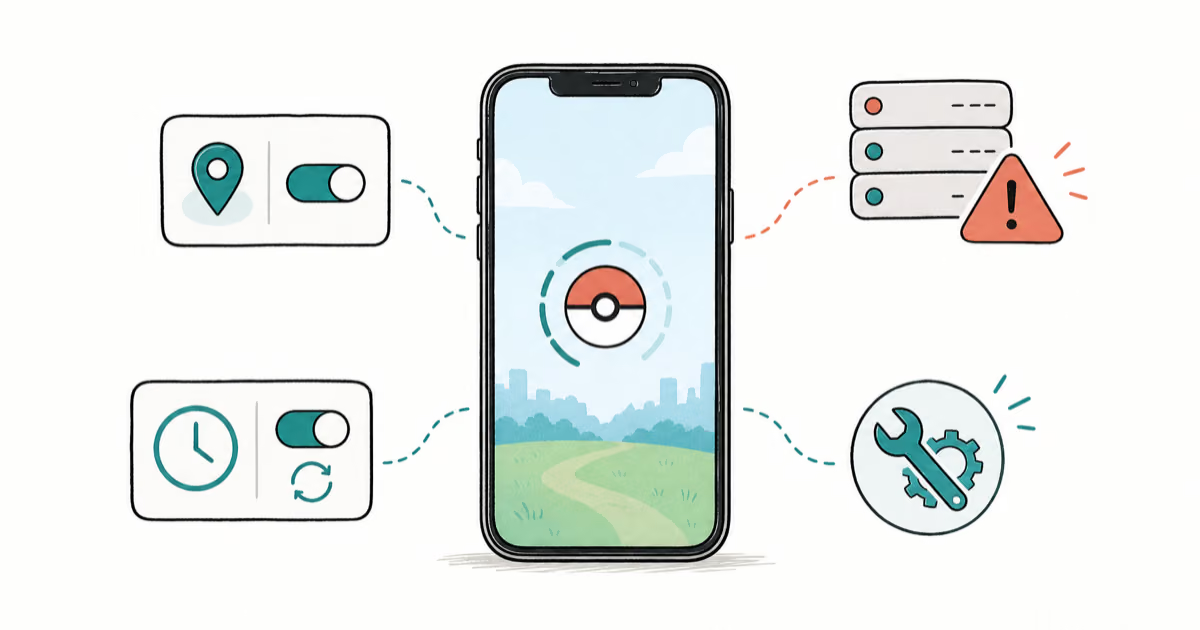
Pokemon GO Not Loading? Fix the Loading Screen 2026
Pokemon GO not loading or stuck on the Pokeball? Check server status, fix automatic date and time, grant location permission, clear the cache, and update.
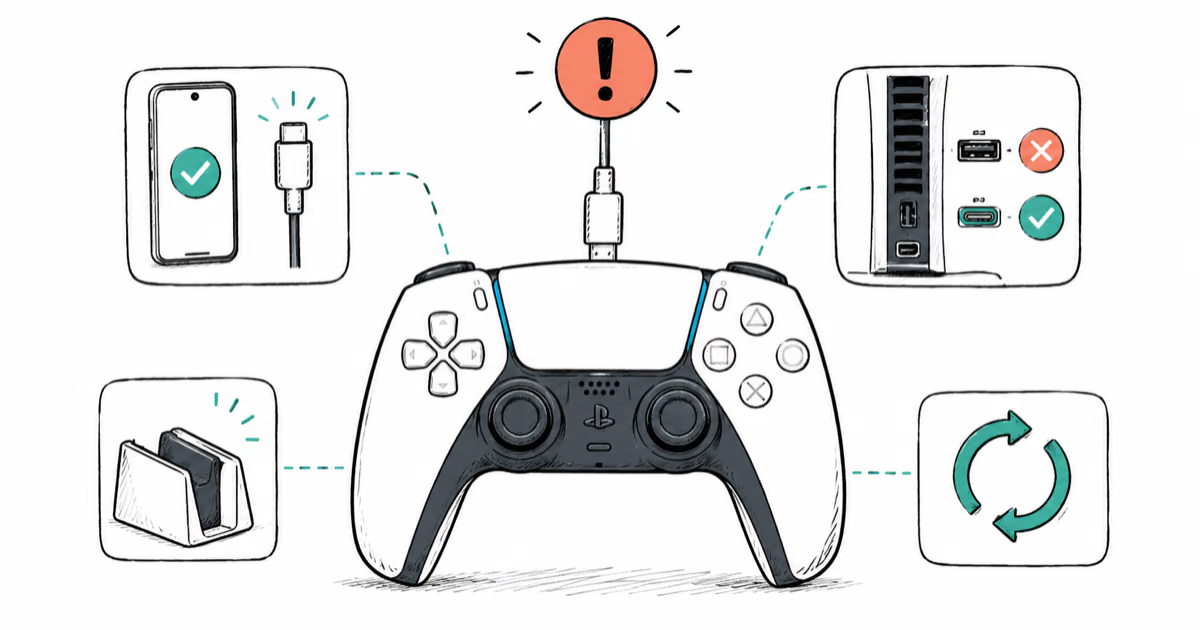
PS5 Controller Not Charging? 9 Fixes That Work (2026)
DualSense not charging? Swap the cable, use a rear port in Rest Mode, clean the USB-C port, and check power settings. 9 fixes for a dead PS5 controller.