Fix "Untrusted Enterprise Developer" on iPhone (2026 Guide)
Fix the "Untrusted Enterprise Developer" error on iPhone by trusting the developer certificate in Settings, verifying app sources, and staying secure.
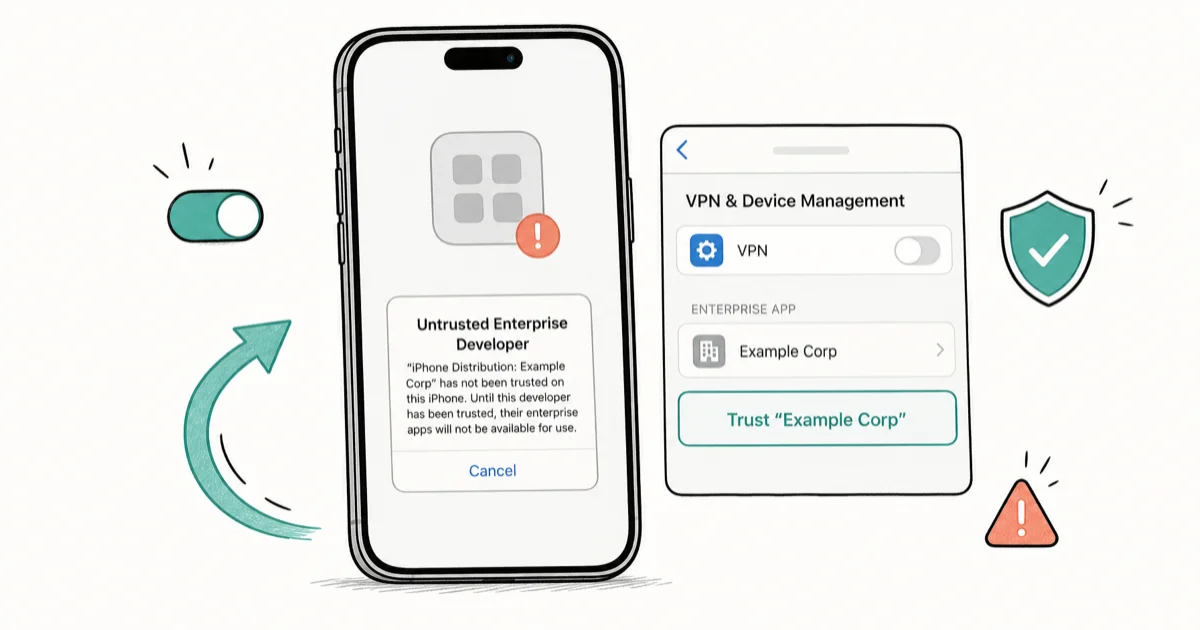
Quick AnswerGo to Settings > General > VPN & Device Management, tap the enterprise developer profile, and select Trust to allow the app to run on your iPhone.
The “Untrusted Enterprise Developer” error pops up on iPhone when you try opening an app that wasn’t downloaded from the App Store. If the app comes from a legitimate organization, the fix is in Device Management settings.
- Trust an enterprise app by going to
Settings>General>VPN & Device Management, tapping the developer profile, and selecting Trust - Enterprise certificates bypass App Store review, so only trust apps from organizations you work with directly
- Missing Trust option usually means your MDM profile blocks enterprise app installation — contact IT rather than trying workarounds
- Revoked or expired certificates trigger the error even after previous trust — developers must renew annually
- Apple can revoke enterprise certificates without warning to end users if the developer violates distribution policies
#Why Does the “Untrusted Enterprise Developer” Error Appear?
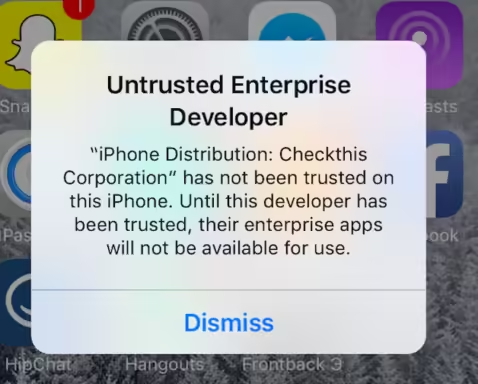
This alert appears when you try running an app signed with an enterprise certificate that your iPhone hasn’t verified yet. iOS blocks it because the app skipped the App Store review.
According to Apple’s enterprise app distribution documentation, enterprise certificates let organizations distribute internal apps directly to employees without publishing them on the App Store. This is common in corporate environments where companies build custom tools for their teams.
The tradeoff: these apps skip Apple’s security screening, so iOS requires you to manually verify trust before they’ll run. Until you trust the developer certificate, iOS blocks the app from launching.
#Understanding Apple’s App Verification Process
Every App Store app goes through Apple’s review process, which checks for malware, privacy violations, and policy compliance. Apps distributed via enterprise certificates skip this review entirely.
Apple’s App Store Review documentation confirms that enterprise certificates are strictly for internal distribution within an organization. Developers who misuse enterprise certificates to distribute apps publicly risk having their certificate revoked by Apple, which instantly breaks all apps signed with that certificate.
iOS also uses sandboxing to isolate each app in its own environment. Even after you trust an enterprise developer, that app can’t access data from other apps or modify system files. This containment limits the damage if an enterprise app turns out to be malicious.
#Step-by-Step Guide to Trusting an Enterprise Developer
If you’re confident the app comes from a legitimate source (your employer, a known organization), here’s how to trust it:
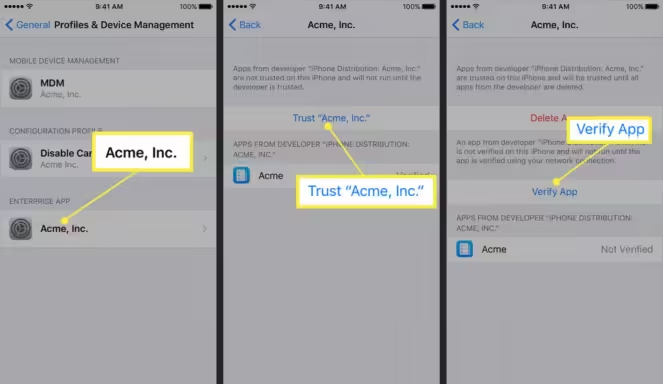
- Open Settings > General > VPN & Device Management. On iOS 14 and older, this option is called Profiles & Device Management.
- Under Enterprise App, tap the developer profile linked to your app.
- Tap Trust “[Developer Name]” and confirm by tapping Trust again.
- Return to the home screen and open the app. It should launch without the error.
If you don’t see the VPN & Device Management option at all, it might be hidden by your organization’s MDM policy. Check our guide on what to do when Profiles and Device Management is missing for workarounds.
After the certificate is trusted, the app should launch without requiring a restart.
#Potential Risks of Trusting Unverified Developers
Trusting an enterprise developer gives that app elevated privileges on your device. Here’s what could go wrong if the source isn’t legitimate:
Malware exposure. Apps outside the App Store haven’t been screened by Apple’s review team. A malicious enterprise app could install keyloggers, steal passwords, or access your camera and microphone. Apple blocks a significant volume of fraudulent transactions through its App Store review process, but sideloaded apps bypass those protections entirely.
Data harvesting. Unverified apps can request access to your contacts, photos, location, and browsing history. Without App Store review, there’s no check on whether the app actually needs that data.
Sandbox escape exploits. While iOS sandboxing isolates apps, sophisticated malware can exploit vulnerabilities to break out of the sandbox and access other apps’ data. This type of attack is rare but possible on older iOS versions with unpatched security holes.
To protect yourself, learn how to detect spyware on your iPhone. If you suspect an enterprise app is behaving suspiciously, delete it and remove the developer profile immediately.
#Best Practices for iOS App Security
Follow these steps to stay safe while using enterprise apps on your iPhone:
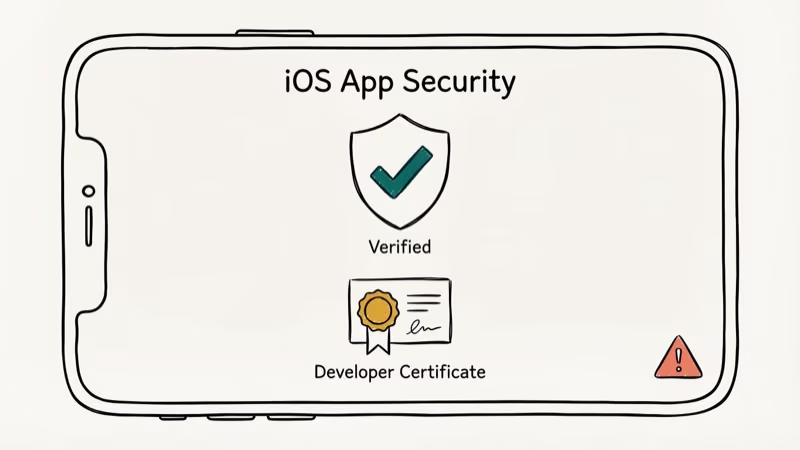
- Stick to the App Store. Only trust enterprise certificates from organizations you work with directly. Don’t install profiles from random websites.
- Review app permissions regularly. Check Settings > Privacy & Security to see which apps access your camera, microphone, location, and contacts.
- Keep iOS updated. Apple patches certificate-related vulnerabilities in nearly every iOS update.
- Ask your IT department about MDM. Mobile Device Management can automatically trust verified enterprise apps so employees don’t have to do it manually.
If you’re dealing with a Mac showing a similar “developer can’t be verified” error, the fix involves a different process through System Preferences.
#What if the Trust Option Doesn’t Work?
If you’ve tapped Trust but the app still won’t open, try these fixes in order:
- Delete and reinstall the app. The certificate might not have linked properly during the first install.
- Check your internet connection. iOS needs to contact Apple’s servers to verify the certificate. Certificate verification fails on airplane mode or unstable WiFi.
- Update to the latest iOS version. Older iOS versions sometimes have bugs with certificate verification. Apple’s iOS security guide recommends updating promptly because each release includes fixes for certificate validation issues.
- Contact the app developer. Their enterprise certificate might have expired (certificates are valid for 1 year) or been revoked by Apple.
If you’ve also run into Activation Lock problems on the same device, resolve those first, because Activation Lock restrictions can interfere with enterprise profile management.
#MDM Solutions for Enterprise App Distribution
Organizations that distribute internal apps should use Mobile Device Management (MDM) instead of asking each employee to manually trust certificates. MDM offers three key advantages:
- Automatic trust. Enterprise apps install and run without the “Untrusted Developer” prompt.
- Centralized control. IT admins can push, update, or remove apps across all company devices from a single dashboard.
- Security enforcement. MDM policies can block non-approved apps and enforce iOS updates, reducing the attack surface.
If your company uses MDM and you’re still seeing the error, your device might not be enrolled properly. Check with IT to verify your MDM profile configuration.
#Bottom Line
The “Untrusted Enterprise Developer” error is iOS doing its job by blocking unverified apps from running on your device. If the app comes from your employer or a trusted organization, use Settings > General > VPN & Device Management to trust the certificate. Don’t trust certificates from unknown sources, random websites, or apps that promise features that seem too good to be true. When in doubt, ask your IT department or the app developer directly before trusting any enterprise certificate.
#Frequently Asked Questions
Can I trust all enterprise developers on my iPhone?
No. Only trust developers from organizations you work with directly. If you didn’t get the app from your employer, don’t trust it.
Will trusting a developer compromise my iPhone’s security?
Trusting a legitimate enterprise developer won’t compromise your device’s built-in security features. iOS sandboxing still isolates the app from other apps and system data, so even a trusted enterprise app can’t read your messages or access your banking apps. The real risk comes from trusting certificates from unknown sources, which could grant malicious apps permissions they shouldn’t have.
How often does iOS reverify enterprise app trust?
iOS checks the certificate against Apple’s servers periodically. If the certificate expires or gets revoked, the app stops working immediately. Your device needs an internet connection for verification.
Can I remove trust from an enterprise developer?
Yes. Go to Settings > General > VPN & Device Management, tap the developer profile, and select Delete Profile. This removes trust and prevents all apps from that developer from running on your device.
Do App Store apps need manual trust verification?
No. App Store apps are automatically trusted because Apple reviewed and signed them during the submission process.
What happens when an enterprise certificate expires?
The app stops working immediately and you’ll see the “Untrusted Enterprise Developer” error again, even if you trusted the developer before. Enterprise certificates are valid for 1 year, and the developer must renew them annually. If this happens to an app you rely on for work, contact the app developer or your IT department to get the updated certificate.
Apple Siri Settlement: Who Qualifies and How to Claim
Apple's $250 million Siri settlement covers iPhone 15 Pro and iPhone 16 models bought June 2024 to March 2025. See who qualifies and how claims work.
iOS 26.6.1 Security Update: What Apple Fixed and Who Gets It
Apple released iOS 26.6.1 on August 17 with 29 security fixes, including an IPSec interception bug. See what it patches, who gets it, and how to update.
iPhone Adaptive Power: How It Works and When to Use It
Learn how iPhone Adaptive Power works, which models support it, what it changes, and when Low Power Mode is still the better battery-saving choice.
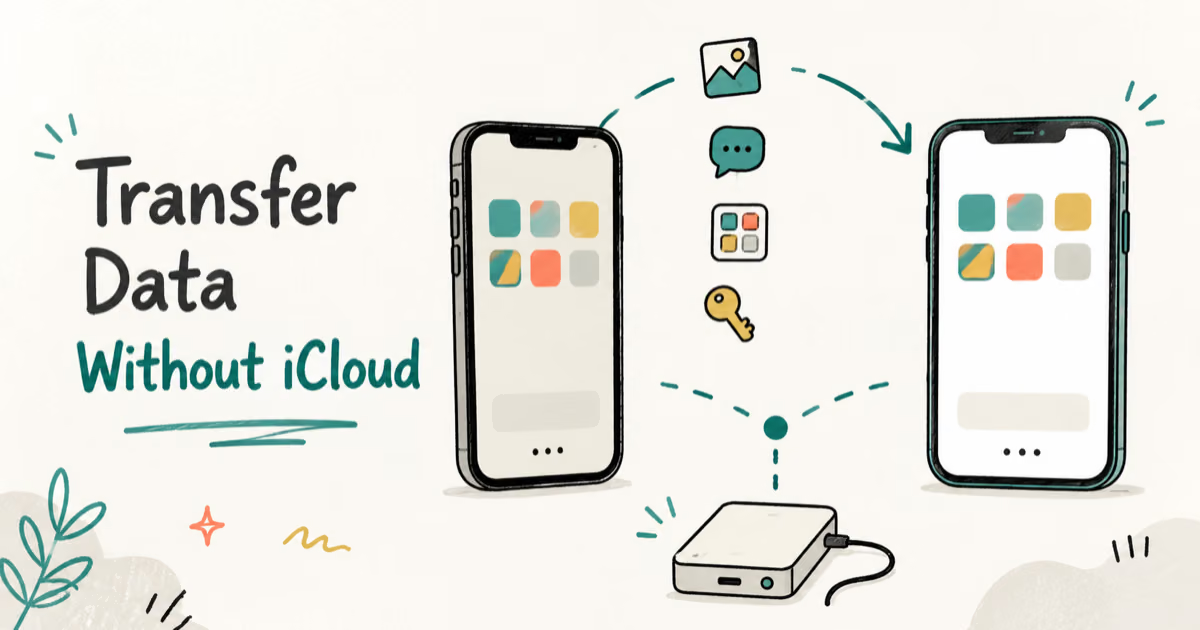
How to Transfer Data to a New iPhone Without iCloud
Move everything to your new iPhone without iCloud: Quick Start device-to-device transfer, wired migration, and encrypted Finder or iTunes backups.