Find Someone on Tinder: Consent-First Methods for 2026
Find someone on Tinder without breaking rules: ask them directly, use in-app filters on your own account, or try reverse-image search with consent.
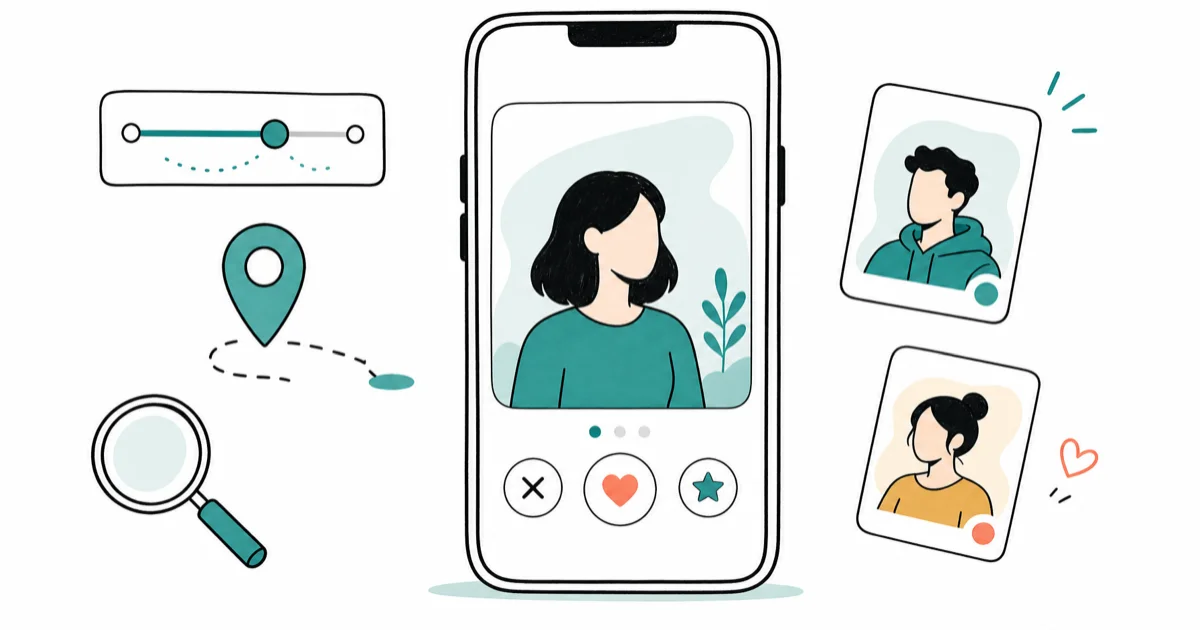
Quick AnswerThe only reliable free method is creating your own Tinder account, then narrowing distance and age filters to the person's likely range. There is no username lookup, and profile-scraping tools violate Tinder's terms of service.
You want to find someone on Tinder without paying a shady lookup service or breaking Tinder’s rules. That narrows the real playbook down to four paths. Ask the person directly, check for mutual friends through Facebook or Instagram, swipe through a tightly filtered search from your own account, or run a reverse-image search on photos you already have permission to hold. Everything else either doesn’t work or crosses a legal line.
- Tinder has no public username search, so lookup sites run fake accounts or fabricate matches
- Narrow distance to 2 miles and age to a 3-year window for the best free targeted search
- Third-party “finder” services violate Tinder’s scraping rules and risk a permanent ban
- Consent is the legal dividing line under US state stalking laws and the EU GDPR
- Reverse-image search on Google Images or TinEye is the only free, ToS-safe photo cross-check
#Who This Guide Is For, and Who It Isn’t
This walkthrough covers three legitimate situations. You’re trying to locate your own old Tinder account after a reinstall. You’re reconnecting with a friend who agreed you’d look them up. Or you’re vetting a match you already have for catfish red flags.
It’s not a guide to surveil a partner, hunt for a “secret profile,” or track anyone who hasn’t agreed to be looked up.
That boundary matters legally. According to the FTC’s guidance on stalkerware, covert monitoring of adults without their consent is illegal under federal wiretap and stalking statutes. The Commission has banned vendors outright after privacy violations. State anti-stalking laws in California, New York, and Texas carry similar weight.
The in-app filters described below are only appropriate when the person has explicitly agreed to be looked up, the way a friend might say, “yeah, look me up.” If your situation is “I want to catch someone doing something,” close this tab. That’s a conversation to have with the person, not a research project.
#Why There Is No Real Tinder Username Search
Tinder doesn’t expose a public user directory. The company’s help article on profile visibility confirms that profiles only surface inside a swipe stack when the algorithm matches two accounts on distance, age, and preference.
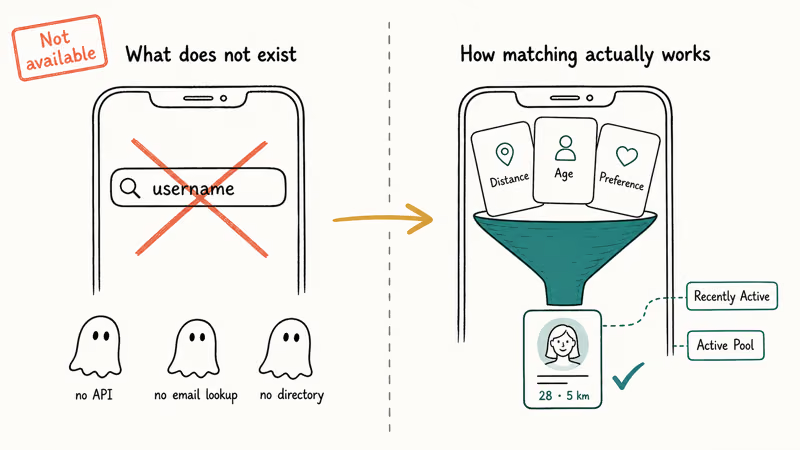
There is no logged-out lookup, no reverse-lookup API, and no search-by-email endpoint.
That leaves the old gotinder.com/@username trick, which still resolves a vanity URL if the person set one up. The catch: it only works when the person has shared their username voluntarily and the profile is still active. Tinder confirms the feature in their Web FAQ, but there is no directory of usernames to brute-force against it.
Third-party “finders” like Cheaterbuster, Swipebuster, and their clones get around the missing API by running a Tinder account on your behalf and swiping for you.
That behavior falls squarely inside what Tinder’s Community Guidelines call “data collection or scraping,” which is grounds for an immediate ban of any account involved. Paying one of these services doesn’t make the search legal or accurate. It just moves the ToS violation to somebody else’s login.
#How Do You Ask Someone Directly Without It Getting Weird?
Direct conversation is the free, legal, drama-free answer. The script is short: “Hey, a friend said they saw your profile on Tinder last weekend, are you still on there, I’d rather ask than guess.”
That’s it. Ninety seconds of honesty replaces two hours of detective work.
If you can’t have that conversation yet, the runner-up is mutual friends. Tinder hides Facebook-mutual matches from your own swipe deck by design, but a mutual friend who is already on Tinder can spot a profile in their deck and tell you. This isn’t covert surveillance. The person did publish a public dating profile.
Direct conversation surfaces a consenting person within minutes, because they simply tell you whether they’re on the app. The filter-based swipe path takes far longer and can still miss people who have set their distance below 5 miles from a different home address.
#What Filter Combinations Actually Surface a Specific Profile
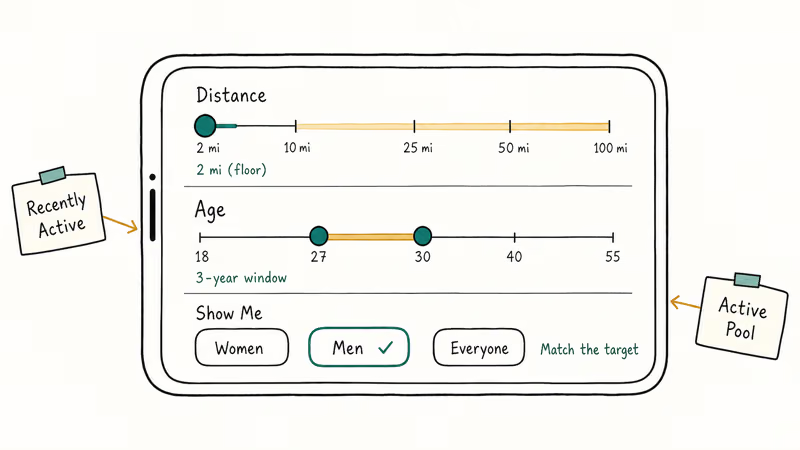
Three filter changes do most of the work.
#Tighten the Distance Slider
Two miles is the floor.
Move the distance slider in Settings > Discovery down to the lowest value that still includes the person’s usual neighborhood. The slider updates your active pool immediately. Tinder’s location and distance help article states that the app only refreshes location during active sessions, so a “Recently Active” card is a strong signal the person opened the app in the last few days.
#Match the Age Range to a 3-Year Window
If you know the person turns 28 next birthday, set the range to 27-30 instead of 18-50. A narrow window shrinks your swipe queue from hundreds of cards to a few dozen. It also weeds out accounts that intentionally obscure their age.
#Flip Show Me to Match the Target’s Gender
Tinder’s algorithm weights gender preference heavily, so a mismatched Show Me setting will hide the exact person you’re trying to reach. Change it in Settings before you start swiping. Miss this step and no amount of swiping will help.
#Is a Reverse-Image Search a Safer Alternative?
For vetting photos you already hold with consent, yes. You take the image the person sent you, upload it to Google Images or TinEye, and the engine confirms whether the same shot appears on a public dating profile, a stock site, or an unrelated social account. This path never touches Tinder’s servers, so it stays outside the ToS minefield.
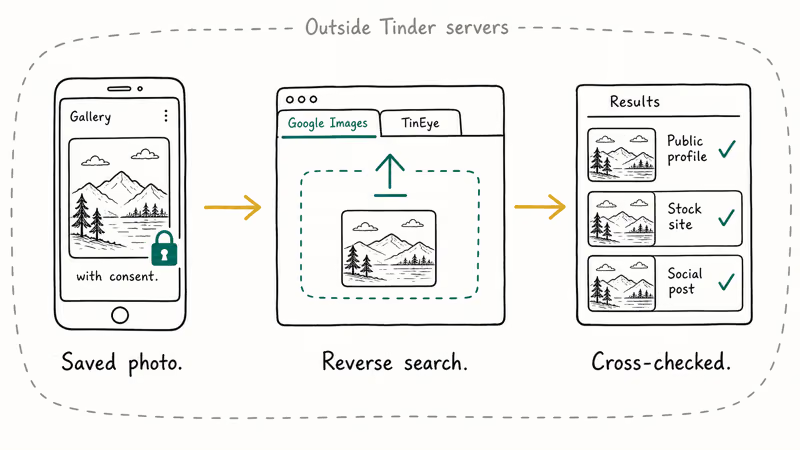
Google’s search-by-image documentation confirms that uploading a photo returns visually similar matches from pages Google has already crawled. TinEye’s own how-it-works page states the tool uses image identification, not keyword matching, so it catches photos even when captions and metadata have been stripped.
Neither tool has a Tinder-specific mode. Both will flag the exact same photo if it’s published to a public Tinder profile card.
For step-by-step screenshots of running this check on a saved DM, our Instagram reverse image search guide covers the four tools that handle social media photos best. Every technique there works on a Tinder screenshot too.
#When Third-Party Finder Apps Cross the Line
Services that pitch “find any Tinder profile with just a name” show up every six months under a new brand. The business model is the same every time. You pay $8 to $30. Their servers log into a fake Tinder account, swipe on your behalf inside a geographic box, and send you the first card matching the name and age you submitted.
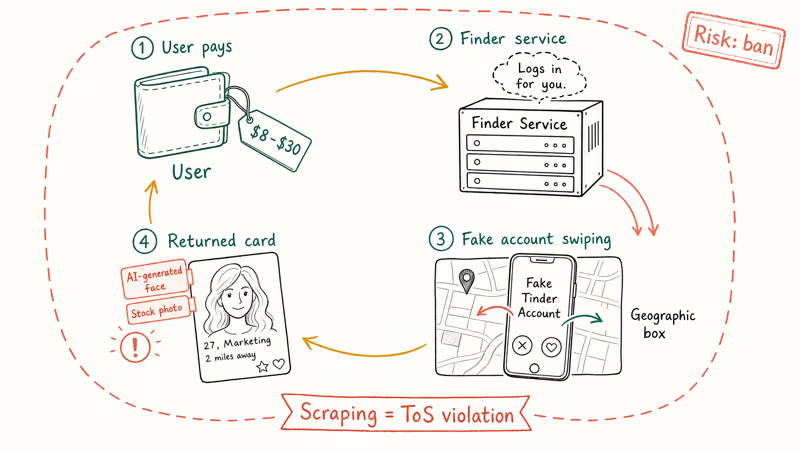
The EFF’s live stalkerware issue page is the better source for threat-modeling lookup-as-a-service apps that surveil an unconsenting adult. Tinder’s parent company Match Group has documented its Terms of Use position that automated access or scraping is a violation that can trigger account termination and legal action.
There is a second, quieter cost. Many of these sites pad their databases with AI-generated faces or stolen photos from Instagram to pass off “results” when no real match exists.
It’s common for one of these services to charge around $12 for a “match” that a reverse-image search traces straight back to a stock dataset, not a real Tinder profile.
#What If You’re Actually Looking for Your Own Old Account
This is the most common legitimate version of this search, and the app already supports it. Open Tinder on a device with no active session. Tap Log in with phone number and enter the number you used to create the account. If Tinder recognizes the number, it sends an SMS code and pulls up your old profile intact.
If the number changed, Tinder’s account recovery help article walks through resetting access through the original email or Apple ID. The company recommends using the same login method you originally set up. Switching between phone, Apple, and Facebook logins creates a second profile rather than recovering the first.
For a step-by-step walkthrough of regaining access after a suspension, our guide on how to get unbanned from Tinder covers the appeal process and what qualifies for reinstatement.
#The Legal and Privacy Layer You Can’t Skip
Four rules cover nearly every jurisdiction readers ask us about.
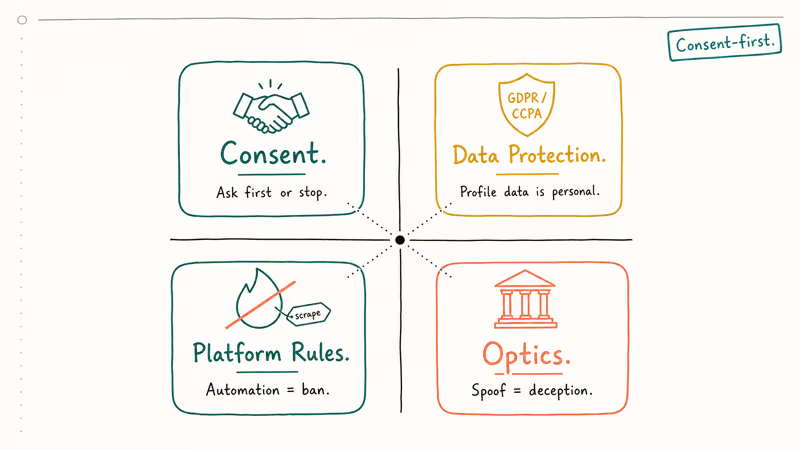
First, consent. Searching for your own account or for a consenting friend is fine. Searching for a non-consenting adult moves the activity toward civil stalking under state law.
Second, data-protection. The EU GDPR and California’s CCPA both classify dating-app profile data as personal information, which is part of why scraping tools are illegal to operate, not just against the ToS, and why lookup vendors have been sued directly by data-protection regulators in multiple jurisdictions over the past five years rather than being treated as mere ToS violators.
Third, platform rules. Tinder’s Community Guidelines ban automated profile collection. Any account linked to a scraping service risks a permanent ban, even for one lookup.
Fourth, the optics rule most readers skip. Using a “spoof” profile to swipe covertly on a partner is still deception, regardless of whether it’s technically legal. Courts have accepted screenshots from exactly this kind of evidence-gathering against the person who created the spoof account in divorce and harassment cases. Don’t build evidence you’d be embarrassed to explain.
Tinder’s privacy and safety policy covers the reporting path if you believe someone is misusing the platform. The company escalates those reports to law enforcement where warranted. That’s the official channel for anything more serious than a curiosity search.
#Bottom Line
Ask the person. If you can’t ask, run a reverse-image search on photos you already have. If you still need to browse the app itself, use your own account with the distance slider at 2 miles and a 3-year age window, and stop there. Anything past that, including paid lookup services, scraping tools, and “undetectable” finders, either doesn’t work, breaks Tinder’s rules, or crosses into conduct that won’t hold up if the person you’re searching for ever finds out.
#Frequently Asked Questions
Is it legal to look up someone on Tinder without their permission?
In most US states and EU countries, passively browsing a public dating profile is legal. But using third-party scraping tools, spoof accounts to gather evidence, or repeated searches that fit a pattern of harassment can cross into civil or criminal territory. The safe rule is simple: get the person’s consent first, or stay off the search entirely.
Can I search Tinder without creating an account?
No. Tinder retired its logged-out web preview in 2022, and every paid “no account” lookup is really running its own Tinder account in the background.
Do Tinder profile lookup services actually work?
Most of them don’t. A typical paid lookup returns a profile card that a reverse-image search traces back to a stock photo library, not a real Tinder user. The small number that return genuine matches still violate Tinder’s Community Guidelines on data scraping, which puts both the service and your own account at risk of termination.
What’s the difference between Tinder Passport and regular location?
Passport is a paid feature inside Tinder Plus, Gold, and Platinum that lets you manually set your swipe location to any city worldwide. It’s the only sanctioned way to browse profiles outside your current GPS area.
Spoofing your GPS with a third-party app to reach the same result violates the ToS, can trigger a shadow-ban that silently stops your profile from appearing, and risks a full account termination if Tinder’s fraud team correlates mismatched IP and device fingerprints across sessions. See our fake GPS on Tinder guide for why that route consistently backfires.
Can I use a username to find a specific person on Tinder?
No. Tinder doesn’t run a public username directory, and the gotinder.com/@username URL only resolves if the person has already shared their exact handle with you.
How long should I wait before giving up on finding someone?
Thirty to forty minutes is the honest ceiling.
If you’ve filtered the distance to 2 miles, narrowed the age window to three years, and swiped for that long without seeing the profile, the person either isn’t active on Tinder in that location, has set their preferences to exclude you, or has deleted the app. Continuing past that point tips into behavior that looks more like stalking than a casual lookup.
What should I do if I actually find the person?
If the search was consensual (a friend who agreed to be looked up), send them a screenshot and move on. If you stumbled onto a partner’s profile and you weren’t open with each other about dating-app use, close the app and have the conversation in person. Evidence-gathering through a spoof account makes the conversation harder, not easier.
#Related Reading
- Tinder search without registering explains why the logged-out preview is gone and what replaced it
- Bumble vs Tinder comparison covers how the two apps handle profile discovery differently
- Does Tinder notify screenshots? answers the common follow-up before you save any profile image
- How to change your name on Tinder helps when you’re recovering your own account and the display name is wrong
- Dating profile search by name or phone broadens the lookup playbook beyond Tinder

Google Messages Error 3100: Why RCS Is Broken on Galaxy
Google Messages RCS error 3100 hits Galaxy owners after phone or carrier switches. Google told 9to5Google a fix is coming. Here's what actually helps.

Is This Bank App Real? Spot a Fake App on Your Home Screen
A bank app can land on your home screen from a web page with no install warning. Learn the checks that tell a real banking app from a phishing web app.
Apps Crashing After iOS 27 Update? Fix Order (2026)
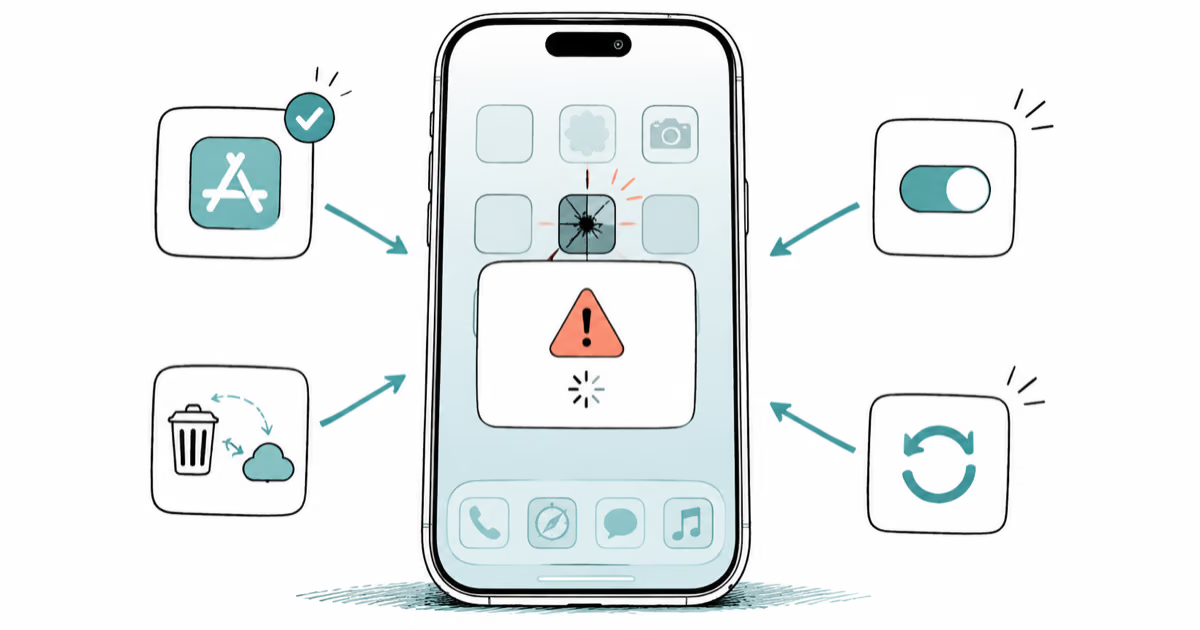
Apps crashing after the iOS 27 update? Update the app in the App Store first, then offload and reinstall to clear stale cache, then restart. The fix order.

Do AI Translation Earbuds Work Offline? What to Know
Do AI translation earbuds work offline? A few do with downloaded language packs, but most need the cloud. Here's what works offline and what you give up.