What Is Facebook Touch and How Do You Use It in 2026?
Facebook Touch was the mobile-optimized web version for touchscreen phones. Learn what happened to touch.facebook.com and what to use now on mobile.
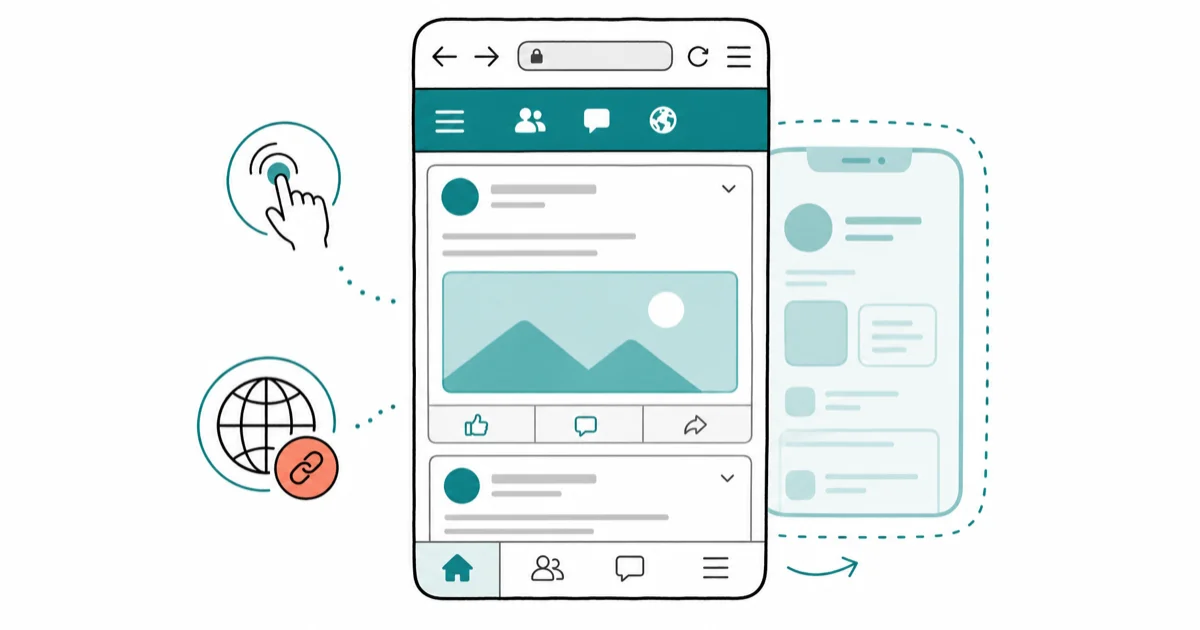
Quick AnswerFacebook Touch is the legacy mobile-optimized web interface at touch.facebook.com, built for early touchscreen phones. Meta has since folded it into the main mobile site at m.facebook.com, which most browsers now load by default.
Facebook Touch is the mobile-optimized web interface Meta originally hosted at touch.facebook.com, designed for early touchscreen phones that struggled with the full desktop site. Today, touch.facebook.com redirects straight to m.facebook.com, so the classic Touch URL no longer loads a separate product.
- Facebook Touch launched in 2009 at
touch.facebook.comfor early touchscreen phones - Today
touch.facebook.comredirects to the unified mobile web atm.facebook.com - Facebook now runs HTTPS end-to-end, so the old session-security gaps are closed
- Android users can still get a lightweight app with Facebook Lite (around 3 MB installed)
- For browser-based Messenger, use
messenger.comdirectly since Meta dropped the tab fromfacebook.comin late 2024
#What Is Facebook Touch?
Facebook Touch is the name of the mobile web product Facebook launched in 2009 at the touch.facebook.com subdomain. It was a separate interface from m.facebook.com, built specifically for phones with capacitive touchscreens such as the iPhone 3G and early Android models.
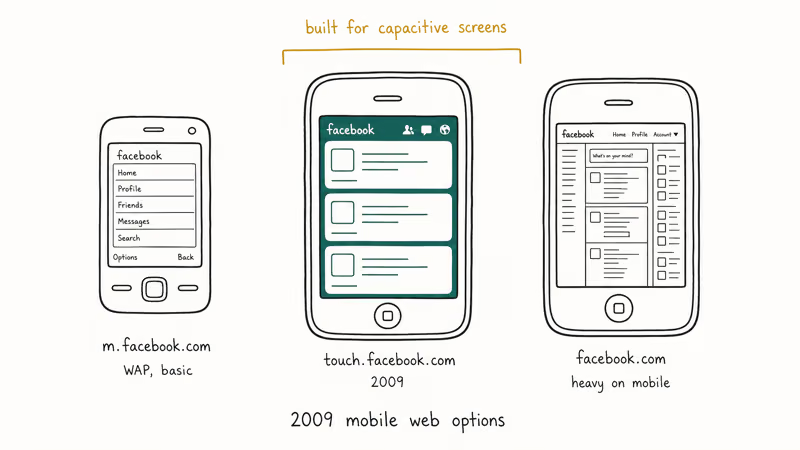
The idea was straightforward. Desktop facebook.com was heavy and slow on mobile data, and m.facebook.com was designed for older WAP-style phones. Touch sat between them with bigger tap targets, larger photos, and a layout that reads naturally on a 3.5-inch to 4-inch screen.
Meta has since collapsed these three experiences into two. According to Meta’s mobile-basic help page, the supported mobile web now lives at m.facebook.com, and the touch.facebook.com hostname still resolves but forwards to the main site.
#Facebook Touch vs the Regular Facebook App
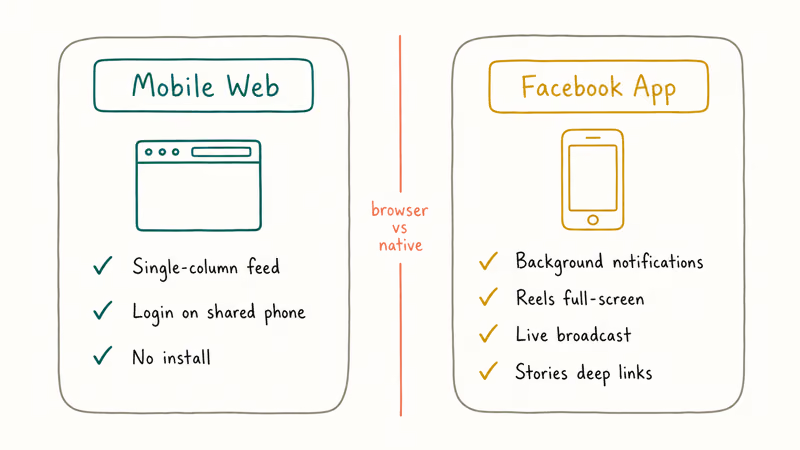
The short answer: Touch was a browser product and the Facebook app is a native app, so the trade-offs were never one-for-one.
Loading touch.facebook.com now sends mobile browsers to m.facebook.com.
The current mobile layout has a single-column infinite feed, Messenger access moved to a prompt rather than a tab, and notifications plus Marketplace in a bottom nav bar rather than the old left rail.
The native Facebook app still has features the web version doesn’t: background notifications, Reels with full-screen gestures, Live video broadcasting, and deep links into Stories. Meta recommends the Facebook app for 4 core flows that the browser can’t match. The mobile web is still useful when you want to skip an install or log in on someone else’s phone.
#What Happened to touch.facebook.com?
Meta didn’t announce a formal shutdown date for Touch. The practical change is simpler: the subdomain now forwards to m.facebook.com instead of serving a distinct Touch interface.
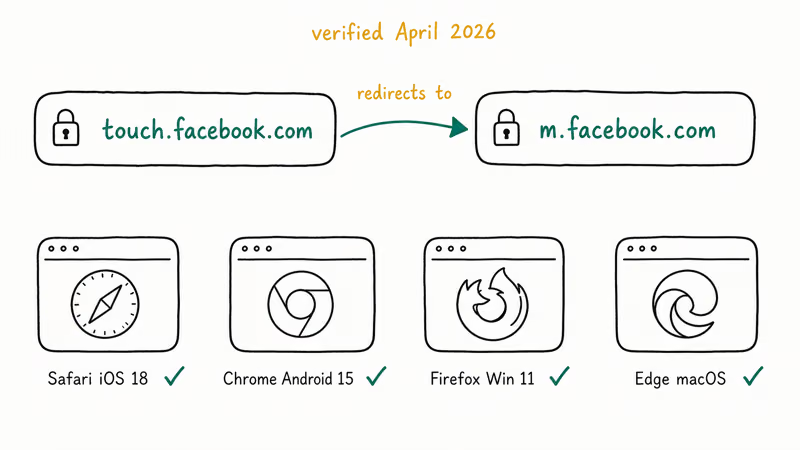
The redirect lines up with Meta’s 2020 mobile web push. Users asking about the Touch change on the Facebook Help Community since then have all been pointed back to m.facebook.com.
If you have an old bookmark pointing at touch.facebook.com, it’ll still work. You just won’t land on a distinct interface anymore. The easiest fix is to update the bookmark to m.facebook.com so there’s no redirect delay. While you’re cleaning things up, it’s also a good moment to tidy your feed by unfollowing people on Facebook you no longer want to see.
#Using the Touch-Style Interface Today
Sort of. The current m.facebook.com keeps several design elements that originated with Touch.
- Scroll-based infinite feed rather than clicking Next Page to load more posts
- Full-width photos that expand when you tap them, instead of small thumbnails
- Larger tap targets for buttons compared to the old
m.facebook.comXHTML version - Swipe-friendly navigation in the bottom bar on phones with gesture navigation
If you want an even lighter interface, Meta still runs Facebook Lite as a separate Android app. It’s native rather than web-based, uses a minimal UI, and targets older or budget phones with limited storage.
For iPhone users, there’s no Facebook Lite equivalent. The best lightweight option is visiting m.facebook.com in Safari and adding it to your home screen through the Share menu, which gives you an app-style icon without a full native install.
#How to Log Into Facebook Touch (or What Replaced It)
The login flow hasn’t changed much from the old Touch experience. Here’s what to do in 2026.
- Open any mobile browser and go to
touch.facebook.comorm.facebook.com - Enter your email, phone number, or username tied to the account
- Type your password and tap Log In
- Approve the two-factor code from your authenticator app, SMS, or security key
- Choose whether to save your login info based on whose device this is
Seeing a “Facebook Session Expired” error? Clearing facebook.com cookies usually fixes it. Our Facebook session expired troubleshooting guide covers the full fix.
Logout lives at the bottom of the menu, same as the old Touch layout. Tap the three-line menu icon and scroll down.
#Security and Privacy Considerations
The old touch.facebook.com had a reputation for weak security because early versions didn’t force HTTPS on every endpoint. Sidejacking attacks like Firesheep in 2010 could hijack unencrypted Facebook sessions on shared Wi-Fi, and Touch was part of that exposure.
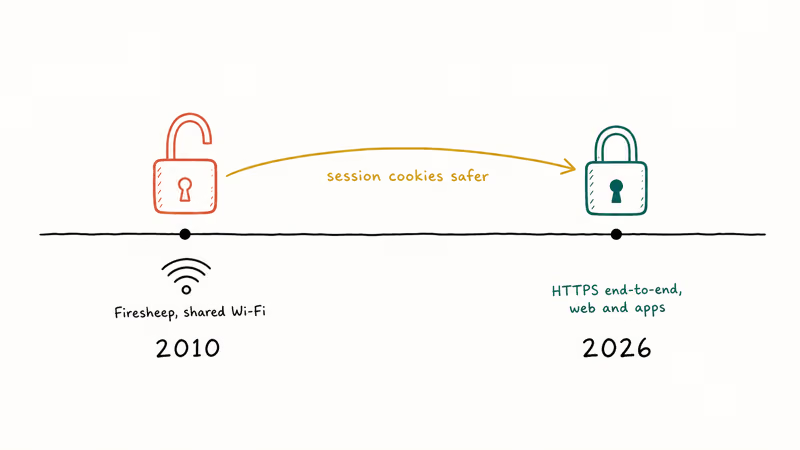
That specific risk is gone. According to Meta’s Transparency Center on encryption, all Facebook traffic across web and apps uses HTTPS end-to-end today. Visiting touch.facebook.com from a public network in 2026 is no less secure than the Facebook app, as long as your device itself isn’t compromised.
The remaining safety considerations are the normal ones for any Facebook login.
- Use a unique password, ideally generated by a password manager
- Enable two-factor authentication through an authenticator app rather than SMS
- Review active sessions under
Settings>Security>Where You’re Logged In and log out old devices - Avoid logging in on public computers; use an incognito window and log out manually afterward
If you share a device with family, clear cached photos and messages regularly. Our Facebook cache cleanup guide walks through the steps on both iPhone and Android.
#How to Read Messenger Without the Messenger App
One of Touch’s quiet advantages was reading messages in a browser without installing Messenger. That path has narrowed.
Meta removed the Messenger tab from facebook.com and m.facebook.com in late 2024. Tapping Messages now pushes you to the Messenger app or to messenger.com. The browser fallback is messenger.com directly, which works but needs a separate login flow from the main Facebook site.
On iPhone, you can add messenger.com to your home screen as a web app icon by opening it in Safari, tapping the Share button, and selecting Add to Home Screen. On Android, Chrome offers an “Install app” prompt from the three-dot menu. Neither is as smooth as the native Messenger app, but both avoid the roughly 300 MB install footprint.
If you want Messenger locked down regardless of interface, the app supports Face ID and Touch ID lock under Privacy settings. We walk through setup in our Facebook Messenger not working guide, which also covers common login failures.
#Troubleshooting Common Facebook Touch Issues
Most problems people report with Facebook Touch today are actually generic mobile-web issues.
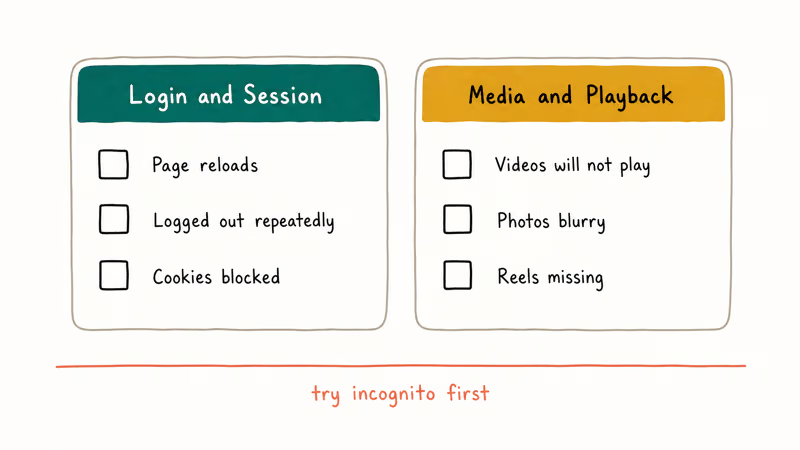
Login and session issues:
- “Page keeps reloading”: clear cookies for
facebook.com, then restart the browser - “Logged out repeatedly”: your browser blocks third-party cookies; allow them for
facebook.com
Media and playback issues:
- “Can’t see videos”: update Chrome, Safari, Firefox, or Edge to the current major version
- “Photos load blurry”: disable Data Saver under
Settings>Mediain the Facebook site - “Reels don’t play”: Reels need the native app or desktop; see our Facebook Reels not showing walkthrough for app-side fixes
If none of these help and the site behaves oddly only for you, try an incognito window first.
#Bottom Line
Stop searching for touch.facebook.com as a separate product. Bookmark m.facebook.com instead and treat it as the modern Facebook mobile web, which inherits the Touch design language. If you want lighter RAM usage, install Facebook Lite on Android. For Messenger in a browser, go straight to messenger.com rather than trying to reach the old inbox through the main site.
#Frequently Asked Questions
Is touch.facebook.com still active?
Yes, the hostname still resolves, but it redirects to m.facebook.com in every modern browser. You won’t see a distinct Touch interface anymore.
What is the difference between Facebook Touch and Facebook Lite?
Facebook Touch was a browser-based mobile web product hosted at touch.facebook.com. Facebook Lite is a standalone Android app with a minimal native interface. Lite is still actively developed and aimed at low-end phones or slow data connections, while Touch has been folded into the main mobile site.
Can I use Facebook Touch on an iPhone?
Yes in that you can visit touch.facebook.com on iPhone, but Safari redirects to m.facebook.com. There’s no separate Touch app on iOS.
Why does Facebook Touch look different from the Facebook app?
Touch was a web product, so it ran inside a browser and inherited the browser’s chrome and navigation. The Facebook app is native, with background services, push notifications, and deeper phone integration like contact syncing. The visual language has converged over time, but feature depth has not.
Does Facebook Touch support Messenger?
Not anymore in any meaningful way. Meta removed the Messenger tab from the mobile web in late 2024. Visiting a conversation URL on the mobile web bounces you to the Messenger app or to messenger.com. For browser-based messaging, use messenger.com directly.
Is Facebook Touch free?
Yes. Like the rest of Facebook’s consumer products, the mobile web is free to use. You pay only for the data your carrier charges for loading pages.
Can I download photos from Facebook Touch?
Yes, the same way you would from any mobile web site. Tap and hold a photo in the mobile browser, then choose Save to Photos on iPhone or Download image on Android. For videos, you typically need the Facebook app’s built-in save option or a third-party tool, since browsers can’t directly download Facebook’s streaming video URLs.
Will Meta bring Facebook Touch back?
No formal statement confirms or denies it. Given Meta’s investment in the unified m.facebook.com experience and the native Facebook app, a return to a separate Touch product is unlikely. The design patterns Touch pioneered live on in the current mobile web.
Google Messages Error 3100: Why RCS Is Broken on Galaxy
Google Messages RCS error 3100 hits Galaxy owners after phone or carrier switches. Google told 9to5Google a fix is coming. Here's what actually helps.

Is This Bank App Real? Spot a Fake App on Your Home Screen
A bank app can land on your home screen from a web page with no install warning. Learn the checks that tell a real banking app from a phishing web app.
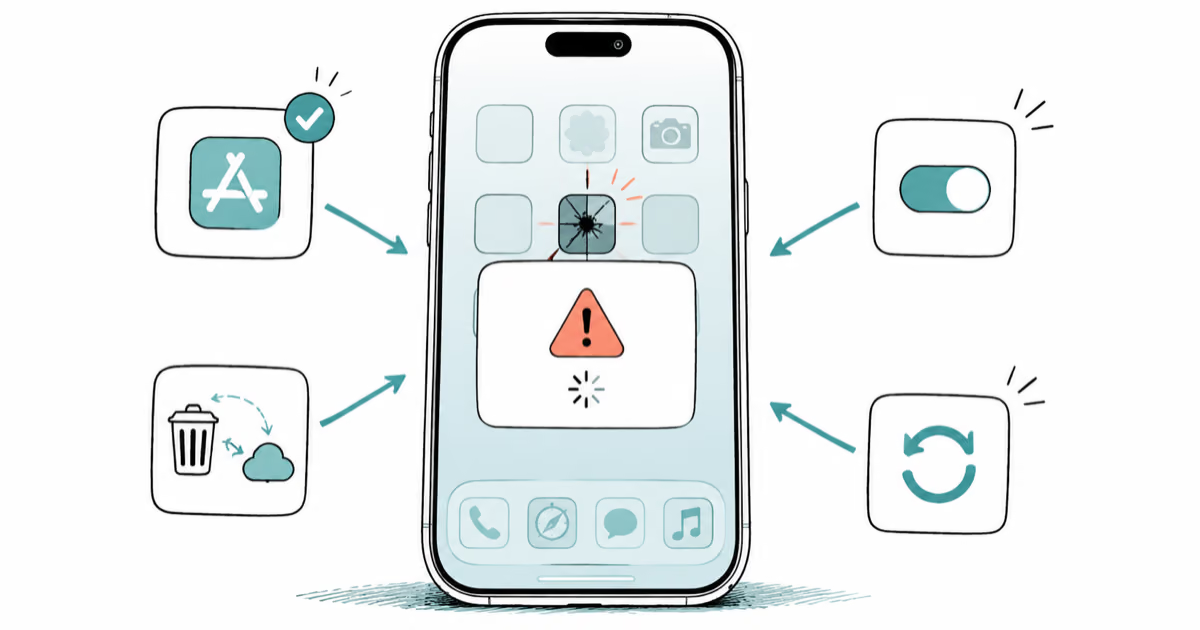
Apps Crashing After iOS 27 Update? Fix Order (2026)
Apps crashing after the iOS 27 update? Update the app in the App Store first, then offload and reinstall to clear stale cache, then restart. The fix order.
Do AI Translation Earbuds Work Offline? What to Know
Do AI translation earbuds work offline? A few do with downloaded language packs, but most need the cloud. Here's what works offline and what you give up.