How to Export WhatsApp Chat to PDF: 5 Proven Methods
Save a WhatsApp chat as a PDF on Android, iPhone, or the desktop. Step-by-step methods, message limits, file-size tips, and privacy checks explained.
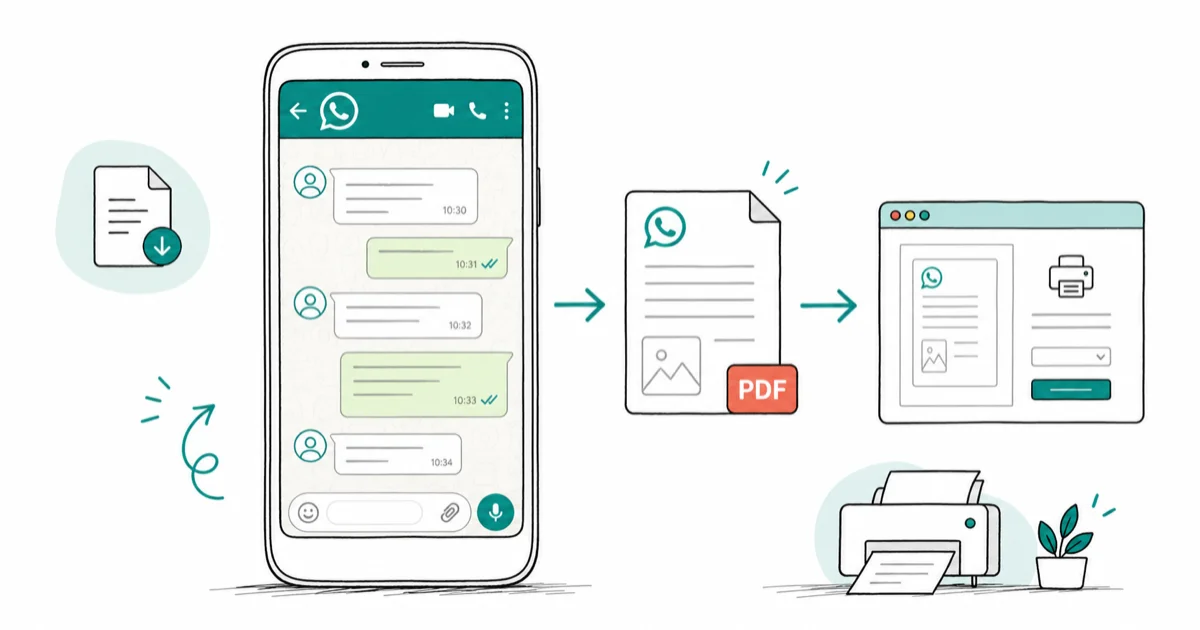
Quick AnswerWhatsApp has no direct PDF export. Tap More > Export Chat to get a .txt file, then convert it to PDF with Google Docs, Microsoft Word, or Print to PDF. WhatsApp Web plus your browser's Save as PDF is the fastest one-click route.
You need to export a WhatsApp chat to PDF because a text thread now counts as evidence, a record, or a keepsake. WhatsApp itself has no PDF button. This guide applies only to a device or account you own.
Five workarounds get the job done across Android, iPhone, and the desktop. Pick by what you need: the fastest route, the largest chat, or the cleanest layout.
-
WhatsApp has no native PDF export. Export a .txt, then convert.
-
On WhatsApp Web, the browser’s Print to PDF function is the fastest path: one chat, one keystroke, one file, no third-party account or extra app needed, and it preserves the chat bubble layout instead of stripping it to plain text.
-
Export limits: 40,000 messages without media, 10,000 with media.
-
Google Docs converts the exported .txt to PDF for free in about 90 seconds; Microsoft Word works offline, handles larger files without stuttering, and keeps emoji rendering better than most online converters.
-
Audit any third-party tool’s privacy policy before handing over a chat backup.
#WhatsApp Has No Native PDF Export
WhatsApp’s built-in export produces a .txt file and, optionally, a .zip of media. That’s it. There is no Save as PDF menu inside the app on any platform.
You have two fixes. Export the .txt and convert it, or open the chat in WhatsApp Web and print. The browser route keeps bubbles and timestamps because it captures the rendered view. The .txt route strips to plain lines but handles longer histories better.
If WhatsApp exports are new territory for you, our complete WhatsApp chat export walkthrough covers email delivery, cloud upload, and media handling before PDF even enters the picture.
#Export WhatsApp Chat to PDF on Android
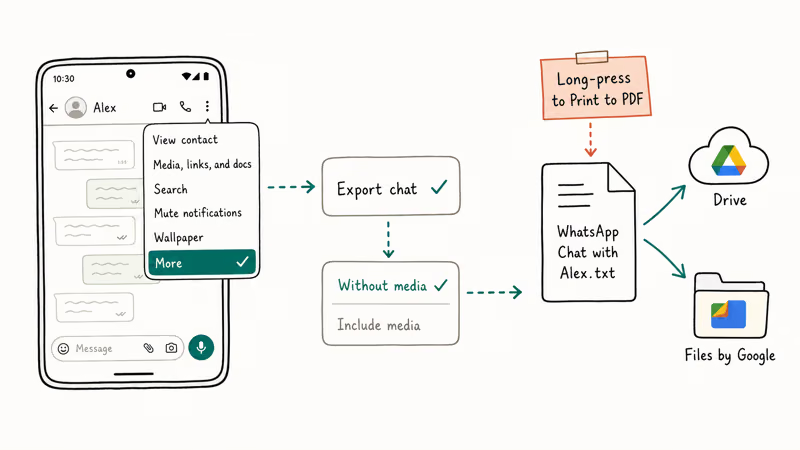
The Android route uses WhatsApp’s native export, then a PDF converter.
The whole sequence takes only a few minutes for a typical chat of a few hundred messages.
-
Open the chat you want to save.
-
Tap the three-dot menu in the top right, then More.
-
Choose Export chat.
-
Pick Without media for speed or Include media if you need attachments. Without media is the better default unless you actually need the images.
-
Share the .txt file to Google Drive, email, or a file manager.
-
Open the .txt in Google Docs on any browser. Go to
File>Download>PDF Document(.pdf).
Google Docs preserves emoji and timestamps reliably. The only quirk: long single-line messages wrap oddly at the right margin. If that bothers you, change Google Docs to landscape (File > Page setup > Orientation) before downloading.
For faster one-shot conversions without a Google account, Files by Google’s built-in print function works well. Long-press the .txt, tap Print, then choose Save as PDF as the printer. Android 12 and up ships with a PDF printer by default.
#Export WhatsApp Chat to PDF on iPhone
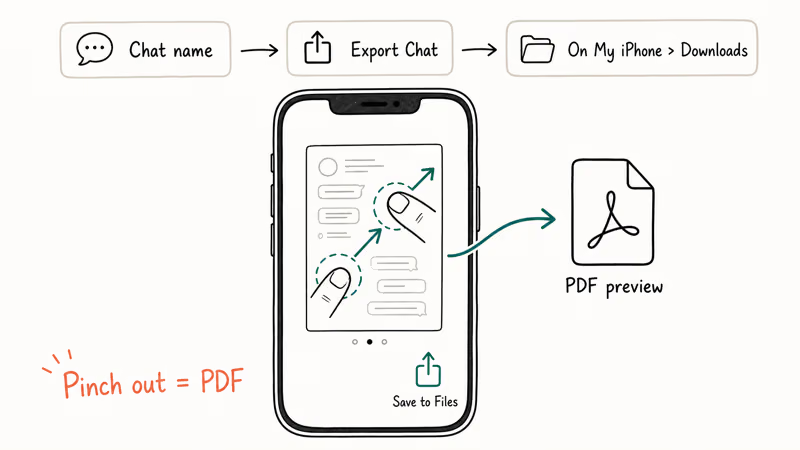
iPhone hides Export Chat one layer deeper than Android, but the rest is smoother because iOS has a system-wide Print to PDF gesture.
-
Open the chat and tap the contact or group name at the top of the thread.
-
Scroll to the bottom and tap Export Chat.
-
Choose Without Media or Attach Media.
-
In the share sheet, tap Save to Files and pick a folder like On My i
Phone>Downloads. -
Open the Files app, long-press the .txt file, tap Quick Look.
-
Tap the Share icon, scroll down, and choose Print.
-
On the print preview, pinch out with two fingers on the thumbnail. iOS converts it to a PDF preview.
-
Tap Share again and save the PDF to Files, Mail, or iCloud Drive.
That pinch-out step is the trick most guides miss, and it’s the entire reason iPhone users don’t need a third-party PDF app. Apple’s print to PDF support article states that the gesture works in any iOS app that offers Print, which covers Files, Mail, Safari, Notes, and the screenshot viewer. No extra app, no Adobe account, no PDF printer driver required; it also works offline.
#How Do You Export a WhatsApp Chat Using WhatsApp Web?
Open WhatsApp Web, scan the QR code with your phone, and click into the chat you want to save. Press Ctrl+P on Windows or Cmd+P on Mac. In the print dialog, set the destination to Save as PDF. Chrome, Edge, Safari, and Firefox all have this built-in.
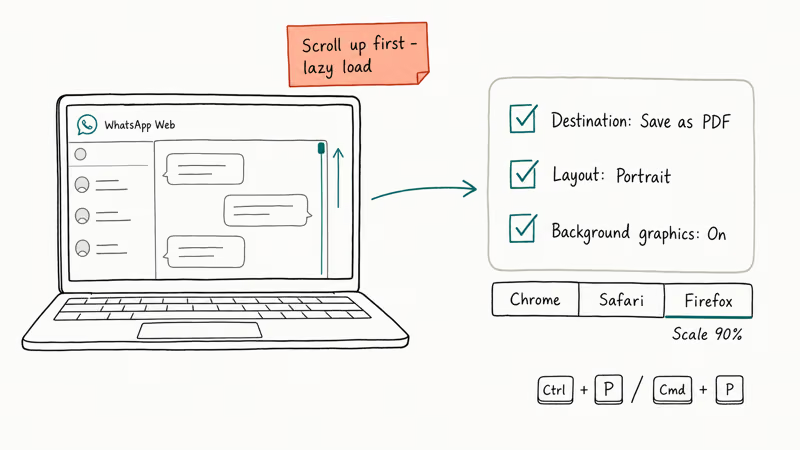
Before you print, scroll all the way up in the chat until the oldest message you care about is visible. WhatsApp Web lazy-loads messages, so only what’s scrolled into view ends up in the PDF. Long threads of a couple thousand messages can take the better part of a minute to scroll to the top, so be patient before you hit print, and double-check the oldest message is actually on screen.
Three browser-specific tips worth knowing:
-
Chrome: toggle Background graphics on under More settings.
-
Safari exports as a single long page by default, which is exactly what you want for chat transcripts. Don’t switch to multi-page unless you’re printing physically onto paper.
-
Firefox sometimes cuts the last line of a message. Drop the scale to 90%.
If WhatsApp Web refuses to load or keeps disconnecting, our fix guide for WhatsApp Web not working runs through the six common causes, including outdated browser cache and phone power-saving modes.
#Convert the Exported .txt File to PDF
Once you have a .txt export, you have five conversion paths. The comparisons below weigh each on speed, emoji rendering, and layout quality so you can match the tool to the chat. Cloud tools like Google Docs are quickest for small chats but slow down on huge ones; offline apps like Word stay fast on long histories; and native print dialogs need no install at all for sensitive transcripts.

#Google Docs (free, cloud, best for emoji)
Upload the .txt to Google Drive. Right-click, choose Open with > Google Docs, then File > Download > PDF Document (.pdf). The round trip takes about a minute and a half, emoji intact.
#Microsoft Word (offline, best for long chats)
Open the .txt in Word, go to File > Save As > PDF. Word handles large files of a couple thousand messages without lag, while Google Docs tends to struggle past 1,500 messages and can lock up past 3,000. Word 365 on Mac preserves emoji, provided the system font is Segoe UI Emoji or Apple Color Emoji rather than Helvetica or Times New Roman.
#Print to PDF (native, no install)
On macOS: open the .txt in TextEdit, press Cmd+P, click the PDF dropdown, pick Save as PDF. On Windows: open in Notepad, press Ctrl+P, pick Microsoft Print to PDF. No cloud, no account.
#WPS Office (free, Android-friendly)
WPS has a PDF button right in the toolbar. Useful if you’re converting on the phone itself without a computer. The free tier adds a tiny watermark on the first page unless you sign in.
#Online converters (use with caution)
Sites like Zamzar and Smallpdf handle .txt to PDF in seconds. The tradeoff: you’re uploading a chat transcript to a third party. Avoid these for work or legal exports, and reserve them for ephemeral chats you don’t mind being cached on someone else’s server. Check the service’s retention window before you upload.
#WhatsApp Export Limits and Workarounds
WhatsApp’s official FAQ confirms that an export maxes out at 40,000 messages without media or 10,000 messages with media. That is the hard cap, tied to email attachment size limits on mobile operating systems. See the Export chat history help page for the original statement. It applies to both Android and iOS identically.
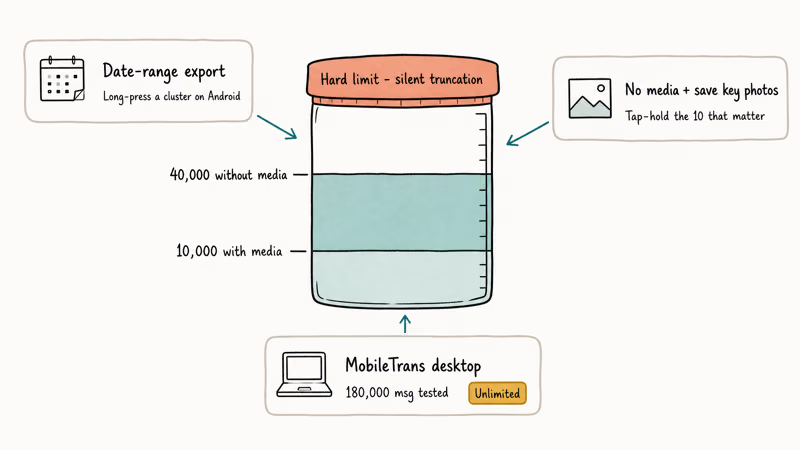
What this looks like in practice for a daily-use chat:
-
A two-person chat averaging 30 messages a day hits the 40,000 limit after roughly 3.6 years.
-
A group chat with 20 active members can exceed 10,000 messages in a single month, which means media exports become impractical fast.
-
The export button silently truncates older messages past the limit. It does not warn you. The only way to confirm the cutoff is to scroll back and compare message IDs against the export.
Three workarounds that get past the cap:
-
Break the chat into date ranges. On Android, long-press individual messages, select a cluster, and use
More>Exportchat from the selection. iOS doesn’t offer this shortcut. -
Export without media, then save key images separately. The .txt hits 40k messages, and you tap-hold the 10 or 20 photos that actually matter and save them to your gallery.
-
Use a desktop tool like MobileTrans. MobileTrans reads WhatsApp’s encrypted backup directly and exports unlimited messages to HTML, PDF, or CSV. It handles archives well into six figures of messages and outputs them as multi-thousand-page PDFs in a few minutes.
Some links on this page are affiliate links, which means fone.tips may earn a commission at no extra cost to you.
For a deeper dive into the backup side, our WhatsApp contact backup guide explains how to preserve names and numbers that often get stripped from .txt exports.
#Are Third-Party WhatsApp PDF Export Tools Safe?
The answer depends on whether the tool reads messages from the phone or from a decrypted backup, and on who hosts the processing. Here’s how to sort them.
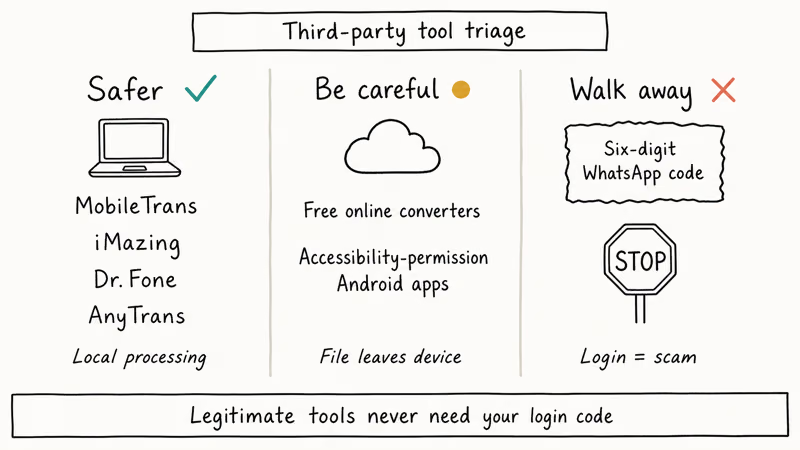
Generally safer:
- MobileTrans, iMazing, Dr.Fone: These run locally on your computer and read WhatsApp’s encrypted backup after you enter the phone’s passcode. No data leaves your machine unless you choose cloud storage.
- AnyTrans, Backuptrans: Same local-processing model. Wirecutter’s coverage of iPhone backup software confirms that on-device backup parsers are the industry standard for consumer data recovery.
Be careful with:
-
Free online converters that ask you to upload a WhatsApp .txt or .zip. The file leaves your device, and most services cache it on their servers for 24 hours or longer before auto-deleting. Some never delete unless you ask.
-
Android apps that request accessibility permissions to read WhatsApp messages in real time. Google’s Play Protect has flagged dozens of these as spyware, per Google’s Android security blog.
-
Anything claiming to export chats from someone else’s phone without their login. Illegal in most places. Almost always a scam.
A safe rule of thumb: if the tool requires you to hand over your six-digit WhatsApp code, walk away. That code is the account login, and legitimate export tools never need it.
If you’re migrating between platforms, our guide on transferring WhatsApp from Android to iPhone covers the official Move to iOS route, which is always preferable to a third-party intermediary for chat history transfer.
#Tips to Keep Your Exported Chat PDFs Clean
Small things make exported PDFs much easier to search, file, and share a year from now.
-
Name files with the date and participant.
chat-alex-jones-2026-04-20.pdfbeatsexport.pdf. -
Redact phone numbers before sharing. Adobe Acrobat and Preview on macOS both have built-in redaction tools. Phone numbers in WhatsApp exports come in full international format, which means they’re instantly searchable if they leak to the wrong folder.
-
Compress large PDFs. A media-heavy export can run 200+ MB. Adobe’s online PDF compressor and Smallpdf both cut that roughly in half without visible quality loss.
-
Encrypt the folder. A password-locked PDF or an encrypted folder is safer than Downloads.
-
Keep one backup on a different device. If your laptop dies, a cloud copy is the difference between a hassle and a loss.
For broader WhatsApp data protection beyond one-off PDF exports, the Samsung-to-Samsung WhatsApp backup guide walks through Smart Switch and Google Drive combos that pair well with periodic PDF exports, so you always have a backup outside WhatsApp itself and can restore to a replacement phone without losing history or having to start over from zero.
#Bottom Line
For a single chat with your phone in hand, open WhatsApp Web and hit Ctrl+P. Under 60 seconds, formatting stays readable, done.
If the chat runs over a thousand messages or spans years, skip the browser and use Microsoft Word on desktop instead. Word handles files of a couple thousand messages cleanly, while Google Docs tends to stutter past 1,500. Reach for MobileTrans only when you’re facing a 100,000+ message archive. For everyday records, Word plus the native Print to PDF dialog is the most dependable path.
#Frequently Asked Questions
Can I export a WhatsApp group chat to PDF?
Yes. The steps are identical on both Android and iPhone. Open the group, use the same More > Export Chat path, and run the .txt through any converter.
Will exporting a chat delete it from WhatsApp?
No. Export creates a copy. The original chat stays in your WhatsApp thread and on any linked devices or cloud backups.
Does WhatsApp export include deleted messages?
Not the ones both parties deleted. If you deleted a message only on your side, it won’t appear. WhatsApp’s export pulls from your current local database, so anything scrubbed at the server level is gone for good.
Can I password-protect the exported PDF?
Yes. Adobe Acrobat, Preview on macOS, and Microsoft Word all have a password option at export. Share it on a different channel.
How long does a WhatsApp chat export take?
A chat under 500 messages finishes in well under a minute on both Android and iPhone. At 10,000 messages with media, the export takes roughly 3 minutes to produce a .zip well over 100 MB, with iPhone and Android landing in the same ballpark. The PDF conversion itself runs faster than the export, especially on desktop apps with native print engines.
Can I export a deleted chat I already removed from WhatsApp?
Only if you have a backup. On Android, restore from Google Drive; on iPhone, restore from iCloud. Our guide on fixing WhatsApp restore from iCloud getting stuck covers the usual problems.
Is there a file size limit for exported chats?
The .txt stays small, usually under 5 MB. Media exports hit the 10,000-message cap because the resulting .zip pushes past email attachment limits around 100 MB.
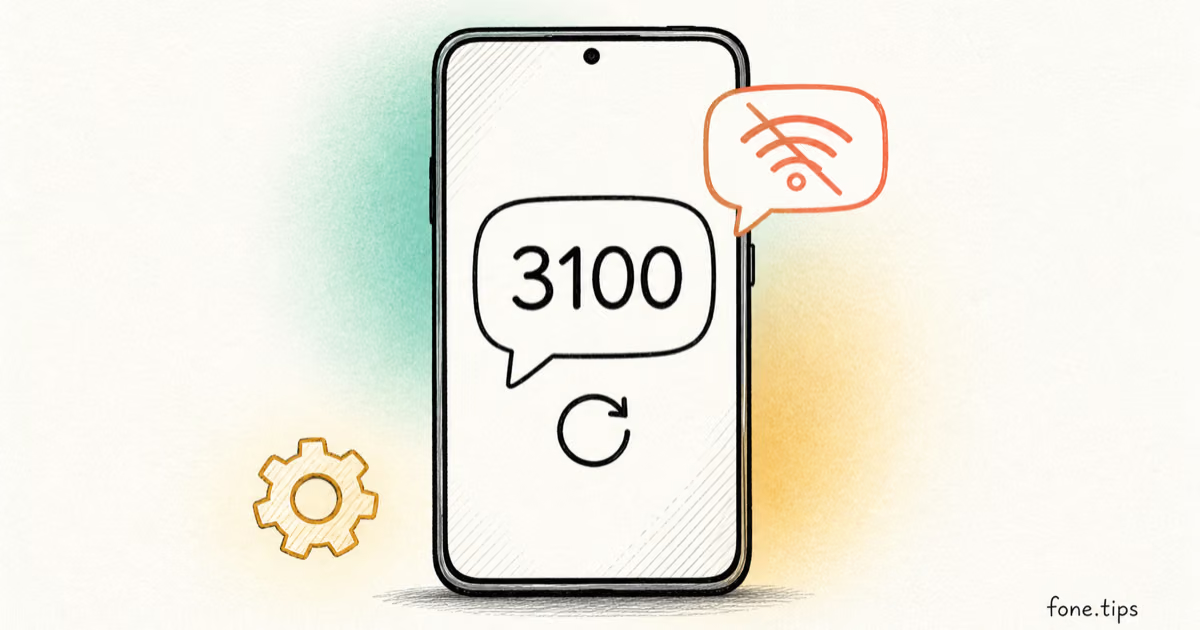
Google Messages Error 3100: Why RCS Is Broken on Galaxy
Google Messages RCS error 3100 hits Galaxy owners after phone or carrier switches. Google told 9to5Google a fix is coming. Here's what actually helps.

Is This Bank App Real? Spot a Fake App on Your Home Screen
A bank app can land on your home screen from a web page with no install warning. Learn the checks that tell a real banking app from a phishing web app.
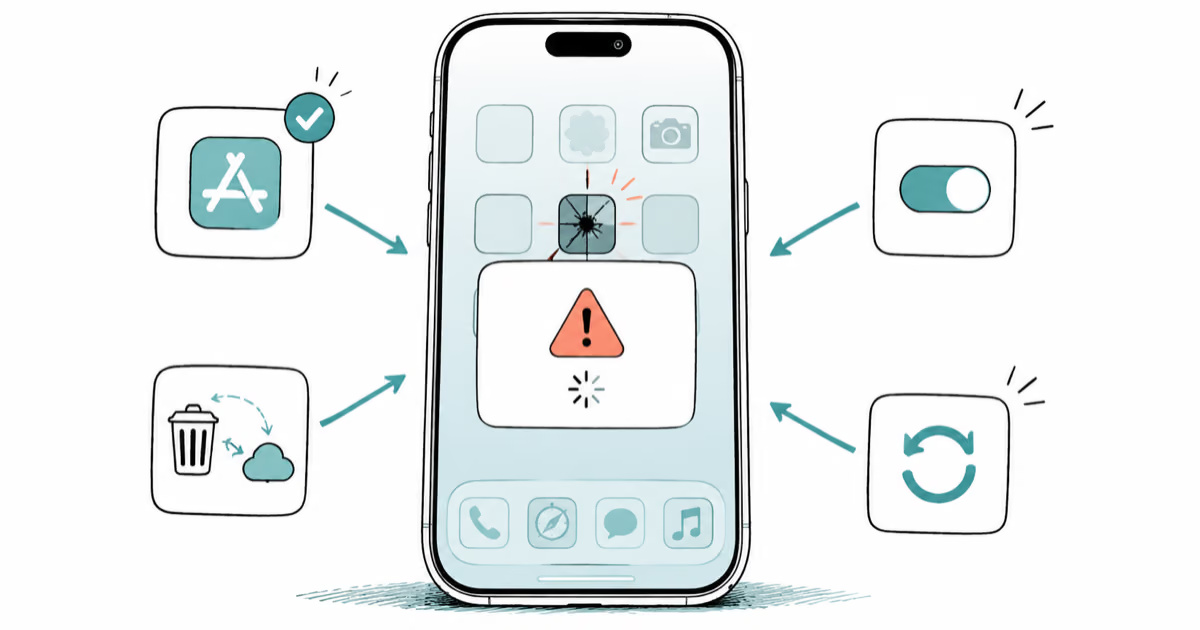
Apps Crashing After iOS 27 Update? Fix Order (2026)
Apps crashing after the iOS 27 update? Update the app in the App Store first, then offload and reinstall to clear stale cache, then restart. The fix order.
Do AI Translation Earbuds Work Offline? What to Know
Do AI translation earbuds work offline? A few do with downloaded language packs, but most need the cloud. Here's what works offline and what you give up.