Can You See Who Views Your VSCO? Here's the Real Answer
Can you see who views your VSCO profile or photos? No, VSCO hides viewer identities by design. Learn what the app actually tracks and shows you.
Quick AnswerNo. VSCO does not show you who views your profile or photos, and the app has no built-in viewer tracking feature. No third-party app can pull this data either because VSCO never logs viewer identities in any user-accessible store.
You can’t see who views your VSCO profile or your individual photos. That’s by design, not an oversight. Neither free accounts nor paid VSCO Membership exposes viewer identities anywhere in the app.
This guide covers VSCO tracking, viewer-app scams, and account hardening.
- VSCO does not record or display who views your profile or photos, and that limitation applies to every account type, including paid VSCO Membership.
- Direct messages on VSCO only work between users who mutually follow each other, so strangers can’t start a conversation with you.
- VSCO profiles are public by default with no private account toggle, so anyone with the app or web link can browse your published images.
- Location metadata can stay embedded in shared images unless you disable it in VSCO’s privacy settings before uploading or exporting.
- App Store ratings list VSCO as 13+, but there is no in-app age verification, so account creation only requires a working email address.
#Does VSCO Track Profile Views?
VSCO doesn’t track profile views in any way you can see, and it doesn’t provide a visible profile-view report for creators.
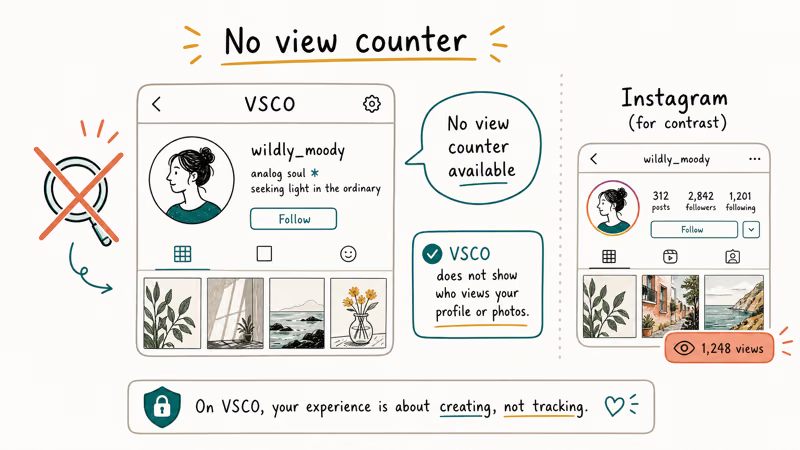
The app provides no viewer notification, no view counter, no activity log, and no “recent viewer” list for profile or individual photo views.
The design choice goes further than missing analytics. According to Wikipedia’s VSCO article, VSCO launched its subscription product in 2017 and built the whole experience around editing tools rather than social engagement metrics. There’s no public like count, no comment thread, and no view count, so there’s nothing for the app to report back to a creator about who looked at a given photo.
VSCO Membership doesn’t change this. The paid tier unlocks more presets, video editing, and Recipe saving, but it does not add audience analytics. No viewer report exists at any subscription level.
#What VSCO Actually Shows You About Your Audience
VSCO gives you exactly one audience signal: your follower list. Here’s how to find it on the current app.
- Open VSCO and sign in.
- Tap the face icon in the top-right corner of the Home tab.
- Tap Followers to see the full list of accounts following you.
- Tap any name to view that follower’s public profile.
That’s it. There’s no “people who viewed but didn’t follow” report, no “your top fans” feature, and no daily or weekly view summary.
You can also see who reposted your photo. Tap into the photo itself and check the repost count below it. Tapping that count opens a list of accounts that grabbed your image with the in-app Repost button. This is the closest thing VSCO has to engagement analytics, and it only counts deliberate reposts, not passive views.
#Why Third-Party Viewer Apps Don’t Work for VSCO
App stores and search results are full of apps that claim to “show who viewed your VSCO profile.” None of them work, and many are actively dangerous. The technical reason is simple: VSCO’s servers don’t log viewer-to-creator identity pairs in any store a third party could query, so there’s no data source for these tools to scrape, no matter what credentials they ask for.
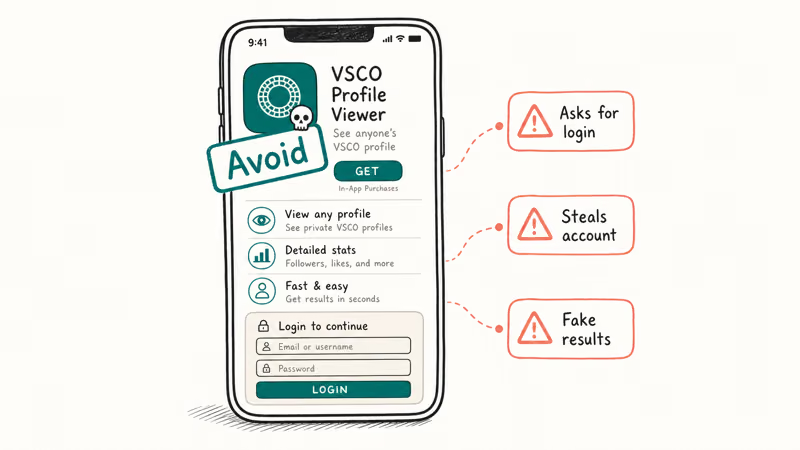
These apps generally fall into three buckets:
- Credential phishers. They ask for your VSCO username and password to “scan your account,” then resell or test those credentials elsewhere.
- Ad-revenue traps. They show fake “view count” data with random usernames to keep you opening the app and watching ads.
- Permission grabbers. They request contact list, photo library, or location access during setup so they can sell that data to ad brokers.
If you’ve already signed into one of these tools, change your VSCO password immediately and revoke any account-link permission you granted. For phone-side cleanup tips, our walkthrough on hiding posts on Instagram covers similar damage-control steps you’d want to apply across any social account a sketchy app may have touched.
#Can You Make a VSCO Profile Private?
VSCO doesn’t have a private-account toggle. Unlike Instagram or TikTok, there’s no setting that flips your published photos to “followers only.” Once you publish to your VSCO profile, anyone with the app or with your vsco.co/username link can see those photos.
You have three workarounds if you want more control:
- Don’t publish. Photos you edit but never post stay in your Studio tab, which is private to your account.
- Use Drafts. Edits you save as drafts remain hidden until you choose to publish.
- Delete published photos. You can remove any post from your profile at any time, which makes it inaccessible to everyone going forward. It doesn’t undo screenshots already grabbed.
Common Sense Media’s VSCO app review confirms that “Location data appears on shared images and when exporting unless turned off in the privacy settings,” so step one for anyone publishing is to flip the location toggle off before posting. That makes the location toggle worth checking before every upload, especially for photos captured with GPS metadata enabled.
#How VSCO’s Privacy Defaults Compare to Other Apps
VSCO leans further toward viewer anonymity than most competitors, but its lack of a private-profile mode is unusual. Here’s how the major photo and short-video apps handle the same question.
| App | Built-in viewer tracking | Private account option | DMs from strangers |
|---|---|---|---|
| VSCO | None | No private toggle | Mutual-follow only |
| Story views only | Yes | Yes, via request inbox | |
| TikTok | Profile View History (opt-in) | Yes | Limited by age and settings |
| Snapchat | Story and Snap views | No, public Stories optional | Yes |
| None on Pins | Secret boards available | Limited |
Protect Young Eyes’ VSCO parental guide states that on VSCO “you can post what you like, when you like” with “no public followers, likes or comments,” and that direct messaging is gated to mutual follows. That mutual-follow DM gate is the most meaningful privacy boundary the app has, because it shuts down the most common harassment vector on rival platforms: cold messages from strangers.
For a deeper look at viewer tracking on a similar app, our guide on whether you can see who views your TikTok covers TikTok’s Profile View History toggle and what creator analytics actually surface. If you’re more interested in the reverse problem, our walkthrough on watching TikTok anonymously explains how to browse without leaving an account fingerprint.
The pattern is the same across modern social apps: built-in viewer tracking is rare, opt-in when it exists, and almost never granular enough to identify which specific stranger saw a given post.
#Steps to Lock Down Your VSCO Account
If you want to minimize your VSCO exposure without leaving the platform, here’s a practical checklist to use.
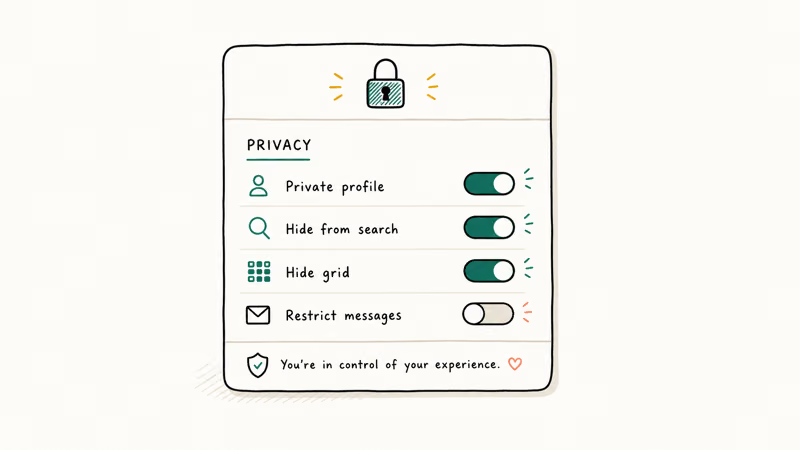
- Strip location from new uploads. Open the VSCO app, tap your profile icon, go to
Settings>Privacy and Personalization, and turn off Location Services for the app along with Use of My Information for advertising signals. - Trim follower count. Block or remove followers you don’t recognize. On any follower’s profile, tap the three-dot menu and choose Block. Blocked accounts can’t see your profile, search you, or DM you.
- Delete posts you don’t want public. Tap any image on your profile, tap the three-dot menu, and choose Delete. The image leaves your public profile within seconds.
- Stay out of Discover. If you don’t want your photos surfacing in the Discover feed, skip public hashtags and avoid tagging locations in captions.
- Audit linked accounts. Open
Settings>Connected Appsand revoke any third-party service you don’t actively use, especially any “view tracker” tool you signed into in the past.
Screenshots are the other half of this privacy story. Our companion guide on whether VSCO notifies screenshots confirms that VSCO sends no screenshot alert for any content, so anyone who can already see your published photos can capture them without notice.
#Spotting and Avoiding VSCO Scam Tools
The volume of fake “VSCO viewer” apps means it’s worth knowing the red flags before you click anything. Most of these tools share a few common tells:
- They promise a viewer list, view count, or “who watched you” report that no legitimate app could surface, because VSCO does not expose that data through any API.
- They ask for your VSCO login on a webpage that is not
vsco.coor the official VSCO app. - They route you to a survey wall, a paid SMS subscription, or a fake “verification” download before showing the supposed results.
- They request permissions that have nothing to do with VSCO, such as SMS access, contact list export, or device location.
If you’re curious whether the same scam pattern exists on other platforms, our explainer on who viewed your WhatsApp profile walks through the identical setup on WhatsApp and the official position the company holds on viewer tracking.
#Bottom Line
If your goal is to know exactly who looked at your VSCO photos, the honest answer is that you can’t get that information, and you should treat anyone promising it as a scam. VSCO’s whole model is the opposite of platforms like Instagram: it removes the social-pressure signals so creators can post without chasing approval. Your only audience metric is the follower list, plus the repost count on individual photos.
For most VSCO users, the right move is to accept the anonymity and lean into the privacy hygiene steps above: strip location metadata before publishing, trim followers, delete posts you don’t want public, and avoid every third-party “viewer” tool. If you need stronger viewer controls than VSCO offers, the practical alternative is to keep your sensitive photos off VSCO entirely and use a closed-network option like a shared iCloud Photos album or a Telegram Saved Messages chat for personal storage.
#Frequently Asked Questions
Does VSCO send a notification when someone views your profile?
No, VSCO doesn’t notify anyone when you view a profile or photo. The only VSCO push notifications are for new followers, caption mentions, and DMs from mutuals.
Does a paid VSCO Membership add viewer tracking?
A paid VSCO Membership does not add viewer tracking. The Membership tier adds editing features such as full preset libraries, video editing tools, and Recipe saving, but it adds no audience-side analytics. No viewer report exists at any subscription level.
Are there any safe third-party apps that show VSCO viewers?
No. Every app or website that claims to show VSCO viewers is either a credential phisher or an ad-revenue scam. VSCO does not log viewer-to-creator identity pairs anywhere a third party could query, so the data these apps claim to display does not exist. If you’ve signed into one of these tools, change your VSCO password and revoke its access in your account settings.
Does VSCO show who screenshotted your photo?
VSCO does not show who screenshotted your photo. The app has no screenshot detection on any surface, including the main grid, individual posts, direct messages, and Member-only content.
Can you tell who reposted your VSCO image?
Yes, you can see who reposted your VSCO image. Tap the image on your profile, then tap the repost count below it to open the list of accounts that reposted it.
How do I block someone on VSCO?
To block someone on VSCO, open their profile, tap the three-dot menu in the top-right corner, and tap Block. The blocked account loses access to your profile, can’t search for you, can’t DM you, and can’t see any of your posts. Blocking is silent, so the blocked user doesn’t get a notification. To undo the block later, open the same menu and tap Unblock.
Is VSCO safer than Instagram for teens?
VSCO has tighter DM gating than Instagram because direct messages only work between mutual followers, but it lacks a private-account toggle. According to Protect Young Eyes, VSCO is rated 13+ on the App Store and Teen on Google Play, with no built-in parental controls. The safer-by-default DM is real, but parents should still review what their teen posts publicly, since profiles can’t be made private.
Google Messages Error 3100: Why RCS Is Broken on Galaxy
Google Messages RCS error 3100 hits Galaxy owners after phone or carrier switches. Google told 9to5Google a fix is coming. Here's what actually helps.
Is This Bank App Real? Spot a Fake App on Your Home Screen
A bank app can land on your home screen from a web page with no install warning. Learn the checks that tell a real banking app from a phishing web app.
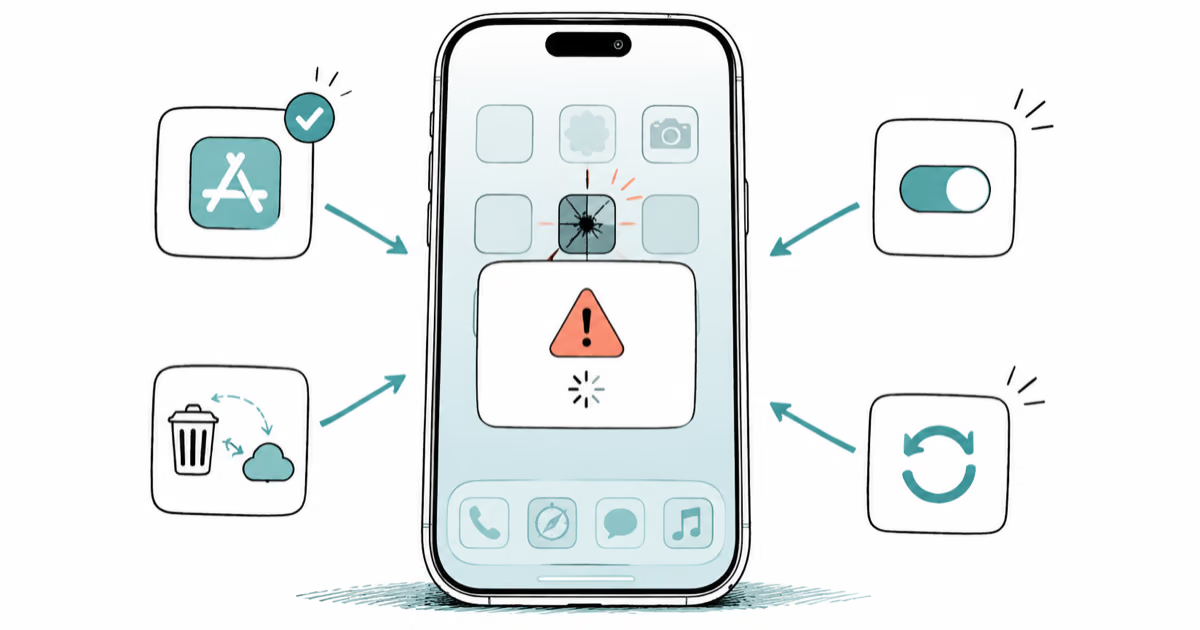
Apps Crashing After iOS 27 Update? Fix Order (2026)
Apps crashing after the iOS 27 update? Update the app in the App Store first, then offload and reinstall to clear stale cache, then restart. The fix order.
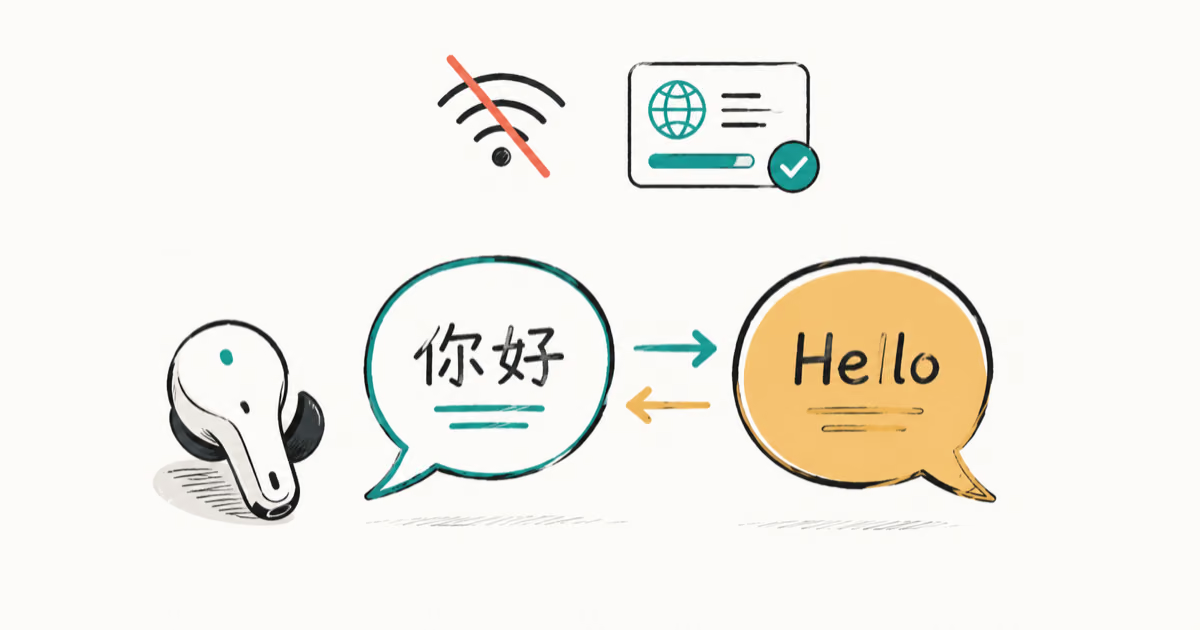
Do AI Translation Earbuds Work Offline? What to Know
Do AI translation earbuds work offline? A few do with downloaded language packs, but most need the cloud. Here's what works offline and what you give up.